Retail News CRM

Tag: CapitaLand

  • Canadian fund buying into Pavilion Dalian mall

    Canadian fund buying into Pavilion Dalian mall

    In a third investment deal in retail real estate in China within in two weeks, the Canadian Pension Plan Investment Board (CPPIB) has signed up to acquire a 40 per cent interest in the Pavilion Dalian shopping mall for $162 million.

    This takes the period’s spending to $684 million for Canada’s largest pension fund. Its latest acquisition is fully leased with the usual mix of local and international brands as well as international eateries.

    “Acquiring a stake in Pavilion Dalian is consistent with our real-estate strategy of investing in high-quality, well-located retail assets with leading partners” says CPPIB head of real-estate investments for Asia Jimmy Phua.

    CPPIB acquired its stake in the retail complex from Malaysia’s Pavilion Group, which opened the mall last year. The deal comes just 14 days after CPPIB put up $147 million for a 49 per cent stake inLongfor Properties’ West Paradise Walk. The six-level shopping mall in the western Chinese city of Chonqing had has a 99 per cent occupancy rate for the past two years.

    Also within the last fortnight, CPPIB invested more than $375 million for a 25 per cent stake in CapitaLand’s Raffles City China Investment Partners III fund. The $1.5 billion investment vehicle targets mixed-use developments in China’s gateway cities.

    A few years ago, CPPIB invested $202 million for a stake in Times Paradise Walk in Suzhou.

  • CapitaLand unveils Asia’s first AI chatbot concierge for shoppers at Future Cities

    CapitaLand unveils Asia’s first AI chatbot concierge for shoppers at Future Cities

    CapitaLand customers will soon get to enjoy a slew of virtual concierge services that allows them to hail rides, book restaurants, and browse retailer offerings by simply chatting with Sparkle – the Group’s fully automated artificial intelligence (AI) chatbot – the first chatbot piloted by a real estate developer in Asia. Unveiled at CapitaLand’s Future Cities: Asia Forum this evening, Sparkle is among a series of new features released on CapitaStar, Singapore’s largest multi-mall, multi-store cardless rewards programme. Members may start chatting with Sparkle from 1 November 2016 when the refreshed CapitaStar app is available for download from the App Store and Google Play.

    Mr Lim Ming Yan, President & Group CEO of CapitaLand Limited, said: “CapitaLand was among the first in our industry to embrace online-to-offline and offline-to-online (O2O). With the launch of Sparkle and partnerships with tech stalwarts and well-loved retail brands, we are now leading the way into the next era of consumerism, defined by convergent offline-AND-online (O&O) experiences. This is a first for an Asian real estate developer, and we want to invite our customers to join us to co-create Sparkle by interacting with it and making it smarter. This way, Sparkle will be a chatbot trained by customers, for customers. Ultimately, we want to create an exceptional customer experience that offers the best of both offline and online. As a market leader with scale and depth across the entire real estate value chain, CapitaLand is in a good position to optimise our customer touch points and harness meaningful data points to map out holistic customer journeys.”

    Grab, Southeast Asia’s largest ride-hailing app company, has signed on as a launch partner, which will see integration of ride-hailing functionalities with Sparkle. This collaboration is part of an exclusive comprehensive tie-up with Grab announced as CapitaLand’s Strategic Mobility Partner to bring ‘live, work, play’ mobility across its diverse real estate portfolio to the Group’s customers in Singapore. Whether it’s a journey from home to work or a trip from a serviced residence to a shopping mall, shoppers, guests, tenants and residents in CapitaLand properties taking Grab rides to or from one of its properties in Singapore will get to enjoy perks ranging from special discounts to STAR$® rewards in CapitaLand’s CapitaStar loyalty programme, and priority bookings, in phases from 1 November 2016 onwards.

    Mr Lim Ming Yan and Mr Anthony Tan, CEO & Co-founder of Grab, inaugurated the partnership with a Memorandum of Understanding (MOU) at the Future Cities: Asia Forum. The MOU signing was witnessed by Guest-of-Honour and keynote speaker Dr Vivian Balakrishnan, Singapore Minister for Foreign Affairs and Minister-in-charge of the Smart
    Nation Programme Office.

    Mr Lim said: “CapitaLand’s partnership with Grab shows how the lines are blurring be tween what is online and offline. Our properties are social spaces where people and communities flourish and connect; and mobility solutions such as Grab are very much the venous systems that connect people with one another, and to the built environment. There is great synergy in this O&O integration. CapitaLand’s physical buildings have helped to incubate many successful Singapore companies and brands over the years. Moving forward, we look to partner more new-economy companies, to help bridge their services to our network of
    customers.”

    The Future Cities: Asia Forum brought together a panel of change-makers from the government, real estate and technology sectors to discuss what it takes to be the builder of future cities and the catalysts for change as Asia’s bustling metropolises evolve into smart cities.

    During the Future Cities: Asia Forum, Dr Vivian Balakrishnan shared his insights into Singapore’s Smart Nation initiative, the lessons learnt as a forerunner in this future-forward drive, and what is next as the city-state engages with global innovators for continued growth. Also on the panel were Mr Lim Ming Yan; Mr Hubert Yoshida, Chief Technology Officer of Hitachi Data Systems; and Mr Ming Maa, President of Grab.

    The new CapitaStar: upgraded with new functionalities and AI chatbot concierge CapitaStar is getting a boost with new functions to link up members and retailers with O&O convenience. The refreshed app comes with a simple digital-first STAR$® redemption mechanism that brings unrivalled convenience to both customers and retailers with simpler and faster processes. Customers can look forward to redeeming great deals with their STAR$®, which will be easily authenticated at the point of sale with a simple merchant app.

    The app also comes with an enhanced machine-learning receipt scanning system to help shoppers get their STAR$® credited faster than before. Another key feature of the new CapitaStar app is the pilot Sparkle virtual concierge chatbot. It
    is CapitaLand’s first endeavour into conversational commerce to connect CapitaStar members with other lifestyle services and forward-thinking retailers. Sparkle is designed to decipher localised linguistic cues while understanding and remembering context. The engine also learns automatically through intelligent feedback scoring algorithms, making the conversation
    smarter along the way.


  • CapitaLand Retail China Trust to buy shopping mall in Chengdu for 1.5b yuan

    CapitaLand Retail China Trust to buy shopping mall in Chengdu for 1.5b yuan

    CapitaLand Retail China Trust (CRCT) is acquiring a shopping mall in Chengdu for 1.5 billion yuan (S$303 million).

    Galleria is located in the Xinnan Tiandi retail precinct of Gaoxin District in the south of Chengdu, a major shopping belt in the city.

    The mall has been valued at 1.52 billion yuan by Savills Valuation & Professional Services as at July 26. Including acquisition-related expenses, the total investment cost for the mall is expected to be about 1.527 billion yuan. CRCT plans to finance the purchase with a mix of existing cash and additional debt.

    When the transaction is completed, the acquisition will enlarge CRCT’s portfolio size by about 14 per cent to 12.55 billion yuan. The mall has a current net property income yield of about 5.4 per cent and the acquisition is expected to be distribution per unit-accretive for CRCT.

    Tony Tan, chief executive of the manager of CRCT, said: “The proposed acquisition will diversify CRCT’s income and strengthen the resilience of our portfolio to deliver sustainable growth. With the opportunity to tap on CapitaLand’s network of five existing malls in Chengdu, the proposed acquisition is aligned with CRCT’s investment strategy to expand our footprint by leveraging on our sponsor’s strong presence in key Chinese cities where it has a competitive edge.”

    Leases accounting for about two-thirds of the mall’s total rent are up for renewal by 2018, which will give it an opportunity to boost rental income by adjusting the tenant mix, he added.

    The six-storey mall, which opened its doors in 2010, has a gross floor area, excluding car park, of about 53,619 square metres and 900 car park spaces. As at end-May, it was fully occupied.

  • Businesses latch on to Pokemon craze

    Businesses latch on to Pokemon craze

    IT has only been a week since the official release of Pokémon Go in Singapore, but amid the smokescreen of marketing puns and Poké-themed promotions, businesses across different sectors are already reporting an increase in business activity.

    Businesses are riding on the popularity of the augmented-reality game by dropping digital “lures” near their premises to attract Pokémon – and consequently, game fans (along with their smartphones and their wallets) to their locations, in search of digital critters to “catch”.

    It seems to be working, going by the experience of Ion Orchard, City Square Mall and Resorts World Sentosa (RWS), which have had more traffic of late; Wildlife Reserves Singapore, which runs Jurong Bird Park, River Safari, and the Singapore Zoo, joins the fray this weekend by scattering lures in the three parks.

    The key reason behind the success of Pokémon Go’s integration into businesses’ marketing models comes from the game’s augmented-reality aspect, through which the game’s software interacts with the elements of the real world; this is unlike most other games, in which the gaming activity is confined to the native gaming software.

    Businesses have been quick to bring customers into their stores in the real world by clever placement of “lure modules” – digital devices earned in the game app or bought through the game shop – near their establishments.

    Clement Goh, managing director of Equinix South Asia, said: “The game in itself has definitely blurred the lines between the virtual and physical world. Brick-and-mortar shops can leverage the game by using it as a marketing tool . . . to attract footfall.”

    Desmond Sim, head of CBRE Research for Singapore and South-east Asia, said using lures is a low-cost avenue for businesses to reach out to a targeted group of potential customers.

    “There are very low barriers to entry for this game. It does not cost players anything to start playing the game; for businesses, it doesn’t cost much to buy the lures to use at Pokéstops near their shops.

    It is basically cheap advertising for businesses.”

    Ion Orchard and City Square Mall, owned by CapitaLand Ltd and City Development Ltd respectively, have placed lures and launched promotions to attract Pokémon Go players to their premises.

    Ion Orchard’s marketing campaign, called Go@Ion Orchard, has been effective, said Chris Chong, chief executive of Orchard Turn Developments. “Based on the number of Go@Ion Orchard redemptions, we have witnessed healthy spending by shoppers who visited our mall to catch Pokémon.”

    CapitaLand launched an Instagram campaign called #PokemonSTAR, which combines the gaming phenomenon with its rewards programme, Capitastar. The campaign rewards players with points, which can be used to redeem CapitaLand vouchers.

    Teresa Teow, CapitaLand Mall Asia head of retail management in Singapore, said that even though it has been only a week since the game’s release, business activity has noticeably increased in its malls.

    “During #PokemonSTAR, the average daily signups for Capitastar increased 43 per cent compared to July. We have also seen a 33 per cent increase in followers for CapitaLand’s Instagram account, with about 2,000 posts garnered on #PokemonSTAR.”

    City Square Mall said it had a “healthy turn-out” of visitors to the mall when it released its lures on National Day.

    Aside from also planting lures, Resorts World Sentosa (RWS) offered a 10 per cent discount for admission to its S.E.A. Aquarium and Universal Studios Singapore for every five Pokémon caught within an hour on its premises.

    An RWS spokesman said Pokémon Go has generated “significant footfall”. “The lures we are releasing across the resort every day this week, including Universal Studios Singapore and SEA. Aquarium, brought about increased visitorship into the attractions.

    “Pokémon Go enthusiasts also took advantage of the promotions running until this Sunday, with many prolonging their stay on the resort and patronising our retail outlets and restaurants.”

    Wildlife Reserves Singapore will release more than 500 lures at the nearly 70 Pokéstops in the BirdPark, River Safari and the zoo, and offering prizes such as free annual membership and plush toys to visitors who catch eight unique Pokémon in the parks.

    One of the more creative marketing strategies out there was launched by dating app LunchClick, which has run a Pokémon-themed dating event at which singles form teams to try outdoing each other in catching the Pokémon with the highest number of combat points.

    LunchClick chief executive Violet Lim said the response to the event was “overwhelming” – its 50 available spaces were gone in three days; it has since opened more spaces to meet the demand.

    Local telcos Singtel, StarHub, and M1 have also placed lures at many Pokéstops to encourage gameplay, although they say they have not noticed a spike in data-usage among their customers; this is because Pokémon Go’s gameplay is not data-intensive.

    So instead of offering data at discounted prices, the telcos have instead opted for more conventional marketing techniques such as putting lures out to help players catch Pokémon.

    In spite of this, industry watchers cited by OCBC Investment Research Pte Ltd expect data usage to go up by 500MB per month, up from the normal monthly average of 3.3GB.

    Separately, these industry watchers also expect the current Pokémon Go trend to boost F&B sales and retail footfall, since many Pokéstops are around shopping malls and landmarks.

    There were, however, mixed reviews about the game’s overall effect on businesses in the long run.

    CBRE Research’s Mr Sim was optimistic: “The main effect is that the presence and visibility of these shops would increase. While not all Pokémon Go players would buy from these shops, more people will now know about the shop’s existence – this can only help businesses in the long run.”

    Srinivas Reddy, SMU’s professor of marketing, took a more neutral stance: “Because of the geocoding, some businesses are benefiting from the game – in terms of attracting people to their location. It is still unclear if they are able to convert them into purchasers.”

    Arvind Sethumadhavan, chief innovation officer for the Asia-Pacific for Dentsu Aegis Network, said Pokémon Go will have only a marginal impact on business due to the marketing campaigns being unsustainable – because they hinge on the continued popularity of the game.

    He, like Mr Sim, thinks the craze will fade away, like fads.

    Mr Sim said: “The litmus test of seeing whether this will last is in looking at how the game reinvents itself. After two to four weeks, when Pokémon Go players have ‘caught ’em all’, what incentive is there left for them to keep playing?”


  • CapitaMall Xinduxin & Laguardalow works together on mall design

    CapitaMall Xinduxin & Laguardalow works together on mall design

    A new six-storey CapitaLand shopping centre in Qingdao, China, was designed by New York design and planning firm Laguarda.Low Architects.

    CapitaMall Xinduxin comprises a six-level above-ground retail centre, two levels of below-ground retail, and two levels of underground parking.

    Covering more than 1.7 million sqft (157,935 sqm), it is the first international large-scale shopping centre in Qingdao. It has a direct link to Qingdao’s new M3 subway line.

    Laguarda.Low’s concept is an exterior form of interconnected bands along the plane of the facade. The fluid form is accentuated by banded metal-panel cladding on the upper levels, as well as red accent panels and inset LED signage. At ground level, the curtain-like metal facade lifts away from a double-height glazing to reveal activities within the mall.

    Throughout each level, warm and light materials set the tone for a sophisticated and serene environment. The sinuous corridors and expansive floor openings at each level encourage circulation and provide views to the upper levels.

    At the sixth level, a dramatic diagrid roof structure filters in natural light. The varying apertures of the pattern work to maximise daylight for several key spaces, while minimising light for more intimate environments. The resulting variation in pattern evokes the feeling of walking beneath a canopy of trees.

    Indoor garden

    At the fifth and sixth levels, a central, double-height atrium space is completed with lush plantings to create an indoor garden.

    “The design focusses on creating a relaxing shopping experience for guests,” says Laguarda.Low Architects principal Pablo Laguarda. “To achieve this, we positioned key elements like the dining and entertainment spaces on the upper levels, next to the interior garden. This provides a perfect respite from the high energy of the shops and street below.”

    As well as fashion and lifestyle retailers, CapitaMall Xinduxin includes a cinema, dining options and more than 1000 parking spaces.

    Founded 16 years ago, Laguarda.Low Architects is an award-winning architecture practice with a global portfolio including large-scale master plans, mixed-use developments, office and residential towers, hotels, and retail centres. Its projects include OCT Happy Harbor in Shenzhen, a shopping and entertainment destination of 3.2 million sqft overlooking Shenzhen Bay.

    Singapore-headquartered CapitaLand is one of Asia’s largest real-estate companies.

  • Will Reits save or kill Singapore’s shopping malls?

    Will Reits save or kill Singapore’s shopping malls?

    REAL Estate Investment Trusts (Reits) were once hailed as the saviours of Singapore’s shopping malls. The theory was that single-owner malls would never match malls run by Reits. And at first, that seemed obvious. After all, compare malls like Sim Lim Square and Ming Arcade (single-owner) to Plaza Singapura and Bugis Junction (run by CapitaLand). The latter command higher rents, are more actively promoted, and don’t expose you to at least seven different diseases when you sit on the toilet bowl. But in a recent Business Times report, there’s a hint that the opinion has changed:

    How are Reits turning into the villain of retail?

    In a recent Business Times report, a number of people were consulted on the reasons for Singapore’s struggling retail scene. With a vacancy rate of 8.8 per cent in the Orchard area, it’s become a hot button topic. Most of the responses covered the oft-repeated reasons: a decline in tourism, the rise of online shopping, economic uncertainty, and so forth. But some responses, such as these, stood out:

    The decline of mainstream retail can be explained by Reits, lack of transparency and online retailing. Most of the retail space in Singapore is owned by Reits whose singular objective is to maximise profits in the short to mid-term.” – Paul Lim, Chief Executive Officer, Secura Group Ltd.

    Also:

    The biggest problem is that investing in real estate is still considered to be a relatively easy way of making money…Together with Reits, this inevitably leads to an oversupply of retail space. That there is now much empty retail space is partly self-created by players in the real estate industry.”  – Lim Soon Hock, Managing Director, PLAN-B ICAG Pte. Ltd.

    Putting the blame on Reits is not a recent development. In fact, we already heard grumbling back in 2014. During the Budget Debate that year, Worker’s Party Non-Constituency Member of Parliament Yee Jenn Jong brought up the issue. He was addressing the perception that Small and Medium Enterprises (SMEs) were being pressured out of business by Reits, which constantly seek to raise rental rates.

    In order to understand the conflict, we need to grasp the basic idea behind retail Reits.

    The role of Reits

    It’s hard to find common ground here. Depending on who you ask, Reits are either the great hope for Singapore’s malls, or abusive landlords who beat their tenants like stepchildren in a fairy tale.

    The point of a retail Reits is to let investors play landlord, without actually buying property themselves. When you buy units in a Reit, you pool your money with other investors to buy retail space (e.g. Malls like Funan Centre). You, along with other shareholders, get dividends based on the rental income that the Reit is able to collect. The more profitable the Reit’s malls are, the more money you make.

    Retail Reits use property managers to decide which malls to buy, and undertake Asset Enhancement Initiatives (AEI) to make the mall more attractive. This is why malls run by Reits are all shiny and clean, and why they constantly have the best Christmas decorations, New Year promotions, Valentine’s events, etc.

    In theory, this means Reits are good for malls. Now I’m not going to name and shame, but we all know there are malls in Singapore that look like post-war Stalingrad. Run down, with entire floors of vacant shops, and the sole decoration being a Christmas tree the security guard put up in 1978.

    Reits mean active asset management, and state of the art malls that are built to pull shoppers. That should be a good thing; the better a mall looks, the more business its shops will get. But then, there’s also…

    The dark side of Reits

    One reason Reits are so attractive is that they’ve been great passive investments (at least, until recently.) By law, Singapore Reits have to pay out 90 per cent of their profits as dividends. They need to publish quarterly reports that detail foot traffic, the profitability of various malls, and the expenses and returns on AEI.

    This places a lot of pressure on the Reits managers. They need to constantly weed out less profitable tenants, and they’re compelled to keep rental rates high. Not only does their bonus depend on it, they have shareholders to answer to. Picture how that affects the insides of a mall:

    Supermarkets take up too much floor space, and generate fewer dollars per square foot. Boom, your favourite Giant or Cold Storage is closed. Now it’s replaced with a dozen smaller shops, all selling branded crap that costs four times your annual income.

    Bookstores don’t make as much money as before. Well we all love literacy, but they can’t cope with the 20 per cent rental rate hike next month. So they’re gone too, replaced with equally short-lived stores. (The new stores will stick around until the next rental rate hike, which is perpetually around the corner.)

    Love little fashion boutiques? Well you’d better blow half your pay cheque in there, before a chain like Uniqlo or Desigual comes along and offers way more money for the space.

    Retail Reits, you see, are relentless, profit-generating machines. And it’s increasingly common to hear complaints that SMEs are driven out of brick and mortar stores by their rent raising antics. Pretty soon, every mall will be a bland mix of the same giant brands, and Din Tai Fung (which apparently wants to be in every mall on the planet).

    Who’s right?

    So far, the situation is unclear. On the one hand, Reits may have the expertise and muscle to bring back the crowds, even in the face of declining tourism and economic struggles. On the other, Reits’ insatiable appetite for rental income may be the very cause of malls dying.

    At present, all we’re hearing are desultory remarks by the occasional business owner or retail space expert. That’s because there are bigger issues to contend with, such as adapting to the online shopping market. That’s a common enemy that both Reits and brick and mortar stores face.

    But as the situation gets worse, ready your popcorn. The accusations and yelling will eventually go into full swing.

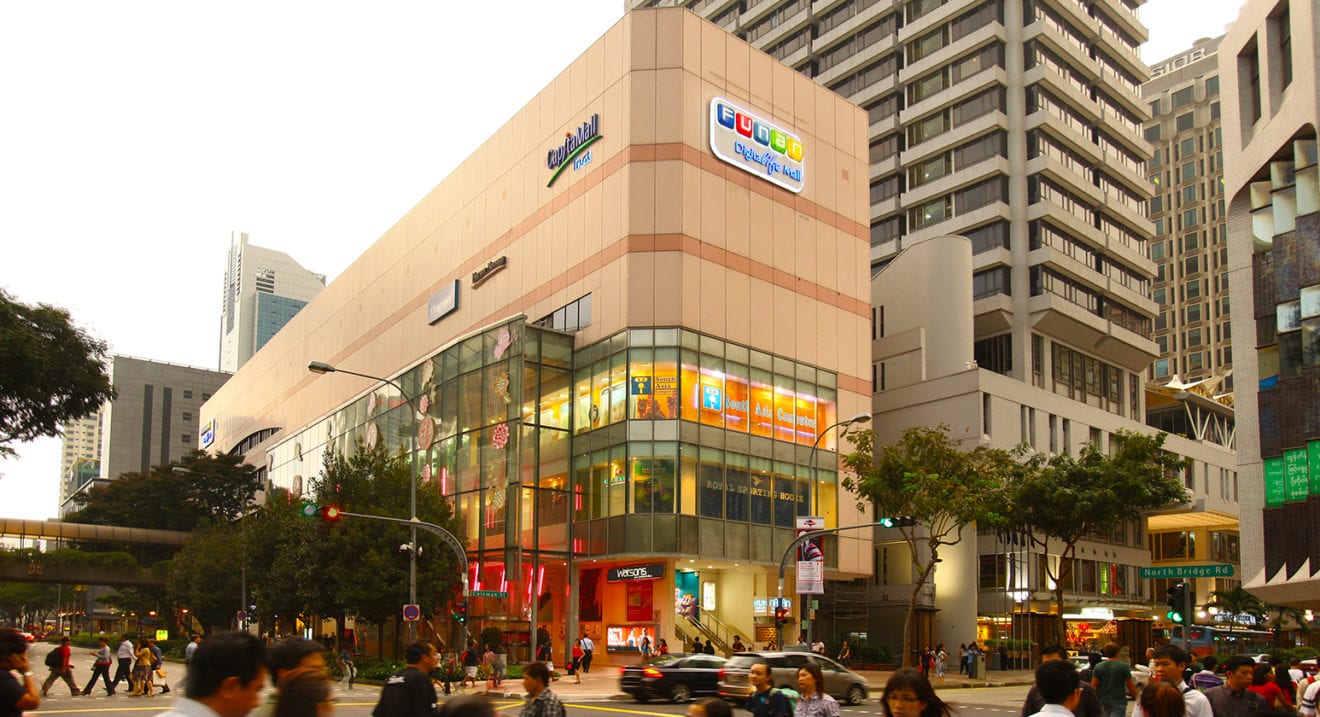
  • What’s In Store For CapitaLand Mall Trust’s Funan DigitaLife Mall?

    What’s In Store For CapitaLand Mall Trust’s Funan DigitaLife Mall?

    The iconic Funan DigitaLife Mall, which belongs to CapitaLand Mall Trust, will be closed officially on 1 July 2016 for redevelopment works that is expected to last for three years.

    The redevelopment will add about 388,000 square feet (sq ft) of space to the mall’s current gross floor area of 482,000 sq ft, leading to a total area of 870,000 sq ft. For perspective, that is almost the size of ION Orchard, one of the newer malls along the Orchard Road shopping belt.

    Currently, Funan DigitaLife Mall is well-known for its focus on the retail of IT products. In its new incarnation, it will become an integrated development.

    Although the redevelopment of properties is a common thing in Singapore, what’s interesting here is that CapitaLand Limited, the manager of CapitaLand Mall Trust, is seeking input from the public to find new concepts for the redevelopment of Funan DigitaLife Mall along the theme of “Play.Create.Live.”

    CapitaLand, together with The Straits Times, are inviting members of the public to submit ideas for their vision of the new Funan DigtaLife Mall to the #BeyondIT digital platform. The idea is to transform the property into a “creative hub” that will include a ‘mall of the future’ that will bring experiential retail to a whole new level in Singapore. The window for submissions will remain open until 31 May 2016.

    Funan DigitaLife Mall is an important asset for CapitaLand Mall Trust, contributing 4.3% of total gross revenue in 2015. As such, the closure of the property for the next three years might have some negative impact on the trust’s revenue stream.

    But, the transformation of Funan DigitaLife Mall is essential given the growing importance of e-commerce among consumers. That might also be the reason why CapitaLand is interested to upgrade Funan DigtaLife Mall into an integrated development that (1) allows people to work, play, and live, and (2) help set a new benchmark for experiential retail in the Garden City.

    Summary

    Will the redevelopment of Funan DigitaLife Mall start a new era for the retail industry in Singapore? And would an increase of more than 80% in floor space for the mall help boost future rental revenue in a significant manner for CapitaLand Mall Trust? These are interesting questions to ponder.

    But, first things first, with the public competition ending on 31 May, we might be able to get our first glimpse of the future of retail in Singapore soon.

  • CapitaLand Malaysia has strong first quarter

    CapitaLand Malaysia has strong first quarter

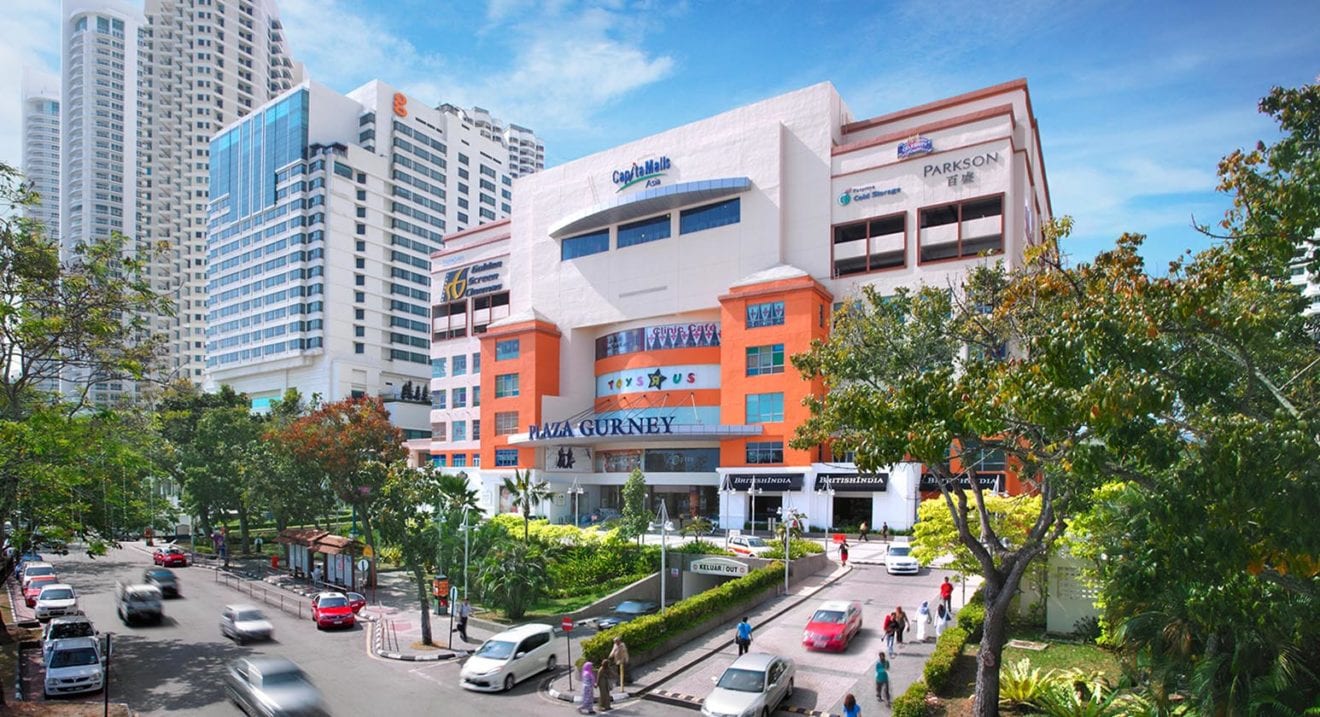
    New income from Tropicana City Mall and higher contributions from Gurney Plaza and East Coast Mall, CapitaLand Malaysia Mall REIT Management (CMRM) have propelled reported property income growth of 13.1 per cent for the first quarter.

    Tropicana City Mall and Tropicana City Office Tower were acquired in July last year.

    CMRM, which manages CapitaLand Malaysia Mall Trust (CMMT), says its net property income for the period was RM60.6 million (US$15.57 million), compared with RM53.6 million for the corresponding period the previous year.

    “Despite the challenging global economic environment, the Malaysian economy is forecast to grow 4 per cent to 4.5 per cent this year,” says CMRM chairman David Wong. “We expect consumer and business sentiments to remain cautious throughout the year as concerns over rising costs of living persist.”

    He says headwinds are also likely from intensifying competition as more retail space is scheduled for completion this year. However, the group is confident its portfolio of malls will continue to be resilient.

    Tropicana City Mall and the office tower accounted for 12.7 per cent of the group’s net property income, says CEO Low Peck Chen. This was also boosted by higher rates from new and renewed leases at Gurney Plaza and East Coast Mall.

    Despite the temporary impact of Mass Rapid Transit construction works on shopper traffic at Sungei Wang Plaza, the stable performance of other malls in the company’s diversified portfolio will help to cushion the effect, she says.

    “At Tropicana City Mall we embarked on asset-enhancement works, including the addition of a retail area on the ground floor next to the office tower.”

    Reconfiguration works will also create retail areas on Basement 1 and Level 7 later this year.

  • Here’s How CapitaLand Mall Trust Wants to Bring Shoppers to Its Malls

    Here’s How CapitaLand Mall Trust Wants to Bring Shoppers to Its Malls

    CapitaLand Mall Trust, an owner of retail malls in Singapore, is the largest listed real estate investment trust (REIT) in Singapore.

    But, mere size alone does not guarantee that shoppers will keep coming back to its portfolio of malls. To ensure a steady stream of shoppers, the REIT has to keep itself plugged into the latest consumer trends.

    One big retail trend is online shopping.

    In my view, shopping online has three major benefits. One, there may be a wider variety of products. Second, the cost of similar products may also be cheaper online. Finally, there is the convenience of having items delivered to one’s doorstep. All three benefits could lead to lower shopper traffic to retail malls in general and thus potentially pressure CapitaLand Mall Trust.

    Threat or opportunity

    For malls, online shopping could be seen as a threat. But for Wilson Tan, the chief executive of CapitaLand Mall Trust’s manager, it is also an opportunity. He shared his thoughts on ecommerce in a recent interview conducted by bourse operator Singapore Exchange Limited  (SGX: S68):

    “We need to be digitally more savvy. We could consider the Internet as a threat, but the issue really is how we harness and ride this horse.”

    With the above in mind, Tan shared two key initiatives that CapitaLand Mall Trust is working on. The first one is a loyalty program that comes from CapitaLand Mall Trust’s sponsor and manager, the real estate outfit CapitaLand Limited (SGX: C31). The report of the interview explains:

    “CapitaLand’s CAPITASTAR loyalty programme – which boasts over 2.6 million members across the five Asian countries where CapitaLand malls operate, and includes more than 800,000 members in Singapore – is one approach to better understand shopper behaviour.”

    The CAPITASTAR loyalty program allows members to accumulate points and thereafter, claim discount vouchers to use in CapitaLand’s family of malls (this includes CapitaLand Mall Trust’s malls). This could encourage shoppers to shop at the REIT’s malls. Tan also said that the loyalty program gives the REIT deeper insight into shopper preferences.

    The number of CAPITASTAR loyalty card holders in Singapore – over 800,000 – can be considered impressive, given that Singapore has a population of only around 5.5 million people.

    There’re more plans on the way. CapitaLand Mall Trust is also testing an online delivery platform at Raffles City Shopping Centre, as the interview report mentioned:

    “Its online order and delivery platform Food to Go, which involves participating food and beverage outlets at Raffles City Shopping Centre, is another initiative. The current beta programme runs until 30 June, and plans for enhancements are underway.”

    Tan feels that this digital effort could help the REIT’s tenants increase their sales. Helping tenants achieve higher revenue could be beneficial for the REIT as it could lead to better rental rates down the line.

    Foolish takeaway

    In my view, online shopping is here to stay and might take up a bigger share of the retail market over time. It is up to Singapore malls to decide whether the trend is a threat, or as Tan sees it, an opportunity.

  • New Bukit Bintang mall for Kuala Lumpur

    New Bukit Bintang mall for Kuala Lumpur

    Retail, entertainment and hospitality brands will feature in a planned City Centre development including a Bukit Bintang mall in Kuala Lumpur.

    “The mall will transform the retail landscape in Kuala Lumpur, catering to all shopping needs with the introduction of home-grown and new-to-market international brands,” says Eco World Development, which is part of the joint venture planning the $400 million project.

    Other signatories to the heads-of-terms agreement signed in Kuala Lumpur are BBCC Development,Mitsui Fudosan (Asia) and Zepp Hall Network. Eco World Development says the project will have an estimated gross development cost (GDC) of RM1.6 billion (US$400 million) and cover 19.4 acres (7.8ha) of mixed residential and commercial development, with UDA Holdings and the Employees Provident Fund (EPF) also as partners.

    Under the agreement, the retail mall will be owned and run through a joint-venture company, Mall JVCo.

    Phase one of the project will be a 45-storey block of strata offices and two blocks of serviced residences, comprising of 680 units, with construction to begin in the third quarter of this year.

    Mitsui Fudosan will jointly develop a 1.4 million sqft (126,000 sqm) lifestyle retail mall, while Zepp Hall is investing in a 2000-seat event hall, the first of its kind outside Japan. Zepp Hall is a subsidiary of Sony Music Entertainment (Japan), and its core business is running venues. Its concert hall will be in the Entertainment Block in BBCC, next to the mall.

    The project is expected to also get underway in the third quarter, and take eight to 10 years to develop. The Mall JVCo is proposed to be equally owned by Mitsui Fudosan Asia and the shareholders of BBCC.

    “This substantial investment by Mitsui Fudosan Asia represents the largest retail investment to date by the group outside Japan,” says Eco World.

    The mall will be developed under the Mitsui Shopping Park LaLaport brand, a regional mall concept conceived by Mitsui Fudosan more than 35 years ago. The concept has evolved from “a place where people gather” to “a place where people interact”.

    BBCC also signed a MoU with Ascott, a member of Singapore’s CapitaLand and the largest international serviced-residence owner-operator in the world, with more than 45,000 units in 290 properties, spanning 100 cities in 27 countries.

  • IDA, SPRING Singapore & CapitaLand partner to boost last-mile delivery for retailers in $20m project

    IDA, SPRING Singapore & CapitaLand partner to boost last-mile delivery for retailers in $20m project

    The three parties have signed a Memorandum of Intent (MOI) to launch an In-Mall Distribution (IMD) trial expected to benefit 300 retailers.

    If successful, the model may be rolled out to other shopping malls owned or managed by the CapitaLand Group in Singapore.

    With two CapitaLand malls – Tampines Mall and Bedok Mall – part of the pilot project, the trial will provide useful insights into how to calibrate the logistics solution for wider implementation.

    The initiative falls under the Nationwide Urban Logistics Programme spearheaded by IDA and SPRING Singapore.

    The idea was first mooted in the Infocomm Media 2015 followed by a funding announcement of $20 million from IDA and SPRING Singapore to implement urban logistics in the retail sector.

    According to the IDA, if deployed nationwide, it could lead to an estimated reduction of trucks on the road by 25 per cent and a cut in waiting and queuing time for deliveries by 65 per cent. The aims is to enable trucks with less-than-full loads to consolidate and sort their goods in an offsite centre before delivering to malls.

    Subsequently, these goods can then be re-loaded and then delivered to their intended destinations on a single truck within the same day, reducing the number of trucks going to the same destination and improving truck load utilisation.

    Teresa Teow, head of retail management in Singapore for CapitaLand Mall Asia Limited, the manager of CMT malls, explained: “As the owner and manager of Singapore’s largest shopping mall network, we are constantly looking at ways to innovate and further improve our operations and shopping experience by leveraging technology and strategic partners.”


    Steve Leonard, executive deputy chairman of the IDA said, “Achieving the Smart Nation vision of Singapore will only be possible if government and industry work closely together, adopting new ideas and embracing new technologies.”

    Leonard added, “We know that the complexities and logistics of moving large amounts of goods in densely-populated areas is a big challenge. Together with our partners, we want to explore how analytics and robotics can be part of new ways to solve these challenges. It is imperative that the government and the industry not only work together, but keep looking forward to adopt new ideas and new tech in business.”


  • Can CapitaLand Mall Trust survive 2016’s volatile equity market?

    Can CapitaLand Mall Trust survive 2016’s volatile equity market?

    CapitaLand Mall Trust (CMT) is poised to dominate the retail REIT scene in 2016, with positive rental reversions and increased tourist arrivals playing to its favour.

    According to a report by RHB, CMT is likely to enjoy mid single-digit (about 5%) positive rental reversion in 2016 as encouraging trends are expected in CMT’s tenant sales (psf/month) and traffic flow at its malls.

    “In the recent reported quarter, the retail REIT reported an upward trend in tenant sales, a 5.3% YoY increase for FY15. With this, we think that the retail landlord is in a better position to command higher rental rates this year,” asserts RHB.

    Moreover, an anticipated pick-up in tourist arrivals is seen to spur consumer spending in malls. This bodes well for CMT, as its malls are located near tourist attractions such as Plaza Singapura, Bugis Junction and Clark Quay.

    RHB also thinks that the expected recovery of Singapore tourism could be boosted by positive catalysts like lower airfares, a busier year for events, and an anticipated climb in Chinese tourists visiting Singapore.

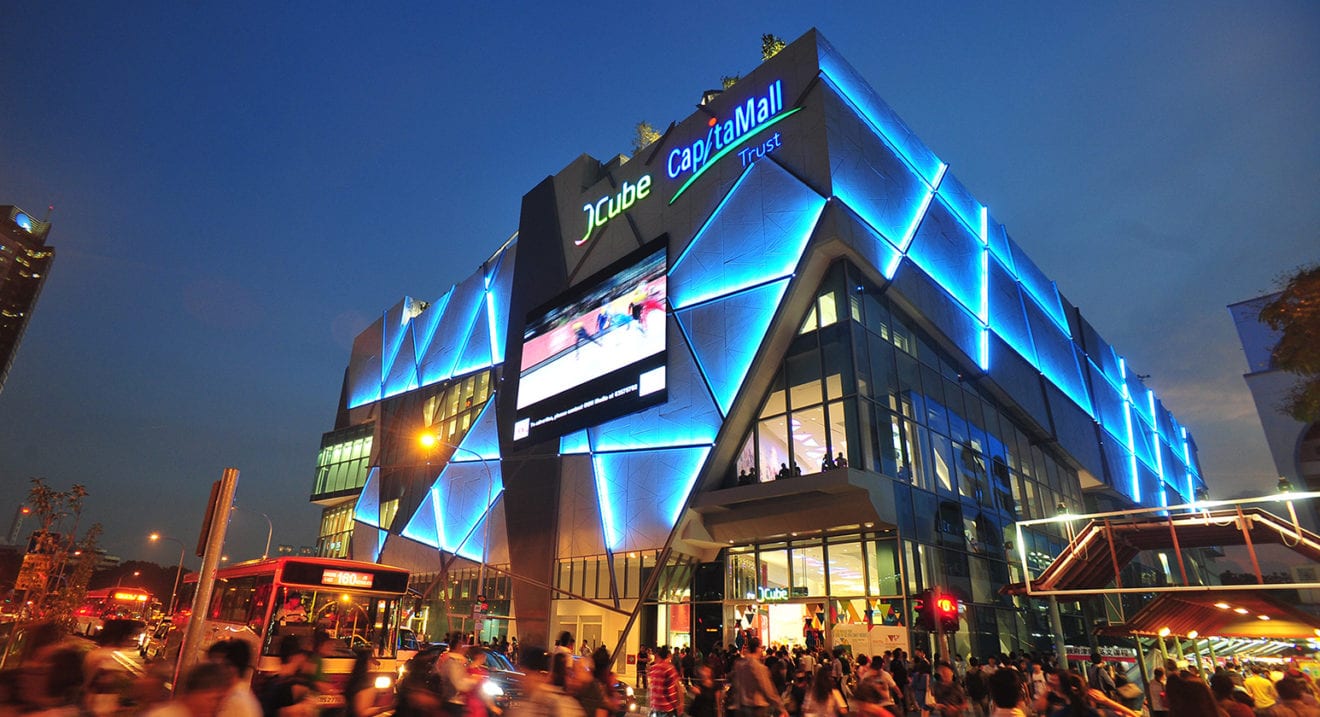
    Further, there’s still room for CMT to exercise a capital recycling strategy given that it currently owns non-core assets such as JCube and Sembawang Shopping Centre.

    RHB further notes that on top of this, CMT handles its portfolio favourably. For instance, CMT recently parted ways with its non-core asset Rivervale Mall, which was estimated to be divested at a attractive cap rate of about 3.4%. Compared to the average cap rates for retail assets, independent real estate company CBRE estimated 4Q15 average cap rates to range from 4.75% to 5.25%.

    “In addition, we advise investors to take up CMT as it is highly liquid, which may be especially advantageous in the current volatile equity market,” states RHB.

  • Will escalating China woes derail CRCT’s growth story?

    Will escalating China woes derail CRCT’s growth story?

    It will benefit from increased consumption.

    CapitaLand Retail China Trust is still poised for growth despite China’s slowing economy, according to a report by DBS.

    Although investors are currently fearful of the slowdown in China’s GDP growth, DBS said that RCT should remain well positioned as it should benefit from China’s move towards a consumption-based economy. This trend is illustrated by the 10.7% jump in retail sales for FY15, faster than the overall GDP growth of 6.9%.

    “Going forward, we understand CRCT remains confident of generating positive rental reversions (in the “single-digit range), although lower than the 15-20% achieved over the past few years,” DBS said.

    The lower level of rental reversion is also due to CRCT making a strategic decision to attract certain tenants as part of its constant tenant remixing to sustain the performance of its malls in the long term, DBS noted.

    “CRCT’s earnings have been negatively impacted by the road closures surrounding Minzhongleyuan over the past two years. As these works are scheduled to be completed by end-2016, we believe we are approaching an inflection point for the mall’s earnings,” the report added.

  • S-Reits are safe havens amid uncertainty

    S-Reits are safe havens amid uncertainty

    Amid the economic uncertainty caused by falling oil prices and slowing growth in China, Singapore-listed real estate investment trusts (S-Reits) are safe havens, DBS Group Research said yesterday.

    S-Reits have outperformed the local benchmark Straits Times Index and real estate developers so far this year, DBS analysts Derek Tan and Mervin Song wrote in a report.

    Like many sectors, S-Reits have fallen in value, but not as sharply as most others. S-Reit unit prices are down by about 3 per cent overall since the start of the year, while the STI has plunged by a much more dramatic 11 per cent.

    These trusts are likely to continue putting in a “firm” performance in the near term, the analysts wrote, especially as increasing expectations of a delay in further interest rate hikes by the United States Federal Reserve will have a positive impact on share prices in general.

    The Fed lifted interest rates in December for the first time since 2006, and the DBS forecasters expect the central bank to raise rates four times throughout this year.

    But the Fed has indicated that it has grown cautious after its December move, as the slump in oil prices has made it harder for it to meet its inflation targets, implying that the next rate hike could be delayed.

    The longer the Fed takes to raise rates, the better for Reits as it will keep their borrowing costs low.

    “While higher interest rates are a potential risk in the medium term, we remain comforted by S-Reits’ conservative capital strategies… which will mitigate the impact of higher refinancing costs when it occurs,” the DBS analysts said.

    On average, locally listed Reits have a gearing of 34 per cent, which is “manageable”, they noted.

    S-Reits are trading at attractive valuations, which make it a good time for investors to jump in and lock in some yields, they added, saying that S-Reits are trading at 0.9 time price to book and offer investors a yield of 7.1 per cent.

    “We believe current valuations are attractive re-entry levels and believe that large caps are likely to benefit as investors turn yield-hungry in a tepid growth environment,” they said.

    Their favourite S-Reits are “those with the opportunity to surprise on the upside through acquisitions or portfolio-specific catalysts”, the DBS analysts added.

    Their top picks are Ascendas Reit, Mapletree Greater China Commercial Trust, Mapletree Commercial Trust, Frasers Centrepoint Trust and CapitaLand Retail China Trust.

  • Capitaland Retail China Trust sees 4.4% rise in Q4 DPU to 2.59 cents

    Capitaland Retail China Trust sees 4.4% rise in Q4 DPU to 2.59 cents

    Capitaland Retail China Trust (CRCT) reported on Thursday (Feb 4) a 4.4 per cent rise in distribution per unit (DPU) to 2.59 Singapore cents for its fourth quarter ended Dec 31, 2015 from 2.48 cents for the year-ago quarter.

    Gross revenue increased 6.7 per cent to S$56.2 million while net property income rose 5.2 per cent to S$35.3 million.

    The rental growth came mainly from CapitaMall Qibao and CapitaMall Saihan. This increase was partially offset by lower revenue from CapitaMall Wuhu due to lower occupancy rate as the mall is undergoing tenancy adjustments and a one-off forfeiture of security deposits at CapitaMall Xizhimen.

    The bottomline in Singapore dollar terms was stronger than in yuan terms due to the appreciation of the Chinese currency against the Singapore unit during the quarter.

    Said Mr Tony Tan, CEO of the trust’s manager: “For FY 2015, CRCT’s gross revenue crossed the RMB1.0 billion mark for the first time. Portfolio occupancy remained high at 95.1 per cent as at Dec 31, 2015, while rental reversion for the full year was 8.1 per cent. Annual tenants’ sales increased 11.6 per cent and shopper traffic rose 1.8 per cent year-on-year.”

    “We will continue to strengthen our malls’ tenant mix and uplift the shopping experience through continual asset enhancement initiatives to remain relevant and attractive to the communities we serve,” he said.

    DPU for the full-year was up 7.9 per cent to 10.60 cents from 9.82 cents a year ago.

    Based on CRCT’s closing price of S$1.460 on Feb 3, the distribution yield for FY 2015 was 7.3 per cent.

    Unitholders can expect to receive their DPU of 2.59 cents for the fourth quarter along with their DPU of 2.64 cents for the third quarter, totalling 5.23 cents, on March 30. The book closure date is 16 February 2016.