Retail News CRM

Tag: carmaker

  • Report urges auto industry to go electric

    Report urges auto industry to go electric

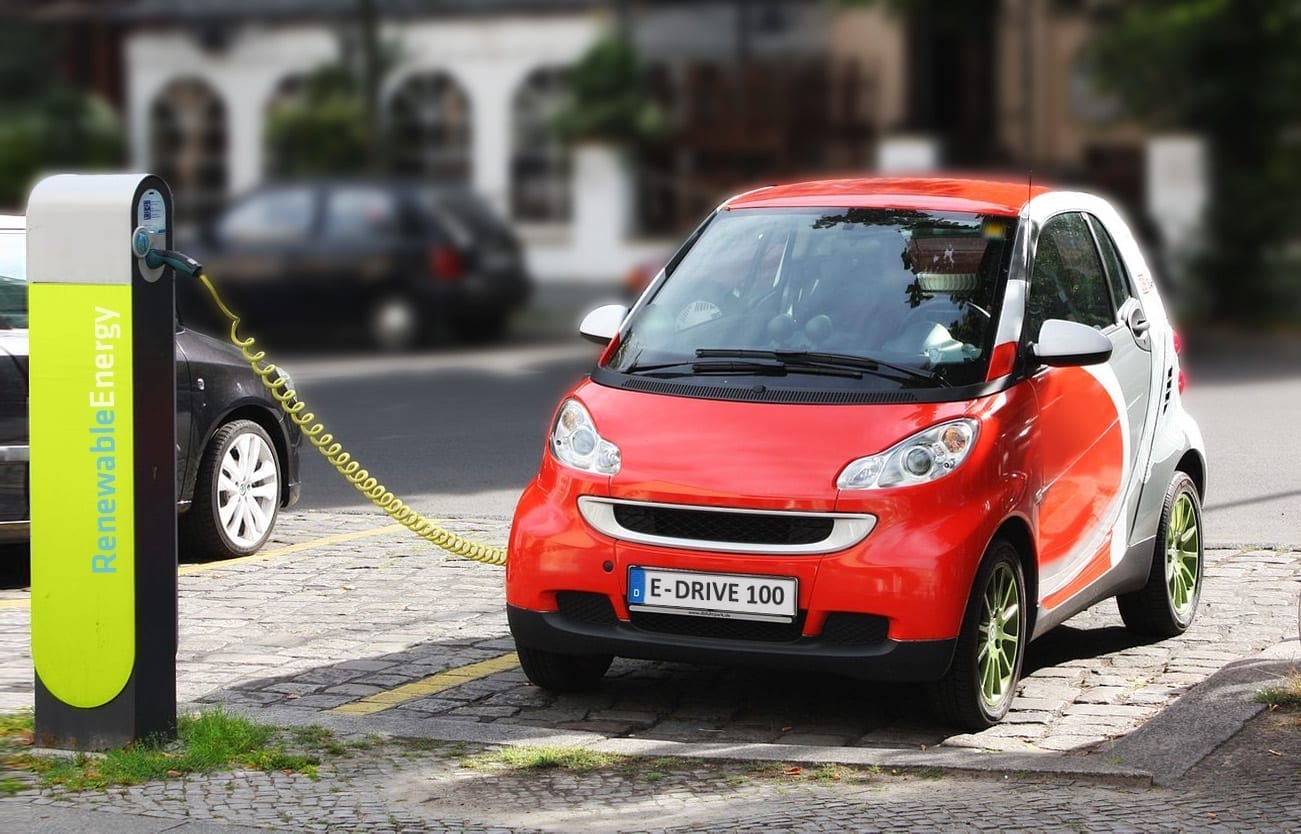
    Korea needs to give equal emphasis to the development of battery electric vehicles and fuel cell cars, considering the estimated future demand and the country’s competitiveness, a report said Thursday. “It’s a well-known fact that our car manufacturers have the mass-production technology for fuel cell automobiles,” the report from the Korea Institute for Industrial Economics & Trade (KIET) said. “However, the accumulated sales of fuel cell electric vehicles (FCEVs) worldwide stopped at 10,000 as of the end of 2018. The demand for fuel cell vehicles in 2030 will be less than 2 percent of the global sales of new automobiles.”

    In comparison, sales of battery electric vehicles (EVs) are estimated to exceed the demand for hybrids this year, 10 years since their commercialization, and show fast-paced growth, the report argued. Global rivals are due to market more than 100 different EV models by 2022, it noted.

    Korea’s high competitiveness in EV batteries is another reason why the government should not neglect investment in electric cars, the report said, warning that the relative weaknesses in the availability of charging stations and other networks could drag down the industry, despite efforts by local automakers to diversify their EV models. The report responded skeptically to the government announcement in December to give 2 trillion won ($1.79 billion) in assistance to reform the car parts industry.

    “If the auto industry, the recipient, is unable to fully accommodate, it could be difficult for the assistance to have the desired effect,” it said.

    The same report predicted hard times ahead for local auto companies, affected by the global slump in the car industry.
  • Unit price of exported automobiles in Korea up on SUV sales

    Unit price of exported automobiles in Korea up on SUV sales

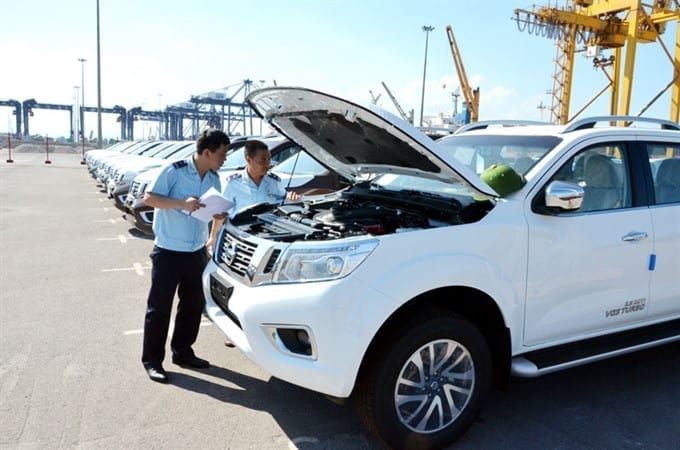
    The average unit price for exported automobiles last year reached a record high of $15,400, pushed up by the strong performance of sport-utility vehicles (SUVs), according to industry statistics Thursday. Monthly data from the Korea Automobile Manufacturers Association (KAMA) put total exports by five local carmakers last year at 2,447,903, down 3.2 percent from the previous year. The monetary sum from the shipments came to $37.68 billion, 1.6 percent less than the year before.

    Despite decreases in both, the unit price of each exported vehicle remained strong thanks to exports of relatively more expensive SUVs, the data indicated, increasing 1.6 percent from 2017.

    Local manufacturers shipped 1,386,539 SUVs last year, up 6.7 percent compared with the year before, setting a new record.

    “The export volume for vehicles shrank from dulled demand in the global market, but it’s fortunate that the export-unit price rose from increased shipments of high value-added cars,” a KAMA official said.

    By manufacturer, Renault Samsung Motors had the highest unit price, at $17,100.

    It was followed by SsangYong Motor, at $17,000. The unit price was $16,200 for Hyundai Motor, $14,900 for Kia Motors and $13,400 for GM Korea.

    Records showed that the unit price rose up to the mid-2010s, rising from $12,000 in 2010 to $14,800 in 2014.

    It pivoted down to $14,200 in 2015 and stayed in a lull in 2016 at the same level before going back up to $15,000 in 2017.

    In terms of export volume, the numbers have been going down since peaking at 3,166,000 in 2012.

  • SsangYong Motor narrows loss in last quarter of 2018

    SsangYong Motor narrows loss in last quarter of 2018

    SsangYong Motor, the Korean unit of Indian carmaker Mahindra & Mahindra, said Thursday its net losses narrowed for the October-December period from a year earlier on a strengthened lineup. Net losses reached 3.99 billion won ($3.59 million) in the fourth quarter from 30.25 billion won a year ago, the company said in a statement. Robust sales of the Rexton Sports sport-utility vehicle (SUV) and the Tivoli SUV helped improve the bottom line, it said.

    Operating losses stood at 3.48 billion won in the final quarter from 2.57 billion won a year ago. Sales rose 17 percent to 1.053 trillion won from 902.16 billion won during the same period.

    For 2018, net losses slightly improved to 61.84 billion won from 65.82 billion won the previous year. Operating losses remained almost unchanged at 64.18 billion won compared with 65.28 billion won.

  • Kia Motors begins sales of 2020 edition of Sorento SUV

    Kia Motors begins sales of 2020 edition of Sorento SUV

    Kia Motors announced Monday it has begun rolling out the 2020 model of its Sorento sport-utility vehicle (SUV) for sale. The updated Sorento comes with new safety features applied to all of its diesel trims and a refreshed design. The diesel version of the compact crossover SUV will have smart safety features, such as lane keep assist, lane departure warning, driver attention warning and others on all of its trims.

    As for design, the automaker said it applied a newly designed dark chrome grille on all of its models, with the highest trim model installed with 19-inch chrome alloy wheels.

    The new model also comes with a new premium trim called “master special,” which features more options, such as rear occupant alert and a head-up display.

    The SUV comes in diesel and gasoline models, with the base diesel model starting at 27.88 million won ($25,000).

  • Hyundai Mobis net swings to positive in Q4

    Hyundai Mobis net swings to positive in Q4

    Hyundai Mobis, Korea’s biggest auto parts maker, said Friday it shifted to net profit in the October-December period due to a low base effect. A net profit of 419.8 billion won ($374.1 million) was achieved for the three months that ended in December, from a net loss of 168.6 billion won a year earlier, the company said in a statement. The result was helped by the high level of corporate taxation reflected in the bottom line for the last quarter of 2017, but there were no such one-off outlays in the final three months of last year, a company spokesman said.

    Operating profit jumped 82 percent to 581.7 billion won in the fourth quarter from 319.4 billion won a year ago.

    Sales rose 9.3 percent to 9.644 trillion won from 8.822 trillion won during the same period.

    In the fourth quarter of 2017, operating profit was hit hard by a diplomatic row between Seoul and Beijing over the deployment of an advanced U.S. missile defense system, called Thaad, in Korea.

    Operating profit in the last quarter of 2018 rebounded following the easing of bilateral tensions.

    Sales climbed on the back of increased exports of high-end auto components and higher parts sales in after-sales markets despite the won’s strength against the dollar and currencies in emerging markets, the statement said.

    For the whole of 2018, net profit rose 21 percent to 1.888 trillion won from 1.558 trillion won a year earlier. Operating profit remained unchanged at 2.025 trillion won compared to a year ago. Sales also changed little to 35.149 trillion won versus 35.145 trillion won, it said.

  • Low export numbers put Hyundai profit in the red

    Low export numbers put Hyundai profit in the red

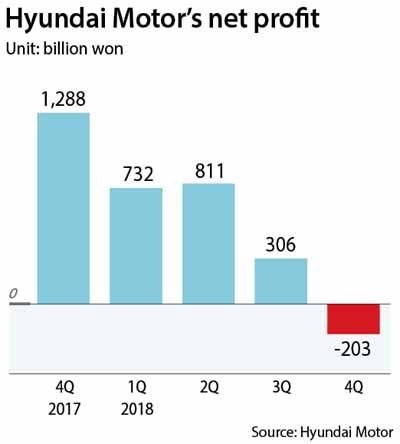
    Hyundai Motor swung to a net loss in the fourth quarter last year, largely due to the strength of the won over the U.S. dollar and weak global sales. It is the worst quarterly earnings reported since 2010, when the company first started posting earnings based on the International Financial Reporting Standards. Korea’s No. 1 automaker by sales on Thursday posted a net loss of 203.3 billion won ($180 million) for the quarter that ended December, a considerable drop from the 1.29 trillion won net profit inked a year earlier.

    The company cited weak earnings from its affiliated locomotive maker Hyundai Rotem, unfavorable currency rates and the sluggish growth of the global automotive industry as major reasons that pulled down earnings in the fourth quarter.

    It added that the cost of its investment into developing futuristic cars was also reflected.

    Hyundai already surprised investors when it posted 306 billion won in net profit in the third quarter, a 67.4 percent year-on-year drop. At the time, the company blamed one-off costs of airbags, engine quality control and marketing activities as well as currency rates to explain its losses and said the fourth quarter would be a better quarter.

    Following the two bad quarters, the carmaker’s annual net profit also dropped to a record low since 2010 – 1.645 trillion won last year, less than half of 2017’s 4.546 trillion won. In 2012, its annual net profit exceeded 9.056 trillion won.

    Choi Byung-chul, chief financial officer at Hyundai Motor, however, said the automaker was able to ramp up automotive sales in the fourth quarter thanks to newly-released SUVs and that the company’s performance could bounce back with several new car launches scheduled this year.

    According to the earnings report, revenue from the automotive business increased by 9.3 percent on year to 20,399 billion won in the fourth quarter. Operating income also jumped up 556.7 percent year on year to 463 billion won for automotives.

    The most recently launched Palisade SUV has been well received by Korean consumers after its launch last month, and a Hyundai Motor spokesperson said it is considering expanding production of the SUV in accordance with the demand. The carmaker has taken orders for 30,000 Palisades so far, according to Koo Za-yong, head of investor relations at Hyundai Motor.

    “Growth of the global automotive market is expected to slow down, but we will strengthen our brand competitiveness by launching cars in segments [that Hyundai had little presence in],” said Koo during a conference call with analysts on Thursday.

    Highly anticipated Hyundai cars this year include a new Sonata sedan and a premium SUV GV80 branded under Genesis.

    Hyundai plans to sell a total of 4.68 million cars this year by selling 712,000 units domestically and 3.97 million units abroad. Last year, the company sold 4.59 million cars at home and abroad, a 1.8 percent increase year on year.

    The automaker commented on its governance reform plans during the conference call as well. It plans to complete reforms this year to break the cross-shareholding structure between affiliates and improve shareholder returns. Last year, its attempt to reform its governance structure failed after facing a series of complaints from U.S. activist hedge fund Elliott Management.

  • Hyundai develops safer airbag deployment system

    Hyundai develops safer airbag deployment system

    Hyundai Motor Group, Korea’s biggest carmaker by sales, said Monday it has developed a safer airbag deployment system to better protect people from multiple crashes. The advanced airbag system immediately prepares for additional crashes once it recognizes an initial collision, in cases where the collision is not serious enough to warrant a deployment, the conglomerate said in a statement.

    “If the first collision is a minor one, but the vehicle continues on and collides with something else, such as trees or street lamps, the airbag system optimizes itself to prepare for additional crashes,” a company spokesman explained to reporters over the phone.

    It is the first time a Korean carmaker has developed such a multi-crash airbag system, the statement said.

    Existing airbag systems do not inflate once they determine the initial collision is minor, even if subsequent impacts involve greater force and can lead to serious injury, it said.

  • 6 months of recalls, but BMWs are still burning in Korea

    6 months of recalls, but BMWs are still burning in Korea

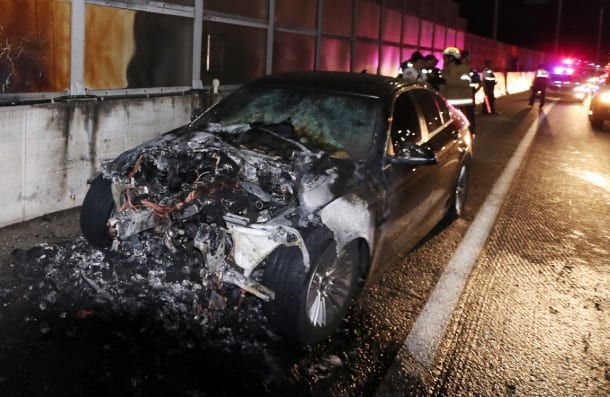
    Things aren’t looking good for beleaguered German automaker BMW, with yet another vehicle reported to have burst into flames on Christmas Day. A BMW 520 sedan caught fire at around 6 p.m. on Tuesday in Gongju, South Chungcheong.

    Earlier that day at 1 a.m., the driver of a BMW 5GT sedan saw black smoke coming out of the back of their vehicle while driving on a highway bound for Pohang, North Gyeongsang. The car, subject to recall, had already gone through safety checks.

    The driver said the car was moving at 110 kilometers per hour (68 miles per hour) on cruise mode, but it started slowing down even though it was moving downhill and then smoke came out the back. The car didn’t burst into flames as the driver immediately pulled over and called the police.

    There were no casualties caused by either incident, but the news stoked fears over the safety of BMW vehicles. Just one day earlier, on Dec. 24, a BMW 320d sedan caught fire in Gwangju.

    The burnt 320d was a 2009 model not included in the 65 models currently subject to recall.

    A public-private investigation team under the Ministry of Land, Infrastructure and Transport had already raised the need of an additional recall for defective designs in exhaust gas recirculation (EGR) system when it released its examination report on BMW fires on Monday.

    The team confirmed that the major cause of the fires was a leaky EGR module, the same conclusion that the German carmaker came to, but disputed BMW’s claims that changing the faulty hardware resolves the issue. The team said there may be a fundamental problem with the EGR design and a simple replacement may not completely resolve that.

    “We spotted coolant boiling within the EGR cooler, and we think the boiling is due to a faulty design of the EGR,” the joint investigation team said in a statement. “If boiling continues, this could lead to a crack in the EGR cooler, [making them leaky.]”

    “New EGR systems won’t lead to fires right away, but the team found that after several years of constant driving heating up the EGR cooler, a similar fire could reoccur as long as the design stays the same,” a spokesperson from the Land Ministry said in a phone call on Wednesday. “We demanded that BMW come up with an explanation regarding EGR design.”

    The joint team also said the intake manifold connected to the leaky EGR coolant should be recalled as well after check-ups if it has been polluted or weakened by a mixture of leaked coolants and engine oil sticking to pipes. The team has delivered its research findings to the carmaker, which has to consult with its German headquarters and come up with a recall plan.

    In the meantime, an increasing number of BMW car owners are signing up to file a suit against the company. Barun Law, which is currently preparing for a class action suit against the carmaker, has collected around 1,000 car owners who would like to take part in the suit as of Wednesday. The Korea Consumer Association is also preparing for a separate suit and has gathered roughly 2,000 participants.

  • Volvo shifts its safety strategy for self-driving world

    Volvo shifts its safety strategy for self-driving world

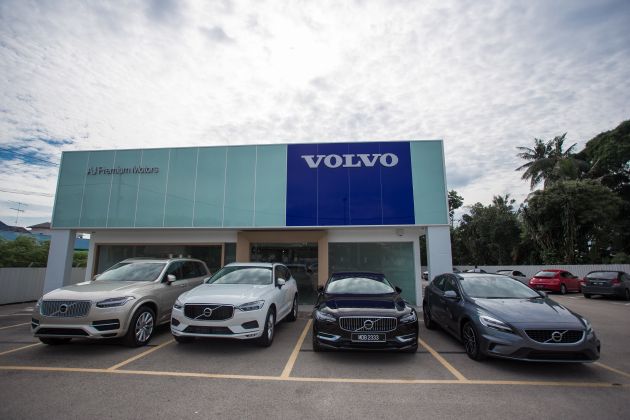
    In Swedish, “safety” translates to “säkerhet,” but for employees of one of Sweden’s biggest employers, it might as well translate to “Volvo.”

    The automaker, owned by Zhejiang Geely Holding Group of China, is fiercely protective of its reputation in safety. But in an age of autonomous driving and advanced sensor technology, Volvo’s top safety experts are increasingly navigating a blurry line between driving safely and being driven.

    “We’re very focused that you as a driver know that you’re in charge, [and] not giving you so much support that you question who’s in charge,” said Malin Ekholm, director of the Car Safety Center at Volvo Cars headquarters in Gothenburg, Sweden. “It’s nudging rather than giving the feeling of taking over.”

    With a bevy of new tools to ensure passenger safety, the automaker’s safety strategy is shifting from passenger protection to accident prediction and avoidance, Ekholm said.

    New technology, tools

    Volvo has a well-developed apparatus in safety research.

    Its safety center, created in the 1970s, runs crash tests and shares information with Swedish road authorities to document accidents and crashes, so that engineers can better understand scenarios they must guard against.

    But the rise of autonomous and connected-vehicle technology, as well as digital simulation technology used to pioneer self-driving vehicles, have augmented researchers’ approach to safety. Now, for instance, in addition to crash tests, vehicle safety systems run through nearly 30,000 accident simulations.

    Volvo’s increasing investment in autonomous r&d — including a recently expanded Silicon Valley operation — also increases the capabilities of its advanced safety team. Volvo’s City Safety package, for instance, incorporates a front-facing camera to recognize pedestrians, bicyclists and oncoming vehicles and deploy automatic emergency braking to avoid collisions.

    The “sensors and cameras were there, so we could use it,” Ekholm said.

    Avoiding accidents

    Increasing use of advanced technology is shifting Volvo safety researchers’ approach from mitigating accidents through restraint devices to predicting and preventing accidents.

    “More and more, we need to help you avoid the crash,” Ekholm said. Researchers, she said, are asking how automakers can support drivers so the motorists never encounter critical situations.

    Part of the solution is supplying more information on potential hazards through the use of connected technology. In Sweden, the carmaker uses vehicle-to-vehicle technology to send warnings about low-friction roads or hazard-light detection to oncoming traffic.

    But a larger focus is on human behavior, often in response to semi-autonomous technology that lulls drivers into a false sense of security.

    The automaker’s semi-autonomous Pilot Assist system, for instance, is intended to reduce fatigue on long trips, but can be abused if drivers fail to keep their attention on the road. Ekholm has responded by expanding the company’s safety team to include human behavior and biomechanical researchers.

    As vehicles become increasingly automated, Volvo’s researchers will need to pick and choose where the technology can enhance the company’s safety standards.

    “Autonomous has so many aspects to it,” Ekholm said. “What we focus on is the safety research.”

  • Indonesia tipped as potential largest carmaker in Southeast Asia

    Indonesia tipped as potential largest carmaker in Southeast Asia

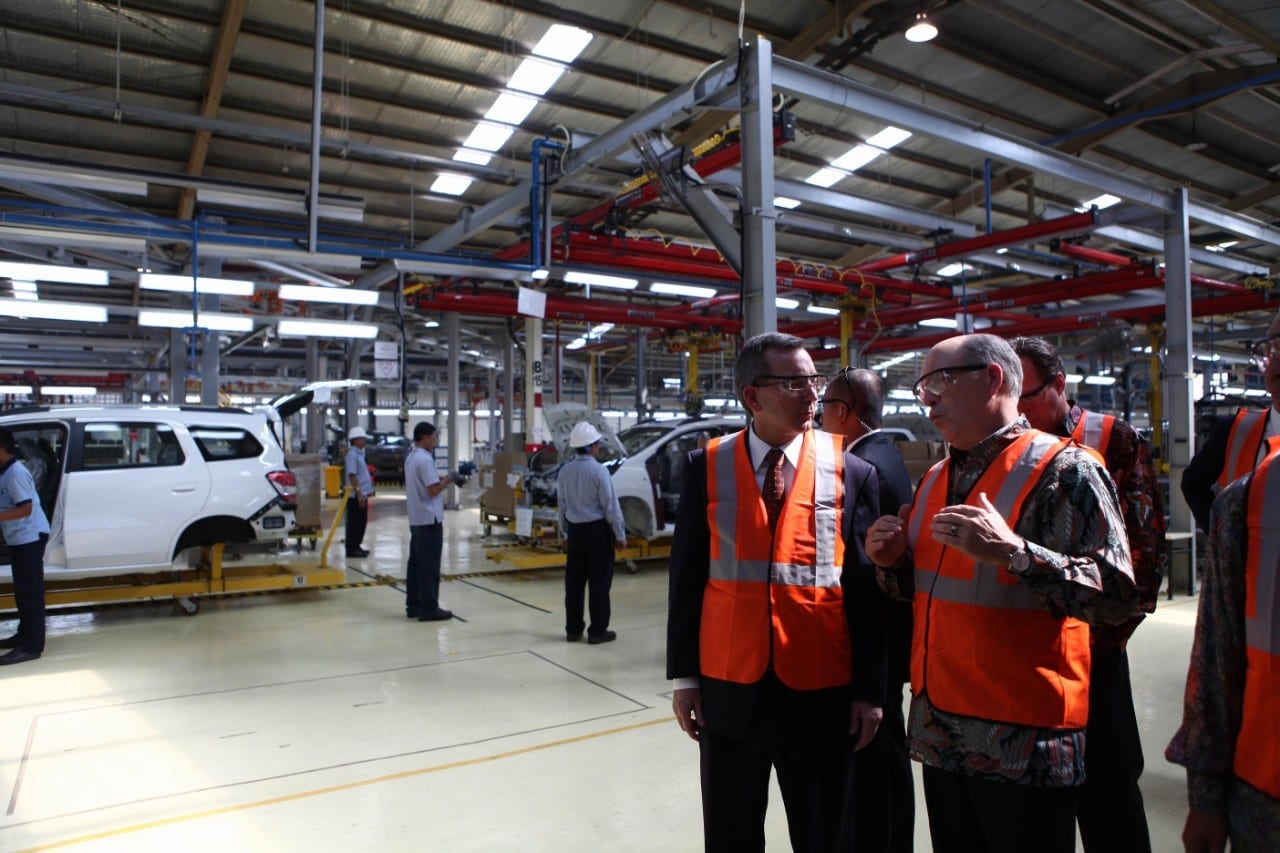
    Indonesia has the potential to become the biggest carmaker in Southeast Asia within the next five years, the country’s automotive industry association Gaikindo said on Wednesday (Feb 3).

    Indonesia can compete, and overtake Thailand’s automotive industry if the government gives the right incentives to boost production, said Gaikindo’s co-chairman Jongkie Sugiarto.

    “Indonesia has a good potential in ASEAN. In the coming years, Indonesia is going to be the leader in the automotive industry,” said Mr Jongkie. “It’s really a pity that (companies like) Ford are (pulling) out of Indonesia.”

    Ford is the second American carmaker to exit the Indonesian market in the past year, after General Motors stopped its manufacturing operations in 2015. Ford had been struggling to maintain profitability.

    However, Mr Jongkie is convinced Ford’s pullout will not affect Indonesia’s automotive industry. Currently, about 1 million cars are for domestic production, but only 0.2 million units are produced for exports.

    With Indonesia’s automotive industry having the annual production capacity to build 1.9 million cars, this leaves 0.7 million units in excess capacity. Gaikindo believes the country needs to expand its production base to make the most of this.

    “We have to add the production base of MPVs, plus sedans, plus pick-ups, plus SUVs,” said Mr Jongkie.

    “How? It’s easy. We have to lower the luxury tax of small sedans, small SUVs, pick-ups from 30 per cent today to 10 per cent. There will be a demand. So, when these models are growing, then the principals will come and say why don’t we produce the cars in the country?”

    Gaikindo submitted its proposals to President Joko Widodo in October 2015, and the government is considering changing the tariff regime in the automotive industry.

    Analysts believe the government is serious in attracting more foreign manufacturers as it tries to move away from a commodity-based economy.

    “Our government’s commitment to increase manufacturing is very strong,” said Myrdal Gunarto, an economist at Maybank Indonesia. “The government has released some stimulus packages that aim to attract foreign investors to come here through deregulations, and to make it easier for foreign companies to invest in Indonesia.”

    Gaikindo predicts car sales this year will increase by 5 per cent, in line with the government’s target to achieve 5.5 per cent economic growth in 2016.