Retail News CRM

Tag: Cashless

  • OCBC Bank Launches Mobile Keyboard to Enable Cashless Payments

    OCBC Bank Launches Mobile Keyboard to Enable Cashless Payments

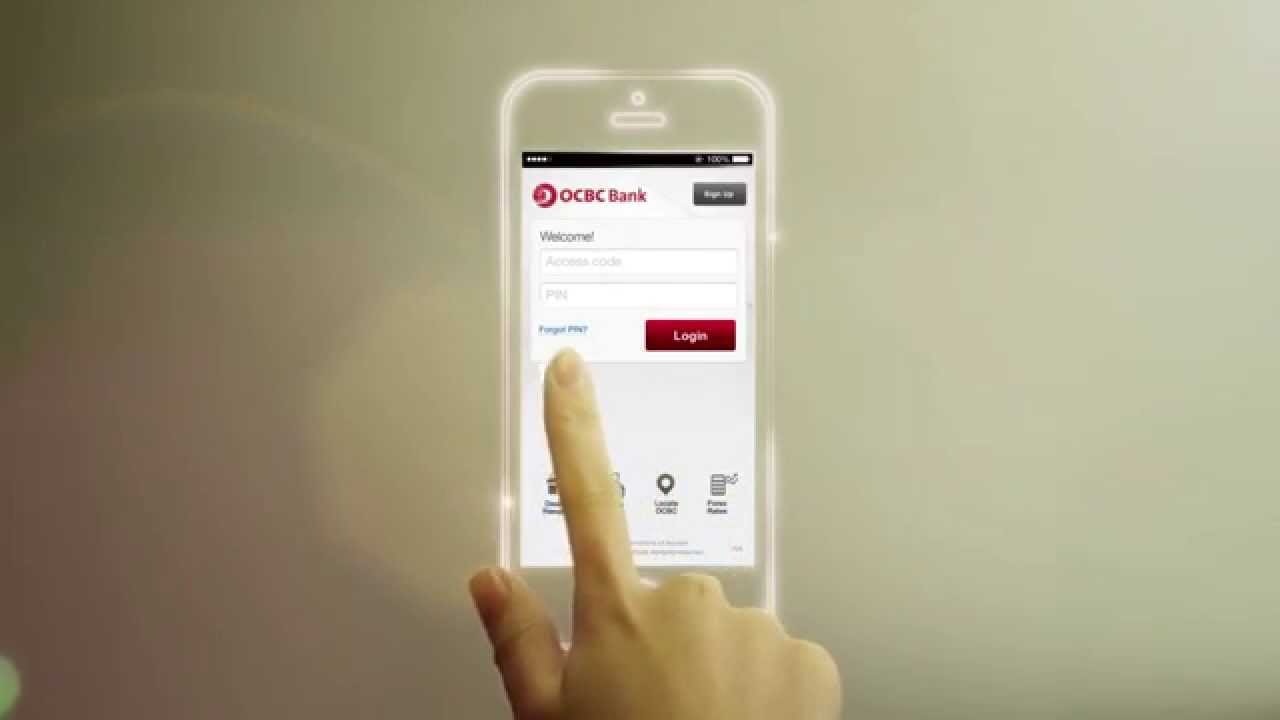
    OCBC Bank has launched a mobile keyboard that allows customers to make peer-to-peer payments without having to exit their current mobile applications. The OCBC Keyboard can be used within any mobile app or browser – for instance, within Facebook, Whatsapp, Instagram or Chrome – to send money instantly to anyone with a bank account in Singapore, including those who have not yet registered for PayNow. The payment rides on the OCBC Pay Anyone e-payment service and can be done using just the recipient’s mobile number.

    The OCBC Keyboard follows on the heels of OCBC Bank’s launch of e-payments integrated with Apple’s Siri and iMessage for iPhone users in 2016, enabling customers to make instant funds transfers with a voice command to Siri or within the iMessage app while engaged in a chat. With the OCBC Keyboard, the convenience of making an e-payment is extended to any app on Android devices running the Android 4.4 KitKat operating system or better. Payments are completely secure as they are authenticated with the sender’s mobile banking credentials.

    Making a payment via OCBC Keyboard

    Imagine being able to make an e-payment as easily as sending an “emoji” to a friend while chatting on Whatsapp, or while negotiating with a potential seller on the Carousell app. Users can automatically access the OCBC Keyboard on any app on their mobile phones once they have updated the OCBC Mobile Banking app to the latest version. They will need to perform a simple one-time set up to enable the OCBC Keyboard and make it the default keyboard on their phone.

    To send money, users simply tap on the OCBC Pay Anyone icon on the keyboard without exiting or switching from their current app activity.Once they select a recipient from their contact list – which is automatically synced with the keyboard – they will be guided to complete the transfer using OCBC Pay Anyone within the keyboard. Once payment is complete, the user can continue accessing the original app.

    Boosting cashless payments

    In alignment with Singapore’s Smart Nation agenda and its drive to go cashless, the OCBC Keyboard is the latest in a series of OCBC Pay Anyone e-payment services that OCBC Bank has introduced to encourage customers to embrace the move away from cash.

    The adoption of the recently launched PayNow service amongst OCBC Bank customers has been exceptionally strong, with over 200,000 signups to date. E-payments done via the OCBC Pay Anyone service have increased 35 per cent since the launch of PayNow, and one in every two PayNow transactions is via OCBC Pay Anyone.

    Mr Aditya Gupta, OCBC Bank’s Head of E-Business Singapore, said: “With OCBC Keyboard, we are embedding payments in our customers’ lives and making it completely frictionless for them to pay while they go about everyday tasks like chatting on Whatsapp, sending emails, buying items on Carousell or browsing the Internet. I’m confident that this added convenience will exponentially increase the adoption and usage of e-payments, including PayNow transfers. We will continue to push the boundaries on e-payments and move the needle in driving Singapore towards becoming cashless.”

    Evolution of OCBC Pay Anyone

    Launched in 2014, OCBC Pay Anyone was the first peer-to-peer mobile payment service offered by any bank in Singapore that enabled customers to make a payment directly into a recipient’s bank account using just a mobile number, email address or Facebook, without having to perform transaction signing using a security token or to add the recipient as a “payee”.

    In September 2016, the daily transfer limit on OCBC Pay Anyone was increased from $100 to $1,000, bringing greater convenience to customers and allowing payments for bigger-ticket items. In October 2016, OCBC Bank further enhanced OCBC Pay Anyone by enabling transactions using Apple’s Siri voice command feature and directly within iMessage.

    In May this year, OCBC Bank launched its first standalone mobile payments app – the OCBC Pay Anyone app – which now consolidates all OCBC Pay Anyone e-payment services into a one-stop shop for customers’ convenience: Peer-to-peer QR code payments via PayNow, QR code payments to NETS merchants, peer-to-peer e-payments and the integration of OCBC Pay Anyone with Apple iPhone’s Siri and iMessage.

    Enabling the OCBC Keyboard for e-payments

    The OCBC Keyboard is available to all OCBC Bank customers using Android 4.4 KitKat devices with the latest OCBC Mobile Banking app. The app can be downloaded from the Google Play Store.

    Customers can enable OCBC Keyboard by following these steps:

    • Tap ‘Pay now’ in the OCBC Mobile Banking app or ‘Send Money’ in the OCBC Pay Anyone app for a tutorial on setting up the keyboard
    • Users will be guided to turn on OCBC Keyboard in Settings and make OCBC Keyboard the default keyboard

    The OCBC Keyboard is now ready to be used as the primary keyboard.

    Making a payment using the OCBC Keyboard

    • Switch to the OCBC Keyboard if it is not the primary keyboard in use
    • Tap on the OCBC Pay Anyone icon on the keyboard to start payment
    • Select the contact you wish to pay to
    • Enter your online banking access code and PIN
    • Select the account to send money from. This step is automatically skipped if you have only one account.
    • Enter the amount to send
    • Create a six-digit passcode to be given to a non-PayNow registered recipient. If the recipient is PayNow-registered, no passcode is required. Confirm the recipient’s name and mobile number on the review screen to proceed.
    • Authenticate payment with a One-Time-Password

    You can then return seamlessly to what you were previously doing on your mobile device. PayNow-registered recipients will receive the payment directly into their bank accounts. If the recipient is not PayNow-registered, they will receive an SMS link. Share the passcode with them to collect the money.
     

  • Alipay, CCPay partner for cashless payments in Singapore

    Alipay, CCPay partner for cashless payments in Singapore

    China’s popular cashless payment platform Alipay has honed in on Singapore, announcing on Tuesday it has entered into partnership agreement with a local digital payment provider CCPay to offer cashless payment services to Singaporean retailers.

    Alipay, a subsidiary of Alibaba’s associated Ant Financial, has tapped CCPay to expand the use of the cashless payment platforms in Singapore, in a bid to give convenience to Chinese tourists here.

    The cashless payments will be first introduced to merchants around the Chinatown area, with plans for further expansion to other shopping malls in Singapore.

    “With Alipay’s scale and expertise in the field of cashless payments, this collaboration with CCPay will provide a platform for merchants to facilitate safe, fast and cashless payments for the Chinese tourists in Singapore,” Melvin Ooi, Alipay country manager at Singapore, Sri Lanka and Maldives, told local media.

    Kicking off in 2004, Alipay boasts over 520 million active users, mostly in China. It continues to expand into offline payments globally and covers more than 200,000 retail stores overseas with the support for 18 currencies.

    Most recently, Alipay entered nearby Malaysia in May, after forging its way into North America in January via its partnership with DFS Group.

    Founded in March 2017, CCPay is a Singapore’s main digital payment solutions provider for online, mobile and in-store payment.

  • Beijing leads the way for China’s cashless generation

    Beijing leads the way for China’s cashless generation

    Beijing is China’s “smartest” city for cashless payments, a new study has found, with consumers using e-wallet everywhere from vegetable markets to hotels.

    The study released on Monday was the result of a 34-city survey by tech firm Tencent, French market research firm Ipsos and Renmin University’s Chongyang Institute for Financial Studies.

    The survey asked more than 6,500 people about their payments for a range of goods and services, including takeaway food, restaurant dining, telecommunications and transport, state-run Xinhua News Agency reported.

    Beijing topped the list for penetration of cashless payments, followed by Shenzhen and Guangzhou in Guangdong province, and Shanghai. Two other Guangdong cities – Dongguan and Foshan – also made it into the top 10, Xinhua reported.

    About half of those surveyed used cash for about 20 per cent of their monthly spending, and four in 10 carried less than 100 yuan (US$14.84) in cash when they left the house.

    About seven in 10 respondents said they could go for more than a week with just 100 yuan in cash, and 84 per cent were comfortable going out with just their mobile phone to pay their way.

    Beijing office worker Xiao Yi said he often went a week without using cash because he could use his mobile from breakfast to dinner. Convenience stores and even vegetable vendors accepted WeChat or Alipay, an online payment platform owned by Alibaba Group, which owns South China Morning Post, he said.

    He also got around the city using a pre-paid subway card or a shared bicycle, which also ran on mobile payments.

  • Cheers launches first unmanned, cashless store in Singapore

    Cheers launches first unmanned, cashless store in Singapore

    The Cheers outlet at Nanyang Polytechnic (NYP) looks like its a normal store – with shelves and fridges stocked with food and drinks – except there is no cashier or assistant in sight.

    The convenience store, fully managed by NYP students, is fitted with at least 10 closed-circuit cameras.

    Customers use a QR code found on the free “Shop It Yourself” mobile app to gain entry to the store. The doors lock automatically after entry.

    The store also features a unified self-checkout system that accepts various cashless payment modes, eliminating the need for multiple payment terminals.

    Customers can pay using Nets, credit card, ez-link, mobile and contactless payment.

    The outlet is also the first convenience store to accept Nets payment by QR code, a new form of payment that utilises DBS Paylah, OCBC Pay Anyone and UOB Mighty.

    There are also three vending machines dispensing ready-to-eat foods ranging from pastries and pizza to fried rice and hor fun.

    At the back end, a system tracks stock levels and automatically places orders when stocks are low.

    This unmanned format saves Cheers 180 man hours per week.

    At the launch of the store on Friday (July 28), Minister for Trade and Industry S. Iswaran said the move by Cheers “raises the bar of what it means to be a convenience store of the future… (and) affirms that local retailers are more than equal to the task of remaining relevant and competitive”.

    This is especially the case when local retailers are now up against the likes of Amazon Prime Now, launched earlier this week, which uses artificial intelligence technology and offers delivery within two hours, he said.

    Mr Seah Kian Peng, chief executive of NTUC FairPrice which runs Cheers, said the store is a step towards offering a “differential and innovative retail concept”.

    “To stay competitive and relevant, a key approach is to provide value-added services that cater to the needs and convenience of customers,” he said. “Besides challenging industry norms, this store also aims to cultivate a self-service culture in Singapore.”

    The store will be fully run by NYP’s School of Business Management students specialising in retail, with help from their lecturers and advisers from Cheers. Over 50 of them will be selected annually and deployed in several batches throughout the year to run the store.

    Instead of having to man the store at the front end, the students will “move up the value chain… (and) take a more strategic approach to drive the success of the store”, said NYP principal Jeanne Liew.

    For example, they will use data and video analytics to study purchasing behaviour and customise the store’s inventory accordingly.

    The store at NYP opens from Monday to Friday between 7.30am and 7.30pm.

    Cheers plans to pilot another unmanned convenience store in Tampines by the end of August.

  • Ant Financial aims for ‘cashless’ cities in China

    Ant Financial aims for ‘cashless’ cities in China

    Alibaba’s financial arm Ant Financial is looking to create more “cashless” cities across China, with the latest agreement inked with Tianjin municipality in North China.

    The city-wide “cashless” campaign pushed by the e-commerce giant is the fourth installment to hit China, following similar initiatives in Hangzhou — where Alibaba is based — followed by Wuhan and Fuzhou.

    As with the other “cashless” cities, Tianjin residents will soon be able to pay for an array services and goods using their mobiles when paying bus fares and medical bills, as well as school tuition and social security.

    It will be officially rolled out by the end of 2017, as reported by the China Economic Times.

    However, going “cashless” does not mean money will become obsolete. It will simply allow customers to decide on the way of payment, Jing Xiaodong, the company’s CEO, said

    Tianjin was chosen, said Jiang, as it has a good foundation for Internet Plus to make it the first cashless city in the north.

    With a resident population of 155 million, sone 69 million are real-name registered Alipay users, according to China Economic Times. The city ranks 10th nationwide by mobile payment activities.

    Ant Financial was a leading sponsor of a cashless alliance set up in April. The company earlier vowed to make mobile payment accessible in the whole country in the coming five years.

    2017 has proven a busy year for Alibaba. Last week, the world’s largest e-commerce platform operator said it plans to enter Macau with a bevy of products and services. Last month, the group acquired an 18% stake in Lianhua Supermarket. Before that, the Chinese giant said it had invested US$1 billion in Southeast Asian online retailer Lazada Group, increasing its stake to more than 80%.

    Looking ahead, said that in fiscal 2018 sales may increase by up to 49 per cent, 10 percentage points higher than estimates.

  • Bank of Korea begins effort to ditch coins

    Bank of Korea begins effort to ditch coins

    At convenience stores across the country, customers paying with cash will have the option of depositing extra change into public transit cards or converting them to rewards points. The bank’s goal is to reduce the number of circulating coins, which costs an estimated 60 billion won ($52.6 million) a year to mint.The Bank of Korea is starting with convenience stores as an experiment.

    The pilot project will run through 2019, after which the bank will decide whether to expand the option to other retail outlets.“After we review the results, we will consider whether to adopt the measure at drug stores and traditional open-air markets,” said Cha Hyeon-jin, head of the payment and settlement systems department at the Bank of Korea.

    Cha added the bank is considering a system that will let people send extra change directly to their bank accounts.About 23,050 convenience stores in Korea, including the chains 7-Eleven, CU and With Me, are participating in the project. Big discount chains like E-Mart and Lotte Mart are also part of the effort.

    The public transit cards in which customers can load their extra change include T-Money and Cash Bee. Customers can also convert the change into points on cardless rewards systems run by Hana Card and Naver Pay, a mobile payment service run by internet giant Naver. Shinhan Card will start servicing CU in May, and service for L.Point, the rewards system at 7-Eleven and Lotte Mart, will begin in July.Here’s how it works. Customers first pay for the transaction with cash. Then, if they want to load the extra change into their public transit card, they simply have to tap the card on the card reader. If they want to convert the change into points, they can also simply show a QR code from the corresponding mobile payment app.The Bank of Korea first proposed the idea of a coinless society last December, when it pledged to expand electronic payment methods to a majority of retail outlets by 2020.

    Cash transactions overall are already falling in Korea. The share of cash transactions decreased from 38.9 percent in 2014 to 36 percent last year, while credit card transactions jumped from 31.4 percent to 39.7 percent. When counting debit and prepaid cards, plastic has accounted for the most-used payment method.There are concerns that the move might hurt mom-and-pop shops and traditional markets that still deal heavily in cash. However, Cha said the coinless efforts will not likely have a big impact on them because it is still far from eliminating cash transactions altogether.

    “We will constantly discuss payment methods with smaller retailers and the possible digital divide phenomenon,” Cha said.

  • AirAsia plans to go fully cashless; stresses on digitisation

    AirAsia plans to go fully cashless; stresses on digitisation

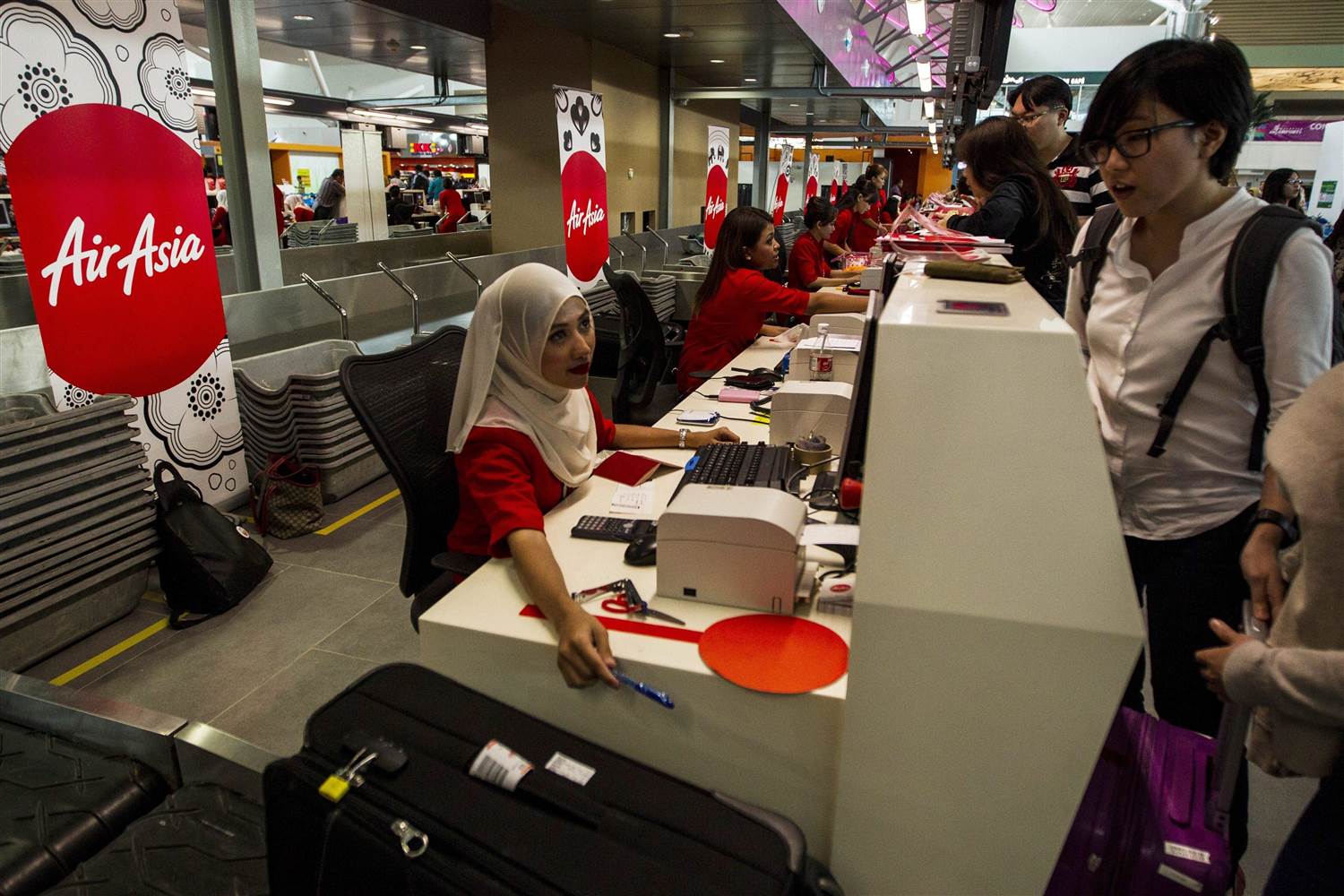
    “I think cash is old fashioned,” said AirAsia Group CEO Tony Fernandes, as he introduced plans of making all in-flight purchases on AirAsia flights cashless.

    From demonetisation to flights, going cashless seems to be the norm. Notably, airlines in the United States started going cashless for in-flight transactions as early as 2009. Even in India, airlines offer customers the option of paying for purchases using cards.

    “I would like all our in-flight sales to be electronic,” Fernandes elaborated. “So you can just use your mobile phone to pay for food, WiFi, etc.”

    He said that AirAsia hopes to launch this service by April-May and that this exercise is a part of digitising the airline. “All our cabin crew will have a mobile phone. When you go on to an Air Asia plane, they will know you,” he added, giving examples of the digitising that the carrier aims to embrace.

    “Transacting in different currencies on international flights can get cumbersome, making it harder for the customer,” Nikunj Shanti, Chief Data Officer, Group Digital, AirAsia, told. “What we are trying to do is make it faster and easier.”

    “This could also give us better information in terms of stock control, etc, so that we are stocking the right goods on the plane,” Shanti said. “Right now, it’s all manual. If we get this information digitally, we can apply learning algorithms and classification algorithms and put better products on the plane.”

    “This digital revolution is a chance for ASEAN and AirAsia to move up the economic value chain,” Fernandes said, clarifying that he doesn’t think the digitising will lead to loss of jobs. “We are already training our sales agents and guest services to become more knowledge-based. We are already anticipating that.”

    Social media platforms

    AirAsia is also personalising its website. “That’s step one. By next month, when you log-on, we will know about you, where you flew, etc,” Fernandes said. Purchasing of tickets from social media platforms is another aspect.

    “Three per cent of our sales come from Facebook. You can buy tickets from Line, WeChat,” he added.

    Hackathon event

    Airvolution 2017, a hackathon for participants from across the Asia-Pacific region, was organised by AirAsia at their headquarters in Kuala Lumpur. This was the first such event organised by the carrier, which also tied into its aim of becoming a digital airline.

    The event saw participation from 20 teams from Singapore, Australia, Malaysia, Hong Kong, Thailand, the Philippines, Sri Lanka, Indonesia, Australia and four teams from India.

    The 18-hour hackathon involved giving the teams a problem statement on how they will profile AirAsia customers based on their digital social footprints to improve their experience.

  • How Thai e-wallet startup T2P is going to help Myanmar go cashless

    How Thai e-wallet startup T2P is going to help Myanmar go cashless

    It’s a little hard to believe, but, four years ago, sim cards in Myanmar used to cost around US$500. If that price is considered exorbitant for even a first world nation, think about how out-of-reach it would be for the working class Burmese, whose minimum wage is only US$87.

    But that all changed thanks to the entrance of two foreign telecoms in 2013, Qatar’s Telenor and Norway’s Ooredoo, which saw sim card prices slashed to about US$1.50. Since then, the mobile penetration in Myanmar has skyrocketed to 90 per cent, up from 7 per cent in 2012, according to government figures. And of that, more than 80 per cent use smartphones; as a result, Burmese are hooking up to the internet more than ever.

    Now, Thailand-based fintech company T2P wants to help Burmese catch up to a tech product already prevalent in many other markets — mobile payments.

    Earlier this week, T2P signed a joint venture deal with City Mart Holdings Co.,Ltd, a leading Myanmar retail chain with over 200 outlets across the nation, which includes fast food restaurants, bookstores and supermarkets.

    The signing was held during a Myanmar-Thailand Business Cooperation event presided over by Myanmar State Counseller Aung San Suu Kyi and Deputy Prime Minister of Thailand Dr. Somkid Jatusripitak.

    The joint venture will see T2P integrate its suite of fintech offerings including its payment platform, loyalty and e-gift platforms, as well as e-wallets to cater to Myanmar’s burgeoning smartphone user demographics.

    According to an official press release, T2P’s overarching goal is to democratise financial services to the country’s large unbanked population.

    “At a company level, we are not only bringing our technology platform to help accelerate technology deployment for our partner, but also indirectly drawing attentions from our investors and other potential investors to take a deeper look at opportunities in Myanmar. When more of this happen[s], I’m sure there will be more parties to help accelerate the growth of startup ecosystem in Myanmar,” said T2P’s CEO Taweechai Pureetip, in an interview.

    He added that through regional events such as Mekong Investment Forum, Thai entrepreneurs are raising awareness about the great potential of tech innovations, as well as enabling other entrepreneurs by sharing their experiences and lessons.

    But like any emerging economy, Myanmar’s tech ecosystem still have many obstacles to overcome. Basic infrastructure is still dysfunctional in certain parts, especially rural areas. And although foreign investments are on the rise in Myanmar, the law regarding such investments in the country’s newly-minted stock exchange is still restrictive.

    Pureetip is aware of such challenges, having faced similar problems in his home market.

    “Since the beginning of our company, we aimed to help improve financial access to those unbanked in Thailand.  We have to take into accounts technology literacy of our customers, access to services, and connectivity issues that may arise in some areas.  These are similar issues but may be more common in Myanmar,” said Pureetip.

    “Aside from technology, both Burmese and Thais are cash base society. Changing cash into electronic money will be our big challenge for us but we also see great opportunities there. We will be working closely with CityMart in adapting our service offerings to encourage them to use more electronic money,” he added.

    Founded in late 2011 by MIT Alumni Pureetip, Natwut Amornvivat and Charatpong Chotigavanich, Panop Kasemsarn, T2P has been providing white label cash and reward card solutions to national retailers in Thailand since 2013. It currently process over 1.5 million card holders,

    In 2016, it raised its first outside financing round in 2016 from 500 Startups, 500 Tuk Tuk and a strategic partner Benchachinda Holding.

  • India could become cashless by 2020

    India could become cashless by 2020

    After the demonetisation of India’s 500 and 1,000 rupee banknotes, the Indian government is stressing the importance of digital transactions in a bid to help the country transform into a cashless economy.

    Government policy think-tank Niti Aayog CEO Amitabh Kant has predicted that that cards, ATMs and POS machines would become redundant in the country by 2020.

    “India is in the midst of huge disruption in the world of both financial technology and in terms of social innovation (there is) huge innovation and this disruption will enable India to leapfrog and by 2020 my view is that in the next two-and-a-half years, India will make all its debit cards, credit cards, all ATM machines and POS machines totally irrelevant,” explained Kant.

    Kant was addressing a session on ‘Startups and innovations which have social impact in India’ at Pravasi Bharatiya Divas 2017, a three-day mega event involving Indian diaspora.

    “They will all become redundant in India, and India will make this jump because every Indian will be doing his transaction just by using his thumb in thirty seconds.”

    Kant added that the government was pushing for digital payments in a big way and this was a huge disruption with several innovative methods. “India has created a back end in terms of biometric which will enable India,” he said, highlighting recently launched BHIM app and Aadhar enabled payment system initiatives.

    BHIM (Bharat Interface for Money) is a mobile app developed by National Payments Corporation of India (NPCI) based on Unified Payment Interface (UPI) launched by Prime Minister Narendra Modi to faciliate e-payments directly through banks. It was launched as part of the 2016 Indian banknote demonetisation and cashless transaction drive. With the Aadhaar Payment App, another initiative of the government, allows users to make cashless transactions through multiple bank accounts.

    While India is the only country with a billion mobile and billion biometric, it is largely a cash driven economy.

    Kant added that despite demonetisation and focus on digital payments, only 2% to 2.5% of Indians pay taxes, so India needs to move from a non-formal to a formal economy.

  • CIMB launches mobile wallet app for cashless payments

    CIMB launches mobile wallet app for cashless payments

    CIMB Bank Bhd has launched a lifestyle mobile application, CIMB Pay that provides combine secure cashless payments with deals and offers.

    This enables the bank’s seven million customers to experience faster, easier and more secure payments at over 1,800 contactless terminal-enabled merchants nationwide as well as search nearby location-based real-time deals.

    Group consumer banking chief executive officer Samir Gupta said the launch of CIMB Pay further strengthens its suite of digital offering, reaffirming CIMB’s position as a customer-centric bank with cutting-edge technology in the region.

    “We are proud that CIMB Pay is the first mobile wallet app that enables consumers to not only make cashless payments, but also allows them to take advantage of lifestyle deals.

    “Combined with the ability to store cards issued by both Mastercard and Visa, CIMB Pay is the leader among similar apps,” Gupta said in a statement, adding the initiative also supports Bank Negara’s move to go cashless.

    On the app’s security features, Gupta noted that security and privacy are at the core of CIMB Pay and that all card details were tokenised with no information stored on the devices.

    “Users will also be required to authenticate transactions either using the mobile fingerprint or a six digit PIN,” he added.

    In the meantime, Gupta said more functionalities will be added onto CIMB Pay in the first quarter of 2017, including simplified online payment and express checkout solutions powered by Mastercard’s Masterpass.

    With Masterpass, shoppers will be able to use their CIMB Mastercard debit or credit card along with the shipping information saved on the mobile app to complete online transactions.

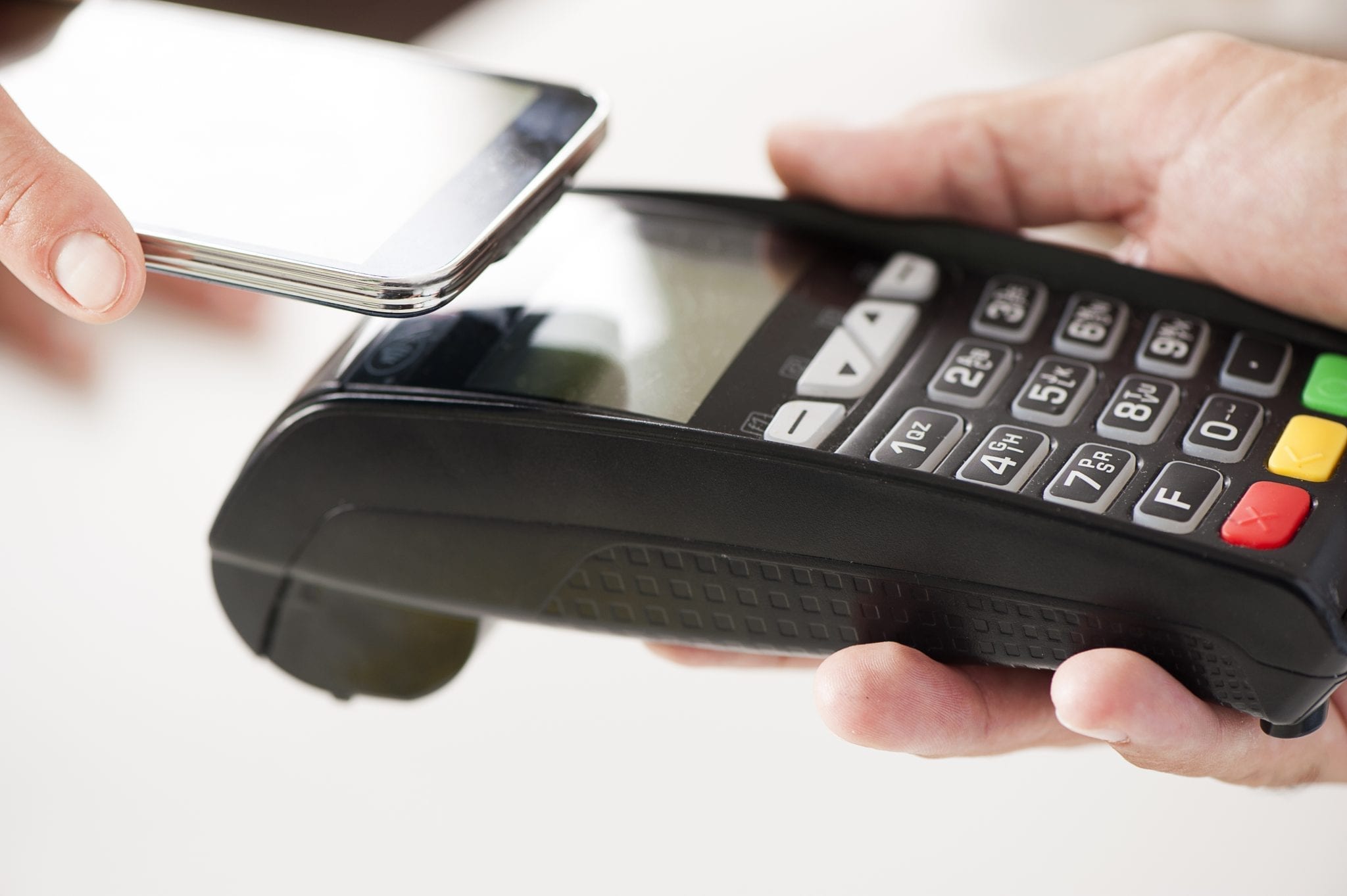
    Customers can make payments by simply tapping their phone on any contactless terminal based on Near Field Communication technology.

    The app also has an in-built notification system that alerts customers on nearby contactless terminals and flash deals.

    CIMB Pay can be downloaded on Google Play for NFC-enabled smartphones running on Android 4.4 and above.

  • South Korea’s Cashless Push Will See Coins Removed From Circulation By 2020

    South Korea’s Cashless Push Will See Coins Removed From Circulation By 2020

    South Korea is the next country looking to go cashless. That in itself may not surprise most people, but the way the government is going about things will raise a lot of questions. It appears the current plan is to force people to hand over all of their physical currency to the central bank. This will not happen overnight, but physical coins are expected to be out of circulation by 2020.

    South Korea Will Use An Aggressive Cashless Strategy

    Various countries around the world are looking at different ways to go cashless in the coming years. Using physical cash can be a burden for both consumers and retailers, while only adding more security risks as well.0. But in most cases, the real reason for going cashless is to make people even more dependent on banks for all of their daily expenses.

    The central bank of South Korea is no different in that regard, as the institution unveiled its plan to enforce a cashless society over the next decade. First of all, they will eliminate all coins from circulation, which they intend to achieve by 2020. Quite an optimistic view, but then again, South Korea is a very different culture compared to most other countries in the world.

    One thing to keep in mind is how the removal of coins from circulation will affect retail prices for goods and services. It is doubtful prices will be rounded down anytime soon, and more expensive goods and services are a far more likely scenario. Whether or not the South Korean population will like that change, remains to be seen.

    To facilitate these changes, the Central Bank of Korea wants consumers to deposit loose changes onto the national T-Money cards. These electronic travel passes can be used for all forms of transportation, including taxi rides. Additionally, several thousand convenience stores in the country accept T-Money as a payment option.

    It has to be said; South Korea may be one of the regions where going cashless will not be a significant change. In fact, there are more credit cards in circulation than citizens. Furthermore, only one in five payments made nationwide occurs through paper money and coins. Phasing out coins should not be a big challenge, but the goal of 2020 may be a bit too optimistic.

    But it appears there is another reason to get rid of physical coins. Credit Finance Institute’s Lee Hyo-Chan told CNBC how it costs more than 10 won to create a 10 won coin. All of the costs associated with the mass minting of coins adds up to over US$40m per year. Additionally, collecting, managing, and circulation of coins incurs, even more, costs.

    Getting rid of cash is a cost-cutting effort, which is understandable. At the same time, banks should not be given even more power of the financial ecosystem than they have right now, as they already have a firm grip on people’s money. Centralization of financial power is never the answer, and going cashless will not necessarily be beneficial to the average consumer from a financial perspective.

  • Forum explores securing APAC cashless payments

    Forum explores securing APAC cashless payments

    The rapid growth of cashless payments are growing rapidly in Asia-Pacific is triggering a corresponding rise in cybercrime, which is costing the region an estimated $81 billion annually.

    With new combinations of malware customized for local markets, phishing and social engineering attacks as well increasing e-commerce and ATM fraud, businesses are increasingly at risk for payment data theft.

    Singapore’s cards and payments market is one of the most competitive and attractive in the Asia-Pacific region. In fact, 69% percent of consumer spending in Singapore is made through electronic payments.

    It’s against this backdrop that global payment and cybersecurity experts met at the PCI Asia-Pacific Community Meeting last week in Singapore to collaborate on helping businesses prevent, detect and respond to cyberattacks that can lead to payment data breaches and fraud.

    “We simply must work together to advance payment security,” PCI Security Standards Council (PCI SSC) international director Jeremy King told attendees.

    “New technologies are driving adoption of cashless, mobile and digital commerce in Singapore and the Asia-Pacific region, and it’s critical that we ensure consumers remain confident in the security of their financial information with every payment transaction. As payments evolve, businesses must prioritize data protection with robust security standards and practices.”

    The PCI SSC, meeting in Singapore, reinforced its mission to foster secure transactions globally and emphasized that as new cyber threats emerge, and advances in technology change the way payments are conducted, PCI Standards will evolve to protect the next generation of payments.

    Regional and industry experts speaking at the event included representatives from the PCI Security Standards Council, INTERPOL, Verizon, Diners Club Singapore, Foregenix, Beijing Information Technology and Pen Test Partners. Presentations and discussions addressed a mix of regional and global topics ranging from new threats via the Internet of Things; cybersecurity trends in Asia-Pacific; Point-to-Point Encryption for protecting payment data throughout the entire processing environment; preventing skimming at ATMs and the future of mobile and digital commerce.

  • Smartphones can help India’s drive for cashless economy

    Smartphones can help India’s drive for cashless economy

    India is currently the largest growing market for smartphones and it is estimated that the number of smartphones sold in the country is very likely to be greater than 100 million in 2017.BEIJING: As India embarked on cashless economy with demonetisation of high value notes, smartphones could help in the country’s de-cashing drive like in China where online payment through phones have become order of the day, Chinese media said today.

    “While India is implementing the government-led de-cashing via demonetisation, China is experiencing a rapid market based de-cashing process via the digitalisation of transactions on the online or mobile payment platforms,” an article in the state-run Global Times said today.

    In the most recent 11/11 (Singles Day) online shopping day, consumers spent 120.7 billion yuan (USD 18 billion) on Tmall, the largest business-to-customer shopping website in China, with all transactions settled via Alipay, the online payment platform set up by Alibaba Group, the article said.

    “Meanwhile, Alipay and WeChat Pay (the online payment platform of WeChat by Tencent) are widely accepted by restaurants, shops and even grocers throughout the country,” it said.

    The high ownership rate of smartphones in China may explain this rapid digitalisation in transactions, it said, citing a recent survey by Pew Research Centre, which said smartphone ownership rate is 58 per cent in China, 37 per cent in Japan and 17 per cent in India.

    “This high ownership rate plus a relatively slow growth rate in credit card ownership has led to the ‘leapfrog development’ of de-cashing in China,” the article said.

    “Compared to traditional bank transfers, online payment systems are usually more convenient and user friendly. Hence, market-based de-cashing faces much less resistance than other types of de-cashing,” it said.

    “India is currently the largest growing market for smartphones and it is estimated that the number of smartphones sold in the country is very likely to be greater than 100 million in 2017,” it said, pointing to high sales witnessed by Chinese phone makers like Xiaomi.

    “If India would like to try the Chinese style of de-cashing through online/smartphone payment, it is very likely to be beneficial to both countries,” it said.

  • Cashless push stimulating APAC m-payment market

    Cashless push stimulating APAC m-payment market

    A top down regulatory push toward cashless societies will stimulate exponential growth in the mobile payment market in Asia-Pacific (excluding China and India), which will surge from $71.92 billion to $271.47 billion by 2021, research from Frost & Sullivan indicates.

    According to the research firm, the number of active customers will also double to 130.8 million users by this time.

    With standardization and increasing openness toward FinTech, competition is intensifying for the entire supply-side ecosystem. Mobile payments solution providers will need to fully understand the mobile payments market in the region to gain an edge.

    Asia-Pacific is expected to continue to lead the world in mobile payment developments as smartphone penetration here is the highest. Apple, Samsung and Google with Apple Pay, Samsung Pay and Android Pay have also addressed existing security concerns through tokenization in the payment infrastructure, supplemented by biometrics on the smartphone.

    “The mobile payments market in Asia-Pacific, however, is guided by local preferences and considerations,” noted Frost & Sullivan Digital Transformation Industry Principal Analyst Quah Mei Lee.

    “For instance, in Indonesia and the Philippines, telcos lead with their e-money products whereas in Japan, South Korea and Australia, credit card is the key payment method. Understanding these dynamics is critical for mobile payments solution providers to succeed.”

    Mobile payment in Asia-Pacific is being led by developed countries such as Japan, South Korea, Australia and Singapore. Japan and South Korea has dominated since the early days of near-field communications (NFC) in 2011 and continues to account for 89.2% of market revenue share in Asia-Pacific.

    Among mobile payment market segments, m-commerce dominates despite the rapid increase in point-of-sale (POS) payment transaction volumes. The strong deployment of NFC in some countries is expected to help expand POS payment shares.

    For now, the mobile payment market has the most promise in countries that have a mandate to go cashless, like South Korea, Australia, Singapore and Malaysia. These will be followed closely by countries such as Thailand and Vietnam which are slowly transitioning to cashless.

    “The opportunities are limitless and mainstream integration of mobile payments into everyday life is already underway,” said Quah. “Even beyond this, there is tremendous potential for growth alongside connected devices in the Internet of Things era.”

  • BRI Goes Digital for Cashless Society Program

    BRI Goes Digital for Cashless Society Program

    Bank Rakyat Indonesia (BRI) has been revamping its digital banking services as part of its “cashless society” program and in support of the central bank’s Non-Cash Payment Movement (GNNT), a senior BRI official said last week.

    BRI Consumer Director Sis Apik Wijayanto said the top small-business lender intends to reduce cash to a minimum for every transaction.

    “This is the digital era, tech support is crucial. The goal is to improve payment efficiency and offer customers  the utmost convenience,” Sis said.