Retail News CRM

Tag: casino

  • Vietnamese to be permitted to gamble in casinos

    Vietnamese to be permitted to gamble in casinos

    The decree, titled 03/2017/NĐ-CP, allows foreigners and overseas Vietnamese situated abroad with a valid foreign passport to gamble in casinos in Vietnam.

    Vietnamese citizens can now also be admitted into domestic casinos, on a three year trial basis. After which, the government will decide whether or not to continue allowing domestic citizens to participate in casino gambling.

    All players must have full capacity for civil acts of individuals according to Vietnamese law and be willing to accept the terms and conditions of the games and the casino’s regulations.

    Vietnamese citizens admitted into casinos must be 21 years old or above with full capacity for civil acts of individuals according to Vietnamese law, have proof of regular monthly income of 10 million VND (450 USD) or be subjected to third degree taxation according to the law on individual income tax. The Ministry of Finance is responsible for providing citizens application forms for these conditions.

    Only enterprises with a Certification of Business will have the legal right to run a casino. The business must be a conditioned commercial act that is closely inspected by the appropriate government authority to ensure operations follow the decree’s regulations and other legal procedures, the decree dictates.

    Players must buy tickets to the casino at 1 million VND (45 USD) for 24 hours entry and 25 million VND (1,126) per person monthly. Players must not be related to casino owners in any way.

    Vietnamese players at casinos must exchange VND for tokens and vice versa.

    Vietnamese citizens who violated national security or committed other crimes abroad resulting in more than three years of imprisonment will not be admitted to casinos. This includes those serving jail time, with or without bail, or any other form of legal punishment.

    The decree did not restrict the amount of capital for business owners, but differentiated between large casinos (of more than 2 billion USD) and small casinos (less than 2 billion USD in capital).

    The decree states that the casino business must be linked to the entrepreneur’s key commercial operations to help boost tourism, trade, diversify entertainment and recreation and enrich tourists’ experience, while assuring security and nation defence, social order and moral health.

    The operation of and participation in gambling games must be transparent, coherent and honest, to protect the rights and legal benefits of parties involved.

    The decree bans gambling between players on results of games at casinos; cheating during preparation, organisation or participation in the casinos; any action that affects security and order in casinos and using gambling machines, tables, tokens and other devices with content not approved by the government.

    The decree also forbids the casino businesses from providing illegal gambling online or telecommunication networks, from smuggling and transferring foreign currency, precious gems and metals and other acts of money laundering, sponsoring terrorism and prostitution and paying out the wrong amount of prize money, among others.

    Organisations and individuals linked to the games’ operations must comply with the decree in its entirety and other legal requirements.
  • Mainland China accounts for 28m of 30m Macau visitors

    Mainland China accounts for 28m of 30m Macau visitors

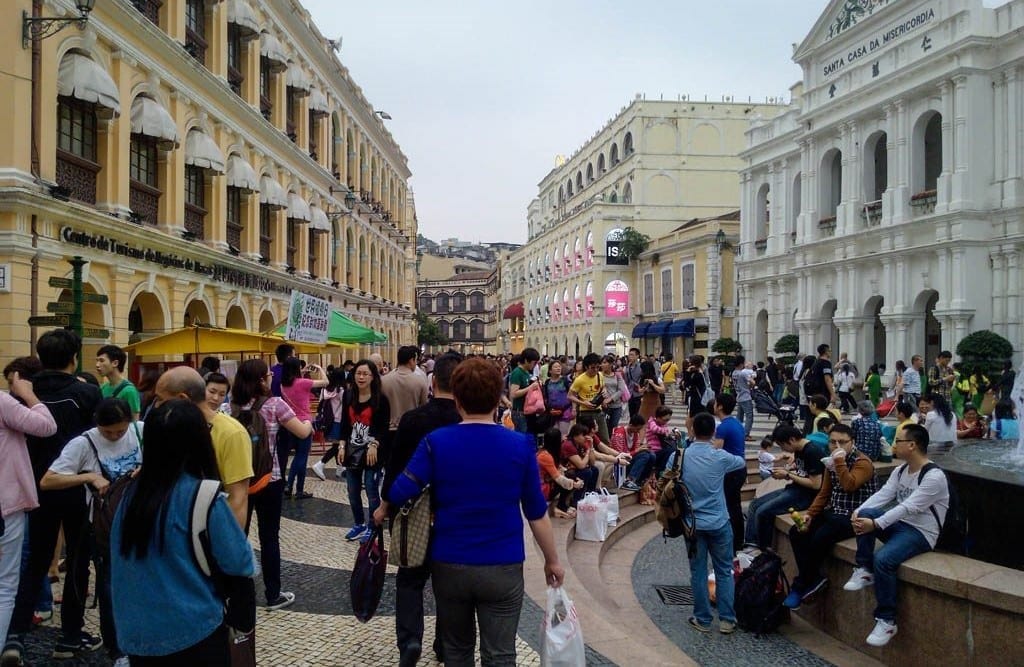
    Macau’s total visitor arrivals rose a nominal 0.8% to a new record 30.95m in 2016, with nearly 28m travelling from Greater China markets (+0.1%), a slight increase of 0.1%, whereas the much smaller international visitor arrival total grew by 7.9%.

    This will be encouraging news for DFS Macau in particular, plus Duty Free Americas, Dufry and many other standalone retailers currently operating shops in Macau’s hotels and tourist district.

    MACAU GAMBLING ON CASINO RECOVERY

    The increase also comes at a time when Macau’s casino business appears to be recovering some of its big spenders, with last December’s revenue up an impressive 8%.

    Most of these big ’high rollers’ were put off visiting the location, following Beijing’s crack down on irresponsible gambling by some mainlanders three years ago.

    Having said that, there was still a 3% fall in Macau’s overall gambling revenue to $28bn last year and this is still the Special Administrative Region of China’s biggest source of revenue by far [three times the gambling revenues generated in Las Vegas-Ed].

    Macau also continues to be only territory anywhere in China that is allowed to operate casinos.

    MACAU STILL NEEDS A LOT MORE HOTEL ROOMS

    The huge new bridge being constructed to link Hong Kong and Macau and the planned expansion of ferry operations to Macau are also expected to greatly increase visitor arrivals – although this expansion will only as good as the number of hotel rooms that are available – around 35,000 at present.

    In the meantime, the MGTO says it continue to work towards completing the tourism development goals in the 5- year development plan formulated by the SAR Government aimed at turning Macau into a World Centre of Tourism and Leisure.

    Macau welcomed more than 20m Mainland visitors last year, up by 0.2%, with 44% from Guangdong Province. There were also nearly 9.56m ‘independent’ visitors from the Mainland. An increase of 8.8% was recorded for the Taiwan market, whereas the sum of Hong Kong visitors dropped by 1.8%.

    HALF A MILLION KOREANS VISITED MACAU LAST YEAR

    As for international markets, South Korea still ranked highest, contributing over 660,000 visitors to Macau last year (+20%). Southeast Asian markets also performed well, with visitors from Thailand registering the largest growth of over 30% among the top ten source markets.

  • Vietnam OKs casino gambling for locals

    Vietnam OKs casino gambling for locals

    Citizens over 21 years old with a monthly income of at least $445 will be allowed to enter local casinos from mid-March. Betters in gambling-mad Vietnam will soon be allowed to stake their fortune in some casinos across the country, the government said Friday, in a pilot scheme aimed at opening up the lucrative industry.

    The government has long-banned locals from gambling in casinos, despite their popularity among foreigners and hot demand from Vietnamese.

    The government said Friday it would allow citizens over 21 years old with a monthly income of at least 10 million dong ($445) to hedge bets in local casinos from mid-March under a three-year pilot program. Vietnam’s average annual income was around $2,200 last year.

    “After three years… the government will decide whether to continue Vietnamese people’s access to casinos,” a statement on the government website said.

    International casino developers, for whom Asia has become a global gaming engine following the stagnation in the U.S., have been circling Vietnam for some time now.

    With a population of nearly 92 million, analysts said that by lifting the gambling ban, Vietnam could reignite interest in investors who had previously pulled out of casino projects due to tough entry barriers.

    A study by Augustine Ha Ton Vinh, an academic who has researched Vietnam’s gaming industry extensively, showed the country is hemorrhaging as much as $800 million a year in tax revenue from gamblers who cross the border to Cambodia. Vietnamese authorities have endorsed this study.

  • Tourists visiting Singapore chase bargains, not baccarat

    Tourists visiting Singapore chase bargains, not baccarat

    Research from HSBC shows a growing number of Chinese tourists visiting Singapore fuelled a 44 per cent increase in retail spending in the first half of this year, versus the same period last year. That put retail ahead of casinos in terms of tourist spending for the first time in five years.

    The number of  Singapore-bound Chinese tourists totalled about 2.1 million in 2016 – twice the number of 2009, the year before the country opened the first of its two casinos.

    Erwan Rambourg, London-based global co-head of consumer and retail research with HSBC, said Chinese, Indonesian and Indian visitors were the top three spenders in the second quarter of 2016, accounting for 40 per cent of total tourist spending. A quarter of spending went on shopping – up from just 18 per cent in the same period last year.

    Last year, Chinese spent S1.15 billion in Singapore stores – compared with just $175 million spent by Indians and $112 million by Japanese. But they spent less than any other nationality on food and accommodation.

  • Tourists boost Central Group revenue

    Tourists boost Central Group revenue

    Thai retailer Central Group expects revenue to rise 21 per cent to Bt320 billion ($9.17 billion) this year following strong growth in overseas business plus tourist spending.

    Controlled by Thailand’s Chirathivat family, Central is seeking to expand in Southeast Asia, says CEO Tos Chirathivat, citing Cambodia, Laos, Myanmar and Vietnam.

    He expects overseas revenue to account for 40 per cent of total in the next five years from 30 per cent now.
    Central bought superstore chain Big C‘s Vietnam business from French retailer Casino in April, comprising 43 stores and 30 malls. Vietnam is Southeast Asia’s fastest-growing market for Central, and the company expects sales to reach Bt37 billion this year.

    Central has also benefited from rising tourist numbers in Thailand, with sales up 15 per cent this year versus 5 per cent for Thai customers, says Tos.

    The group, whose interests include shopping mall developer Central Pattana, Robinson Department Store and Central Hotel Plaza, plans to spend more on its online retail business, which currently accounts for just 1 per cent of revenue.

    Central bought fashion-focused eCommerce site Zalora in April as part of a push to win back shoppers who increasingly prefer internet shopping.

  • Philippines Mactan casino project to start in 2017: Calata

    Philippines Mactan casino project to start in 2017: Calata

    Philippine fertiliser product distributor Calata Corp says construction works for its Mactan casino resort are scheduled to start in January 2017.

    “There will be a 36-month construction schedule with six months for warranty works giving it a total of 42 months to complete. The projected date of completion would be in the middle of 2020,” the firm stated in a Friday filing to the Philippine Stock Exchange. The filing was in response to a query from the exchange on the Mactan project and the parties involved.

    The project – named Mactan Leisure City – is being developed in partnership with U.S.-based Sino-America Gaming Investment Group LLC and the latter’s subsidiary Macau Resources Group Ltd. Mactan is an islet linked by bridge to the Philippine holiday island of Cebu.

    Macau Resources Group’s registration on the OTC Markets Group exchange, based in New York, United States, was revoked last month, after the firm’s failure to make required periodic filings with the U.S. Securities and Exchange Commission. Calata said in its Friday filing that Macau Resources Group shareholders had “agreed to deregister” the firm from the exchange “to provide management the ability to effectively rebrand and position the company”.

    Calata added: “Once rebranded, the company will then be re-registered as Jade Leisure and Entertainment Group, on the [OTC Markets Group exchange], with a goal to list on the Nasdaq at the earliest opportunity.”

    The partnership between Calata, Sino-America Gaming and Macau Resources Group was first announced on Tuesday. The Philippine firm explained at the time that it would involve “the creation of a corporate vehicle intended for the future establishment of a real estate and investment trust (REIT)” which would be used for the Mactan project. The corporate vehicle – in which Calata will have a 51 percent stake – is to be established by next month, the firm said in Friday’s filing.

    Under the Philippines’ constitution and public land laws, only Filipinos, or entities owned at least 60 percent by Filipino citizens, are allowed to own land.

    In a story published by GGRAsia in April 2015, Sino-America Gaming managing director Michael Foxman had provided several details about the group’s plans for Mactan. At the time, Calata’s name was not mentioned.

    Mactan Leisure City has been presented by Calata as “a PHP65-billion [US$1.4-billion] integrated resort incorporating three hotels, casino and entertainment complex, commercial, retail, and conference facilities, and yacht club, situated at a 14-hectare property located on Mactan Island, Cebu”.

    The firm stated on Friday it expected to secure a casino licence for the project from the country’s gaming regulator – the Philippine Amusement and Gaming Corp (Pagcor) – by the end of 2017.

    “The target submission of the complete application with Pagcor will be by late October 2017,” Calata stated. The firm added that the project had already received support from local authorities, civic groups and the Catholic Church.

  • Macau Casinos Stung as Fewer Chinese Come and Spend Less: Chart

    Macau Casinos Stung as Fewer Chinese Come and Spend Less: Chart

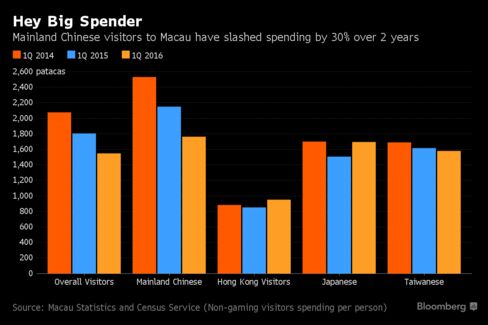
    Mainland Chinese have toned down their spending, shelling out 1,762 patacas ($220) per person in the first quarter on non-gambling purchases, down almost a third from 2014. That’s bad news for casino operators such as Wynn Macau Ltd. and Galaxy Entertainment Group Ltd. as they shift focus to casual gamblers and tourists to lift revenue from hotels, retail and conventions amid a two-year gambling slump. Chinese still make up about two-thirds of Macau’s visitors, even as their numbers last year fell for the first time since 2009 and eased a further 1 percent in the first four months of this year, according to data released Monday.

  • Gaming boosts Macau retail

    Gaming boosts Macau retail

    Macau retail and wholesale has tripled in value thanks to the knock-on effect of the territory’s gaming industry.

    Macau government research shows that as the gaming industry has developed, it has scaled up the added value of other industries. Conducted by Institute for the Study of Commercial Gaming at the University of Macau, the report looks at the spread of added value through gaming in Macau over the 10 years to 2013.

    The gaming industry was liberalised in 2002, and this is the first report following a mid-term review on the sector. It notes that the added value of the gaming industry has increased 6.9 times in the 10 years, with the hotel industry increasing 11.4 times.

    Data from six gaming companies showed that their non-gaming activities created an income of 23.2 billion patacas (US$2.9 billion) in 2014, while the total non-gaming spend of tourists in Macau is comparable to that of Las Vegas.

    Gaming dominates the Macau economy with a 58.3 per cent slice of the pie, while the wholesale/retail sector has a humble 5.2 per cent.

    Meanwhile, the report will probably help Macau set policy direction for the $30 billion gaming industry as units of casino groups such as Melco Crown Entertainment Group and MGM Resorts International struggle to cope with Macau’s two-year gambling downturn, reports Bloomberg.

  • Macau Legend buys troubled casino in Laos

    Macau Legend buys troubled casino in Laos

    Macau Legend Development Limited announced via press release on May 13 that it had entered into a USD42 million (approximately HKD326 million) project development agreement (PDA) with a company wholly-owned by the Ministry of Finance of the Lao People’s Democratic Republic, to purchase the Savan Vegas Hotel and Entertainment Complex, a full-service casino, hotel and resort located in Laos’ Savannakhet Province.

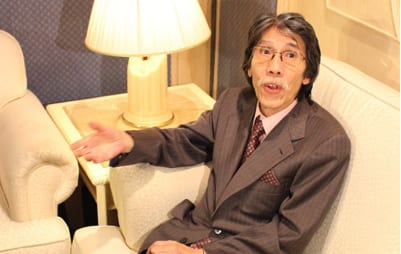
    However, the apparently very advantageous and profitable business might be tainted for David Chow’s company, as the Savan Vegas Hotel and Entertainment Complex is involved in a series of serious disputes and legal actions that are directly connected to its owners.

    In another statement on May 5, Lao Holdings N.V., the parent company of Sanum Investments Limited, stated that it has filed three legal actions against Laotian authorities for violating the 2014 settlement agreement reached by both parties, stipulating the sale of the Savan Vegas Hotel and Casino, and other assets, for maximum value to the benefit of all parties.

    David Chow

    David Chow

    According to the same statement, “these actions have been taken in direct response to the expropriation and planned sale of Sanum’s gaming and hotel complex located in Savannkhet, Laos,” that has now reportedly gained the involvement of the Macau company as the buyer.

    “All of the actions taken by the Lao Government over the past two years have been a blatant attempt not only to avoid, but systematically obliterate its legal obligation to work with us in good faith,” said Jody Jordahl, President of Sanum Investments in the same statement.

    However, none of these actions and lawsuits have been reported or identified in the note sent by the Macau Legend to the Hong Kong Stock Exchange as potential risks for the business.

    The Savan Vegas Hotel and Entertainment Complex occupies 50 hectares of land, which currently features gaming facilities with 92 tables and 493 slot machines; a 476 room hotel and convention center, restaurants, bars and other dining, recreational and retail shopping facilities.

    The PDA announced that Macau Legend has an initial term of 50 years which may be extended for an additional period up to another 49 years.

    Regarding the business agreement, the co-chairman, executive director and CEO of Macau Legend, David Chow, said: “We have been looking to invest in and develop integrated resort projects outside of Macau.” He thanked the support of the Lao PDR Government, for their trust in the company to turn the Savan Vegas project into a regional entertainment hub in Southeast Asia.

  • Chow Tai Fook casino interests expand

    Chow Tai Fook casino interests expand

    Hong Kong jewellery retailer Chow Tai Fook Enterprises is diversifying into gaming, and is lead partner in a three-way joint venture developing Vietnam’s second integrated resort casino.

    After a prolonged delay, work has started on the $4 billion project’s first phase, in the UNESCO heritage city of Hoi An in Quan Nam province.

    Also involved in the Nam Hoi An Casino Resort are Vietnamese investment banking firm VinaCapital and Macau junket company SunCity Group. Chow Tai Fook acquired VinaCapital’s majority holding last September, although VinaCapital has announced it will boost its stake from 22.5 to 32 per cent, and also has a major stake in SunCity.

    Chow Tai Fook casino interests in Vietnam, through its New World Development unit, already include two large hotels in Ho Chi Minh City, the New World and the Renaissance Riverside. Three hotels will be included in the Hoi An development.

    Including resorts, an amusement park, golf course, premium villas and apartments, the first phase of the Hoi An project will cost about $500 million and should be completed early 2019. It covers 160ha. The only other integrated resort in Vietnam offering high-end gaming for international tourists is the larger Ho Tram Strip resort near Vung Tau, a beach settlement near Ho Chi Minh City.

    While the Nam Hoi An resort was licensed in 2010, VinaCapital’s original JV partner Genting Malaysia dropped out of the project two years later after deciding that the government’s demand for a minimum US$4 billion investment threshold was too steep considering the property’s gaming options would not be available to local residents.

    Chow Tai Fook, meanwhile, has been aggressively seeking out diversification via casino projects. The company has a stake in The Star Entertainment Group’s $3 billion resort casino project in Brisbane, and in November the Korea Herald reported that Chow Tai Fook had signed a letter of intent to invest $1.6 billion in creating a casino resort at Incheon, near Seoul.

    Chow Tai Fook is a privately held conglomerate controlled by the family of Hong Kong businessman Cheng Yu Tung, Hong Kong’s fourth-richest person who is a longstanding business partner of Stanley Ho Hung Sun, a founder of Macau casino investor SJM Holdings. For the Vietnam project, Chow Tai Fook is working through its entity Gold Yield Enterprises.

    Reuters has quoted industry analysts as saying that Vietnam is within easy reach of wealthy Chinese who provide the lion’s share of gaming revenue in Asia.

  • Was Las Vegas Sands’ First Quarter as Bad as Advertised?

    Was Las Vegas Sands’ First Quarter as Bad as Advertised?

    Success or failure is often in the eye of the beholder, and in the case of Las Vegas Sands that sentiment holds very true today. On Wednesday after the market closed, the company reported first-quarter revenue of $2.72 billion and earnings of $320.2 million, or $0.40 per share. Hold-adjusted EBITDA, which is a proxy for cash flow from resorts, was a whopping $1.03 billion in just one quarter. But for the market, that wasn’t enough.

    Analysts had been expecting revenue of $2.88 billion and earnings of $0.63 per share on an adjusted basis (compared to the $0.45 reported), so the stock was down sharply in trading Thursday morning. But are things really as bad as they appear?

    What you need to know about Las Vegas Sands in Macau
    Before getting into the detailed numbers, it’s important to point out that Macau’s overall gaming revenue declined 13.3% in the first quarter. That’s the bar against which every company’s results should be measured.

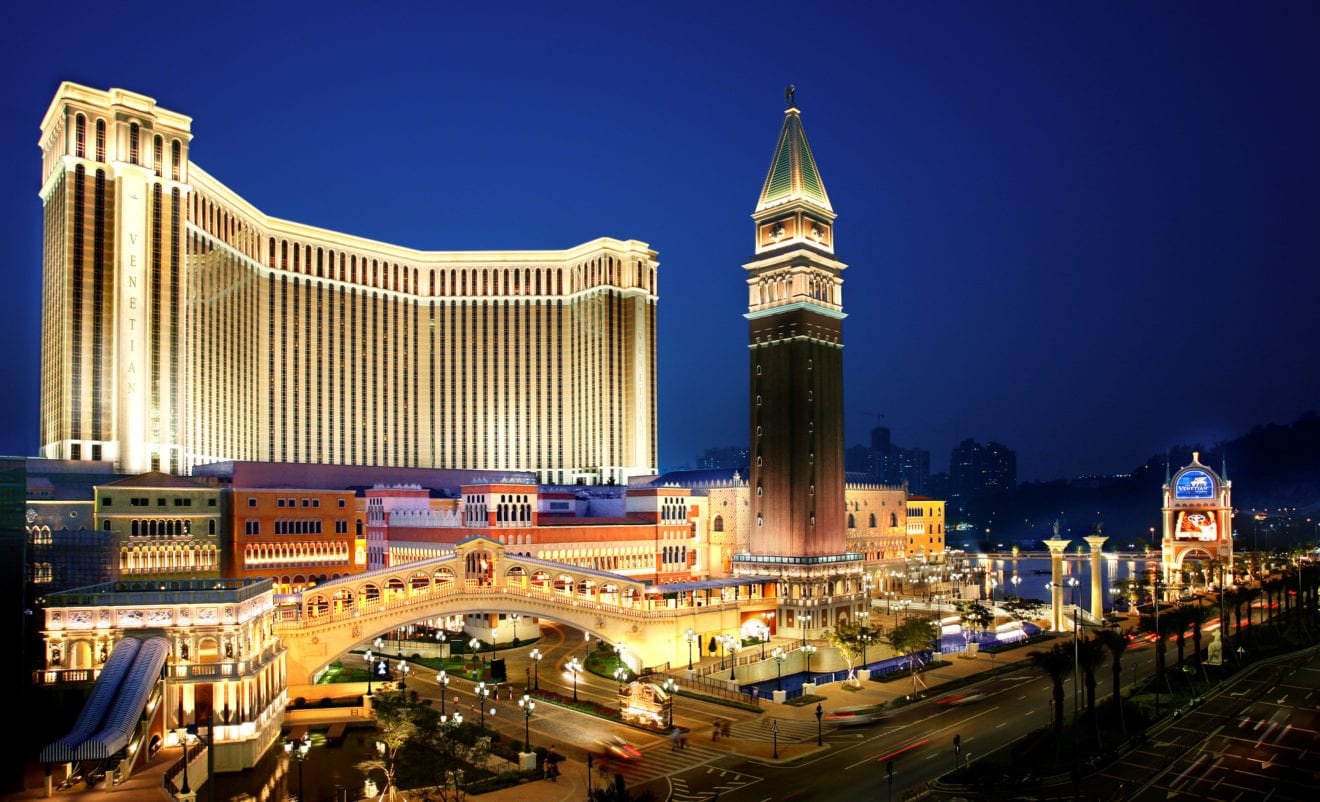
    You can see below that three out of Las Vegas Sands’ four resorts in Macau actually performed well in the quarter, compared to the Macau market as a whole, with only Sands Macau underperforming it. As the only property the company has on the Macau Peninsula, where Wynn Resorts has already said it will have weak numbers, even that’s not a surprise.

    Q1 2016 Revenue Q1 2016 EBITDA
    The Venetian Macau $749.0 million

    (4.9%)

    $267.8 million

    (0.8%)

    Sands Cotai Central $530.3 million

    (7.3%)

    $163.5 million

    4.9%

    Sands Macau $175.1 million

    (22.3%)

    $31.0 million

    (46%)

    Four Seasons Macau $148.3 million

    (8.1%)

    $48.2 million

    8.3%

    SOURCE: LAS VEGAS SANDS EARNINGS REPORT.

    Good luck helped improve results for some of the resorts, particularly Sands Cotai Central, but Las Vegas Sands is still gaining share in Macau even after adjusting for luck.

    Marina Bay Sands

    MARINA BAY SANDS

    Singapore is a different story
    At Marina Bay Sands in Singapore, which is actually Las Vegas Sands’ most profitable resort, results were a little weaker. Revenue fell 23.1% to $603.1 million and adjusted EBITDA fell 33.8% to $274.9 million (still a huge number for one resort). But that doesn’t tell the whole story.

    Casino revenue, which accounts for a vast majority of the resort’s revenue, fell 28.3% in the quarter. But VIP gaming volume only fell 4.5% and mass-market volume only fell 9.2%. What led to the weak results was a very low hold percentage in VIP, meaning bad luck for the casino. Without that bad luck, revenue and EBITDA still would have fallen, but not by much.

    Las Vegas continues to steadily grow
    In Las Vegas, revenue rose 2.3% to $384.9 million and EBITDA jumped 17.3% to $86.9 million. This is consistent with competitors like Wynn Resorts, which said it expects a small amount of growth in revenue at the midpoint of its first quarter preliminary  results.

    Las Vegas isn’t going to be a huge growth market for Las Vegas Sands, but slow and steady will win the race.

    What determines long-term success
    When you look at Las Vegas Sands’ numbers in the context of the Macau market, they look a lot better than when you compare them to Wall Street analysts’ guesses about what the numbers would be. And it’s far more important to gain share in Macau long-term than to meet Wall Street’s expectations.

    What investors really need to watch over the next few quarters is the impact of new competition. Wynn Palace will open near the end of the second quarter and MGM Cotai will open sometime next year, competing with the resorts I listed above, and the soon-to-open Parisian for Las Vegas Sands. It’s possible that LVS’s market share might start to slip in a big way as new resorts enter the Cotai market that the company currently dominates.

    Until that competition comes, I see a lot more positives in Las Vegas Sands’ fundamentals than warning signs. And with the stock down in early trading, this could be a great buying opportunity for investors with a long time horizon.

  • Mohegan Sun-led scheme gets South Korean casino licence

    Mohegan Sun-led scheme gets South Korean casino licence

    The government of South Korea has awarded a licence to build a casino resort to a consortium between U.S.-based Mohegan Tribal Gaming Authority (also known as Mohegan Sun) and South Korean chemicals manufacturer KCC Corp.

    The new property is to be located in Incheon, near the country capital Seoul, the Ministry of Culture, Sports and Tourism said in a statement on its website on Friday.

    The country’s authorities had been reviewing an unspecified number of proposals for new casino resorts, submitted as part of an integrated resort licence bidding process initiated in 2015. There were up to two new casino resort licences up for grabs, but the South Korean government decided to grant only one.

    The licence allows the Mohegan Sun-KCC consortium to set up a foreigners-only casino.

    South Korea currently has 17 casinos, but the country’s nationals are only allowed to gamble at one of them – Kangwon Land in an upland area of Kangwon province.

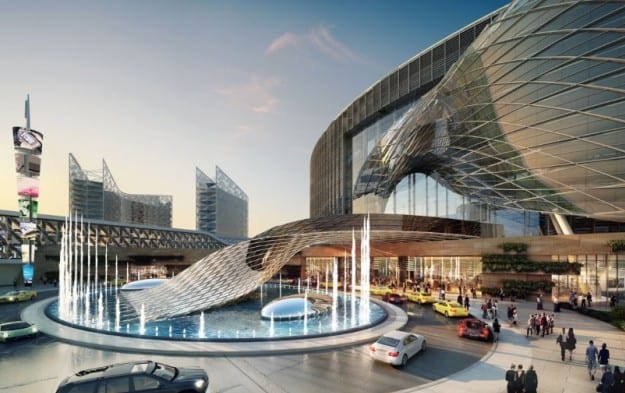
    The winning bid (pictured in an artist’s rendering) has a price tag of US$1.24 billion and includes a hotel, retail areas, a concert arena and venues for conventions, according to South Korea’s Yonhap news agency. The scheme is scheduled to begin operations by 2020.

    “We will closely monitor the project to help support the [winning consortium] in building a world-class integrated resort,” the ministry said, quoted by the news agency. “It is expected to boost the competitiveness of the South Korean tourism industry with various tourism infrastructure, such as a K-pop arena, a theme park and a convention centre.”

    There are already two casino projects proposed for Incheon.

    South Korean foreigners-only casino operator Paradise Co Ltd has linked with Japanese pachinko operator Sega Sammy Holdings Inc for a project in Incheon referred to as Paradise City and already under construction. The scheme, with a total area of 330,000 square metres (3.55 million sq feet), is presented in its official website as having a price ticket of KRW1.3 trillion (US$1.05 billion) and featuring a foreigners-only casino with 160 live table games, 388 electronic table games and 350 slot machines. It is scheduled to open in 2017.

    The other announced project for Incheon is the result of a partnership between U.S. casino operator Caesars Entertainment Corp and Hong Kong-listed real estate developer Lippo Ltd. Construction has not yet started. Analyst Grant Govertsen from Union Gaming Securities Asia Ltd said in a note on Friday “there are uncertainties currently associated with the Caesars project”.

    No regional impact

    Mr Govertsen said in his note following the South Korean government’s announcement that construction for Mohegan Sun-KCC’s project should begin in early 2017. The project has the working title ‘Inspire Integrated Resort’. It will be Mohegan Sun’s first venture outside of North America.

    KCC in November announced it acquired a 24.5-percent stake in Inspire Integrated Resort Co Ltd – a South Korean subsidiary of U.S. regional tribal casino operator Mohegan Sun – for a total consideration of KRW203.8 billion, becoming a joint venture partner in the casino resort project.

    The consortium has a commitment to spend a total of US$5 billion in South Korea over the next 20 years.

    Mohegan Sun’s project includes a 20,000-square metre casino with 250 gaming tables – including 40 VIP tables – and 1,500 slot machines.

    The casino resort will have a two-tower luxury hotel complex with 1,000 rooms, a 20,000-seat arena, and more than 18,500 square metres of shops, restaurants, art exhibition and music entertainment areas, including “a Korean village celebrating Korean food and music, and a Native American cultural and arts experience”, according to Mohegan Sun.

    Union Gaming said in its note it did not expect the three new casino resorts in Incheon to pose a material threat to Macau, Singapore or the Philippines.

    Mr Govertsen noted the ongoing decline in Chinese high roller play around the region. He added that none of the U.S.-based casino operators entering the South Korean market had a significant built-in base of VIP customers, being largely reliant upon mass-market customers to generate a return.

    He said: “Importantly for Macau, its mass market gross gaming revenue is driven primarily by southern China meaning that related persons are unlikely to divert to [South] Korea for gaming. Rather we would expect Incheon integrated resorts to draw from northern Chinese cities (e.g. Beijing, Tianjin) and from Chinese visitors already going to [South] Korea for purposes other than gaming.”

    In a January note, Morgan Stanley said new casino supply did “not bode well” for South Korea’s foreigners-only casinos, especially as the investment bank expected the number of Chinese high rollers to South Korean casinos to continue declining.

    Union Gaming’s Mr Govertsen also noted that the three casino projects for Incheon are not close to each other. “This suggests that there is unlikely to be the natural benefit associated with the cluster effect seen in markets like Las Vegas and Macau (e.g. driving increased visitation and therefore increased revenue).”

    He added: “However, operators who do not have a presence in Asia, like Caesars (coming in capital light) and Mohegan Sun, seem to be less risk averse and could be beneficiaries should [South] Korea ever green light locals gaming beyond the lone locals gaming licence issued to Kangwon Land – although we find this scenario to be highly unlikely for the foreseeable future.”

  • Mohegan gaming authority wins license for Korea casino

    Mohegan gaming authority wins license for Korea casino

    UNCASVILLE, Conn. (AP) – The parent company of the Mohegan Sun casino says it has received a license from the Korean government to build a $5 billion resort near the international airport in Seoul.

    The Mohegan Tribal Gaming Authority says the project will include a hotel complex with 1,350 rooms, more than 20,000 square meters of retail space and an arena that it says would be the largest in South Korea.

    The gaming authority is teaming with the KCC Corp., a South Korean chemicals company, and the airport for the project.

    Gaming authority president Bobby Soper said Friday the company aims to help the Korean government fulfill its vision of “driving economic development by growing tourism, creating jobs, and showcasing Korean culture via the integrated resort.”

  • Suitors for Casino’s Asia assets will have to face off against Thai tycoons

    Suitors for Casino’s Asia assets will have to face off against Thai tycoons

    French retail group Casino’s sale of its Thai and Vietnam units has drawn the eye of Singapore’s Dairy Farm International Holdings and South Korea’s Lotte Shopping but they’ll need punchy bids to go up against deep-pocketed Thai tycoons, bankers said.

    The auction represents a rare opportunity for cashed-up Asian companies to expand into what analysts say are two of Southeast Asia’s most profitable retail markets, but they also warn there is a risk of overpaying, particularly in Thailand where the economy is slowing.

    Central Group, Thailand’s biggest retailer led by tycoon Tos Chirathivat, has pole position as it already owns a quarter of Big C Supercenter Pcl, the nation’s second-largest discount retailer which it founded in 1993.

    Central has said it is keen to buy Casino’s 58.6 percent stake in Thailand’s Big C, worth around $3.1 billion at current market prices, and Casino’s wholly owned unit, Big C Vietnam, which bankers have valued at between $800 million and $1 billion.

    “Whoever is going to buy this will have to pay a high price to get Central out or they will have to co-exist,” said a banking source familiar with the matter.

    A separate banking source said Casino was keen to sell both units to the same bidder.

    In addition to Dairy Farm and Lotte Shopping discussing potential bids with banks, Japanese retail conglomerate Aeon Co Ltd (8267.T) is weighing an offer, the sources said but added it was unlikely to bid aggressively.

    The sources declined to be identified as they were not authorized to speak about the matter.

    Dairy Farm, the second-biggest retailer in Singapore and Hong Kong, and Lotte Shopping, South Korea’s largest department store operator declined to comment. Aeon and Casino also declined to comment.

    The bidder seen most likely to give Central Group a run for its money is Thai business magnate Charoen Sirivadhanabhakdi, who is keen to expand further in retail.

    Berli Jucker Public Co, the listed retail arm of Charoen’s TCC group, has said it is interested in Casino’s Vietnam unit and bankers also expect TCC to make an offer for the Thai unit.

    Asked whether TCC would bid for the Thai business, Charoen told Reuters in Bangkok on Wednesday: “Not yet, we haven’t done anything. We need to have a look first.”

    PREMIUMS NEEDED

    The first source said that to outbid Central for the Thai asset, other suitors would likely have to pay 270 baht per share, a 14 percent premium to Thursday’s close that would value Casino’s stake at $3.6 billion.

    Bangkok-based AEC Securities said in a note to clients it expects bidders to pay 238-298 baht per share. Thailand’s Big C shares have jumped as much as 17 percent since Casino said on Jan. 15 it has received expressions of interest..

    Casino’s surprise plans to sell the Thai unit came after a December report by short-seller Muddy Waters that said the French firm was “dangerously leveraged”, prompting its worst stock slide in seven years. The Vietnam unit sale had been planned beforehand.

    Preliminary bids for the Thai unit, which had 734 stores including 125 hypermarkets at the end of 2015, are due on Feb. 5. Bids for the Vietnam unit are due in late February, one source said.

    Thailand’s retail market is worth $93 billion annually, according to research firm Euromonitor. The sector trades at a price-to-earnings ratio of 24, the highest in Southeast Asia, and is no stranger to rich deals.

    In 2013, CP All, backed by Thailand’s richest man Dhanin Chearavanont, bought cash-and-carry wholesaler Siam Makro for $6.6 billion, valuing it at 53 times earnings in Asia’s most expensive consumer sector deal by multiple.

  • Central Group eyes Casino’s units in Thailand, Vietnam

    Central Group eyes Casino’s units in Thailand, Vietnam

    Thailand’s largest retail conglomerate Central Group is keen to bid for Casino Group’s Thai and Vietnam operations, a company executive said.

    Casino owns 58.6% of Big C Supercenter Plc, which has a total a market value of $5.5 billion. Casino said last week it was keen to sell this stake after announcing it would sell its Vietnam unit in the first quarter.

    “We are interested in both Big C in Thailand and Vietnam,” Prin Chirathivat, deputy chief executive officer.

    “If the prices are not too expensive, we will be keen to bid,” Mr Prin said adding his family, the Chirathivats, has a combined 25% stake in Big C.

    Central has been actively looking to buy assets overseas as it wants to expand into Southeast Asia and Europe.