Retail News CRM

Tag: centre

  • DHL Express launches Rp-17-billion service center and gateway

    DHL Express launches Rp-17-billion service center and gateway

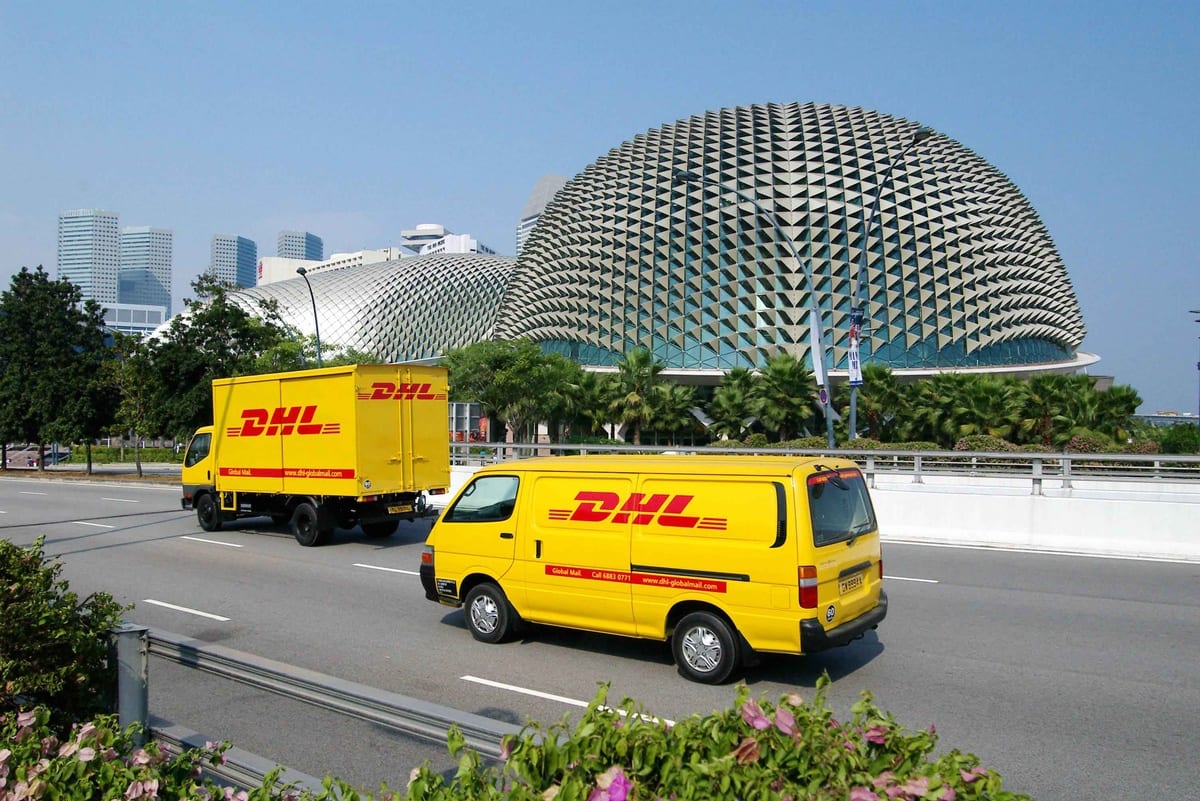
    International logistics company DHL Express, part of Deutsche Post’s DHL Group, launched a service center and a gateway worth Rp 17 billion (US$1.26 million) to support its business operations in and out of Batam, Riau Islands, on Monday.

    DHL Express decided to expand its business in Batam given its potential as the third-largest city in Sumatra, well known as an industrial area, an emerging transport hub, and part of the Indonesia-Malaysia-Singapore golden triangle.

    “This new investment could improve our network in Indonesia that consists of gateways in Balikpapan, Batam, Denpasar, Jakarta, Medan and Surabaya,” Sean Wall, executive vice president of network operations and aviation of DHL Express Asia-Pacific said.

    The new facility has the capacity to handle 2.4 million kilograms of cargo and process up to 150,000 shipments per year. About 26 people work in the 972-square-meter facility, with three certified employees for handling dangerous goods.

    The company claimed that the facility was launched at the right time because the government is considering whether to make Batam a special economic zone for companies that are involved in aircraft maintenance, repair and overhaul.

    “With the potential of Batam being opened as a special economic zone for the aviation industry, DHL’s investment will be able to support the growth of the aviation industry in Indonesia,” Ahmad Mohamad, senior technical advisor of DHL Express Indonesia, said.
  • Thai univeristy opens Alibaba e-commerce training center

    Thai univeristy opens Alibaba e-commerce training center

    The University of the Thai Chamber of Commerce (UTCC) has become an authorized Alibaba e-commerce training center in Thailand.

    Both organizations said they will work to accelerate e-commerce growth in Thailand and help Thai SMEs position themselves in the global market.

    Several collaborative programs, including training the trainers, have already been implemented. A team of Alibaba personnel has coached UTCC faculty members in the School of Business and the School of Science and Technology, among others, to become certified Alibaba trainers.

    These trainers, in turn, are now ready to train Thai SMEs, entrepreneurs and UTCC students to run businesses on Alibaba.com.

    UTCC said it can train more than 5,000 individuals per year, which would help create more e-commerce-minded entrepreneurs and allow more SMEs to expand their businesses internationally.

    “Thai SMEs can potentially drive Thailand’s economy. They just need opportunities to do so. UTCC is now taking the lead to open the door of opportunities for those who aim to take their B2B businesses to another level,” said UTCC President and Associate Professor Dr. Sauwanee Thairungroj.

    Jerry Wu, Alibaba’s country manager in Thailand, said the company sees great potential in products from Thailand and hopes to train Thai SMEs to compete effectively on the global stage through e-commerce.

  • NEC sets up open-source software center

    NEC sets up open-source software center

    NEC in Japan and NEC Technologies India have established the “OSS Technology Center,” an organization specializing in technical support related to the use of open source software (OSS).

    The new organization began operations July 1, with approximately 50 staff based out of NTI, consisting of experienced OSS engineers who are well-versed in OSS solution architecture, as well as essential software development and support capabilities.

    The OSS Technology Center aims to strengthen the organizational structure for supporting global enterprises in building systems based on OSS, to reinforce collaboration with international OSS vendors and to provide rapid technical support to users who construct systems operated globally using OSS.

    Moreover, the new organization will actively carry out development of new network functions related to Software-Defined Networking (SDN), Network Functions Virtualization (NFV) and application platform functions, such as container and Platform as a Service (PaaS).

    All of these are part of the OSS Technology Centre’s OpenStack-based development activities, in addition to its contributions to making source codes openly available by providing them to the OSS community.

    In recent years, the need for enterprises to capitalize on OSS, particularly OpenStack, in cloud computing, big data computing and SDN/NFV, has become increasingly pronounced.

    Also, in terms of next-generation ICT technologies, there are heightened expectations towards OSS applications in areas related to Systems of Engagement (SoE) and Internet of Things (IoT).

  • DHL Inaugurates S$160-million Advanced Regional Center in Singapore

    DHL Inaugurates S$160-million Advanced Regional Center in Singapore

    DHL Supply Chain has launched its Advanced Regional Center (ARC) in Singapore. Built at an investment of more than S$160 million, the new 90,000 sqm facility features an S$18.8 million multi-customer automation system featuring advanced robotics.

    The pioneering system allows customers to enjoy the benefits of automation solution without the need for significant capital investment. The technological enhancement uses 130 robotic shuttles to pick and store products from 72,000 locations spread across 26 levels, improving picking efficiency by 20 per cent and utilising 40 per cent less space than conventional warehousing operations.

    This is the first of its kind deployed by DHL globally and creates a model for the future of warehousing in land-scarce countries and dense cities where land availability is limited and expensive.

    “As an organisation, our spirit thrives on a hunger for new knowledge and innovations that we can bring to customers to meet the challenges of Industry 4.0, the fourth industrial revolution. We see the Asian region as a swift adopter of technologies for enhanced productivity and efficiency. By 2020, Asia will constitute 30 per cent of our total revenue. Facilities like the Advanced Regional Center offer a ready model of innovations that reduce complexity, improve accuracy and maximize opportunities for productivity gains,” said Frank Appel, Chief Executive Officer, Deutsche Post DHL Group.

    Co-located within the ARC is the DHL Asia Pacific Innovation Center (APIC), DHL’s first innovation centre outside of Germany and a joint development with the Singapore Economic Development Board (EDB). Launched in 2015, APIC is the first dedicated centre for innovative logistics services in the Asia Pacific region and showcases futuristic technologies.

    As a multi-customer facility, the Advanced Regional Center also offers bespoke solutions to cater to specific industry needs. For example, the facility boasts clean rooms for Life Sciences & Healthcare businesses, specialised infrastructure for aerospace operations and customized storage solutions for managing service parts for technology customers.

    Purpose-built to industry-leading standards, the ARC facility has been awarded ‘gold status’ for its energy and environmental design. The company has also implemented robust security measures that are in accordance with global TAPA standards.

  • Apple eyes Vietnam R&D centre

    Apple eyes Vietnam R&D centre

    US tech giant Apple is mulling a $1-billion regional data hub in Hanoi, according to the Dien dan doanh nghiep, the official publication of the Vietnam Chamber of Commerce and Industry.

    “Apple is studying the sites for the construction and completing the investment procedures,” the publication said, cited its source.

    This will be Apple’s first investment in Vietnam and it will be following in the footsteps of South Korean conglomerates Samsung and LG, and US-headquartered Microsoft, which have been present in the country for years.

    However, while the others have invested in manufacturing facilities in Vietnam, Apple will reportedly build a data centre meant for its entire Asian operations.

    Reuters reported in November last year that Apple had set up a subsidiary in the Southeast Asian country to import and sell its mobile phones directly in this market.

    Samsung is one of the biggest investors in Vietnam with $13 billion direct investment in factories and a research hub in Bac Ninh, Thai Nguyen and Ho Chi Minh City. LG Electronics is also building a $1.5-billion producing complex in northern Vietnam. Microsoft has shifted its smartphone production from China, Hungary and Mexico to Vietnam in 2014.

    Meanwhile, the iPhone maker has been aggressively investing in R&D with a spend of $8 billion last year. Apple already has R&D facilities in the UK, China, Taiwan, US, Israel and Japan.

    “It is unclear when Apple will deploy the Hanoi-based centre, but the size of the project has shown the high potential of the Vietnam market to the US tech major,” the Dien dan doanh nghiep commented.

    Samsung, as Apple’s biggest competitor in the Vietnam’s mobile phone market, is also investing in two R&D centres, a $300-million new one in Hanoi and a facility within the $1.4-billion complex in Ho Chi Minh City.

    Several other global tech and electronics firms have chosen Vietnam as base for their global back-end and manufacturing activities, including Hewlett-Packard, Panasonic and Nissan Techno.

    Vietnam is considered as the next manufacturing powerhouse of Asia, fueled by its growing economy, young and urbanised population and cheap labour cost.

    Also, US has been Vietnam’s biggest export market for the last couple of years, accounting for the largest proportion of 20.7 per cent of the total exports, according to a latest update of Trading Economics.