Retail News CRM

Tag: ceo

  • Lululemon’s Chief Executive Resigns Over Behavior

    Lululemon’s Chief Executive Resigns Over Behavior

    Canadian activewear retailer and manufacturer Lululemon has announced its CEO Laurent Potdevin is resigning effective immediately amid unspecified misconduct.

    Potdevin, who has been with the company for four years, will also resign from the board.

    The board, led by glenn Murphy, executive chair, has already begun searching for his replacement.

    “Lululemon expects all employees to exemplify the highest levels of integrity and respect for one another, and Mr. Potdevin fell short of these standards of conduct,” the retailer stated.

    According to Murphy, while it was a difficult and considered decision, the board thanks Laurent for his work in strengthening the company and positioning it for the future.

    “Culture is at the core of Lululemon, and it is the responsibility of leaders to set the right tone in our organisation,” he said.

    “Protecting the organisation’s culture is one of the board’s most important duties.”

    Three of Lululemon’s senior leaders are being elevated and will take on additional responsibilities, reporting to Murphy.

    Celeste Burgoyne, executive vice president, Americas, will oversee all channel and brand-facing aspects of the global business, including stores and e-commerce, as well as brand marketing; Stuart Haselden, chief operating officer, will have responsibility for all operations related to finance, supply chain, people, and technology; and Sun Choe, senior vice president of merchandising, will guide all aspects of product development, design, innovation, and merchandising.

    Murphy said the company is confident that Burgoyne, Haselden and Choe will continue to execute on Lululemon’s growth strategy and drive global performance.

    “Based upon their contributions to the recent expansion of the business, their history of collaboration with one another and their strong support across the Lululemon organisation, we believe this trio of leaders will take Lululemon from strength to strength,” he said.

    The retailer also reaffirmed its updated guidance provided on January 8 and said the company’s growth strategies remain on track to achieve $4 billion in revenue in 2020.

    While the reasons for the departure of Potdevin are unclear, his exit is a blow to Lululemon, according to Neil Saunders, managing director of analysis firm GlobalData Retail.

    “During his tenure, Mr. Potdevin oversaw the steady expansion of Lululemon through both calm and rough periods in the athleisure market,” he said.

    “His innovative approach and his clear sense of Lululemon’s values and essence is one of the reasons the company has enjoyed continued success, even while other sporting brands struggle to generate growth.

    “Although we see executive chairman Glenn Murphy as a capable pair of hands in the short term, Lululemon needs a CEO to guide it as it expands overseas and tries to make further gains in its home market. It is crucial that the right person is selected, but it is equally appointment that the task is undertaken with urgency so that Lululemon doesn’t lose momentum.”

    Saunders said the announcement is vague and damaging to the retailer’s image.

    “Lululemon owes it to investors and to customers, to be clear about the reasons Mr. Potdevin was made to depart. As a company that prides itself on transparency and openness, we would expect it to have an honest conversation with stakeholders. Failure to do so will likely lead to speculation which could ultimately harm the brand,” he said.
  • Former DKNY Commercial Head, Paul Kotrba joins SEAFOLLY as Chief Executive Officer

    Former DKNY Commercial Head, Paul Kotrba joins SEAFOLLY as Chief Executive Officer

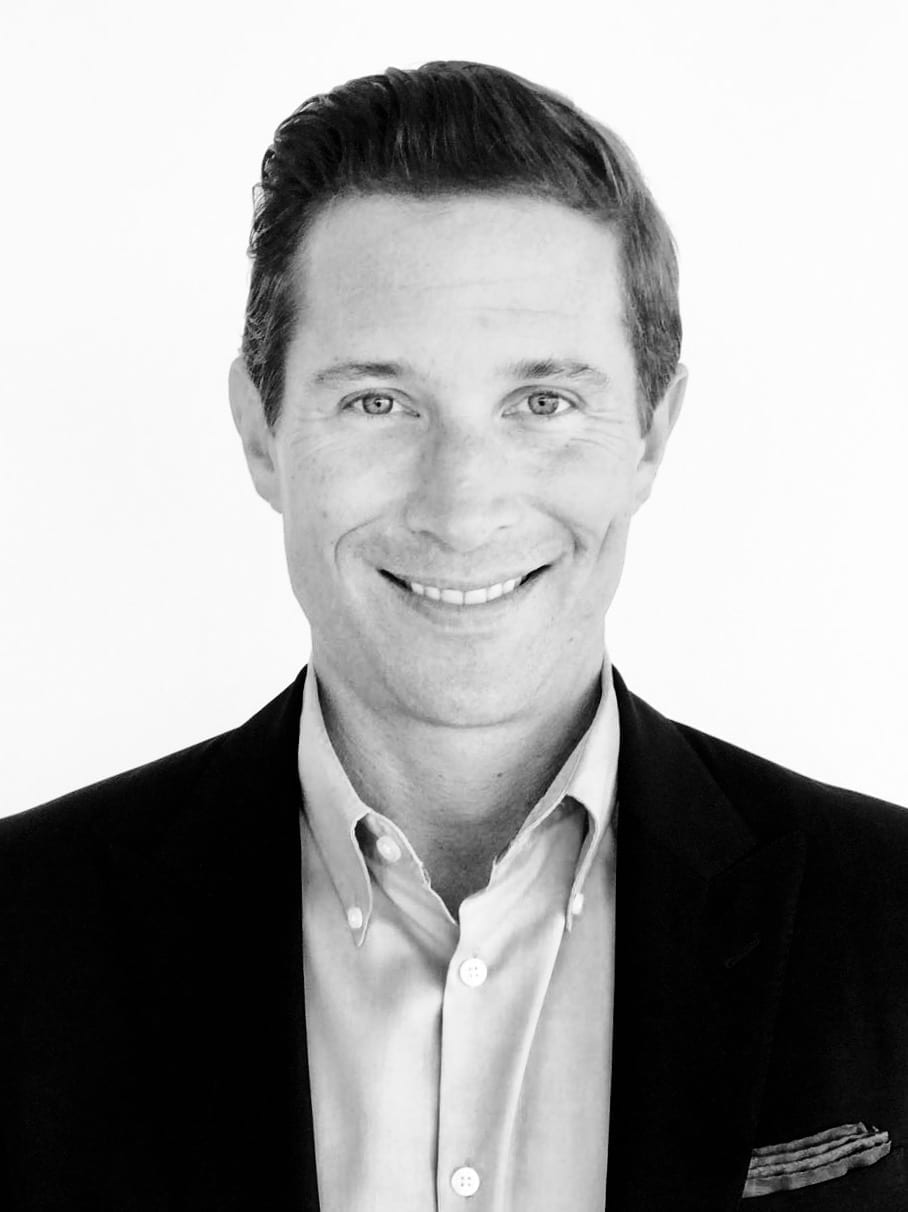
    Paul Kotrba has been appointed SEAFOLLY’s new CEO. This international appointment will enable SEAFOLLY, the 42-year old Australian swimwear powerhouse, to further develop its global growth potential.

    Originally from Vienna, Austria, Kotrba is an experienced global retail executive with over 15 years spent in New York City at Donna Karan and DKNY during the period of ownership under LVMH. There he successfully built brand equity by leading the execution of the groups’ commercial growth strategy across the US, Europe, Middle East and Asia.

    Paul Kotrba: “I am very much looking forward to joining the SEAFOLLY team and for us to expand this powerful Australian brand across the globe. It is impressive what the founders and the management team have accomplished and to experience the loyal following the brand has, especially here in Australia. I believe there is now a real opportunity to build SEAFOLLY into the world’s number one iconic swimwear and beach lifestyle brand.”

    Commenting on the appointment, Chairman and Managing Partner of the majority shareholder private equity group, L Catterton Asia, Ravi Thakran, stated: “Paul’s appointment is another significant step in our journey in continuing to expand the brand that Peter and Anthony Halas have successfully built over the last four decades. Paul’s leadership and experience will be a huge asset to SEAFOLLY in the next stage of growth and bring us closer to becoming the world’s most recognized brand in this exciting category.”

    Founded in 1975 by Peter & Yvonne Halas, the SEAFOLLY brand was led by Anthony Halas since 1998 when he became CEO, and subsequently grew the business across several international markets in Europe, North America and Asia.

    Anthony Halas, who remains a Non-Executive Director and shareholder stated, “Paul’s extensive commercial acumen and experience building brand equity in established and emerging markets is second-to-none. His international experience combined with SEAFOLLY’s unique history is a success formula for the brand’s future.”

  • Neiman Marcus appoints new CEO

    Neiman Marcus appoints new CEO

    It is a new era for Neiman Marcus. The US luxury department store chain has appointed a new CEO, Geoffroy van Raemdonck, in the wake of the departure of current chief executive, Karen Katz.

    Karen Katz, who is retiring after more than 30 years with Neiman Marcus, served in her capacity as CEO for seven years. She will relinquish her role next month, 12 February 2018.

    Having served as President for Europe, the Middle East and Africa (EMEA) and global travel retail at Ralph Lauren, van Raemdonck joins Neiman Marcus at a tumultuous time in the company’s history.

    With a solid track record at Ralph Lauren, spearheading the luxury brand’s omnichannel transformation, the luxury executive’s appointment hopes to lead Neiman Marcus into future growth and relieve heavy debts.

    “We are thrilled to welcome Geoffroy to Neiman Marcus, and look forward to extending the company’s positive momentum under his leadership,” said Neiman Marcus chairman David Kaplan.

    “He is a global industry leader and business builder with exceptional vision and energy.”

    Katz will remain on Neiman’s board of directors, and will work with van Raemdonck during the transition process.

    “Geoffroy has an impressive track record of success at luxury brands, and he is the right person to lead the company through this next phase of growth,” Katz said.

    During his career, Van Raemdonck has also spent time at French luxury group Louis Vuitton from 2008 to 2013 and Victoria’s Secret owner, L Brands Inc.

    Neiman Marcus, the Dallas-based group, which owns MyTheresa.com and Bergdorf Goodman, has been struggling since 2013, after Ares and Canadian public pension fund CPPIB acquired it from other private equity firms, and left it with a nearly $5 billion debt load.

    The firm’s most recently financial quarterly result saw losses widen to $26.2 million from $23.5 million over the same period last year, as debt and previously accrued losses continued to weigh on the business.

    However, Neiman Marcus recorded a 4.2% rise in comparable revenue in the first quarter of 2018, which it attributed to its ‘digital first’ strategy and new technology investments.

    Quarterly revenue rose to $1.12 billion, up 3.8% from $1.08 billion a year ago, said the firm.

  • Fernandes to be co-group CEO of AirAsia X

    Fernandes to be co-group CEO of AirAsia X

    Tan Sri Tony Fernandes, who is currently AirAsia’s non-executive director, has been redesignated executive director and co-group chief executive officer of the airline. The long-haul sister company of AirAsia told us that the change would be effective on Jan 1, 2018.

    This means Fernandes, 53, will join current group CEO Datuk Kamarudin Meranun at the helm.

    AirAsia Bhd, where Fernandes is already holding the posts of executive director and group CEO, also recently announced changes at the top as part of its internal reorganisation.

    In a separate development, Bernama reported that AirAsia’s unit, PT AirAsia Indonesia Tbk (AAID), has completed the acquisition of 57.25% shareholding in PT Indonesia AirAsia (IAA).

    In a filing with Bursa Malaysia yesterday, AirAsia said, as part of the transaction, AAID completed a rights issues and divestment of its coal trading and transportation businesses.

    “The net cash proceeds of 26 billion rupiah (RM7.78mil) from the rights issue and the divestment would be used for working capital purposes of AAID,” it said.

    It said AirAsia Investment Ltd (AAIL), AirAsia’s wholly-owned unit, would continue to hold a 20.95% direct shareholding in IAA and pursuant to the transfer of IAA Perpetual Securities amounting to 1.27 trillion rupiah to AAID, it has acquired a 47.71% shareholding in the listed AAID.

    Based on yesterday’s last traded price of 240 rupiah, the value of AAIL’s quoted investments in AAID amounted to 1.22 trillion rupiah (RM367.1mil), it said.

    “The objective of the above corporate exercise is to provide IAA access to the equity capital markets, increase its visibility and profile, and also to benefit from the higher corporate governance standards that demand greater transparency and accountability being an integral part of an Indonesia Stock Exchange-listed entity,” it said.

  • Kanebo Cosmetics President plan to depart

    Kanebo Cosmetics President plan to depart

    Kanebo Cosmetics announced that Masumi Natsusaka, the company’s President, is scheduled to leave his post at the end of the year.

    Natsusaka has served in the role of the president of Kanebo since 2012, and is credited for orchestrating the brand’s recall of 50 products due to white splotches reported on the skin of customers, caused by Rhododenol. Following this, Natsusaka also made improvements to the company’s customer response bureau.

    In addition, Kanebo said Natsusaka’s successor, Yoshihiro Murakam, is planned to start in the head role, effective January 1, 2018.

    Natsusaka joined Kao Corp. in 1986, the owner of Kanebo since 2006, and previously served as president of its global skincare business. He is a graduate of Tokyto’s Rikkyo University.

    Kanebo has been strengthening its global reach and product portfolio in recent seasons. In 2016, the Japanese brand launched a namesake luxury skincare line and high-end cosmetic collection in its domestic market.

    More recently, Kanebo brought the same line to the European market in September 2017. In addition to the new brand, it also revealed its prestige line Sensai in Europe, the Middle East and South Africa.

    Looking ahead, Kanebo Cosmetics aims to bring its new line of skincare products to China in 2020. Kanebo hopes its namesake brand will become a pillar of global operations and is aiming for 30 billion yen ($264 million) in annual sales by 2020.

    In China, the brand already offers midrange products under its Kate, freeplus and other brands, priced at around 1,000 yen to 3,500 yen per item. Kanebo-branded products will be priced higher than those brands, and sales are said to begin in major cities such as Shanghai before being expanded across the country.

    For the year ending December 31, Kao Corp.’s net profit grew 20.3 percent to 126.55 billion yen ($1.17 billion). Net sales for the same period declined 1.1 percent to 1.46 trillion yen. Hindered by currency exchanges, yearly sales would have increased by 3.2 percent.

  • Morten Lundal to step down as Maxis CEO

    Morten Lundal to step down as Maxis CEO

    Morten Lundal will be stepping down from his position as chief executive officer of Maxis next year after serving the Malaysian telecoms operator for nearly five years.

    In a filing with Bursa Malaysia, Maxis said Lundal will be leaving the company when his contract expires on March 31, 2018.  No official reason was provided, and Maxis will reveal a successor in due course, the operator said.

    Lundal joined Maxis as CEO back in October 2013, bringing over 16 years of experience in the telecoms industry onboard. He was previously CEO of Digi, before joining Vodafone in various global positions within the British telecoms giant in 2008.

  • Prudential appoints Aman Chowla as Thailand’s new CEO

    Prudential appoints Aman Chowla as Thailand’s new CEO

    Prudential Life Assurance (Thailand) Public Company Limited (PLT) has appointed Aman Chowla as Chief Executive Officer.

    Aman joined Prudential in 2011 and brings with him over 20 years of experience in financial services. He has worked in several markets across Asia including India, Singapore, Malaysia and now Thailand.

    Having held functional general Management & Transformation roles in his career, his last role was as the Chief Executive Officer of Prudential BSN Takaful BHD in Malaysia.

    “Thailand is a key market for Prudential in Asia. I am truly excited with the opportunities for growth, but more importantly to do our bit to bridge the protection gap and increase insurance penetration rates,” Aman said.

  • New CEO says Uber Vietnam will not be distracted by criticism

    New CEO says Uber Vietnam will not be distracted by criticism

    Traditional taxi firms have been protesting against Uber and Grab, accusing the ride-hailing apps of unfair competition. Uber Vietnam on Thursday said the company would focus on growing and serving its partners and passengers and would not be distracted by criticism, following protests and accusations of foul play by traditional taxi firms.

    Tom White, the company’s newly appointed CEO, issued the statement during a press briefing at the unveiling of Uber Vietnam’s new partner support center in Hanoi.

    “My focus would be to serve them as best as I possibly can and not be distracted by criticisms about this,” he said.

    Uber Vietnam’s key objective instead would be to further expand across the market and reach an even greater number of riders and drivers.

    “There have been millions of app downloads here in Vietnam and we’re only scratching the surface of what’s possible.”

    Stressing reputation as a precious asset for Uber, White said he would prioritize building and maintaining trust with the Vietnamese government.Regarding his appointment as the new CEO of Uber Vietnam, White said his experience working for Uber in Australia had played a role in the decision. As one of its earliest members, he helped build the company there from scratch and forged a strong and trusting relationship with the Australian government.

    While admitting he had much to learn after moving from Australia to Vietnam, White also said he hoped to be able to work with the government to make policies more open and regulations more fair across all platforms for companies to compete and allow consumers to benefit from the competition.

    Regarding Ho Chi Minh City’s demand last month for VND66.68 billion ($2.93 million) in tax arrears, White said that the company firmly believed it had met all its tax obligations and complied with government regulations.

    Tom White is an Australian who joined Uber in January 2015 and held various management positions in Uber Australia and New Zealand. He was appointed as the new CEO of Uber Vietnam earlier this month following his predecessor Dang Viet Dung’s departure.

    Dung, who had been Uber Vietnam’s CEO since the U.S.-based firm first entered the country in 2014, left the company on October 1, but no information about the reasons for his departure has been revealed.

    His departure triggered speculation that Uber Vietnam was in a crisis, especially after a recent tax scandal.

    Late last month, tax authorities in Ho Chi Minh City demanded VND66.68 billion ($2.93 million) in arrears from Uber Vietnam, including fines for faulty declarations and late payments.

    Following the incident, rumors started to spread that Uber would be leaving Vietnam. The company was quick to dismiss this.

    As of August, Uber had four million users in Vietnam, according to official company data.

  • Uber Vietnam fills vacated CEO position

    Uber Vietnam fills vacated CEO position

    The Australian replacement has worked in management positions for the ride-hailing firm for two years. Uber Vietnam has appointed a new CEO following the abrupt departure of its previous leader two weeks ago.

    Tom White, an Australian who joined Uber in January 2015, is now holding this chair.

    White will be in Hanoi soon to take up the position, a source close to the matter told.

    According to his Linkedin profile, White worked as Uber’s head of cities in Australia and New Zealand from July to September this year after leaving his position as general manager in Western and Southern Australia, which he held from February 2016 to June 2017.

    Before that, he was Uber’s city leader in Perth from July 2015 to February 2016 and demand manager for the U.S.-based ride-hailing firm from January to July, 2015.

    “I’m excited to be setting sail for Vietnam to help the Uber team there write their next chapter of their story,” White wrote in a Tweet last month.

    Earlier this month, Dang Viet Dung, the first CEO of Uber Vietnam, left after holding the position for three years.

    No information about the reasons for his departure has been revealed to date.

    His departure triggered speculation that Uber Vietnam was in a crisis, especially after a recent tax scandal.

    Late last month, tax authorities in Ho Chi Minh City collected VND66.68 billion ($2.93 million) in arrears from Uber Vietnam, including fines for faulty declarations and late payments.

    Following the incident, rumors started to spread that Uber would be leaving Vietnam. The company was quick to dismiss this.

    As of August, Uber had four million users in Vietnam, according to official company data.

  • Uber Vietnam CEO leaves post, reasons unknown

    Uber Vietnam CEO leaves post, reasons unknown

    The company had to pay nearly $3 million in back-taxes and fines last month, but it is unclear if this had any bearing on the decision. Uber Vietnam has announced that its CEO Dang Viet Dung has left the company. No information about the reasons for his departure or who will replace him has been revealed.

    Dung, 32, took the helm of Uber Vietnam when the U.S.-based firm first entered the country in 2014.

    A graduate from Amherst College in the U.S., he took the post after halting a master program at Harvard Business School.

    Late last month, tax authorities in Ho Chi Minh City collected VND66.68 billion ($2.93 million) in arrears from Uber Vietnam, including fines for faulty declarations and late payments.

    Following the incident, rumors started to spread that Uber would be leaving Vietnam. The company was quick to dismiss this.

    As of August, Uber had four million users in Vietnam, according to official company data.

  • New Look CEO steps down after five years

    New Look CEO steps down after five years

    New Look CEO Anders Kristiansen has stood down after almost five years.

    The UK fashion retailer’s board has appointed Danny Barrasso, currently MD of UK & ROI, as interim CEO with immediate effect while it identifies a permanent successor.

    Chairman John Gnodde said Anders made a “fantastic contribution” during his tenure with New Look.

    “Under his leadership, the company has made significant progress and we wish him well for the future. As New Look embarks on its next phase of development, we have mutually agreed that it is the appropriate time for a change to the leadership of the company. Danny and the wider executive team have the full support of all the shareholders to provide continued operational progress and leadership as we search for a permanent CEO.”

    Kristiansen said he had enjoyed his time with the brand.

    “I am proud of what we have achieved as a company and have every faith in New Look’s future prospects and progression.”

  • Uber CEO Travis Kalanick resigns under investor pressure

    Uber CEO Travis Kalanick resigns under investor pressure

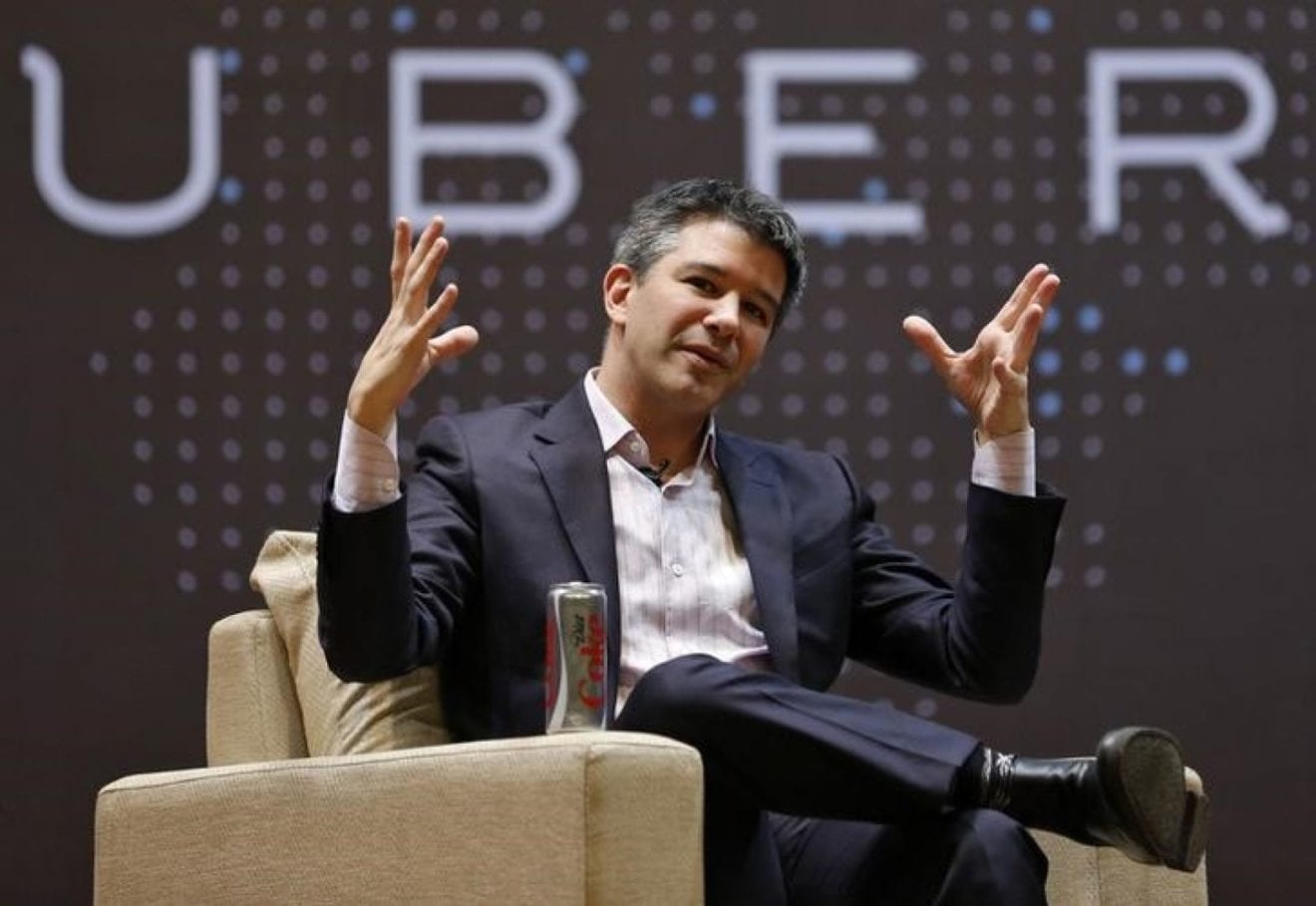
    Kalanick’s decision ‘was a surprise to everyone’, a second Uber spokesman said. Uber Technologies Inc Chief Executive Travis Kalanick, co-founder of one of the most influential technology companies of its generation, resigned on Tuesday under mounting pressure from investors over his leadership.

    Kalanick’s departure caps a tumultuous period for the world’s largest ride-services company, which upended the taxi industry and transportation regulations globally with Kalanick at the helm.

    “I love Uber more than anything in the world and at this difficult moment in my personal life I have accepted the investors’ request to step aside so that Uber can go back to building rather than be distracted with another fight,” Kalanick said in a statement first reported by the New York Times and verified by an Uber spokesman.

    Kalanick, 40, has faced increased scrutiny in recent weeks following an investigation into the culture and workplace practices at a company he helped start in 2009 and is now the world’s most highly valued startup.

    But it was a chorus of demands for changes at the top from some of Uber’s biggest investors that ultimately forced Kalanick out, according to a source familiar with the matter.

    Venture capital firm Benchmark, whose partner Bill Gurley is one of Uber’s largest shareholders and sits on its board, as well as investors First Round Capital, Lowercase Capital, Menlo Ventures and Fidelity Investments, all pressed Kalanick to quit.

    They delivered a letter to Kalanick while he was in Chicago, the New York Times reported, citing people with knowledge of the situation. The newspaper, which was first to report Kalanick’s resignation, said he would remain on Uber’s board.

    Kalanick’s decision “was a surprise to everyone”, a second Uber spokesman said.

    Kalanick’s departure comes after a lengthy investigation led by former U.S. Attorney General Eric Holder.

    Uber hired Holder to look into its culture and workplace practices after a female former employee publicly accused the company of what she described as brazen sexual harassment.

    Privately held Uber has been valued at $68 billion, shattering the norms for Silicon Valley startups, and the company embodied many of Kalanick’s aggressive and pugnacious personality traits.

    Following the release of recommendations stemming from the Holder investigation, which called for increased controls and oversight at the company, Kalanick said last week he would take a leave of absence for an undetermined period.

    He said he needed space to grieve the death of his mother, who died recently in a boating accident in which his father was also seriously injured, and to work on his leadership skills.

    Gurley, one of Kalanick’s closest confidants, praised the CEO on Twitter, after calling for his resignation.

  • ‘I’ve never aimed at being a billionaire’ says Vietjet CEO

    ‘I’ve never aimed at being a billionaire’ says Vietjet CEO

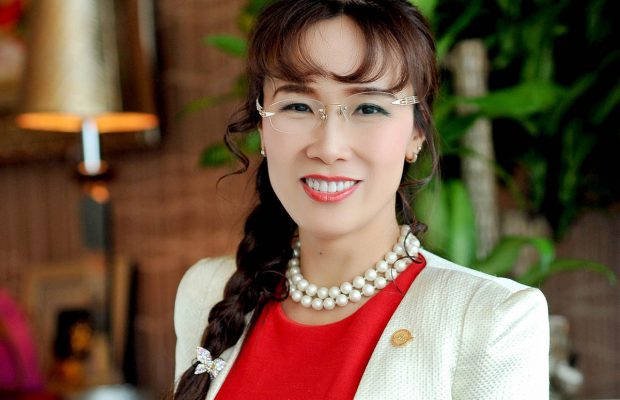
    Vietnam’s richest woman with an estimated net worth of $1.2 billion says she’s not used to the new title yet. CEO of Vietnam’s rising budget carrier VietJet said her main goal in business is not money or a “billionaire” title, which she received last month as the only self-made woman billionaire from Southeast Asia.

    “To be honest, I’m not used to it yet,” Nguyen Thi Phuong Thao, 46, said during the Forbes Vietnam Women Summit 2017 on Wednesday.

    “During my 30 years in business, I’ve never counted my money and I’ve never aimed at being a millionaire or billionaire,” Thao said.

    She said she did not grow up poor and thus earning money was never her primary goal. Her main concern, she said, is to build a strong stand for her business.

    Thao studied economics and finance in Soviet Russia in the 1980s. She founded VietJet, the country’s only private airline, in December 2011, after starting her career trading commodities in Eastern Europe and Asia.

    The “bikini” airline, nicknamed after its unique yet controversial promotional campaign for depicting a female crew in bikinis, now makes up 41 percent of the domestic air travel market, only one percentage point behind the national carrier Vietnam Airlines.

    It went public on February 28 and, in less than a week, reached the market value of $1.8 billion, ahead of Vietnam Airlines’ $1.7 billion.

    Thao said her carrier is not competing directly with Vietnam Airlines. “We create our own customers. We do not take them from others.”

    She said around 30 percent of VietJet’s passengers never flew before and more than half of their air routes are brand new.

  • Vietnam’s bank CEOs receive sky-high salaries

    Vietnam’s bank CEOs receive sky-high salaries

    Meanwhile, the managers at VP Bank receive twice as much as Vietcombank’s managers, about VND3.6 billion if the bank can fulfill the business plan. At ACB, the average level for key personnel is VND530 million a year.

    Vietnamese banks are more generous, accepting to pay billions of dong a year to their key personnel.

    VP Bank is believed to lead the banks in pay to members of the board of directors and supervisory board. Shareholders agreed to pay one percent of pretax profit, or VND32 billion to the members if the bank can make the pretax profit of VND3.2 trillion in 2016.

    There are nine members on the boards, which means that if the business plan can be fulfilled, each of the members can receive VND3.6 billion a year.

    Techcombank also promises attractive awards to the managers. Its shareholders approved the pay of VND29.54 billion in 2016 to the board of directors and supervisory board. With 11 members, each of them expects to receive VND2.6 billion this year.

    With satisfactory business result, Vietcombank’s shareholders approved the pay of VND1.9 billion for every member of the boards in 2015.

    The bank has consulted with shareholders about the pay equivalent to 0.35 percent of post-tax profit to the members of the boards in 2016, while the bank plans the pretax profit of VND7.5 trillion. This means that if the business plan is fulfilled, the pay would be VND2.3 billion.

    Meanwhile, Maritime Bank plans a little bit lower pay for the members of the boards, at VND16 billion. Every of nine members expects to get VND1.7 billion in 2016.

    Orient Bank plans a relatively modest pay to its key personnel with the budget of VND8.2 billion only for the members of the board. However, the figure is still higher by VND1.2 billion than the last year.

    Nam A Bank plans to pay VND18 billion to 18 members of the boards in 2016, the level which some shareholders think is too high icompared with the dividend of 5 percent paid to shareholders in 2015.

    Banking is the business field which offers high pay to staff.

    A report of Navigos Search showed that the two positions which received the highest pay in the first three months of the year were the senior executive of a joint stock bank and a service company. Each of them got over VND200 million a month.

    The following positions were ones in the fields of healthcare, service, trade and bank.

    Meanwhile, the managers of state-owned conglomerates, keep complaining that the pay is unreasonably low which cannot reflect the effective business performance of the enterprises.

  • Ericsson appoints new CEO

    Ericsson appoints new CEO

    Ericsson has appointed long-time board member Börje Ekholm president and CEO, effective from mid-January.

    Ekholm will replace interim CEO Jan Frykhammar on January 16, who is standing in following the resignation of Hans Vestberg in July.

    Ekholm joins Ericsson from Patricia Industries, a division of Sweden’s Investor – Ericsson’s largest shareholder -where he is CEO. Prior to this he was CEO of Investor AB between 2005 and 2015, and has held positions at companies including Novare Kapital and McKinsey and Co.

    “I am very excited about this opportunity. As the networks and applications become even more important in a 5G connected world, our customers, and the industry, look for continuous innovation,” he commented.

    “I look forward to joining the great team at Ericsson and work closely with existing and new customers around the world in shaping the future of our industry.”

    Ekholm is also a board member of Alibaba and several other companies. He is based in the US, and will stay there when he takes the role. He will retain his position on the Ericsson board.

    Ericsson recently announced plans to cut 3,000 jobs in Sweden as part of the vendor’s ongoing cost cutting program.