Retail News CRM

Tag: consumption

  • Women can make or break Vietnam’s F&B industry

    Women can make or break Vietnam’s F&B industry

    With more women spending more on eating out, they have become linchpins of the F&B industry, a study indicates. A new survey by HCMC-based market research firm Decision Lab finds that female consumers can make or break the food and beverage industry of Vietnam.

    Average visits per capita by female consumers to the out of home food and beverage market has increased by 5 percent during last year, from 121 between the fourth quarter of 2016 and the third quarter last year to 128 between the fourth quarter last year and the third quarter this year.

    Women have also increased spending on almost all major food channels in Vietnam, namely full service restaurants (FSR), or sit down eateries where food is served directly to the customers’ table, and quick service restaurants (QSR), where table service is minimal and the typical fare is fast food, street food, convenience stores, canteens and bars.

    As a result, women’s contribution to the out of home market revenue has increased by a whopping 10 percent.

    Among the women themselves, the 15-34 year-old segment accounts for 82 percent of the visits in the out of home market, and more than half of those by white-collar workers. Students are also seen as the driving force of female visits at 25 percent.

    As such, Decision Lab points out that the growing influence of women on the foodservice market is real and the industry would be well advised to use female-friendly messages to increase the traffic.

    According to market research firm Vietnam Report (VR), Vietnamese spend more than a third of their income on food and beverages, topping education and utilities.

    VR said the food and drink market has become more exciting in recent years with the entry of technologies such as phone apps that allow users to find nearby restaurants and order deliveries.

    Food and beverages were two of the 10 most bought products online last year, it said, citing data from market research company Nielsen.


  • Power consumption hits record high as Vietnam swelters under heat wave

    Power consumption hits record high as Vietnam swelters under heat wave

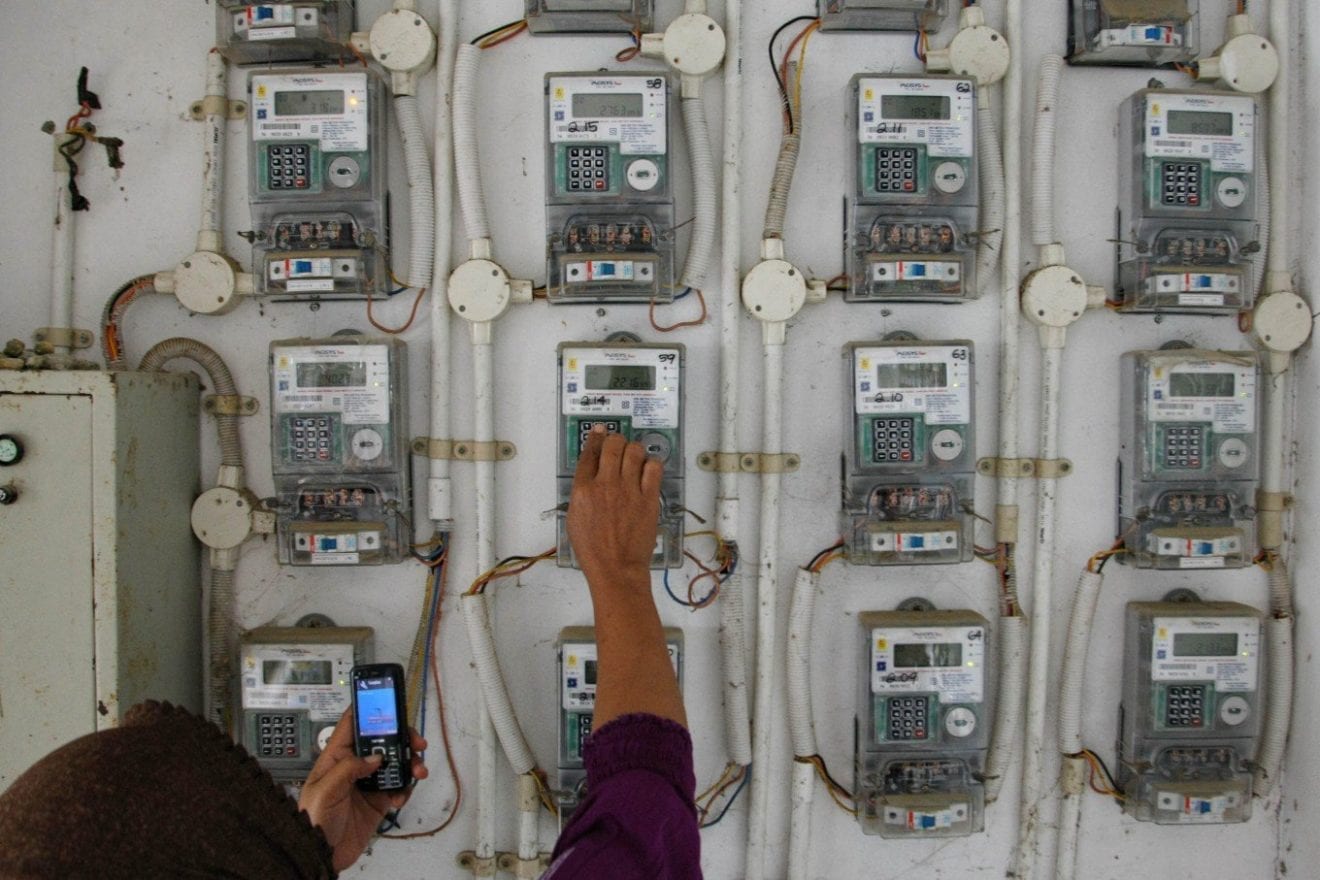
    Air conditioners and fans have been going at full blast as locals take cover. Vietnamese people have been draining the national power grid in an effort to keep cool over the past few days as temperatures climb to record highs, especially in the north.

    Nationwide power consumption was measured at 630 million kilowatt-hours (kWh) last Friday, up 11.8 percent over the previous week, according to the country’s power monopoly Vietnam Electricity (EVN).

    In the north, electricity output reached 290 million kWh that day, up 10 percent from last year.

    In Hanoi, the hottest part of the country since early June, local residents used up to 70 million kWh of electricity last Saturday, an increase of 8 million kWh from two days before.

    This is a 163-percent rise compared to the average level for May and a 127-percent rise against the same period last year.

    EVN has made preparations and there will be no power shortages, said Nguyen Duc Ninh, an EVN official.

    “This is just the first heat wave to hit this year, and EVN predicts higher power consumption as the temperature rises,” Ninh added.

    But he also calls on local residents to use electricity efficiently and economically to reduce the pressure on the power sector.

    On Saturday the Ministry of Industry and Trade said the government has no immediate plan to hike power prices.

    The demand for cooling devices has also been growing alongside the temperature over the past few days.

    Data from Google Trends revealed that key words for such devices, including air conditioners and steam cooling fans, surged over the weekend in Vietnam.

    “Sales of air conditioners rose 4-5 times to 120 units per day over the past week,” the owner of a store on Ha Dong District told.

    On Saturday afternoon, the temperature in Hanoi hit 41.5 degrees Celsius, the highest since 1971.

    On Monday morning, a 70-year-old woman fainted while driving a motorbike on Xa Dan Street in Hanoi and died just a few minutes later.

    Doctors at Bach Mai Hospital said the intense heat in the city may have been the cause of her sudden death.

    Meteorologists forecast that the heat wave in Hanoi will last until Tuesday.

  • Singapore leads region by online video consumption

    Singapore leads region by online video consumption

    Singaporeans lead the region in online video consumption, spending two hours every day tuning into video content, according to the results from a new YouTube Consumer Insights study conducted by Google Singapore and Kantar TNS.

    The survey of 1,035 Singaporeans aged 16 to 60 found that 78% of Singaporeans are turning to YouTube as their first stop for their daily dose of video. And perhaps not surprisingly, 6 in 10 agree that they visit YouTube for one video and end up looking at others.

    The study also found that Singaporeans are watching videos away from a desktop, with more than half of YouTube watch-time originating from mobile devices. Moreover, more than half are finding more content that they want to watch on YouTube than on TV, according to the study.

    Google pointed to recent research that it conducted with Ipsos that found attention to paid advertising on YouTube is 84% higher than advertising on TV. In addition, 95% of video ads on YouTube are also played with sound on, ensuring brands’ messages reach their audiences as intended.

    There is no question that the popularity of online video is at an all-time high; Google says that the hours of YouTube content uploads from Singapore has doubled compared to the previous year.

    “YouTube is popular with Singaporeans of all ages – who come to YouTube for entertainment, education, shopping and much more. With Singaporeans using YouTube to search for products, businesses looking to grow should use YouTube to tell their story and build their brands,” said Joanna Flint, country director of Google Singapore.

  • Online retail growth reflects changing consumption

    Online retail growth reflects changing consumption

    China’s online retail sales posted robust growth in the first quarter of the year, reflecting a changing consumption pattern, official data showed. Online retail volumes reached over 1.4 trillion yuan ($203 billion) in the first three months, up 32.1 percent year-on-year and more than double the pace of total retail sales, the Ministry of Commerce said on Wednesday.

    Online consumption of services such as tourism, dining and entertainment continued to rise, with sales of travel and take-away food rising by 64 percent and 163 percent, respectively.

    Central and western regions posted stronger growth in online spending and online shoppers in third- and fourth-tier cities.

    “Ten years ago, people said e-commerce would not take off in China. But as soon as you overcome the payment barrier, consumers here are so much more ready than in other countries to take it on,” said Richard McKenzie, a partner at consultancy Oliver Wyman.

    With the advent of better logistics, it is no wonder that online marketing is bringing more sales growth, said Vishal Bali, managing director of Nielsen China.

    “Physical and online stores don’t have to be against each other. That means more connection and integration, which is not simply for retailers but also affects consumer behaviour, manufacturers and other areas of industry,” he said.

    According to research firm Mintel, the cross-border shopping market is expected to post an annual growth rate of 15 percent from 2016 to reach 1.3 trillion yuan by 2021.

    “Haitao, or shopping directly from overseas sites, is likely to be more relevant to brands looking at initial market entry. Retailers and brands should therefore play to their different national specialties when attempting to differentiate themselves from their competitors,” said Matthew Crabbe, Mintel’s Asia-Pacific director of research.

    Another trend the Ministry of Commerce observed is that online players such as Alibaba Group Holding Ltd and JD.com Inc are expanding offline to improve the consumer experience with convenience stores as an emerging market.

    For instance, Alibaba and Shanghai-based retail conglomerate Bailian Group Co announced a partnership in February to jointly design bricks-and-mortar stores to deliver enhanced customer services through technologies such as geo-location, facial recognition and big-data driven customer management systems.

  • Total data created to grow tenfold by 2025

    Total data created to grow tenfold by 2025

    In response to a new study forecasting a tenfold rise in worldwide data by 2025, Seagate is advising business leaders and entrepreneurs to amplify their focus on the mega trends driving data growth over the next several years, and examine their business’ course for the future value of data from creation, collection, utilization and management.

    The IDC white paper, Data Age 2025, sponsored by Seagate, predicts data creation will swell to a total of 163 zettabytes (ZB) by 2025; indicating that the decade centered around the conversion of analog data to digital is being replaced by an era focused on the value of data; creating, utilizing, and managing ‘life critical’ data necessary for the smooth running of daily life for consumers, governments and businesses alike. Consumers and businesses creating, sharing and accessing data between any device and the cloud will continue to grow well beyond previous expectations.

    Further, whereas once consumers were the primary creators of the bulk of the world’s data, Data Age 2025 predicts this will shift, with enterprises creating 60% of the world’s data in 2025. Business leaders will have the opportunity to embrace new and unique business opportunities powered by this wealth of data and the insight it provides but will also need to make strategic choices on data collection, utilization and location.

    Virtually every enterprise, the white paper indicates, is being affected by the major data-driving trends. Notable drivers of the shift from primarily consumer-led to enterprise-driven data include:

    • The evolution of data from business background to life-critical –By 2025, nearly 20% of the data in the global datasphere will be critical to our daily lives and nearly 10% of that will be hypercritical.
    • Embedded systems and the Internet of Things (IoT) – By 2025, an average connected person anywhere in the world will interact with connected devices nearly 4,800 times per day – basically one interaction every 18 seconds.
    • Machine learning changing the landscape –IDC estimates that the amount of the global datasphere subject to data analysis will grow by a factor of 50 to 5.2 ZB in 2025.
    • True mobile and real-time data –By 2025, more than a quarter of data created will be real-time in nature, and IoT real-time data will constitute over 95% of it.
    • Automation and machine-to-machine technologies shifting the bulk of data creation away from traditional sources – While data creation in the previous 10 years has been characterized primarily by an increase in entertainment content, the coming decade will reflect the shift to productivity-driven and embedded data, as well as non-entertainment images and video such as surveillance and advertising.
  • Household consumption key to achieving economic growth in 2018

    Household consumption key to achieving economic growth in 2018

    The head of Indonesias National Development Planning Agency (Bappenas), Bambang Brodjonegoro, has said household consumption and inflation will be the key to achieving higher economic growth in 2018.

    “To ensure consistent growth, the best recipe is to maintain the rise in household consumption, while keeping the growth at five percent or more,” Bambang said as he provided directives at a Bappenas consultation gathering in Jakarta on Friday.

    According to Bambang, household consumption will rise only when consumers have confidence about economic outlook and spend money.

    Bamang stressed that the central and regional governments should be able to ensure a perception of a normally-running economy so that people are willing to spend money.

    “If people spend money (to shop), it means household consumption is increasing, which boosts economic growth. When people shop, retail trade increases, large trade also rises, and the economy registers growth,” explained Bambang.

    Meanwhile, inflation itself should be kept as low as possible. According to Bambang, controlling inflation was the most effective way of maintaining purchasing power.

    If inflation is allowed to erode purchasing power, he added, the growth in household consumption will also be affected.

    When it comes to inflation itself, three factors can have an impact. These are a rise in food prices, change in government-set (administered) prices and core inflation. As far as core inflation is concerned, it is the task of Bank Indonesia to control the availability and demand for money. The administered price falls under the central governments authority.

    Bambang reminded that at times, two aspects can be controlled but food prices can become volatile. As a result, inflation seems higher than it should be.

    “This becomes a matter of concern in the region. Of course, there are no specific instances in the region about dealing with inflation, and response should be coordinated. But it needs to be consistently ensured that inflation should be kept as low as possible by maintaining food price stability and meet the peoples food needs,” Bambang concluded.

  • Lawmaker wants increase milk production, consumption

    Lawmaker wants increase milk production, consumption

    Legislator of Commission X of the House of Representatives (DPR), Dwita Ria Gunadi wants to increase milk production and consumption because the per capita milk consumption in the country is still lower than other Asian countries.

    “The per capita milk consumption in 2015, based on data from the Agriculture Ministry was only 12.1 liters per annum,” Dwita Ria Gunadi said in a written statement here on Thursday.

    The per capita consumption is still is still lower than the per capita consumption of India, which reached 48.62 liters per annum, Singapores 44.5 liters and Malaysias 36.2 liters.

    Indonesias per capita milk consumption is even lower than that of Thailand, which reached 33.7 liters per annum, the Philippines 17.8 liters and Vietnams 14.3 liters.

    Dwita reminded that the milk imports of Indonesia should meet domestic need, which has exceeded 80 percent.

    “This condition is a cause for concern because our land has potential for developing and breeding milch cows,” Dwita, who is a member of the Greater Indonesia Movement Party, (Gerinda) said.

    She has also started a discourse to boost production though among others, the allocation by local governments of funds to breeders for stimulating milk production.

    It was earlier noted that the fresh milk production of milch cows in the Malang District of East Java, increased from 117,235 tons in 2014 to 132,052 tons in 2015 and during the first semester of 2016 it was pegged at 66,593 tons.

    “In order to increase production and consumption of milk, we provide milch cow assistance to breeders. This year, 92 heads of milch cows were provided, and next year this assistance will continue, but the number will not be as big as this year,” Sudjono, the head of Malangs Animal Husbandry Service, said on November 4.

    He added that over the past five years the number of milch cows provided for breeders accounted for 826 heads.

    The farmers, who got the assistance, were those from milch cow production centers, such as Wajak, Pujon, Ngantang, Poncokusumo and the Jabung sub-districts.

    According to the Cooperatives, Small and Medium-Scale Enterprises (SME) Minister Puspayoga, milch cow farmers must increase and maintain the quality of their milk production. All milk produced domestically, including by members of cooperatives, should be absorbed by the milk-processing industry (IPS) in order to meet the domestic need and reduce imports.

    An executive from one of the countrys food and drinks company, PT Nestle Indonesia, argued that to increase productivity and improve the quality of milk, local milch cow farmers should adopt sustainable breeding practices.

    “The key to increasing production and improving quality is to adopt sustainable breeding practices and to optimize cowshed cleanliness,” R Wisman Djaja, PT Nestle Indonesias director for Sustainability agriculture Development and Procurement Affairs, had said in Malang, East Java last month.

    The government, according to Minister Puspayoga, is now trying to resolve the constraints being faced by milch cow farmers and milk processing industries.

  • Indonesian ministry to boost fish consumption

    Indonesian ministry to boost fish consumption

    The Indonesia Industry Ministry will continue to encourage and increase fish consumption in various regions to raise domestic demand for fish, in an effort to advance the maritime and fisheries sector.

    “We will boost fish consumption, apart from exports, through developing traditional fish industry, which would increase the demand in the fishery sector at home,” Industry Minister Airlangga Hartarto said.

    The minister made the remarks in his address to the working meeting of the Indonesian Chamber of Commerce (Kadin) on fisheries affairs in Jakarta on Monday.

    Hartarto said that his ministry would also encourage fish consumption on a national scale.

    Slamet Soebjakto, Director General of Fisheries of the Ministry of Maritime Affairs and Fisheries, said his ministry wanted to increase the peoples sources of protein intake through increasing their fish consumption.

    It was earlier reported that the Indonesian government had been giving priority to increase the fisheries production by relaxing regulations for fishermen and local industries. The move is meant to support these sustainable industries in the development of the national fisheries sector and maintain seafood sovereignty.

    As part of the efforts to boost fish production, the government, though the Ministry of Maritime Affairs and Fisheries (KKP), had earlier built 15 Integrated Fisheries and Marine Resource Development Centers (SKPT) in various regions in the country. The aim of the SKPT is to boost fishery exports directly from the center without the need to go to Jakarta.

    The SKPT aims to maintain food resilience, increase fish consumption, foreign exchange earnings through exports, and raise the income of the people.

    Five of the SKPT are located in Simeullue (Aceh), Natuna (Riau Islands), Tahuna (North Sulawesi), Saumlaki (Maluku) and Merauke (Papua).

    Ten others are also built in Mentawai Island (West Sumatera), Nunukan (North Kalimantan), Talaud (North Sulawesi), Morotai (North Maluku), Biak-Numfor (West Papua), Sarmi (Papua), Mimika (Papua), Tual (Maluku), Rote Ndao (East Nusa Tenggara/NTT), and Maluku Barat Daya (Maluku).

  • Household consumption estimated to increase in third quarter

    Household consumption estimated to increase in third quarter

    Bank Indonesia estimated that household consumption rose in the third quarter of this year from 5.04 percent of the countrys Gross Domestic Products (GDP) in the second quarter of this year.

    One of the factors causing the increase was high consumption during Idul Fitri 2016, Executive Director of Statistic Department of the central bank Hendy Sulistiowati said here on Thursday.

    Increase in household consumption was also attributable to higher Consumer Confidence Index (IKK) that rose to 112.5 points from 111.6 points in the second quarter, Hendi said.

    “The quarterly increase in IKK, normally would result in an increase in household consumption,” she said.

    Household consumption has been the largest contributor to the countrys GDP accounting for 55.9 percent, followed by Gross Fixed Capital Formation (PMTB).

    Though rising quarterly, IKK fell monthly . In September IKK was 110 points down from 113.3 points in August.

  • Electricity consumption up 7.85 percent: PLN

    Electricity consumption up 7.85 percent: PLN

    The countries electricity consumption in the first half of 2016 reached 107.2 Terra What hour (TWh), up 7.85 percent from 99.4 TWh in the same period in 2015, state-owned electricity company PLN said.

    Senior Public Relations Manager of PLN Agung Murdifi said in a release here on Sunday that the consumption growth raised electricity sales revenue during the six months of 2016 by Rp3.2 trillion, or 3.15 percent, to Rp104,7 trillion over the same period in 2015 which amounted to Rp101,5 trillion.

    “The Increased consumption is in line with the increase in the number of subscribers to 62.6 million in June 2016 or additional 1.4 million customers from 61.2 million subscribers at the end of 2015,” he said.

    The Increase in the number of customers, he added, also raised the national electrification ratio of 88.3 percent in December 2015 to 89.5 percent in June 2016.

    Agung said operating expenses rose by Rp1.9 trillion (1.66 percent) to Rp119,7 trillion over the same period in 2015 which amounted to Rp117.8 trillion.

    Meanwhile, fuel expenses (BBM) fell by Rp8.4 trillion to Rp10.4 trillion, due to the decline of fuel consumption by 0.6 million kiloliters to 2.2 million kiloliters until June 2016.

    Realization of electricity subsidies in the first half of 2016 reached Rp26.6 trillion, down by Rp891 billion compared to the same period in 2015 amounting to Rp27.5 trillion.

    Agung added that in the first half of 2016 the EBITDA (earnings before interest, taxes, depreciation and amortization) was recorded at Rp30,2 trillion, up 3.3 trillion compared to the same period in 2015 which amounted to Rp26.9 trillion.

    “Net profit in the first half of this year reached Rp7,9 trillion,” he said.

    However, public accounting firm Tanudiredja, Wibisana, Rintis & Partners still awarded the PLN the qualified opinion rating for its June 2016 financial report.

  • For domestic consumption, China’s women are in the driving seat

    For domestic consumption, China’s women are in the driving seat

    It was a quick decision for Wu Qiaoyun, 35, from Yunnan province, when she splashed out nearly 90,000 yuan (HK$107,000) on a new Peugeot 301 just before the Lunar New Year.

    As a new mother of a four-month-old baby girl she believed a car would be more convenient for her family.

    Wu, an accountant at a state-owned company, mentioned the idea to her husband, who did not oppose the purchase, so she went ahead and paid for it, largely with the earnings from her 3,500-yuan-a-month salary, as her husband’s finances were tied up in the stock market.

    Wu’s is not an exceptional case in China, where women are playing a far bigger role in purchases for the family instead of being subservient to their husbands.

    According to a report by Economist Intelligence Unit, which surveyed 5,500 women across major cities in Greater China, India, Japan, Singapore and South Korea, 62 per cent of mainland women described themselves as joint breadwinners, compared with the average rate of 41 per cent.

    When it comes to e-commerce, women’s roles appear to be bigger on the mainland, with nearly 70 per cent of mainland interviewees saying they preferred the experience of shopping online to doing so in stores and are much more active than peers in South Korea (50 per cent), Hong Kong (30 per cent) and Japan (18 per cent).

    It is estimated that China has 480 million female consumers, and among them, 290 million are aged between 25 and 45.

    Women, who are making nearly 75 per cent of household buying decisions, are likely to be an important driver of domestic consumption in a market valued at more than 4.5 trillion yuan by 2019, especially in industries related to beauty, garment and leisure tourism, according to a memo by Guotai Junan Securities.

    The growing number of well-educated and financially independent women, especially those living in the cities, has also prompted traditional manufacturers and service providers in China to engage more in marketing to attract female clients, a trend that research firm Mintel named as one of the most influential in the retail market this year.

    China’s recent move to allow all families to have a second child, meant women would take on more financial responsibilities in the household, said Philix Liu, a trend analyst at Mintel.

    But women’s role in the economy remained weak compared with their male counterparts, said women’s rights activist Feng Yuan.

    Feng referred to a widening income gap between men and women in China. urban women in China earned only 65 per cent of what their male counterparts did in 2009, putting them five percentage points behind where they were in 1999.

  • China Consumption Growth To Stay Strong In 2016

    China Consumption Growth To Stay Strong In 2016

    China’s consumption will grow at a quick pace in 2016, the country’s Minister of Commerce Gao Hucheng assured investors Tuesday, while tackling issues such as impact of yuan devaluation, building more free trade zones and the U.S.-led Trans-Pacific Partnership (TPP) at a news conference.

    A slowdown in China’s traditional economic drivers — heavy industries and manufacturing — last year sent jitters in global financial markets and commodity markets, as China’s policymakers look to shift the balance of the economy toward a consumption-led growth.

    “China realized a major transformation of economic growth, from growth mainly driven by investments and foreign trade to one mainly driven by domestic demand, especially by consumption,” the minister said. In terms of consumption, China’s total retail sales of consumer goods rose 10.7 percent to hit 30.1 trillion yuan ($4.59 trillion) in 2015, he added.

    Consumption accounted for 66.4 percent of China’s GDP growth in 2015, the Chinese statistics bureau said in January.

    A weaker yuan has not had a direct impact on China’s foreign-trade growth, Gao said, adding: “I don’t believe yuan exchange-rate volatility since the August reform can have big impact on our trade.” The renminbi, has declined by a further 3 percent against the U.S. dollar after China devalued its currency by nearly 2 percent on Aug. 11 last year.

    Earlier in February, China had announced monthly trade figures that missed expectations with exports slipping 6.6 percent in January compared to a year earlier, while imports fell 14.4 percent year-on-year.

    China’s trade decline in 2015 was much lower than those of its main trading partners and the world in general, Gao said Tuesday.

    Gao also said that the ambitious TPP agreement, signed earlier in February among twelve Pacific Rim countries — of which China is not a member — and the China-led Regional Comprehensive Economic Partnership, are moving in the same direction.

    “Bejing does not think that the (TPP) targets China,” Gao said.

  • China’s growing upper middle class to drive consumption by 2020

    China’s growing upper middle class to drive consumption by 2020

    The dramatic rise of China’s upper middle class and affluent families is expected to become a major driver for domestic consumption, which will grow fast despite the nation’s sluggish economy.

    A report released by consulting firm BCG and AliResearch, the research arm of China’s largest e-commerce company Alibaba Group, said the combined number of upper-middle class households, whose annual disposable income ranges from US$24,000 to US$46,000, and affluent households, with disposable income over US$46,000, would double to 100 million by 2020.

    By then, they will account for 30 per cent of urban households, up from 17 per cent today and only 7 per cent five years ago.

    “During the past few decades, China’s consumer economy has been powered by the ascent of hundreds of millions of people from poverty to an emerging middle class,” said Kuo Youchi, a principal with BCG Greater China who helped draft the report.

    “But China is entering a new era. The real driver for the future will be upper-middle class and affluent shoppers.”

    The report projects that affluent and upper-middle class consumers will account for 55 per cent of China’s urban consumption and 81 per cent of its incremental growth by 2020.

    Compared to tier-one cities like Beijing, Shanghai and Guangzhou, smaller mainland cities would see faster growth in the number of well-off shoppers. Half of the upper middle class and affluent households to emerge during the coming five years were likely to be in fourth-tier or even smaller cities, it said.

    China’s economy has been undergoing a structural transformation while its gross domestic product growth has cooled in recent years. The government hopes domestic consumption willoffset the sluggish export and investment sectors.

    The report is bullish about China’s consumption market, predicting it to grow 9 per cent annually to US$6.5 trillion by 2020, outpacing GDP growth which is expected to remain at around 6.5 per cent over the next five years.

    In addition to an increase in wealthier consumers, another force to boost consumption is from the younger generation of shoppers who were born in 1980s and 1990s.

    A separate BCG survey found that 42 per cent of Chinese aged 18 to 25 disagreed with the statement, “I feel I have enough things and feel less need to buy new ones”. That compared to 36 per cent in the US and European Union and 32 per cent in Japan.

    Meanwhile, e-commerce, as a more important retail channel in China, will also help stimulate demand and is expected to account for 42 per cent of growth in private consumption.

    Alibaba recently announced plans to buy the South China Morning Post and all other media assets owned by the SCMP Group.

  • China pledges to boost retail, health and travel sectors to lift consumption

    China pledges to boost retail, health and travel sectors to lift consumption

    China will promote the development of the retail, health, travel and sports sectors in a bid to boost domestic consumption, the cabinet said on Sunday.

    In a statement on its website, the State Council said it will encourage financial institutions to accept a broader range of collateral for extending loans to “lifestyle-related businesses”.

    Other sectors that the government highlighted are service ones related to families and the elderly, culture, law, accommodation and catering as well as education and training.

    The State Council said the government will also expand consumer credit, improve the system of Internet payments and study the management of credit card fees “to further reduce overall expenses” related to their use. No details were given.

    The government will crack down on price-gouging as well the sale of counterfeit goods, and prosecute monopolies and businesses engaged in unfair competition, according to the statement.

    Top leaders have flagged a “new normal” of slower growth as it tries to shift the world’s second-largest economy to sustainable, consumption-led development.

    China’s economy is on track this year to grow at its slowest pace in more than two decades. Chinese growth dipped to 6.9 percent in the third quarter, the weakest since the global financial crisis, hurt partly by cooling investment.

    Earlier this month, the government said it will increase financial, fiscal and tax policy support to drive consumption.

  • 50% tariff reduce to spice up consumption

    50% tariff reduce to spice up consumption

    China will minimize import tariffs by about 50 % for some shopper items in June to spice up home consumption.

    Tariffs for imported skin-care merchandise will probably be slashed from 5 % to 2 %, diapers from 7.5 % to 2 %, leather-based boots from 24 % to 12 %, and woolen fits from 17.5 % to 10 %, the Ministry of Finance stated in a press release yesterday.

    Tariffs for fur clothes, cashmere jumpers and sneakers have additionally been halved to between 7 and 12 %.

    “Chinese language shoppers are very taken with shopping for clothes, footwear, cosmetics and diapers from abroad,” the ministry stated. “Decrease tariffs for such merchandise will assist increase imports, improve home consumption, and meet numerous wants of shoppers.”

    The State Council, China’s Cupboard, determined in late April to chop import tariffs because the nation seeks to spice up home consumption as extra rich Chinese language vacationers store overseas.

    However Zhang Junwei, a researcher with the Improvement Analysis Middle of the State Council, famous that slicing import tariffs alone might solely have restricted impact in bringing consumption house because the tariffs comprise a small half within the remaining costs of merchandise.

    Worth-added tax, consumption tax, distribution prices and the model’s pricing technique play a larger position in costs of imported items, specialists stated.

    China has up to now minimize import tariffs for some toddler meals, drugs and digital camera lens.