Retail News CRM

Tag: cross-border

  • Ant International’s Alipay+ Adds New Bank Partners Amid Cross-border Mobile Payment Boom in Asia Pacific

    Ant International’s Alipay+ Adds New Bank Partners Amid Cross-border Mobile Payment Boom in Asia Pacific

    Ant International is making inroads into the traditional banking industry in Asia, with Hang Seng Bank being the first to partner with the payment network in Hong Kong. This collaboration will enable customers to make cross-border QR payments directly from the bank’s mobile app.

    Users of the Hang Seng Mobile App are now able to scan QR codes to facilitate payments in mainland China and overseas. This is made possible through the Alipay+ network, which boasts access to over 100 million merchants across 55 countries and regions. This marks a significant milestone in the integration of traditional banking apps with the fast-growing digital wallet and QR-based payment network ecosystem in Asia.

    Banking Sector Taps Into Expansion of Cross-Border Payments

    Banks are finding that integrating with Alipay+ allows them to enhance their cross-border payment capabilities without the necessity of establishing separate connections with merchants and payment networks in individual markets.

    Alipay+, which serves as Ant International’s unified wallet gateway, is connected to more than 50 digital wallets and financial institutions. It is accepted across more than 220 markets globally and has forged partnerships with over ten national QR payment systems including Malaysia’s DuitNow and Thailand’s PromptPay.

    With the demand for cross-border payments originating from Asia-Pacific predicted to grow faster than the global average, this presents banks with a prime opportunity. The expectation is that outbound consumer-to-consumer and consumer-to-business cross-border payment volumes from the region could hit $3.7 trillion by 2032, almost twice the level recorded in 2024. This trend enables banks to retain customers within their own digital ecosystems, even when they travel or carry out international transactions.

    Alipay+ Builds Banking Network Across Asia

    Hang Seng Bank joins an increasing number of Asian banks that are connecting their mobile banking customers to Alipay+. Existing banking partners include OCBC in Singapore, Public Bank in Malaysia, Bank of the Philippine Islands, Asia United Bank in the Philippines, Kasikorn Bank and Siam Commercial Bank in Thailand, as well as Vietcombank in Vietnam.

    This model enables customers to continue using their familiar banking app while gaining access to a much larger international merchant network. In addition to payments, banks can utilise the Alipay+ Super App Platform to integrate additional services through mini-programs and plug-in solutions, which include travel-related services and other digital features.

    Ant International is not only positioning itself as a payments provider but increasingly as a technology and infrastructure partner to banks. Alongside Alipay+, the company is developing AI-based foreign-exchange technology and blockchain-powered infrastructure for cross-border liquidity management. Ant International already collaborates with global financial institutions such as Citi, Barclays, Standard Chartered and HSBC across various technology initiatives.

    For traditional banks, the rise of networks like Alipay+ signifies a broader strategic shift in Asian payments. Banks are increasingly connecting their own apps to external payment ecosystems rather than competing with digital wallets solely through proprietary solutions. The partnership with Hang Seng brings this model to Hong Kong, one of Asia’s primary banking and cross-border financial hubs.

    Questions & Answers

    What does the partnership between Hang Seng Bank and Ant International entail?
    This partnership allows Hang Seng Bank’s customers to make cross-border QR payments directly through the bank’s mobile app via the Alipay+ network.

    How is Alipay+ influencing the cross-border payment landscape in the Asia-Pacific region?
    Alipay+ is helping banks expand their cross-border payment capabilities without the need for separate connections with merchants and payment networks in individual markets.

    What is the broader strategic shift in Asian payments?
    There is a strategic shift in favor of banks connecting their own apps to external payment ecosystems, rather than competing with digital wallets solely through proprietary solutions.

  • Tencent Revolutionizes Cross-Border Payments: Expands Remittance Services to Global Audience

    Tencent Revolutionizes Cross-Border Payments: Expands Remittance Services to Global Audience

    Tencent, the Chinese multinational conglomerate, has extended its cross-border payment service, TenPay Global, to non-Chinese citizens. This move allows overseas individuals to send money directly into China and avail themselves of WeChat-related services.

    Enhanced Access to Digital Transactions in China

    Tencent’s newly launched service, “Remit to China for Non-Chinese Citizens,” permits foreign passport holders to transfer funds directly from overseas to beneficiaries in mainland China. This expansion in Tencent’s service offerings is a significant move in making China’s highly digitalized payment ecosystem more accessible to international tourists, students, expatriates, and business travelers.

    With this service, overseas users can transfer funds to beneficiaries in China using mobile phone numbers associated with WeChat accounts. Upon receipt, the funds can be instantly used for a variety of services within the Weixin ecosystem. These include online shopping, mobile top-ups, utility payments, and other everyday transactions.

    This service is particularly beneficial for international students, workers, travelers, and expatriates in China. TenPay Global offers round-the-clock access and allows transfers to be completed within minutes.

    Strengthening Cross-Border Payment Connectivity

    This launch is part of Tencent’s broader strategy to bolster cross-border payment connectivity between China and international markets. The current TenPay Global remittance platform works in conjunction with over 60 international banks and money transfer providers, supporting transfers to China from more than 100 countries and territories worldwide.

    As cross-border mobility begins to recover across Asia, payment providers are concentrating on minimizing friction for international consumers seeking access to local payment networks.

    Tencent’s remittance service is a key component of the internationalization strategy for Weixin Pay, Tencent’s leading domestic payment platform. The company has also advanced its “Pay with Your Home E-Wallet” initiative, enabling foreign visitors to make payments in mainland China using digital wallets issued in their home markets.

    With over 40 global wallet providers, TenPay Global currently has 36 e-wallets from 13 countries and regions connected to Weixin Pay’s network.

    Tencent’s expansion is indicative of the ongoing efforts by Chinese tech companies to merge domestic payment platforms with international financial networks, simplifying transactions within China’s predominantly cashless economy for foreign users. This initiative also strengthens WeChat’s position as a hub for both payments and everyday digital services, extending its reach to a rapidly growing international customer base.

    Questions & Answers

    What services does Tencent’s “Remit to China for Non-Chinese Citizens” allow?

    The service enables foreign passport holders to transfer funds directly from overseas to recipients in mainland China. The funds can then be used for various services within the Weixin ecosystem, like online shopping, mobile top-ups, and utility payments.

    What initiative has Tencent expanded apart from the remittance service?

    Tencent has also expanded its “Pay with Your Home E-Wallet” initiative, which allows overseas visitors to make payments in mainland China using digital wallets issued in their home markets.

    Which countries and regions are connected to Weixin Pay’s network?

    Currently, 36 e-wallets from 13 countries and regions, including the United States, Singapore, Vietnam, Laos, and Mongolia, are connected to Weixin Pay’s network.

  • Singapore Loses $7 Billion Annually due to Inefficient Cross-Border Payment Systems: Study

    Singapore Loses $7 Billion Annually due to Inefficient Cross-Border Payment Systems: Study

    The antiquated systems of cross-border payments are imposing a substantial financial burden on businesses in Singapore, confining billions of dollars in operational capital and diminishing economic efficiency. This is according to recent research conducted by the financial tech firm, Airwallex, and the Centre for Economics and Business Research (Cebr).

    The research suggests that Singaporean companies lose roughly $7 billion per year owing to inefficiencies inherent in the traditional global payment infrastructures. The losses mainly come from payment failures, foreign exchange spreads, correspondent banking fees, and slow settlement processes that plague a vast portion of the global business-to-business (B2B) payment realm.

    Airwallex has termed this occurrence as the “Global Growth Tariff,” defining it as the economic pullback instigated by outdated cross-border payment systems. The report estimates that globally, a staggering $330 billion in working capital is stalled within the financial system due to these inefficiencies, an amount that is roughly equivalent to 9 percent of the United Kingdom’s annual gross domestic product.

    The Business Capital Drain

    For Singapore, one of the most internationally linked trade and financial hubs globally, the impacts are especially notable. Businesses involved in cross-border operations encounter higher transaction costs, delayed access to funds, and increased administrative workloads, all of which can influence cash flow and investment decisions.

    According to the study, payment failures and manual repair measures account for about $420 million in annual costs for Singaporean businesses. When transactions fail to process automatically, companies often suffer additional operational expenses and delays as payments are manually fixed and resubmitted.

    Simultaneously, foreign exchange spreads and correspondent banking fees remain the dominant source of friction. As per the research, these costs annually account for roughly $6.3 billion in lost business capital worldwide.

    The report also emphasizes the impact of settlement delays. At any given time, about $220 million in working capital is essentially frozen in Singapore as businesses await the clearance of international transactions. This capital could otherwise be used for investments, recruitment, or daily business operations.

    The Push for Efficiency

    The report’s findings come at a time when businesses are under increasing pressure to optimize liquidity amid economic uncertainty, higher financing costs, and ongoing changes in global trade patterns.

    “Legacy payment systems are quietly depleting billions from businesses that can least afford it. Every dollar stuck in the system is a dollar not invested in growth,” said Firdevs Abacioglu, Head of Data Science and AI at Airwallex.

    The research was founded on an analysis of cross-border B2B payment volumes, payment failure rates, significant currency corridor foreign exchange costs, and international supplier and contractor payment settlement timelines.

    Liam Daly, Senior Economist at Cebr, stated that the findings spotlight the structural inefficiencies that persistently obstruct international commerce. He added that addressing these frictions would promote seamless international trade and free up capital for productive use.

    Questions & Answers

    What is the “Global Growth Tariff”?
    The Global Growth Tariff is a term coined by Airwallex, referring to the economic drag created by outdated cross-border payment systems.

    How much do payment failures and manual repair processes cost Singaporean businesses annually?
    Payment failures and manual repair processes cost around $420 million each year for Singaporean businesses.

    What is the estimated amount of working capital trapped within the financial system due to inefficiencies in cross-border payment systems?
    According to the report, around $330 billion in working capital is effectively trapped within the financial system due to these inefficiencies.

  • Alibaba Veteran Jia Hang Spearheads DCS Group’s Future; Set to Revolutionize Cross-Border Payments

    Alibaba Veteran Jia Hang Spearheads DCS Group’s Future; Set to Revolutionize Cross-Border Payments

    DCS Group, previously known as Diners Club Singapore, has announced the appointment of Jia Hang as its new executive chairman. This represents the most senior leadership addition in the group’s history, underlining its ambition to revolutionise cross-border and cross-rail payments from Singapore.

    Jia Hang Takes the Helm

    Jia Hang will lead DCS Group, which includes DCS Fintech, its global business, and DCS Card Centre, the group’s core entity based in Singapore. His mandate will include strengthening DCS’s role as a trusted payment institution under the Banking Act and the advancement of its vision to create seamless, interoperable payment flows across both traditional and blockchain rails.

    The move strategically places DCS in a position to speed up its dual-rail strategy across traditional finance and blockchain ecosystems. This comes at a time when regulatory trust and infrastructure preparedness are becoming key differentiators in Asia’s digital finance landscape.

    Focusing on TradFi-Web3 Convergence

    As executive chairman, Jia Hang will oversee corporate direction, governance, and business development. He will focus on enhancing DCS’s dual-rail infrastructure and improving customer experience. He has been tasked with deepening the company’s collaborations with regulators and partners to deliver secure payment solutions for consumers and businesses.

    Global Experience in Payments

    Jia Hang discussed his appointment and stated, “At every stage of my career, I’ve been guided by one enduring question – how can payments connect the world more inclusively, seamlessly, and securely?” He added that DCS is uniquely positioned with the regulatory trust and operational discipline needed to “reimagine that future from Singapore outward.” His ambition is to build a next-generation payments network merging the reliability of traditional finance with the agility of emerging technology.

    Recent Milestones in DCS’s Transformation

    Jia Hang’s appointment comes on the heels of major milestones in DCS’s transformation journey. Last month, the company completed its largest asset-backed securitization program, a S$450 million transaction that achieved AAA ratings on senior tranches. Earlier this year, DCS launched the DeCard Visa card, which allows stablecoin-to-fiat conversion for everyday transactions, extending real-world utility to Web3 users.

    A Career Spanning Leading Digital Commerce Platforms

    Jia Hang brings with him extensive experience from major Asian and global payments ecosystems. His prior roles include senior leadership posts at Ant Group, where he led the expansion of Alipay+ across Southeast Asia and Europe. He also spent nearly a decade at China UnionPay and UnionPay International, where he launched and built UnionPay USA.

    DCS: A Next-Generation Global Payments Provider

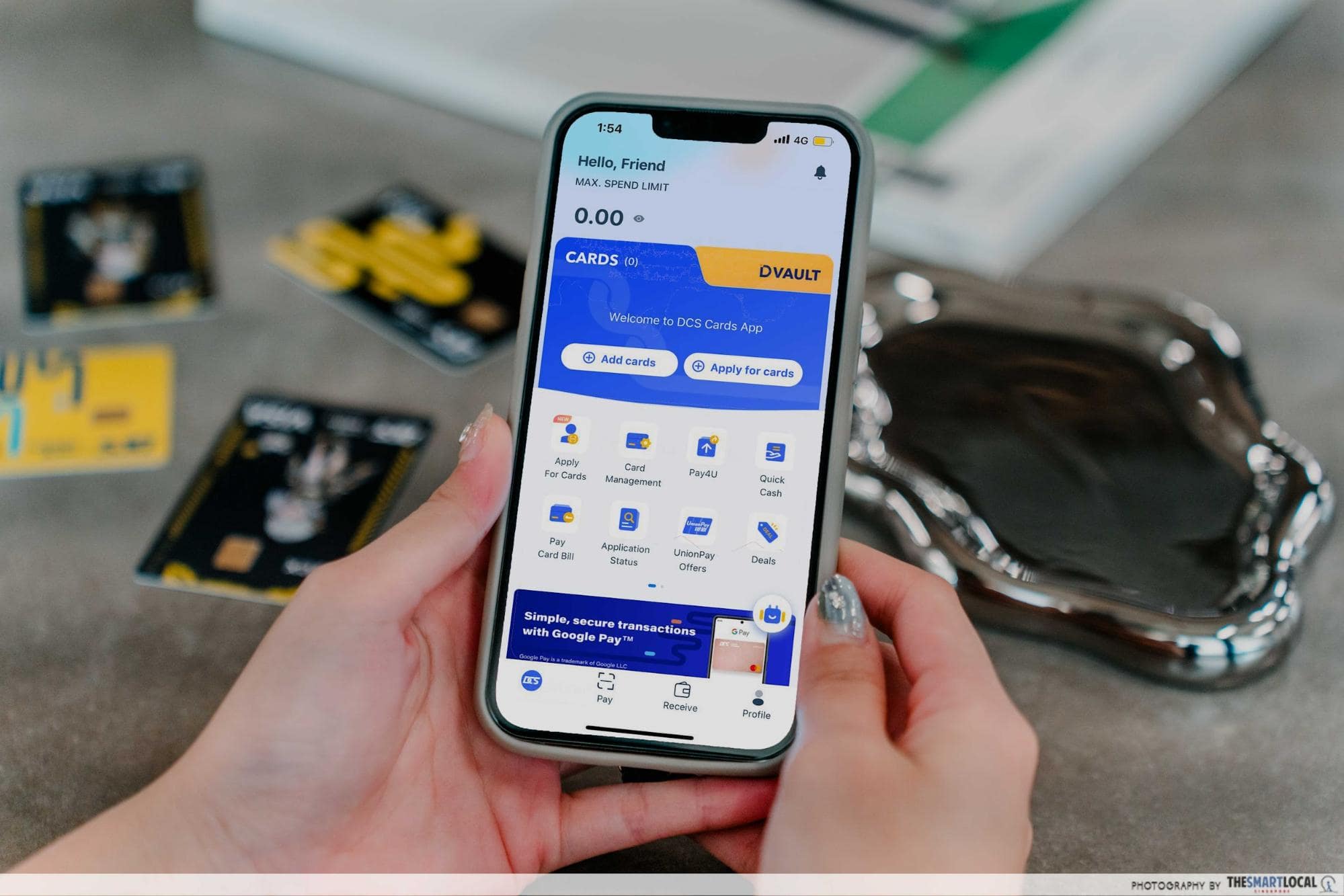
    DCS, established over fifty years ago as Diners Club Singapore, has evolved into a Singapore-licensed financial institution with dual capabilities in card issuing and merchant acquiring. Its infrastructure supports both traditional and cryptocurrency-funded payments through regulated partners and is compatible with global schemes, including Visa, Mastercard, UnionPay, and Diners Club. The group continues to position itself as a bridge between traditional and decentralized finance, aiming to deliver secure, borderless payments with real-world utility for businesses and consumers.

    Questions & Answers

    What is the role of Jia Hang in DCS Group?
    Jia Hang has been appointed as the executive chairman of DCS Group. His role involves overseeing corporate direction, governance, and business development, with a particular focus on enhancing DCS’s dual-rail infrastructure and improving customer experience.

    What is DCS Group’s aim with the appointment of Jia Hang?
    With Jia Hang’s appointment, DCS Group aims to reshape cross-border and cross-rail payments from Singapore. The move positions DCS to accelerate its dual-rail strategy across traditional finance and blockchain ecosystems.

    What is the significance of Jia Hang’s appointment?
    Jia Hang’s appointment is a significant move for DCS Group, marking the most senior leadership addition in the group’s history. It also signals the company’s ambition to become a leading player in Asia’s digital finance landscape.

  • UBS and Ant International Pioneer Real-Time Global Payments: Unveiling Next-Gen Blockchain Solutions for Cross-Border Settlements

    UBS and Ant International Pioneer Real-Time Global Payments: Unveiling Next-Gen Blockchain Solutions for Cross-Border Settlements

    Swiss institution UBS has announced a strategic partnership with Singaporean fintech firm Ant International. The collaboration aims to build blockchain-based tokenised deposits to facilitate real-time global payments. This alliance marks a significant milestone in the rapidly transforming digital finance sector in Asia.

    Exploring Blockchain Solutions

    At UBS’ Singapore head office, both companies signed a Memorandum of Understanding to delve into blockchain solutions. These solutions aim to upgrade cross-border settlements and liquidity management for Ant International’s global treasury functions.

    As per the details released on Monday, Ant International plans to utilize UBS Digital Cash, a blockchain payment platform launched in 2024. The platform is designed to expedite, streamline and secure settlement procedures across multiple markets.

    Tokenised Deposits: A Central Element

    A primary focus of this partnership is the examination of tokenised deposits, which will link UBS Digital Cash with Ant International’s proprietary Whale platform. The Whale platform is a next-generation blockchain-based treasury management system.

    This combined infrastructure is designed to facilitate real-time cash flows across Ant’s worldwide entities, bypassing traditional cut-off restrictions and enhancing liquidity visibility across various currencies.

    Pioneering Digital Asset Innovation

    Young Jin Yee, co-head of UBS Global Wealth Management Asia Pacific and country head UBS Singapore, stated that the alliance with Ant International builds upon the momentum of UBS Digital Cash’s pilot launch from the previous year. The combined expertise in digital assets and Ant’s progressive blockchain technology would deliver a real-time, multi-currency payment solution that is both transparent and efficient.

    The partnership also underscores UBS’s commitment to augmenting client access to global markets via digital innovation.

    A Strategic Alliance

    Kelvin Li, general manager of platform tech at Ant International, expressed excitement about the partnership with UBS, a global bank with a solid reputation for blockchain innovation. Li highlighted the shared belief in the transformative potential of these technologies for cross-border payments, and the anticipation of creating a larger impact together.

    This alliance showcases the growing interest in programmable money, tokenised deposits, and real-time settlement infrastructure – areas financial institutions deem critical for the future of cross-border payments.

    Unlocking Capital Efficiency

    For banks, businesses, and wealth managers, the opportunity to instantly move liquidity across markets can unveil new heights of capital efficiency, risk management, and treasury automation.

    As Asia becomes a global hub for digital-asset experimentation, the UBS-Ant partnership epitomizes the region’s increasing influence.

    Questions & Answers

    What is the main goal of the partnership between UBS and Ant International?
    The alliance aims to develop blockchain-based tokenised deposits to facilitate real-time global payments.

    What is the role of Ant International’s proprietary Whale platform in this partnership?
    The Whale platform, a next-generation blockchain-based treasury management system, will be linked with UBS Digital Cash to facilitate real-time cash flows across worldwide entities.

    What potential benefits can banks, businesses, and wealth managers expect from this partnership?
    They can anticipate new heights of capital efficiency, risk management, and treasury automation, thanks to the ability to instantly move liquidity across markets.

  • Revolutionizing Finance: Singapore and UK Launch Innovative AI Partnership for Cross-Border Growth

    Revolutionizing Finance: Singapore and UK Launch Innovative AI Partnership for Cross-Border Growth

    Singapore and the United Kingdom’s financial regulators have initiated a novel partnership that focuses on artificial intelligence (AI). The aim of this collaboration is to enhance cross-border opportunities between the two markets.

    The Monetary Authority of Singapore (MAS) and the UK’s Financial Conduct Authority (FCA) recently revealed their latest venture – an AI-focused partnership – during the Singapore FinTech Festival 2025. The primary goal of this UK-Singapore AI and Finance Partnership is to encourage the sharing of best practices and foster cross-border opportunities within the two markets.

    Enhancing AI Solutions

    MAS’s fintech chief, Kenneth Gay, emphasized the potential benefits of this partnership. He believes that these collaborations will significantly improve the AI services provided by both parties, leading to increased adoption in their respective financial sectors. Furthermore, he predicts that the collaboration will result in a more efficient, safe, and robust financial sector powered by AI.

    A Corridor for Growth

    Jessica Rusu, the FCA’s chief data, information & intelligence officer, echoed Gay’s sentiments. She stated that firms are increasingly seeking out cross-border opportunities and collaboration. Through this partnership, firms can learn from one another and collectively shape the future of responsible AI. Rusu sees this partnership as more than just a collaboration; she views it as a corridor for growth within London, Singapore, and the industry as a whole.

    Questions & Answers

    What is the primary aim of the UK-Singapore AI and Finance Partnership?
    The main objective of the partnership is to encourage the sharing of best practices and foster cross-border opportunities within the two markets.

    How will the partnership enhance AI solutions?
    The collaborative efforts between the two parties are expected to greatly improve the AI services provided, leading to increased adoption in their respective financial sectors.

    What does the partnership represent for the industry, according to Jessica Rusu?
    Jessica Rusu, the FCA’s chief data, information & intelligence officer, views the partnership as a corridor for growth within London, Singapore, and the industry as a whole.

  • Creating new cross-border opportunities post-Covid

    Creating new cross-border opportunities post-Covid

    Discover the current and upcoming shopping behaviours that will shape the future of cross-border commerce, and emerging trends that will help integrate and bring seamless shopping experiences to your customers.

    During the pandemic, 10 years of forecasted growth happened in the span of 90 days. This year, the global e-commerce market is expected to be valued at US$5.55 trillion and will reach $6.17 trillion by 2023, making up nearly a quarter of total retail sales. Though retailers have often shied away from expanding into new markets due to their complexity, closed borders pushed businesses to venture beyond their native markets, supported by the advancement of merchant tools. In a recent webinar hosted by Inside Retail Asia, luxury flash sale showroom OnTheList shares its international expansion journey amidst the pandemic, with global payments provider PayPal advising strategic tips for merchants looking to enter foreign markets.

    The pandemic impact

    The fight for survival spurred by product shortages and in-person shopping safety accelerated consumers’ digital adoption, as countries with the lowest e-commerce penetration saw the largest migration to online shopping with Southeast Asia welcoming 70 million new shoppers since the beginning of the pandemic with no signs of slowing down. As shoppers become more comfortable with the online environment and shopping globally, consumers’ expectations have increased, urging retailers to keep up and meet their demands in competing with new entrants. Having the wealth of product options suddenly available (albeit faced with shipping challenges) has lured shoppers away from brick-and-mortar to the world wide web.

    Despite national campaigns and broad sentiment to support local retailers, consumers are choosing to shop outside of their home countries for numerous reasons. A study by PayPal revealed that Japanese consumers favour shopping abroad due to price sensitivity and unique products available. Equally, businesses have been casting their net beyond their home markets in hopes of recapturing lost businesses overseas. Cross-border merchants have found new revenue opportunities abroad and larger audience reach, all the while competing with local sellers. One in two surveyed e-commerce merchants in Hong Kong had been actively looking to reach new customers in other markets as part of their efforts to recapture lost businesses.

    Originally starting with a 7000sqft physical showroom in Central, Hong Kong, the space had been temporarily shut during lockdowns. Shifting from a 90 per cent offline presence to online, members were pushed to snatch Jimmy Choo flash sales online, all the while inventory build-up became a problem for luxury retailers.

    “Many of them (brand partners) were impacted at different stages with regards to traffic in their stores or even stores being closed, so this posed an opportunity for OnTheList to step in and partner with them to find solutions for their inventory”, shared Adele Leong, SEA MD at OnTheList. The organic transition to online catapulted OnTheList’s digital transformation to scale and expand to Australia, Malaysia and South Korea all within a short period.

    What normally was recognised as slow sales seasons in the months of March and April, PayPal equally witnessed a volume uptake in transactions and merchant sign-ups as more consumers turned online for products and services overseas that were not available locally due to supply shortages.

    “A lot of businesses had to look for new ways of survival; they have to think about being agile and responding to new ways of catering to consumer demands” explained Syd Wong, head of enterprise sales at PayPal (Hong Kong, Taiwan, Korea). As new consumers migrated from traditional in-store experiences to online, more than 67 per cent of transactions were also taken on mobile rather than desktop, prompted by the government’s push to use digital payments and wallets during subsidy payouts in an attempt to reignite the retail economy.

    Entering new markets

    The challenges of global expansion and localisation cannot be tackled with just one global site and a currency converter widget. Truly understanding customers abroad is the key to every successful market entry, where localisation plays a huge part in connecting and retaining local consumers through understanding cultural nuances and adapting content appropriately. E-commerce marketplace Techsembly identified localisation can increase a site’s conversion rate by up to 70 per cent, where consumers are more likely to purchase if the retailer’s website is displayed in their native language with their preferred local payment options available.

    “We just couldn’t make that trip to each market to see what has happened to find opportunities, particularly for offline. We had to really depend on the local teams to maximise our operational expertise,” said Leong.

    From an organic China expansion to cross-border scaling, OnTheList is a successful case study of a retailer’s international growth during the pandemic, all the while remote. The brand relied on brand partners and members as the main basis to explore new market openings.

    “There’s really no big secret. We took the time to understand all the localisation factors that were important for us to be successful. For example, the type of brands that we worked with, the way we communicated with our members and understanding the types of shopping habits, cultures and payment methods” revealed Leong. OnTheList expanded into new markets as pure online retailers, all the while dabbling with physical pop-ups to test market potential to expedite expansion.

    The long-standing debate between outsourcing to service providers or building in-house for cross-border retail and payments stands to benefit retailers without remote resources abroad.

    “One of the barriers to think about is the sensitivity to some of the local country’s consumer behaviours and their types of payment preferences,” commented Wong, noting specific local payment behaviours vary from Octopus-loving Hong Kongers as opposed to consumers in Europe in comparison.

    PayPal prides itself on its flexibility, being able to work with local partners and shopping cart solutions to integrate payment options for a seamless checkout experience, with language and customer support provided.

    “Work with a global partner with experience and feet on the street of each market that you’re actually expanding into so you can actually leverage some of the expertise and experience in the local markets” suggested Wong. “We have actually started to work with local partners to accept local payment types to cater towards local consumer preferences to help merchants go into new markets easier” he adds.

    With over 180 fiat currencies available, it is suggested at least 30 to 40 currencies need to be available in order to be recognised and supported in order to gain substantial sales benefits. Offering multiple payment options may be complex, but payment technology providers such as PayPal have simplified cross-border payments, allowing merchants to scale into new markets with ease.

    Future payment trends

    With the rise of social commerce, consumers have higher expectations for convenience and seamless checkout experiences. Retailers like OnTheList are pressured to invest in improving their e-commerce platform and apps to cater to the demand and new expectations. Mobile payments are deemed a must-have as 99 per cent of Gen Z have the highest smartphone usage compared to all generations.

    “You need to present a smooth user interface across all devices for consumers, especially the ability to checkout and pay, regardless of what devices you’re actually on,” emphasised Wong.

    As Gen Z and Gen Alpha enter the workforce with new spending power, young and aspiring professionals wanting to spend more at certain times have prompted the uptick of ‘Buy Now Pay Later’ schemes. Though more prominent in Western countries such as the US, UK and Europe, the trend is also seen catching up in Asia.

    Leong reports: “This for us has been particularly interesting because it brings us a very new and interesting pool of aspiring customers, people that are in the earlier stages of their career who may not be able to afford full-price luxury. But by having Buy Now Pay Later, they can experience luxury brand products before becoming a full-price customer eventually.”

    As Asia adapts to the new normal, so are solutions and services that have been evolving ever since to better serve the various different markets and changing consumer behaviours. Brands are to face the latest demands with agility to cater for the future generation of consumers under new opportunities, across the borders.

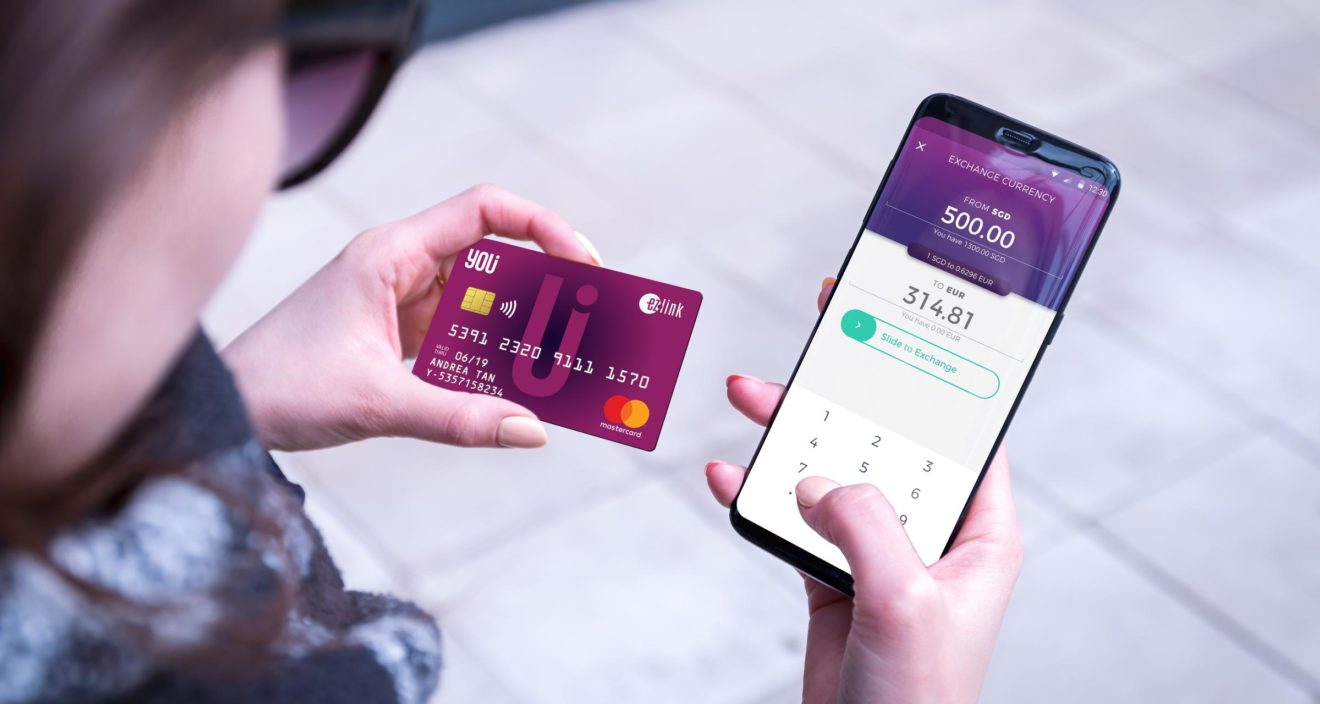
  • Multi-Currency Wallet YouTrip to Grow B2B Offerings

    Multi-Currency Wallet YouTrip to Grow B2B Offerings

    Singapore-based YouTrip aims to scale its product offerings, including venturing into the B2B payments space, and accelerate its expansion across Southeast Asia.

    YouTrip has raised $30 million in a Series A funding round driven by returning investors from major Asian family offices and prominent financial technology investors, bringing its total funding since launch to $60 million, it said in an announcement on Tuesday.

    The company has set its sights on the growing B2B payments space, as it said SMEs are showing a strong willingness to adopt digital banking services, specifically for cross-border payments. To cater to this segment, it will be rolling out its YouBiz product in Singapore in the first quarter of 2022, and with plans to bring it to five other Southeast Asia countries in the next 12 months. It has already received over 1,000 sign-ups in a beta launch.

    It is a segment with a deep market, as companies increasingly operate in a distributed and borderless manner and we expect their cross-border payment needs to go up, Arthur Mak, co-founder said in the announcement.

    This latest round also gives us the resources to strengthen our multiple growth engines to stay resilient and well-primed for expansion into new vistas, Caecilia Chu, co-founder, said.

    YouTrip said its transaction volume has rebounded to pre-COVID levels, driven by strong traction in cross-border e-commerce transactions and return of travel spending. Exponential growth is expected in the upcoming months following the opening of more Vaccinated Travel Lanes in Singapore and progressive return of regional travel.

    According to YouTrip, it has processed over $800 million in card spending globally, with almost 20 million transactions and over 1.5 million app downloads.

  • Hong Kong Cross-Border Wealth Scheme Delayed by Pandemic

    Hong Kong Cross-Border Wealth Scheme Delayed by Pandemic

    Banks looking to capitalize on wealth management opportunities from the Greater Bay Area will have to wait until travel bans are lifted, according to the Hong Kong Monetary Authority.

    HKMA chief executive Eddie Yue said that the existing travel bans make it difficult to launch the ‘Wealth Management Connect’ scheme – a cross-border channel that will allow mainland residents of the 11-city cluster to invest in Hong Kong and Macau-based wealth management products.

    Under the current rules, investors seeking such products must physically open an investment account in person for the financial firm to share relevant information and risks.

    The overall scheme allows an individual investor quota of 1 million yuan ($150,000) each and an aggregate quota of 300 billion yuan (US$45 billion) for north and southbound fund movements.

    While it remains to be seen when travel restrictions will be removed – Hong Kong recently recorded another wave of coronavirus cases that led multiple banks to advise employees to work from home – HKMA is actively working with Beijing to simply the process for cross-border account opening.

    According to Yue, a simpler process could be introduced which would require only one-time cross-border travel, compared to the current practice which requires a plethora of documents and often multiple visits.

    Other cross-border initiatives that the HKMA is focused on include the southbound segment of the bond connect scheme which is planned for a launch in the second half of 2020 after the northbound segment was introduced in 2017. Unlike the wealth management connect scheme, cross-border trading does not require physical travel.

  • Chinese e-commerce policy to benefit foreign sellers

    Chinese e-commerce policy to benefit foreign sellers

    The Chinese government last week announced that it will improve its e-commerce retail import policy to boost consumption. “We need to take a holistic approach, exercise prudent yet accommodating regulation to fully unleash the growth potential of cross-border e-commerce,” Li Keqiang, Premier of the State Council of the People’s Republic of China, said at a cabinet meeting on November 21, when the policy was laid out.

    The policy has been cheered by Australian exporters to the market, such as AuMake, the ASX-listed retail company that connects local suppliers with Chinese personal shoppers, daigous, who buy and ship products on behalf of friends, family and customers in China.

    The retailer released a statement on Friday saying the new policy is expected to stimulate daigou activity through 2019.

    The new policy ensures that China’s existing approach to cross-border e-commerce continues, and no new requirements around licensing, registration or record-filing for first-time imports will apply to sales through cross-border e-commerce platforms, as was expected to apply from January 1, 2019. Instead, these goods will continue to receive the more relaxed regulation for personal use imports.Adtech Ad

    The Chinese government is also expanding its preferential import duties to another 63 tax categories of high-demand goods and increasing the quota of goods eligible from 2000 yuan to 5000 yuan per transaction, and from 20,000 yuan to 26,000 yuan per head per year. This quota will be further adjusted in light of an individual’s personal income.

    “AuMake welcomes the latest development to further stimulate the CBEC [cross-border e-commerce] with the continuation of current licensing requirements, extension of tariff/VAT/consumer tax concessions and value per transaction/head limit also being increased,” the retailer said in a statement.

    “These measures are anticipated to increase the total size of the CBEC and it is anticipated that legitimate cross border e-commerce participants, including AuMake and professional daigou, will increase their market share as illegitimate operators are phased out with increased regulation.”

  • Singtel launches VIA cross-border mobile payment alliance

    Singtel launches VIA cross-border mobile payment alliance

    Singtel and Thai mobile affiliate AIS have jointly launched a cross-border mobile payment alliance known as VIA, introducing Singapore-Thailand cross border mobile payments in collaboration with Thailand’s Kasikornbank.

    Through the collaboration, Singtel and AIS will offer QR code based mobile payments through their respective mobile wallets – Singtel Dash, as well as AIS Global Pay and Rabbit Line Play.

    The service can be used at all merchants displaying the new VIA brand as well as the more than 1.6 million Kasikornbank merchants displaying the Thai QR Code.

    Singtel said the VIA Alliance in the first cross-border initiative to connect both telco and non-telco mobile wallets.

    The alliance will be progressively expanded to include more of Singtel’s regional associates, including Airtel in India, Globe Telecom and the Philippines and Telkomsel in Indonesia, as well as more non-telco partners such as China’s Ping An Insurance Group.

    “This is a game changer for the Singtel Group and the region. The VIA alliance is aimed at unifying Asia’s fragmented payments scene by connecting different mobile wallet systems across the region. As more people travel around the region, we want them to be able to enjoy the ease and familiarity of using their local mobile wallets abroad,” Singtel International CEO Arthur Lang said.

    “VIA will enhance the payment experience for millions of consumers including our Group’s customer base of more than 700 million. We see a tremendous opportunity to drive the adoption of mobile payments which supports ASEAN’s push towards financial inclusion and vision of a single digital market.”

  • Chinese cross-border online market is yet to be dug out

    Chinese cross-border online market is yet to be dug out

    Cross-border e-commerce is the new fashion trend in China, powered by a rising middle class and robust economic growth. With an estimated 125 million Chinese consumers purchasing $105 billion of overseas products through this channel in 2017, according to a new research report by Azoya Consulting and Frost & Sullivan.

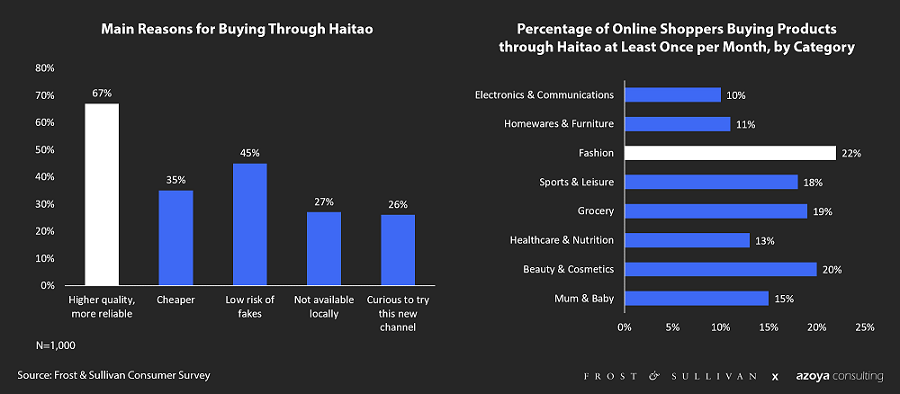
    In China cross-border e-commerce is often referred to as Haitao, which is overtaking the traditional method of buying through daigou agents (personal buyers) or friends/family based overseas as consumers seek a more legitimate, formal avenue for purchasing overseas products.; the research shows that the average Haitao shopper is spending RMB5,300 a year (US$848 a year) on products bought through this channel, with 60% intend to spend more. Fashion, beauty & cosmetics and grocery being the most popular categories.

    In China cross-border e-commerce is often referred to as Haitao, which is overtaking the traditional method of buying through daigou agents (personal buyers) or friends/family based overseas as consumers seek a more legitimate, formal avenue for purchasing overseas products; the research shows that the average Haitao shopper is spending RMB5,300 a year (US$848 a year) on products bought through this channel, with 60% intend to spend more. Fashion, beauty & cosmetics and grocery being the most popular categories.

    However, the research finds out while over 80% of western retailers see China as a lucrative opportunity, only 20% feel confident in their capability to succeed in China’s e-commerce market. Retailers cite regulations, intense competition, investment and not profitable as their main challenges, while retailers from different countries have distinctive strategy on enhancing their capabilities in China.

    Increased competition is making it difficult to succeed in the e-commerce marketplaces such as Tmall and Kaola were once seen as the major platforms where e-commerce sales and customer traffic come from, but now as the marketplaces are getting crowded and acquiring traffic is becoming more and more expensive, retailers find it increasingly difficult to differentiate themselves from one another, either satisfied with their sales performance in marketplaces.

    The research reveals that selling through marketplace holds the lowest satisfaction among other sales channels – only 21% of retailers are satisfied with their sales on marketplaces. Other concerns with selling through marketplaces include lack of direct customer access; high commissions up to 15% eating into margins; upfront costs to establish stores; and intense competition particularly around price.

    As a result, retailers are looking beyond marketplaces as their only approach to consider. “In fact, for retailers aim to establish long-term sales in China and build a brand that Chinese consumers trust, which commands a healthy profit margin and repeat buyers, retailers need to approach customers through multiple touchpoints. The key channel should be within retailers’ control, accompanied by supplementary platforms,” said Don Zhao, Co-Founder of Azoya International. “More and more retailers are establishing standalone websites as the core of their strategies, as these sites directly connect retailers with Chinese consumers who desire foreign brands, while empowering retailers with flexibility and control over their business.”

    Picky Chinese consumers are forcing brands to tailor their offerings to local tastes, while retailers react differently from countries Chinese consumers prefer to shop on cross-border e-commerce foreign platforms due to higher product quality and less risk of buying fake, while they tend to be picky when it comes to platform choices.

    The research finds out that China payment and website performance are the top influencers when selecting to buy from certain platform, the others were cited as Chinese customer support and nearby inventory.

    There’s also a trend that Chinese consumers are also looking for unique niche brands in pursuit of differentiating themselves from their peers and create a unique image. For cross-border transactions, shoppers are increasingly interested in seeking niche products suiting their personal needs; they also values the authenticity of a brand and the story it offers. Brand heritage and storytelling are important for brands to build a relationship with their customers now.

    Localisation is the key. Correspondently, retailers focus on enhancing their capabilities differently varies from countries. In mature countries where Chinese cross-border shoppers are familiar with, such as Australia and the USA, retailers focus on establishing warehouse or distribution centre in China to enhance shipment experience, tailoring their products to local consumer demands, and also Chinese language content such as blog articles to meet the tastes of Chinese consumers; while in the ‘late comers’ countries such as the UK, Germany, France and other European countries, retailers tend to focus on basic capabilities as introducing Chinese language website or entry level solution of social media strategy.

    The research draws a conclusion that retailers are advised to enter the Chinese market to take step by step approach that first research the market to understand the potential of certain brand or products in China, including category and product popularity; a second step involves deciding an entry model that’s most appropriate for their current stage offering the retailers enough control over the business while leave the flexibility of expanding to other channels; and finally, look for a local partner who will be able to guide the retailers through complex market, while adapt in time to the rapidly changing market when implementing.

  • SWIFT explores Asia Pacific cross-border real-time payments

    SWIFT explores Asia Pacific cross-border real-time payments

    SWIFT has joined forces with a group of SWIFT gpi banks from Australia, China, Singapore and Thailand to develop a unique cross-border real-time payments service in the Asia Pacific region.

    SWIFT has held exploratory talks with banks from the Asia Pacific region, including ANZ, Bangkok Bank, Bank of China, China Construction Bank, China Guangfa Bank, Commonwealth Bank, DBS, ICBC, Kasikornbank, NAB, Siam Commercial Bank, UOB and Westpac about the development of an Asia Pacific cross-border real-time payments system based on gpi. At the workshops SWIFT and the participating banks determined that such a service would have significant benefits that would extend beyond gpi banks and their customers, deep into the domestic markets, eventually affording a complete real-time cross border payments experience for all bank customers in the region.

    The group agreed the service should be rolled out in three distinct phases:

    • Phase 1 will see the introduction of a new real-time gpi sub-scheme, to facilitate real-time cross-border payments between gpi banks in the region. Building on the significant success of SWIFT gpi payments, which already significantly reduce cross-border payment times to minutes, will ensure real-time settlement of cross-border payments between signatory gpi banks in the region.
    • Phase 2 will effectively extend the SWIFT gpi rails into existing real-time payment systems within each recipient country, thus ensuring that “inwards and onwards” payments can be settled in real-time in each of the four markets, irrespective of whether the final beneficiaries hold accounts at banks that are connected to SWIFT or that are using gpi.
    • A third phase would look to link domestic real-time payment systems via SWIFT gpi to facilitate full cross-border real-time payments between their respective customers. This aims to enable both sending and receiving account holders to benefit from a full real-time payments experience – again independently of whether they hold accounts at banks that are connected to SWIFT or using gpi.

    Eddie Haddad, Managing Director of SWIFT Asia Pacific said: “With the widespread adoption of domestic real-time payments systems in the region, a cross-border real-time service is both a natural extension for SWIFT gpi in Asia Pacific and a real game-changer for bank customers. SWIFT is uniquely positioned to help our customers leverage their existing investments in infrastructure, to standardise connectivity across multiple markets and to drive efficiencies in support of cross-border trade, facilitating further integration in the ASEAN region.”

    Following the initial workshops, SWIFT and participating gpi member banks have begun work on defining a common cross-border real-time scheme that banks can review and test. The design of the new service will build on existing SWIFT gpi service rules to help resolve additional business process frictions in the payments chain. SWIFT has also commenced discussions with the New Payments Platform (NPP) in Australia to enable SWIFT gpi payments to be processed onwards through their newly launched domestic real-time payments system. SWIFT has helped to design, build and deliver the NPP, and is playing a key role in operating the infrastructure for the NPP.

    Launched in 2017, gpi already accounts for nearly 10% of SWIFT cross-border payment traffic, and is enabling more than a hundred billion dollars to be transferred across the world rapidly and securely every day. More than 160 banks, including 48 out of the 50 top banks on SWIFT, have signed up to the service, sending hundreds of thousands of payments daily across 350 country corridors – including major corridors such as USA-China, where gpi already accounts for more than 30% of payment traffic.

    “SWIFT gpi already reduces cross-border payment times to minutes, even seconds and indeed nearly 50% of gpi payments are already being completed in less than 30 minutes”, said Haddad. “This new scheme will both further speed up those payments, and extend the reach of the gpi capability far deeper into domestic markets, driving radical change in the cross-border payments market across the region. We look forward to seeing this work in practice and to more countries, and banks joining the new service.”

  • Swift unveils industry’s first ever cross-border payments tracker

    Swift unveils industry’s first ever cross-border payments tracker

    SWIFT announces today the availability of its new cross-border payments Tracker that enables international payments to be traced in real-time. The Tracker is the cornerstone of SWIFT gpi – the cooperative’s new payments innovation service – which is revolutionizing the industry by combining real-time payments tracking with the speed and certainty of same-day settlement for international payments.

    Available since January 2017, more than 20 global transaction banks are using or implementing the SWIFT gpi service, with another 50 in the implementation pipeline. Hundreds of thousands of gpi payments have already been sent across more than 85 country corridors.

    “Uptake of SWIFT’s gpi service has been encouraging and the addition of the Tracker capability can only help build momentum and accelerate adoption of the service in international payments,” says David Bannister, Principal Analyst, Ovum. “The most common complaint from corporates is the lack of visibility on their payments’ status. With the Tracker capability, SWIFT gpi tackles that issue and will be a useful tool to help corporate treasurers to execute their core responsibilities.”

    SWIFT gpi enables companies engaged in international trade to get paid for services, or delivery of goods, in a more timely fashion, enabling a faster supply chain process. The highly innovative gpi Tracker provides corporate treasurers with a real-time, end-to-end view of their payments combined with a confirmation notice when the money reaches the recipient’s account. It also enables a more accurate reconciliation of payments and invoices, optimizes liquidity with improved cash forecasts and reduces exposure to FX risks with same-day processing of funds in the beneficiary’s time zone. The Tracker is available via an open API, making it compatible with proprietary banking systems worldwide – helping to ensure maximum impact of gpi benefits at a greater adoption speed.

    SWIFT gpi has garnered considerable industry support across the globe. More than 110 leading transaction banks have committed to the service, representing over 75% of all SWIFT cross-border payments. Recent joiners to SWIFT gpi include: Agricultural Bank of China, Bank of Communications, Banque Centrale Populaire, BayernLB, China Citic Bank, China Minsheng Banking Corporation, Commercial Bank of Kuwait, Denizbank, Ebury, Industrial Bank, Guangfa Bank, Lek Securities, Ping An Bank, Piraeus Bank, Postal Savings Bank of China, Shanghai Pudong Development Bank, Turkiye Cumhuriyeti Ziraat Bankasi, Westpac Banking Corporation and Yapi Kredi, and Zhejiang Rural Credit Cooperative Union. Click here for a full list of participating banks.

    The service is also compatible with and integrated into domestic payment market infrastructures(MIs) across the globe, facilitating local clearing and settlement of gpi payments. Banks can already exchange gpi payments over the 56 SWIFT-connected MIs as well as other MIs that have established local market practices for their participants that use the gpi service. SWIFT will also continue to actively engage with additional MI communities for future gpi compatibility.

    “Today’s announcement is a significant step towards a game-changing experience for corporates the world over,” says Christian Sarafidis, Chief Marketing Officer, SWIFT. “By taking advantage of the right technology, at the right time, with the right players behind us, SWIFT has successfully helped correspondent banking reach a significant milestone in its evolution.”

    Wim Raymaekers, Programme Manager for SWIFT gpi adds, “This is only the beginning for SWIFT gpi. We will continue to explore new technologies, such as blockchain, and deliver more value added payment services further transforming the international payments landscape and, in doing so, accelerating global trade.”


  • Cross-border e-commerce to hit $900b by 2020

    Cross-border e-commerce to hit $900b by 2020

    Cross-border e-commerce is now the fastest growing segment in the retail market, according to a report published by DHL Express.

    Cross-border sales volumes are predicted to increase at an annual average rate of 25% – from $300 billion to $900 billion – between 2015 and 2020. This is twice the pace of domestic e-commerce growth, DHL Express said.

    The study found that online retailers are boosting sales by 10-15% on average simply by extending their offering to international customers.

    By including premium service offering such as faster shipping options, retailers and manufacturers also grew 1.6 times their online stores faster on average than other players.

    “Shipping cross-border is much, much easier than many retailers believe, and we see every day the positive impact that selling to international markets can have on our customers’ business growth,” DHL Express CEO Ken Allen said.

    In Asia (Singapore, Hong Kong, and India) and Europe (Italy, Spain, France, Germany), key markets for high-value purchases are being expanded — with growth rates up to two or three times higher than the global average driven by rising consumer education and e-tailer awareness of opportunity.

    The report also noted that the $30 billion market of high-basket value transactions is evenly divided between Asia, Europe, and North America.

    Allen added that DHL Express sees that virtually every product category has the potential to upgrade to premium, both by developing higher quality luxury editions and by offering superior levels of service quality to meet the demands of less price-sensitive customers.

    “The opportunity to ‘go global’ and ‘go premium’ is there for many retailers in all markets,” he said.

    The main challenges highlighted by consumers to cross-border purchases relate to logistics, trust, price, and customer experience.