Retail News CRM

Tag: drop

  • Huawei says half of its flagships could have foldable displays by 2021

    Huawei says half of its flagships could have foldable displays by 2021

    Huawei is betting pretty heavily on foldable smartphones and in a recent interview the CEO of the company’s Consumer Business Group, Richard Yu, revealed Huawei’s short-term expectations for the new device format. Because the foldable segment is so new, Huawei’s primary focus at the moment is the recently-announced Mate X, which will go on sale in June. This device, as the company openly admits, is rather expensive but as foldable devices start to gain traction Huawei expects pricing to begin falling. In fact, in just two years’ time, Huawei’s foldable flagships should cost no more than regular smartphones.

    This gradual drop in price will also result in Huawei bringing more devices to the market and, by 2021, half of the smartphone giant’s flagship offerings could sport foldable displays, with one of these being a compact device that’s smaller than both the Huawei Mate X and Huawei P30 Pro.

    Obviously, foldable devices will become increasingly more important to Huawei in the years to come. The company does, however, recognize that not everyone will be interested in the new format and that some will prefer traditional smartphones. This would suggest that regular devices, like the ones in our hands today, will be sticking around for quite some time and are under no threat at the moment.

  • M1 profit falls 16.1% in 2016

    M1 profit falls 16.1% in 2016

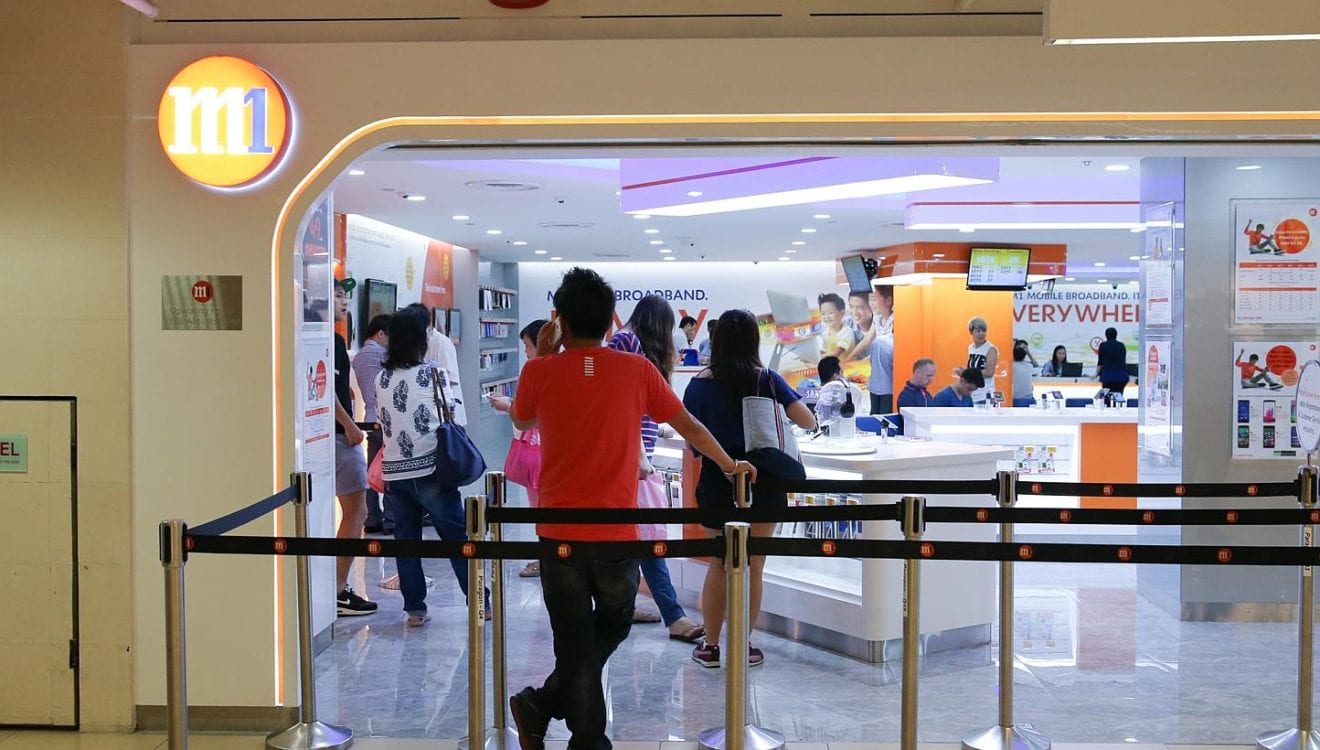
    Singapore’s M1 has reported a 16.1% slump in net profit for 2016 to S$149.7 million ($105.3 million), blaming lower international call and roaming revenues as well as rising expenses.

    The operator’s service revenue for the year fell 2% to S$805.5 million, due to the ongoing impact of OTT substitution. But fixed-line revenue grew a strong 21.4% to S$104.2 million, growing to account for 12.9% of service revenue.

    Besides the decrease in revenue, M1 said depreciation and amortisation expenses grew due to an increasing 4G network fixed asset base, and additional spectrum acquisition costs also contributed to the profit decline.

    M1 added 52,000 postpaid customers and 39,000 prepaid customers during the year, bringing its total mobile customer base up to 2.02 million. Mobile churn meanwhile stayed flat at 1%.

    During the year, mobile data consumption grew to account to more than half of M1’s total service revenue, increasing 7.7 percentage points year-on-year during the fourth quarter to 54%.

    M1 meanwhile added 32,000 fiber customers during the year, taking its total to 160,000 and contributing to the growth in fixed service revenue.

    Capex for the year grew to S$140.5 million, up from $133.5 million a year earlier,

    “We continue to invest and innovate to enhance our service offerings to better serve our customers, as well as capitalize on new opportunities in the digital economy such as solutions for smart nation and  IoT services,” M1 CEO Karen Kooi said.

    “These initiatives, together with the foundation that we have laid over the years, will enable us to create and deliver long-term value to our stakeholders.”

  • Hong Kong Suffering From China Visitor Drop

    Hong Kong Suffering From China Visitor Drop

    Tour groups from mainland China to Hong Kong could shrink by two-thirds in the first half of this year, dealing another blow to retailers and an economy facing pressure from slowing growth in China.

    China accounts for almost three-quarters of all visitors to Hong Kong, which relies on tourism for about 5 percent of its GDP.

    Tourism numbers, however, fell last year for the first time in more than a decade and Ricky Tse, chairman of the Hong Kong Inbound Tour Operators Association, said he expects a further decline this year as the strong Hong Kong dollar continues to drive mainland Chinese to comparatively cheaper destinations such as Japan and South Korea.

    “The drop will continue for sure. The winter has just begun,” Tse said, adding that he expected the number of tours by Chinese visitors to fall by 60 percent in the first half of this year after halving in 2015.

    Government data shows tourist arrivals to Hong Kong fell 2.5 percent year-on-year in 2015 to 59.32 million, the first decline since 2003 when the city was hit by an outbreak of Severe Acute Respiratory Syndrome (SARS).

    This decline has hit luxury retailers, with the latest available data showing overall retail sales falling for the ninth consecutive month in November, the longest period of decline in 13 years.

    Brokerage CLSA, forecast trips by mainland Chinese to Hong Kong and the nearby gambling hub of Macau to average 3 percent growth over the next five years, compared with 16 percent growth for all other markets.

    “The move away from pure shopping trips is one of the main reasons that led to the slowdown in Hong Kong,” CLSA said in a recent report. “Looking into 2016, we believe the trend will continue.”

    (Reuters)

  • Tourists drag down Hong Kong retail sales

    Tourists drag down Hong Kong retail sales

    Official Hong Kong retail sales figures for March show a 2.9 per cent year-on-year fall, blamed on shrinking in-bound tourist numbers.

    According to data released by the Census and Statistics Department the fall follows a two per cent drop in January and February combined.

    A government spokesman blamed the sluggish sales on a slowdown in inbound tourism.

    “Most types of retail outlets recorded year-on-year declines in sales… Retail outlets selling certain consumer durable goods saw some notable increases in sales, mainly helped by the launch of certain smartphone models,” the spokesman said.

    Weakened tourism is likely to continue to constrain growth, he said, “although the stable labour market conditions should still render support to local consumer sentiment”.

  • Osim profit plummets

    Osim profit plummets

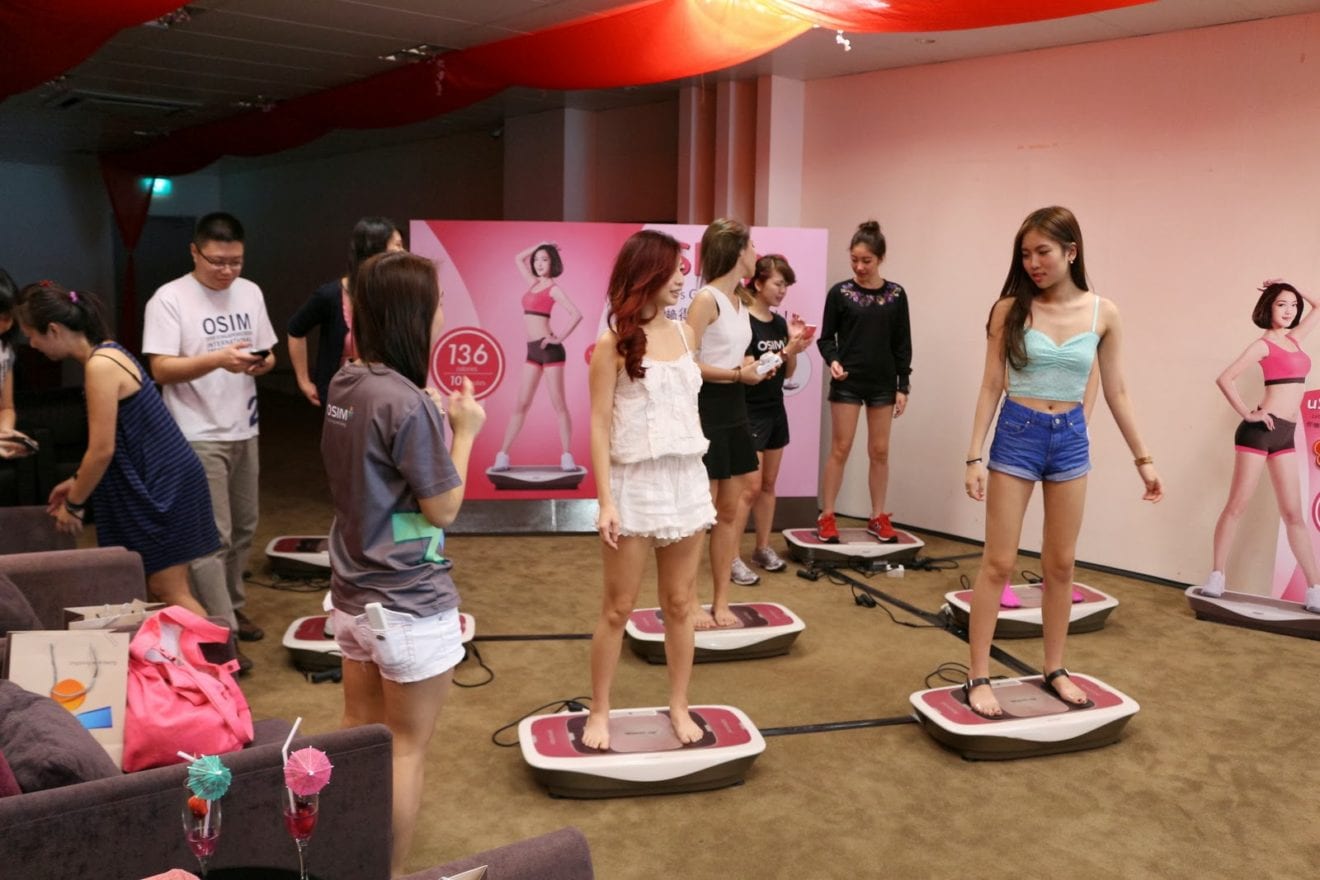
    Lifestyle company Osim has posted a 53 per cent profit drop for the first quarter on declining sales.

    The retailer of massage chairs and other remedial devices, says sales fell 13 per cent quarter-on-quarter, blaming a lack of new products and a drop-off in mainland Chinese tourists into Hong Kong, a key market for the Singapore-listed company.

    Total first quarter sales were S$150 million, and Osim profit $18 million

    “This has been a challenging quarter where retail sales across the core countries has been
    soft and there have been no new major Osim product launches,” the company said in its earnings statement.

    “Despite these challenges, our dominant brand has enabled us to maintain a stable gross margin and highly cash generative business. We are continuing to invest for growth supported by a strong balance sheet.”

    Osim has 560 retail stores and China remains its largest market, where it has 252 stores in 45 cities.

    “Products including uInfinity Luxe, uDiva, uHip, uSqueez Air, uTrek and uShape Music have sustained our dominant position in the market. We have just launched a new massage chair uMagic in April with favourable response and will be introducing more innovative products this year.”

    Osim also operates 233 GNC/Rich Life stores and 44 TWG Tea stores, with plans for 15 more this coming year.

    “With the upcoming planned new product launches we remain positive about the outlook for
    the remainder of the year.”

  • Hong Kong’s retail gross sales down 2.9 pct in March

    Hong Kong’s retail gross sales down 2.9 pct in March

    Hong Kong’s worth of complete retail gross sales fell 2.9 % year-on-year to 38.four billion HK dollars ( about four.9 billion U.S. dollars) in March, 2015, the statistics division stated right here on Tuesday.

    The worth of gross sales of jewellery, watches and clocks, and priceless presents misplaced 18.6 % in March from a yr in the past, adopted by gross sales of fuels 16.four %, footwear, allied merchandise and different clothes equipment 11.7 %, Chinese language medicine and herbs eight.four % and optical outlets 5.three %.

    Then again, the worth of gross sales of meals, alcoholic drinks and tobacco rose four.zero %, adopted by gross sales of electrical items and photographic gear 2.eight %, and books, newspapers, stationery and presents 2.three %.

    A authorities spokesman stated the efficiency of retail gross sales remained sluggish in March, with most forms of shops recording year-on-year declines in gross sales, conceivably reflecting the slowdown in inbound tourism.

    The retail gross sales efficiency within the close to time period is more likely to be constrained by the weaker efficiency of inbound tourism, though the secure labor market circumstances ought to nonetheless render help to native shopper sentiment, the spokesman stated.

  • Japan retail sales plunge

    Japan retail sales plunge

    Japan retail sales plunged nearly 10 per cent in March compared with a year ago.

    The sales slump – 9.7 per cent – was worse than expected, but despite the shock, analysts urged caution in the interpretation of the data. In March 2014, sales were artificially high as Japanese brought forward spending to avoid a sales tax increase that took effect on April 1.

    Analysts had expected a fall of close to seven per cent. February’s fall was just 1.8 per cent. Retail sales have been subdued since Japan raised the consumption tax to eight per cent last April.

    Marcel Thieliant, an economist at Capital Economics, said in a research note that the spending decline suggests private consumption may have fallen for the first time since the sales tax rose.

    “It was widely expected that consumption would benefit from the plunge in energy prices. However, households have chosen to save rather than spend the windfall from cheaper oil.”

    The decrease was the worst March fall since 1998.