Retail News CRM

Tag: E-tailing

  • Fashion etailer SuperGurl apologises for rape gaffe

    Fashion etailer SuperGurl apologises for rape gaffe

    Singapore online fashion retailer SuperGurl has apologised online and on social media for a homepage banner inviting rape, described by at least one shopper as “absolutely vile”.

    The banner featured a young woman with her arms up in submission and a button users could click on to gain discounts inviting them to “rape us now”.

    The momentously stupid and insensitive promotion – targeting Black Friday shoppers – has received media attention internationally. UK Lifestyle news blog The Debrief referred to it as evidence that Black Friday “brings out the worst in retail brands”.

    On SuperGurl’s Facebook page one follower of the brand Wei Wei Gwee eloquently summed up community anger: “Rape isn’t an advertising angle that one can exploit when thousands of victims suffer the irreparable damage rape has caused to them every day. Not only do you make light of sexual assault, you used this really young girl in a suggestive pose which seems to be extremely inappropriate. I wonder how the model will feel if she knew her photo was being used this way.”

    SuperGurl creative director Jordus Lim posted an unqualified apology on the SuperGurl website and Facebook page claiming the brand never meant to offend anyone. He says a junior graphic designer created the promotion and uploaded it online before the image was approved.

    “I am writing this to express our sincerest apologies pertaining to our insensitive action and the choice of [the] word ‘rape’ during our ‘Black Friday’ sale. We do not mean for it to be offensive to anyone, and I extend my sincerest apology for the lack of a better word.

    “I hereby acknowledge that we have made a mistake, and that our caption does not advocate the right values to the young women community today.

    “Having regretted [sic] for what we have done, the team at Supergurl will definitely be more careful with what we will put up in future as this is also a lesson learnt for us.

    “This is an honest mistake that we have made on our side, and we do know that it is indefensible. We hope that the public will accept our apology for what we have done wrong.”

    Another follower Christina Chew responded, typing Lim’s response “is uncommon valour”.

    “Perhaps the wounds would leave some lingering scars thereafter. But I pray that the scars will heal and you will grow in increasing wisdom.”

    To be fair, as The Debrief points out, SuperGurl is not alone in its poor judgement.

    Last month, American Apparel was criticised for asking employees to wear shirts that read ‘Ask Me To Take It All Off’, while Bloomingdale’s issued an apology for their Christmas ‘date rape’ advertisement, with the caption: ‘Spike your best friend’s eggnog when they’re not looking’, the site reported.

    “When will fashion brands (or any brands for that matter) get the message that rape is not an acceptable advertising tool?”

    Indeed.

  • Indonesian eCommerce boom

    Indonesian eCommerce boom

    Indonesians are embracing online shopping at an astonishing rate.

    The Indonesian eCommerce Association expects the total online market to treble between 2014 and 2016, worth Rp 283 trillion (US$24 billion) in 2016.

    According to Bank Central Asia, Indonesia’s largest private lender, an Indonesian eCommerce boom will see spending rise an estimated 127 per cent this calendar year. And next year, growth will be as high as a further 80 per cent.

    The head of BCA’s consumer card division, Santoso, says the bank recorded Rp 4.5

    trillion (US$326.3 million) in eCommerce transactions in the first nine months of the year and he is confident it will reach Rp 5 trillion by the end of the year. Shoppers are using both credit and debit cards online.

    Despite such figures, the Indonesian eCommerce market remains in relative infancy. Online shopping still accounts for just 0.5 per cent of sales. Consumers are wary of supplying card details online and a mere six per cent of Indonesians actually possess a credit card. Unreliable logistics infrastructure is a further barrier to growth, although this week’s agreement between Zalora and Pos Indonesia to have nearly 3000 of its post offices double as delivery and return points are a step towards addressing that issue.

    Driving the current growth is the small percentage of Indonesia’s affluent consumers – especially those living in second tier cities who lack physical access to branded retail stores or range of products.

    Next week, BCA will hold a three day long e-Shopping Carnival featuring 16 online merchants. It currently works with 420 eCommerce businesses and plans to add a further 150 to those ranks next year, including hotels, travel businesses and electronics vendors.

    Meanwhile, Indonesia’s National Online Shopping Day (Harbolnas) will take place on December 12 with 140 eCommerce sites offering discounts of up to 90 per cent for one day. The online retail event is likened in magnitude to the Jakarta Great Sale.

  • mCommerce boom raises cybersecurity risk

    mCommerce boom raises cybersecurity risk

    Asia’s mComerce boom is creating a growing target for online fraud and cybersecurity risks, according to fraud consultancy Fico Group.

    Criminals who used to focus on ATM skimming are turning their attention online in an effort to compromise credit and debit card data. These attacks can be far more lucrative, with more details stolen and a lower chance of getting caught, warns Fico.

    “The demographics suggest that this this will soon become a very big data problem.  In the next 15 years, Asia is expected to add another 1 billion internet users, which comes on top of the 700 million it has today, making it the world’s largest market for online consumers.”

    With fraud challenges growing, the issues and technologies needed to address them will be discussed this week in Bali, Indonesia, where Fico will hold its regional Fraud Forum with bank executives from across Asia Pacific.

    The last year alone has seen an average 22 per cent increase in shopping on mobile phones across 13 Asia-Pacific markets, according to a 2015 study from Visa. Indonesia, China and Taiwan reported the highest rates of growth for 2015 at 36 per cent, 34 per cent and 28 per cent respectively.

    With these card-not-present (CNP) transactions, the retailer never sees the customer or their physical card, and the cardholder doesn’t enter their PIN. At last year’s Fico Asia Pacific Fraud Forum in Singapore, 94 per cent of attendees said that cases of online or CNP fraud had increased at their organisation.

    Spotting and finding anomalies in this pool of data requires sophisticated self-learning and adaptive technologies so banks can catch fraud vectors as quickly as criminals exploit them. Fico is currently testing the geolocation abilities of mobile devices and integrating them with the Fico Falcon Platform, which protects 2.5 billion payment cards worldwide. By validating whether a consumer’s phone is in the same place where their card is being used, the system can reduce false positives while focusing on the most likely incidents of fraud. Banks can also send SMS messages to the consumer’s mobile to validate a transaction in real time.

    Maintaining trust in shopping from mobile devices will also require a new approach to cybersecurity. Data breaches at poorly protected retailers can threaten ecommerce sales. Predictive analytics is needed, rather than signature-based solutions, so that so-called “zero day” attacks can be identified and controlled.

    Raed Taji, head of global fraud consulting for Fico in Asia Pacific, said: “We are seeing rapid changes in customer behavior which then open up opportunities for fraud. In Australia, for example, cash withdrawals from ATMs have fallen 20 per cent in three years, thanks to

    tap-and-go card and mobile payment technologies. The focus on online fraud is growing very rapidly, so we must stay nimble to reduce losses.”

    Dan McConaghy, president for Fico in Asia Pacific, added: “Digital disruption to financial services may present fraud challenges, but it also presents opportunities for us to stop criminals. If consumer payments shift toward a new form of payment, fraudsters will seek out the most vulnerable element – which increasingly means a mobile device.

    “By investing in an analytics-based solution, lenders can add a powerful tool to their arsenal to stay ahead of new criminal fraud patterns.”

  • Lazada sees opportunities in upcountry expansion

    Lazada sees opportunities in upcountry expansion

    Lazada, Southeast Asia’s largest online shopping website, is pushing its business development in Thailand in a drive to capitalise on the lucrative and rapidly growing e-commerce market.

    The company has set up two subsidiaries: Lazada Express, the logistics arm; and helloPay, the mobile payment arm.

    Having logistics and mobile payment services will help Lazada facilitate its customers and boost sales.

    In June, Lazada relocated its local representative office to a new facility to support its existing 800 employees here. The company has 6,000 employees located in Southeast Asia.

    “Thailand and Indonesia are the two largest e-commerce markets in terms of sales for Lazada in Southeast Asia,” said Alessandro Piscini, chief executive of Lazada Thailand.

    Lazada has an online footprint in six countries in the region.

    However, Mr Piscini said Thailand’s online retail industry remains tiny, accounting for less than 1% of the total retail market, compared with 10% each in China, Japan, South Korea and France.

    “We believe Thailand will soon grow at the same pace as other developed markets, helped by an expected surge in mobile data users because of the arrival of 4G commercial service nationwide,” he said.

    Lazada sees a strong opportunity for online shopping upcountry because the number of retail stores there remains small, Mr Piscini said.

    As of Nov 30, Lazada’s sales from the provinces accounted for 60% of its annual gross merchandise value (GMV), worth 10 billion baht.

    “Thailand’s sales represented 25% of Lazada’s total sales in Southeast Asia,” he said.

    Lazada recorded GMV of US$1.1 billion from the six Southeast Asian countries, with a combined 8 million buyers.

    Lazada Thailand provides more than 2 million product items from 7,000 online merchants on its website. The top three best-selling categories are health, beauty, and home and living.

    Mr Piscini said Lazada had expanded its warehouse operation by 60% to support the business growth.

    Lazada and a group of partners announced the Online Festival yesterday, to be held from Dec 10-12. The company will offer discounts of up to 90% across 14 product categories.

  • Kakao Bank, South Korea first internet-only banks

    Kakao Bank, South Korea first internet-only banks

    The country’s Financial Services Commission said Sunday it awarded a preliminary license to Kakao for a business to be named Kakao Bank.

    “An Internet bank is meant to give non-financial players, including IT firms, chances to enter the banking sector if they have feasible business plans to improve the financial market and customer rights”, the FSC said earlier’.

    Kakao Bank and K Bank will individually apply for the final approval after satisfying the human and material requirements.

    For Kakao Bank, Korea Investment Holdings Co. will take part as a major shareholder with 50 percent share, while Kakao and Kookmin Bank own 10 percent share each.

    Kakao, KT and Interpark were reported to be the three applications accepted by the FSC. It is the first time in 23 years that a new commercial bank has opened in the country’s banking industry. Once they receive the official approval form the FSC, they need to start operation within six months.

    According to the agency, Kakao’s Kakao Bank gained high scores for innovative services based on its immensely popular mobile messenger app KakaoTalk with 40 million users.

    The banks holding a stake in the two winning consortiums, on the other hand, rejoiced at the FSC approval, but are also facing financial burdens, as well as possible power struggles within the consortium.

    Currently, top-tier banks offer an annual rate of 3 percent to 5 percent, while secondary financial institutions, such as mutual savings banks or capital services, charge 15 to 34 percent.

    “Kakao’s rival, the K-Bank consortium, includes South Korea’s second-largest mobile carrier KT, Woori Bank, GS Retail and China’s Alipay, which is affiliated with e-commerce company Alibaba”.

    Nonparticipating banks geared up to expand their online banking platforms and increase their range of mid-interest rate loans to defend against the incoming Internet-only banks.

    FSC Chairman Yim Jong-yong has been a strong advocate for the web-based bank, saying he expects the online-banking industry to raise the competitiveness of the Korean banking industry as a whole. However, many difficulties are expected in order to pass the bill.

    The bank also aims to go global as it has secured ties with Tencent, China’s biggest social-networking and mobile games company, and the USA online retail giant eBay, which also owns Korea’s two leading shopping sites Gmarket and Auction.

  • China Jo-Jo Drugstores turns a profit

    China Jo-Jo Drugstores turns a profit

    Chinese pharmacy retailer China Jo-Jo Drugstores has finally turned a profit, thanks to booming online sales and partnerships with health insurers.

    The US-listed retailer achieved second quarter sales of US$22.6 million, up 22.4 per cent on the same period last year. And it turned a loss of $40,000 last year into a $150,000 profit for the quarter.

    Year to date, revenue totaled $43.9 million up 25.7 per cent year on year, gross profit of $8.4 million was up 58.3 per cent and gross margin of 19 per cent compared to 15.1 per cent last year.

    “We are pleased with China’s Jo-Jo’s mid-year progress as the company continues to focus its efforts in growing the online pharmacy division which experienced triple-digit growth in the period,” commented Lei Liu, chairman and CEO.

    “ In large part, due to strategic cooperation with large insurance companies and fast-growing private healthcare insurance programs, our online pharmacy sales have expanded quickly in this quarter. The consumer demand for expanded online pharmacy services continues to play an integral role in the rebalancing of the company’s revenue mix while providing the opportunity to enhance organic sales growth at our physical chain drugstores,” he said.

    “China Jo-Jo continues to explore new sales and marketing channels to grow its consumer base including establishing programs to promote “mobile app” shopping with major vendors.”

    The company also continues to optimise its product mix across its online storefronts and physical stores.

    Retail drugstore sales, accounted for approximately 58 per cent of the total revenue for the three months ended September 30, and increased by $697,097, or 5.6 per cent.

    Same-store sales decreased by approximately $343,219, or 2.9 per cent, while new stores contributed $952,255 in revenue.

    Online pharmacy sales increased by approximately $3,609,016, or 122.4 per cent for the quarter. China Jo-Jo continues to operate several online pharmacy storefronts including China Jo-Jo’s own official branded store in addition to working with other B2C’s online platforms which direct customers back to China Jo-Jo’s own websites.

    Its own branded website sales in the quarter increased by 406.2 per cent, primarily as a result of the active cooperation with large insurance companies in China, to sell online products to customers who have purchased health insurance from them.

  • Asian eCommerce boom reshaping logistics sector

    Asian eCommerce boom reshaping logistics sector

    The Asian eCommerce boom is driving major changes in logistics developments and networks across the region, according to CBRE’s latest Global & Emerging Logistics Hubs report.

    “With a trickle-down effect to inventory management, this is leading to changes in the global supply chain network,” said Dennis Yeo, regional head, industrial & logistics services with CBRE Asia.

    “Speed-to-market is more important than ever. The service demands brought about by eCommerce – for example, shorter delivery times to consumers – has changed the entire retail supply chain of getting goods to consumers, including regional distribution strategies. The technical ability of locations and buildings to support the ever-increasing demands for both scale and speed of output is an ever-more important determinant of market position.”

    In Asia, the eCommerce and e-tailing market has been particularly strong, with eCommerce upending the traditional bricks-and-mortar distribution networks, forcing retailers and third-party logistics firms to adapt to an increasingly demanding consumer.

    “eCommerce shipments are smaller in size and require more technology and expertise to execute efficiently. As a result, modern logistics facilities are being developed in the traditionally strong logistics hubs of Tokyo, Seoul and Taipei. Besides the developed markets, the new consumer class in the emerging markets is creating opportunities for logistics development in in China, India and Vietnam,” said Yeo.

    Hong Kong under threat

    Meanwhile, the report concludes that while Hong Kong will remain one of the top global logistics hubs in the world, for the next decade, the territory will be in strong competition with several emerging Asia hubs including China’s Beijing, Hangzhou, Nanjing, Suzhou, and South Korea’s Busan.

    “Hong Kong has maintained its global logistics hub status due to its efficient transportation network and highly developed logistic services. It ranks third in the World Bank’s Logistics Performance Index,” said Darren Benson, executive director, industrial & logistics, brokerage services, CBRE Asia.

    “As the traditional global gateway to China, Hong Kong is likely to remain the hub for global distributors, due to its local trade and transport regulations and its ease of connectivity via seaports.“

    Hong Kong is currently the fourth largest global seaport by container volume, while emerging hubs such as Shanghai, Shenzhen and Busan rank first, third and fifth respectively. These emerging locations share a number of characteristics, including significant investments in infrastructure, new trade policies and agreements, and more advanced supply chains and technologies. As these cities continue to improve their regional transportation infrastructure so their viability for international trade increases.

    The shift in global supply chain dynamics and creation of new logistics hubs in Asia may also be spurred by China’s plans to revive the Silk Road trade route.

    In 2013, China launched a new strategic initiative, known as “one belt, one road,” which aimed to revive the importance of the Silk Road. The new Silk Road has two parts: the Silk Road Economic Belt, a land-based route that will connect central China to the Middle East and Eastern Europe, and the Maritime Silk Road, a sea-based path that will link South China to Southeast Asia, East Africa and Europe.

    In Asia, low-end manufacturing – such as garment and textiles production and electronics component assembly – has steadily been moving from Southern China to Western China and Southeast Asia. Southern China, encompassing the Pearl River Delta, has traditionally been the light industrial manufacturing center of the world, however, as wages continue to rise and China attempts to move up the manufacturing value chain, there has been a shift to more sophisticated heavy industry manufacturing.

  • BCBGMaxAzria opens Tmall store

    BCBGMaxAzria opens Tmall store

    BCBGMaxAzria, the US premier lifestyle fashion brand has partnered with B2C cross-border eCommerce solutions provider VoyageOne to expand its online footprint in China.

    “We are pleased to launch of BCBG on Tmall. We are very optimistic about the opportunity in China,” says Max Azria, founder, chairman and CEO of BCBG Max Azria Group.

    BCBGMaxAzria’s flagship line is now available to Chinese online shoppers on Alibaba’s Tmall Global through VoyageOne’s platform. BCBGMaxAzria can now efficiently integrate, sell, and manage its online selling process across multiple marketplaces in China.

    “BCBGMaxAzria is a truly an American flagship designer brand and completely understands the complexity of cross-border eCommerce landscape in China and the need for a proven technology and solution delivery mechanism by which BCBGMaxAzria seamlessly integrate, launch and manage its online footprint in China,” said Dennis Zhang, VoyageOne CEO.

    “We’re extremely pleased to partner with BCBGMaxAzria to delivering true online shopping and customer service experiences through a single platform while help them grow their online business in China.”

    Michelle Magallon, SVP of digital commerce & omnichannel with BCBG Max Azria, says China is an important international market for the brand.

    The BCBGMaxAzria Winter 2015 collection is already available at Tmall’s Hong Kong and China stores.

  • 7-Eleven Taiwan in MyDay eCommerce partnership

    7-Eleven Taiwan in MyDay eCommerce partnership

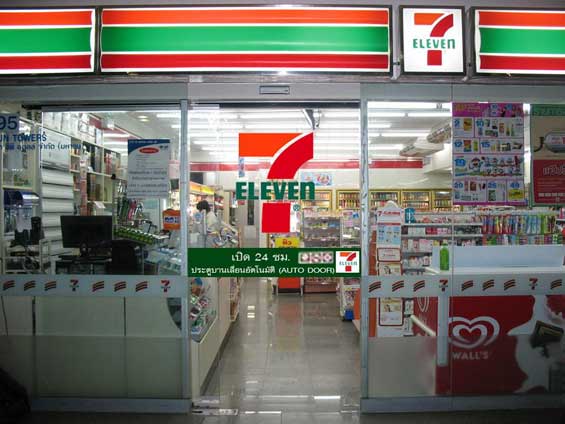
    Taiwan’s largest convenience store chain, 7-Eleven, says it will work with local shopping website MyDay to have online purchases from overseas delivered to its 5000-plus stores around Taiwan.

    The convenience store introduced the delivery service on Wednesday (November 25), allowing shoppers on the MyDay website to have their purchases delivered from Japan, the US and South Korea in as little as five days.

    Myday has over 10 years’ experience in cross-border eCommerce services and also partners with other sites such as Amazon in the US, Rakuten in Japan, and Gmarket in South Korea, said 7-Eleven.

    7-Eleven is the second convenience store chain in Taiwan to offer such a service, following FamilyMart, which established a similar partnership with the Japanese shopping site Tenso in September.

    Registered members of Tenso can have their purchases delivered to FamilyMart stores in Taiwan in about six days.

    Over 43 per cent of online shoppers in Taiwan buy products on overseas sites six times per year on average, according to a 2013 survey by the Market Intelligence & Consulting Institute under the Institute for Information Industry.

  • Sa Sa plans new store concepts

    Sa Sa plans new store concepts

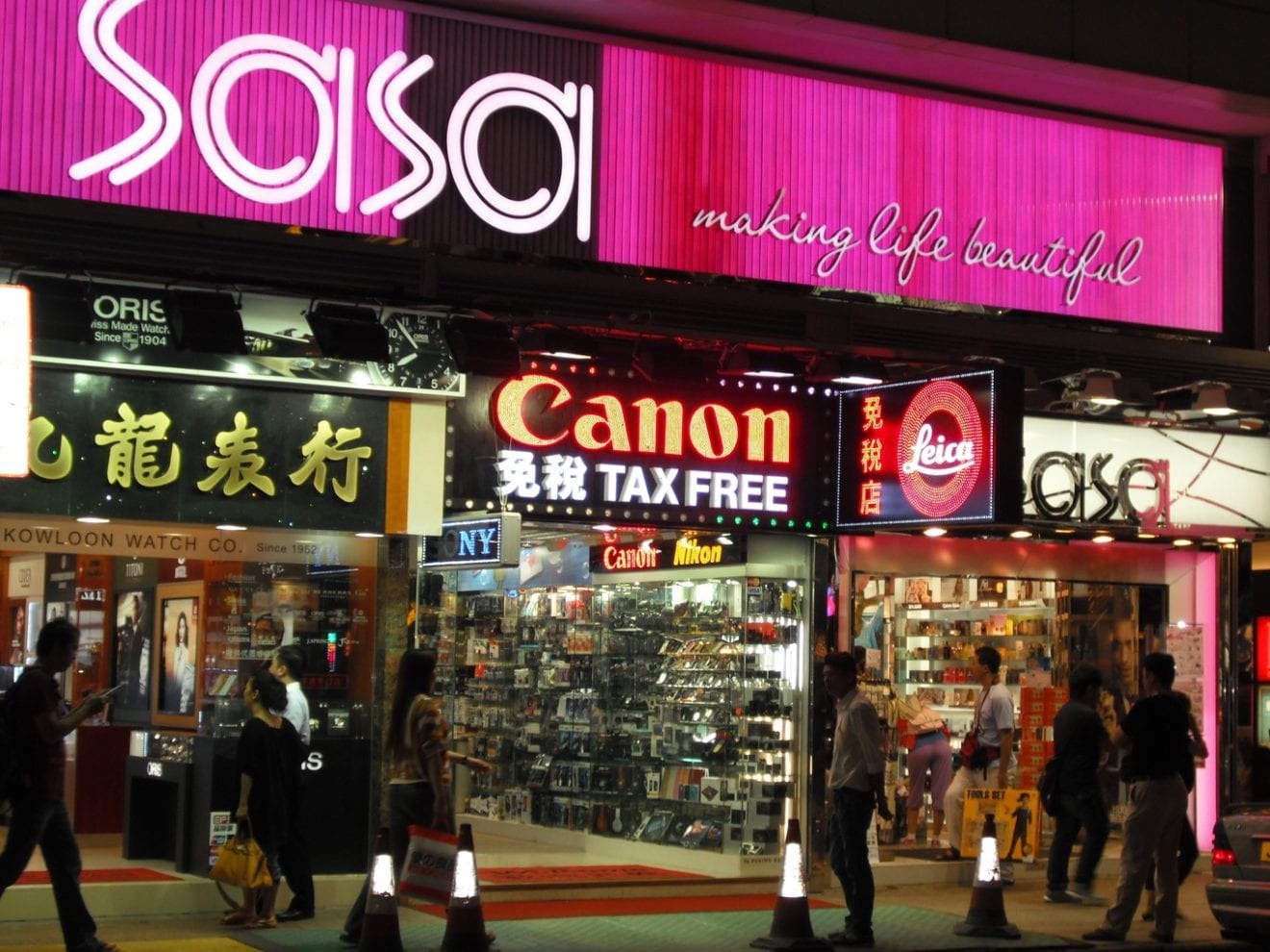
    Hit by falling sales in the tourist downturn, Hong Kong beauty retailer Sa Sa plans new store concepts and diversification to restore growth.

    Reporting a 10.6 per cent decline in sales to HK$3.778 billion in the first half of the current year, and a 55 per cent plunge in profit to $153 million, Sa Sa revealed a strategy to “develop other businesses beyond traditional operations”, including tapping the opportunities of O2O and cross-border eCommerce.

    “The group’s O2O initiatives will initially launch in Hong Kong and gradually extend to mainland China. For the China market, the O2O initiatives will significantly broaden product offerings in its physical stores through online sales and cross border fulfillment. The group aims to use different channels and to leverage a variety of online partners to increase online exposure, including operating physical stores to promote O2O in Free Trade Zones, and cooperating closely with major China online operators, all with their unique positioning and correspondingly different opportunities,” the company said in its interim report.

    New store concepts are also on the drawing board.

    “The group’s strategy for new store concepts includes introducing more trendy and lifestyle concepts to attract young and trend-setting customers, much improved product display, and more emphasis on enhancing the shopping experience.”

    Sa sa says it also aims to place more emphasis on the unique shopping experience with Sa Sa through improved product displays, while changing the mindset of its beauty consultants to one that is more receptive to consumer preferences.

    “In addition, the group will substantially strengthen its online marketing efforts, including the use of social media channels to improve interactivity.”

    Hong Kong & Macau

    Sa Sa says its first half year was marked by pressure from a series of negative factors in the retail market of Hong Kong during the first half of the year. Retail sales in Hong Kong and Macau decreased by 11.1 per cent to $3.010 billion.

    “The cosmetics market in Hong Kong continues to face strong headwinds due to the slowing of mainland China tourist arrivals, their reduced spending, and weak local consumption sentiment. The one-visit-one-week policy for mainland visitors is gradually taking its toll on the market, while the strength of the Hong Kong dollar and depreciating yuan will continue to make shopping overseas more attractive for both mainland China and local consumers. Intensifying competition within the cosmetic industry is a further challenge, with ongoing discount and promotion programmes having an ongoing impact on profitability,” the company reported.

    “Although rental pressure is expected to moderate in a slowing market, rental reductions still lag behind weak sales performance. In the face of these challenges, The group rationalised its retail network from 287 to 281, a net decrease of three stores each for both “Sasa” stores and single-brand counters.”

    Mainland China

    In Mainland China, the stores’ profitability continued to improve, but weak operational and product management led to a decline in turnover, as well as an increase in the inventory provision. Overall turnover for Mainland China operations decreased to HK$148.9 million, a decrease of 8.7 per cent in local currency terms, while same store sales growth in local currency decreased by 9.8 per cent for the period. Loss for the period amounted to HK$24.5 million. The group has recognised the need for more management resources to improved management, and is currently using external management resources on a contract basis to allow for more time to develop its own management structure and training. The group is also seconding experienced staff from Hong Kong to improve attractiveness of product offerings and inventory management.

    Taiwan

    Turnover in the group’s Taiwan business decreased to HK$130.2 million during the period, representing a drop of 2.2 per cent in local currency terms. Same store sales fell 8.7 per cent in local currency. The number of mainland China consumers in Taiwan is expected to increase in view of the country’s enhanced infrastructure and retail space, and the introduction of unlimited visa quotas for high-end Mainland Chinese tourists who have greater spending capacity. The group has already opened stores in tourist locations to tap the potential of increasing in mainland Chinese tourist arrivals.

    Singapore & Malaysia

    Flat sales across the Sa Sa Singapore network has prompted a rethink of the brand’s local network.

    In the first half year, Sa Sa reported turnover of HK$112.8 million (S$20.445 million) in Singapore, remaining flat in local currency terms over the same period last year.

    “The group will continue to build scalability and profit potential by closing inefficient stores and opening stores in new malls with good potential,” the company said in its interim trading statement.

    Meanwhile, turnover for Sa Sa Malaysia was HK$141.9 million, an increase of 2.5 per cent in local currency terms over the same period last year. However, same store sales decreased 8.5 per cent in local currency.

    “Sales and profit growth were restrained by the implementation of GST [on April 1], which adversely impacted store productivity during the transitional period. This effect is expected to be normalised in the second half.”

    Chairman’s view

    Chairman and CEO Dr Simon Kwok put on a brave face on the results:

    “Sa Sa has a long track record of delivering outstanding success in all economic climates and in the face of the most severe headwinds and difficulties. We firmly believe that in spite of the current difficult business environment we are now facing, we can still turn challenges into opportunities and further consolidate our competitive advantages. The flexibility of our business model, with an ability to rapidly adapt to new circumstances, markets and trends, will continue to support our position as a leading provider of beauty products in the Asia Pacific. We also believe that the resilience and adaptability of our loyal staff and the forward vision of our outstanding management team will ensure that we deliver sustained, satisfying growth for many years to come.”


  • Jumei doubles sales, but still in the red

    Jumei doubles sales, but still in the red

    Jumei International, the Chinese online retailer of beauty products, has reported a sales increases of 99.9 per cent – but it still posted a quarterly operating loss.

    In the quarter to September 30, net revenue reached RMB1.9 billion (US$305.5 million). Total net GMV increased by 35.6 per cent to RMB2.3 billion (US$358.7 million), driven primarily by a 30.8 per cent rise in the number of active customers and a significant 89.5 per cent boost in total orders.

    But gross profit as a percentage of net revenues decreased to 26.2 per cent (from 38 per cent)in the same period of 2014, primarily due to the company’s shift in strategy from beauty product marketplace sales to merchandise sales that started in September 2014, and inventory optimisation activities for Jumei Global.

    The net loss attributable to Jumei’s ordinary shareholders was RMB86.9 million (US$13.7 million), compared with net income attributable to Jumei’s ordinary shareholders of RMB120.0 million in the same period of 2014.

    Leo Chen, founder and CEO of Jumei, appeared upbeat about the results however.

    “Our third quarter net revenue growth continues to be strong… driven by Jumei Global and rapidly shifting consumption patterns in China as consumers upgrade their tastes, preferences and expectations for products. We continue to strengthen our position as a leading import cross-border eCommerce platform in China and are pleased to see both active customers and number of orders grow rapidly while maintaining a high repeat purchase rate,” he said.

    “We continue to add world renowned brands such as Shiseido and KOS to our Jumei Global platform. This is the first time these Japanese beauty groups have directly authorised a cross border eCommerce company in China to carry their merchandise. This means that going forward, new products by both brands will be launched simultaneously in Japan and on Jumei Global in addition to those already on offer in Jumei’s domestic platform. Chinese consumers will now be able to access international beauty trends at the same time they take place in the brand’s home markets.”

    In the fourth quarter of 2015, the company says it expects total net revenues to be between RMB1.83 billion and RMB1.93 billion, representing a year-over-year growth rate of 80 to 90 per cent.

  • Alibaba launches Taiwan, Hong Kong venture funds

    Alibaba launches Taiwan, Hong Kong venture funds

    China’s Alibaba has announced two venture funds to help entrepreneurs with projects who can leverage the resources of Alibaba’s ecosystem.

    A HK$1 billion (US$130 million) venture fund – named Entrepreneurs Fund for Hong Kong – will be managed by venture capital firm Gobi Partners.

    A second – Entrepreneurs Fund for Taiwan – will have initial capital of NT$10 billion (US$316 million) and be managed by CDB Capital, a division of China Development Industrial Bank (CDIB).

    As well as cash, the two new funds will offer 200 internship opportunities annually for graduates and final year students of local tertiary educational institutions. Successful applicants will be able to work for between six and 12 months at Alibaba Group companies in Mainland China.

    Andrew Lee, the former CFO of EnTie Bank will act as executive director of the Taiwan fund, with directors including Charles Yen, co-founder and principal of the AAMA Taipei cradle program and Joseph Tsai, senior EVP of Cathay Financial.

    The fund will be headed by Cindy Chow as executive director. Other directors include Dr Allan Zeman, founder and chairman of the Lan Kwai Fong Group, and Savio Kwan, an independent business consultant who served as president and COO of Alibaba from 2001 to 2003.

    The funds are intended to help entrepreneurs and position Hong Kong and Taiwan as business hubs engaged regionally and globally, with a mandate to invest in qualifying companies in the startup, growth and expansion phases. Selected ventures will be able to leverage the platforms in the Alibaba ecosystem to offer products and services to mainland China and globally, given that Alibaba operates in eCommerce, logistics, mobile platforms, cloud computing and financial services.

    Said Joseph Tsai, executive vice chairman of Alibaba Group: “At Alibaba, our mission is to make it easy to do business anywhere. We are passionate about fostering entrepreneurial spirit and hope the resources provided by the fund will help unleash potential for innovation and entrepreneurship.”

  • JD.com posts huge GMV sales increase

    JD.com posts huge GMV sales increase

    JD.com, China’s second largest eCommerce player, has reported a 76 per cent increase in core GMV sales in the third quarter to RMB111.0 billion (US$17.5 billion).

    Excluding Paipai.com – which the company is closing down by the end of this year – unique customers, annual active customer accounts increased by 62 per cent to 126.9 million year on year.

    Net revenues for the quarter RMB44.1 billion (US$6.9 billion), an increase of 52 per cent from the third quarter of 2014.

    The company fulfilled 329.7 million orders during the quarter, an increase of 85 per cent from the 178.2 million of the same period in 2014.

    But JD.com still fininshed the three months with a loss of RMB530.8 million (US$83.5 million) and a net margin of negative 1.2 per cent.

    “This was another quarter of strong growth, as JD.com increasingly becomes China’s source for fast, worry-free shopping online,” said Richard Liu, founder and CEO.

    “Our partnership with Tencent’s dominant Weixin and Mobile QQ platforms puts JD.com at the fingertips of virtually every Chinese mobile online consumer, and continues to drive rapid user growth. Looking ahead, we will stay focused on enhancing user experience, deepening ties with leading brands and working to further expand JD.com’s leadership in mobile eCommerce.”

    Sidney Huang, JD.com’s CFO, said third quarter results were “very healthy, with encouraging user growth and robust performance across all of our product categories”.

    “As China’s direct B2C eCommerce leader, JD.com is benefitting from the industry-wide shift to direct-sales eCommerce as we continue to invest strategically in our core business and high-growth initiatives,” he said.

    As at September 30, JD.com had approximately 90,000 merchants on its online marketplace and a total of 94,615 full-time employees.

  • Vipshop sales soar

    Vipshop sales soar

    Vipshop, the Chinese online discount retailer, says it boosted sales by as much as 63 per cent in the last quarter.

    The US-listed company says it expects revenue to be between RMB8.6 billion (US$1.349 billion)  and RMB8.7 billion ($1.365 billion). But that is less than its earlier guidance of RMB9.1 billion to RMB9.3 billion.

    “The weaker-than-expected preliminary third quarter results for total net revenue are partially driven by the warmer-than-expected fall weather in China, which caused customers to delay purchases of relatively higher-priced autumn and winter apparel,” the company said in a stock exchange disclosure.

    The preliminary, unaudited results are based on management’s initial review of operations for the quarter to September 30, and remain subject to change based on management’s ongoing review of the third quarter results.

  • Bizpluss.in targets $20 billion sales

    Bizpluss.in targets $20 billion sales

    Indian B2B eCommerce startup Bizzplus.in has added 32 suppliers from China to its portfolio, giving 50 brands direct access to its Indian business customers.

    And the company says it aims to become a US$20 billion turnover business within the next three years.

    Its next priority is to add suppliers from the UK, UAE and Europe as it aims to supply 100,000 retailers in the first phase of its growth plan.

    Among the 50 new Chinese suppliers are TCL, Toshiba and G’Five.

    “This new venture will disrupt the long supply chain and will directly connect the retailers and suppliers between India and China for better pricing,” said Yasharth Verma, executive director of Bizpluss.

    “Today with 100 per cent production, the demand is only for 50-60 per cent compared to 120 per cent before. Suppliers from electronics, electrical home appliances and home furnishing are the top categories from China region. Next, we will get children products and garments from European countries,” he said.