Retail News CRM

Tag: fruits

  • Vietnam needs to build national brands for fruits

    Vietnam needs to build national brands for fruits

    Experts said that Vietnam must develop national fruit product brands to increase added value and competitiveness in international markets.

    Although fruits bring in billions of U.S. dollars in export revenue annually, Vietnam has no well-established fruit brands.

    “When talking about apples, we think about the US,” said Nguyen Dinh Tung, Director of Vina T&T Import-Export Company. “Talking about kiwis, we think about New Zealand. Talking about melons, we think about Japan. Talking about Monthong durians, we think about Thailand. Talking about Musang King durians, we think about Malaysia… Meanwhile, where many types of fruits are grown, Vietnam has no famous fruit brands.”

    Tung said Vietnam has Ri6 durian, which could compete with durian from Thailand and Malaysia in terms of quality and is chosen by many companies as an export product.

    However, it is still falling behind in terms of brand identity and value.

    “Because there is no brand, the price of Ri6 is always about 20% lower than Monthong and much lower than Musang King,” he said.

    Le Thi Kieu Oanh, Director of Apple LLC, which exports Vietnam’s agricultural products to Japan, said Japan imported dragon fruit from Vietnam, but only 10% were sold at supermarkets under Vietnamese brand names.

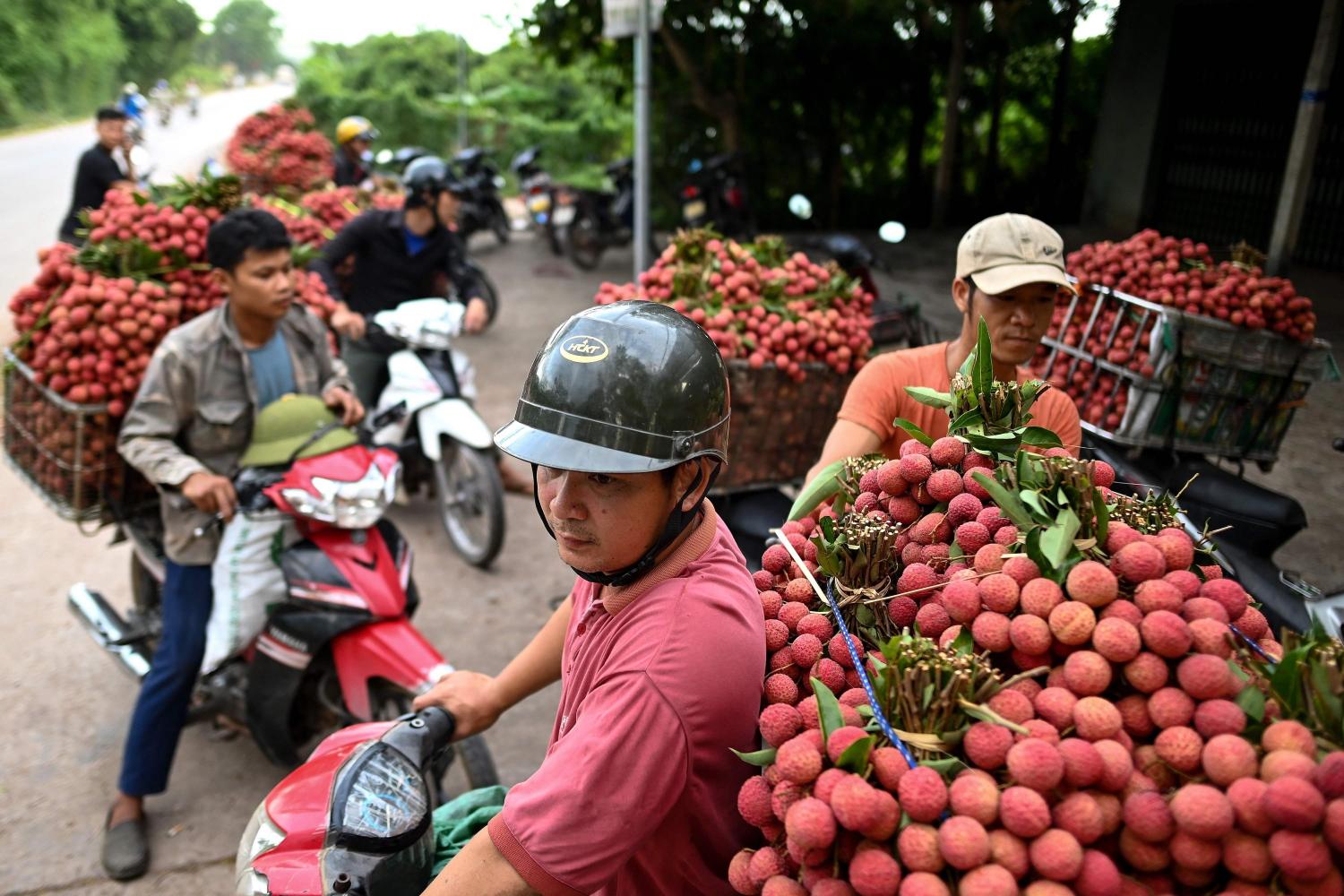
    According to Ta Duc Minh, Vietnamese Trade Counselor in Japan, Vietnamese lychees are exported to many countries and have become popular with the Japanese market.

    However, Vietnamese lychees remain inferior to their Japanese counterparts in terms of economic value, even though Japan does not have a production advantage in lychees.

    Japanese lychees are grown in Miyazaki over an area of around 10,000 hectares, and Japan has built a brand for its lychees as a precious fruit. There was a time when each Japanese lychee was sold for as much as $10 each, and people still waited in line to buy them, Minh said.

    According to Tung, Vietnam must develop national fruit brands to increase their value and competitiveness in the international market.

    “We should select several types of fruits to build national brands for,” Tung said. “Like New Zealand, this country successfully built brands for kiwis, which have markets around the world with the export value of over $3 billion per year, equal to the whole fruit and vegetable export of Vietnam.”

    To build fruit brands of national pride, Tung said it was necessary to pay attention to factors including varieties associated with soil, Vietnamese culture, quality, food hygiene and safety, planting area, high yield and preservation technology.

    Tung said that grapefruit, coconut and durian were fruits with large potential for export.

    He said that to build national fruit brands, it was vital to control the granting of geographical indication certificates strictly.

    Each type of fruit is only suitable for the climate and soil of certain localities. However, many kinds of fruit, such as pomelo, dragon fruit and lychee, are grown all over the country, which can affect branding, according to Tung.

    Therefore, it is important to select products associated with local culture and history to grant and manage geographical indication certificates.

    For example, the best quality coconuts are from Ben Tre province, lychees from Bac Giang and Hai Duong, white-flesh dragon fruit from Binh Thuan and red-flesh dragon fruit from Long An. Vietnam could choose typical products of each locality and upgrade them to national brands.

    Ngo Tuong Vy, General Director of Chanh Thu Company, said that among dozens of fruits exported, Vietnam could choose from three to five fruits to focus the resource on to build brands of Vietnam’s pride.

    “It’s time for Vietnamese fruits to focus on improving quality and adding cultural and creative elements to farming methods so that products contain stories that appeal to consumers,” Minh said.

    Minh pointed out that Japan focused on the quality of some world-famous fruits of the country. Even output was controlled to maintain selling prices. For some, special farming techniques were incorporated into the story to ensure the best quality.

    Building national brands and quality management databases and traceability systems would be the focus of the Ministry of Agriculture to increase the export value, Deputy Minister Tran Thanh Nam said, adding that growth should not be based on output any longer.

    He said that the agriculture ministry must work with the Ministry of Industry and Trade to propose to the Government a program to build national brands for agricultural products.

    The branding should also be integrated with a digitalization process in traceability, field diary, fruit chain management, and registration and protection of fruit brands in foreign markets.

    Vietnam’s export of fruit and vegetables reached nearly $3.34 billion in 2022, 80% of which were fruit exports.
  • Thai durian farmers feel threatened as Vietnam makes China debut

    Thai durian farmers feel threatened as Vietnam makes China debut

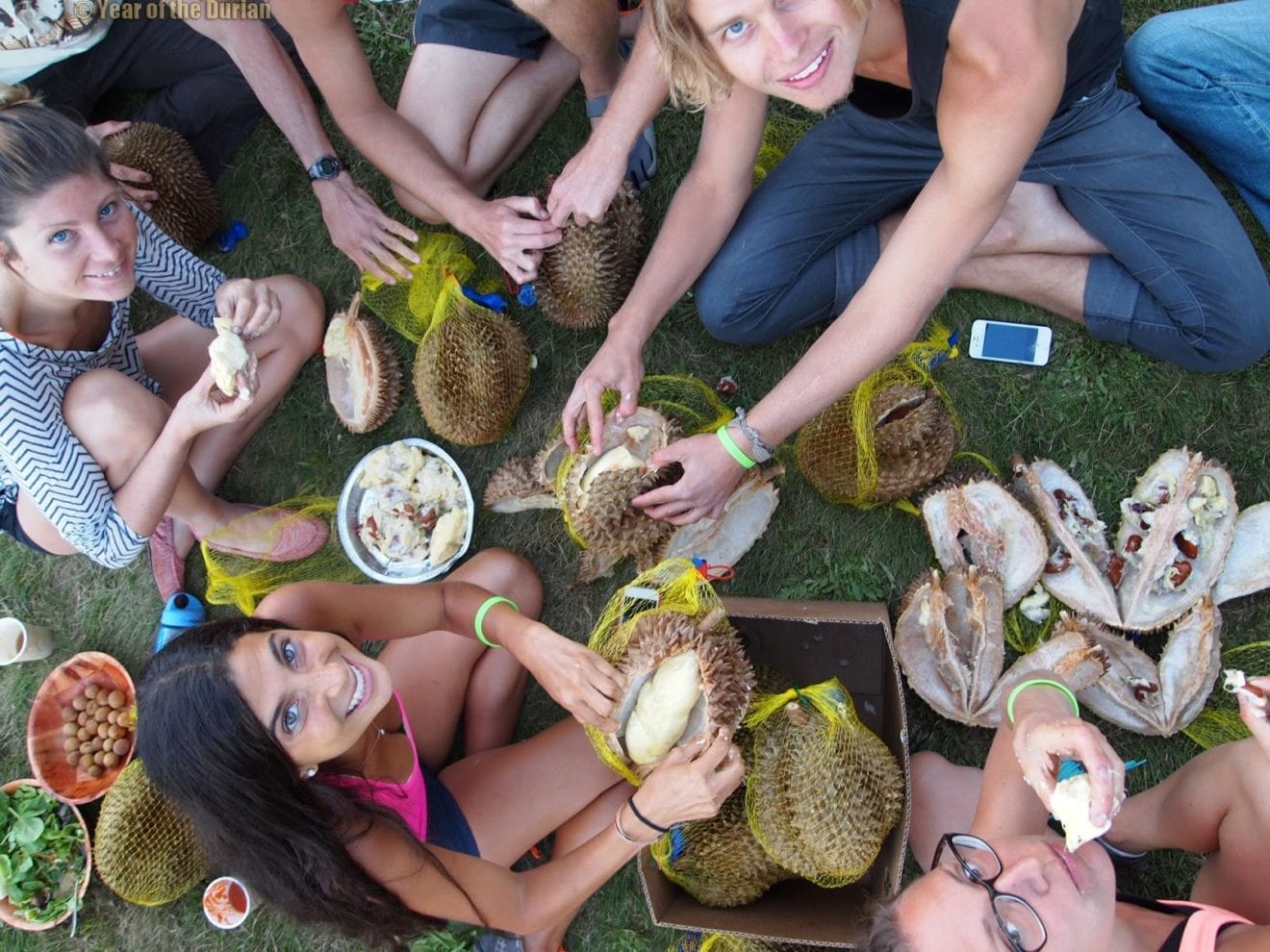
    Thai farmers who’ve enjoyed a virtual monopoly in exporting fresh durian to China are worried about Vietnam entering the fray because the latter’s proximity to the importer generates several advantages.

    When Vietnam’s first batch of fresh durian was exported to China under official quota in September, Thai farmer Busaba Nakpipat said she was concerned about heightened competition in a market that Thailand has dominated for decades.

    “Thailand used to be the only country allowed to export fresh durians to China, while Vietnam used to export processed durian,” she said. “But now Vietnam is our competitor and it worries me.”

    During a trip to Vietnam in September, Busaba saw an increasing number of durian orchards and found there was large potential in the country to further expand cultivation of the special fruit.

    Vietnam has been exporting processed durian to China for years, but now that the export of fresh durian to the world’s largest consumer market has been approved, local farmers see a great opportunity to make bigger profits.

    China has approved exports of fresh durian from nearly 3,000 hectares in Vietnam. It took Vietnam four years to negotiate the approval as China has become a difficult market with high quality standards.

    “Our exports need to meet Chinese consumers’ standards and we need to respect their desires and regulations. That is how we can ensure a sustainable export channel to this market,” said To Ngoc Son, deputy head of the Asia and Africa division under the Ministry of Industry and Trade.

    Industry insiders in Thailand view this development with some trepidation because its market dominance is threatened now.

    Thailand was the first country to export fresh durian to China. In 2021, Thai durian exports to China grew at a record 68% year-on-year to more than 875,000 tons.

    However, Vietnamese farmers have an advantage over their Thai counterparts because they can afford to pick durians for export later than in Thailand. Shipments from Vietnam take less time to reach China, said Thai academic and agriculture specialist Sakda Sinives.

    “Even without any clear difference in terms of taste … the riper fruit from Vietnam will slowly attain higher prices from buyers, while the price of durians from Thailand will fall. This quality control issue is why Thai [durian production] will fall as farmers can no longer shoulder the costs,” Sakda said.

    Sakda said that many traders operating in Thailand – more than a few acting on behalf of buyers from mainland China – have moved to Vietnam, lured by higher profit margins though very few Vietnamese farms have received export approval from China, he added.

    Long way to go

    However, Vietnamese officials say farmers in the country have a long way to go in improving their standards and practices to ensure export of high quality fruit.

    The nearly 3,000 hectares of durian orchards approved for exports to China only account for 3.5% of total area dedicated to cultivating the fruit.

    In the Central Highlands province of Dak Lak, where many durian orchards are located, only 16 out of 25 applications were approved by Chinese officials.

    “Some farmers are not aware of the benefits of being approved. Of those who have been approved, some do not keep a careful record of their farming activities,” said Vo Thanh Toan, an agriculture expert in Krong Pak District.

    Other officials have said that Chinese buyers have warned Vietnamese farmers about the failure to follow their standards by growing durian in the same area with other fruits, which increases the risks of pests and diseases. Some farmers have been warned about low hygiene and weak anti-Covid-19 measures.

    Nguyen Thi Thu Huong, deputy head of the Plant Protection Department, expressed concern at a recent forum that some Vietnamese durian farmers who have not been approved by Chinese officials are looking for ways to export to the neighboring country illegally.

    Farmers have registered to export 1.3 million tons of durian to China a year, which is double the approved amount by Chinese officials, suggesting that unapproved farmers are trying to add their fruit to the inventory of approved ones, she said.

    “If Chinese officials find out, all our negotiations and efforts of the last four years will be thrown away.”

  • Vietnamese lychees aim to expand global footprint

    Vietnamese lychees aim to expand global footprint

    The “Vietnamese lychees go global” forum was held on June 16 to promote lychee exports and take the brand name of the Vietnamese fruit to the next level.

    Vietnamese lychees have made a name for itself in many international markets. According to Le Hoang Tai, deputy director of the Trade Promotion Department, Ministry of Industry and Trade, China accounts for 91 percent of Vietnam’s total lychee export volume. Other markets include Japan, Korea, Australia and the United Arab Emirates.

    Hai Duong, home to Thanh Ha lychees, currently has over 9,000 hectares under cultivation, producing 60,000 tons of lychees every year, of which 50 percent is consumed domestically, 40 percent is exported to traditional markets, and 10 percent to high-end markets including the U.S., Japan, and EU.

    “We aim to build a global brand of high-quality lychees,” Tran Van Quan, vice chairman of Hai Duong Province People’s Committee, said.

    Bac Giang, another leading area for lychee production, has 28,000 hectares of lychee-growing land, providing 25,000 tons of lychees exported to 30 countries. Most meet VietGAP and Global GAP standards.

    “The province will continue to boost lychee exports to high-end markets, and new markets including Canada and Thailand,” Phan The Tuan, vice chairman of Bac Giang, said.

    Palestinian Ambassador to Vietnam, Saadi Salama, said: “Lychees have gradually become the pride of Vietnam.”

    George Burchett, a journalist from Australia, said: “Lychees are both eye-catching and delicious, suitable for everyone’s taste, not only contributing to Vietnamese exports but also enhancing Vietnam’s image to the world.”

    Pham Van Dung, director of Hong Xuan Cooperative, Bac Giang, admitted that the preservation process is one of the challenges for Vietnamese lychees. “Ripe lychees that have not been consumed yet need more intensive solutions like freeze-drying or high-tech drying, so that there are still products for the market even when the harvest ends,” said Dung.

    Director of Toan Cau Company, Nguyen Duc Hung, admitted that Vietnamese enterprises focus on exporting fresh lychees, but fresh lychees can be preserved for 40 days at most, “so it is difficult for lychees to reach far-flung markets.”

    He suggested new products like frozen lychee, with long-term preservation capacity, should be offered so that the fruit could reach global customers with diverse tastes.

    The Palestinian ambassador noted Vietnamese lychees are facing difficulties in reaching far-flung markets because of logistics. “In a short time of two months, to export lychees to global markets in fresh conditions is a challenge.”

    He suggested agencies prepare in advance to facilitate lychee transportation.

    Tai of the Trade Promotion Department recommended that while aviation costs are high, lychees should be transported via railways to cut costs and avoid delays in shipment, which takes about only 15-21 days.

    Salama said that products on sale in the Middle East normally have Halal marks on their packages as a sign of a trustworthy or superior product. He hoped that more Vietnamese lychee products are Halal-labelled to reach consumers here.

  • Fruits, meats buck trend of surging prices

    Fruits, meats buck trend of surging prices

    While the prices of many consumer goods are rising sharply, some have bucked the trend as their supply remains strong while demand, especially for exports, is weak. Looking for a place to eat dinner at a traditional market, Huong, a garment worker in Tan Binh District, said it is fortunate that the price of pork, popular among most Vietnamese families, has fallen slightly.

    This has relieved some of the financial pressure on low-income workers like her as the prices of many goods have been rising.

    Imported beef prices are down 10-20 percent, and farmed fish prices have fallen even more sharply.

    A recent survey found that the prices of many agricultural, fishery and livestock products have dropped, with most of them seeing double-digit declines.

    “I suffered heavy losses as production costs doubled from last year but prices are lower”.An, who has a jackfruit orchard in the southern province of Long An, said merchants have halved their buying price and even stopped buying due to high transport costs and export challenges.

    Hung, a farmer in the central coastal province of Binh Thuan, said several tonnes of dragon fruits have ripened on his farm but there are no buyers.

    Citing export issues, merchants buy the fruit in small quantities at around VND2,000 per kilogram (8.7 US cents).

    Pham Thanh Mai, an agricultural products trader in the Central Highlands, said difficulties with exports are the main reason for the price drops.

    “Usually off-season fruits always fetch higher prices because of limited supply. Prices have now fallen sharply since demand is lower as fruits cannot be exported”.

    As of March 21, around 1,000 trucks remained stranded at at border gates with China in the northern province of Lang Son, 660 of them laden with fresh fruits. According to Vietnam Customs, 80 percent of the country’s dragon fruit is exported to China. But after that country imposed stringent Covid-19 safety measures, Vietnam’s exports have stalled, causing demand for many fruits to dry up.

    Le Xuan Huy, deputy director of leading pork producer CP Vietnam, said meat prices have dropped generally due to higher supply and fall in demand to 80 percent of pre-pandemic levels.

  • Vietnam biggest buyer of Cambodia’s mangoes

    Vietnam biggest buyer of Cambodia’s mangoes

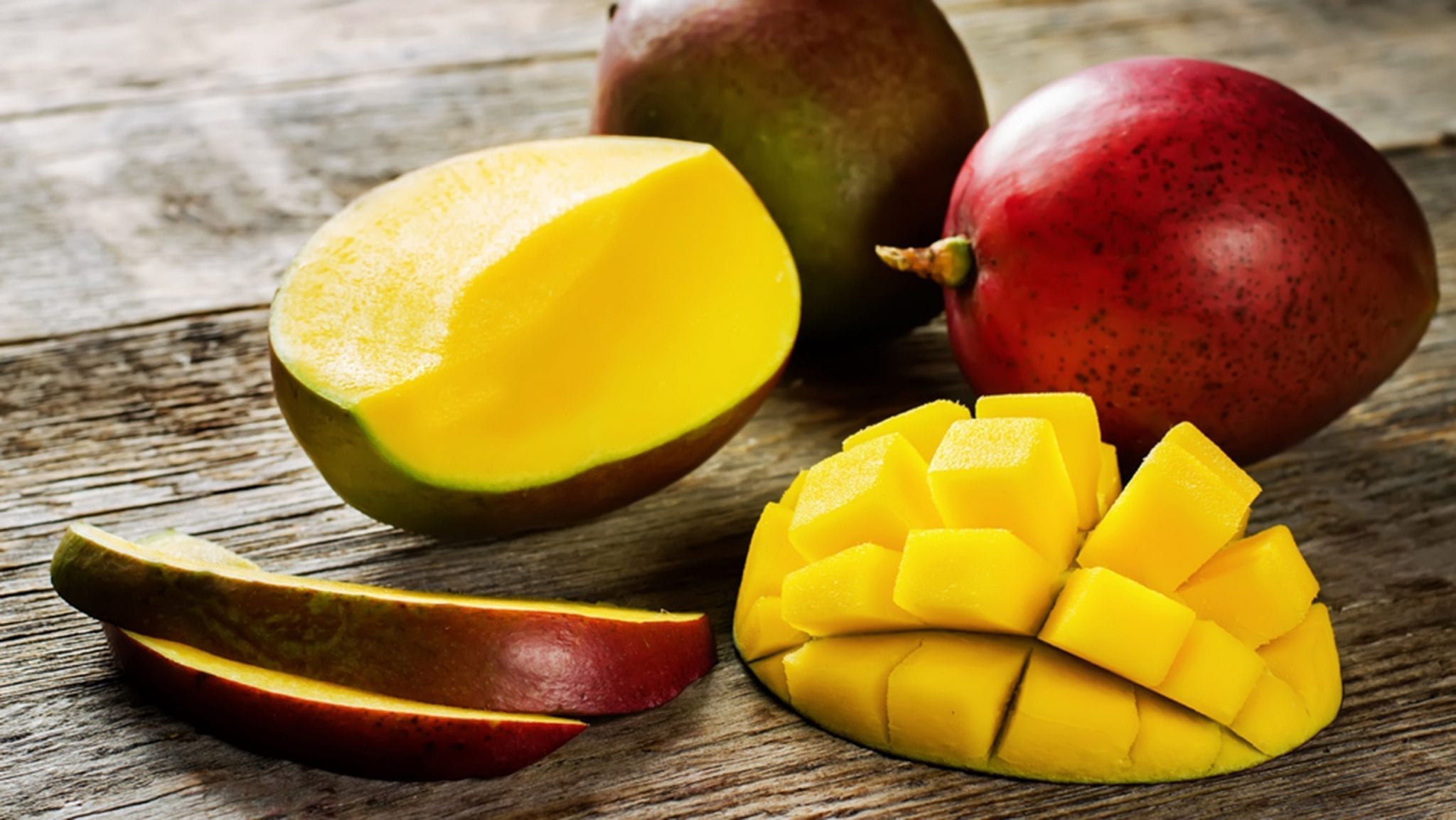
    Cambodia exported 140,000 tons of fresh mangos, or 86.8 percent of its total exports of the fruit, to Vietnam in the first seven months of this year.

    Citing data from the Cambodian Ministry of Agriculture, Forestry and Fisheries, the Vietnam Trade Office said the nation exported 161,228 tons of mangos between January and July, a year-on-year surge of 248 percent.

    Besides fresh mangos, Cambodia exported nearly 13,525 tons of mango jam, including 77 tons to Vietnam, 1,000 tons to Thailand and 11,000 tons to China in the seven-month period.

    Cambodia, which cultivates mangoes on 126,668 hectares at present, exported 845,274 tons of mangos worth over $473.2 million last year, mostly to Vietnam, Thailand, China, South Korea, Singapore, Russia and France.

  • Vietnam fruits, vegetables struggle to enter overseas market

    Vietnam fruits, vegetables struggle to enter overseas market

    Vietnamese fruit and vegetable exporters are struggling with many countries increasing quality standards for them. Dragon fruit, which accounts for 40 percent of Vietnam’s fruit and vegetable exports in value, is facing the biggest challenge as China, which used to buy 80-90 percent of Vietnam’s dragon fruit mainly through border gates, has tightened the import through the channel.

    The importer has also improved standards on quarantine and food safety and origin tracking to Vietnamese fruits, including dragon fruits.

    Facing the difficulties, many traders have recently stopped buying the fruit in some major growing regions.

    As a result, prices of the fruit have plummeted. Recently farmers in Binh Thuan Province said that prices are down 90 percent to VND1,500-2,000 ($0.06-0.08) per kilogram.

    Vietnam’s dragon fruit exports might see more pain since China may reduce purchases after expanding its own cultivation, warned by industry insiders.

    Vietnam’s Plant Protection Department said China has planted dragon fruit on 20,000 hectares in places such as Guangxi and Hainan.

    The department said this area would increase to 30,000 hectares next year.

    Chili, which accounts for a third of Vietnam’s total vegetable export value, is struggling in the Malaysian market.

    Malaysia is among the three largest buyers of chili from Vietnam along with South Korea and China.

    But it announced to cease licensing the import of chili from Vietnam from September 14 after detecting excessive residues of plant protection products in chili shipments.

    Together with dragon fruits and chilli, papaya has struggled to enter overseas market.

    The South Korean Ministry of Food and Drug Safety has informed Vietnam’s Plant Protection Department that it discovered genetically modified papaya in shipments from Vietnam.

    South Korea does not allow entry of genetically modified organism (GMO) products.

    A spokesperson for a large papaya exporter in southern Long An Province said that farmers knew about this policy, and some GMO fruits went into the consignments despite their efforts to prevent it.

    It is working with farmers to grow non-GMO fruits, the spokesperson added.

    Nguyen Quoc Vong, a researcher in the GMO fruit industry, said the trend in developed countries is to consume non-GMO products.

    He warned that Vietnam would be shut out of high-end markets if it exports GMO products since food safety standards around the world are rising.

    “Our competitors like Thailand do not grow GMO produce, so they will have an advantage in high-end markets where we cannot compete,” he said.

    Vietnam earned $3 billion from fruit and vegetable exports in the first nine months of this year, up 15.2 percent over the same period last year, according to the General Statistics Office.

  • Vietnam fruits, vegetables struggle to enter overseas market

    Vietnam fruits, vegetables struggle to enter overseas market

    Dragon fruit, which accounts for 40 percent of Vietnam’s fruit and vegetable exports in value, is facing the biggest challenge as China, which used to buy 80-90 percent of Vietnam’s dragon fruit mainly through border gates, has tightened the import through the channel. The importer has also improved standards on quarantine and food safety and origin tracking to Vietnamese fruits, including dragon fruits.

    Facing the difficulties, many traders have recently stopped buying the fruit in some major growing regions.

    As a result, prices of the fruit have plummeted. Recently farmers in Binh Thuan Province told VnExpress that prices are down 90 percent to VND1,500-2,000 ($0.06-0.08) per kilogram.

    Vietnam’s dragon fruit exports might see more pain since China may reduce purchases after expanding its own cultivation, warned by industry insiders. Saigon Giai Phong Online quoted Vietnam’s Plant Protection Department as saying China has planted dragon fruit on 20,000 hectares in places such as Guangxi and Hainan. The department said this area would increase to 30,000 hectares next year. Chili, which accounts for a third of Vietnam’s total vegetable export value, is struggling in the Malaysian market. Malaysia is among the three largest buyers of chili from Vietnam along with South Korea and China.

    But it announced to cease licensing the import of chili from Vietnam from September 14 after detecting excessive residues of plant protection products in chili shipments.

    Together with dragon fruits and chilli, papaya has struggled to enter overseas market.

    The South Korean Ministry of Food and Drug Safety has informed Vietnam’s Plant Protection Department that it discovered genetically modified papaya in shipments from Vietnam.

    South Korea does not allow entry of genetically modified organism (GMO) products.

    A spokesperson for a large papaya exporter in southern Long An Province said that farmers knew about this policy, and some GMO fruits went into the consignments despite their efforts to prevent it.

    It is working with farmers to grow non-GMO fruits, the spokesperson added.

    Nguyen Quoc Vong, a researcher in the GMO fruit industry, said the trend in developed countries is to consume non-GMO products.

    He warned that Vietnam would be shut out of high-end markets if it exports GMO products since food safety standards around the world are rising.

    “Our competitors like Thailand do not grow GMO produce, so they will have an advantage in high-end markets where we cannot compete,” local newspaper Thanh Nien reported him as saying.

    Vietnam earned $3 billion from fruit and vegetable exports in the first nine months of this year, up 15.2 percent over the same period last year, according to the General Statistics Office.

  • Vietnam fruits welcomed overseas, less favored in home market

    Vietnam fruits welcomed overseas, less favored in home market

    In January 2017, Vietnam imported $110 million worth of fruit, a sharp increase of 55 percent over the last year’s same period.

    In 2016, Vietnamese spent $700 million on imported fruits which came mostly from Chile, New Zealand and Australia.

    Vietnam also imported fruit from neighboring countries. Thailand has surpassed China to become the biggest fruit supplier. It exported $218.8 million worth of fruit to Vietnam in the first eight months of the year, while China exported $125.2 million.

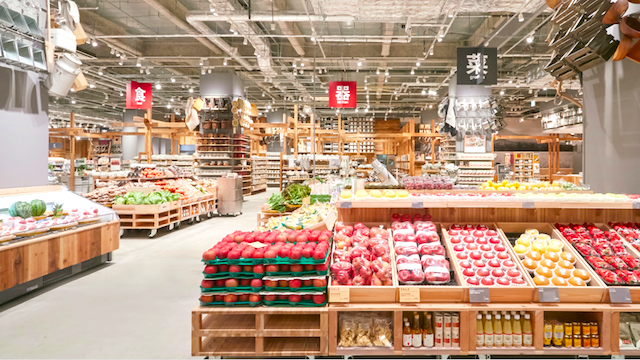
    Imported fruits, mostly grapes, oranges and apples, flood traditional markets and dominate the shelves at supermarkets, though they are nearly VND100,000 per kilo more expensive than domestically grown products.

    Thu Duc, a large wholesale farm produce traditional market in HCMC, is one of the biggest distribution centers of foreign fruits. About 10 types of fruits there are carried to retail markets.

    South Korean Fuji apple priced at VND133,000 per kilo, French kiwi VNDVND75,000, and South African grapes VND165,000 per kilo sell very well despite high prices.

    When asked why they accept to pay for imports, Ngoc Thu, a housewife in Tan Phu district in HCMC, said foreign products have longer shelf life, and there is no need to worry about unsafe plant protection chemicals, because foreign farmers have to follow strict regulations during farming and preservation.

    Hoa, an office worker in Go Vap district, said she understands that Vietnam’s fruits are always fresher than imports because they are brought directly from orchids and fields to markets, while it takes months to ship fruits from other countries to Vietnam.

    However, she still chooses imported fruits because she believes the fruits are safer.

    “Imported fruits have to undergo strict examination by the state management agencies in their countries. Meanwhile, the quality of Vietnam’s products cannot be controlled,” she said, adding that imports are 20-60 percent more expensive than domestic products.

    Vietnam still imports fruits from China in large quantities. However, in Vietnam, they are introduced as Vietnam’s fruits because Vietnamese consumers boycott Chinese fruits.

    A GDC report showed Vietnam exported $2.4 billion worth of fruits and vegetables in 2016, an increase of 30 percent over 2015, while the figure is expected to rise to $3 billion this year.

    According to the Vietnam Fruits & Vegetables Association, Vietnam’s products can enter 60 markets, but they still find it difficult to penetrate distribution networks in these countries.

    Nguyen Dinh Tung, general director of Vina T&T, said Vietnam needs VND500 billion for projects on developing the technologies for fruit preservation.

  • Improved quality boosts export of fruits, vegetables

    Improved quality boosts export of fruits, vegetables

    Việt Nam’s fruit and vegetable export in 2016 hit US$2.4 billion, a 30 per cent increase over 2015, and exceeding the Ministry of Industry and Trade’s yearly target of $2.2 billion.

    According to the Vietnam Fruit and Vegetables Association, the result was attributed to efforts to seek new markets and keep traditional markets.

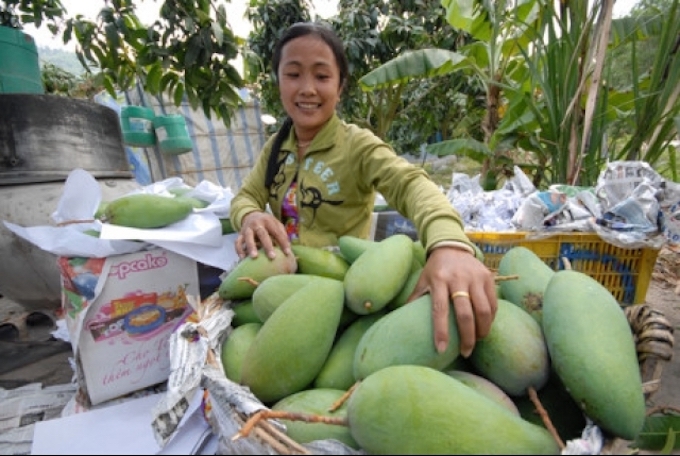
    In 2016, five types of fruits gained entry to four new markets — mangoes to Australia, dragon fruits to Taiwan (China), longans and lychees to Thailand and cashew to Peru — thus expanding the market for Việt Nam’s fruit and vegetable to more than 60 countries and territories.

    China continues to be the largest market for Việt Nam’s fruits and vegetables, accounting for some 70 per cent, followed by the Republic of Korea, the United States and Japan.

    Bùi Sỹ Doanh, from the Department of Plant Protection under the Ministry of Agriculture and Rural Development, said the department would continue negotiations on technical barriers to help more Vietnamese fruits and vegetables enter selective markets like the United States, Japan and Australia.

    In 2017, Việt Nam hopes to win import approval from Australia for its dragon fruits, approval from Japan for red-flesh dragon fruits and from the United States for star apples.

    Nguyễn Hữu Đạt from the Vietnam Fruit and Vegetables Association emphasised the need to further improve post-harvest preservation and processing technologies to meet demands for quality and diverse products in foreign markets.