Retail News CRM

Tag: gm

  • GM Korea to cut prices after disappointing sales

    GM Korea to cut prices after disappointing sales

    GM Korea, the Korean unit of General Motors, said Tuesday it has cut the prices of mainstay models in an effort to revive lackluster sales. Starting Tuesday, GM Korea revised the prices of its major models — such as the Impala sedan, Trax, and Equinox sport-utility vehicles — by up to 3 million won ($2,700). The company expects its “customer-focused pricing approach” to strengthen the position of those key Chevrolet vehicles in the Korean market, Cesar Toledo, vice president in charge of sales, customer care and aftersales at GM Korea, said in a statement.

    “Winning more customers, growing market share and sustaining trust in our brand are all crucial ingredients in building a sustainable GM Korea for the long term,” he said.

    GM Korea struggled with weak sales in Korea due to a lack of new models and labor-management disputes over jobs last year.
    In the January-November period, GM Korea’s sales fell 12 percent to 420,447 vehicles from 479,058 a year earlier. Sales figures for December are set to be released today.

    To drive up sales, the carmaker plans to introduce 15 vehicles into the local market over the next five years. It has launched the U.S.-made Equinox and the upgraded Chevy Spark since June. The Traverse SUV will be the next model to be added to its lineup.

    GM holds a 77 percent stake in GM Korea, with the state-run Korea Development Bank and SAIC Motor controlling 17 percent and 6 percent, respectively.

  • Richemont joins Alibaba’s IP alliance on brand protection

    Richemont joins Alibaba’s IP alliance on brand protection

    Global luxury group Richemont has joined the Alibaba Anti-Counterfeiting Alliance, a partnership between the e-commerce giant and brands that works to protect intellectual property rights on Alibaba’s platforms. Geneva, Switzerland-based Richemont is now among the 115 members from 16 countries and regions that are a part of the IP alliance, as well as the latest from the luxury sector to partner with the e-commerce giant on brand protection. Richemont said it would share its technology, expertise and other information to support the Alliance’s efforts.

    Richemont owns 17 luxury brands, including Cartier, Montblanc, Piaget, Van Cleef & Arpels, Watchfinder & Co and Chloe, in addition to Yoox Net-A-Porter Group, the online retail platform. YNAP runs four different websites — Net-A-Porter, Mr Porter, lifestyle-goods destination YOOX and affordable-fashion seller The Outnet — as well as online flagship stores for leading fashion brands, such as Armani, Moncler and Valentino.

    The announcement comes a month after Alibaba and YNAP partnered to bring the site’s high-end goods to Chinese consumers. A joint venture between Alibaba and YNAP will launch a mobile app for the Net-A-Porter platform and menswear site Mr Porter, in addition to opening flagship stores for Net-A-Porter and Mr Porter on Tmall Luxury Pavilion, a channel that connects premier brands with China’s digital-first consumers.

    Richemont, along with New Balance, General Motors and McDonald’s, were the latest global brands to join the AACA. The alliance’s membership has more than tripled from the original 30 founding brands at its launch last year, and now includes  names, such as Bose, Canada Goose, Honda, Samsung, Mars, Adobe, Danone, Hasbro and L’Oreal, in 12 industry categories. They work with Alibaba in six key areas — proactive online monitoring and protection, a product test-buy program, offline investigations and enforcement actions, industry-law enforcement workshops, litigation tactics and public awareness campaigns — in the fight against IP infringement.

    In September last year, the AACA established an advisory board so that brands could provide feedback to Alibaba in areas related to IP enforcement. Alibaba has since upgraded its Intellectual Property Protection Portal as well, delivering faster navigation and a better user experience on the site, where rights holders report suspected infringing listing and share information with Alibaba. In addition, Alibaba’s Good Faith program, which is open to brands with a track record of accurate notice and takedown filings, has streamlined the reporting process.

    The IP alliance does not restrict its brand-protection efforts to the online space. Alibaba and its brand partners also work to find and eliminate fakes at their source. In the luxury sector, Alibaba and Louis Vuitton – one of the first members of AACA – conducted an offline investigation that resulted in the seizure in May of approximately RMB 100 million ($14.4 million) worth of counterfeit goods.

    “The protection of intellectual property rights requires all stakeholders to work closely together and share their expertise. The AACA will continue its efforts to establish industry best practices for IP protection by creating effective collaboration among brands, platforms and law enforcement,” said Michael Yao, Alibaba’s senior VP and head of Brand Protection and Cooperation.

  • KDB to pay GM Korea by the end of the month

    KDB to pay GM Korea by the end of the month

    The state-run Korea Development Bank (KDB) said Thursday it will complete its injection of $750 million into the Korean unit of General Motors later this month, ending a controversy over GM Korea’s plan to spin off its research unit. The KDB and GM signed a deal in May on the rescue package for GM Korea.

    Under the agreement, the KDB pledged to inject $750 million, while GM agreed to provide $3.6 billion in fresh loans to keep GM Korea afloat.

    The condition to the additional investment was that GM would keep its Korean operation open for a minimum of 10 years.

    In June, the KDB injected $375 million into GM Korea, but the bank said the remaining half may not be provided amid concerns that the U.S. carmaker may keep only its research facility in Korea and eventually shut down its manufacturing facilities here.

    KDB Chairman Lee Dong-gull in October told lawmakers that the remaining investment may not be executed, depending on policy decision.

    The KDB’s decision came after GM Korea submitted details of its spin-off plan to the bank, the second-largest shareholder of GM Korea.

    The KDB has a 17-percent stake in GM Korea.

    The KDB said it will buy about 11.9 million preferred shares of GM Korea for 404.5 billion won ($360 million), or 33,932 won per share.

    The transaction will be made on Dec. 26, the KDB said.

    The May agreement prohibits GM from selling any stake in GM Korea over the next five years and limits GM’s right to sell shares or assets in GM Korea for 10 years.

  • GEOX appointed new leader for Asia Pacific

    GEOX appointed new leader for Asia Pacific

    Geox is a leading brand in the International lifestyle footwear Market. The success of Geox is due to the constant focus on the application of innovative solutions and technologies on the product that guarantee both impermeability and breathability. Geox technology is protected by over 60 different patents registered in Italy and extended internationally.

    Over 65% of its turnover is achieved abroad in more than 110 countries worldwide. Geox distributes its product through around 10,000 multi-brand selling points and a network of 1.157 mono-brand shops worldwide.

    Effective from today, Fillipo Gori, former CEO APAC at Roberto Cavalli, will lead the Asian expansion of the brand.

    Filippo Gori is a fashion professional with a finance and consulting background. After having worked 3 years in management consulting he joined GE Energy where he worked 3 years in FP&A. Soon after he began his journey in fashion, working for Emilio Pucci (Retail Controller), Gucci (Greater China CFO) and Replay (CEO APAC).

    In 2016 Filippo joined Vip.com as BD Director for international brands and established a profitable business in less than one year.

    In 2017 Filippo joined Roberto Cavalli, in one year and a half he opened in 3 new markets and increased the store network from 2 to 20 across Asia. In 2019 most of Asia markets will be reopened either through DOS or franchisee partnerships.

  • Korea’s car companies discuss challenges

    Korea’s car companies discuss challenges

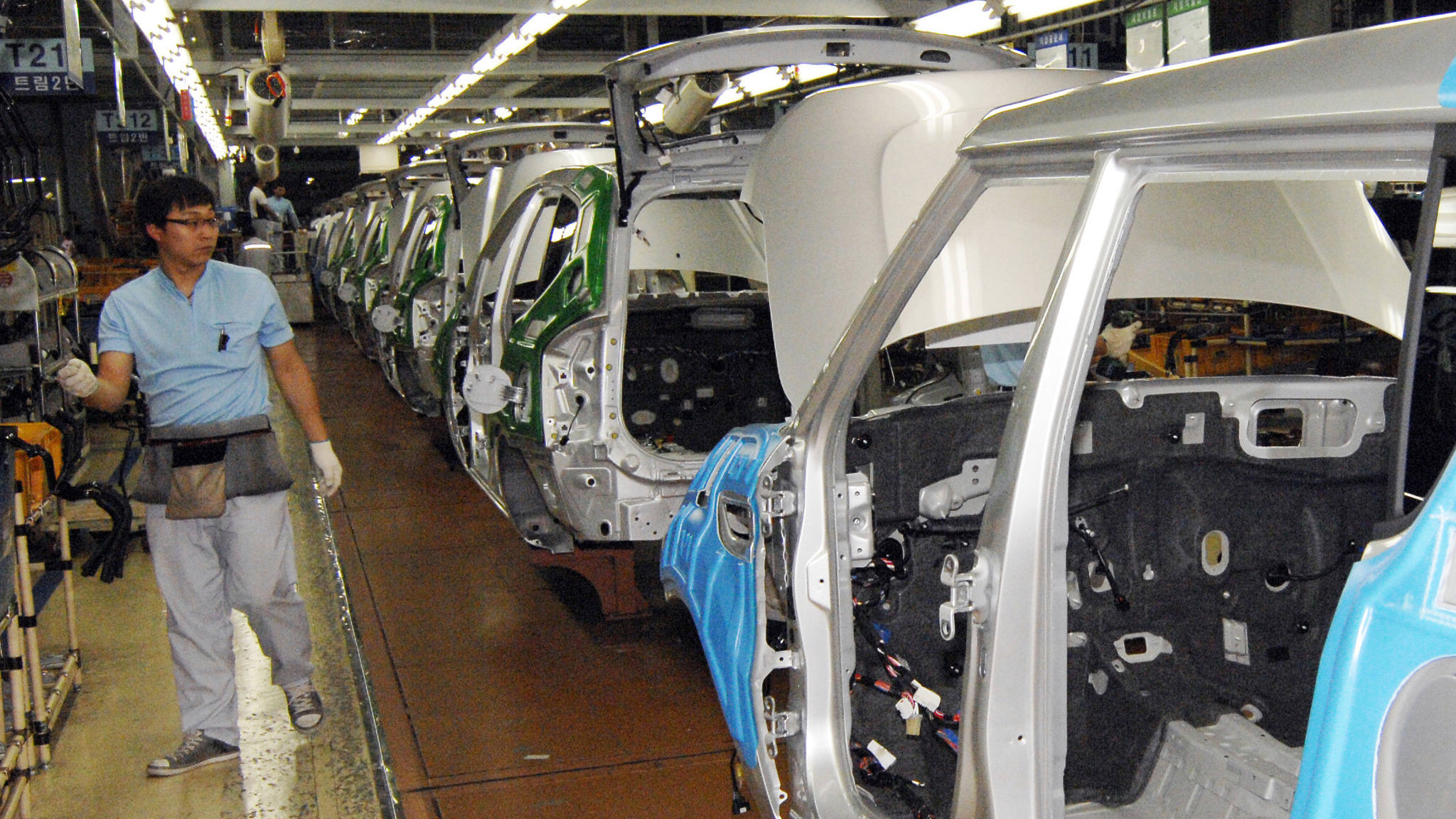
    Representatives of Korea’s major automakers and parts makers and industry officials gathered in Seoul Wednesday to discuss ways to breathe new life into the sluggish sector. The chief executives of the big five automakers — Hyundai Motor, Kia Motors, GM Korea, Renault Samsung and Ssangyong Motor — and their local parts makers and industry associations explored ways to tackle daunting challenges facing the industry.

    Korea’s auto industry is going through a hard time after GM Korea shut down its underutilized Gunsan plant in May, and Hyundai and Kia have been posting generally disappointing earnings this year.

    Small and medium-sized companies that make parts for the carmaker were more vulnerable to falling sales, with more than one-third of such Korean auto parts makers posting losses in the first half of this year, data by the think tank Korea Institute for Industrial Economics and Trade showed.

    They are also in the crosshairs as the United States is weighing slapping tariffs on foreign-made autos and auto parts on national security grounds.

    The participants called for the government to boost domestic demand, provide financial assistance to cash-strapped parts makers and lower regulations in emerging sectors, such as autonomous and electric vehicles.

    The automakers said they will seek ways to maintain over 4 million units in domestic car production and raise the number to 4.5 million by 2025.

    Hyundai Motor, the nation’s leading automaker, said it will invest 220 billion won ($193.8 million) over the next two years to develop an advanced lineup of its hydrogen-fuel electric car Nexo, with a goal of releasing over 30,000 units in the domestic market in 2022.

    GM Korea said it will hold trade shows to help its local contractors tap into the global market and supply 70 billion won in subsidies for small- and medium-sized contractors.

    Renault Samsung said it will operate a research and development fund worth 35 billion won by 2020 and form an alliance with Nissan and Mitsubishi to help its contractors make bids overseas.

    Ssangyong Motor promised to expand use of Korean-made parts and support its contractors in India.

    The Ministry of Trade, Industry and Energy said it will join industry efforts to overcome challenges and drive innovation in the sector.

    “If the auto industry and the government work together, we can come up with measures to deal with the hardship,” Industry Minister Sung Yun-mo said during a meeting with them.

    “We will gather opinions to prepare support measures, especially for parts manufacturers.”

    The ministry said it will unveil a comprehensive support package for the auto industry next month, which includes financial and R&D support as well as deregulatory measures.

  • GM chairman might visit Korean facility

    GM chairman might visit Korean facility

    General Motors Chairman and CEO Mary Barra hinted at visiting Korea soon amid conflict over the spinning off of the Korean unit’s R&D division. If the trip happens, it would be Barra’s first visit to the Korean operations since she became chairman in 2016.

    GM Korea head Kaher Kazem reiterated the company’s commitment to the market during a government audit held Monday. “I would like to visit our Korea operations at some point soon,” Barra wrote in a letter sent to labor union head Lim Han-taek on Oct. 24.

    Lim had requested a meeting with Barra over GM’s decision to spin off the R&D division.

    Since July, GM has been pushing to build a separate R&D center tentatively named GM Korea Technical Center. Management says it will raise work efficiency and competitiveness.

    The labor union has opposed the idea, claiming a separate R&D center will eventually result in the ending of production in Korea, resulting in massive layoffs. On Oct. 19, the automaker approved the plan in a board meeting despite the opposition.

    In the letter, Barra emphasized GM’s dedication to its Korean operations.

    “The specialized unit will benefit from focused management, increased transparency on cost and improved operational efficiency,” Barra wrote in the letter.

    “We think the demerger is an important step to allow both the engineering services company and the manufacturing unit to stand on their own as profitable, viable businesses.”

    During a government audit held Monday at the National Assembly, GM Korea CEO Kazem said the company “has no plan to withdraw from Korea.” His comments assured lawmakers the spinoff is part of GM’s plan to stay in Korea longer than the initially promised 10 years.

    “In fact, we are establishing a long-term commitment to GM Korea. [Building a separate R&D center enables] us to not only upgrade but also introduce new models. We are committed to building a very long-term future for GM Korea,” Kazem said. “The framework agreement says 10 years, but we are looking at longer than that.”

    Kazem added that the company is engaging a number of parties on the possible redevelopment of the currently shut-down Gunsan factory, but he didn’t reveal details. He said he would “review” whether the plan for the Gunsan factory site could be included in the initial framework agreement.

    GM abruptly shut down the Gunsan factory in May. GM Korea has since been beset by speculation of completely shutting down in the country.

    The company and the Korean government have decided to jointly invest 7.7 trillion won ($6.7 billion) to save the ailing unit. GM also promised to stay in the country for the next 10 years.

    A GM Korea official said that Barra’s visit to the country is not yet confirmed.

  • GM Korea votes to spin off R&D unit

    GM Korea votes to spin off R&D unit

    A GM Korea shareholders’ meeting Friday decided to spin off its R&D and design department, reigniting conflict with its labor union and the state-owned Korea Development Bank (KDB), the automaker’s second-largest stakeholder.  “The plan to establish a dedicated engineering unit, GM Technical Center Korea, was approved during the shareholders meeting,” GM Korea said in a statement.

    However, the decision is guaranteed to be controversial since KDB, which owns 17-percent of GM Korea, intended to vote against the spinning off of R&D and design unit from production but missed the shareholders’ meeting.

    “We received notification of the shareholders’ meeting, but the decision was made in our absence,” an official at the KDB bank said. “We were not able to exercise our veto rights since we weren’t there.”

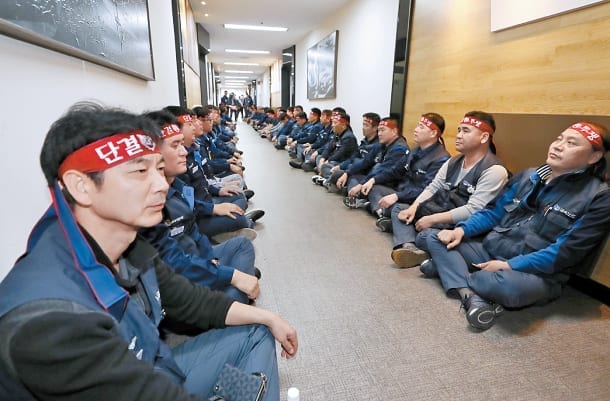
    GM Korea’s unionized workers occupy the hallway leading to the GM Korea chief executive’s office at the company’s headquarters in Bupyeong District, Incheon, on Friday in an effort to stop a shareholders’ meeting from taking place

    It’s not clear why KDB representatives didn’t attend. KDB said it will be looking into the legality of the meeting.

    On Thursday, KDB released a statement saying it would ask GM Korea’s management to explain fully its decision to spin off the R&D and design center and decide whether to exercise its veto rights.

    The statement was released after a court in Incheon rejected KDB’s request for an injunction to stop the shareholders’ meeting.

    “Although we respect the judgment of the Incheon court, we have deep concerns about GM Korea’s push to spin off [R&D and design] without sufficient explanation or agreement from the interested parties during the shareholders’ meeting,” the bank said in the statement.

    GM Korea’s union claims the spin-off is the first step in a long-term plan to completely halt domestic production.

    KDB has the right to nullify any GM Korea decision to sell more than 20 percent of its total assets, which is supposed to prevent the U.S. automaker from pulling out of Korea or restructuring without the consent of the bank.

    That right, which expired in October 2017, was reinstated after GM and the Korean government reached an agreement in April.

    However, it’s not clear whether that veto right can be applied to spinning off units within GM Korea. There’s even arguments that the newly forming center may not account for 20 percent of the automaker’s total assets.

    The union tried to stop the shareholders’ meeting by occupying a hall leading to GM Korea CEO Kaher Kazem’s office in Bupyeong District, Incheon. The union earlier this week voted in favor of a walkout that will likely take place next week.

    A crisis that led to the shutdown of one of GM Korea’s four plants in Korea in May seemed to have been solved when GM and the Korean government reached an agreement after long negotiations to inject $7.15 billion into the struggling automaker. GM agreed on covering $6.4 billion while KDB put up $750 million. GM agreed to keep the local unit going for at least 10 years.

    But in July, GM Korea announced the spinning off of its R&D center, which will turn Korea into its global strategic development and design center for next generation models.

    Meanwhile, production of compact vehicles will end in 2022 and factories will concentrate on SUVs.

    “The establishment of a dedicated GM Korea Technical Center is an important development in continuing our organization,” said GM Korea CEO Kazem in a letter sent to employees on Monday, adding that the new center would help to “more effectively respond to and secure and execute global engineering projects.”

  • Satcom Direct to distribute Intelsat’s FlexExec service

    Satcom Direct to distribute Intelsat’s FlexExec service

    Satellite operator Intelsat has teamed up with business aviation connectivity provider Satcom Direct to provide in-flight broadband connectivity to business jets globally. Satcom Direct has become the first solution partner and master distributor for Inmarsat’s FlexExec service for the business aviation sector. The company will add FlexExec to its new SD Xperience portfolio.

    Under the agreement, Inmarsat will provide Satcom Direct with immediate access to Intelsat’s Ku-band satellite fleet including its high throughput satellites.

    FlexExec is designed to differentiate from the competition by not sharing capacity with commercial aviation or customer broadband customers to provide business jet owners with guaranteed provide seamless, on-demand connectivity.

    “We are delighted that Satcom Direct has chosen FlexExec to be a part of their SD Xperience platform,” Intelsat VP and GM for mobility Mark Rasmussen said.

    “The global footprint, resiliency, redundancy and flexibility of FlexExec’s seamless Ku-band platform will ensure that passengers can easily extend fast, high quality broadband connectivity from their office into the skies.”

  • GM to transfer Vietnam operation to Vingroup’s car arm, eyes sales boost

    GM to transfer Vietnam operation to Vingroup’s car arm, eyes sales boost

    General Motors (GM.N) has agreed to transfer its Vietnamese operation to VinFast Trading and Production LLC and distribute Chevrolet cars through the local carmaker, in a move that could help drive up its modest sales in the country.

    The U.S. automaker will transfer full ownership of its Hanoi factory to VinFast for the Vietnamese firm to produce small cars under a GM global license from 2019, the companies said in a statement on Thursday, without disclosing a value for the deal.

    As part of the deal, VinFast, a unit of Vietnam’s biggest private conglomerate – Vingroup JSC VIC.HM, will be the exclusive distributor of the Chevrolet in Vietnam.

    “The GM-VinFast strategic partnership will best position the Chevrolet brand and dealer network for long-term growth in Vietnam by leveraging GM’s global scale and expertise, married with VinFast’s domestic strength and insight,” said Barry Engle, executive vice president and president of GM International.

    The transfer, which includes GM’s Hanoi plant, dealer network and employee base, is expected to be conducted by the end of 2018, the companies said in the statement.

    GM used its Hanoi plant to assemble Chevrolets with parts imported from South Korea – a country where the U.S. automaker came close to bankruptcy as it struggled to turn around its debt-laden unit. GM Korea is GM’s biggest production base in Asia excluding China.

    The plant will be used solely to produce VinFast cars after the transfer, while Chevrolet cars will be imported.

    VinFast said this partnership with GM was “integral” to its plan to “launch a portfolio of five VinFast vehicles in 2019”.

    It is building a $1.5 billion factory in the northern province of Hai Phong and plans to launch a sedan and sport-utility vehicle in the third quarter of 2019, and a small car, electric car and electric bus by end-2019.

    “Our vision is to build an automobile manufacturing eco-system that will include assembly plants, local automotive suppliers and dealers, and a string of supporting industries,” said VinFast CEO Jim DeLuca.

    Vietnam’s automobile sales grew 24 percent in 2016 but fell 10 percent last year to 272,750 units, data from the Vietnam Automobile Manufacturers’ Association (VAMA) showed. Sales fell 6 percent in the first five months of 2018.

    While GM’s sales in Vietnam have been rising since 2014, its numbers last year were only an eighth of the country’s market leader, local Truong Hai Auto Corp, and a sixth of runner up Japanese rival Toyota Motor Corp (7203.T), VAMA data showed.

    Sales of the Chevrolet, the only vehicle GM offers in Vietnam, grew 8.5 percent to 10,576 units in 2017, lagging gains of 34.5 percent in Indonesia and 25.7 percent in Thailand.

  • Auto sales pick up but GM, Renault struggle

    Auto sales pick up but GM, Renault struggle

    The outlook for Korea’s top automobile manufacturers has started to look up as overseas sales increase.

    It wasn’t all rosy, however, as GM Korea, which has been struggling to stay afloat since the beginning of the year, saw sales continue to fall.

    Hyundai Motor, Korea’s top automaker, said Friday its May sales rose 5.7 percent from a year earlier on recovering demand for its vehicles.

    Hyundai Motor sold 387,017 vehicles in May, up from 366,256 units a year earlier, helped by increased overseas sales, the company said in a statement.

    “The monthly results were helped by increased shipments of the Kona SUV to overseas markets, recovering sales in China and robust sales in emerging economies, such as Brazil and Russia,” the statement said.

    Domestic sales climbed 2.1 percent to 61,896 units last month from 60,607 a year ago, and overseas sales were up 6.4 percent to 325,121 from 305,649 during the same period, it said.

    In the January-May period, sales gained 2.4 percent to 1.83 million units from 1.79 million units a year earlier, the statement said.

    Kia Motors said its car sales rose 9 percent in May from a year earlier on recovering demand for its vehicles.

    Kia Motors sold 247,176 vehicles last month, up from 226,826 units a year earlier, the company said in a statement.

    The monthly sales were buoyed by increased domestic and overseas sales of new and upgraded models, such as the Stonic subcompact SUV, the Stinger sports car, the Rio subcompact and the Sportage SUV, it said.

    Domestic sales climbed 8.1 percent on-year to 47,046 units in May from 43,522. Overseas sales were up 9.2 percent to 200,130 from 183,304 over the same period, the statement said.

    In the January-May period, Kia’s sales grew 3.9 percent to 1.13 million autos from 1.09 million units in the year-ago period, it said.

    Renault Samsung Motors saw its May sales fall 22 percent from a year earlier due to weaker demand for its vehicles.

    Renault Samsung sold 16,101 vehicles last month, down from 20,517 units a year earlier, the company said in a statement.

    Domestic sales dropped 20 percent on-year to 7,342 units last month from 9,222 units. Exports also declined 23 percent to 8,759 from 11,295 during the same period, the statement said.

    In the January-May period, overall sales fell 4.6 percent on-year to 104,097 autos from 109,080, it said. The company’s current lineup includes the SM3 compact, the all-electric SM3 Z.E. sedan, the QM3 subcompact SUV and the SM5, SM6 and SM7 sedans.

    Renault SA owns an 80 percent stake in Renault Samsung.

    SsangYong Motor sales rose 4.6 percent last month from a year earlier, helped by increased exports.

    SsangYong Motor sold 12,920 vehicles in May, up from 12,349 units a year earlier, the company said in a statement.

    Domestic sales fell 5.2 percent to 9,709 units last month from 10,238 a year earlier. But exports jumped 53 percent to 3,229 units from 2,111 during the same period, it said.

    In the January-May period, the maker of the Rexton and Tivoli sport utility vehicles sold a combined 54,514 vehicles, down 5.4 percent from 57,648 a year earlier, the company said.

    Indian carmaker Mahindra & Mahindra Ltd. owns a 72.85 percent stake in SsangYong Motor.

    GM Korea saw sales fall 5.1 percent from a year earlier due to weaker domestic demand.

    GM Korea sold 40,879 vehicles last month, down from 43,085 units a year earlier, mainly because of a sharp decline in domestic sales, the company said in a statement.

    Domestic sales plunged 35 percent to 7,670 units last month from 11,854 a year ago. Exports rose 6.3 percent to 33,209 units from 31,231 during the same period, it said.

    The sales slump was mainly affected by weaker local demand for the Cruze subcompact and midsize Malibu sedans, the statement said.
  • GM Korea to offer more Chevys on local market

    GM Korea to offer more Chevys on local market

    GM Korea, the Korean unit of General Motors, will bring in more Chevrolet models produced outside the country if local demand rises, a company executive said Wednesday.

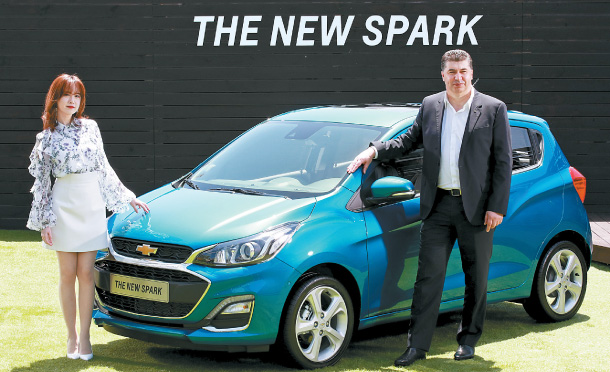
    “Chevrolet is a global brand. We have a very diverse portfolio. We will make sure that customers in Korea will have access to Chevy models brought from around the world,” GM Korea President and Chief Executive Kaher Kazem said in a showcase for the face-lifted Spark.

    The upgraded Spark will go on sale next month in Korea after it is produced at the Changwon plant, 400 kilometers (248 miles) south of Seoul, for local and international markets.

    To select the right Chevrolet models for the Korean market, GM Korea conducted a consumer survey from May 8 to 20. The six models posted on the Chevrolet webpage were the Equinox, Traverse, Tahoe and Suburban sport utility vehicles and the Corvette sports car and Colorado pickup.

    The company didn’t provide the survey results as the poll was for its own reference.

    The Equinox SUV will be displayed at the Busan motor show next month and is expected to hit dealerships within this year, the CEO said, adding that the introduction of Chevy cars fully depends on domestic demand.

    As the demand for SUVs has been on the rise in global markets, carmakers have beefed up their lineups with SUV models in recent years.

    The New Spark is the first model of 15 new and upgraded vehicles GM vowed to launch in the Korean market in the next five years as part of its commitment to bolster its operations in Asia’s fourth-largest economy.

    “We start today with the Chevrolet Spark to open a new chapter together in Korea. The Spark is an extremely important vehicle not only for domestic customers but also for international customers,” Kazem said.

    The Spark comes with eight air bags and other safety features, such as forward collision alert, side blind spot alert, lane departure warning and low-speed collision mitigation braking systems.

    The Spark is available in 48 markets and is the best-selling mini car in the United States, with sales of 176,627 units in the six years through 2017, the company said.

    The 1.0-liter gasoline model with a manual transmission sells at the starting price of 9.8 million won ($9,100), and prices go up to 13 million won depending on options. The price for the Spark with an automatic transmission is higher than the manual model by 1.8 million won, it said.

    GM and the state-run Korea Development Bank (KDB), the two biggest shareholders in GM Korea, recently signed the binding agreement that will permit a combined 7.7 trillion-won lifeline – 6.9 trillion won from GM and 810 billion won from the KDB – to keep the loss-making Korean unit afloat.

    Under the deal, the Detroit carmaker is banned from selling any of its stake in GM Korea before 2023 and is required to keep its holding in the unit above 35 percent until 2028.

    In February, GM announced its plan to shut down one of its four car assembly plants in Korea by May and asked the KDB to extend a financial helping hand to GM Korea. The Korean unit has continued to post net losses worth an accumulated 3.134 trillion won over the past four years through 2017 due to lower demand for its models.

  • GM workers storm Korea CEO’s office after company holds back bonus

    GM workers storm Korea CEO’s office after company holds back bonus

    General Motors workers in South Korea forced their way into company executive offices, destroying and removing furniture, shortly after the automaker’s local unit told employees that there will be no bonuses due to a cash crisis.

    A video posted on YouTube showed about a dozen union members storming the CEO’s office in Incheon on Thursday, kicking and throwing chairs before removing a large desk.

    The union, whose representative could not be reached for comment, was protesting the company’s decision and urged the CEO to resign, according to GM Korea’s spokesman.

    Separately, the company confirmed in a statement what it called a “violent incident” at its executive offices that “resulted in significant damage to company property.”

    GM, which is seeking concessions from the union to revive its South Korean business after mounting losses, has proposed a $2.8 billion new investment plan and a $2.7 billion debt-for-equity swap to turn around the unit. After threatening to exit the country altogether earlier, the subsidiary last month said it intends to file for bankruptcy if the union fails to agree to a restructuring plan, putting pressure on employees and the government to help it stay afloat.

    The incident was reported to the police, the company said, adding that it will take legal action against the workers.

    Government reaction

    South Korea on Friday urged GM and the union to reach a wage deal swiftly, saying the government will be able to discuss support for the money-losing unit on condition of an agreement.

    The latest comments, made by the industry minister during a meeting with GM Korea’s CEO, came after the union’s protest over nixed bonuses.

    “Should the industrial conflict seen yesterday and today happen again, it will be difficult for (GM Korea) to gain public support and government support,” Paik Un-gyu, minister of trade, industry and energy, said in a statement.

    GM’s union accepted the company’s demand for a wage freeze and no bonuses for this year, but opposes a proposal to cut benefits as well as its plan to shut down the Gunsan plant.

    “We appreciate the ministry’s interest and encouragement,” a GM Korea spokesman said.

  • German automakers gain ground in South Korea, outselling GM for first time

    German automakers gain ground in South Korea, outselling GM for first time

    Mercedes and BMW both sold more cars in South Korea than General Motors for the first time last month, helped by the growing popularity of German premium brands and as consumers shied away from GM after it announced a major restructuring.

    While home-grown automakers Hyundai Motor and Kia Motors Corp dominate the local market, high-end German vehicles have made inroads in recent years with more diverse offerings for brand-conscious consumers.

    BMW saw the biggest jump with February sales nearly doubling to 6,118 vehicles, industry data showed. That was just a tad behind Mercedes which led the imported car rankings with 6,192 cars, up 12 percent from the same period a year earlier.

    South Korea last year became the sixth biggest market for Mercedes, climbing from eighth place.

    GM’s announcement last month that it plans to shut down of one of its four factories in South Korea and was weighing the fate of the three other plants resulted in domestic retail sales nearly halving in February to 5,804.

    With consumers worried about loss of after-care services and residual value, GM lost its long-held spot as South Korea’s No. 3 automaker, slipping to sixth place.

    The U.S automaker, whose South Korean operations are primarily geared toward exports, is seeking financial aid from Seoul as well as concessions on wages and benefits from its local union to stay operating in the country.

    Talks with the labor union on Wednesday failed to produce concrete results although some 2,500 workers have applied for voluntary redundancy package.

    “We hope to wrap up talks with the labor union and the government swiftly,” a GM Korea spokesman said.

    “A drawn-out restructuring will hurt consumer trust,” he added.

  • GM sees flat 2018 earnings, with pickups picking up in 2019

    GM sees flat 2018 earnings, with pickups picking up in 2019

    General Motors Co shares rose on Tuesday after the company said 2018 earnings will be largely flat compared with 2017 and forecast higher profits in 2019 when its revamped line of high-margin pickup trucks hits the U.S. market.

    The 2018 earnings outlook was above market expectations, sending GM shares up about 2 percent in midday trading.

    GM forecast 2017 earnings per share at the high end of its previously forecast range of $6 to $6.50. The company expects earnings for 2018 to be roughly the same as in 2017. Analysts have predicted full-year 2017 earnings per share of $6.30, and $5.98 a share in 2018.

    “If the guidance is as positive as we interpret it, this could be the positive catalyst that we expected, and sets up a solid ’18,” Barclays analyst Brian Johnson wrote in a client note.

    The company and its Detroit rivals, Ford Motor Co and Fiat Chrysler Automobiles NV, are bringing on new trucks at a time when overall U.S. new vehicle sales have been falling, but truck sales continue to grow as consumers abandon passenger cars in favor of pickups, SUVs and crossovers.

    President Dan Ammann said GM’s new line of pickups should generate improved profit from increased production of higher-priced, four-door crew cab trucks, and expanded sales of luxury truck models.

    GM said in a presentation on Tuesday its Denali line of luxury pickups has average transaction prices of about $55,600, higher than the average for Daimler AG’s (DAIGn.DE) Mercedes-Benz brand, or GM’s own Cadillac luxury brand.

    Chief Executive Mary Barra said during a meeting with reporters the automaker will boost investment in electric vehicles, but declined to say by how much. Rival automakers have used the Detroit auto show to tout multi-billion dollar investments in electrification.

    GM said it expects capital expenditure in 2018 of around $8.5 billion, about $1 billion of which will go toward self-driving car technology. In future years, Chief Financial Officer Chuck Stevens said total capital spending should decrease.

    Last week, the company said it was seeking U.S. government approval for a fully autonomous car – one without a steering wheel, brake pedal or accelerator pedal – to join GM’s first commercial ride-sharing fleet in 2019.

    Barra also said GM will not follow other companies that have given employees special bonuses tied to tax cuts by the administration of U.S. President Donald Trump, which slashed the top U.S. corporate tax rate.

    Instead, Barra said if GM has higher profits because of lower U.S. taxes, GM employees, including union-represented U.S. factory workers, should see larger bonuses or profit-sharing checks based on existing pay formulas.

    In a client note, Buckingham Research Group analyst Joseph Amaturo wrote that GM’s 2018 earnings outlook includes a “lower statutory corporate tax rate, so on an apples-to-apples basis, this appears to be an effective EPS guide down.”

    “We believe the stock will fade after investors understand that the implied EPS guide is for a year-on-year decline, as we and consensus are forecasting,” Amaturo wrote.

    GM faces challenges in 2018 from the costs of launching the new large pickup trucks, rising interest rates in the United States and a likely decline in overall U.S. vehicle sales, Stevens said.

    However, Stevens said wage growth could offset the impact of higher interest rates for consumers buying vehicles.

    Barra, Ammann and Stevens declined to say when investments in self-driving vehicle services and electrification will return profits. They pointed to the potential for new trucks and SUVs, a new, low-cost car for international markets, and the Cadillac luxury brand, to improve future earnings.

    Cadillac profits should double from current levels by 2021, GM said, riding growing sales in China and new products planned for the United States to replace a current crop of slow-selling sedans. Stevens did not disclose current profit figures for Cadillac.

    GM said on Tuesday that while it retools a factory in Ft. Wayne, Indiana, to make the new pickup trucks, it will shift some production to an Oshawa, Ontario, plant in order to build up to 60,000 vehicles and avoid missing sales.

    The No. 1 U.S. automaker said it will record a $7 billion non-cash charge for its fourth-quarter 2017 earnings related to deferred tax assets that will lose their value because of the lower U.S. corporate tax rate.

    GM shares rose 2.2 percent to $45.04 in noon trading.reu

  • GM venture to recall nearly a million vehicles in China

    GM venture to recall nearly a million vehicles in China

    One of General Motors’s China ventures will recall nearly a million vehicles due to fuel tank problems, the country’s quality watchdog said on Friday, the latest in a spate of major auto recalls in China over the last few months.

    SAIC-GM-Wuling Automobile Co Ltd is a three-way tie-up between SAIC Motor, General Motors and Guangxi Automobile Group, formerly known as Wuling Motors.

    The recall of the 938,686 vehicles involves two models of the venture’s popular Baojun cars, a high-volume, entry-level brand for the Chinese market, which sold more than 2 million vehicles last year.

    GM did not immediately respond to a request for comment.

    This year has seen a number of major car recalls in China, the world’s biggest auto market.

    China’s quality watchdog said in September GM and its China ventures would recall over 2.5 million vehicles over airbag issues. That followed a similar 4.86 million vehicle recall by Volkswagen AG and its Chinese joint ventures.

    GM produces vehicles in China through a joint venture with SAIC, the country’s largest automaker, as well as the three-way venture that is now working on an electric battery car called the Baojun E100 to help meet strict new-energy vehicle quotas.