Retail News CRM

Tag: Indonesia

  • Indonesia’s Wake Cup Coffee & Eatery makes Indian debut

    Indonesia’s Wake Cup Coffee & Eatery makes Indian debut

    Indonesian coffee chain Wake Cup Coffee & Eatery has launched in Mumbai.

    The franchise opens in India in partnership with local franchisee Gobble Me Good, its first international location after opening 13 outlets back home.

    The firm is the newest player in India, the world’s 10th fastest-growing coffee market currently valued at ₹2570 crore (US$374 million), according to a recent Euromonitor International report that estimated industry growth at 6.9 per cent a year by 2023.

    “Consumers frequenting cafes in India are primarily 18-35 years old, which comprises the country’s primary working force with higher disposable income and fast-paced lives,” said the

    Large food companies such as local giant ITC are also making moves in coffee retail to compete with the likes of Nestle and Unilever.

  • Indonesian brand Palm Lagoon opens at Trans Studio mall

    Indonesian brand Palm Lagoon opens at Trans Studio mall

    Indonesian brand Palm Lagoon, which specialises in resort wear, has opened at Bali’s Trans Studio mall.

    The 207sqm boutique offers a curated selection of apparel, footwear, bikinis, swimwear, bags, sunglasses, watches and jewellery, targeting women and men.

    Brands sold include Rik and Reg, Saturdays eyewear, Pierre Lannier, Ellyse, Karmen and Marius, Little Savvy, Antyik Butik, Lima Watch, Hopy bags, RDNB bracelets and SNJA tote bags. Fashion advisors will be in store to provide styling advice.

    Onnie Khristanto, COO of Bestari Group, Palm Lagoon’s operator, said the new store brings the brand to life in a new and exciting way with its ‘less-is-more’ concept and product curation based on the beach-and-resort lifestyle.

    “We will inspire head-to toe looks and in-store associates will help our regular customers find styles they love with more ease as well as introduce brands our new customers will love to discover.”

    Launched in 2013, Palm Lagoon now has seven flagship stores in Indonesia, including one at Ngurah Rai International Airport, and 51 points of sales in major cities.

    Its products are also available online at Zalora, Zillingo, Shopee Indonesia, and Amazon Australia.

  • India, Indonesia Set $50 Billion Trade Target By 2025

    India, Indonesia Set $50 Billion Trade Target By 2025

    India and Indonesia on Saturday set an ambitious USD 50 billion target for bilateral trade over the next six years as Prime Minister Narendra Modi and President Joko Widodo discussed ways to deepen cooperation in a number of key areas including economy, defense and maritime security.

    The two leaders, who are in Osaka, Japan for the G20 Summit, met in the morning and discussed ways to boost bilateral ties and enhance cooperation in trade and investment. According to the Ministry of External Affairs spokesperson Raveesh Kumar, India and Indonesia set a USD 50 billion target for bilateral trade by 2025.

    Trade between the two countries in 2016 was USD 12.9 billion. It rose 28.7 percent to USD 18.13 billion in 2017 with Indonesia’s exports to India reaching USD 14.08 billion and its imports from India standing at USD 4.05 billion, according to Indonesia’s Central Statistics Agency.

    During his meeting between Prime Minister Modi and Indonesian President Widodo, the two leaders discussed ways to deepen bilateral cooperation in trade and investment, defense and maritime fronts. This was Modi’s first official engagement on the second day of the June 28-29 Summit.

    “Beginning Day 2 of the G20 Summit by meeting a valued friend. PM Narendra Modi holds talks with President Joko Widodo on ways to deepen India-Indonesia cooperation,” the prime minister’s office tweeted.

    In a tweet, Kumar said, “Taking forward the comprehensive strategic partnership. PM Narendra Modi had a productive meeting with Indonesian President Joko Widodo on margins of G20 Summit. Discussed expanding cooperation in trade & investment, defense, maritime, space & exchanged views on Indo-Pacific vision”.

    On Friday, Modi held bilateral and plurilateral meetings with many leaders, including US President Donald Trump, Russian president Vladimir Putin and China’s Xi Jinping.

  • Fave Wants to Be Merchant Super App

    Fave Wants to Be Merchant Super App

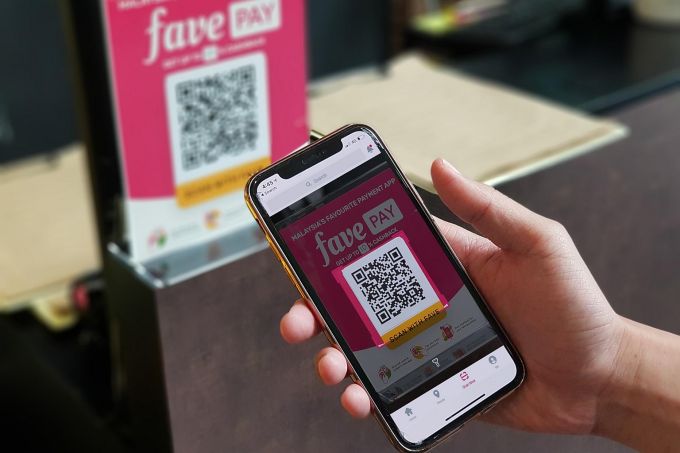
    Singapore-based Fave is onboarding merchants quickly to distinguish itself, as competition in the mobile rewards and mobile wallet space heats up.

    Fave has recently moved into the fringes of financial services, with a pilot project to help small and medium enterprises (SMEs) obtain micro-loans from financial institutions. The move appears to follow similar moves by lifestyle apps such as Grab, that offer micro-loans to consumers in other parts of Southeast Asia.

    There are all these consumer super-apps, but then, actually we are like a merchant super-app platform,» said Fave’s chief executive Joel Neoh.

    Fave distributes coupons for the merchants while rewarding customers with cashback. After its launch in 2017, Fave acquired the Singapore, Malaysia and Indonesia units of Groupon. Neoh was the founder of Fave Malaysia (originally GroupsMore) and previously led Groupon’s Asia-Pacific business.

    So far, the platform has more 25,000 merchants on its platform in Singapore, Malaysia and Indonesia, where the company had acquired the units of Groupon. In September 2018, Fave raised $20 million in Series B funds from existing investors Sequoia Capital India, SIG Asia Investments and venture capital firm Venturra Capital, which is backed by Indonesia’s Lippo Group.

  • Indonesian coffee chain Kopi Kenangan to expand across SEA

    Indonesian coffee chain Kopi Kenangan to expand across SEA

    Indonesian coffee chain Kopi Kenangan has closed a US$20 million growth funding deal with Sequoia India.

    The firm, which secured an $8 million investment from local group Alpha JWC Ventures last October, plans to use the capital to open 150 outlets within this year, expanding to 1000 stores throughout the territory by 2021. The chain will also consider regional expansion across Southeast Asia.

    Kopi Kenangan currently operates 80 stores in eight cities, which sell around a million cups of coffee per month – predominantly traditional Indonesian iced coffee with organic palm sugar.

    “Our mission is to bring high-quality coffee, made with the freshest local ingredients to consumers across Indonesia – and the rest of Southeast Asia, too,” said Kopi Kenangan co-founder and CEO Edward Tirtanata.

    Sequoia expressed admiration for the firm’s achieving profitability in its second year of business.

    “Most food-retail businesses struggle despite high gross margins due to operating costs like rent, manpower and wastage,” wrote Sequoia Capital investment advisor Rohit Agarwal. “Kopi Kenangan has implemented robust backend systems to track inventory in real-time and moves excess items across stores, cutting wastage to almost zero. Its stores are 10–20 per cent of the size of a normal cafe, significantly cutting cost per store”.

    One of the chain’s core strengths is its app, launched in April, which allows customers to order their coffee for pick up and avoid queues, or have their purchase delivered by food delivery partners.

  • AirAsia to move domestic flights to Kertajati airport starting June 30

    AirAsia to move domestic flights to Kertajati airport starting June 30

    Low-cost carrier AirAsia is to move its domestic flight operations from Husein Sastranegara International Airport in Bandung to Kertajati International Airport in Majalengka starting June 30.

    Majalengka is a 2.5- to 3-hour drive from Bandung, West Java.

    Meanwhile, AirAsia continues to offer international flights at Husein Sastranegara airport.

    Following this decision, flights to and from Bali are to land or depart at Kertajati airport. Hence, passengers who made Bali-Bandung bookings from June 30 onwards are advised to check their emails for new flight itineraries and to reprint their revised boarding passes.

    For those who are uncomfortable with having to change their travel plans, AirAsia announced in a statement that it is offering passengers a one-time chance until June 30 to change their flight date 30 calendar days in advance of the original scheduled flight date. There would be no additional cost but changing flights is subject to seat availability.

    The carrier is also accepting requests for full refunds for the value of passengers’ bookings at support.airasia.com.

    Information regarding Kertajati airport’s location and transportation options is available at bijb.co.id/akses-bandara.

  • AirAsia announces five new domestic routes to Lombok, Labuan Bajo, Kertajati

    AirAsia announces five new domestic routes to Lombok, Labuan Bajo, Kertajati

    Low-cost carrier AirAsia launched five new domestic routes on Monday as it stated its “commitment to continue to support tourism and the economy by providing affordable flights”.

    Among the new services that will be operational on Aug. 1 are Jakarta-Lombok (11 times a week), Bali-Lombok (seven times a week), Yogyakarta’s Kulon Progo-Lombok (three times a week), Bali-Labuan Bajo (seven times a week) and Surabaya-West Java’s Kertajati (three times a week).

    Special promos are available for bookings made through airasia.com or the airline’s mobile app until June 30 for trips between Aug. 1 to Oct. 26, including for the Jakarta-Lombok (starting from Rp 635,000 [US$44.88]); Bali-Lombok (Rp 243,000) and Surabaya-Kertajati (Rp 626,000) routes. A free 15-kilogram baggage allowance is available for all the carrier’s domestic flights.

    “Since AirAsia’s newest hub in Lombok was inaugurated in early May and with the addition of our 25th Airbus A320 fleet, we are now ready to connect more and more of the country’s best destinations to support tourism and the local economy,” said AirAsia Indonesia managing director Dendy Kurniawan in a statement.

    AirAsia’s current domestic routes are Jakarta-Bali, Jakarta-Yogyakarta, Jakarta-Surabaya, Bali-Yogyakarta, Bali-Surabaya, Bali-Surakarta, Yogyakarta-Medan and Bandung-Bali.

  • Indonesian e-commerce site Tokopedia generates record sales

    Indonesian e-commerce site Tokopedia generates record sales

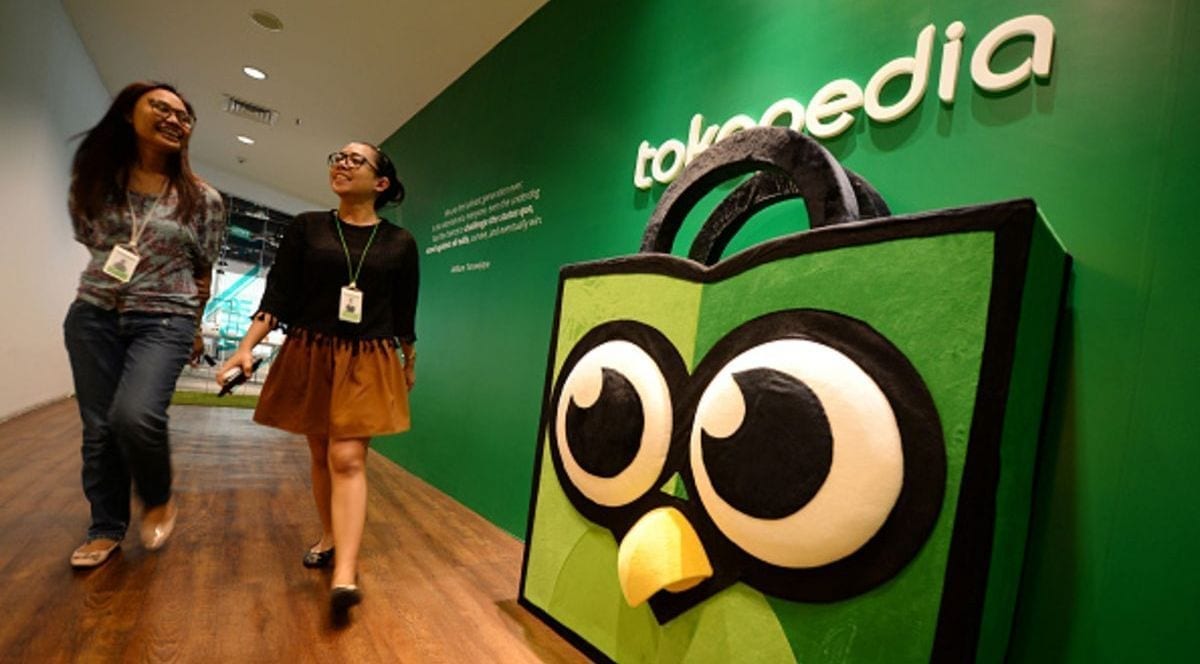
    Tokopedia, an Indonesian e-commerce site backed by SoftBank and Alibaba, said on Wednesday it generated a record $1.3 billion in gross merchandise volume (GMV) during Ramadan sale, amid soaring demand for online retail.

    The company said its biggest sales, recorded on May 17, resulted in a total transaction value that was higher than combined sales from the first six years.

    “Those transactions are happening across 97% of sub-districts in Indonesia and involved 5.9 million sellers,” said Tokopedia founder and CEO William Tanuwijaya.

    The start-up secured $1.1 billion in a funding round in December, led by Japan’s SoftBank Group Vision Fund and Chinese e-commerce giant Alibaba Group Holding Ltd. Sources say Tokopedia is valued at $7 billion.

    Shopping for clothes and gifts during the holy month of Ramadan is a significant part of the culture for Indonesia – the world’s largest Muslim-majority country.

    The Southeast Asian nation of over 260 million people is seen among the most promising global e-commerce markets, buoyed by a younger generation shifting their preference to online shopping.

    The Indonesian internet economy reached $27 billion last year and is poised to grow to $100 billion by 2025, according to Google-Temasek 2018 study.

    However, its logistical challenges are massive. The country’s 17,000 islands are sprinkled across an area bigger than the European Union, with logistical costs swallowing up around a quarter of Indonesia’s gross domestic product.

    Tokopedia’s Ramadan sale success reflects that e-commerce retailers are trying to overcome difficulties faster than expected amid higher usage of smartphones.

    Tanuwijaya told reporters that Tokopedia, which does not have its own inventory, was experimenting with artificial intelligence to predict demand and store stock in advance in partnership with warehouse operators.

    Rivals Bukalapak and Shoppee have not made their Ramadan sales public.

  • Tokopedia enters wedding industry, buying Bridestory

    Tokopedia enters wedding industry, buying Bridestory

    Indonesian e-commerce platform Tokopedia has acquired local wedding-service marketplace Bridestory, which allows users to plan their big day on their smartphones.

    Bridestory targets the Southeast Asian wedding market, connecting couples with venues, organizers and vendors/service providers in the wedding industry. It has reportedly connected more than 3.5 million customers with at least 27,000 wedding vendors annually.

    “It all started with a web application,” said Bridestory CEO Kevin Mintaraga, “then we slowly saw the change in behavior as people became more mobile-centric. We also wanted to help brides to plan their wedding anywhere and anytime with their smartphone”.

    The Tokopedia acquisition includes Bridestory’s new service, Parent story, which help parents and expecting parents connect with age-specific activity providers for their kids.

    Tokopedia has stated that the site will continue to operate independently, while Kevin Mintaraga will join Tokopedia’s management in a VP role.

  • CIMB Niaga partners Liquid Group to support Bank Indonesia’s QR Code standardisation

    CIMB Niaga partners Liquid Group to support Bank Indonesia’s QR Code standardisation

    PT Bank CIMB Niaga Tbk (“CIMB Niaga”) and Liquid Group today announced a strategic partnership to spearhead cross-border QR payment acceptance between Singapore and Indonesia. The partnership was initiated through their joint participation in Bank Indonesia’s Quick Response Indonesian Standard (QRIS) trial for cross-border payment transactions. The QRIS trial was conducted on May 23, 2019 using the CIMB Niaga’s digital banking product “Go Mobile” carried out at selected merchants located at Terminal 3, Singapore Changi Airport.

    Slated to launch in the 3PrdP quarter of 2019, CIMB Niaga and Liquid Group will enable the acceptance of participating QRIS compliant payment apps and e-wallets at Singapore Changi Airport through Liquid’s integrated QR payments and marketing infrastructure launched back in April this year.

    CIMB Niaga and Liquid Group have successfully completed their proof-of-concept with CIMB Niaga’s Go Mobile application and QRIS compliant payment apps and e-wallets. With the integration of Bank Indonesia’s QRIS code into Liquid Group’s cross-border payments platform, Indonesian travellers will be able to use their preferred local payment apps to make purchases at Changi Airport.

    Furthermore, CIMB Niaga and Liquid Group will be looking at opening the Singapore – Indonesia corridor for QR payments, enabling the acceptance of Singapore’s local payment apps and e-wallets at participating merchants in Indonesia.

    Lani Darmawan, Consumer Banking Director, CIMB Niaga, commented: “We are honoured to be the first bank in Indonesia given the opportunity by Bank Indonesia to conduct a cross-border QRIS payment trial. We believe that this initiative will greatly benefit our customers who can enjoy the ease of transacting abroad, starting with Singapore’s Changi Airport, using our Go Mobile QR app. This also offers a perfect solution to our customers who may not travel aboard with credit cards or large amounts of cash. We see great potential in the adoption of QRIS-supported cross-border payments with an increasing number of people travelling aboard.”

    Lani added:” The Go Mobile application will offer customers an attractive and competitive exchange rate at the point of payment, with the option to draw funds from their savings accounts, e-wallets and credit cards.”

    Jeremy Tan, Chief Executive Officer, Liquid Group, commented: “Accelerating the adoption of QR payments across borders is our key mission and we appreciate the vote of confidence given to us by CIMB Niaga in using Liquid Group’s integrated payments and marketing infrastructure at Changi Airport for their QRIS trial. Further to opening up the Singapore – Hong Kong corridor for QR payments last month, we are thrilled to now offer Indonesian consumers the convenience and benefit of cross-border QR payments starting with those stopping over at Singapore Changi Airport. We look forward to expanding the acceptance of QR payment apps and e-wallets from both Singapore and Indonesia on our cross-border payment platform.”

    Ms Teo Chew Hoon, Group Senior Vice President of Airside Concessions at Changi Airport Group, commented: “We continuously find new ways to elevate the shopping experience for our passengers and make their payment journey a frictionless one.  This collaboration with Liquid Group and CIMB Niaga will make Changi Airport the first retail destination to spearhead the acceptance of cross-border QR payments using Liquid Group’s first-of-its-kind unified QR payment infrastructure.”

    Liquid Group and Joint Electronic Teller Services Limited (“JETCO”) has also announced a strategic partnership to enable cross-border QR payment acceptance in Singapore and Hong Kong earlier in May, a month after the launch of the world’s first integrated QR payments and marketing infrastucture at Changi Airport back in April 2019.

  • Gojek to Be Integrated Within DBS’ PayLah

    Gojek to Be Integrated Within DBS’ PayLah

    Users of DBS Bank’s PayLah! app over the next few months will find Gojek integrated within its app, both companies said on Thursday. In addition, Gojek customers can now pay with PayLah.

    As part of its partnership with the Indonesian ride-hailing firm, DBS Bank’s payment feature has been made available in the Gojek app for both iOS and Android users in Singapore, both companies announced on Thursday.

    Through integrating DBS PayLah! in the Gojek app, our riders will have greater flexibility to choose their preferred payment methods, which allows for a more seamless travel and payment experience with every ride, said the general manager of Gojek Singapore, Lien Choong Luen, in a media statement.

    Gojek customers will be able to add DBS PayLah! as a preferred payment method for their rides after a one-time authorization and set-up. According to Gojek, about 35 percent of its daily ride-hailing transactions are paid for in cash.

    This presents an opportunity for DBS and Gojek to encourage users to adopt digital payments, the companies noted.

    As Indonesia is a key growth market for DBS, DBS and Gojek are now exploring collaboration opportunities in Indonesia, including cross-marketing initiatives. Ride-hailing company Gojek is headquartered in Indonesia, where DBS has more than 460,000 digibank customers.

    Following the success of DBS and Gojek’s partnership in Singapore, where Gojek recently celebrated their 10 million-trip milestone, we have also entered the next phase of our partnership in Indonesia, said Shee Tse Koon, DBS country head for Singapore.

  • Indonesian Start-Up Seeks Swiss Listing

    Indonesian Start-Up Seeks Swiss Listing

    Jakarta-based Achiko wants to list 100 million shares on SIX, the Swiss stock exchange, it said on Wednesday. The shares were valued at $0.70 during its last fundraising, which would make for proceeds of $70 million.

    Its seven-year-old subsidiary Mimopay offers payment services for consumers without bank accounts – thus far, the company has won 2 million clients. Mimopay’s offering includes services to pay via smartphone, at ATMs, or directly at vendors. The company said its service has potential among the 1.7 billion people with no bank account.

    From Indonesia, the fintech led by president Allen Wu and CEO Kenneth Ting wants to expand to Myanmar, Vietnam and the Philippinen. To do so, Achiko plans to seek strategic partnerships with local firms.

  • AirAsia Offers Cheap Perth to Lombok Flights

    AirAsia Offers Cheap Perth to Lombok Flights

    AirAsia has launched a four-times-a-week service between Perth and Lombok, with the inaugural flight touching down on Sunday night.

    With fares starting at just $99 one way, the flights are set to be popular with Aussie tourists keen to sample the destination known as “the new Bali”.

    Dendy Kurniawan, AirAsia Indonesia CEO, said the flights would introduce healthy competition for the region and an additional option to much-loved Bali.

    “Blissful beaches, top surfing and dive sites, and picturesque mountains are now easily accessible for Australians and I encourage those looking to book their next holiday to consider Lombok,” he said.

    Perth Airport CEO Kevin Brown said the new service consolidated AirAsia’s position in the Perth market by adding more than 74,000 seats annually.

    “AirAsia has been in the vanguard of a low-cost carrier revolution that has delivered more affordable and accessible travel options for many Western Australians,” Mr Brown said.

    “Western Australians have a great propensity for travel and Indonesia represents Perth Airport’s largest outbound market as it offers an easily accessible and attractive destination for travellers.

    “This new service also provides an opportunity to grow the Indonesian inbound tourism market for Perth and Western Australia.”

    Indonesia represents WA’s eighth largest visitor market. Last year 31,000 Indonesian visitors arrived, injecting more than $56 million into the WA economy.

    AirAsia operates 25 flights per week between Perth, Australia and Indonesia, which includes Bali, and Lombok.

  • Tokopedia expands delivery promise Same Day Delivery

    Tokopedia expands delivery promise Same Day Delivery

    Indonesian e-commerce company Tokopedia is expanding its one-day delivery guarantee to almost all of its products as it prepares to battle Amazon and other foreign rivals.

    Backed by Alibaba Group and SoftBank, Tokopedia’s greatest strength might lie in the fact it is a 100-per-cent Indonesian focused company, unlike its rivals – and shareholder – which are simultaneously trying to build share in many different markets simultaneously.

    “We focus on Indonesia,” Tokopedia founder and CEO William Tanuwijaya said in an interview in Tokyo. “Our mission is really to solve the Indonesian customer problem. And we see the room for growth is still tremendous.”

    Online shopping in Indonesia is expected to grow by more than 400 percent within the next five or so years, to US$53 billion. That sort of growth is attracting Amazon, which opened in Singapore two years ago and subsequently launched in Australia, along with existing Indonesian rivals including Alibaba-backed Lazada and Shopee.

    Tokopedia already offers same-day or one-day delivery for about 65 percent of the products it sells. Expanding that to almost its entire catalog would be made possible by alliances with 11 logistics companies covering the most populous of the country’s 17,000 islands.

    The company is a marketplace, linking more than 5 million sellers with the nation’s largest database of online shoppers. It has no inventory of its own.

    Tanuwijaya admitted getting more than 90 per cent of goods delivered within 24 hours was a goal that might take two years or more to achieve.

  • Expedia, Booking.com warn AirAsia of turbulence in online travel plan

    Expedia, Booking.com warn AirAsia of turbulence in online travel plan

    Online travel giants Expedia and Booking.com are warning that budget airline pioneer, AirAsia Group, risks being destabilized by ambitious plans to become the “Amazon of travel”.

    AirAsia, which already offers limited travel plans on its website, plans to expand the online service to include booking flights with rival airlines and ecommerce. As profits tumble in the face of rising fuel costs and intensifying competition, CEO Tony Fernandes is seeking alternative sources of revenue and earlier this year told the Nikkei Asian Review he intended to invest 100 million Malaysian ringgit ($24.6 million) a year to become a technology-led company.

    The carrier’s future competitors in the wider online travel sector dismissed the threat posed by the company which brought low cost flight to Asia.

    Booking.com’s head of China, Marsha Ma, suggested the online travel giants would rally their vast networks of flights, hotels and services in the fight against any attempts by AirAsia to take market share. “The online travel agency business, especially accommodation, is a pretty heavy business model in terms of its supply chain management,” said Ma. “It takes years… We have offices at 190 locations and [they] have built up our supply chain capability, with width and depth.”

    “We will keep fighting on that,” the Booking.com executive said, speaking at an event held in Singapore last week by Skift, an U.S.-based travel industry information provider.

    Expedia, once a partner of AirAsia’s existing travel platform, indicated the carrier might not have the necessary skills to succeed. “What makes you great to run an airline” is not the same as being a great online travel agency, said Greg Schulze, head of commercial strategy & services at Expedia. Worse, the carrier risked being distracted from selling its own flights, which could exacerbate its current troubles, he suggested. “I am happy to see [AirAsia] negotiating with other airlines.”

    However, Aireen Omar, AirAsia’s deputy CEO for technology, was confident AirAsia could manage the risks. It was “ambitious, but I think it’s very doable,” Omar said.

    The aviation business model was changing, Omar said. “The key essence for us is no longer the aircraft but data.” AirAsia transported close to 100 million passengers this year alone in Southeast Asia, and was seeing six to eight million visitors come to its website every month. “A lot of new business opportunity is around there,” she said. This included enhancing its digital travel platform with itinerary suggestions, hotels or shopping, using technologies such as artificial intelligence to improve the offering.

    When asked if becoming the Amazon of travel is overly ambitious, Aireen Omar, AirAsia’s deputy CEO for technology and digital, said it’s “ambitious, but I think it’s very doable.” (Photo by Eri Sugiura)

    “I think online travel agencies are very cautious,” Omar said. She insisted that the company already has a “big platform” for AirAsia.com, the carrier’s BigPay, a mobile wallet which was launched in Malaysia last year tracking consumers’ credit and debit card payments, and combining this with its own loyalty program. “It is an opportunity for [other airlines] to have an access of the network and the data we have,” she added.

    AirAsia entered the flight and hotel package business in 2015 through a joint venture with Expedia. However last August it announced it would sell its 25% stake to Expedia for $60 million. This freed the carrier to build its own accommodation and other inventories. The airline in 2017 acquired 50% in travel tours and attractions provider startup Vidi, in a deal worth $2.6 million.

    Omar said the company’s data would be uploaded in the cloud by the end of the year, in preparation for the launch of its new service.

    AirAsia’s rush to build an enriched travel platform can be explained by headwinds the company faces in its core business. The carrier’s net income slipped to 96.1 million ringgit, a 92%-drop in the three months through March from a year earlier, as it was hit by high fuel costs and lower average fares.

    While the company remains profitable in Malaysia, where it is based, its operations in Indonesia, Thailand and elsewhere are either losing money or earning less.