Retail News CRM

Tag: jaguar

  • Jaguar seller says new tax rate could hit business

    Jaguar seller says new tax rate could hit business

    Inchcape Thailand, an importer and distributor of Jaguar and Land Rover, says it’s concerned about the way the new excise tax for cars, effective in mid-September, will be calculated.

    The government has yet to formally announce details of the new tax rate and the computation formula that will apply to car distributors; however, Inchcape said the new tax may affect the way in which it does business.

    From Sept 16 onward, Thailand’s amended excise tax law will change the base tax rate to take into account the recommended retail price of goods, rather than ex-factory prices and cost, insurance and freight (CIF) values.

    The government says a tax system based on retail prices will create a fairer system for makers and importers after some were found to have been exploiting the ex-factory and CIF values to understate tax bills.

    The act also authorises the director-general of the Excise Department to determine recommended retail prices for use as a base for excise tax calculation in the event of disputes.

    If the recommended retail price is not in line with the market price, the department will have the power to determine it. The value will be based on retail market prices or import prices.

    The department is drafting 80 organic laws to facilitate the new base for excise tax computation.

    Inchcape Thailand managing director Charnchai Mahantakhun said the details are not yet available but he is aware that the new tax measures will come into effect in September.

    “At this time, not only Inchcape but also other distributors cannot calculate future prices or margins,” he said.

    Mr Charnchai said the new tax regime will affect Thailand’s automobile market as a whole, both importers and local manufacturers.

    Imported cars are subject to an 80% import duty. In addition, all imported vehicles are also subject to a 10-50% excise tax based on CO2 emissions, a 10% interior tax and a 7% value-added tax.

    Nonetheless, Mr Charnchai remains upbeat about the sales prospects for his three brands this year, though he declined to offer projected sales figures.

    According to the Land Transport Department, Land Rover had 38 cars registered from January to May, followed by Jaguar with 23 and Range Rover with 11.

    Last year, 73 units of Jaguar were sold, with Land Rover’s sales standing at 49 cars and Range Rover’s at 47.

    Mr Charnchai said the overall sentiment for luxury cars and sport-utility vehicles is still positive, though competition has intensified with brands that run their assembly plants locally.

    The British automotive retail and services company set up a local subsidiary, Inchcape Thailand, in July last year with registered capital of 100 million baht to handle the import and distribution of Jaguar Land Rover vehicles and parts in Thailand.

    Earlier, the Jaguar and Land Rover brands were sold by authorised distributor and service provider City Automobiles Co, an affiliate of global automotive company RMA Group.

    In a related development, Inchcape yesterday launched the Jaguar Land Rover Approved programme to offer its certified used cars for buyers, aiming to upgrade its reselling prices in the Thai market.

    Inchcape has eight approved used cars that are 15-35% cheaper than new vehicles.

  • Jaguar selects K+N to implement European aftermarket logistics

    Jaguar selects K+N to implement European aftermarket logistics

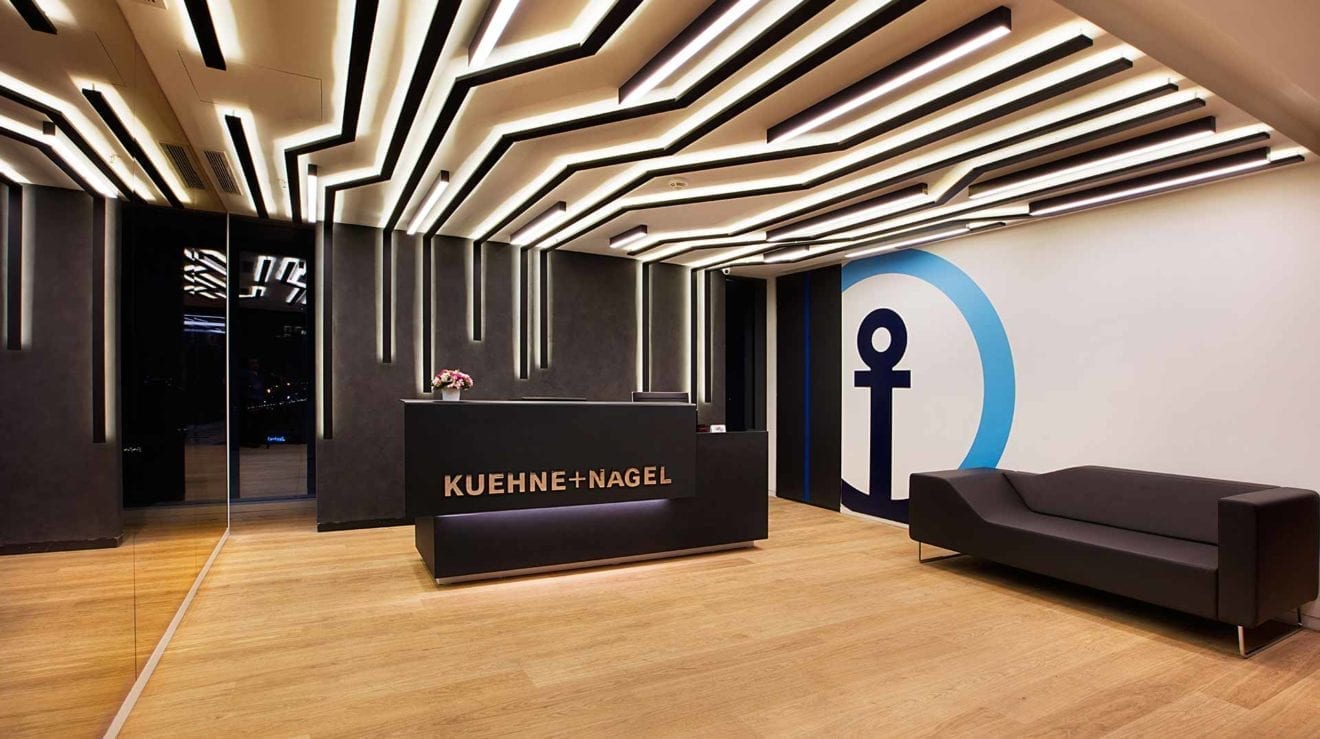
    Jaguar Land Rover, premium and luxury car manufacturer, has appointed Kuehne + Nagel (K+N) to manage three warehouses in France, Spain and Italy serving Continental Europe. The new contract also includes transport management control tower function and customer contact centres for Jaguar Land Rover retailers for the region.

    The European Aftermarket is of very high importance. The car manufacturer has consolidated its supply chain into a robust logistics setup with innovative processes, including an upgraded Warehouse Management System (WMS). This supply chain will support over 400 Land Rover retailers across Continental Europe.

  • Jaguar Land Rover overall retail sales up 1.2 pct in May

    Jaguar Land Rover overall retail sales up 1.2 pct in May

    Jaguar Land Rover says overall retail sales for Jaguar Land Rover were 45,487 in May, up 1.2 percent year-on-year.

    Jaguar Land Rover says Jaguar May sales were 13,613 vehicles, up 28 percent year-on-year. Jaguar Land Rover says Land Rover retailed 31,874 vehicles in May, down 7.1 percent year-on-year.

  • Jaguar F-Type gets four-pot turbo power

    Jaguar F-Type gets four-pot turbo power

    New entry-level sports car may not match the performance credentials of the Porsche Cayman on paper but is set to be significantly cheaper in price in Thai showrooms.

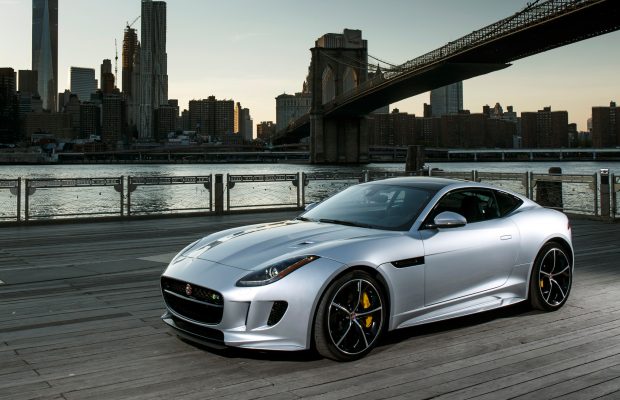
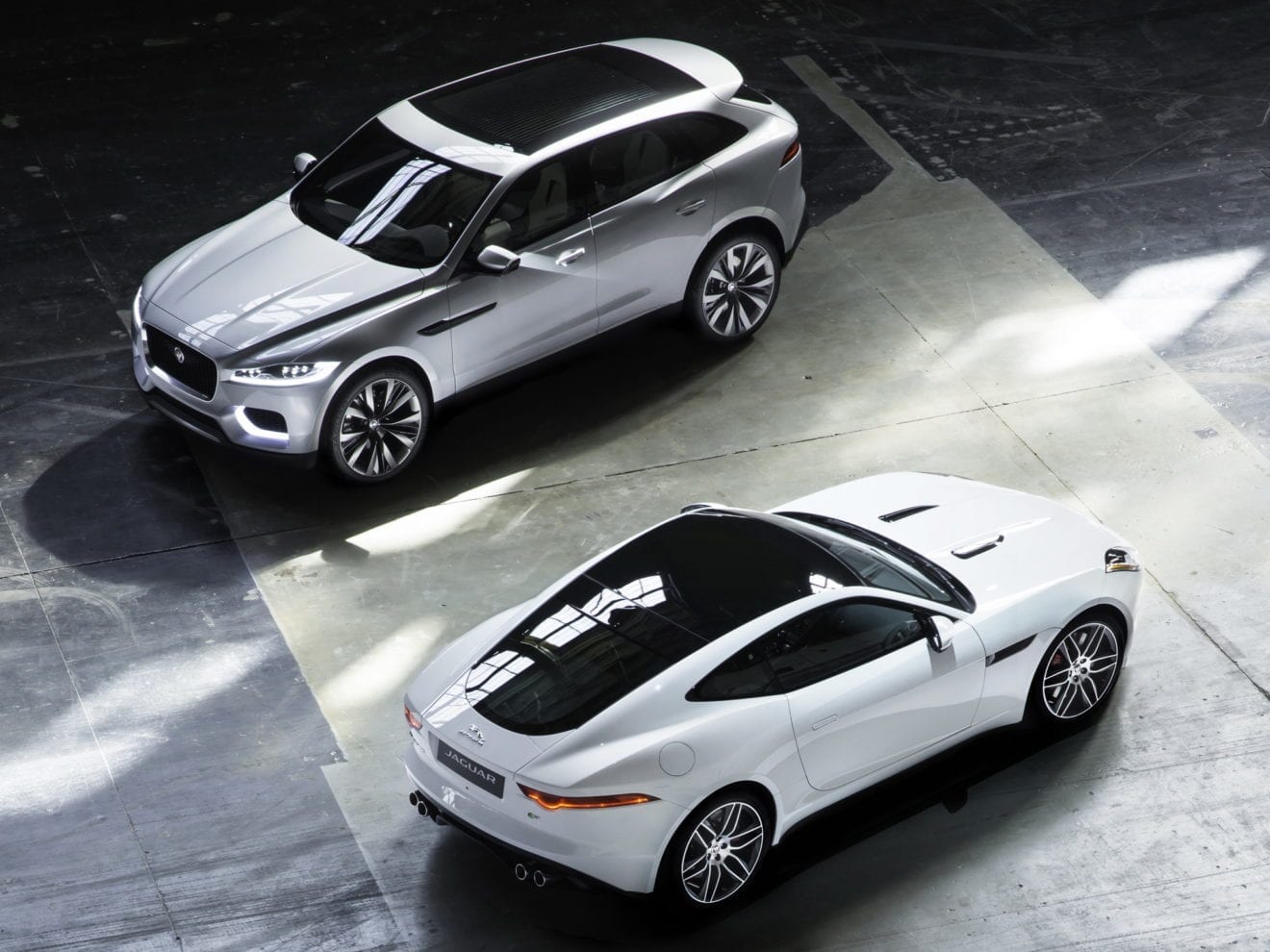
    The Jaguar F-Type Coupe you see here in official pictures is the new entry-level model powered by a 2.0-litre four-cylinder petrol-turbo engine. This new motor is also available in the Convertible version.

    For the sake of differentiation, this particular F-Type gets a single exhaust pipe mounted centrally behind where you can also find a new diffuser design. The 3.0 V6 models get two tailpipes, while the 5.0 V8 receives four of them.

    And since the F-Type is now three years old in its current generation, Jaguar has given new mag wheels and slightly massaged the front end with new LED lights and bumper.

    What’s the power like?

    Jaguar has taken its new Ingenium four-pot engine from other models and tuned it to 300hp – between 50-100hp more than in other applications. Maximum torque is rated at 400Nm attained at 1,500rpm. Drive in this F-Type goes via eight-speed automatic to just the rear wheels.

    Jaguar claims a 0-100kph time of 5.7sec – 0.4sec slower than the F-Type fitted with 340hp 3.0-litre supercharged V6. However, the four-potter is said to be 16% more fuel efficient while spewing out 163g/km of CO2; the V6 emits 199g/km.

    Although the acceleration time may by slightly slower, the four-pot F-Type may have the chance of being more agile to drive because Jaguar says it is 52kg lighter than the V6. But what also remains to be seen is whether the engine noise would be as tuneful as the V6.

    How does it fare against the Cayman?

    The Porsche Cayman comes with 300hp 2.0-litre flat-four turbo-petrol engine, seven-speed dual-clutch automatic and a quicker 4.9sec (4.7sec with launch control) acceleration time.

    But the Cayman already costs one million baht more than the 7.99 million baht F-Type V6. This means than the F-Type in 300hp suit should be priced even lower than that level when sales start later this year, although punters must be content with the inferior on-paper performance figures the front-engined Jag concedes to the mid-engined Porsche.

  • DHL to provide in-plant logistics for Jaguar Land Rover’s new factory

    DHL to provide in-plant logistics for Jaguar Land Rover’s new factory

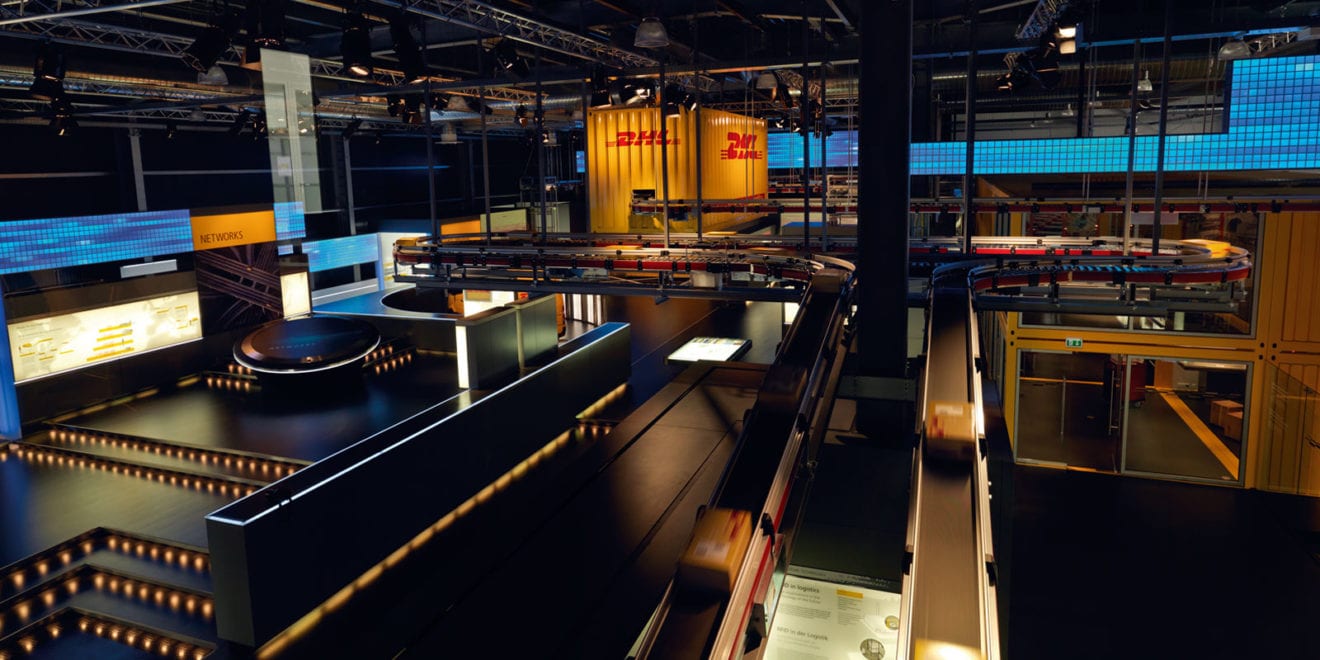
    DHL has been appointed to manage in-plant logistics for Jaguar Land Rover’s new manufacturing plant in Itatiaia, Brazil. Under the new contract DHL Supply Chain will oversee all aspects of the supply chain, from warehousing through to sequenced track-side delivery. The scope of work also includes the delivery of sub-assembled kits to the production line, streamlining the manufacturing process.

    “We’re delighted to have secured this new contract with Jaguar Land Rover which builds on our long-standing relationship,” said DHL Supply Chain’s Director of Business Development for Brazil, Miquele Lioi. “Our proposal was built on three key pillars: unrivalled sector expertise, derived from managing more than 250 automotive logistics operations worldwide; our strong presence in the Itatiaia region and a clear focus on delivering efficiency and control.”

    Goods arriving at the warehouse will be stored in 8,500 pallet locations where DHL will sort, move and sequence parts, as well as sub-assemble kits of up to 25 components, before shipping in sequence to the assembly line.

    “In these challenging times, the automotive industry has proved that it can reinvent itself by identifying new market approaches, such as Jaguar Land Rover’s new plant in Brazil. In this case, sound logistics planning and a safe and efficient execution are critical to achieving business success,” added Lioi.

  • The Road to World Car journey ended today with the declaration of a double win

    The Road to World Car journey ended today with the declaration of a double win

    The JAGUAR F-PACE won the 2017 World Car Design of the Year award as well as the overall 2017 World Car of the Year. The winner was announced during a press conference hosted by the New York International Auto Show, Bridgestone Corporation and Autoneum.

    Dr Ralf Speth, CEO Jaguar Land Rover said: “The F-PACE was designed and engineered as a performance SUV with exceptional dynamics, everyday usability and bold design. Winning these two awards endorses the talent and great work of our teams that have delivered the world’s most practical sports car and Jaguar’s fastest selling vehicle.”

    The JAGUAR F-PACE was chosen from an initial entry list of 23 vehicles from all over the world, then a short list of ten, then three finalists as announced in Geneva last month: the Audi Q5, the Jaguar F-PACE and the Volkswagen Tiguan

    To be eligible for the overall World Car award, the candidates must become available for sale on at least two continents during the period beginning January 1, 2016 and ending May 31, 2017.

    This year, vehicles were selected and voted on by an international jury panel comprised of 75 top-level automotive journalists from 23 countries around the world. Each juror was appointed by the World Car Steering Committee on the basis of his or her expertise, experience, credibility, and influence. Each juror typically drives and evaluates new vehicles on a regular basis as part of their professional work. Through their respective outlets they collectively reach an audience of many millions world-wide. The international accounting firm KPMG tabulates the jurors’ ballots.

    Previous World Car of the Year winners were the Mazda MX-5 (2016), Mercedes-Benz C-Class (2015), the Audi A3 (2014), the Volkswagen Golf (2013), the Volkswagen Up! (2012), the Nissan Leaf (2011), the Volkswagen Polo (2010, the Volkswagen Golf (2009), the Mazda2 / Mazda Demio (2008), the Lexus LS460 (2007), the BMW 3-Series (2006), and the Audi A6 (2005).

    The Road to World Car began in Paris on September 29, was followed by test-drives in Los Angeles in November, continued in Geneva with the Top Three in the World announcement, and finally ended today with the declaration of the winners in six categories at the New York International Auto Show.

    2017 marks the 11th anniversary of the partnership between World Car and the New York show, and the fourth consecutive year that the World Car Awards have retained their ranking as the number one automotive awards program in the world in terms of media reach.

    The Global Trends Report, co-presented annually by Prime Research and Autoneum, was also released today.The report is the culmination of research and insights across the past six months. Autoneum CEO Martin Hirzel said, “The auto industry is in the midst of an upheaval that goes far beyond anything it has experienced in the past 100 years. Emerging industry trends such as autonomous driving, electric mobility and connected cars are changing not only vehicles and their technologies but also their concepts and forms. As the market leader in acoustic and thermal management for vehicles, Autoneum today already offers a large variety of multifunctional and lightweight technologies and components to meet the requirements of modern mobility. With our recently established “Competence Center for New Mobility” in Sunnyvale, California, Autoneum is taking a committed and active role in driving vehicle advancement by developing innovative technologies and components for all forms of mobility.”

    World Car of the Year is more than just an awards program. The World Car community brings together a large cross section of experts and professionals from every segment of the automotive industry. World Car connects the global industry around the very best of today and inspires, with insights, the ideas and trends of tomorrow. Thus defining The Road Ahead platform shared with our presenting partners Bridgestone Corporation, Prime Research, Autoneum and, most recently, Brembo.

    “As the world’s largest tire and rubber company, we are proud to partner with the World Car program for the 9th consecutive year,” said Mike Martini, president, original equipment tire sales, U.S. and Canada, Bridgestone Americas Tire Operations. “This is an important forum for leaders in the automotive industry to celebrate achievements in innovation, performance and sustainability. As new mobility preferences emerge, we must continue to collaborate across our industry to deliver cutting-edge technology and world-class products that meet the needs of a changing global customer base.”

    In a rapidly changing automotive world, Brembo is also focused firmly on the future and the vehicles it will bring to market. Brembo is committing significant resources to perfecting ever more sophisticated virtual simulation methodologies that includes the study of forms, materials, technologies and surface treatments able to meet the needs of the new-generation vehicles, with a particular focus on environmental impact aspects, which drives all of Brembo’s development activities.

  • Tata Motors” arm reports 12% rise in December retail sales

    Tata Motors” arm reports 12% rise in December retail sales

    Tata Motors’ subsidiary — Jaguar Land Rover (JLR) has achieved its best ever December sales performance in 2016, with total retail sales of 55,375 vehicles, up 12% on the prior year, primarily driven by the ongoing success of the Jaguar F-PACE, Land Rover Discovery Sport and the Range Rover Sport as well as strong demand for the long wheel base Jaguar XFL in China. JLR total retail sales for the full 2016 calendar year also reached record levels with sales of 583,312 units, up 20% compared to 2015.

    JLR’s global retail sales performance for December shows strong growth in China (up 36%), North America (up 30%) and Europe (up 8%) but softer sales in the UK (down 3%) and in other overseas markets (down 16%).

    Jaguar retail sales were up 95% in December 2016, retailing 16,349 vehicles driven by the ongoing success of the F-PACE and strong demand for the long wheel base XFL in China. Jaguar retail sales for the full 2016 calendar year reached 148,730, up 77% compared to 2015.

    Land Rover retailed 39,026 vehicles in December 2016, down 5% compared to December 2015 as strong retail sales of the Discovery Sport and Range Rover Sport were offset by lower sales of the discontinued Defender and Discovery models. Land Rover retail sales for the full 2016 calendar year reached 434,582, up 8% compared to 2015.

  • Jaguar Land Rover sells record 583,313 cars in 2016

    Jaguar Land Rover sells record 583,313 cars in 2016

    Britain’s biggest carmaker Jaguar Land Rover sold a record 583,312 cars last year as the Indian-owned firm continues its rapid expansion with the aim of building 1 million vehicles a year at the turn of the decade.

    Sales were up 20 percent from the previous year, although sales growth slowed to 12 percent year-on-year in December, the carmaker said.

    The automaker, which spent years in the doldrums before being bought by India’s Tata in 2008, has since invested heavily in new models and expanded production with plants in China and Brazil and construction of a new site in Slovakia under way.

    Sales of luxury Jaguar models rose 77 percent to 148,730 units in 2016 due to strong demand for a range of new high-end products including the F-PACE, the brand’s first off-roader which was launched last year.

    Europe was the carmaker’s biggest overall market, accounting for almost a quarter of total demand.

    The firm said its line-up will continue to expand but it has warned about the negative effect any tariffs on its business imposed as part of a Brexit deal could have if Britain were to lose unfettered access to the single market.

    Its annual profit could be cut by 1 billion pounds ($1.23 billion) by 2020 if Britain returned to World Trade Organization rules for trade with the continent, two sources told Reuters last year.

  • Jaguar Land Rover October sales up 11% at 46,325 units

    Jaguar Land Rover October sales up 11% at 46,325 units

    Tata Motors-owned Jaguar Land Rover (JLR) today reported 11 per cent increase in October retail sales of 46,325 units. The month’s performance has been driven by strong sales of the Land Rover Discovery Sport, Range Rover Evoque, Jaguar XF and the introduction of the Jaguar F-PACE, as well as strong year-on-year sales growth in China and Europe, JLR said in a statement.

    JLR Group Sales Operations Director Andy Goss said: “With our most engaging productline up to date, we are continuing to see positive sales momentum. Impressive performances across Europe and China have boosted our year-to-date sales to over 4,80,000 vehicles.”

    The company said its retail sales grew across majority of key regions in October year-on-year, with China up 39 per cent, Europe up 25 per cent, the UK and North America both up 8 per cent but other overseas markets were down 22 per cent.

    In the first ten months of 2016, JLR sold 4,80,349 vehicles, 23 per cent up on the same period in the prior year.

    The Jaguar brand recorded retail sales of 14,402 units in October, up 93 per cent on the previous year, reflecting the strong launch of the F-PACE and the introduction of the long- wheel base XFL in China, JLR said.

    Sales of the Land Rover brand however were down 6 per cent in October at 31,923 units. The company had ceased production of the Defender and Discovery in January 2016 and August 2016 respectively.

  • Jaguar Electrifies With I-PACE Concept Car

    Jaguar Electrifies With I-PACE Concept Car

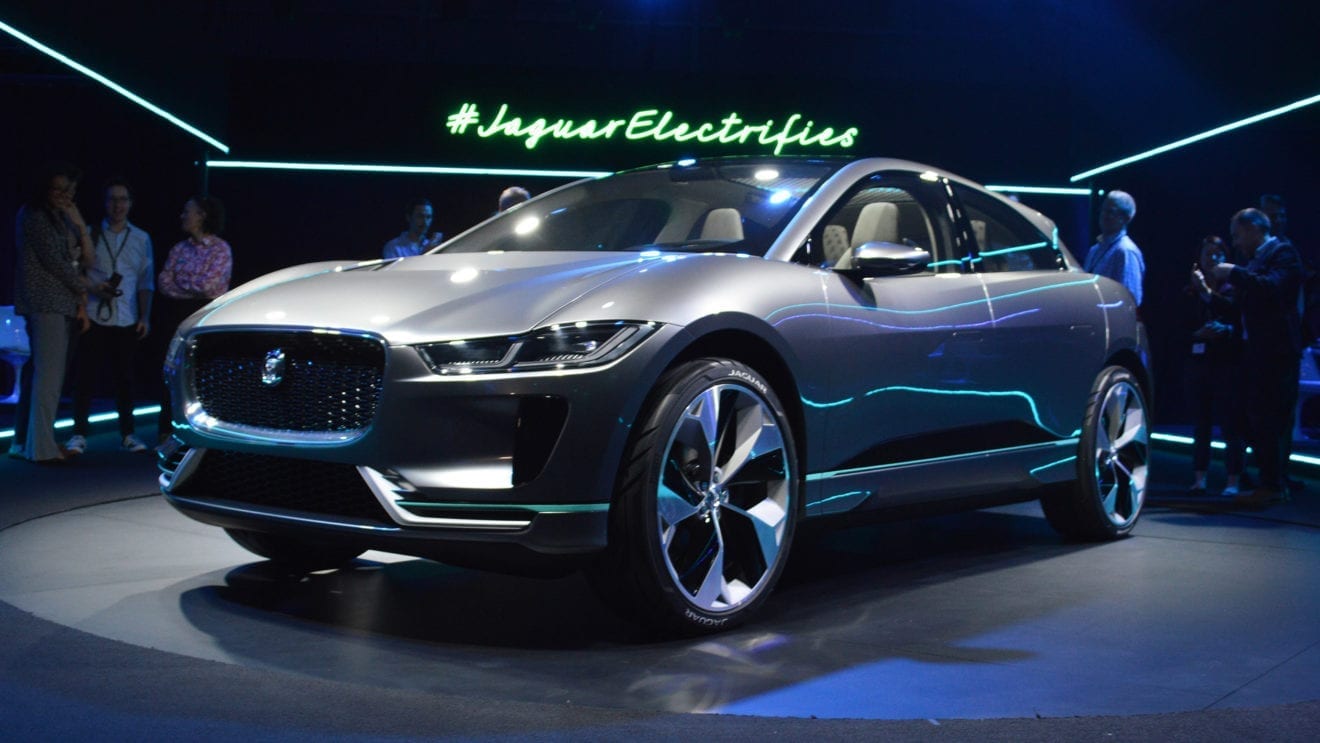
    Jaguar’s engineering and design teams have torn up the rule book to create a bespoke electric architecture, matched with dramatic design. The result is no-compromise smart, five seat sports car and a performance SUV in one.

    Ian Callum, Director of Design, said: “The I-PACE Concept represents the next generation of electric vehicle design. It’s a dramatic, future-facing cab-forward design with a beautiful interior – the product of authentic Jaguar DNA, electric technology and contemporary craftsmanship.

    “Our virtual reality reveal today has pushed technology boundaries as well, and captures the hi-tech essence of the concept car. We only have one concept car and it is in LA for the reveal. For the first time, VR has allowed us to share it across the globe in the most immersive way possible.”

    This unique and world-first ‘social VR’ reveal is believed to be the largest live and connected VR event of its type to date. Throughout the day more than 300 guests were transported into a specially created life-like virtual space, into which, two of the car’s creators, Ian Callum and Ian Hoban were projected.

    From VR hubs in Los Angeles and London, groups of 66 guests including A-list stars Michelle Rodriguez, Miranda Kerr, James Corden and David Gandy, used HTC Vive Business Edition headsets, powered by Dell Precision workstations, to put themselves inside the concept car and interact live with other participants. Guests ‘sat’ on the concept’s virtual seats, had a 360[0] view of Venice Beach as the concept was built piece by piece around them, and saw the I-PACE Concept race towards them across a virtual desert.

    Dr Wolfgang Ziebart, Jaguar Land Rover, said: “This is an uncompromised electric vehicle designed from a clean sheet of paper: we’ve developed a new architecture and selected only the best technology available.”

    The I-PACE Concept transforms the electric driving experience and offers the driver-focused performance and response Jaguar is renowned for. To help deliver this, the I-PACE has electric motors on the front and rear axles. Their combined output is 400PS and 700Nm of torque – the same torque rating as the F-TYPE SVR, accelerating from 0-60mph in around four seconds. For rapid charging, using a typical public 50 KW DC charging network, a full charge will take just over 2 hours – enough to deliver more than 220 miles range.

    The virtual reality experience also allowed participants to sit in the front and rear of the Jaguar I-PACE Concept and explore the beautiful interior, discovering hidden details and features.

    Ian Callum said: “The interior of the I-PACE Concept is finished with beautiful, premium materials and an unwavering attention to detail. From the expansive panoramic glass roof to the sporting, beautifully finished seats, every feature bears the hallmark of British craftsmanship.”

    Renowned VR Director, Alexander Horton, led the creative direction. Participants experienced the car being built around them, speeding towards them and appearing to fall to Earth from another planet – clearly signalling the future-forward nature of the revolutionary Jaguar.

    The new and exciting VR platform pushed the boundaries further than ever before, with the inclusion of social interaction and a live presenter broadcast into a single VR world, so groups in both LA and London were able to communicate and interact with one another.

    The VR content from the reveal will now be available on Vive Port through a dedicated Jaguar app allowing consumers to experience the I-PACE Concept at home.

    Jaguar joined forces with VR leaders HTC, Computer experts Dell and Creative agencies ReWind and Imagination to create the world’s largest, global, connected VR experience.

    Hervé Fontaine, Vice President Virtual Reality B2B and Business Development at HTC said: “Jaguar Land Rover is renowned for its innovative spirit, and with Vive Business Edition we’re thrilled to be the virtual reality partner to help bring to life their latest launch. With the blend of cinematics and Vive’s room-scale VR technology, the I-PACE Concept VR experience offers an incredible level of immersion, and showcases an exciting reimagining of the traditional car launch as we know it.”

    Rahul Tikoo, Vice President and General Manager for Dell Precision, said: “Dell has long been involved in VR, and we’ve been evolving our business model to introduce solutions that are optimized for the future of VR. The Jaguar I-PACE Concept, designed and introduced with VR, reinforces the incredible innovation that’s possible with VR technologies and the potential to ultimately transform industries.”

    Ross Wheeler, Head of Automotive at Imagination, said: “For the first time in history, a global automotive brand has used fully immersive VR to launch their latest car. This launch takes the individual far beyond any new car experience they would have witnessed before, allowing people across the globe to connect in real time, be fully immersed within the vehicle and share live together their experience of Jaguar’s first ever electric vehicle.”

    “Jaguar, by embracing cutting-edge technology in this way, has created an experience rich and rewarding for its consumers. It has undoubtedly redefined the future of how automotive brands introduce their new vehicles to customers.”

    The Concept will make its first public physical appearance at the 2016 Los Angeles Auto Show on Wednesday 16 November.

  • South Korean e-commerce site ‘Ticket Monster’ starts luxury car sales

    South Korean e-commerce site ‘Ticket Monster’ starts luxury car sales

    South Korea’s major e-commerce site, Ticket Monster on Monday said it has started sales of British luxury car brand Jaguar. Ticket Monster put on sales of 20 Jaguar XE Portfolios and R-Sports on Monday morning, marking them down 7 million won (US$6,317) from the regular retail prices to 48.1 million won and 46 million won, respectively. The two models were sold out in three hours, the company said.

    Ticket Monster said it could sell all of the vehicles on the first day because it offered the best available price and even promised a refund if it was not the cheapest.

    “Although new cars have been sold by overseas online shopping malls, it is the first time that a Korean e-commerce site sells new cars online,” a company official said. Consumers made a one-time payment on the website and will take over the vehicles from designated dealers or visit dealer shops, officials said. Ticket Monster said the latest move was aimed at changing customers’ expectations and leading the new trend in the highly competitive market.

    “The sales of imported cars is part of Ticket Monster’s efforts to change the retail paradigm,” Ha Sung-won, the chief operating officer of Ticket Monster, said.

  • Tata Motors & Jaguar Land Rover: China Drag Diminished?

    Tata Motors & Jaguar Land Rover: China Drag Diminished?

    Tata stock, down 25% so far this year, is off by 54% over 12 months, prompting Goldman Sachs to close its sell rating on Tata Motors equity Monday. Citi Analysts Manish A. Somaiya and Esha Ranganath note that for the Jaguar Land Rover unit, while China revenue accounted for a third of fiscal 2015 earnings, China is only about 19% of fiscal year to-date retail volume compared to 27% in the prior year. They write:

    “Management cited the 10% year-over year decrease in China retail volumes for the fiscal third quarter (including joint ventures vs. -32% in the fiscal second quarter and -33% in the fiscal first quarter) as an indication that declines in the region have stabilized while still citing the region as a main factor in lower year-over-year earnings before interest, taxes, depreciation and amortization (EBITDA) (we assume this is a function of JV transition and higher China margins) …”

    The Citi analysts raised their issuer weighting on Jaguar Land Rover (TTMTIN) to Marketweight from Underweight, and raised their senior notes ratings to Neutral from Sell. With their sell rating last fall, they cited weak China revenue. The fresh decision reflects the following:

    1. “Management actions including capex reduction bolstering liquidity,
    2. Volume growth in other regions offsetting a softer China and,
    3. Possible stabilization of decline in China.

    While we still anticipate a negative free cash flow year and slightly higher gross leverage of 0.9x at fiscal 2016 year-end (vs. 0.8x currently), we like the company’s strong balance sheet and could see investor focus on higher quality defensive names providing a positive technical. Additionally, we continue to monitor potential execution risk from focus on multiple product launches …

    Guidance included FY2016 capex reduction to £3.3 billion ($4.7 billion) from £3.5 billion previously and indications of negative free cash flow (FCF) in the near to medium term (albeit offset by a strong balance sheet and cash balance). On the call, management reaffirmed EBITDA margins at the lower end of 14-16% range as a result of model mix, launch costs, and mixed economic conditions incl. China. At the same time, management aims to fund capex from operating cash flows as evidenced this quarter and anticipates continued working capital benefit during fiscal fourth quarter given seasonal benefits during the second half of the fiscal year. At a high level, we estimate FY2016 EBITDA of £2.9 billion, implying a 14% margin in-line with low end of guidance. Our FCF use estimate of ~£1.0 billion for the year results in gross leverage increasing slightly to 0.9x at year end.”

  • British brands invading Philippines

    British brands invading Philippines

    Asif Ahmad, the UK ambassador to the Philippines, is one of the busiest diplomats in the country, as he leads, almost on a weekly basis, the opening of new outlets put up by dozens of British companies which are taking advantage of the rapidly growing consumer market and improved purchasing power of Filipinos.

    Ahmad, the 59-year-old diplomat who has been assigned in the Philippines since July 2013, says while several British companies have established their presence in the country for several decades now, more are expected to land in the Philippines soon.

    “We have done it in fashion.  We have done it in cars. We have done it in films and music.  The next story is eating and drinking,” says Ahmad, during the opening of the second outlet of Costa Coffee in the Philippines at Robinsons Place in Ermita, Manila.

    Costa Coffee, the leading coffee chain in the United Kingdom, is the latest British brand setting its sights on the Philippine market, which Ahmad says offers a lot of opportunities for foreign companies.

    The ambassador says the expansion of British firms in the country is a part of a deliberate effort of the London government to triple its exports to the world to 1 trillion pounds by 2020.

    Unilever, an Anglo-Dutch company, is one of the biggest distributors of consumer products in the Philippines while Royal Dutch Shell Plc. is one of the three largest petroleum players in the country.

    The last couple of years saw dozens of UK firms opening outlets or expanding their presence in the Philippines.  In November 2013, London opened its airspace to Philippine Airlines via Heathrow Airport, with the help of Ahmad.  This has triggered a faster movement of people, including investors and tourists, between the two countries.

    British financial giants HSBC, Standard & Chartered, Barclays and Pru Life UK have strong presence in the Philippines while UK companies that are expanding in the country include Pearson Plc., Ashmore Group, British American Tobacco, British Petroleum, ECR Minerals Plc., CRH Plc., Arup, Nectar Group Ltd., MacKay Green Energy Inc., Forum Energy, Pitkin Petroleum Plc., Eaton Corp. Plc. and Weir Engineering Services Ltd.

    Top British brands opening or adding outlets in the Philippines include Rolls Royce, Range Rover, Jaguar, Mini Cooper, Morgan Motors, Tesco, The Body Shop, Fitness First, Toni & Guy, Remington UK, Marks & Spencer, Debenhams, Lee Cooper, F&F, John Lewis, Burton, Reiss, Speedo, Hamleys, Burberry, Topshop, Topman, Dorothy Perkins, Mitre Sports, Berghaus, Kangaroos, Superdry, Warehouse, Clarks Shoes, Paul Smith, Mothercare, Hackett London, Lush, TM Lewin, River Island, Cath Kidston, Pepe Jeans London, Savile Row, Lyle & Scott,  Whyte & Mackay, Twinings, Diageo, Union Jack Tavern, Wolf & Fox, Chuck’s Grub, Waitrose and Yummy Organics.

    Ahmad says more brands will expand in the Philippines soon. “We have a strong presence of British brands that is gonna grow.  My government, the UK, has said that we must triple exports to 1 trillion [pounds]. My mission here is to grow three times more than before.  That is a very strong target to have,” he says.

    The UK is already the largest investor among European countries in the Philippines.  “The easy target that we have met is being the number one investor in the Philippines from the European Union. We have achieved that already,” he says.

    “In terms of trade, we have a long way to go.  If we added it both ways, it [bilateral trade] adds up to $2 billion.  We have to make it $6 billion,” says Ahmad.

    He says the UK embassy is working with the British Chamber of Commerce to help more companies navigate the Philippine market.  British investors are looking at infrastructure, public-private partnership projects, water, healthcare, education, information technology and defense sectors, he says.

    The British Chamber of Commerce is arranging more trade missions to bring more British brands in the Philippines this year to look at opportunities, given the country’s improving economy.

    “What we are seeing is that the government has more money.  The infrastructure projects are now speeding up, after a difficult start.  We are seeing people consuming more, spending money more, not just in houses and cars, but also in their lifestyle,” Ahmad says.

    Ahmad says Filipinos can afford to buy British brands.  “It [local market] has been ready for quite some time.  That’s why we have been very successful here.  If you go back, they [British companies] have been here for a long time and they are expanding still.  New ones are coming onboard.  What Costa Coffee does is something different.  It is in food and beverage segment, which has much more to offer,” he says.

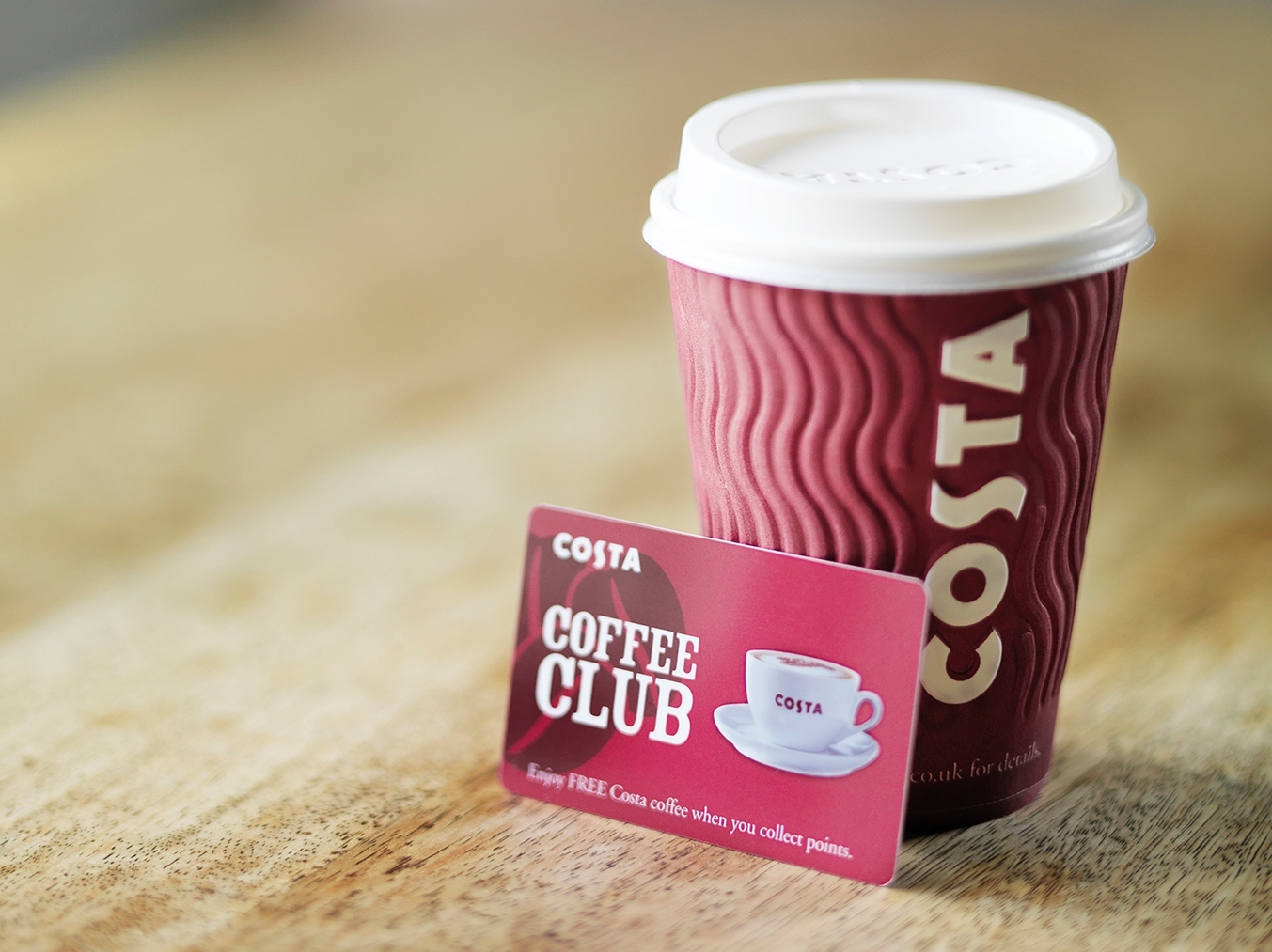
    Costa Coffee opened its first outlet at Eastwood Citywalk 1 in Libis, Quezon City in June and plans to open three more branches this year at Tera Towers in Fort Bonifacio, E. Rodriguez Jr. Ave. in Quezon City and Robinsons Antipolo in Rizal.

    “We plan to open 70 Costa Coffee branches in the Philippines over the next five years,” says Costa Coffee Philippines general manager Corinne Milagan, who heads a new unit of Robinsons Retail Holdings Inc. to guide the expansion of the Costa brand in the country.

    Among those who attended the opening of the Costa Coffee branch at Robinsons Place Manila are Ahmad, Milagan, Robinsons Retail Holdings president and chief operating officer Robina Gokongwei-Pe, Costa Coffee International managing director Chris Rogers, Robinsons Land Corp. president and chief operating officer Frederick Go and Costa Coffee franchise manager for Southeast Asia and India Matt Kenley.

    RRHI formed a new company called Robinsons Gourmet Food and Beverage Inc. to operate the Costa Coffee chain in the country. Robinsons Gourmet teamed up with Whitbread Plc. of the United Kingdom to bring the British coffee brand to the Philippines.

    “The Philippines has fantastic opportunity for the Costa brand.  It brings something different to the market. A different coffee, a different environment and a great people.  And it brings a little taste of London to the Philippines,” says Rogers.

    “We have been looking forward to the next 20 to 30 years. The Philippines is an exciting place to be, because of the potential growth.  The economy is growing strongly. The consumer population is growing. There are good dynamics,” says Rogers, who joined Whitbread eight years ago.

    Rogers has been leading the international expansion of the Costa Coffee brand since July 2012.

    Robinsons Retail plans to open 70 Costa Coffee stores in the Philippines over the next five years, with an average cost of P10 million per outlet.

    Rogers says Costa Coffee has found its niche in the competitive coffee market.  “Our difference is our coffee.  We have the Mocha Italian blend.  We are very particular with the beans we choose–high-quality beans with a particular taste. The environment is also very different,” he says.

    Milagan says the Philippine coffee market is now prepared for a British brand.  She says coffee lovers, including British expatriates, were lining up hours prior to the opening of the Costa Coffee branch at Robinsons Place Manila on July 31.

    “The [coffee] market is not yet saturated. The Philippine market has matured in terms of  food and drinking preference. We are graduating now from instant coffee and we are now shifting to coffee made in a hand crafted way,” says Milagan.

    Milagan says “the Filipino taste has become discriminating, as they travel abroad.”

    Costa Coffee was founded by Italian immigrants Sergio and Bruno Costa in 1971 in Lambeth, London. The Costa brothers were known for creating their unique blend of coffee, a combination of Arabica and Robusta beans. They called it Mocha Italia, a blend that is a closely guarded secret to this day.

    The brand was acquired by Whitbread Plc. in 1995.  The UK firm continues to serve the original Mocha Italia recipe, which is slowly roasted in the Old Paradise Street Roastery in London.

    Milagan says Costa coffees are all handcrafted and espresso-based.

    Costa Coffee now has 3,000 stores in more than 30 countries. Costa employs Master Genarro Peliccia as the official coffee master who ensures that the taste remains consistent to the original blend.

    Gokongwei-Pe says Costa Coffee is the second British brand brought to the Philippines by Robinsons Retail, the first being the fashion brand Topshop.  She says her company will bring more foreign brands, depending on the performance of Costa Coffee.

    “We have to make sure this works first,” she says, adding that the outlook for the Costa brand in the Philippines is promising.

    “I believe in good luck.  I believe in good vibrations,” she says.
     

  • Jaguar Land Rover profits down on slowing demand in China

    Jaguar Land Rover profits down on slowing demand in China

    Jaguar Land Rover became the latest casualty of a slowdown in Chinese auto demand, reporting its steepest drop in quarterly profit in two years after retail deliveries slumped in the world’s largest vehicle market.

    Profit fell 33 percent to 302 million pounds (US$465-million) in the three months ended March, the biggest decline since the quarter ended March 2013. That contributed to a worse-than-estimated drop in earnings at its parent, India’s Tata Motors, which also faced a prolonged slump in demand for commercial vehicles in its home market. Shares of Tata Motors declined.

    The result underscores the reliance of global automakers on China to drive profit growth and the extent of the slowdown in luxury demand after the government’s campaign to stamp out graft and extravagance. Jaguar Land Rover said the introduction of new models, and conditions in China and Russia, may lead to lower margins this year.

    “We see a certain slowdown in the market and we read that many competitors are going to reduce prices,” Ralf Speth, chief executive of Jaguar Land Rover, said on a call with investors. “I can assure you that we will not be the very first ones to reduce prices because we’re convinced we bring color to the Chinese market.”

    Jaguar Land Rover’s retail sales volume declined in the quarter, with deliveries in China falling 20 per cent. The company is seeing a changing Chinese market with more pricing pressure in more segments than in the past, Jaguar Land Rover chief financial officer Kenneth Gregor said on a separate call.

    China’s slowing economy has prompted BMW to cut production and prices in the country. Intense competition is putting pressure on prices, and the automaker doesn’t expect this trend to be reversed in the short term, Friedrich Eichiner, chief financial officer of BMW, said on May 6.

    General Motors cut its prices in China after reporting a decline in deliveries there last month, joining Volkswagen in stepping up discounts. Foreign automakers have also come under increasing pressure from local brands that are gaining market share by offering cheaper sport-utility vehicles.

    Besides discounts, foreign automakers are offering incentives such as subsidized insurance, zero down payment, interest-free financing and higher trade-in prices, according to Sanford C. Bernstein.

    Passenger-vehicle sales rose at the slowest pace in five months in April, with most of the expansion coming from local brands. Vehicle sales in China this year may rise by less than the 7 per cent projected in January, the China Association of Automobile Manufacturers said last month.

    Jaguar has said it plans to unveil 12 new products, including upgrades and variants, this year. A new version of its XF sedan will be introduced in 2015 and the F- PACE crossover in 2016, Speth said yesterday.

    “Jaguar Land Rover is more dependent on China than any other original equipment manufacturer, thanks to extraordinarily high pricing,” Max Warburton, an analyst at Sanford C. Bernstein in Singapore who rates the Tata Motors stock the equivalent of a hold, wrote in a note to clients today. “Slowing premium growth, deteriorating pricing, and falling dealer profitability in China are all issues.”