Retail News CRM

Tag: Korean

  • South Korean Retailers Innovate To Welcome Returning Chinese Tour Groups Amid Changing Consumer Trends

    South Korean Retailers Innovate To Welcome Returning Chinese Tour Groups Amid Changing Consumer Trends

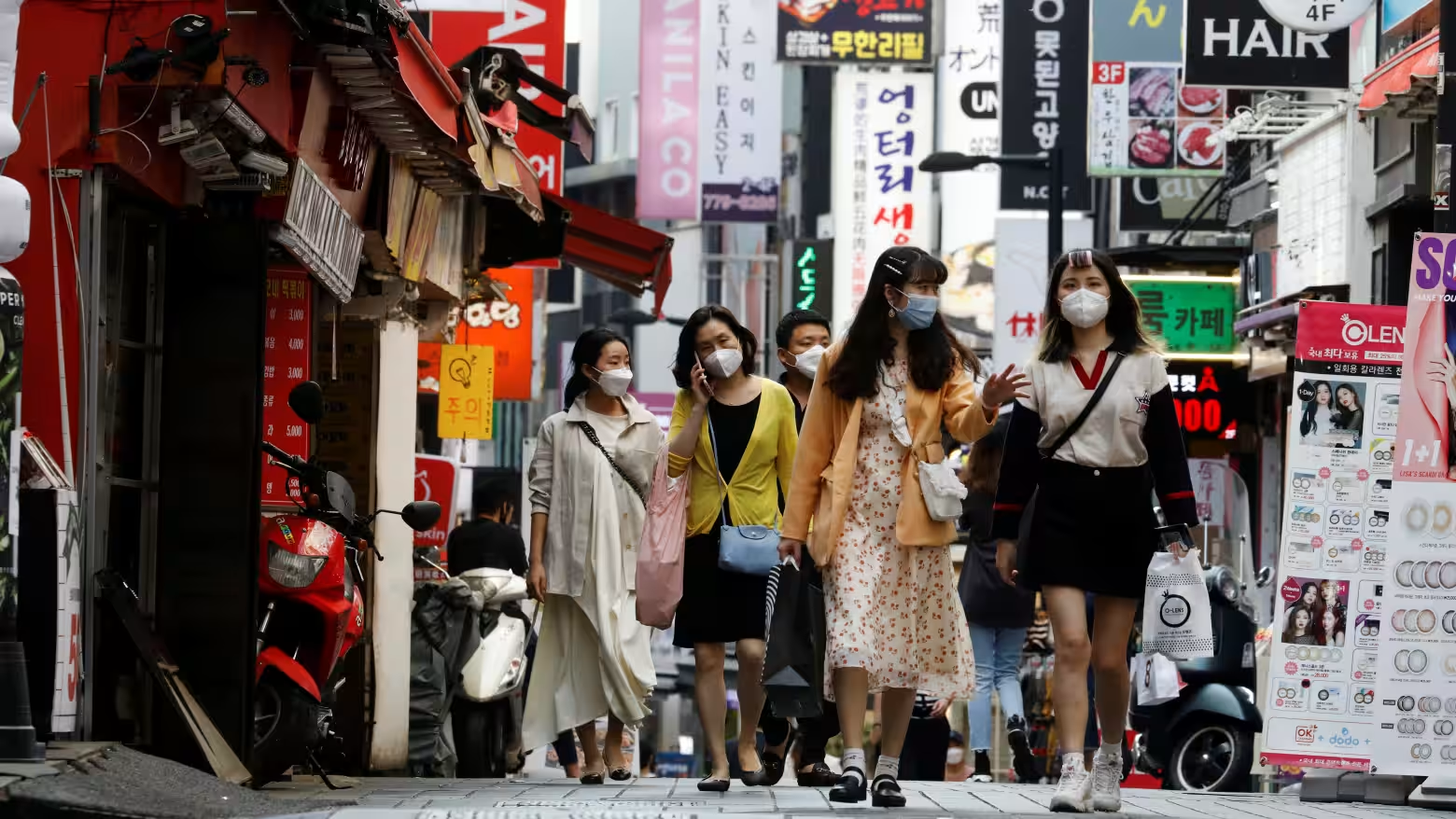
    As South Korea prepares for the much-anticipated return of Chinese tour groups from September 29, retailers are taking proactive measures to welcome them. To cater to these visitors, who will be allowed visa-free entry, a wave of new promotions is on the horizon, and retailers are expanding their product ranges. Instead of focusing solely on luxury cosmetics, retailers are branching out to incorporate fashion, lifestyle, and even convenience store exclusive items.

    Change in Chinese Tourists’ Preferences

    In the mid-2010s, Chinese travelers, often referred to as “Youke,” were known for their bulk purchases of high-end skincare products. However, recent industry data indicates a significant shift in their preferences. Currently, eyewear brands such as Gentle Monster, K-fashion labels, health foods, and lifestyle goods are gaining popularity among these travelers.

    Retailers’ Innovative Strategies

    In response to these changing demands, Lotte Department Store has launched curated boutiques as part of the “Kinetic Ground” platform. These boutiques will feature trendy domestic brands. In addition, the department store’s duty-free branch has plans to inaugurate a new “K-Beauty Hall” in Myeongdong, accompanied by an expansion of local specialty food offerings.

    Shinsegae Department Store is orchestrating a “Global Shopping Festa” around the Chuseok holiday, with a focus on categories popular with foreign shoppers. Convenience chains are also making preparations. GS25 is advertising Greek yogurt, highballs, and K-pop albums as emerging favorites. They have even released a “K-Convenience Store Guidebook,” presenting product rankings and celebrity snack choices. Additionally, 7-Eleven is promoting souvenir items that represent Korean symbols like the national flag and old currency.

    Duty-Free Shops Gear Up

    Duty-free shops, known to benefit most from group tourism, are also gearing up. Lotte Duty Free is bolstering relationships with agents in second- and third-tier Chinese cities such as Chongqing and Qingdao, while Shilla is setting its sights on corporate travel groups. Shinsegae Duty Free is honing in on smaller groups that tend to spend more. Retailers are further enhancing the shopping experience by introducing experiential attractions like revamped “Star Avenues” and Artificial Intelligence (AI)-aided translation services to facilitate shopping for international visitors.

    Challenges Ahead

    Despite these proactive measures, retailers face several challenges. One critical issue is the shift in travel patterns towards individual tourism, making it uncertain whether duty-free operators will regain their past dominance. Another concern is the increase in hotel costs since the pandemic, which could potentially impact package competitiveness.

    A duty-free executive expressed optimism, stating that visa-free entry for Chinese group tourists might signal a turning point for Korea’s tourism recovery. However, the real litmus test lies in whether spending bounces back. The industry is eagerly waiting for the APEC summit in late October, hosted by Seoul, as it could provide more clarity on the situation. The event is also likely to attract China’s President Xi Jinping.

    Questions & Answers

    What changes are South Korean retailers making to accommodate the return of Chinese tour groups?
    Retailers in South Korea are launching new promotions and expanding their product offerings. They are diversifying their product lineups to include not just luxury cosmetics, but also fashion items, lifestyle goods, and exclusive convenience store products.

    How are duty-free shops preparing for the return of Chinese tour groups?
    Duty-free shops are looking to strengthen ties with agents in Chinese cities, targeting corporate travel groups, and focusing on smaller, high-spending groups. They also aim to improve the shopping experience by introducing experiential attractions and AI-powered translation services.

    What challenges do retailers face with the return of Chinese tour groups?
    Retailers are facing challenges such as the shift in travel patterns towards individual tourism, which raises questions about the future dominance of duty-free operators. Additionally, rising hotel costs since the pandemic could impact package competitiveness.

  • South Korean Yogurt Giant, Yoajung, Makes Debut In Singapore Amidst Competitive Market

    South Korean Yogurt Giant, Yoajung, Makes Debut In Singapore Amidst Competitive Market

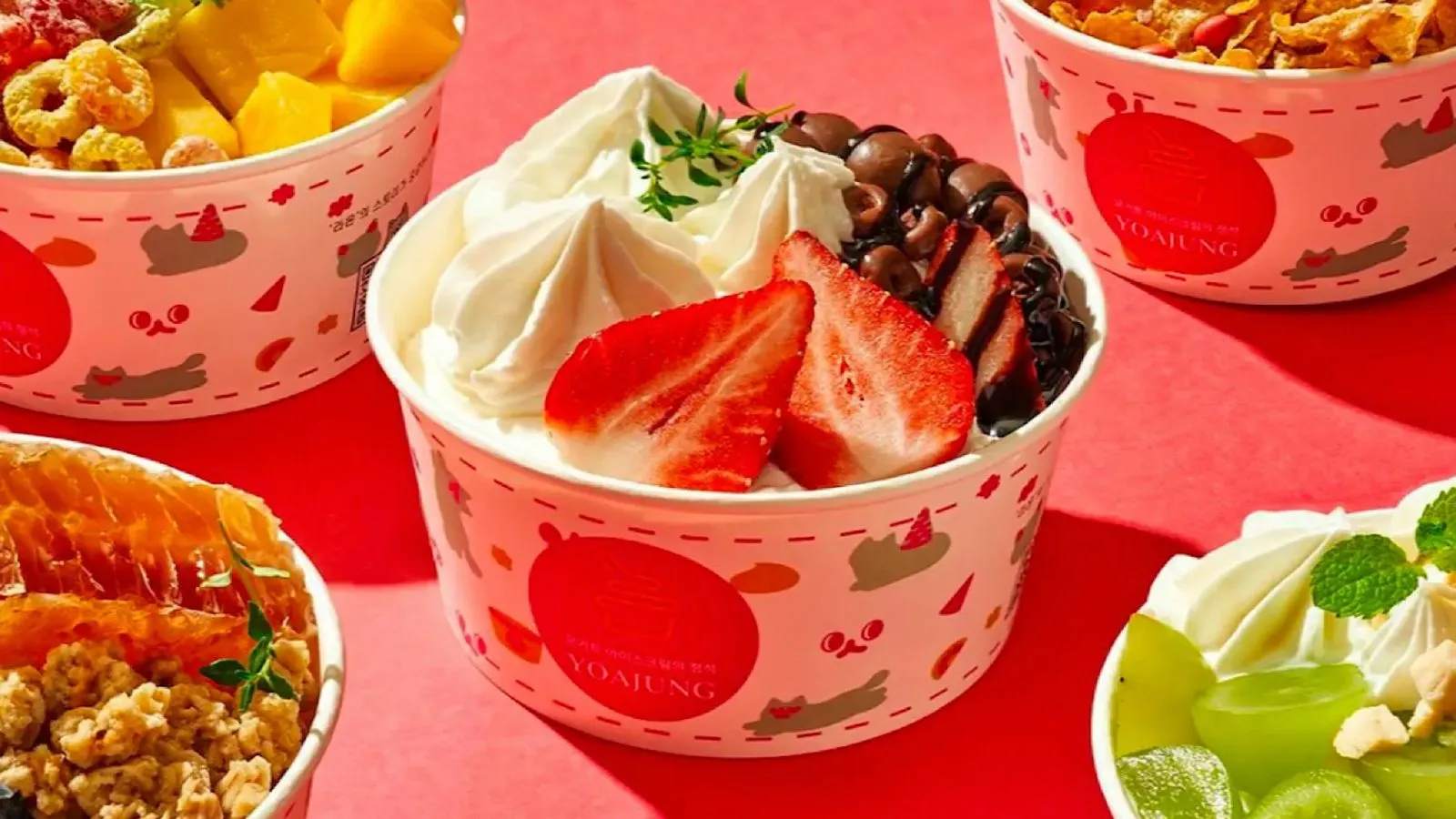
    South Korean yogurt chain, Yoajung, has officially launched its first store in Singapore, located on the bustling Orchard Road’s Scape.

    Yoajung, established in 2021, has seen rapid expansion in its short existence. The brand currently boasts over 650 branches in its home country of South Korea and has extended its international footprint to countries including Japan, China, Hong Kong, and Australia.

    This bold move into the Singaporean market was made possible through a partnership with Hong Kong’s Modu Consulting. Modu Consulting owns the master franchise rights for Yoajung in various regions, including Hong Kong, Macau, and now Singapore.

    The newly opened outlet on Orchard Road offers a customizable menu, with a focus on frozen yogurt and acai bowls. Customers have the opportunity to personalize their bowls with an extensive range of toppings and premium upgrades.

    Yoajung’s entry into Singapore is hot on the heels of another international yogurt brand, Yo-Chi. The Australian-based chain made its own foray into the Singapore market last month, opening a 60-seat outlet at Orchard Central.

    Questions & Answers

    When was Yoajung established, and how many outlets does it currently have?
    Yoajung was established in 2021 and currently operates over 650 outlets in South Korea, in addition to its branches in Japan, China, Hong Kong, and Australia.

    Who holds the master franchise rights for Yoajung in Singapore?
    Modu Consulting, a Hong Kong-based company, holds the master franchise rights for Yoajung in Singapore.

    What is unique about the menu at Yoajung’s Orchard Road outlet in Singapore?
    The Orchard Road outlet offers a customizable menu focusing on frozen yogurt and acai bowls with a broad variety of toppings and premium add-ons.

  • South Korean Fashion Retailer Musinsa Teams Up With Anta Sports To Expand Into China

    South Korean Fashion Retailer Musinsa Teams Up With Anta Sports To Expand Into China

    Musinsa, a fashion retailer from South Korea, has recently expanded its operations into China, thanks to a collaboration with Anta Sports. By creating a joint venture known as Musinsa China, the two companies aim to stimulate growth in both online and physical store outlets. Majority ownership (60%) of the joint venture will be held by Musinsa, while Anta Sports will possess the remaining 40%.

    Advancing Korean Fashion in China

    Musinsa currently collaborates with over 1500 brands on its platform and intends to use this new venture to assist Korean designer labels in making their debut in China. According to Musinsa’s CEO, Joonmo Park, this alliance merges Musinsa’s knowledge of fashion with Anta’s expertise in retail and brand management.

    Park enthusiastically shared his vision for the partnership, stating that it would utilize diverse retail channels to provide Chinese consumers with unique brand experiences. He expressed eagerness to captivate young consumers in the vibrant Chinese market.

    Roles and Responsibilities

    The implementation of Musinsa Standard, the retailer’s private-label line, and the Musinsa Store will be managed by Musinsa China. Meanwhile, Anta Sports will oversee strategic and financial aspects of the venture through its representatives on the joint venture’s board.

    Co-CEO of Anta Sports, Wu Yonghua, believes that the agreement aligns perfectly with Anta’s ‘Single-Focus, Multi-Brand, and Globalisation’ strategy. He stated their intention to integrate sportswear with fashion-forward design to better cater to the preferences of China’s younger generation.

    Anta Sports aims to use its value chain capabilities and successful ‘Brand + Retail’ operating model to empower Musinsa China. The goal is to deliver standout, style-conscious products to consumers interested in sports and lifestyle.

    The business transaction is set to be finalized by the end of the month, subject to approval from regulatory bodies.

    Questions & Answers

    What is the purpose of the partnership between Musinsa and Anta Sports?
    The partnership aims to advance the growth of both online and offline channels in China by creating a joint venture, Musinsa China.

    How does this partnership fit into Anta Sports’ business strategy?
    The collaboration aligns with Anta’s ‘Single-Focus, Multi-Brand, and Globalisation’ strategy, allowing them to integrate sportswear with fashion-forward design to cater to China’s younger generation.

    Who will oversee the operations of this new venture?
    Musinsa China will manage the implementation of Musinsa Standard and the Musinsa Store, while Anta Sports will handle strategic and financial oversight through its representatives on the board of the joint venture.

  • Korean e-commerce firms under fire over hidden review rankings

    Korean e-commerce firms under fire over hidden review rankings

    Approximately 40% of significant online shopping portals in South Korea utilize proprietary algorithms to order product reviews, but the metrics behind these rankings are not publicly disclosed. This lack of transparency has caused some concerns about consumer trust, as per a recent study by the Seoul Metropolitan Government.

    Algorithm-Based Ranking in Online Retail

    The Seoul Electronic Commerce Center’s latest survey, published on Friday, revealed that 66% (33 out of 50) of the country’s top online retail platforms arrange customer feedback using algorithm-based rankings. These kinds of rankings are often labeled as “most popular” or “best”. However, 36% (18 out of 50) of these platforms do not provide any explanation about how these algorithms work.

    The systems used for review rankings can vary across different platforms, but they often prioritize high-star ratings and positive comments. Only a handful of platforms allow visibility for critical yet constructive reviews or let users sort reviews based on their valuable positives and negatives.

    While most platforms offer basic filtering options like “photo/video reviews” or “newest first”, more sophisticated controls are a rarity. Only a single platform allowed users to sort by “most commented”, while merely four platforms provided options to exclude reviews from promotional testers.

    The Importance of Reviews in Online Shopping

    In the report, the city stated, “In online shopping, where consumers cannot inspect the product in person, reviews are a vital factor in the decision-making process. Overemphasis on positive reviews undermines trust and limits informed consumer choice.”

    International platforms such as Costco, Rakuten, Amazon and Sephora have implemented more transparent and user-friendly review systems. For instance, Costco and Rakuten highlight one positive and one critical review deemed most helpful, while Sephora marks incentivised reviews and enables users to filter them out completely. Amazon provides tools to highlight both positive and negative reviews that other consumers have found useful.

    Seoul officials are planning to propose regulatory changes that would require online retailers to reveal their review-sorting algorithms to ensure better oversight.

    Kim Myung-sun, director of Seoul’s Fair Economy Division, commented, “A balanced review policy aids consumers in making quicker decisions and reduces unnecessary returns and disputes. We will continue to advocate for policies that protect consumer rights.”

    Questions & Answers

    What percentage of South Korean online shopping platforms use proprietary algorithms for ranking product reviews?
    Approximately 40% of major online shopping platforms in South Korea employ proprietary algorithms to rank product reviews.

    Why is there a concern about the use of algorithm-based rankings?
    The concern arises from the fact that the criteria behind these algorithm-based rankings are not disclosed to the public, which raises issues about consumer trust and transparency.

    What do Seoul officials plan in response to these findings?
    Seoul officials plan to propose regulatory changes requiring online retailers to disclose their review-sorting algorithms, which aims to strengthen oversight in the online retail sector.

  • South Korea’s ‘mallcations’ Trend: Unprecedented Weather Boosts Indoor Retail Sales

    South Korea’s ‘mallcations’ Trend: Unprecedented Weather Boosts Indoor Retail Sales

    As South Korea experiences an intense summer marked by unprecedented heatwaves and monsoon downpours, there’s been a noticeable uptick in customers choosing to spend their leisure time indoors. This trend, known as “mallcations,” is resulting in a significant surge in sales for department stores and outlet malls.

    Increased Footfall and Sales

    Major retailers have reported a sharp increase in foot traffic from July 1 to 17, compared to the same time frame last year. Lotte Department Store noted a 10% surge in visitor numbers, while Shinsegae and Hyundai Department Store registered increases of 14% and 13% respectively, translating into sales growth of 11.1% and 10.7%. Meanwhile, Hyundai Premium Outlet, which boasts an underground parking feature, saw its sales skyrocket by 21.2%.

    This changing consumer behavior is largely attributed to the unpredictable weather conditions, making air-conditioned indoor spaces far more appealing than outdoor venues. Notably, families are driving an increase in food and beverage (F&B) sales: Lotte observed a 10% rise, while Shinsegae and Hyundai reported increases of 15.8% and 12.4% in F&B revenue respectively.

    Seasonal Products and Experiences

    As the summer vacation season looms, seasonal product categories have also shown strong sales performance. Sales of swimwear at Lotte have jumped by 15%, supported by a government tax incentive for cultural activities. Appliance sales have increased by 10% under an energy efficiency rebate program.

    Cooling bedding has emerged as another hot-selling item. Shinsegae saw a 33.7% surge in its bedding category, while Hyundai recorded growth of 23.9% in sportswear and 18.8% in home living products.

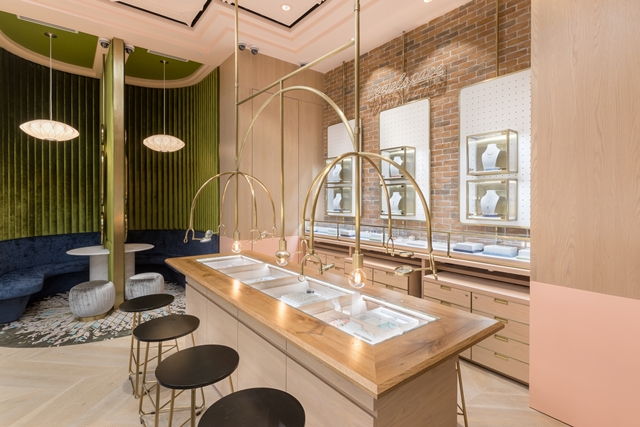
    In addition to the increase in sales, retailers are also rolling out immersive, summer-themed experiences to capitalize on the increased footfall. Lotte is set to launch a “Summer Gourmet Week” across all its locations, complete with sweepstakes for F&B customers. The retail chain will also host a “Summer Wine Festa”, offering discounts on spirits, and pop-up jewelry boutiques catering to seasonal accessory shoppers.

    Shinsegae, on the other hand, has introduced pop-ups featuring surfing gear and is hosting art exhibitions. Hyundai Department Store is revamping its spaces with a Hawaiian resort theme under the “Hu’i Hu’i Maui” campaign which will run through August 21.

    Reinventing Retail

    With the Korean climate becoming increasingly erratic, retailers are adopting climate-proof leisure strategies. They are redefining malls as not just shopping centers, but as cool and curated summer destinations.

    Questions & Answers

    What is a “mallcation”?
    A “mallcation” refers to the trend of consumers spending their leisure time indoors at malls due to unfavorable weather conditions.

    What factors have contributed to the growth in foot traffic and sales for retailers?
    Unpredictable weather conditions, the appeal of air-conditioned indoor spaces, and the introduction of immersive, summer-themed experiences by retailers have contributed to the increase.

    How are retailers capitalizing on the rising trend of “mallcations”?
    Retailers are rolling out immersive, summer-themed experiences and pop-up shops, hosting art exhibitions, and transforming their spaces to provide a more engaging and enjoyable shopping experience for consumers.

  • F&F Engages Goldman Sachs For Potential Acquisition Of Taylormade Amid Legal Tensions

    F&F Engages Goldman Sachs For Potential Acquisition Of Taylormade Amid Legal Tensions

    South Korean apparel company F&F Co announced on Monday that it had engaged Goldman Sachs as its advisor on the prospective purchase of TaylorMade. The company also stated that it would pursue legal action if the current owner of TaylorMade proceeds with an independent sale process.

    The Context of the Acquisition

    Earlier this year, Centroid Investment Partners, a private equity firm headquartered in Seoul, initiated a sales process for TaylorMade, which it had acquired in 2021. The company, based in Carlsbad, California, could potentially be sold for as much as $3.5 billion, according to those familiar with the transaction.

    F&F Co was a pivotal player in the 2021 acquisition of TaylorMade, participating as a strategic investor. As the most significant investor, F&F secured written Consent Rights over major business decisions, which included borrowing, key management decisions, and sales of equity. However, F&F has not approved Centroid’s current attempt to sell TaylorMade, and it views this action as a considerable violation of its contractual consent rights.

    Despite the potential acquisition, F&F stated that it is fully prepared to use all available legal and contractual measures to hold Centroid accountable for any violations. The company is carefully preparing to exercise its Right of First Refusal (ROFR) if necessary, to ensure alignment with its original investment thesis.

    Investment Breakdown

    F&F’s investment in the acquisition of TaylorMade by Centroid was substantial, contributing 358 billion won ($258 million) of a total subordinated equity investment of 619.2 billion won. This made F&F the primary equity investor as a limited partner (LP).

    Additionally, F&F contributed 195.7 billion won to a mezzanine investment of 471.5 billion won. The fashion company had already expressed its intent to acquire TaylorMade last month, explaining that its significant investment in TaylorMade in 2021 was made with the ultimate aim of acquiring the company.

    Centroid’s Sale Process

    According to insiders, Centroid’s advisors have sent confidential memoranda and process letters concerning the sale of TaylorMade to potential buyers. However, no official process has been initiated yet. Responding to a request for comment, Centroid confirmed it was in the process of selling TaylorMade to maximize its LPs’ return on investment.

    In the private equity sector, a GP, or General Partner, refers to the manager of a fund who is responsible for making investment and operational decisions. In contrast, LPs, or Limited Partners, are investors in the fund who usually have a passive role in individual deals. F&F is an LP investor in a fund managed by Centroid as the GP.

    Centroid confirmed that F&F holds the right of first refusal, which it guarantees. However, it pointed out that this right does not preclude a sale process from occurring.

    TaylorMade Overview

    Established in 1979, TaylorMade produces golf clubs, balls, and other golf-related accessories. The company has offices in Canada, China, Japan, South Korea, and Australia, in addition to its U.S. base.

    Questions & Answers

    What is F&F Co’s role in TaylorMade’s acquisition?
    F&F Co participated as a strategic investor in the 2021 acquisition of TaylorMade and is the largest equity investor as a limited partner (LP).

    What are the potential legal actions that F&F Co might take?
    F&F Co stated that it is fully prepared to use all available legal and contractual measures to hold Centroid accountable for any violations of its contractual consent rights.

    What is the right of first refusal that F&F Co holds?
    The right of first refusal allows F&F Co to decide whether or not to match the terms of a sale determined through the auction process.

  • South Korean Jewelry Brands Pivot To Lower-karat Gold Amid Rising Prices

    South Korean Jewelry Brands Pivot To Lower-karat Gold Amid Rising Prices

    As gold prices continue to rise, South Korean jewelry brands are increasingly leveraging lower-karat gold and alternative materials to attract younger, budget-aware customers.

    Market Shift to More Affordable Options

    The market, which has traditionally been dominated by 14k and 18k products, is witnessing a surge in the availability of more cost-effective 10k, 9k, and even 5k gold items. These lower purity items, which contain less gold than the 24k gold standard, are assisting brands in maintaining their pricing strategy without compromising on design aesthetics.

    Leading retailers such as Lloyed, managed by E-Land Group’s E-World, have successfully targeted younger consumers by broadening their range of “light gold” products and silver jewelry.

    Since the introduction of 5k gold in late 2023, Lloyed has expanded its collection to include diverse products such as rings, necklaces, earrings, and anklets. This expansion has led to a 27 percent year-over-year increase in sales for its light gold and silver collections in the first half of 2025.

    A representative of Lloyed noted the company’s strategic move towards practical materials in the face of fluctuating gold prices has found favor with younger customers. “Diversifying beyond a product range focused exclusively on 14k and above has allowed us to address the evolving consumer demand effectively,” they said.

    Adapting to Changing Demographics

    Luxury brand Didier Dubot, known for its prominent positioning in high-end department stores, has also made changes to cater to younger demographics. The brand now offers 10k custom-made options in its couple ring line. A representative from Didier Dubot emphasized that their aim was not merely about providing affordable options, but also about introducing new customers to the brand.

    Some brands are exploring the concept of dual series. MiniGold, for instance, offers a premium series composed entirely of 14k gold alongside a “Smart Daily Line.” In the latter, silver pieces are gold-plated with only the earring posts made from 14k gold.

    The price difference between the two lines is significant. One style of 14k earrings is priced at nearly 1.3 million won (US$1,000), while the Smart Daily version is affordably priced under 200,000 won (US$150).

    Industry professionals point out that price-sensitive consumers, particularly those in their twenties and thirties, are the driving force behind this diversification. One executive commented, “While luxury brands have raised prices in line with the increasing gold prices, mass-market jewelry lines are innovating with materials and design to maintain accessibility.”

    With affordability now being considered as crucial as aesthetics, South Korea’s jewelry market is redefining luxury to cater to a generation that values cost-effectiveness over karats.

    Questions & Answers

    Why are South Korean jewelry brands moving towards lower-karat gold?
    Due to rising gold prices, these brands are utilizing lower-karat gold and alternative materials to maintain price points while meeting the demands of young, cost-conscious consumers.

    What changes have brands like Lloyed and Didier Dubot made?
    Retailer Lloyed has expanded its range to include “light gold” products and silver jewelry, while luxury brand Didier Dubot is offering 10k custom-made options in its couple ring line to attract younger customers.

    How is the jewelry market in South Korea evolving?
    The market is moving towards more affordable gold options, with brands creating lines that incorporate lower-karat gold and alternative materials. This shift is largely driven by price-sensitive younger consumers, leading to a redefinition of luxury in the sector.

  • MBK plans to sell its troubled Korean supermarket chain Homeplus

    MBK plans to sell its troubled Korean supermarket chain Homeplus

    MBK Partners, a private equity firm primarily operating in Northeast Asia, recently announced plans to sell its struggling South Korean supermarket chain, Homeplus. This move aims to prevent the retailer from going under.

    In an attempt to keep the firm afloat amidst the ongoing pandemic and intensified competition from e-commerce platforms, MBK Partners initiated court-led restructuring of Homeplus, South Korea’s second-largest grocery retailer, back in March.

    MBK Partners revealed that a court-commissioned assessment showed that the firm’s liquidation value surpasses its going concern value. Therefore, the decision to sell seems to be a strategic move to salvage as much value as possible.

    The retail company is planning to issue new shares and find a buyer for them. In contrast, MBK Partners is considering cancelling the shares it currently holds, which are valued at 2.5 trillion Korean won (equivalent to US$1.83 billion).

    MBK Partners originally purchased Homeplus in 2015, buying it from British multinational company Tesco for a hefty sum of 4 billion pounds.

    Legal challenges have surfaced as South Korean prosecutors are investigating whether MBK Partners authorized Homeplus’s debt issue in 2025, despite having prior knowledge of the retailer’s potential credit downgrade. MBK has refuted these accusations.

    The investigation led to a foreign travel ban in May for MBK Partners Chairman, Kim Byung-ju.

    Questions & Answers

    Why is MBK Partners selling Homeplus?
    MBK Partners is planning to sell Homeplus to avoid its liquidation. The decision came after a court-commissioned review showed the company’s liquidation value to be higher than its going concern value.

    What legal challenges is MBK Partners currently facing?
    South Korean prosecutors are investigating if MBK Partners approved Homeplus’s debt issue in 2025, despite being aware of a possible credit downgrade. MBK has denied these allegations.

    What actions are being taken against the chairman of MBK Partners?
    As part of the ongoing investigation, a foreign travel ban was imposed on the chairman of MBK Partners, Kim Byung-ju, in May.

  • Korean shoppers buy more eco-produce, but prices remain a hurdle

    Korean shoppers buy more eco-produce, but prices remain a hurdle

    Increasingly, consumers in South Korea are choosing eco-friendly agricultural products, but a key obstacle to wider adoption remains: high prices. This was revealed in a recent government survey.

    The Ministry of Agriculture, Food and Rural Affairs disclosed that 76.8% of the participants in the survey reported having bought eco-friendly produce at least once over the previous year. This marks a slight growth, 0.6 percentage points, compared to 2024.

    The main reasons consumers gave for choosing eco-friendly produce were perceived safety (39.5%) and family health (31.1%). Environmental protection also influenced their decision (13.6%). Taste and quality were not as important, with only 4.8% and 3.1% naming these factors, respectively.

    Yet, the higher cost of such products remains a significant deterrent. Of those who did not buy eco-friendly products, 65.1% stated that the higher prices, in comparison to conventional alternatives, dissuaded them.

    The most commonly bought items were strawberries, tomatoes, mushrooms, and leafy vegetables. Most consumers (68.1%) made these purchases at large supermarket chains. However, online purchasing has been steadily increasing, particularly through early morning delivery services, making up over 35% of transactions in 2025.

    Even with the increased interest from consumers, the market experienced a drop in overall sales. In 2024, the number of online and offline retailers selling eco-friendly products increased to 6,099, yet total revenue decreased by 158.3 billion won to 2.04 trillion won. Certified organic product sales also fell by 81.3 billion won to 904.5 billion won. The majority of retailers blamed the decline on dampened consumer sentiment due to continuing economic uncertainty.

    As a countermeasure, the ministry plans to introduce initiatives such as production subsidies and promotional discounts to lower the cost of eco-friendly foods. “We are dedicated to reducing the price obstacle through consumer incentives and production support to expand the eco-friendly food market,” says Kim Jung-wook, Director of Agri-Food Innovation Policy at the ministry.

    Questions & Answers

    What are the primary reasons South Korean consumers choose eco-friendly produce?
    The main reasons are perceived safety and family health.

    Why do some consumers avoid buying eco-friendly products?
    High prices compared to conventional alternatives are the main deterrent.

    What steps is the Ministry of Agriculture, Food and Rural Affairs taking to support the eco-friendly food market?
    They are planning to introduce initiatives such as production subsidies and promotional discounts to make eco-friendly foods more affordable.

  • Korean beauty startups bet booming US demand outlasts tariff pain

    Korean beauty startups bet booming US demand outlasts tariff pain

    Following their impressive online achievements in the US, South Korean cosmetic start-ups are seeking to strengthen their physical presence in the world’s largest consumer market. These brands, including Tirtir, D’alba, Torriden and Beauty of Joseon, are currently in discussions with major retailers to make their products available on US shelves. The expectation is that the popularity and broad appeal of their products will outweigh any potential impact from tariffs.

    K-Beauty: Global Competitor

    Known for their high-quality products, competitive pricing, and clever marketing strategies, South Korean beauty products have successfully established a global presence. This success has been largely facilitated by the wider popularity of South Korea’s other cultural exports, including music, film, and television.

    According to Tirtir CEO An Byung-Jun, the increased interest in South Korean culture has paved the way for the country’s cosmetic industry, especially given the good quality of the products and their affordability compared to existing luxury brands such as L’Oreal or Estee Lauder.

    Tirtir’s reputation significantly increased last year due to the viral online success of its cushion foundation shades designed for dark skin. The company aims to double its US sales this year, with its products being made available in Ulta Beauty stores over the summer.

    US Expansion

    Major US retailers, including Sephora, Ulta Beauty, Costco, and Target, are currently in discussions with South Korean cosmetic brands about launching their products in physical stores. Industry experts believe Korean brands’ higher margin business models will allow them to withstand tariffs better than their competitors.

    South Korea became the world’s third-largest beauty product exporter in 2024, after France and the US. The majority of its cosmetic output, valued at $13 billion, is for export, with e-commerce sales driving most of this success.

    Challenges and Opportunities

    While tariffs pose a potential threat to South Korea’s beauty industry, the strong demand for their products is expected to mitigate some of this risk. Olive Young, South Korea’s leading beauty retailer, plans to establish its first US store in Los Angeles later this year.

    Despite concerns about tariffs, South Korean cosmetic brands are persisting with their US expansion plans. Brands such as D’alba, Torriden, and Beauty of Joseon are set to launch in Sephora stores over the summer.

    The Power of Social Media

    South Korea’s success in the cosmetic industry has been significantly bolstered by social media. Viral videos and influencer endorsements can transform a product into a global bestseller. However, industry experts caution that long-term success will require an increase in physical store sales.

    Despite rising competition and the emergence of cheaper alternatives, investors remain optimistic about South Korea’s potential in the cosmetic industry.

    Questions & Answers

    What has contributed to the success of South Korean beauty products in the global market?
    South Korean beauty products have risen in popularity due to their high quality, competitive pricing, and effective marketing strategies. They have also been boosted by the wider global interest in South Korean culture, including its music, film, and television.

    What is the current status of South Korean cosmetics in the US market?
    South Korean cosmetic start-ups are currently in discussions with major US retailers to launch their products in physical stores, following their successful online performance.

    What are the potential challenges for South Korean cosmetic brands in the US market?
    Potential challenges include tariffs and increasing competition. However, the strong demand for their products is expected to mitigate some of these concerns, and many brands have business models that allow them to withstand tariffs better than their competitors.

  • Korean retailers struggle amid sluggish demand

    Korean retailers struggle amid sluggish demand

    The initial quarter of 2025 has proven challenging for South Korea’s department store sector due to a slow down in local consumption that has greatly affected sales and profits. Lotte Department Store stood as the exception, recording a significant growth in profits, which has been attributed to excellent performance in overseas operations and effective internal restructure.

    Lotte Department Store’s Rise in Profits

    Lotte Department Store’s operating profit rose by 44.3% year-on-year, reaching 130 billion won in the first quarter, despite a minor decline of 1.1% in revenue to 806.3 billion won. The company attributes the profit surge to aggressive cost-efficiency measures, including shutting down underperforming stores and reinvesting in primary locations. Another contributing factor was the gain from its international business, which saw a 6.2% increase in revenue and bounced back into profitability.

    Struggles of Competitors

    Contrarily, competitors Shinsegae and Hyundai Department Store did not meet their projected performance. Shinsegae’s revenue fell by 0.8% to 659 billion won, with the operating profit decreasing by 5.1% to 107.9 billion won. Similarly, Hyundai reported a 0.8% drop in sales to 589 billion won and a 5.7% decline in operating income to 97.2 billion won.

    The downturn has been attributed to poor performance across nearly all product categories due to increasing consumer pessimism and colder-than-average winter, which negatively affected fashion sales – a category that typically makes up to 50% of annual department store revenue. According to one department store industry official, a combination of domestic and global challenges, including political instability due to emergency rule, increased trade uncertainty due to US tariff actions, and unpredictable weather conditions have all contributed to the downturn.

    E-Mart’s Successful First Quarter

    In the big-box retail sector, E-Mart led the market with an impressive first quarter. On a standalone basis, the company’s revenue grew by 10.1% year-on-year to 4.63 trillion won, while the operating profit shot up by 43.1% to 133.3 billion won, marking its best quarterly performance since 2018.

    The company’s executives credit the success to an increase in foot traffic at both its standard discount stores and warehouse-style Traders locations, indicating a resurgence in consumer interest in offline shopping despite the ongoing economic uncertainty.

    In comparison, Lotte Mart saw a modest increase in revenue by 0.3% to 1.49 trillion won, while operating profit fell sharply by 34.8% to 28.1 billion won. After excluding overseas earnings, domestic operating profit sank 73.6% from a year earlier.

    Both E-Mart and Lotte Mart have adopted low-price strategies via centralised purchasing, but analysts have noted that E-Mart’s larger scale offers it a stronger advantage in passing savings onto consumers. E-Mart’s aggressive promotions were also identified as key factors contributing to its outperformance.

    Questions & Answers

    What led to the rise in Lotte Department Store’s profits?
    The surge in Lotte Department Store’s profits can be attributed to aggressive cost-efficiency measures and a strong performance from its international business.

    What factors contributed to the struggle of Shinsegae and Hyundai Department Store?
    Poor performance across nearly all product categories, increased consumer pessimism, colder-than-average winter, and various domestic and global challenges contributed to the struggle of these department stores.

    What factors influenced E-Mart’s successful first quarter?
    An increase in foot traffic at both its standard discount stores and warehouse-style Traders locations, along with aggressive promotions, contributed to E-Mart’s successful first quarter.

  • Vietnamese customers continue to love Korean cars

    Vietnamese customers continue to love Korean cars

    The market share of Korean auto brands Hyundai and its subsidiary Kia increased from 18 percent in 2017 to over 30 percent last year.

    Hyundai continued to lead the market with sales of 70,518 units, though down 13.3 percent from the previous year.

    Japan’s Toyota followed with 67,339 units, down 4.7 percent, and Kia was third with 45,532 units, up 16.2 percent.

    For a third consecutive year the two Korean brands were among the top three, and they had a combined 30.2 percent share, almost the same as in 2020.

    With sales of 116,110 units, Vietnam was far and away the most important market for Korean automakers in Southeast Asia.

    To put numbers in perspective, their sales in Vietnam was four times higher than the combined sales in five other markets in the region: Thailand, Indonesia, Malaysia, the Philippines, and Singapore.

    Competitive pricing compared to Japanese brands and a wide of options have helped Korean become popular in Vietnam.

    Hyundai and Kia cars are assembled by Thaco and TC Motors respectively in the northern province of Ninh Binh and central province of Quang Nam.

  • Korean convenience stores start selling Covid-19 self-testing kits

    Korean convenience stores start selling Covid-19 self-testing kits

    Coronavirus self-test kits became available in supermarkets and convenience stores across the country Thursday as South Korea is seeking to step up its testing capacity with no letup of new virus cases insight.

    Self-test kits by two local drugmakers – Humasis Inc. and SD Biosensor Co. – have been sold at local pharmacies after receiving approval for emergency use last month, and they have hit shelves of supermarkets and convenience stores to provide easier access to the public.

    GS25, a convenience store chain, on Wednesday, started sales of test kits by Humasis and SD Biosensor at some of its stores, and its rival 7-Eleven said it will begin sales Friday.

    E-Mart, the nation’s largest discount store chain, said its major outlets in Seoul began to offer Humasis’ test kits earlier in the day and will distribute more in other stores.

    CJ Olive Young, a major health and beauty store chain, said it will sell Humasis’ kits starting Friday at offline stores and on its online channel, with a parcel delivery service available.

    A growing number of new cases has prompted the nation’s health authority to approve the use of at-home virus tests to detect patients at an early stage.

    Users can collect samples from their noses on their own for testing, and the results come out within 15-30 minutes.

    If users receive a positive result from the self-test, they are required to visit screening stations to undergo preemptive polymerase chain reaction (PCR) tests to get a more accurate result.

    On Thursday, the country reported 574 more COVID-19 cases, raising the total caseload to 125,519, the Korea Disease Control and Prevention Agency said.

  • Korean restaurant chains cry foul over Covid-19 rules

    Korean restaurant chains cry foul over Covid-19 rules

    South Korean restaurant chains are accusing the government of using “discriminatory countermeasures” in the fight against the coronavirus pandemic.

    Recent edicts to prevent the spread of the latest outbreak in the country have seen the closure of buffet and family-style restaurants, while still allowing cafes to operate. Prominent chains CJ Foodville, Shinsegae Food and Elandeats have expressed their dissatisfaction with the discrepancy, which has involved multiple outlet closures and necessitated the dumping of fresh food.

    “The largest number of coronavirus cases was confirmed at Starbucks coffee shop(s), but I don’t understand why restaurant chains are targeted,” a family restaurant worker told the Korea Times. “Starbucks closed its relevant branches for a few days and then they reopened them.”

    The restaurant chains had previously instituted anti-Covid-19 precautions, such as checking the temperatures of customers and enforcing social distancing.

    The Korea Times quoted one CJ Foodville official as saying: “It is our obligation to follow the government’s regulations, but we hope people don’t continue to think that our restaurants are high-risk after things get better.”

  • South Koreans spending more on Chinese online stores

    South Koreans spending more on Chinese online stores

    South Koreans are spending more at Chinese online stores, according to credit-card spending data. Purchase records from November 1-26, compiled by the big data centre at Shinhan Card, showed a 9.8 per cent increase from last year in the value of goods bought from overseas internet sites. The number of transactions was up 16.6 per cent year on year.

    Chinese online stores outperformed rivals from other countries. AliExpress took 9.5 per cent of the purchases, up from 6 per cent in 2016 and 6.1 per cent last year. It ranked second after Amazon’s 16.3 per cent.

    Taobao, another Chinese Internet shopping site, grew from 2.3 per cent in 2016 to 3.3 per cent last year and to 4.4 per cent this year, raising it to the third most-used overseas online marketplace. Alibaba made it to the top 10 for the first time this year with 1 per cent.

    The shift is stark when comparing the purchases during Black Friday in the US and Singles Day in China. This year, overseas shopping during Singles Day rose 35 per cent. Black Friday purchases stopped at a 9 per cent gain.

    Data showed 70.8 per cent of purchases during Singles’ Day were for goods priced up to 50,000 won (US$44.32). Shoppers in their 30s and 40s remained the biggest clients, but the number of those in their 20s increased 1.9 percentage points from last year.