Retail News CRM

Tag: liquor

  • Vietnam liquor maker makes a loss, 4 years in a row

    Vietnam liquor maker makes a loss, 4 years in a row

    Nation’s leading liquor maker Halico has reported a loss of VND75 billion ($3.22 million) for 2018. With Vietnamese consumers moving towards foreign brands, the 120-year-old liquor maker, in which Vietnam’s second biggest brewery Habeco has 54.29 percent ownership and British multinational Diageo holds a 45.5 percent stake, Halico has reported losses for the fourth year in a row.

    It reported a loss of over VND20 billion ($859,780) in the fourth quarter of 2018, raising the total annual loss to VND75 billion ($3.22 million).

    In its annual statement for 2018, Halico’s board expressed doubts that the company can continue operating, with Vietnamese consumer tastes shifting to imported beer and foreign alcoholic products. It conceded that it has failed to capture younger consumer segments.

    In addition, Diageo has been unable to negotiate any substantial supply contracts with foreign partners, so the company has not been able to do well in exports.

    Furthermore, management costs have risen to over 60 percent of revenue. Despite a 30 percent rise in sales in 2018 (VND155 billion or $6.66 million), the difference was not able to compensate for expenses incurred.

    The Hanoi Liquor Joint Stock Company was originally a Hanoi winery, founded in 1898 and equitized in 2004 with initial charter capital of nearly VND50 billion ($2.15 million).

    In early 2011, Diageo Plc, a British multinational alcoholic beverages company, acquired an 18.67 percent stake in Halico for a total of VND800 billion ($34.4 million) from investment fund VinaCapital.

    Diageo is the world’s biggest liquor company, owning famous brands such as Johnnie Walker, Bailey and Smirnoff. It bought another 26.83 percent stake in 2012, hoping to cash in on the growing consumer market.

    Halico’s accumulated losses at the end of last year topped VND330 billion ($14.19 million), 1.6 times higher than its current charter capital at VND200 billion ($8.6 million).

  • Hennessy celebrates Chinese New Year by opening pop up store at Changi

    Hennessy celebrates Chinese New Year by opening pop up store at Changi

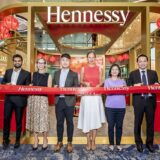
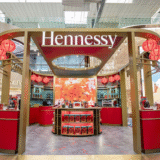
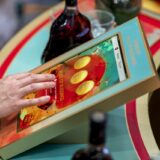
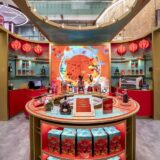
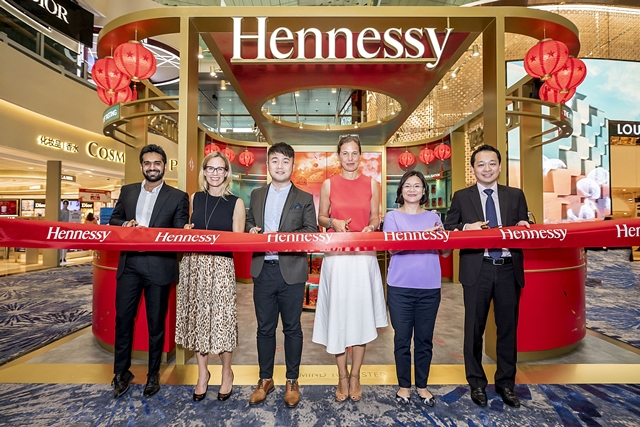
    Moet Hennessy is partnering with DFS Group in Hennessy pop-up store a Changi Airport celebrate Chinese New Year. The store, a Travel Retail Concept Exclusive, features interactive consumer experiences and will remain open until February 19. Located at the Terminal 3 Departure Hall, the pop-up experience, the only one of its kind globally. It invites travellers to “engage in a joyous reunion through experiences such as interactive digital games, Hennessy’s bottle engraving service, limited edition offers, as well as exclusive gifts with purchase,” the companies said in a statement.

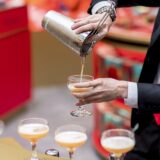
    Travellers are also welcomed to test the Firecracker, a unique Hennessy cocktail, which will be available exclusively at the pop up.

    Hennessy collaborated with contemporary artist Guang-Yu Zhang to create an art piece centrestage in the pop up. The design, A Joyous Reunion, celebrates the love for nature, mastery of savoir-faire and spirit of conquest.

    Gallery of the pop up stores (6 images) :

    “Hennessy shares the dream of Harmony, from vine to grape to distillation to glass, from nature to people, Hennessy takes the best of nature and offers it to the Chinese people to celebrate this special moment,” said Guang-Yu Zhang.

    The also features on the limited-edition packaging that has been created for Hennessy XO, Hennessy VSOP and James Hennessy products.

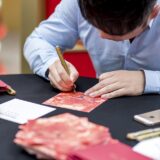
    After purchase, customers at Changi are invited to use Hennessy’s first-ever engraving station at the pop-up store to add a personalised messages to their bottles.

    “At Hennessy, we are honoured to have collaborated with a world-class artist to deliver these beautiful, one-of-a-kind Chinese New Year limited-editions for our travellers,” said Moet Hennessy MD travel retail Asia Pacific, Vanessa Widmann.

    A rising star in the international art world, Guang-Yu Zhang grew up in Shanghai and graduated from Central Saint Martins College in London in 2012. In 2014, he was selected for the International Emerging Artists Exhibition at the Saatchi Gallery in London; that year, he also exhibited his work at the Tate Britain Museum in London. He is known for his unique fusion of Eastern and Western cultures and traditional and contemporary techniques.

  • New era for single malt whisky with Ailsa Bay’s launch in Australia

    New era for single malt whisky with Ailsa Bay’s launch in Australia

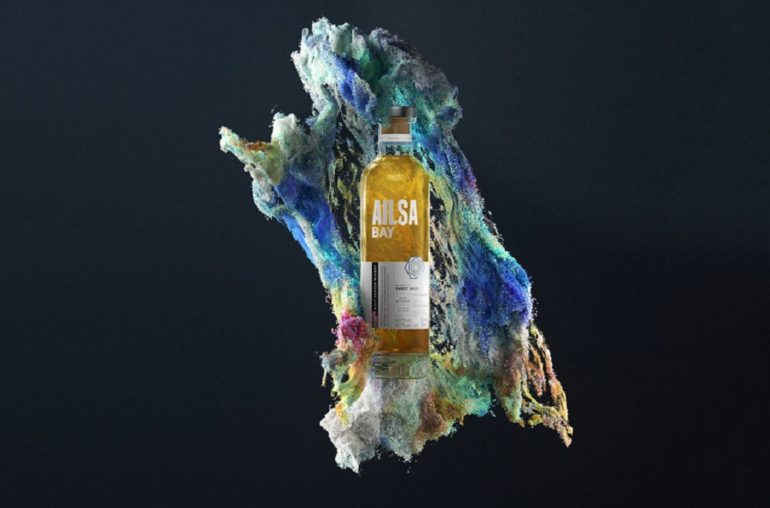
    Independent family-owned distiller, William Grant & Sons has announced the launch of Ailsa Bay in Australia. The single malt is the first whisky in the world to index ‘sweetness’. Following its successful launch in the United Kingdom and Nordics in 2016, Ailsa Bay will now be landing in Australia to serve and content all the Australian whisky enthusiasts.

    Ailsa Bay is created based on an industry-first “sweetness” index which enables the scientific measurement of sweetness.

    This complements a precise calculation of ‘peatiness’ to create a balance between smokiness and sweetness – all driven by advanced technology.

    This method was developed by Malt Master Brian Kinsman at William Grant & Sons.

    Alongside its liquid, Ailsa Bay’s packaging features dynamic artwork which takes its inspiration from the creativity of science, reflecting the boundary-pushing technology at its Girvan distillery.

    Ailsa Bay is available in Australia through Vintage Cellars, select First Choice stores only and Liquorland select stores in December.

  • Vietnam’s U18 liquor sales ban impractical, experts say

    Vietnam’s U18 liquor sales ban impractical, experts say

    Experts say it will be difficult to implement an age-based ban on selling liquor, better options are needed.

    They are also saying that an emphasis on education and raising awareness will have greater impact in dealing with the problem of liquor abuse.

    A draft bill on the prevention of dangers of alcohol being compiled by the Ministry of Health proposes a number of prohibitions, including: promotion in any manner of liquor with alcohol content of 15 degrees or above; usage of positive phrases like “medicinal alcohol”, “nutritious alcohol” on product labels; advertising of alcohol during television prime time (6-9 p.m.); sale of alcohol to persons under 18; and sale of alcohol on the internet.

    Kieu Anh Vu of law firm KAV Lawyers said it was very necessary to bring legal measures against the dangers of alcohol, because the harm it was causing was indisputable.

    Vu said he supported the draft bill’s ban on alcohol consumption by government officials, civil servants, and employees during working hours or between shifts during the working day; by operators of motorized vehicles; and by people under 18.

    “These regulations are appropriate to ensure social order, safety and health of the community,” he said.

    However, Vu was concerned about how age checks would be carried out. “Will vendors have the right to check people’s age by looking at their identity cards, or just by asking questions?”

    Psychologist Nguyen An Chat, on the same page as Vu, also questioned how alcohol sellers could correctly verify the age of each individual.

    “Some 15 year olds look very mature while some 20 year olds can look underage. Would everyone wishing to purchase alcohol have to produce identity documents?” he wondered.

    An online right?

    Lawyer Vu Tien Vinh, director of Bao An Law Firm, said: “Buying alcohol over the Internet is more convenient than going to shops or supermarkets. If online sale is prohibited, people can and will continue to buy alcohol through traditional channels.

    Vinh said that in reality, it was too easy for buyers to obtain alcohol via traditional channels such as supermarkets and other dealers. When consumers can buy alcohol anytime, anywhere, the ban on online sales will not have much of an impact on its consumption, he said.

    “Detecting online transactions on the sale of alcohol to punish with fines is very difficult. It will not be hard for consumers to get around this regulation,” Vinh added.

    Sociologist Trinh Hoa Binh concurred, saying identification of illegal alcohol sales online was very hard to do.

    “Internet sales are the current trend. Will the prohibition of selling alcohol online go against this?” asked psychologist researcher Nguyen An Chat.

    Given the implementation difficulties, Binh proposed that instead of prohibitive regulations, authorities should instead start with education, build a set of cultural values for the modern Vietnamese society that discourages alcohol abuse.

    Chat supported this. He said education should begin at home and continue in schools so that each person was aware of the danger of drinking, so that people would exercise restraint and control their consumption.

    Psychologist Khuat Thu Hong said many countries have faced difficulties in implementing regulations prohibiting or restricting the sale/use of alcohol, but over time, strict compliance has become the norm.

    “In Vietnam, for these regulations to be implemented well, close monitoring and regular communication on the harms of alcohol will be essential for the people to understand and co-operate,” said Hong.

    In Vietnam, about 800 deaths per year are related to the use of alcohol, including beer. Almost 30 percent of social order disruption cases are also related to alcohol consumption.

    In 2017, Vietnamese people spent close to $4 billion on alcohol. The cost of dealing with alcohol-related traffic accidents was  estimated at about one percent of the GDP the same year.

    The alcohol industry contributes about VND50 trillion ($2.17 billion) to the state budget a year and provides about 220,000 jobs directly or indirectly.
  • Lotte Liquor launches Fitz, a lighter beer for summer

    Lotte Liquor launches Fitz, a lighter beer for summer

    Lotte Liquor will launch its second beer brand Fitz Super Clear on June 1, the company said. Fitz Super Clear is a lager containing a relatively low 4.5 percent alcohol content. The company said Fitz is designed to serve as a light but refreshing alcoholic drink for the summer.

    “Fitz was developed with a focus to resolve a reputation that Korean beer is tasteless and bland,” the company said. “We tried to eliminate the unnecessary taste that is generated when the temperature and ingredients aren’t kept stable during the brewing process.”

    The beer uses the same “original gravity” method as Kloud products, which don’t add water in the brewing process. It also used the self-developed Super Yeast and enhanced the fermentation rate to 90 percent for a cleaner taste.

    The company launched Kloud in 2014. Kloud has 5 percent alcohol content and has a flavour similar to imported beers from European countries. It’s sometimes criticised for not being suitable for Korea’s somaek drinking culture, which mixes soju with beer.

    Fitz’s target customers are in their 20s and 30s. Kloud is for those who enjoy drinking alcohol while Fitz is for general gatherings because it is lighter and contains less alcohol content.

    Lotte Liquor invested 700 billion won (US$622.6 million) for a second beer manufacturing plant, which is scheduled to open in July. Once it opens, it will be able to produce up to 200,000 kiloliters (55.8 million gallons) of Fitz per year.

    The company aims to generate 90 billion won in sales for Kloud and 70 billion won for Fitz this year.

    The beer costs 1,147 won for a 500-millileter bottle.

  • Hard Liquor Helps E-Commerce Titans Take China’s Consumer Pulse

    Hard Liquor Helps E-Commerce Titans Take China’s Consumer Pulse

    Predicting the changing tastes of China’s consumers is becoming easier thanks to the country’s e-commerce giants, who monitor sales that can exceed US$17 billion in a single day.

    The country’s second-biggest web-based retail platform, JD.com Inc, already has dozens of new indexes tracking sales of products from liquor to appliances. Larger rival Alibaba Group Holding Ltd plans to publish its own spending gauges in coming months.

    Their data is vital to large global companies like Starbucks Corp and Wal-Mart Stores Inc that are looking for insights into what’s hot among China’s billion-plus consumers. Online shopping indexes reflect millions of transactions daily, whereas traditional consumer surveys can only test a tiny sample.

    “The ability to analyse and understand trends in online consumption has never been more important or more valuable,” said James Huang, big-data analytics director for the finance unit of Beijing-based JD.

  • Deau Cognac opens office in Shandong

    Deau Cognac opens office in Shandong

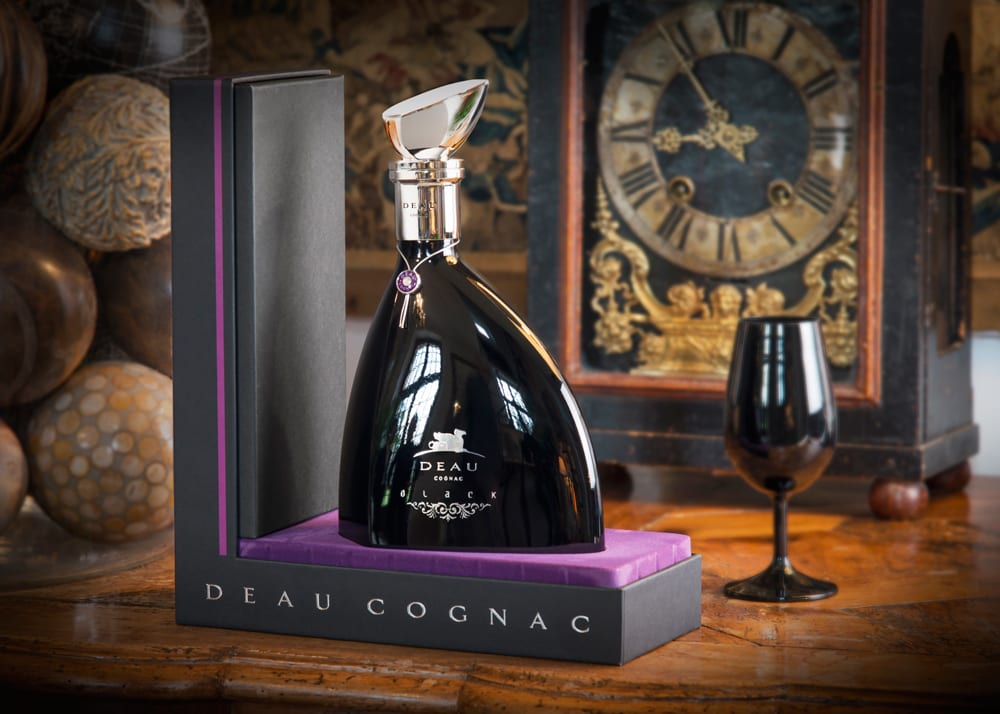
    Deau-Cognac-leadWith 40% of its business currently in Asia, and a new commercial office opened recently in Shandong Province, Tsing Tao, Deau Cognac now hopes to build on its relationships with key Asian retailers.

    To this effect, the brand will be exhibiting for the second time at the TFWA Asia Pacific Exhibition (Stand A02) and Conference, to continue its expansion into the Asia Pacific travel retail market.

    Olivier Hidier, Commercial Director, comments: “Last year was our first time exhibiting at TFWA AP, and we had such a good experience and received such positive feedback, that returning was a given.

    “The region is full of opportunities, but remains challenging to break into and secure a strong foothold. Currently, China represents the biggest share of our Asian business, so the recent slowdown in Chinese spend has been tough, but we are optimistic this will return.

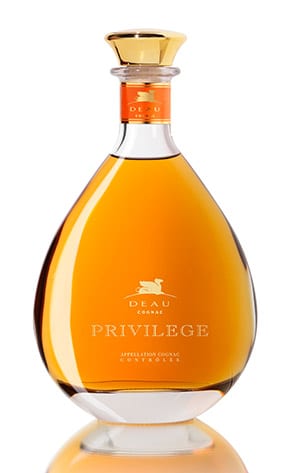
    Privilège VSOP Cognac

    Deau will also be showing its Privilège cuvée – a unique blend of Cognacs, slowly matured in ageing cellars.

    “Opening our Shandong Province commercial office has enabled us to better service and support the market through our own dedicated sales development team that in turn works very closely with local distributors.”

    This year, Deau will be showcasing its Cognac Extra Black, which has been given a ‘facelift’ with a more premium black cover, and gift pack.

    “The demand for premium products in the region continues to be strong, so we thought returning to Singapore with a more high-end looking product was important,” adds Hidier.

    “The new look cover and gift pack is sure to catch the eye of passers-by, and will look amazing displayed in any retail environment.”

    Deau will also be showing its Privilège cuvée – a unique blend of Cognacs, slowly matured in ageing cellars. Aiming to enhance its perceived quality, the cuvée has also been improved, receiving an upgrade to both its look and taste.

    The front label has been replaced with an engraving, whilst the blend now sits as a superior VSOP – making it ideal for the region. Also perfect for travel retail are its two Tasting Boxes, beautifully presented, and enabling consumers to try either three, or all six of the main Deau Cognac expressions.

    “We may be a small brand in comparison to the main Cognac players, but we have a unique offering, which is quite exceptional, and one we feel is ideal for this channel,” adds Hidier.

    “We have seen success in the domestic markets, and we are now looking to replicate this in travel retail; it is a great showcase for further building awareness of our brand, and an excellent platform for which to go to the next level of growth.”

  • Indonesia set to ban liquor sales in mini markets

    Indonesia set to ban liquor sales in mini markets

    Indonesians looking to buy a cold beer from one of the country’s ubiquitous minimarts come the end of the month will soon find themselves out of luck.

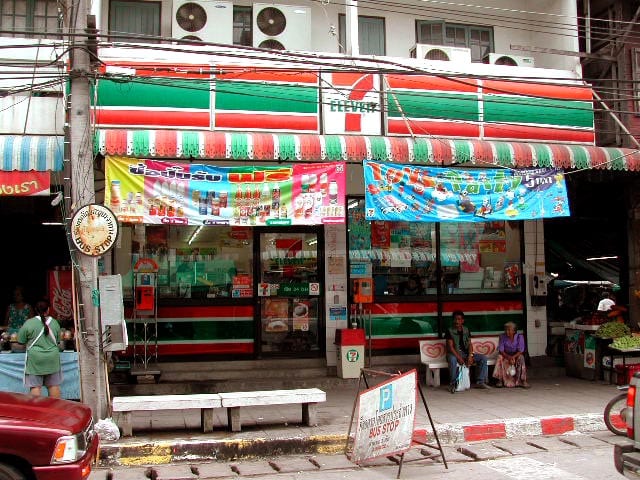
    Trade Minister Rahmat Gobel has reportedly signed a regulation that will ban small, modern retail chains such as Indomaret, Alfamart, Circle K and 7-11, from selling alcoholic beverages, including beers and pre-mixed drinks with less than 5 percent alcohol.

    The regulation, which local media have reported was signed by the minister on 16 Jan., affects mini markets only. Supermarkets and hypermarkets, such as Carrefour, will still be able to sell booze.