Retail News CRM

Tag: mobile payment

  • Mobile payment firms struggle to dethrone cash in Southeast Asia

    Mobile payment firms struggle to dethrone cash in Southeast Asia

    Bui Mai Phuong is an avid online shopper, ordering anything from clothing to personal-care products from her smartphone. But she prefers to pay with cash.

    She is among hundreds of millions of people whom firms such as Softbank Group-backed Grab and China’s Tencent want to win over as they try to tap into Southeast Asia’s burgeoning internet sector.

    More than 70 percent of the region’s 600 million-plus people do not use banks – higher than the global average of about 30 percent – and e-commerce is projected to hit $88 billion by 2025.

    But convincing consumers like Phuong, who lives in Hanoi, could be tricky.

    “I have never tried using mobile payments because I don’t know how to use it and it seems a bit complicated to use,” said Phuong, 36, a manager at a construction material supplier in Vietnam.

    Mobile payments are ubiquitous in China; a consumer can spend a day without using cash at all in Beijing or Shanghai, and even some beggars accept mobile payments. But cash remains king in Southeast Asia.

    Hard currency, paid on delivery, accounted for 44 percent of total e-commerce transactions last year and is likely to remain the most popular payment option for at least the next three years, according to data by research firm IDC.

    “The biggest challenge for users and merchants to adopt cashless is the fact that cash remains ubiquitous, easy to use and inexpensive,” said ride-hailing firm Grab, which has ventured into e-wallets.

    And the mobile payment marketplace in Southeast Asia remains wide open, with no dominant players.

    Indonesia’s ride-hailing firm Go-Jek’s Go-Pay, Singapore-based Grab’s GrabPay, Japan’s messaging app Line’s Line Pay, Momo e-wallet owner M_Service in Vietnam and Voyager Innovations, which operates Paymaya in the Philippines, have all entered the fray. The gaming company Razer Inc has also indicated it is eager to play a role.

    Cash on delivery costs e-commerce businesses more than other payment methods, said Alibaba Group Holding-backed e-retailer Lazada Group.

    For example, sometimes a customer does not have enough cash on hand, or is not home to pay for the delivery. In those cases, the product must be sent back to the seller, adding logistical costs, Lazada said.

    Mobile payments address some of those problems. They can also benefit buyers by keeping payment in escrow and releasing it only on delivery.

    But it can be difficult to persuade users to switch from cash when they earn about $200 on average a month in economies like Vietnam and Indonesia, according to economic data provider CEIC.

    “To break habits of using cash, Grab is creating more daily use cases for cashless payment – commuting, food delivery, paying at food and retail stalls – to drive more usage of the GrabPay e-wallet,” Grab said in an email.

    Mobile payment companies bet they can transform their platforms into financial supermarkets, offering everything from loans to insurance on top of payment options.

    Slow going

    At the moment, usage is spotty. E-wallets will account for 16 percent of total e-commerce transactions in Southeast Asia by 2021, up from last year’s 9 percent, according to IDC.

    In countries like Vietnam, where the informal economy has long been a key part of the social fabric, many consumers do not bother to get a bank account.

    Some want to stay under the taxman’s radar or, like Quang Thi Si, simply do not see the need for a bank.

    Si, a 48-year-old scrap collector near Ho Chi Minh City, said her business is all cash.

    “Sometimes I need to send money to my relatives at home, and I often send in cash through my friends,” she said. “I don’t think I will have a bank account in the future because I don’t think I need it.”

    But Si does have a smartphone. More than 90 percent of Southeast Asia’s internet access comes through mobile devices, according to a Google-Temasek study.

    Even so, in countries like the Philippines, which is known for having some of the slowest Internet speeds in Asia-Pacific, connectivity is a major hurdle for digital payments to clear.

    ‘Late to the party’ 

    Such challenges are likely to pose a setback to Ant Financial and Tencent, which are looking outside China for growth.

    Ant, which has 600 million customers and aims to reach 2 billion worldwide in the next decade, has stepped up investments in the region, including a stake in Thai financial technology firm Ascend Money.

    But its services are largely limited to Chinese tourists.

    “Most of our customers are from China and they are usually very happy to know that we accept AliPay and WeChat Pay. This makes them more willing to spend money too,” said Daphne Tan, a staff member at a shop selling durian-flavored coffee and snacks in Singapore’s Chinatown.

    Tencent plans to make its first foray outside China with an e-payment license in Malaysia for local transactions.

    The Chinese players are “kind of late to the party,” said Michael Yeo, research manager for IDC.

    “By the time they come in with a local version, if they do, the local players will have a significant advantage,” said Yeo.

    Razer, which said last month it would buy the remaining stake in payments processor MOL Global that it did not already own, also signed a deal with Singtel to link its e-payments network with that of the telco.

    Other recent deals in the sector include Go-Jek’s acquisition of three financial technology businesses, while Grab’s purchase of a handful of companies as well.

    “It’s a highly fragmented market. Later on, there will be acquisitions, there will be shutdowns, there will be mergers,” IDC’s Yeo said. “The market will consolidate.”
  • Prepare for a mobile payment revolution among Chinese travelling shoppers

    Prepare for a mobile payment revolution among Chinese travelling shoppers

    Mobile payments will soon overtake cash and credit cards as the preferred payment choice for Chinese travellers shopping abroad, according to a new survey.

    Mobile payments specialist Cancan and financial research authority Kapronasia have published a global study, 2017 Mobile Payment Survey: Chinese Consumers Abroad, covering the impact of Asian mobile payment solutions at point-of-sale worldwide. Over 1,000  Chinese consumers and more than 60 C-level decision-makers from global merchant companies were surveyed.

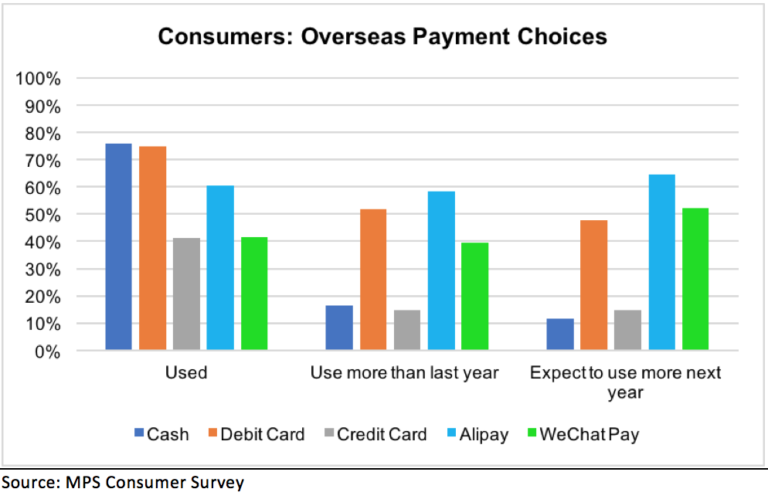
    Among the key findings, the study found that Mainland Chinese consumers expect to spend more with mobile payments such as Alipay and WeChat Pay this year and next year than in 2016 when travelling abroad.

    Most Chinese travellers spent in the range of either US$393–US$786 or US$1,179–US$1,572 for retail purchases on their most recent overseas trip, the report found, while 5.7% spent more than US$6,288.

    Some 67% of respondents reported that they use mobile payments overseas. When consumers were asked about their primary method of payment while overseas, mobile payments represented about 41% of overseas consumption.

    Nearly half of the consumers surveyed made between 10-30% of their overseas shopping purchases with QR code-based mobile payment methods; one third of consumers paid over 50% of their purchases in China with mobile.

    chinese travellers mobile payments survey - Retail in Asia

    Fashion and cosmetics/skincare are among the categories consumers were most likely to purchase with mobile payment.

    The survey found that transaction convenience and the ability to track purchases in real time were the primary reasons for using mobile payments. Not needing to carry cash and credit cards was also appreciated. “You can easily spend days in China without opening your wallet, and consumers expect that too when they are shopping overseas,” the report said.

    The main reasons for not using mobile payments were merchants not offering the facility, as well as consumers’ ignorance that it was possible to use mobile payments when merchants do offer it.

    Alipay, WeChat Pay and Apple Pay are the most popular mobile payment methods. Over 75% of the surveyed merchants accepted Alipay. Over one third of merchants who do accept mobile payments indicated that it contributed to at least 3% or more of their global sales, with some experiencing a share as high as 15-25%.

    Although customer demand is primarily driving merchant adoption of mobile payment (over 80% of respondents agreed that they were reacting to customer demand), retailers also appreciate the speed of transaction and many desire to be seen to be “ahead of the game”.

    Cancan Managing Director Candice Koo: “Global merchants can profit from the mobile payments revolution storming out of the Far East, but they need to focus on the Chinese consumer”.

    “If the overseas market continues to mirror China’s mobile payment growth and development, this will likely change over time. Loyalty and points programmes in mainland China were slow to take off but are now informing an increasing number of merchant’s digital strategy, many of whom all have domestic WeChat official platforms.”

    Cancan and Kapronasia concluded that as well as there being continued growth in mobile spending, there will also be a change in what consumers buy using mobile payments.

    “Although they started out being used for smaller value purchases, mobile payments are increasingly being used for higher value and luxury items,” the report said. “The average transaction value on Alipay went from US$82 in 2015 to nearly US$100 in 2016, an increase of +22%.

    “The implications for overseas merchants are pretty clear: mobile payments have become a way of life for many Chinese and Asians and their habits are extending overseas.”

  • Cashing in on mobile payment

    Cashing in on mobile payment

    Eight years ago, Starbucks developed an app for mobile payments. Today, it is still held up as the gold standard in the US. In Asia’s rapidly developing market, where mobile payment is almost a decade ahead of the West, things are quite different.

    In China, you can mobile pay for everything, from cab fares to a utility bill. In 2015, WeChat registered more financial transactions in a day than PayPal did in 12 months. It is not just China that is adopting the trend – mobile payment is also making massive inroads in South-east Asia as shopping apps gain popularity.

    In Singapore, there are 30,000 retail points accepting contactless payment methods, such as Apple Pay, Android Pay and Samsung Pay. In Indonesia, the most populous country in the region with 250 million people, most of the big traditional retailers are unveiling e-commerce plans of their own.

    In a recent GfK study, The Connected Asian Consumer, consumers here and in Indonesia reported fairly high usage of shopping apps (37 per cent and 35 per cent, respectively).

    This growth is fuelled by affordable smartphones, a massive young and tech-savvy population as well as efforts by governments and telco operators to expand and improve high-speed wireless networks.

    It is only a matter of time before mobile payment goes mainstream.

    Unfortunately for traditional retailers, the age of e-commerce also produced a new consumer – we like to call them the “connected consumer” – and their behaviours are shaping the future of retail.

    In the GfK FutureBuy survey last year of 20,000 consumers in 20 markets, it was found that shoppers are becoming less loyal to any one retailer.

    Almost half (46 per cent) of all consumers (aged 14 to 65) stated that they are less loyal when shopping. This figure rises among the youngest consumers – to 53 per cent of Gen Y (aged 18 to 29) and 58 per cent of Gen Z (aged 14 to 17).

    For retailers who understand the connected consumer, there are opportunities to stay ahead of the competition – and mobile payment is a huge part of it.

    Despite becoming less loyal, many connected consumers expect an omni-channel shopping experience, where they interact with a brand. Connected consumers in Asia-Pacific seek the best of both worlds.

    For example, shoppers in China are the most likely to embrace omni-channel shopping – 71 per cent shop both online and in-store, while Australian shoppers are the most likely to shun online shopping (62 per cent shop exclusively in-store).

    In contrast, Indians lead the way in online shopping with 23 per cent shopping the category exclusively online.

    NEW REALITY

    Therefore, it is important for retailers to understand the new reality of the omni-channel consumer and know that the “whatever, whenever” culture demands that user experience is seamless across all devices.

    If retailers do not understand this, customers will simply delete their app and move on.

    At the same time, using analytics, retailers can receive customer data to offer more personalised services. In turn, this presents an opportunity to generate long-term relationships.

    But it is important to note that not all connected consumers are the same.

    For example, older consumers are not as comfortable with sharing personal information as younger consumers.

    Understanding the shopper’s purchase journey is easier these days, with research offering detailed information on the route shoppers take when making a purchase as well as ways in which online and offline touchpoints influence their decisions.

    We believe that brands that understand, respect and protect the consumers’ individual boundaries will earn their loyalty.

    As mobile payments continue to grow in Asia-Pacific, businesses in sectors such as financial services, cybersecurity and telecommunications stand to gain, and they can evolve to support the changing landscape.

    Loyalty is great, but to really retain customers in today’s omni-channel space, the shopping experience is equally important.

    To connected consumers, simplicity and convenience is paramount. Not only do they expect everything quickly, they also lose their patience faster.

    For large retailers, mobile payment offers the opportunity to segment and target consumers much more effectively, with highly-personalised offers.

    Discounts and offers can be integrated into mobile payment, replacing the need for physical coupons and entering information into a terminal.

    Connected consumers will wave goodbye to the traditional checkout queue and benefit from customised rewards.

    Mobile payment also offers a chance for small retailers to move into a new era of retailing. Freed from high transaction fees and with new ways to connect with consumers, they can embark on the kind of personalisation and targeting that is usually the privilege of larger players.

    With e-commerce here to stay, there is plenty of potential for retail businesses to leverage research intelligence to adequately design and develop strategies to target this group of consumers.

  • Myanmar mobile payment firm ONGO gets new investor

    Myanmar mobile payment firm ONGO gets new investor

    National Bank of Canada (NBC) has acquired a 22% stake in Myanmar-based mobile payments firm ONGO for an undisclosed sum.

    ONGO is the consumer facing brand of Ronoc Asia, a subsidiary of the emerging markets investment business Ronoc. It offers retailer payments solutions, payroll programs and direct to consumer services leveraging payments technology.

    ONGO currently employs over three hundred people in Yangon and is expected to grow to five hundred by year end.

    “The addition of National Bank of Canada is an important milestone for our business. We have aggressive growth plans for Myanmar and have set ourselves a goal of providing over one million consumers with access to finance over the next three years,” said Michael Madden, the Founder and Chairman of Ronoc Asia/ONGO.

    “The addition of NBC as a strategic investor will strengthen our capabilities and accelerate our timelines in Myanmar as well as our expansion to other markets in the region.”

    “National Bank of Canada is proud to become a partner of Ronoc Asia/ONGO. This investment in fintech complements the activities we already have in the ASEAN zone through our subsidiary ABA Bank, in Cambodia,” stated Louis Vachon, President and Chief Executive Officer of National Bank of Canada. “We look forward to contributing to ONGO’s success.”

  • Visa, Amex to launch Apple Pay in HK

    Visa, Amex to launch Apple Pay in HK

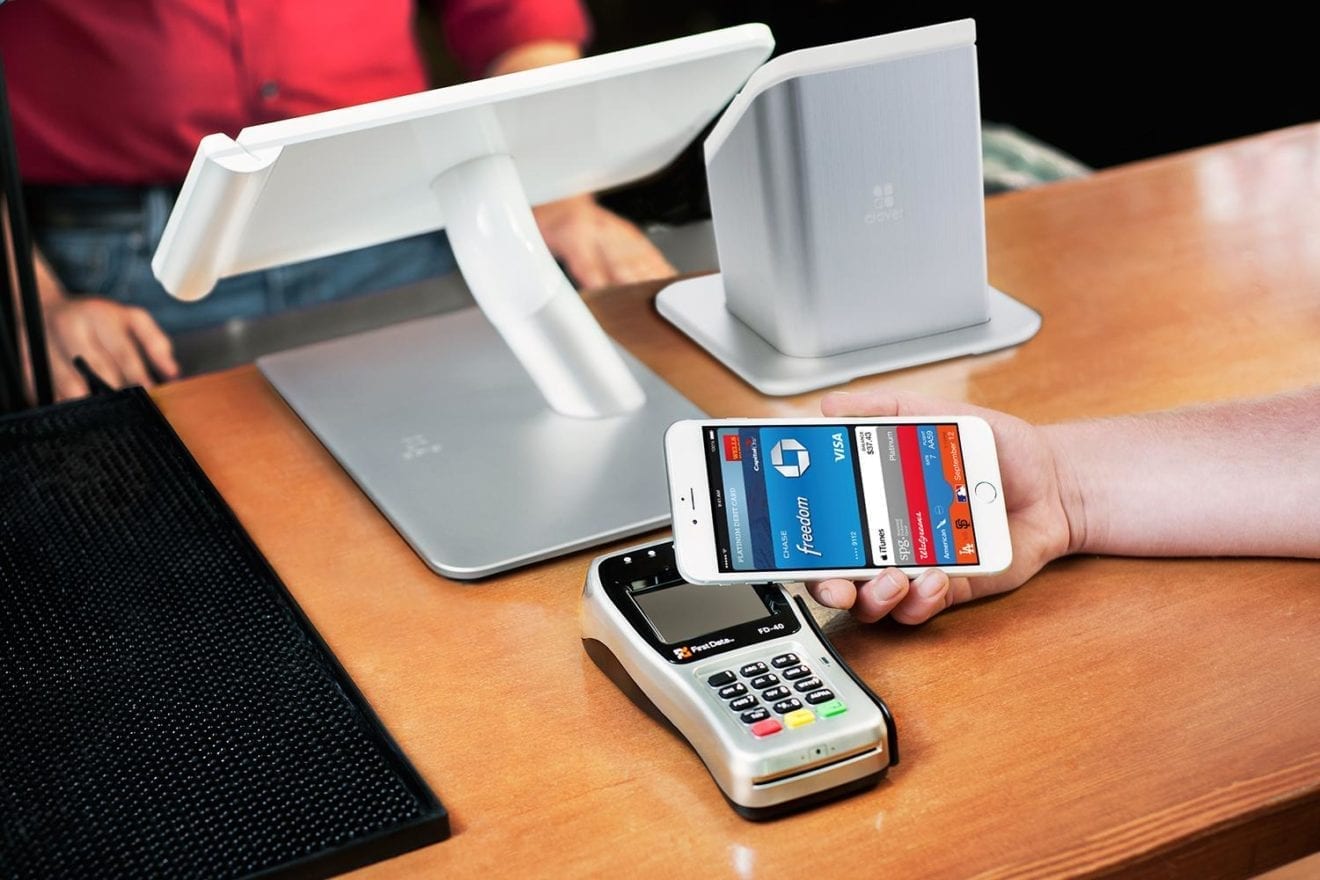
    Visa and American Express have both revealed plans to support mobile payment service Apple Pay in Hong Kong starting this summer.

    Customers in the region with American Express and Visa cards will be able to use Apple Pay to pay for purchases where contactless payments from the credit or charge cards are accepted.

    Apple Pay supports the iPhone 6s, iPhone 6s Plus, iPhone 6, iPhone 6 Plus, iPhone SE and Apple Watch for in-store payments, and these devices plus the iPad Air 2, iPad mini 3, iPad mini 4 and iPad Pro for payments from within apps.

    The platform uses the Visa Token Service to ensure card numbers are not stored on the device or on Apple servers.

    Instead a unique device account number is assigned, encrypted and securely stored in the Secure element on a user’s device device. Each transaction is authorized with a one-time unique dynamic security code. Customers can use Apple’s TouchID fingerprint authentication system to approve payments.

    “Visa is proud to support issuers in Hong Kong who want to launch Apple Pay to bring their customers a more secure and convenient way to pay. In Hong Kong contactless payments have become a necessity for everyday life,” commented Caroline Ada, country manager for Visa Hong Kong and Macau.

    “American Express was the first card issuer to bring Apple Pay to Card Members in the Asia Pacific region. Our customers love the ease and security of Apple Pay in their daily spending, dining and leisure activities,” added American Express VP and general manager for card services for Hong Kong and Taiwan Susanna Lee.

  • The rise of mCommerce in Malaysia

    The rise of mCommerce in Malaysia

    Online payment gateway provider iPay88 has seen a sharp rise in mobile traffic with its total online payment transactions representing close to 70% of the Malaysian market.

    Chan Kok Long, executive director of iPay88 said this was refelctive of the growth of mCommerce in the market.

    In year 2015, iPay88 recorded that 3.7 million online shoppers who made purchases through its systems used mobile devices. A year ago it was only 2.0 million.

    It is also seeing a rise in merchants actively promoting mobile purchases in 2016 following the mCommerce waves. In the last few years, the percentage of mobile traffic have also increased substantially, with the number being 27% in 2014, to 38.4% in 2015, up until 48.6% in 2016 so far.

    In the first quarter of 2016 alone, 1.6 million shoppers have purchased through their mobile devices on iPay88, the company said.

    With the rising number of mobile device users increasing, the mCommerce trend is predicted to follow suit. Mobile penetration has reached 136% in 2015, with 47% of Malaysians using their smartphones to online shop.

    Statistia, one of the leading statistics companies on the Internet projects the value of retail goods purchased via mobile to exceed USD$1 billion in 2018. Paypal has also cited that 28% of the 4.9 billion payments it processed in 2015 were from mobile devices.

    A survey on mobile shopping last year ranked Malaysia third in terms of mobile shopping growth rate in Asia, at over 20%, from 25.4% in 2012 to 45.6% in 2014. Many popular international online stores including Amazon, Apple, Walmart and Google Play have recorded an increasing number of consumers purchasing on their mobile.

    In Malaysia, 35% of the purchases on smartphones go to ticketing, while 29% goes to marketplace/group buying, but airline tickets are the most commonly purchased items on Malaysian tablets.

    Additionally, the rise of new platforms such as Uber and Grabcar that leverage on mobile booking and transactions also contribute to the rise of popularity in mobile usage and purchasing.

    “No doubt the availability of cheap smart phones and laptops have made the Internet accessible to a whole new demographic. The advent of tablets and smart watches has also broadened the spectrum of Internet usage,” Chan said.

  • Vodafone’s M-Pesa surpasses 25m active users

    Vodafone’s M-Pesa surpasses 25m active users

    Vodafone has announced that its M-Pesa mobile money service now has more than 25 million active customers.

    Across the M-Pesa footprint in Africa, Asia and Europe, active M-Pesa customers increased by 27.1% to 25.4 million for the 12 months ending in March.

    Vodafone offers M-Pesa in 11 countries, having most recently launched in Albania and Ghana. The service debuted in 2007 in Kenya and Tanzania.

    M-Pesa is also available in India, South Africa, Afghanistan, Mozambique, Lethoso, the Democratic Republic of Congo and Romania.

    In India, Vodafone recently launched an M-Pesa smartphone app to allow customers to pay for goods on Ebay, as well as taxi fares and train tickets on India’s national railways.

    Over the past 12 months Vodafone has entered a series of deals with partners to allow for cross-border and cross-service transactions using M-Pesa.

    These include global agreements with the international money transfer hubs TransferTo and MFS, as well as an arrangement to allow direct-money transfer between M-Pesa and users of MTN Mobile Money in seven East African countries.

    “I am delighted and proud that M-Pesa has reached the 25 million active customers milestone,” Vodafone group director of mobile money Michael Joseph said.

    “M-Pesa continues to expand, evolving beyond traditional money transfers to encompass savings and loans, payment of salaries and benefits, settlement of utility bills and school fees and to enable vital health and agricultural solutions.”

  • Singapore’s StarHub adds support for Apple Pay

    Singapore’s StarHub adds support for Apple Pay

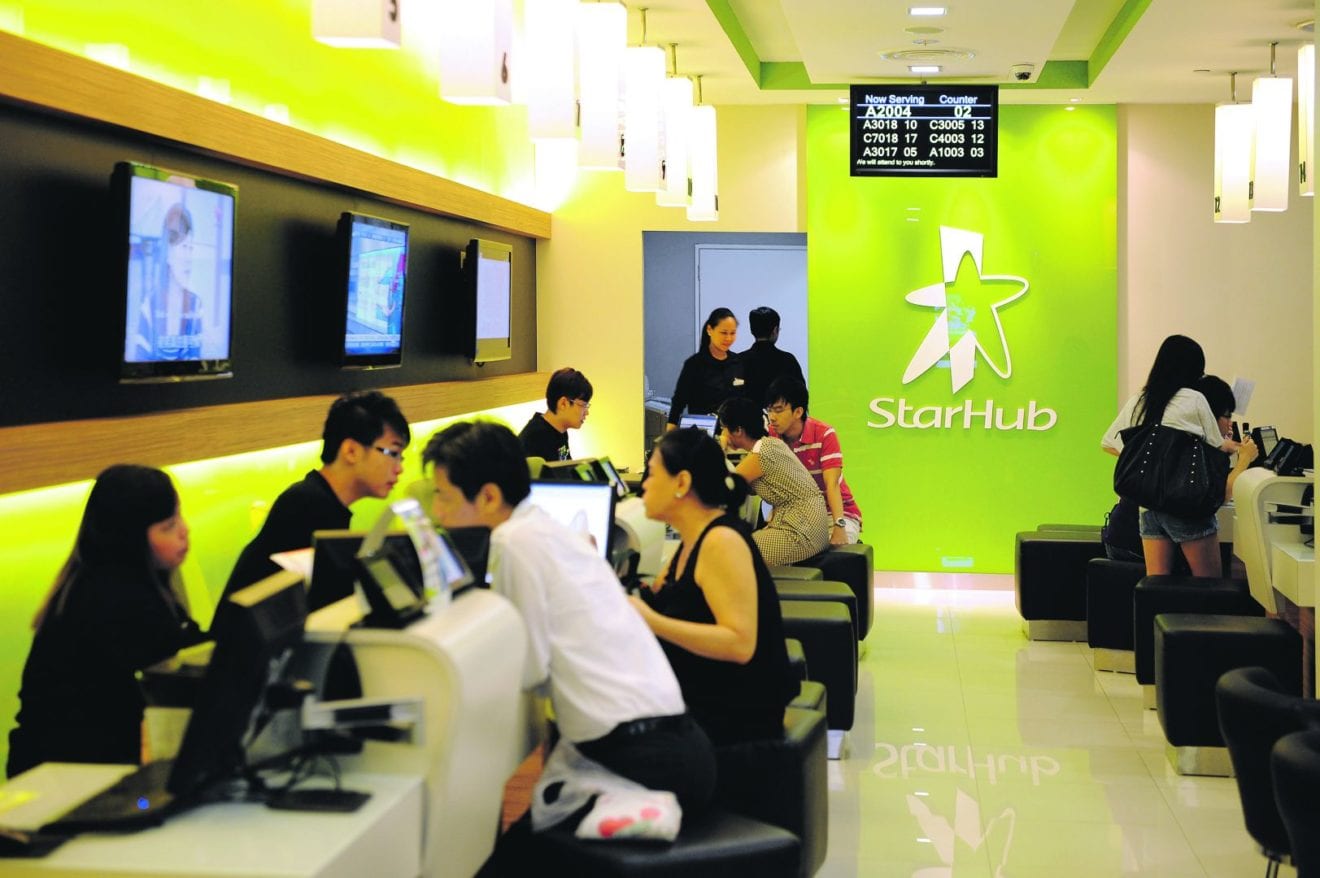
    Singapore’s StarHub has introduced the ability for its customers to use Apple Pay for secure mobile payments.

    When customers use a credit or debit card with Apple Pay, the actual card numbers are not stored on the device, nor on Apple servers.

    Instead, a unique Device Account Number is assigned, encrypted and securely stored in the Secure Element on the device. Each transaction is authorised with a one-time unique dynamic security code.

    “Digital commerce is fast catching on with Singapore consumers, and we want to be at the forefront of enriching our customers’ lifestyles using technology,” StarHub’s head of business strategy Yeong Mun-Ling said.

    “Being among the first Apple Pay-enabled merchants in Singapore, we are pleased that customers can now conveniently tap to pay at StarHub Shops using their iPhone and Apple Watch,” said Yeong.

    In stores, Apple Pay works with iPhone SE, iPhone 6s, iPhone 6s Plus, iPhone 6, iPhone 6 Plus and Apple Watch.

    Online shopping in apps accepting Apple Pay can be authorized with the touch of a finger with Touch ID.

  • Seems customers leave bigger tips if they use mobile payment apps

    Seems customers leave bigger tips if they use mobile payment apps

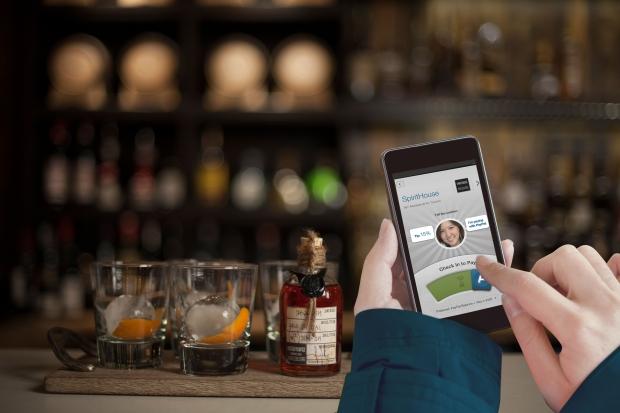
    It’s likely only a matter of time before mobile payment apps become more popular among consumers, and there are some people very excited: restaurant waitstaff and bartenders. Both mobile payment app providers and restaurants have noticed an uptick in tips if consumers use their smartphones to make payments for food and drinks.

    Customers may need to wait for their food order to be completed, but don’t have to just sit and wait to pay. In addition, some apps allow restaurant patrons to check their bill in real-time, and even split it among the number of guests.

    “We do see increase at bars where people haven’t been tipping,” said Michelle Songy, co-founder of the Cake mobile pay app, in a statement to CNBC. “I’d like to think as we are trying to make the payment experience a bit more fun, easier or quick it leaves you with a better experience.”

    Mobile phone and tablet users are expected to make 72 billion transactions in 2015, and that number will increase up to 195 billion annually by 2019, according to Juniper Research.

  • Philippines’ mobile wallet providers announce interoperability

    Philippines’ mobile wallet providers announce interoperability

    Mobile money interoperability in the Philippines took a step forward with the successful integration of the digital payments mobile app of PLDT and Smart Communications’ Paymaya Philippines with Globe Telecom’s mobile money service GCash.

    The interoperability agreement is part of an initiative of the GSM Association (GSMA) and the Philippine Central Bank in making mobile money services more inclusive and accessible to more people in the country.

    With the interoperability in place, users of the PayMaya app can soon send funds to users of other mobile money systems, including GCash, and vice-versa. This move is seen to boost the growth of mobile money usage in the country, and in turn, expand the local digital commerce ecosystem.

    “This development comes on the heels of the launch of the National Retail Payment System (NRPS) Framework in December led by the BSP and fully supported by the industry, which aims to create a “safe, efficient, reliable, and affordable electronic retail payment system that is interconnected and interoperable,” said Bangko Sentral ng Pilipinas (BSP) Deputy Governor Nestor A. Espenilla Jr. in a statement.

    Aside from domestic remittances, GCash and PayMaya are also expected to collaborate on merchant payments, bulk payments, government-to-person payments (G2P), and person-to-government payments (P2G), among others.

    “We are confident that more consumers would be more open to adopt mobile money services if they can send cash to anybody regardless of what mobile provider they are using especially if this means more efficient services and lower prices,” John Rubio, President and CEO of Mynt, a fully-owned financial services subsidiary of Globe, said in a media statement.  Mynt is also the mother company of G-Xchange, Inc. which operates GCash.

    Through Paymaya and GCash, customers no longer need to own a credit card or even have a bank account to make financial and e-commerce transactions.

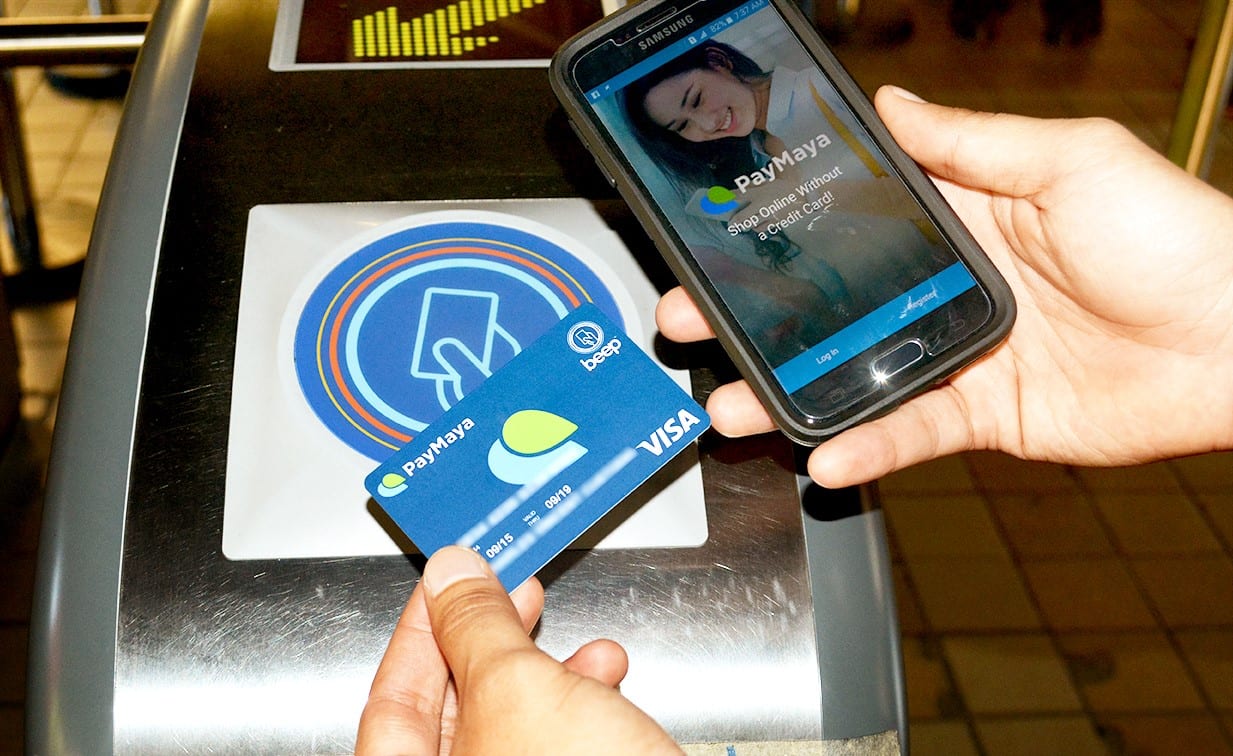
    Paymaya was launched in August 2015 as a virtual Visa card that resides in a mobile app, allowing people to purchase online, send money, send telco airtime load. Soon, it envisions to allow users to pay bills online and do other types of transactions. A physical card can be linked to the virtual card for use for purchases in physical stores and pay for train rides.

    GCash, on the other hand, was launched in 2004 as a micropayment service of millions of Globe subscribers. It transforms a mobile phone into a virtual wallet for safe, secure, and hassle-free mobile money transactions such as the purchase of prepaid load, bills payment, money remittance, donations, online shopping, among others.

    “This is a step toward advancing the future our digital economy. Interoperability is but a natural progression in the ongoing evolution of financial technology services in the country,” said Orlando B. Vea, President and CEO of PayMaya Philippines.

    BSP Governor Amando Tetangco Jr. cited in an earlier speech that studies have shown that shifting from paper to electronic–based payment system could generate annual savings up to one percent of the country’s gross domestic product (GDP).

    At present, there are 10 GSMA active operators with strong money deployments, three of which – Sri Lanka, Pakistan, and Tanzania, are already practicing interoperability since 2014.

    Committed markets, on the other hand, include the Philippines, Paraguay, and Myanmar while Rwanda, Madagascar, Thailand, and Jordan already made a pilot launch last year.

    The fifth annual ‘State of the Industry Report on Mobile Money’ released by GSMA during the Mobile World Congress in Barcelona, Spain showed that there are more than one billion mobile money transactions in December 2015.

    The report noted that mobile money is available in 85 percent of countries where most of the population lack access to formal financial institutions. Moreover, there were 29 cross-border mobile money initiatives connecting 19 countries in 2015, with cross-border remittances growing 52 percent, by volume, over the last year.

    “Mobile money is driving social and economic impact for millions of people in emerging markets,” said John Giusti, Chief Regulatory Officer, GSMA. “Over the last decade, mobile money has done more to extend the reach of financial services than traditional bricks and mortar banking were able to do over the last century. With 411 million mobile money accounts today, mobile is an increasingly critical platform for expanding financial inclusion globally.”

  • Cross-border deals, connected shoppers, and mobile payments

    Cross-border deals, connected shoppers, and mobile payments

    Black Friday, the day after the Thanksgiving holiday in the US (celebrated on the fourth Thursday in November), and Cyber Monday, the first Monday after Thanksgiving, mark the start of the year-end holiday shopping season.

    Figures from the United States National Retail Federation shows that over 151 million consumers made purchases online and in physical stores during the most recent Black Friday and Cyber Monday shopping seasons.

    The trend, however, is becoming global. In Asia, where connected shoppers are constantly searching for the best deals, often crossing physical and geographical boundaries, Black Friday and Cyber Monday have been integrated into the retail experience. This, despite the popularity of China’s own Single’s Day online shopping festival that is also being adopted by many retailers across the region.

    Warren Hayashi, President, Asia-Pacific, Adyen, said this is partly due to the growth of cross-border e-commerce, which is giving Asian consumers access to both US and European retailers, who market Black Friday and Cyber Monday promotions in the region and ship to Asia.

    The trend has also been driven by the growing reach of US e-commerce giants like Amazon, which has meant that e-commerce companies based in other markets, such as Lazada, Qoo10, Rakuten, Alibaba, and Zalora, are rolling out similar promotional periods.

    “An interesting effect of this trend is that rather than adversely affecting transactions during the non-promotion period, we are seeing that seasonal shopping promotions actually expand the size of the market. They provide consumers with even more opportunities to shop,” he explained.

    Ayden’s data shows that in Asia, sales volumes increased by 170 percent in a year-on-year comparison over the course of the Black Friday weekend. Meanwhile, shoppers in China spent twice the amount during Black Friday 2015 as compared to the same period in 2014. In Japan, the average transaction value increased by 50 percent.

    Interestingly, the payments industry for online and offline retail is also innovating to keep up with these developments in the retail scene. Ayden sees that companies are also going global with a payments first approach.

    “For example, we have Asian merchants expanding into Europe with their English-language website and local payment methods, such as iDEAL in the Netherlands (which accounts for over 60 percent of transaction volume in that market), SOFORT in Germany, and so on,” Hayashi shared.

    “Likewise, we have global customers selling in Asian markets from their global website, but offering targeted payment methods such as Alipay, which are dynamically offered at the checkout stage according to the shopper’s geographical location. This is a huge opportunity for retailers to expand globally,” he added.

    Interestingly, he said one of the most innovative payments technologies that is changing the user experience is the zero-click transaction – which takes place in the background, without any action required by the customer. An example is how Uber is accepting payments.

    “When passengers take an Uber, they do not need to take any specific action for the payment to be made, everything happens in the background. This kind of frictionless connectivity brings businesses closer to their customers and will spread rapidly,” he explained.

    In 2016, Hayashi sees the retail landscape in the region as going more on mobile, especially in the area of payments.

    Citing Ayden’s own data – tracked quarterly through the Mobile Payments Index – shows that Asia-based payment methods such as Alipay, UnionPay, and JCB have among the highest proportions of mobile payments globally.

    “With everything they do around payments, retailers should simply be asking themselves, how does this improve the customer experience? One key goal should be to provide a frictionless payment experience across channels,” he said.

    “For mobile, along with optimizing the size of the page, many merchants find that a “less is more” approach drives conversion increases, with page layout minimized to ensure the smoothest possible payment flow,” he continued. “It’s also important to remember that the checkout stage of the shopper should be the beginning of an on-going relationship with the consumer. Merchants that have created a frictionless checkout experience, regardless of the channel, see sustained increases in their repeat customers and purchases.”

  • Samsung tests mobile payment service

    Samsung tests mobile payment service

    Samsung has launched a short, live beta test of its new mobile payment service.

    Samsung Pay, developed by Samsung Electronics, will soon be launched in its home market soon as a beta service for a 36 day trial period.

    Samsung Card says it will recruit beta testers for Samsung Pay until July 10. The testers will experience the Samsung Pay service at various major offline member stores of Samsung Card from July 15 to August 20.

    The card company will provide 10,000 points to those beta testers who spent more than 50,000 won through the payment solution. In addition, the company will hold a special event offering up to 50,000 points to active beta testers who use the service often.

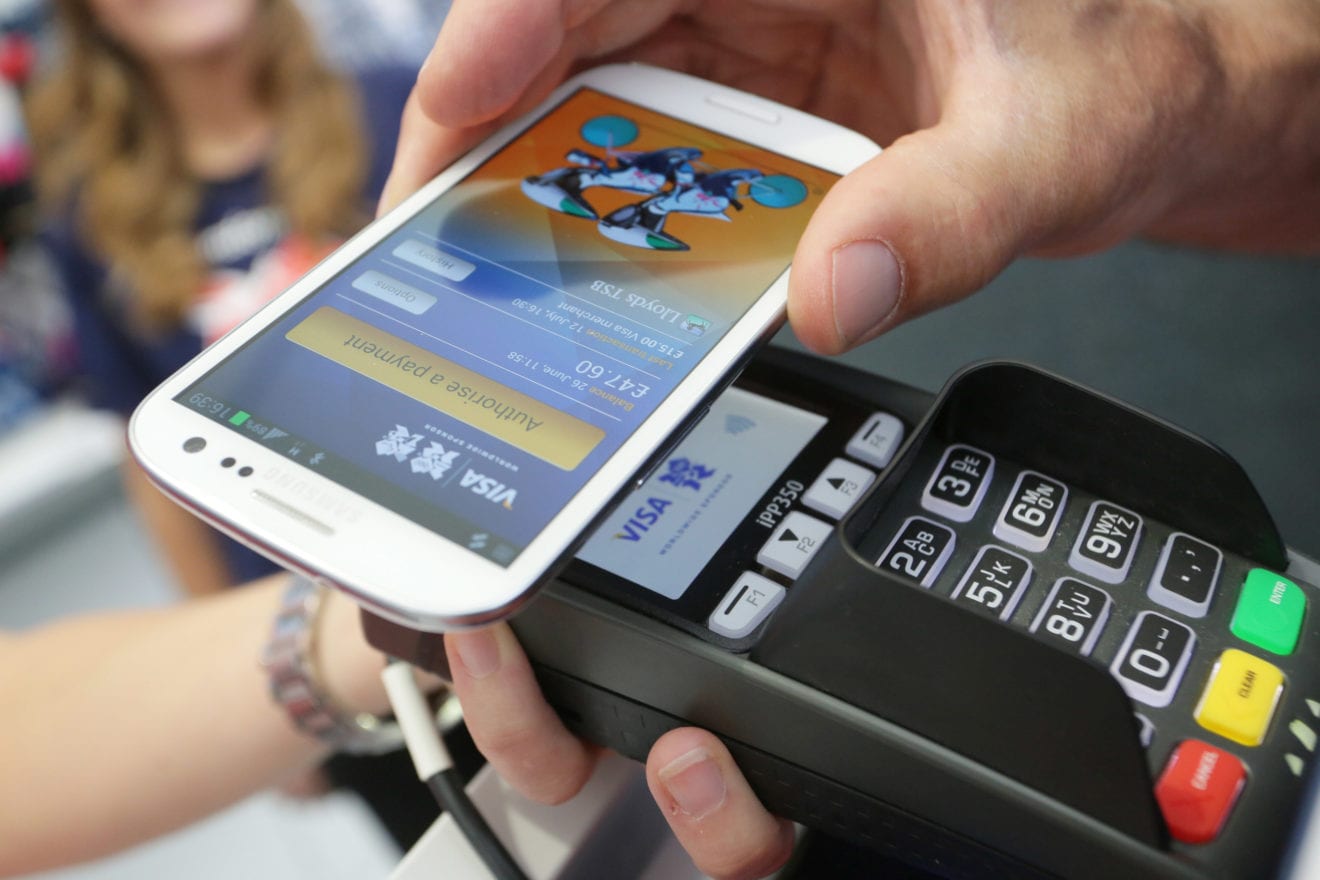
    Samsung Pay, which is to be available in September, stands out from other competitors as the service supports virtually all forms of payment – near field communication (NFC), magnetic secure transmission (MST) and barcode technologies – which reaches far more point-of-sale devices than those of its rivals.

    Currently, other mobile payment services are used mainly online as they lack offline affiliates.

    Meanwhile, Samsung is planning to introduce the payment platform in the US later this year to compete with overseas mobile payment services like Apple Pay and Alipay.

  • Who will dominate Korea’s mobile payment market?

    Who will dominate Korea’s mobile payment market?

    South Korean heavyweights ranging from Internet to retail to tech companies are all paying keen attention to preoccupy the mobile payment system market, which hasn’t yet taken off.

    Since Daum Kakao first ignited the competition by rolling out its mobile payment Kakao Pay last year with its 4 million subscribers. Korea’s largest portal operator Naver unveiled Naver Pay this July, by joining hands with 50,000 partner stores.

    Retail giants are also following suit. Lotte and Shinsegae are currently developing L Pay and SSG Pay respectively in order for consumers to more conveniently buy goods with retail technologies. They plan to let customers to save all the information of credit cards, gift cards, cash and coupons on smartphones to easily pay for things. Membership points will be accumulated on smartphone apps.

    Smartphone conglomerates are no exceptions here. Korea’s largest smartphone maker Samsung Electronics is set to unveil its new mobile payment system Samsung Pay in September. It is expected to be embedded in its latest smartphones like Galaxy S6 and Galaxy S6 Edge. As the tech giant recently acquired Boston startup LoopPay, which has magnetic secure technology, Samsung Pay will be compatible with existing magnetic card readers. This way, stores do not have to change their readers separately to use the service.

    In the smartphone market, Samsung has to compete with its global rivals Apple and Google. American search giant Google unveiled Android Pay at its I/O Conference 2015 late in April at San Francisco. Samsung’s arch rival Apple unveiled Apple Pay last October, and is now in discussion with China’s biggest e-commerce company Alibaba in a bid to make forays into the China’s market.

    Market watchers say the mobile payment system, which heralds the opening of the Fintech market – a combination of finance and technology – will have a great impact on the local financial market. Commercial banks have so far been in charge of small sum transaction but it is likely to be shifted to non-financial institutions if the mobile payment service takes off.

    Daum Kakao’s Kakao Pay, which is the first mobile payment service in Korea, already saw more than 4 million subscribers last month. Though it still does not have a great impact on the market with a limited number of partner stores, analysts say they have secured a meaningful number of clients.

    Korea’s financial watchdog said when the number of Kakao Pay’s subscribers reach 2 million, it will have a significant meaning as a financial transaction tool. Currently, no official figure of daily transaction has been unveiled.

    The local mobile payment market is expected to continue to grow, according to market observers. In a nation dubbed as IT powerhouse, many users still find it difficult to buy goods online as they have to install various programs such as Active X and keyboard security programs. Also, they have to type in their credit card information or personal information every time they pay.

    However, the emergence of the mobile payment system is removing all the hassles and only requires simple authentications such as smartphone numbers or password.

    According to research firm Gartner, the local mobile payment service market came to around 3.8 trillion won in the fourth quarter of last year, up 65 percent during the same period of the previous year. The global mobile payment service market also continued to grow around 30 to 40 percent annually for the past years. It would reach around 721 trillion won by 2017.

    “There is not yet a dominant player in the local mobile payment service market. Thus, fierce competition among tech firms hoping to preoccupy the market is expected in the second half of this year,” according to a market observer.