Retail News CRM

Tag: OCBC

  • OCBC Cycle 2019 Expands On Green Initiatives

    OCBC Cycle 2019 Expands On Green Initiatives

    The eleventh edition of OCBC Cycle featured new initiatives associated with the environment, adding on to those implemented last year.  About 6,800 cyclists, ranging from casual riders to competitive athletes, participated in the OCBC Cycle event held on Sunday. The event’s eleventh edition expanded on its green initiatives from previous years.

    Cycling is a green sport.  I am especially glad that, this year, we have planned seven new initiatives associated with OCBC Cycle for the environment. Some are modest in scope, but it is our belief that every small thing we do matters, said Samuel Tsien, Group CEO of OCBC Bank in a media statement.

    Last year, OCBC Cycle engaged the help of the Singapore Sports Hub to recycle the plastic bottles that thirsty cyclists use by the hundreds. With the increased focus on environment conservation efforts, OCBC Cycle retained the bottle-recycling arrangements and expanded on its green initiatives this year.

    These include stopping the usage of single-use plastics in its event pack, replacing trophies for the OCBC Cycle Speedway Championships with reusable steel tumblers and used plastic containers into useful items, such as tote bags and furniture.

    Our event banners will be repurposed to make useful items such as tote bags; we will compost all fruit peels to make fertilizer.  Our goal is to work with the Singapore Environment Council to be the first event in Singapore to achieve the ‘Eco Event’ certification, added Tsien.

  • HSBC Gets New Trade Finance Head from OCBC

    HSBC Gets New Trade Finance Head from OCBC

    The move comes as HSBC Singapore looks to strengthen its regional coverage and increase its headcount across its entire business by more than 10 percent over a three-year period from 2018.

    HSBC Singapore on Monday announced the appointment of Tze Tze Lee as the bank’s head of product and propositions, a new position created within the bank’s global trade and receivables finance (GTRF) team.

    Lee began her new role on April 29 and reports to GTRF country head Iain Morrison and Sanjay Tandon, the Asia-Pacific head of product and propositions.

    According to her LinkedIn profile, Lee was previously head of Trade Finance Product Management at OCBC Bank, where she worked for two and a half years. Prior to that, she spent five years at Swedish commercial group Skandinaviska Enskilda Banken, where she was responsible for its product management of Cash Management and Trade Finance business. She was also employed by DBS Bank for 11 years, including as head of supply chain financing.

    HSBC Singapore recently completed a live and fully digitised trade finance transaction on a scalable blockchain platform and a fully digitised end-to-end trade finance transaction.

  • Paperless Trade Financing an Inevitability

    Paperless Trade Financing an Inevitability

    The paper-filled world of trade financing is ripe for reform as the expertise of forgers in faking documents used by banks is forcing the industry to digitalize.

    Trade financing is being forced into the digital age because of the scale and expertise of forgery, said Ng Chuey Peng, Oversea-Chinese Banking Corp’s (OCBC) managing director, and head of global commodities finance, in an interview with Bloomberg.

    The widespread use of paper in trade financing – to establish the existence, ownership, and provenance of goods – stands in contrast to the high-tech world of finance, but is critical for banks to issue loans for trades. Digitalization and high levels of security can improve efficiency and help reduce fraud in trade finance by removing paper documents that are often manipulated.

    Ng said that OCBC is currently working on projects «that leverage technology in order to reduce the use of paper in commodities trade finance,» without providing further details.

    OCBC started its trade finance unit in 2014. Since then, it has tripled its number of trade financing customers, Ng said, Bloomberg reported. She added that the bank will soon add a Hong Kong and U.S.-based team for this business.

  • DBS Partners Sinosure for BRI Projects

    DBS Partners Sinosure for BRI Projects

    DBS Group has signed a cooperation agreement with China Export & Credit Insurance Corporation, adding to the list of banks that are partnering Sinosure for projects under the Belt Road Initiative.

    DBS Group Holdings on Monday announced that it has partnered with Sinosure, the only state-funded Export Credit Agency conducting export credit insurance business in the People’s Republic of China. It joins OCBC Bank, who last week announced a similar partnership agreement.

    «Through signing the cooperation agreement with Sinosure, we will strengthen our partnership and increase the depth of our business with mainland China by facilitating project finance, and investment and trade opportunities especially with partners in ASEAN. We look forward to helping companies capitalize on the numerous business opportunities offered under BRI,» said DBS Singapore Country Head Shee Tse Koon.

    Under the cooperation agreement, DBS and Sinosure will collaborate on projects under the Belt and Road Initiative, especially those from ASEAN, by leveraging each other’s strengths in trade and investments and in-market experience.

    Sinosure will provide credit insurance for DBS’ mid and long-term financing activities for projects in the fields of marine engineering, infrastructure construction, energy, chemicals and textiles, aerospace, as well as services and technology.

  • Millennials in Singapore eshew power and famefor self-fulfillment and caring for the community

    Millennials in Singapore eshew power and famefor self-fulfillment and caring for the community

    The majority of Singapore millennials are extremely passionate about social causes such as human rights, poverty and helping the elderly, and prefer to gain life experiences when they have the financial means, rather than physical possessions.

    These key insights of millennials were revealed in the inaugural annual FRANK by OCBC survey, the FRANKly Asked Questions, which aims to understand and track four psychographic variables – values, attitudes, interests and desired experiences – of millennials over time. Conducted between January and February 2019, 866 students and young working adults aged 16 to 29 years old were asked a total of 50 questions in an online survey. Forty-five per cent of the respondents were students from all Singapore universities and polytechnics.¹

    An integrated banking programme for millennials in Singapore

    OCBC Bank created the FRANK by OCBC banking programme in 2011. It remains the only programme which provides millennials with banking products and solutions designed for them as they go through milestones in life as tertiary students, to entering the workforce as young professionals. FRANK by OCBC offers millennials deposit accounts, credit and debit cards, insurance, investment products and study loans. The other programme activities in place today include:

    • Financial literacy seminars organised regularly for FRANK by OCBC customers to learn how to invest and manage their finances
    • Helping youths give back to the community

    o   Organising youth dives to clean up the reefs of plastic waste

    o   Supporting campus programmes such as at Prinsep Street Residences, where SMU students organise overseas Community Involvement Programmes and programmes to support the elderly in the Bras Basah area

    • Helping youths prepare for future careers

    o   FRANKpreneurship – learning human-centred design and start-up business principles as they are mentored by The Open Vault at OCBC and different teams in OCBC Bank to tackle real banking challenges

    Insights from the FRANKly Asked Questions survey will help FRANK by OCBC develop more comprehensive programmes on financial literacy and beyond to meet millennials’ holistic needs. They will include:

    • Helping youths to build their wealth

    o   Looking to introduce new investment and insurance products which will be affordable for youths

    o   Organising financial seminars with partners such as SGX to learn the basics of investing

    • Helping youths to raise awareness of environmental issues

    o   Supporting #noplastics initiatives by distributing reusable tote bags at the NUS FRANK store and Cheers and FairPrice outlets at NUS

    Mr Dennis Tan, OCBC Bank’s Head of Consumer Financial Services Singapore, said: “The ‘FRANKly Asked Questions’ is the first FRANK by OCBC survey that we will be conducting annually. The survey has revealed insights into the psyche of millennials today and the values and attitudes they hold dear. In addition to the deep and rich insights that we already have from banking with one in two youths in Singapore, this enables us to tailor products and services that they will find useful at every stage of their lives and help achieve their aspirations.”

    Key Insights from FRANKly Asked Questions (see attached slides)

    Youths are motivated to discover their inner selves, care for their family and society, and are less likely to be materialistic in nature

    o   86% of millennials are motivated to understand their inner selves, compared to being famous (32%)

    o   3 in 4 millennials are concerned about their parents’ finances for retirement, and find it important to help others

    o   Less than half of millennials want to gain physical possessions when they have the money

    They understand the importance of a well-rounded education, value work-life balance at the workplace, and are practical

    o   82% of millennials feel that internships and working experience is crucial; 73% agree that getting a degree is a necessity

    o   Work-life balance is their top consideration for an ideal job

    o   83% of millennials want to secure a job with regular income, rather than start a family (46%) or start a business (37%)

    o   70% of millennials will only consider marriage once their career is stable

    They are generally positive in their financial attitudes, but more could be done to keep them informed and educated about investments and insurance

    o   41% of millennials struggle to stick to their saving plan

    o   While 69% of millennials want to start buying insurance policies and 71% want to start investing, less than half of millennials consider themselves knowledgeable about insurance and investments

    They are interested in bigger societal issues and new technologies, but are less interested in entrepreneurship and freelancing

    o   The top 5 most important social causes millennials care about are human rights (82%), poverty (81%), the environment (79%), helping the elderly (79%) and mental health awareness (79%)

    o   Millennials are more excited about the Internet of Things (73%) and Artificial Intelligence (62%) than going cashless (59%) or self-driving cars (57%)

    o   Less than half of millennials are interested in starting a business in the next five years, or being a freelancer

    They value gaining life experiences to value-add to themselves, and are constantly seeking to broaden their horizons and skillsets

    o   82% of millennials say gaining life experiences will be a priority when they have the financial means

    o   82% want to maintain relevant skillsets, which is their top motivation for pursuing higher education

    o   76% like to try new and different things, and half of them often try out new and trendy restaurants

    New ‘borderless’ FRANK Store at NUS

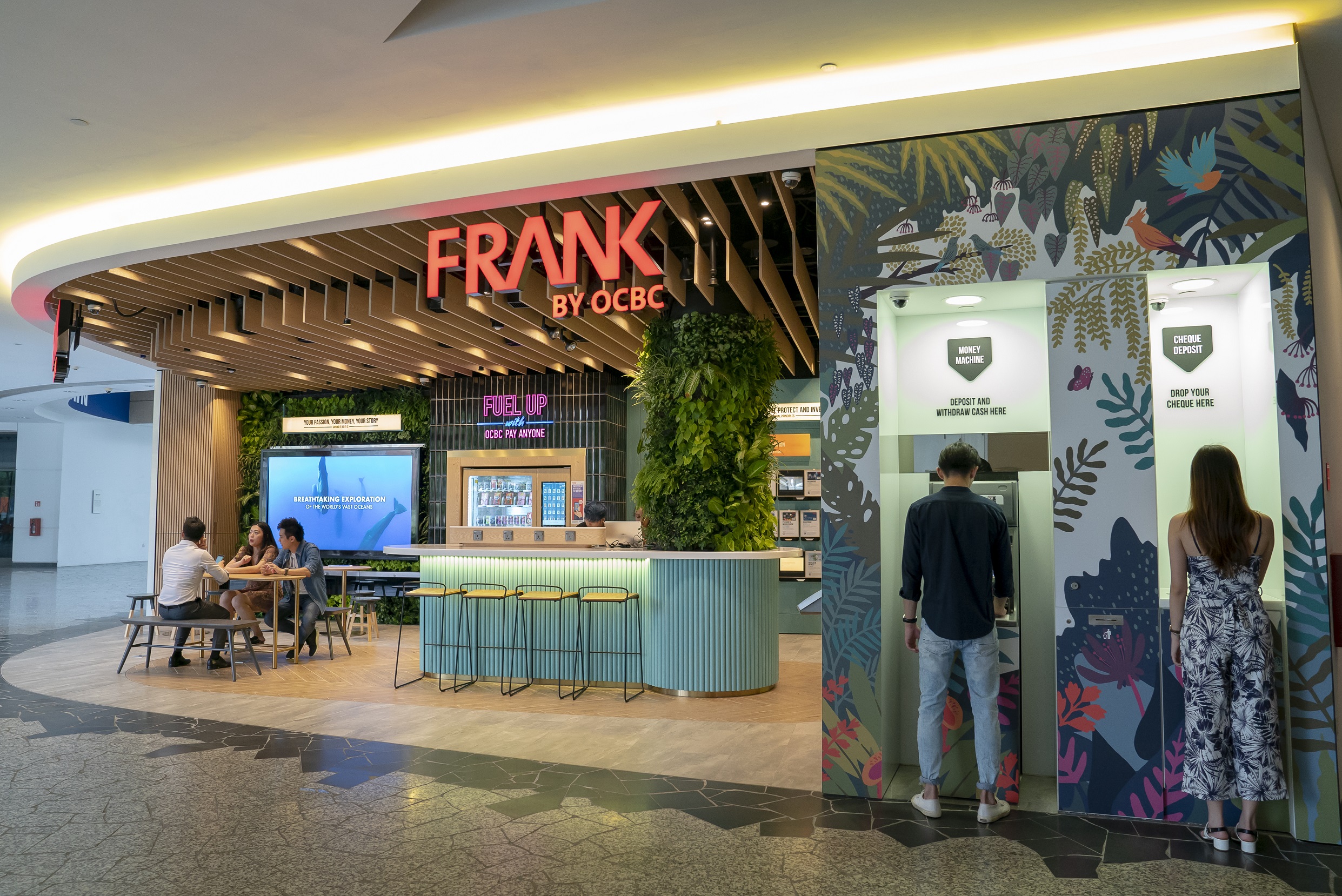
    The survey comes on the heels of the opening of the fourth and newest FRANK by OCBC Store at the National University of Singapore (NUS) last month. Taking over the space at the Stephen Riady Centre at University Town (UTown), which was previously a sports shop, OCBC Bank won a public tender for the space by offering to build a bank branch to offer students an essential service, and at the same time, add vibrancy to UTown through the creative design and use of the space. Occupying an area of 947 square feet, the FRANK by OCBC Store at NUS is a testament to the deep knowledge and insights FRANK by OCBC boasts in understanding the interests of millennials and integrating banking and financial literacy into their lives to make it accessible and relatable. The new FRANK by OCBC Store integrates features that are desired by millennials – borderless and digital interactions, environmental sustainability and a casual setting for banking.

    Like all other FRANK by OCBC Stores, the Store at NUS is designed differently from a traditional bank branch, making it attractive for students to come into the Store to take their time to browse and ask questions about banking products and services, play games or catch up with their friends over coffee.

    The new Store at NUS is Singapore’s first borderless and open-concept bank branch that does not utilise shutters or barriers after operating hours, and has no teller counters.

    Students interact with banking staff – known as FRANK Ambassadors – at the store’s collaboration areas, and can access the store round-the-clock to study or to get snacks at the cashless vending machine using the OCBC Pay Anyone mobile payments app. A ‘Future of Banking Zone’ highlights new mobile and Internet banking features on the latest iPads and iPhones, and enables students to try out digital banking services, including interacting with chatbot ‘Emma’ about study loans.

    The other FRANK by OCBC stores are located at Singapore Management University, Nanyang Technological University and orchardgateway mall.

  • OCBC Forms Committee to Ensure Responsible Banking

    OCBC Forms Committee to Ensure Responsible Banking

    The bank’s new ethics and conduct board committee wants to ensure that the group’s core values of trust and integrity continue to anchor the way it conducts its business.

    OCBC Bank has formed an ethics and conduct board committee, which is chaired by OCBC chairman Ooi Sang Kuang and includes directors Lee Tih Shih and Christina Ong, according to a news release on Thursday.

    While the industry is seeing ethics and compliance as an area of greater concern, the committee, which provides oversight of the group’s policies, guidelines, and programmes, is a first among Singapore banks.

    Laying Out Standards

    It held its first meeting on Wednesday, laying out expectations and standards for the group’s 29,000 employees as it aims to «sustain and grow a strong culture of responsible banking and fair dealing» and ensure that responsible banking is rigorously enforced across the whole OCBC group, the bank said.

    In the last decade, there have been several high-profile examples of questionable conduct by financial institutions. These examples span the globe and the misconduct ranges from extreme over-leveraging to violating international sanctions, tax fraud, and money laundering. The misconduct stems mostly from an imbalance between the pursuit of financial goals and responsible banking, Ooi said.

    Transforming Rapidly

    The banking industry is transforming rapidly due to technological advancements, and customers’ expectations have also changed. However, what has not changed is that our customers still expect us to be utterly worthy of their trust. That is why amid so much change in the banking industry, our underlying values of integrity and honesty must never change, Ooi added.

    The ethics committee also oversees a new culture and conduct committee, chaired by group chief executive Samuel Tsien. The committee will implement initiatives to enhance existing policies and programmes on ethics and conduct, as well as roll out new ones to strengthen these values among all the group’s employees.

  • OCBC: Malaysia could restore fiscal health in 3 years

    OCBC: Malaysia could restore fiscal health in 3 years

    Malaysia has a reasonable chance of restoring its fiscal health within three years if the economic growth remains stable with new revenue streams and stable expenditure, according to OCBC Bank chief economist Selena Ling. “But if you have a case where the global environment is very serious and dire and there is no deal between US and China… then it becomes a very hostile environment for any developing country to operate in,” she said last Friday.

    She noted that if the global economy remains at a status quo for the rest of the year and crude oil prices stabilise, Malaysia may miss the fiscal deficit target by 0.1-0.2 percentage points.

    Having said that, the potential slippage is not expected to be “very severe” that will derail Malaysia off its targets.

    “Rating agencies also want to see a multi-year plan. If it’s just a slippage of one year that you can attribute to a lot of external factors, probably the rating agencies will give you a pass. It’s really not a one year story they’re looking for,” she explained.

    The government has projected fiscal deficit to ease to 3.4% of gross domestic product (GDP) this year from 3.7% in 2018. It looks to further narrow the fiscal deficit to 3% and 2.8% in 2020 and 2021, respectively.

    Ling projects Malaysia to record a full-year GDP growth of 4.4% for 2019 amid slowing global growth and the ongoing external headwinds.

    Malaysia’s ringgit, on the other hand, could appreciate to RM4 against the greenback in the event of a weak dollar.

    She said the strengthening of the ringgit will have less to do with domestic factors as the slowdown in economic growth is seen as benign, coupled with an unlikely change in the Overnight Policy Rate (OPR).

    Another reason that could be supportive of strong ringgit is the risk of the US economy falling into a recession next year.

    Meanwhile, Ling expects oil prices to be subdued and could result in a shortfall in government coffers if they remain at the current level of around US$50 per barrel until year-end.

    Although Budget 2019 is based on the oil price assumption of US$70 per barrel, she does not see a need to recalibrate the budget at this juncture, but it will exert pressure on seeking new revenue sources.

    “As far as the budget revision is concerned, I suspect (it will) not be so soon because the US$70 is a medium-term price target and oil prices have been volatile in the last six months.

    “But if you look at the average price, it is relatively stable and maybe for the next budget in October 2019, they (the government) may revise the oil price assumption,” she added.

  • SE Asia Stocks not looking good, Singapore hits 22-month low

    SE Asia Stocks not looking good, Singapore hits 22-month low

    Philippines shares regained on Friday after reduction in previous section, while regional markets fell in line with broader Asia. The previous session saw sharp losses in the Philippines and other regional markets, as a tech-fuelled rout on Wall Street spooked investors across Asia, leading to a massive sell-off in regional equities.

    Asian bourses are likely to benefit from “tentative bottom-fishing”, analysts at OCBC said in a note.

    The Philippine index, which has been the region’s worst performer this year and the biggest loser in the previous session, rose 0.7 percent, boosted by real-estate stocks.

     “This is a short-lived bounce, since it was the worst performer and had seen a steep drop yesterday, I think investors think the 6,900 level of the index is a good time to buy… the last time it hit that level, investors bought back,” said Miguel Ong, research analyst at AP Securities.

    Real estate conglomerate Ayala Land Inc gained 2.1 percent and SM Investments Corp added 1.5 percent.

    Indonesian shares also ticked up, helped by telecom and financial stocks. Sector heavyweight PT Telekomunikasi Indonesia Tbk rose 0.8 percent and PT Bank Central Asia Tbk rose 0.9 percent.

    Vietnamese stocks were on track for a seventh losing session and a fourth straight week of losses, with real estate stocks and industrials being the biggest drags on the benchmark.

    Vinhomes Joint Stock Company fell 3.7 percent and No Va Land Investment Group Corporation lost 3.1 percent.

    Singapore stocks approached their lowest in nearly 22 months, falling 1.7 percent and on track for a fourth week in the red. Financial heavyweights like United Overseas Bank Ltd lost 3.5 percent and DBS Bank’s parent company DBS Group Holdings Ltd lost 2.6 percent.

    Thai shares failed to sustain the previous session’s brief bounce and looked set to post a fourth week of losses. Its energy sector, which drove a turnaround in the index in the previous session, was the biggest drag.

    Oil and gas giant PTT PCL lost 2 percent, while PTT Exploration and Production PCL traded 2.2 percent lower.

    Malaysian stocks edged lower on the back of telecom stocks, with Telekom Malaysia Berhad shedding 1.3 percent and wireless service provider Digi.Com Berhad losing 1.7 percent.

  • Touché signs agreement with OCBC to offer world’s first fingerprint biometric-based payment

    Touché signs agreement with OCBC to offer world’s first fingerprint biometric-based payment

    Singapore-based technology company Touché today announced an agreement with OCBC Bank to bring the world’s first fingerprint biometric-based payment and loyalty management solution to OCBC’s Singapore credit card merchant customers.

    Developed in Singapore, Touché includes both an elegant and innovative device and a robust software solution that delivers highly secure, convenient and personalised point of sale transaction services at the touch of two fingers.

    Touché will offer the solution to all of OCBC’s cards acceptance merchants with physical stores.

    Touché delivers a number of advantages that redefine point of payment and customer interaction. For merchants, Touché eliminates the need for multiple payment devices. Its devices are set up to accept traditional card payments as well as fingerprint-based payments. Touché brings operational efficiencies since transactions are completed quickly, and recorded electronically. Receipts are emailed – making the reconciliation process more efficient and eliminating paper entirely.

    Touché also makes management of loyalty programmes easy for both customers and merchants. Points and discounts are instantly applied for qualifying customers at the point of interaction. For merchants, moving existing loyalty programme members to the Touché biometrics-based platform is painless. As is building a new, tiered loyalty programme that offers membership based benefits.

    Uniquely, Touché also provides for personalised customer experiences. Merchants can recognise their customers at any point of interaction and accord them recommendations and offers that are relevant to them. Touché’s data analytics component enables merchants to create bespoke, personalised, offers for customers based on their own preferences and buying patterns.

    For the merchants’ customers, Touché brings convenience and efficiency and ease of use. A one-time registration process takes under two minutes wherein people can add their existing credit cards, loyalty/membership cards and link them to their fingerprints. Once registered, payments are completed in under four seconds at one touch, without the need for signature, pin number, card or mobile phone. Neither do people need to carry their loyalty cards, discount vouchers, coupons (etc) to access their benefits.

    “Touché provides a highly convenient and secure transaction point for people without the need for multiple cards,” said Sahba Saint-Claire, Chief Executive Officer and co-founder, Touché. “But Touché is more than payments and biometrics. We are a solution that enables merchants to provide their customers with personalised experiences to deepen their relationships. Touché is a key point of differentiation for banks and merchants, helping them grow their business by delighting customers and offering the next level in people engagement.”

    “We are delighted to collaborate with Touché to be the first in Singapore to offer a fingerprint biometric payment solution to our cards acceptance merchant customers. This service enables an easy and secured platform that will improve the user experience for their customers. It will make digital e-payments simpler and more accessible than using cash, and will help to drive Singapore’s push towards becoming an e-payments society,” said Mr Desmond Tan, Head of Group Lifestyle Financing, OCBC Bank.

  • OCBC Bank is First in Singapore to Rollout AI-Powered Voice Banking Services

    OCBC Bank is First in Singapore to Rollout AI-Powered Voice Banking Services

    OCBC Bank is the first in Singapore to launch artificial intelligence (AI) powered voice banking in collaboration with Google. With Google Home and Google Home Mini launched in Singapore today, anyone can now speak to the Google Assistant – on a smartphone or a Google Home device – to initiate a conversation about OCBC Bank’s services. These services range from planning for retirement or a new home to saving for a child’s education, getting the latest financial market updates, and more.

    At the forefront of voice-powered banking

    The proliferation of digital voice assistants is tipped to impact the consumer technology market this year. A 2018 Digital Consumer Survey by Accenture of 21,000 online consumers in 19 countries, including Singapore, indicates year-on-year growth of stand-alone digital voice assistants will increase 50 per cent in 2018, suggesting consumers are increasingly comfortable talking to digital voice assistants and smart home devices.

    The Google Assistant will provide consumers with another self-service digital channel to interact with OCBC Bank that is convenient and embedded in consumers’ lives. Consumers can pose general banking questions to the Google Assistant at any time of the day to get instant responses. This complements other self-service digital channels such as AI-powered chatbot ‘Emma’, which was launched in 2017 and specialises in answering home and renovation loan queries on the OCBC Bank website in an intelligent, human-like way.

    OCBC Bank remains the only bank in Singapore to offer voice-based banking on digital voice assistants as a medium for customer interaction and engagement. OCBC Bank has been leading the financial industry in rolling out numerous voice and conversational banking innovations for the convenience of customers. Voice-powered technology has been deployed across the bank since October 2016, when OCBC Bank was the first in Singapore to enable customers to initiate e-payments using Apple’s Siri voice assistant. In October 2017, OCBC Bank was again first in Singapore to let business banking customers check their account balances and make funds transfers using just their voice via Siri. This was extended to retail banking customers in February 2018. OCBC Bank will continue to innovate and add more banking services – payments and account balance enquiries, which require more secure access and authentication – to expand OCBC Bank’s services via digital voice assistants, in partnership with technology companies.

    Mr Aditya Gupta, Head of E-Business Singapore said: “This is the new digital – conversational, smarter and simpler access to banking. For our customers to be able to interact with OCBC services by simply speaking to AI assistants on their smartphones and smart home devices is an exciting development, and an important one as we shape the bank of the future. We are the first bank in Singapore to collaborate with Google on this game-changing service, and will continue to embed ourselves in consumers’ lives using voice-powered AI tools, which will be able to answer more questions and perform more tasks for OCBC customers over time.”

    ‘Talk to OCBC’ via the Google Assistant

    By speaking to the Google Assistant, users will be able to:

    • Calculate the mortgage loan amount they can afford
    • Plan how much to save for their children’s education
    • Ascertain how much they would need to retire comfortably
    • Get the latest updates on the financial market
    • Check unit trust prices
    • Get foreign exchange rates
    • Search for nearby OCBC Bank branches or ATMs

    For retirement planning, a user can activate OCBC Bank’s service through the Google Assistant by saying: “Ok Google, talk to OCBC about retirement planning.” The Google Assistant will then reply to the user with leading questions to eventually calculate the retirement amount required.

    The Google Assistant: “Great! It’s never too late to plan for your retirement. Let’s start with your age, how old are you?”

    User: “I’m 25 years old.”

    The Google Assistant: “Cool, you are 25 years old. At what age do you expect to retire?”

    User: “65 years old.”

    The Google Assistant: “All right – this means you have another 40 years to build your retirement portfolio. Now, imagine

    you are 65 and have just retired. How much do you expect to spend on basic expenses such as utilities, transport, entertainment and food in a month based on today’s prices?” 

    User: “$2,000.”

    The Google Assistant: “All right, $2,000 a month for basic expenses sounds good. Finally, how much do you plan to spend on vacations and overseas travels every year after retirement?”

    User: “$2,000.”

    The Google Assistant: “$2,000 per year it is. In total, it sums up to approximately $2,200 per month. Let’s compare this to the expected income you will receive after retirement. During retirement, how much do you expect to receive from investments and rental per month?

    User: “$2,000.”

    The Google Assistant: “Okay, $2,000 every month from rentals and investments. Lastly, how much do you expect to receive from CPF or other allowances per month?”

    User: “$500”

    The Google Assistant: “Okay, $500 from CPF and allowances every month it is. So, in total, you should be receiving $2,500 a month during your retirement. If you start today, you will need to save approximately $751,000 for retirement. Don’t worry, OCBC can help you achieve your retirement planning goals. Would you like to chat with an OCBC expert about your retirement plans in detail? 

    User: “Yes.” 

    The Google Assistant: “That’s great, can you please provide a contact number so I can arrange for someone to call you?”

    User: “91234567”

    An OCBC Bank customer service representative will then follow up with the user on their retirement plans.

  • OCBC Bank first in Singapore to enable instant digital card issuance and provisioning on Apple Pay

    OCBC Bank first in Singapore to enable instant digital card issuance and provisioning on Apple Pay

    OCBC Bank customers have a new, speedy way of resolving a common issue when shopping or dining: Not having the right credit card to enjoy the best discount, rebate or reward.

    Since last month, OCBC Bank became the first bank to enable customers to transact at merchants that accept Apple Pay within minutes of applying for a new VISA credit or debit card. Any OCBC Bank customer – even if you do not yet own an OCBC Bank card – can apply for a card online and have your application approved almost immediately. There is no need to then wait for the physical plastic to arrive in your mailbox: The card can be accessed and provisioned (that is, added to) Apple Pay instantly via the OCBC Mobile Banking app.

    VISA cards make up almost 80 per cent of the OCBC Bank cards currently provisioned to Apple Pay. Instant provisioning of cards for use with Apple Pay has been enabled for OCBC Bank VISA credit cards – including the 365, FRANK, Voyage, Robinsons Group, Plus! VISA and NTUC Plus! cards – as well as the Yes! debit card.

    Mr Aditya Gupta, OCBC Bank’s Head of E-Business Singapore, said: “This is the new digital – instant, embedded and frictionless access to banking products and services. Our customers can now receive their new card digitally and provision it to their Apple Wallet to start paying with it straight away – all from within our mobile banking app and within a few minutes. We believe this is a huge level-up in customer experience and will further accelerate our digital card applications and cashless payments market leadership drive.”

    Leader in payments and digital banking

    OCBC Bank is one of the top credit card issuers in Singapore and the market leader in contactless payments; one in every two VISA contactless transactions, including Apple Pay, is made with an OCBC Bank card. Monthly mobile wallet payments have doubled since 2016, while the number of credit cards provisioned to mobile wallets has increased sevenfold. 60 per cent of OCBC Bank cards provisioned to mobile wallets are on Apple Pay. Mobile wallet usage is especially popular for lifestyle transactions including groceries, transport such as private hire cars, food deliveries and fast food.

    Mr Vincent Tan, OCBC Bank’s Head of Credit Cards, said: “When we first introduced mobile payments to our customers in 2016, the future of payments looked exciting then – and it has definitely proven itself to be so. One in every two VISA contactless transactions is made with an OCBC Bank card so we have clear leadership in the mobile and contactless payment space. More OCBC customers, even those who are not currently our cardholders, can now benefit from our suite of credit cards within minutes of applying for one. With our instant digital card issuance, they can immediately provision their new cards to Apple Pay via our mobile banking app, and start to enjoy our cards’ rewards and rebates.”

    OCBC Bank has constantly worked towards making banking seamless and embedded in our customers’ natural behaviour and interactions. OCBC Bank led the way in Singapore in launching voice-powered conversational banking for retail customers in February 2018, which allows customers to ask Siri to check their bank balances, credit card overview and make e-payments. It was the first bank in Singapore to introduce biometric authentication to access bank account details with OCBC OneTouch in March 2015, and OCBC OneLook in November 2017 on the OCBC Mobile Banking app, leveraging fingerprint and facial recognition technology. OCBC Bank then offered customers the convenience of banking on their wrist, launching its mobile banking app for Apple Watch in March 2016. In November 2016, OCBC Bank enhanced its OCBC Pay Anyone e-payments service by enabling customers to send money via OCBC Pay Anyone directly within Apple’s iMessage on iPhones, and via any app on Android devices using the OCBC Keyboard in August 2017.

  • OCBC Bank Launches Mobile Keyboard to Enable Cashless Payments

    OCBC Bank Launches Mobile Keyboard to Enable Cashless Payments

    OCBC Bank has launched a mobile keyboard that allows customers to make peer-to-peer payments without having to exit their current mobile applications. The OCBC Keyboard can be used within any mobile app or browser – for instance, within Facebook, Whatsapp, Instagram or Chrome – to send money instantly to anyone with a bank account in Singapore, including those who have not yet registered for PayNow. The payment rides on the OCBC Pay Anyone e-payment service and can be done using just the recipient’s mobile number.

    The OCBC Keyboard follows on the heels of OCBC Bank’s launch of e-payments integrated with Apple’s Siri and iMessage for iPhone users in 2016, enabling customers to make instant funds transfers with a voice command to Siri or within the iMessage app while engaged in a chat. With the OCBC Keyboard, the convenience of making an e-payment is extended to any app on Android devices running the Android 4.4 KitKat operating system or better. Payments are completely secure as they are authenticated with the sender’s mobile banking credentials.

    Making a payment via OCBC Keyboard

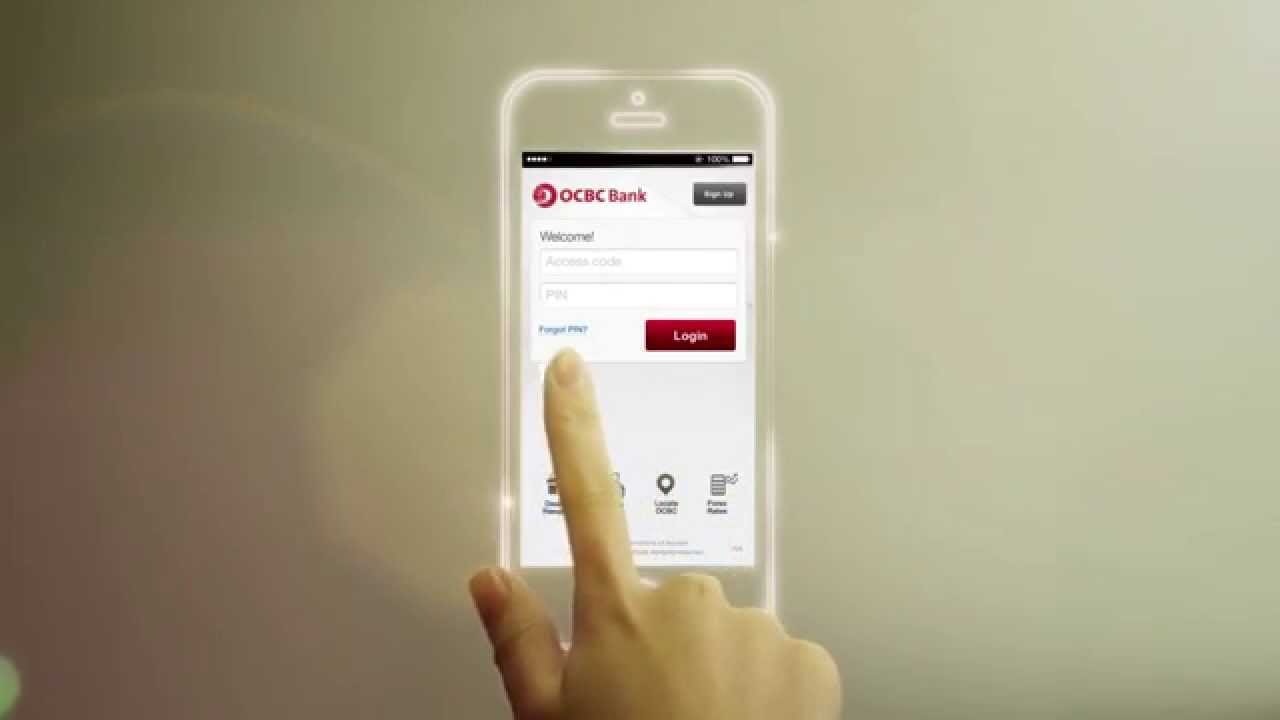
    Imagine being able to make an e-payment as easily as sending an “emoji” to a friend while chatting on Whatsapp, or while negotiating with a potential seller on the Carousell app. Users can automatically access the OCBC Keyboard on any app on their mobile phones once they have updated the OCBC Mobile Banking app to the latest version. They will need to perform a simple one-time set up to enable the OCBC Keyboard and make it the default keyboard on their phone.

    To send money, users simply tap on the OCBC Pay Anyone icon on the keyboard without exiting or switching from their current app activity.Once they select a recipient from their contact list – which is automatically synced with the keyboard – they will be guided to complete the transfer using OCBC Pay Anyone within the keyboard. Once payment is complete, the user can continue accessing the original app.

    Boosting cashless payments

    In alignment with Singapore’s Smart Nation agenda and its drive to go cashless, the OCBC Keyboard is the latest in a series of OCBC Pay Anyone e-payment services that OCBC Bank has introduced to encourage customers to embrace the move away from cash.

    The adoption of the recently launched PayNow service amongst OCBC Bank customers has been exceptionally strong, with over 200,000 signups to date. E-payments done via the OCBC Pay Anyone service have increased 35 per cent since the launch of PayNow, and one in every two PayNow transactions is via OCBC Pay Anyone.

    Mr Aditya Gupta, OCBC Bank’s Head of E-Business Singapore, said: “With OCBC Keyboard, we are embedding payments in our customers’ lives and making it completely frictionless for them to pay while they go about everyday tasks like chatting on Whatsapp, sending emails, buying items on Carousell or browsing the Internet. I’m confident that this added convenience will exponentially increase the adoption and usage of e-payments, including PayNow transfers. We will continue to push the boundaries on e-payments and move the needle in driving Singapore towards becoming cashless.”

    Evolution of OCBC Pay Anyone

    Launched in 2014, OCBC Pay Anyone was the first peer-to-peer mobile payment service offered by any bank in Singapore that enabled customers to make a payment directly into a recipient’s bank account using just a mobile number, email address or Facebook, without having to perform transaction signing using a security token or to add the recipient as a “payee”.

    In September 2016, the daily transfer limit on OCBC Pay Anyone was increased from $100 to $1,000, bringing greater convenience to customers and allowing payments for bigger-ticket items. In October 2016, OCBC Bank further enhanced OCBC Pay Anyone by enabling transactions using Apple’s Siri voice command feature and directly within iMessage.

    In May this year, OCBC Bank launched its first standalone mobile payments app – the OCBC Pay Anyone app – which now consolidates all OCBC Pay Anyone e-payment services into a one-stop shop for customers’ convenience: Peer-to-peer QR code payments via PayNow, QR code payments to NETS merchants, peer-to-peer e-payments and the integration of OCBC Pay Anyone with Apple iPhone’s Siri and iMessage.

    Enabling the OCBC Keyboard for e-payments

    The OCBC Keyboard is available to all OCBC Bank customers using Android 4.4 KitKat devices with the latest OCBC Mobile Banking app. The app can be downloaded from the Google Play Store.

    Customers can enable OCBC Keyboard by following these steps:

    • Tap ‘Pay now’ in the OCBC Mobile Banking app or ‘Send Money’ in the OCBC Pay Anyone app for a tutorial on setting up the keyboard
    • Users will be guided to turn on OCBC Keyboard in Settings and make OCBC Keyboard the default keyboard

    The OCBC Keyboard is now ready to be used as the primary keyboard.

    Making a payment using the OCBC Keyboard

    • Switch to the OCBC Keyboard if it is not the primary keyboard in use
    • Tap on the OCBC Pay Anyone icon on the keyboard to start payment
    • Select the contact you wish to pay to
    • Enter your online banking access code and PIN
    • Select the account to send money from. This step is automatically skipped if you have only one account.
    • Enter the amount to send
    • Create a six-digit passcode to be given to a non-PayNow registered recipient. If the recipient is PayNow-registered, no passcode is required. Confirm the recipient’s name and mobile number on the review screen to proceed.
    • Authenticate payment with a One-Time-Password

    You can then return seamlessly to what you were previously doing on your mobile device. PayNow-registered recipients will receive the payment directly into their bank accounts. If the recipient is not PayNow-registered, they will receive an SMS link. Share the passcode with them to collect the money.


  • OCBC Bank subsidiary launches private onshore banking in Indonesia

    OCBC Bank subsidiary launches private onshore banking in Indonesia

    OCBC Bank has launched onshore private banking in Indonesia through its 85 per cent-owned subsidiary, OCBC NISP, the company said on Monday.

    OCBC NISP has obtained regulatory approval to establish the private banking unit to manage the wealth of Indonesians with assets under management of more than US$1 million (S$1.38 million) with a comprehensive range of wealth management solutions.

    The unit will leverage OCBC Bank’s uniquely integrated wealth management platform that draws on the combined product expertise of the Bank and its subsidiaries – insurance products from Great Eastern Holdings, equities and bond funds from Lion Global Investors, brokerage services from OCBC Securities and private banking services from Bank of Singapore.

    The launch team includes four other private bankers who have an average of 18 years of onshore and offshore private banking experience and deep knowledge of regional markets. The team is expected to double in size by the end of the year.

    OCBC NISP private banking clients who are business owners will be able to draw on the commercial banking solutions offered by OCBC NISP and leverage OCBC Bank’s global network of more than 610 branches and offices across 18 countries and regions.

    “We are pleased to offer our wealthy clients alternative wealth management and investment options to help them manage their funds with the launch of our private banking business,” said Ms Parwati Surjaudaja, president director of OCBC NISP. “We will be introducing more sophisticated solutions that are tailored to our clients’ unique wealth planning and investment needs as we grow our business.”

    Calling the launch an important milestone in the expansion of OCBC’s wealth management franchise, Mr Samuel Tsien, group CEO of OCBC Bank, said the new business will help broaden client coverage of high net worth individuals. “We will leverage our strong product development, distribution and execution capabilities across the OCBC group to support this new customer segment in Indonesia.”

  • OCBC buys Australia bank’s retail, wealth business in Singapore, Hong Kong

    OCBC buys Australia bank’s retail, wealth business in Singapore, Hong Kong

    With Australian banks retreating from the retail business in Asia, OCBC has scooped up the retail and wealth business in Singapore and Hong Kong of Australia’s largest business bank, National Australia Bank (NAB), to bump up both its mortgage portfolio and customer base.

    Observers said the deal reflects the surging costs for foreign banks in competing against local players in the retail and wealth space in Asia.

    While there is undoubted growth in wealth in the region, non-domestic players would have to spend significantly to expand their product and services suite beyond a boutique presence.

    “In American football, there’s a phrase, ‘Go big or go home’. And based on a cost-benefit analysis, it was time to go home,” said one observer, pointing to NAB’s exit from the Asian wealth business.

    The negotiations for the profitable business unit took about three months, The Business Times understands. The acquisition, in effect, has Singapore’s second-largest bank buying up about US$1.7 billion of mainly residential mortgage loans, with more than half of the properties in the major Australian cities of Sydney, Melbourne and Brisbane, OCBC announced on Thursday. Notably, over 50 per cent of these mortgage loans are booked in Hong Kong.

    The purchase price will match the value of the loan-book at the time that the transaction closes, which is expected to be by the end of the year.

    To be clear, the purchase comes with a US$3.05 billion deposit portfolio comprising a mix of currencies that include the Australian, Hong Kong, Singapore and US dollar.

    OCBC will reach about 11,000 new customers, with more than 7,000 in Singapore and about 4,000 in Hong Kong. Most of the customers are Singapore and Hong Kong residents.

    With the mortgages increasing the bank’s overall mortgage portfolio by about 4 per cent, one analyst noted that the bump is “negligible”.

    “OCBC does get 11,000 customers out of it – though how sticky they are is another issue. (But) the low customer acquisition cost is probably the attraction for OCBC,” he said.

    OCBC said the acquired business will be earnings accretive to the bank within the first year of completion.

    The mortgage portfolio is made up of mainly home loans with an average loan-to-valuation ratio of below 60 per cent, as weighted according to the value of the loans. NAB also has a “strong track record with negligible delinquencies”, OCBC said.

    The business adds to the bank’s overseas property financing programme for real estate in Australian cities such as Sydney, Melbourne and Perth.

    “This deal makes financial and strategic sense to us,” said Ching Wei Hong, OCBC’s chief operating officer, noting that the mortgage loan book would have required “time and money” to grow via organic means.

    “The mortgage portfolio to be transferred to us is a high quality and well-supported one, (while) the customers are in the affluent segment that we have been building.”

    The deal also comes amid surging profit contribution of regional business for OCBC. The bank’s shares closed on Thursday at S$10.56, up 10 cents.

    The market is drawing comparisons between the NAB transaction and the one signed by DBS and ANZ in November, with ANZ selling most of its wealth and retail business in Asia for S$110 million to Singapore’s largest bank.

    That S$110 million represented about 0.5 per cent of the S$23 billion of assets under management from ANZ’s wealth business, mostly out of Singapore and Hong Kong.

    The ANZ sale to DBS also included loans and deposits, but was also in effect a self-funded loan book. At the point of announcement, DBS said it would take up about S$11 billion of loans once financed by ANZ, as well as S$17 billion in total deposits owed to former ANZ customers.

    It should also be noted that ANZ took a A$265 million (S$275 million) loss on the sale to DBS, reflecting write-offs taken for software, goodwill and fixed assets, as well as transaction costs. By contrast, NAB said the sale will not have a material financial impact on it. It is now focused on helping business customers in Australia and New Zealand access the Asian markets.

    In a media statement, Neil Parekh, NAB’s general manager for Asia (ex-Greater China) said: “We wanted a buyer that could meet our customers’ growing demand for a wide range of wealth management solutions in Asia. OCBC is uniquely qualified to do so.

    “We will work closely with OCBC during the transition to completion to ensure a smooth process for customers moving to a business with a comprehensive product offering and strong presence in Asia.”

  • OCBC Trials Blockchain for Interbank Payments

    OCBC Trials Blockchain for Interbank Payments

    One of the five largest banks in Singapore has tested a blockchain-based payment service, with an eye to develop commercial products around the tech.

    OCBC Bank used the tech to send funds between its operations in Singapore and Malaysia, as well as transmit money to the Bank of Singapore, a private banking business it owns. The bank said it worked with BCS Information Services, a local payments firm, to develop the prototype.

    The test is the latest for Asia’s banking sector, the members of which have spent much of the past two years investigating use cases, investing in startups and pursuing commercial applications.

    Praveen Raina, OCBC senior vice president, was quoted as saying:

    “We hope this will be a catalyst for more banks to adopt the blockchain technology so that, together, we can achieve efficiency and cost effectiveness while delivering more high-value financial services to our consumers.”

    Though the bank announced its move on its official group website, the details of that announcement appear to have been removed at press time.

    The move comes as the Monetary Authority of Singapore (MAS), the city-state’s central bank, has moved to create a pro-fintech environment within the domestic finance sector. Earlier this month, MAS has forged relationships with regional interests on the tech, coming more than a year after the institution began developing and investing in projects of its own.