Retail News CRM

Tag: OCBC

  • OCBC Bank is first local bank to win top honours

    OCBC Bank is first local bank to win top honours

    OCBC Bank marked another milestone in its journey towards ever-greater performance and business excellence by earning the World Class Award – the highest award tier – at the 2016 Global Performance Excellence Awards (GPEA), under the “Large Service” organisation classification. The GPEA is administered by the Asia Pacific Quality Organisation (APQO), an autonomous, scientific and technical organisation that brings together professional quality organisations from countries in Asia and the Pacific, including Singapore. For 16 years now, it has given out the Global Performance Excellence Awards – which are the only internationally-recognised honours for performance and business excellence.

    To be even considered for an Award, stringent criteria must be met. An organisation must start by being a winner at its own country’s national quality awards. Then, within two years, it must be recommended as a candidate for the GPEA by that country’s national quality award organising committee. OCBC Bank qualified by first being conferred the prestigious Singapore Quality Award by SPRING Singapore in 2014, following rigorous assessment of OCBC Bank’s consumer financial services business, and then by being recommended by SPRING Singapore for the GPEA.

    The organisations are reviewed by an international team of experienced examiners who assign scores and summarise the results of their assessment. The results and recommendations are then submitted to an international ‘Jury of Judges’ who make the final decision on which Award category each organisation wins.

    Mr Dennis Tan, Executive Vice President and Head of OCBC Bank’s Consumer Financial Services Singapore, said: “This award is an honour for all of us at OCBC, and is testament to our commitment to high standards of service quality. This is a key milestone in our journey towards organisational excellence. Since we embarked on our Business Excellence journey in 2001, we have tightened and enhanced our processes to deliver customer-centric, useful, fast, friendly and simple service to customers. This has earned us local recognition, with our 2014 Singapore Quality Award win, but we have not stopped there. We have continued to pursue even greater heights of business excellence – and this has culminated in our earning the Global Performance Excellence Award. While the team is very encouraged by this, achieving recognition is never a means in itself. We continue to consistently and relentlessly deliver quality products and services to meet our customers’ needs. Chasing excellence is a constant journey, never a destination.” 

    Mr Harnek Singh, President of the APQO, said: “Singapore has established itself as a leading financial centre. OCBC was amongst the first banks to win Singapore’s pinnacle award – the Singapore Quality Award – recently. This speaks volumes about the visionary leadership and well-entrenched, effective systems and processes that steer OCBC’s business excellence journey. With technology and innovation being increasingly a key competitive advantage, OCBC has successfully leveraged on technology and innovation as an enabler to offer innovative customer-centric offerings, cut costs, respond to changing customer expectations and create the agility needed to capitalise on opportunities in the market. OCBC has successfully offered a slew of award-winning, innovative products and services.” 

    OCBC Bank’s strengths in performance and business excellence are underscored by a focus on customer centricity and a competency in mining customer data through analytics to deliver intelligent customer experiences. OCBC was the first bank in Singapore to offer banking facilities at branches on Sundays, developed the ground-breaking OCBC 360 account (a deposit account that rewards customers with higher interest rates for banking more with OCBC Bank) and grew its youth segment – FRANK by OCBC – through intensive data analytics and research on how youths behave and desire to be engaged.

    OCBC Bank is also a leader in banking digitalisation. Over the past three years, it has introduced numerous first-to-market innovations in digital and mobile banking in Singapore to meet customers’ needs. Many of the bank’s customer touch points have been digitalised: Voice biometrics has replaced traditional identity verification when customers call its Contact Centre, the OCBC Open Account app now enables customers to apply for the popular OCBC 360 Account via their mobile phones or tablets without ever visiting a branch, and OCBC OneTouch uses fingerprint recognition to give customers quick and easy access through their mobile devices to their account balances and transactions. OCBC Bank has also launched a mobile application – OCBC One Wealth – that is a one-stop wealth management app providing customers with convenient access to market information, investment ideas, personalised alerts about their existing investments and even the ability to directly purchase unit trusts using their mobile devices.

    Mr Patrick Lim, Director of Business and Service Excellence at SPRING Singapore said, “OCBC Bank’s Consumer Financial Services Division was awarded the Singapore Quality Award in 2014 for having developed innovative new banking products and customised channel delivery, enabling it to be among the top banks in the highly competitive financial sector. Its recent GPEA win highlights the bank’s dedication to achieving business excellence. Recognition at GPEA proves the bank’s ability to demonstrate outstanding management capabilities while delivering superior performance and results.”
  • OCBC adds Siri, iMessage support to Pay Anyone

    OCBC adds Siri, iMessage support to Pay Anyone

    OCBC Bank has integrated its Pay Anyone e-payment service with Siri and iMessage to enable peer-to-peer payments supported by voice and messaging technology

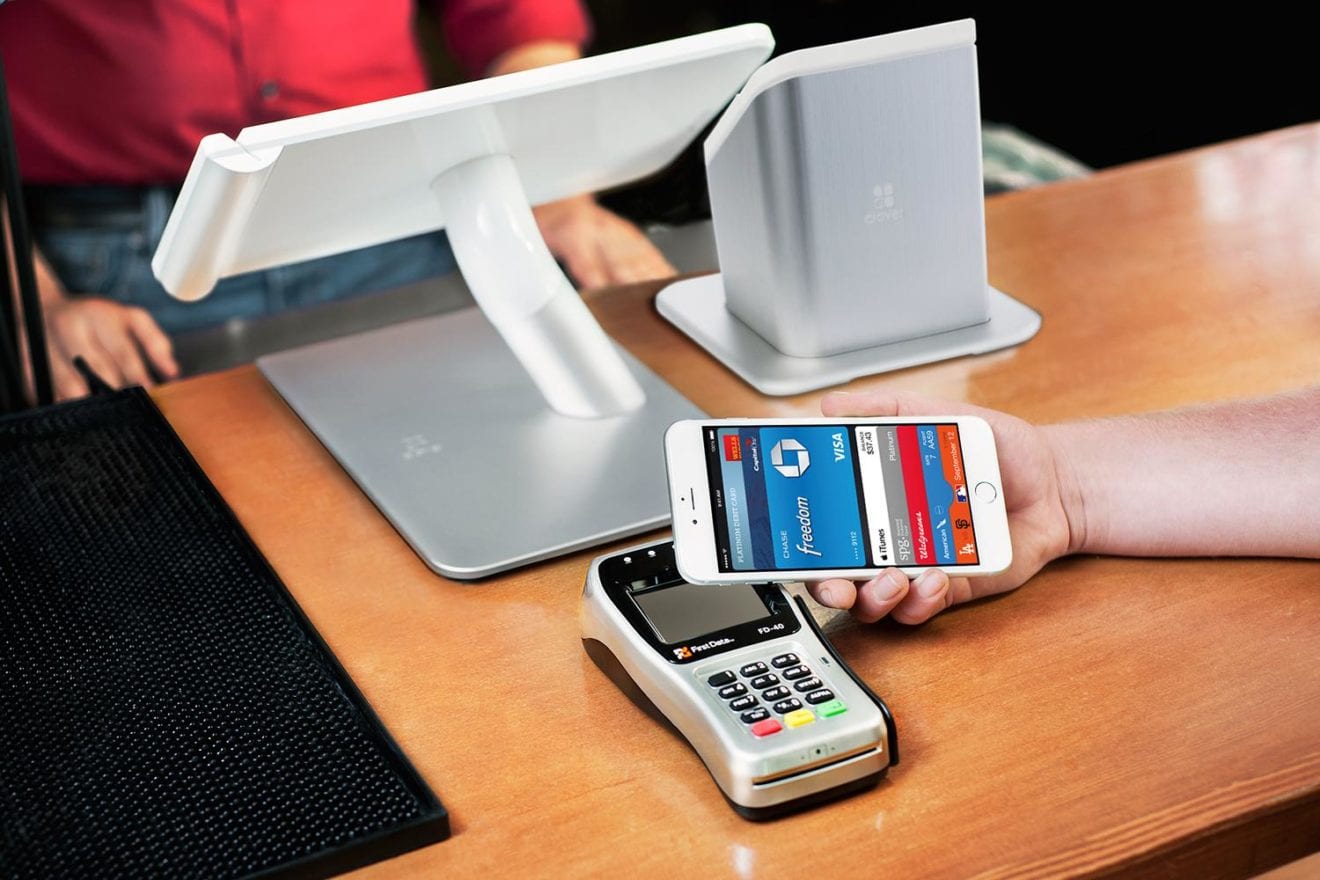
    OCBC has enabled payment commands on its mobile banking app to be facilitated via Apple’s Siri or iMessage.

    Users can now issue a voice command to Siri, Apple’s virtual assistant, specifying the payee and payment amount to make payments. Customers can also send money to others via iMessage, Apple’s messaging platform.

    The Siri and iMessage services for OCBC Pay Anyone, the payment service within OCBC’s mobile banking app, are available to all OCBC Bank customers using iPhone devices running the iOS10 software and the latest OCBC Mobile Banking app. Payments are authenticated by the customer using their mobile banking credentials.

    To send money using Siri, users need to instruct Siri with a voice command indicating whom from their contact list to send money to, and the amount to send. Upon making this request, the Siri interface will pop up on the iPhone, asking the user to confirm the payment details. Once the payment details are confirmed, the user will be guided to complete the transfer using OCBC Pay Anyone.

    Additionally, users can choose to send money via iMessage while texting their friends, without leaving the conversation by closing the messaging app or opening another app. Within the iMessage conversation screen, users can choose the OCBC Pay Anyone iMessage app to initiate payment directly to the person they are chatting with.

    The app automatically populates the recipient’s name, and the user just needs to indicate the amount to send and complete the transaction with OCBC Pay Anyone. Once the money is sent, the OCBC Pay Anyone app will close and the user can resume chatting within the same iMessage window.

  • Five major banks lined up to support Apple Pay launch in Singapore

    Five major banks lined up to support Apple Pay launch in Singapore

    Five major banks, representing 80% of Visa and MasterCard credit and debit cards issued in Singapore, have signed up to Apple Pay, extending the use of the mobile wallet beyond a limited earlier release for AmEx cardholders.

    MasterCard says it is working with DBS, OCBC, POSB, Standard Chartered and UOB, to enable iPhone and Apple watch users to make purchases in stores equipped with contactless readers.Recent figures from MasterCard indicate that consumers in Singapore are supportive of the idea of adopting contactless payments. Singaporeans are among Asia’s top three adopters of digital wallets and interest has been climbing steadily with one in four likely to use a digital wallet compared to just one in 20 three years ago.

    Apple Pay’s launch comes just a month after Samsung announced plans to roll out its rival mobile wallet with the support of DBS/POSB, OCBC Bank and Standard Chartered. Previously, Apple Pay had only been available for American Express cardholders in Singapore.

  • OCBC Singapore launches voice biometrics, speech recognition in contact center

    OCBC Singapore launches voice biometrics, speech recognition in contact center

    OCBC Bank in Singapore has launched voice metrics and speech recognition in its contact center to improve the retail customer experience.

    According to the bank’s head of consumer financial services Dennis Tan, the solutions launched reduce the time taken for customer verification, giving customers quicker access to services required. The voice biometric authentication replaces PINs, one-time passwords and security questions at the bank’s contact centre. Customers can use their voices as vocal passwords for authentication.

    Voice biometrics was launched by OCBC in September last year to a targeted group of retail customers. With the technology, customers could use their voiceprints to authenticate requests for account balances, latest transactions and the status of deposited cheques.

    Voice biometrics will be available to the bank’s retail customers in the fourth quarter of this year, with customers expected to be able to use their voiceprints to authenticate a majority of banking transactions.

    To enrol their voiceprint, customers are asked to say a specific phrase, called a passphrase, three times. A passphrase is an explicit sentence crafted by OCBC Bank to be spoken by the customer into the system to capture the customer’s voice. The voiceprint is created using the spoken passphrase and stored in the system’s database. A voiceprint is not a recording of a voice but a digital representation of a person’s vocal characteristics, so it cannot be disguised and is not affected by emotion or a blocked nose.

    To authenticate a banking transaction, the customer will be asked to say the passphrase that was used to enroll his or her voiceprint. If further verification is needed to confirm the customer’s initial vocal password is valid and is not a voice recording, the system will then ask the customer to say a different sentence from the enrolled passphrase. The customer’s voice is captured and is compared with the relevant stored voiceprint on the database. A verification result is then provided by the system. The authentication process is hassle-free and can be done in 15 seconds.

    Speech recognition

    OCBC Bank launched speech recognition at its contact center in April this year to all personal banking customers.

    While voice biometrics enhances customer experience by replacing PINs, passwords and security questions, speech recognition replaces the need to select service options via the phone keypad. The deployment also reduces the number of steps needed to enter the options sequentially on the keypad to access a particular service. Speech recognition technology recognizes and understands a customer’s spoken request, thereby enabling the customer to access the required service faster and more accurately.

    According to OCBC Bank, the top customer enquiries received via speech recognition are checking recent transactions and account balances, requests for fee waivers, and Internet Banking and statement enquiries. These requests amount to 30.4 per cent of all requests to the Contact Centre. The success rate of the speech recognition service has been extremely high, says OCBC Bank, with 90 per cent of customers having their spoken requests recognised by the system.

  • OCBC launches banking app for Apple Watch

    OCBC launches banking app for Apple Watch

    Singapore’s OCBC Bank has launched a new mobile banking app designed for the Apple Watch.

    With the app, users can have instant access to their personal banking information, including the full list of their balances – bank accounts, cards and investments, recent transactions, and the location of the nearest OCBC Bank branch or ATM, on their Apple Watch.

    Customers must first perform a one-time activation on their OCBC iPhone mobile banking app before using the Apple Watch app. Once activated, account information and recent transactions can be viewed on Apple Watch, without the need to login to mobile banking.

    This service is available for customers using mobile devices such as iPhone 5, iPhone 5S, iPhone 6, iPhone 6 Plus, iPhone 6S or iPhone 6S Plus operating on iOS 9 and Apple Watch devices running on WatchOS2.

    The service can only be activated on a single pair of Apple Watch and iPhone devices at one time and all account numbers displayed on the watch are partially masked with only the last four digits revealed. No information is stored on the phone or watch and for security purposes, customers can choose to set a passcode on their Apple Watch.

    Market intelligence firm IDC estimates the worldwide wearable device market will reach a total of 111.1 million units shipped in 2016, a strong 44.4% increase from the 80 million units shipped in 2015. By 2019, the five-year compound annual growth rate (CAGR) of wearable devices would be 28%, with Apple smart watch devices taking the lion’s share of the market.

    “Smartwatches represent the next generation of personal mobile devices, and our Apple Watch app will offer the convenience, security and choice that customers demand when it comes to everyday banking on-the-go,” said Aditya Gupta, OCBC Bank’s Singapore head of e-business, said.

    “We are confident the Apple Watch app will be a big hit with our fast-growing number of customers who are mobile and digitally-savvy.”

  • OCBC rallies on earnings surprise as Singapore bank rivals fall

    OCBC rallies on earnings surprise as Singapore bank rivals fall

    Oversea-Chinese Banking Corp.rallied after fourth-quarter profit rose more than analysts anticipated. Shares of its two large Singapore rivals fell.

    The bank’s stock surged Wednesday by the most in almost six months following the release of an exchange statement showing net income climbed 21% on higher interest and trading income as well as gains from life insurance.

    Chief Executive Officer Samuel Tsien signalled confidence in the bank’s ability to continue growing as Singapore’s lenders face pressure from their exposure to a commodity price slump and an economic slowdown in China and Southeast Asia. OCBC doesn’t face issues with its Greater China loan portfolio, he said in a briefing. Smaller competitor United Overseas Bank Ltd.reported barely improved quarterly net income Tuesday as rising expenses and provisions for bad loans restrained earnings growth.

    “Against the massively negative sentiments against banks in general and fears of oil and gas impact, OCBC indeed saw higher provisions but nowhere near levels justifying” downgrades for the stock, Kevin Kwek, an analyst at Sanford C. Bernstein & Co. in Singapore, said in an e-mail. “The positives of gains in net interest and fee income in this environment should also reassure investors.”

    Analysts had cut their consensus 12-month target price for OCBC’s shares to $9.67 from a peak of $11.76 last August, according to estimates compiled by Bloomberg.

    The lender’s stock jumped as much as 4%, the largest intraday gain since Aug. 25. The shares were up 1.8% at $7.91 as of 1:33 p.m. in Singapore. United Overseas Bank fell 3.2% and DBS Group Holdings Ltd. declined 0.2%. The benchmark Straits Times Index dropped 0.9%. The rally in OCBC stock pared its loss this year to 10%, exceeding a 9% decline in the Straits Times Index.

    OCBC, Singapore’s second-biggest bank by assets, said net income climbed to $960 million in the three months ended Dec. 31 from $791 million a year earlier. That exceeded the $877 million average of seven analysts’ estimates compiled by Bloomberg.

    OCBC’s net interest margin, a measure of lending profitability, rose to 1.74% in the fourth quarter, a seven basis-point increase from a year earlier. That helped net interest income climb 5% to S$1.34 billion, the statement showed. Non-interest income advanced 26% to $960 million as the life-insurance unit’s profit jumped 24%. Net trading income soared nine times to $163 million from $18 million a year earlier.

    Bad loans

    Non-performing loans rose 54% to $1.97 billion in 2015, mostly because of “a few large corporate accounts associated with the oil and gas services sector,” the bank said. Its bad-loan ratio climbed to 0.9% as of Dec. 31 from 0.6% a year earlier. The loan portfolio remained “sound” with a “comfortable” allowance coverage, the bank said.

    At a briefing for media and analysts Wednesday, CEO Tsien said that while he expects an increase in non-performing loans, it’s unlikely the bank’s NPL ratio will exceed levels during the global financial crisis that started in 2008. In that period, OCBC’s soured credit ratio reached 1.7% of total loans. NPLs tied to the oil and gas industry represented 0.39% of the bank’s loan book of $211 billion, he said.

    Tsien said pillars of Singapore’s economy — such as real estate, retail and oil and gas — have weakened, and that a “challenging operating environment” will continue this year.

    “The past year has been a challenging one for most industries,” he said in the statement, citing the economic downturn, volatility in financial markets and higher regulatory requirements for capital.

    OCBC spent US$5 billion buying Hong Kong-based Wing Hang Bank in 2014. The acquisition helped the bank rely less on revenue from Southeast Asia as China including Hong Kong became its largest source of income after Singapore. Greater China accounted for 20% of pretax profit in 2015, up from 12% in 2014, it said.

  • HSBC to locally incorporate its Singapore retail operations in May

    HSBC to locally incorporate its Singapore retail operations in May

    In order to follow new MAS regulations.

    HSBC will transfer its local retail banking and wealth management business, which is currently under the HSBC Singapore Branch, to a locally incorporated subsidiary, HSBC Bank (Singapore) Limited.

    The transfer of HSBC’s retail banking and wealth management business is expected to take effect on 9 May 2016, subject to the receipt of regulatory and court approvals.

    The move comes after Monetary Authority of Singapore tagged HSBC as one of seven domestic systemically important banks (D-SIBS). Under a new regulatory framework announced in April 2015, all D-SIBS should locally incorporate their retail operations to allow the MAS to set targeted and appropriate policy measures specifically for the systemically important banks.

    The other D-SIBS are DBS, OCBC, UOB, Citibank, Malayan Banking and Standard Chartered.

  • Singapore retail sector kept at ‘neutral’ by OCBC, picks Sheng Siong, Thai Bev

    Singapore retail sector kept at ‘neutral’ by OCBC, picks Sheng Siong, Thai Bev

    OCBC reiterates its “neutral” stance on Singapore’s retail sector, but says opportunities exist in companies that are able to weather the current gloomy sentiment.

    The house notes that the year has started on a bleak note with volatile stock markets and a World Bank report flagging continued fears over developing economies, especially China.

    Singapore reported stronger fourth quarter growth, but the economy logged its lowest pace of growth in six years in 2015.

    OCBC believes its “picks in the sector exemplify stability and are able to ride out the gloomy sentiment.”

    OCBC has “buy” recommendations on Sheng Siong Group, QAF and Thai Beverage.

  • Banks in Singapore staring to offer higher fixed deposit rates

    Banks in Singapore staring to offer higher fixed deposit rates

    The upcoming Singapore Savings Bonds and stricter rules on how much capital banks must hold may be driving lenders to offer enticing promotional rates for fixed deposits.

    A shortage of funds on deposit available to banks for lending might also have prompted them to step up the competition for cash.

    Putting $25,000 into a 12-month fixed deposit now yields 1.5 per cent at OCBC and 1.45 per cent at Maybank, up from around 0.25 per cent to 0.7 per cent a year.

    Ms Kum Soek Ching, head of South-east Asia research at Credit Suisse, noted that banks could be offering promotions to prepare for the sale of the Singapore Savings Bonds (SSB), which could attract investments that would normally go into a fixed deposit.

    The bonds offer investors with a longer horizon a higher yield than fixed deposit rates, she said.

    Singapore Savings Bonds will start being issued in October and have a term of up to 10 years. They offer yields linked to long-term Singapore Government Securities, which have been between 2 and 3 per cent over the past 10 years.

    SSBs will start being issued in October and have a term of up to 10 years.

    They offer yields linked to long-term Singapore Government Securities, which have been between 2 and 3 per cent over the past 10 years.

    Dr Chua Hak Bin, head of emerging Asia economics at Bank of America Merrill Lynch, noted that the sale of SSBs would “intensify competition for retail deposits and pressure rates higher”.

    He added that the Government intends to issue up to $4 billion of bonds this year, an amount roughly equal to the increase in retail deposits over a six-month period.

    But some analysts believe SSBs will likely only marginally impact bank deposits in the short term.

    Mr Kumar Rachapudi, senior rates strategist for Asia at ANZ Research, said the amount of SSBs to be issued this year is small compared to total bank deposits, which are about $550 billion.

    The total bank deposits would at most be reduced by the amount of SSBs issued – only up to $4 billion – he added.

    Furthermore, retail investors are allowed to buy only up to $100,000 worth of SSBs, he said, adding: “There is no such cap on deposits.”

    Increasing liquidity requirements may also pressure foreign banks into raising rates, analysts here noted.

    Foreign banks deemed systemically important – such as Citi, HSBC, Maybank and Standard Chartered – will have to hold more high quality assets, like deposits, from January next year, noted Mr Chan.

    Ms Kum added that foreign banks could feel the pressure of increased deposit competition more, as they have a much smaller base of low-cost Singdollar deposits.

    However, local banks enjoy this larger base because of their home town advantage.

    The reduced pace of retail deposits, in the light of slower economic growth and a rate hike in the United States, would put further pressure on short-term rates, Dr Chua said.

    Local and foreign banks The Straits Times spoke to said their promotions were part of regular efforts to keep fixed deposit interest rates competitive.

    They also said they expected the SSBs to complement, not compete, against fixed deposits.

    Mr Matthew Colebrok, head of retail banking and wealth management at HSBC Singapore, said fixed deposits offered investors flexibility on terms while not limiting deposit amounts.

    They complemented saving bonds, which are used to meet long-term needs, he added.

  • Identifying Asia’s regional bank champions

    Identifying Asia’s regional bank champions

    Bank of China is seen as the strongest challenger for Asian leadership

    A swelling population, exponential economic growth and broad financial development are transforming Asia ex-Japan into a global finance hub.

    It is the opportunity to service retail and wealthy clients in Asia that has fired banks’ ambitions to extend their regional networks and boost their distribution power.

    But the odds are stacked against them. They have nowhere near the scale of the international players Citi, HSBC and Standard Chartered. This trio has resources, customer networks and relationships acquired from a century of operations in Asia.

    Asian banks, on the other hand, face constraints in their ability to expand cross-border, including fierce domestic competition and national protectionism.

    Nevertheless, they have become increasingly vocal about their regional ambitions, centred around expanding their wealth management businesses.

    Our leading contenders come from China, Malaysia and Singapore. Hong Kong banks appear content to focus on Greater China, where they will seek to be facilitators of trade flows rather than competitors in regional distribution.

    “From a geographical standpoint, the footprint of the Singaporean banks is wider,” said Michael Wu, senior equity analyst at Morningstar. “They might be in a better position to access Asia.”

    Bank of China is seen as the strongest challenger for Asian leadership. It has the balance sheet and is willing to suffer in the short term to expand, notes CLSA.

    BOC has a network of 11,514 offices, although 10,693 are onshore. Overseas, it has 628 offices in Hong Kong, Macau, Taiwan and in 37 other countries.

    It was first to offer private banking onshore in 2007 and now manages Rmb720 billion ($116 billion) for 74,000 private banking customers, with more than 7,000 wealth management centres and 34 private banking hubs. It has private banking operations in Singapore and Hong Kong and has ambitions to grow in Asia, including Australia, where it opened a branch in 2010.

    Singapore’s largest lender, DBS, has 280 branches across 15 markets in Asia. But Singapore and Hong Kong remain its major markets, despite its attempts for regional leadership. As CLSA points out, its operations in the growth markets of China, India and Indonesia have remained sub-scale.

    DBS is building wealth management/private banking operations. Its private banking business was bolstered by its $220 billion acquisition of Société Générale’s private banking business in Asia last October, boosting its AUM 22% to S$133 billion ($97.4 billion) as of December 2014. DBS’s total wealth management AUM stood at S$141 billion and its private bank AUM at S$95 billion.

    Maybank was a late-comer to private banking, but has been building a solid Asean network. Its regional operation only started 18 months ago, with Singapore as its hub. But it has been hiring aggressively and expanding its proposition, including launching a discretionary portfolio management service.

    Steven Seow, Asia head of wealth management at Mercer, pointed out that Maybank has succeeded in converting long-time Asian corporate banking entrepreneurs to its wealth management business. In terms of private banking assets, Maybank has S$6 billion in overall AUM, having added S$2 billion in new assets over the past year.

    Historically OCBC has focused on Southeast Asia. It has a strong position in Singapore and is one of the largest foreign banks in Malaysia, providing conventional and Islamic finance. Last year it acquired Wing Hang Bank in Hong Kong for $5 billion.

    That increased OCBC’s branches in Greater China from 25 to 120 and deepened its operations in the Pearl River Delta, although it paid a high premium given Wing Hang’s operations in Hong Kong and China were marginal.

    In private banking and wealth management, OCBC’s 2009 acquisition of ING Private Banking (renamed Bank of Singapore) for $1.46 billion has given it the scale to compete with DBS and global banks. The acquisition trebled its private banking AUM to $23 billion.

    As of March this year that AUM had since doubled to $51 billion. It enjoyed 15% year-on-year growth in wealth management income in 2014.

    Among Singaporean banks, UOB’s focus is on Southeast Asia, with universal banking operations in Malaysia, Thailand and Indonesia. But outside of Singapore its strength in Malaysia – it has the largest foreign bank network in the country with 45 branches – is not replicated in Thailand and Indonesia.

    Without the help of an international acquisition, UOB has invested in building its wealth management and private banking capabilities out of Singapore.

    It saw the combined AUM of wealth management and private banking grow 67% to S$80 billion in the four years to 2014, during which time the profit contribution of wealth management doubled to 47%.

    But while it has plans to offer private banking outside of Singapore, its current proposition is acknowledged as behind city-state peers DBS and OCBC.

    The full article appears in the July 2015 edition of AsianInvestor magazine

  • ICBC Singapore launches USD/SGD dual currency card

    ICBC Singapore launches USD/SGD dual currency card

    Industrial and Commercial Bank of China (ICBC) Singapore has launched a US dollar and Singapore dollar dual currency credit card as it seeks to expand its retail banking presence here.

    The ICBC Visa USD/SGD dual currency credit card will have zero administrative fees for all US dollar transactions, the bank said in a press release on Monday. This would ease “additional costs that customers tend to bear, which can be as high as 2.5 per cent”, ICBC Singapore’s general manager Zhang Weiwu added in the statement.

    It is “the first dual currency card in Singapore to combine both USD and SGD customer accounts in one credit card”.

    Credit card providers typically charge an administrative fee for currency conversions on credit card purchases made in foreign currencies. This fee is usually a percentage of the transaction cost, and depends on the rate set by the bank and by the credit card network, such as Visa or MasterCard. This fee is usually not explicitly given in the cardholder’s monthly statement.

    Banks in Singapore have rolled out a few new credit cards since the start of the year in a bid to grow their slice of the market, where growth momentum is slowing. OCBC, which has set its sights on 30 per cent growth in card spending this year, launched its Voyage air miles card in March targeted at high net worth and affluent customers. ANZ also launched in March a credit card that lets cardholders choose what rebates they get.

    ICBC Singapore, designated as the yuan clearing bank here, also came up with Singapore’s first yuan and Sing dollar dual currency credit card in 2011 – the RMB(renminbi)/SGD UnionPay dual currency credit card.

    On the launch of its latest credit card, the bank said that its promotion incentives include “cashbacks on every new application and activation, and additional rewards for online applicants”. It has retail branches in Raffles Place, Orchard, Chinatown, Paya Lebar and Jurong East.