Retail News CRM

Tag: partnership

  • Kakao T signs MOU with premium taxi service

    Kakao T signs MOU with premium taxi service

    Kakao Mobility is partnering with premium taxi provider Tago Solutions to improve customer service quality and drivers’ income levels. The move comes as tensions continue to boil over with much of the taxi industry fiercely protesting the company’s carpooling business. On Thursday, Kakao’s mobility subsidiary announced that it signed an MOU with Tago Solutions, a company co-established by some 50 taxi companies and 5,000 taxi drivers last September with the goal of offering distinguished and premium taxi services like pet-friendly options.

    Tago hit headlines last month for requesting the Seoul Metropolitan Government’s approval to offer Korea’s first women-only taxi services. The service, dubbed Waygo Lady, will only allow female drivers and customers.

    Kakao is expected to give customers the option to choose Tago’s services via the Kakao T taxi-hailing app.

    “We hope to create an environment where drivers are friendly and do not refuse customers,” Kakao added in a statement. One of Tago’s stated missions is to accept all customers regardless of destination. Though refusing customers is illegal in Korea, some drivers still do it if the requested destination is unprofitable.

    Kakao is also hoping to improve drivers’ working environment with Tago. The premium services, which are expected to come at a premium price, will improve drivers’ income levels while the services for women will provide new opportunities for female taxi drivers – a minority in Korea.

    The move comes as many other taxi drivers and unions are boycotting Kakao for its plan to launch a carpooling service that potentially threatens the taxi industry. A Kakao spokesman said the company and Tago are on good terms and have been working on the partnership for months.

    Ahead of launching the premium services, Kakao said it will focus on developing technology that will allow for the seamless matching of users to taxis, while Tago will focus on training and educating drivers to provide high quality services.

     

  • 2018 : Alibaba’s news about F&B, starting from Starbucks’ partnership

    2018 : Alibaba’s news about F&B, starting from Starbucks’ partnership

    Starbucks launched its first virtual store in China powered by technology from Alibaba Group, providing a unified, one-stop digital experience across the Starbucks app and mobile apps within the Alibaba ecosystem, including Taobao, Tmall, and Alipay. The first-of-its-kind virtual store leverages an online management hub developed specifically for Starbucks by Alibaba. It provides consumers integrated access to Starbucks’ digital offerings, including “Starbucks Delivers,” “Say it with Starbucks” social gifting and merchandise available from Starbucks’ Tmall flagship store.

    Alibaba’s technology streamlines the shopping process, pulling offers that were available in multiple digital apps into a single access point. Adopting a centralized approach to its mobile presence enabled by the Alibaba ecosystem, Starbucks now has a complete overview of its consumers’ actions online. Moreover, the integration of membership between Starbucks and the range of Alibaba apps is expected to fuel strong growth in Starbucks Rewards membership in China.

    The new virtual store steps up the collaboration announced by Alibaba and Starbucks in August 2018, when the companies agreed a deep, strategic “New Retail” partnership. Ele.me, China’s leading on-demand food delivery platform, owned by Alibaba, provides Starbucks delivery service for 2,000 stores across 30 Chinese cities.

    In October 2018, Starbucks also piloted its first “Star Kitchens” within two FRESHIPPO (previously known as Hema) supermarkets in Shanghai and Hangzhou. As the first retail brand to establish a dedicated back-of-house presence in FRESHIPPO locations, each Star Kitchen utilizes the distinct fulfilment and delivery capabilities on-site to complement the handcrafted beverages offered through existing Starbucks stores.

    The launch of Starbucks’ virtual store is also the latest example of how the so-called “Alibaba Operating System” empowering traditional retailers. After years of development in this digital age, Alibaba has created a unique system to support enterprises in the process of digital transformation that covers critical areas such as retail, marketing, finance and logistics.

  • Vietnam’s PVOIL seeks multiple partners

    Vietnam’s PVOIL seeks multiple partners

    Vietnam’s second-largest oil retailer, PV Oil, is seeking multiple buyers, instead of a single strategic investor, for a 44.72 percent stake. Although many investors expressed interest in becoming strategic partners with PetroVietnam Oil (PV Oil), including British-Dutch oil company Shell, South Korea’s SK Energy, and Idemitsu, a Japanese petroleum company, complicated administrative procedures have discouraged them, analysts say.

    PV Oil requires a strategic partner to hold the stake for at least 10 years.

    According to a new and revised divestment plan for PV Oil, the company is expected to raise at least $300 million from the divestment, Cao Hoai Duong, CEO of PV Oil, said.

    The bidding is expected to start in 2019.

    Last December, Deputy Prime Minister Vuong Dinh Hue had approved that state-owned PetroVietnam, the parent company of PV Oil, would reduce its ownership in PV Oil to 35.1 percent by selling a 44.72 stake to strategic investors.

    In January this year, VND4.18 trillion ($184 million) was raised through the sale of a 20 percent stake in PV Oil in an initial public offering (IPO).

    Vietnam maintains a 49 percent cap on foreign ownership limit in PV Oil.

    PV Oil runs 540 filling stations on its own and has about 3,000 locations operated by agents, mostly in northern Vietnam, as well as about 120 gas stations in Laos.

    PetroVietnam is one of the three biggest state-owned groups in Vietnam and a major contributor to state coffers.

  • Wirecard expands cooperation with Singtel’s Dash to enable mobile payments with Apple Pay

    Wirecard expands cooperation with Singtel’s Dash to enable mobile payments with Apple Pay

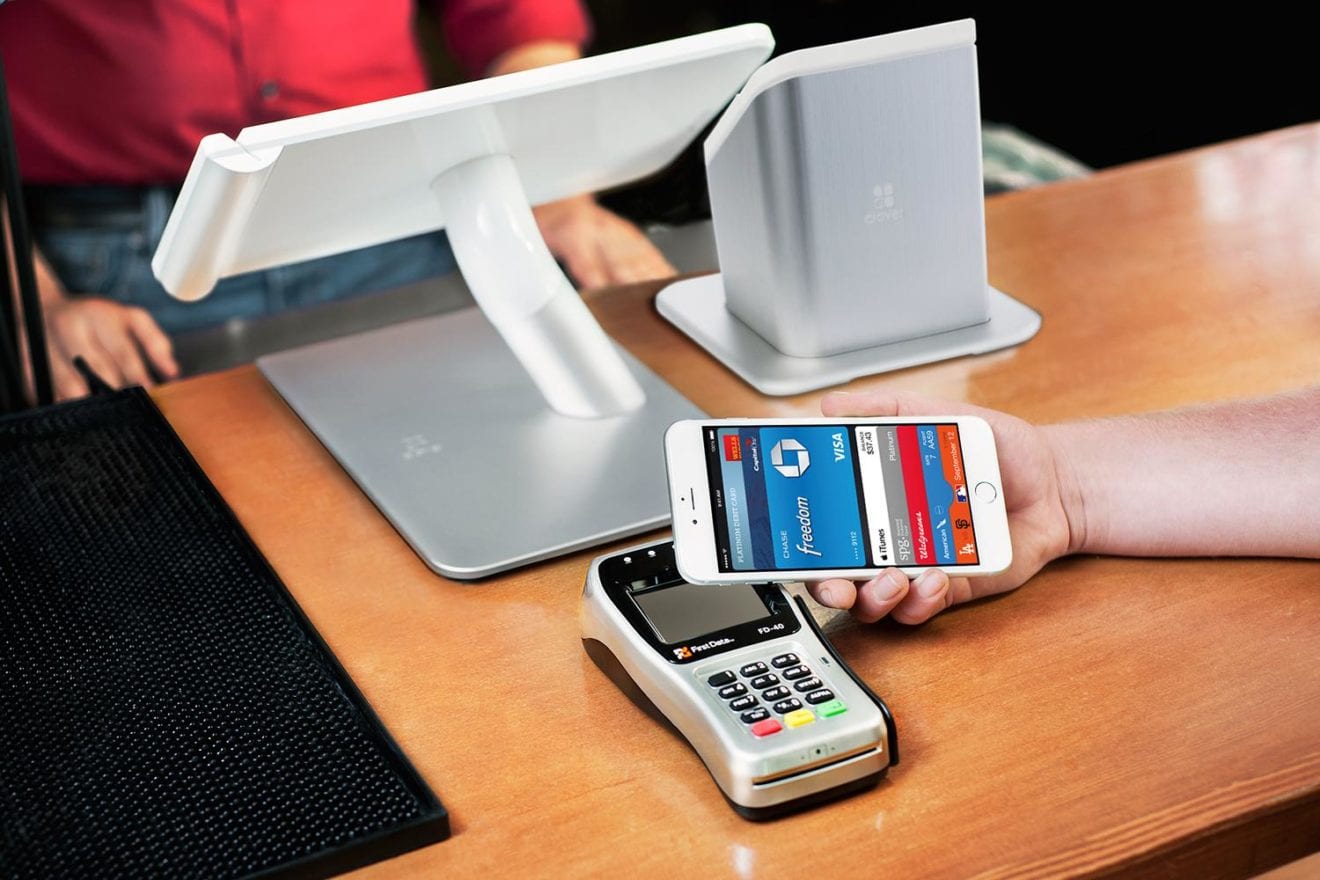
    Wirecard, the global innovation leader in digital financial technology, has deepened its partnership with Singtel’s Dash to support the Dash mobile wallet’s Visa Virtual Account on Apple Pay. From now on, Dash’s customers can make payments using Apple Pay at millions of participating on- and offline merchants worldwide.

    Brigitte Haeuser-Axtner, Executive Vice President, Sales Asia, Digital & Telecommunications at Wirecard said, “As leaders in digital financial technology, we are proud to work with Singtel to bring Dash to an even larger group of potential customers, and to connect consumers with merchants around the globe. Asia continues to be the leader of the digital payments revolution worldwide, and we are excited to be at the forefront of these innovations.”

    “With the increasing popularity of mobile and online payments, Dash enables easy, secure and seamless payment options between our partner merchants and our more than half a million Dash customers on the platform of their choice,” said Gilbert Chuah, Head of mCommerce at Singtel. “Our expanded partnership with Wirecard to bring Dash to Apple Pay reflects our commitment to enhance the digital payment experience for both merchants and customers.”

    Singtel Dash is Singapore’s only all-in-one digital wallet which provides a safe and secure mobile payments solution for shopping, commuting, and remitting money. Dash’s Visa Virtual Account is the first of its kind in Singapore and was introduced in 2017.

    The inclusion of Dash into Apple Pay complements the increasing popularity of online shopping in Singapore. Wirecard’s 2018 International Holiday Shopping Report found that 67% of Singaporeans surveyed prefer shopping online, either via desktop or mobile, while 20% prefer shopping in-store. The ability to use mobile payments in-store is also a welcome innovation with 51% of respondents saying it would improve their shopping experience.


  • Visa and The Mall Group collaborate to drive the future of retail in Thailand

    Visa and The Mall Group collaborate to drive the future of retail in Thailand

    Visa, the world’s leader in digital payments, and The Mall Group, Thailand’s leading retail and entertainment complex developer, last week announced a new long-term partnership set to drive the future of retail in Thailand.

    Building on their existing relationship, this partnership will see The Mall Group and Visa develop personalised shopping experiences for consumers, using Visa’s capabilities and exploring new technologies such as the Internet of Things (IoT), Artificial Intelligence (AI), Augmented Reality (AR), Virtual Reality (VR), biometrics, as well as data analytics to understand changing consumer behaviours.

    Chris Clark, Visa’s Regional President for Asia Pacific, said: “We believe payment technology can be a key differentiator for The Mall Group helping it to deliver a faster, more convenient and more personalised shopping experience for consumers. We’re looking forward to working together to drive payments innovation at The Mall Group’s expansive locations across Thailand.”

    Supaluck Umpujh, Chairwoman of The Mall Group, said: “The partnership with Visa represents a significant step into a new era of retail where customer experience is at the heart of everything we do. Our goal is to explore and leverage the latest innovations that will add value to our business. This will consequently benefit our shoppers and help strengthen our position as a world-class shopping destination among both local and international visitors.”

    Studies have shown that by 2020 AI will be responsible for managing 85 percent of retail customer interactions and as many as 100 million consumers will use AR to create a more novel shopping experience.

    For decades, Visa, together with its merchant partners, has consistently invested in growing electronic payments in Thailand. This has included educating consumers and merchants on the benefits of electronic payments, expanding the acceptance of electronic payments, and introducing new technologies to enhance the payment experience and make it more secure, such as EMV, contactless payment technology, tokenisation, and Visa QR payments.

  • AuMake enters into agreement with JD Worldwide

    AuMake enters into agreement with JD Worldwide

    AuMake International Limited has joined forces with JD Worldwide, a division of Chinese e-commerce giant JD.com, to create a new omnichannel platform for Australian and New Zealand brands to reach Chinese customers. The strategic agreement, which was signed in Sydney on Tuesday, will see JD combine its online and logistics capability in China with AuMake’s retail store and brand building capabilities in Australia.

    The partnership mirrors a similar agreement between Alibaba’s Tmall and Chemist Warehouse, the companies noted in a statement.

    The agreement builds on the booming daigou industry in Australia and New Zealand, where personal shoppers, often Chinese students or tourists, buy and ship products on behalf of family, friends and other clients in China.

    AuMake over the past two years has expanded its chain of retail stores catering to daigou shoppers with relevant products and services.

    Under the agreement, AuMake will become JD’s exclusive retail store partner in Australia and New Zealand and connect existing and future store customers to its online flagship on JD’s cross-border platform, JD Worldwide.

    JD, under the agreement, will fully support AuMake’s online flagship, with an initial sales target of 10 million RMB ($2 million) per month, and provide access to its warehouse and dispatch logistics network in China.

    The companies will also work together to incubate and develop new brands to be exclusively sold on the JD Worldwide platform and in AuMake retail stores.

    AuMake executive chairman Keong Chan called the agreement a “company-changing event”.

    “This is a company changing event for AuMake and confirms the value that we have created so far via our retail store distribution network in Sydney,” he said.

    “Under this collaboration with JD Worldwide, AuMake will now be able to reach hundreds of millions of customers in China with new brands and products, including brands and products owned by AuMake.”

    Keong added that he believes AuMake and JD together can fundamentally change the way in which Australian and New Zealand products reach the Chinese market.

  • Bukalapak Joins Hands With Tanamduit to Sell Mutual Funds Online

    Bukalapak Joins Hands With Tanamduit to Sell Mutual Funds Online

    E-commerce platform Bukalapak has partnered with online investment platform Tanamduit to introduce mutual fund products to first-time retail investors. The partnership will see local asset management firms Bahana TCW Investment Management, Batavia Prosperindo Asset Management and Sucorinvest Asset Management offer five new investment products, ranging from equity to fixed-income funds, on Bukalapak’s mutual funds platform BukaReksa.

    At its launch in January 2017, BukaReksa only featured money market fund products offered by CIMB Principal Asset Management and Mandiri Manajemen Investasi.

    But to capture a larger market, Bukalapak joined hands with finance marketplace Bareksa in December 2017, adding four more asset management firms, Kresna Asset Management, Syailendra Capital, Ciptadana Asset Management and BNP Paribas Investment Partners, to the platform

    BukaReksa now features nine asset management firms offering 21 investment products, compared with Bareksa, which has 31 asset management firms offering 160 investment products.

    “We hope our partnership with Tanamduit can boost financial literacy and investment in the country,” said Destya Danang Pradityo, head of payment and financial services at Bukalapak.

    Through the BukaReksa platform, customers can invest from as little as Rp 100,000 to Rp 1.5 million ($7-$104) in mutual funds.

    Destya said BukaReksa has at least 120,000 registered customers, with around half of them active investors from across the archipelago.

    “We believe online investment will become part of our lifestyles. Our collaboration with Bukalapak forms part of our mission to educate people on the benefits of investing,” said Muhammad Hanif, business development director at Tanamduit.

    With rapid technological development and the growth in online transactions, e-commerce players see opportunities to provide various services, including financial and investment products. This has seen the emergence of fintech startups offering mutual fund investment has been a trend over the past three years.

    Aside from Bukalapak, other online marketplaces also joined hands with Bareksa, such as Tokopedia, which in April this year launched Tokopedia Reksadana, offering mutual funds through local asset management firm Syailendra Capital.

    Another fintech startup, Invisee, has also been offering mutual fund products online in partnership with various asset management firms since last year.

    According to Halim Haryono, deputy director of investment supervision and development at the Financial Services Authority (OJK), the number of people investing in mutual funds increased 16.25 percent year-on-year to about 930,000 by October this year, due to the rise of online mutual fund marketplaces.

    Only about 400,000 people invested in mutual funds in 2016, Halim said.

  • Telenor Group CEO meets Prime Minister to discusses digitalisation and socioeconomic development

    Telenor Group CEO meets Prime Minister to discusses digitalisation and socioeconomic development

    SigveBrekke, President and CEO of Telenor Group, along with IrfanWahab Khan, CEO of Telenor Pakistan and Petter-Børre Furberg, Executive Vice President Telenor Group met the Honorable Prime Minister of Islamic Republic of Pakistan Imran Khan to discuss the growing and evolving digital ecosystem in the country and Telenor Group’s longstanding commitment to the country.

    During the meeting, Brekke shared Telenor Groups journey to becoming one of the largest telecom and digital services provider in Pakistan. SigveBrekke thanked the Government of Pakistan for its continued support for the telecom sector and for encouraging foreign direct investments into the country.In addition,theydiscussed possible collaborations to bringcontinued socioeconomic development and digitalisation for all. Brekke also highlighted Telenor’s commitment towards financial inclusion and informed the Prime Minister of incoming investment of USD 140mnas a result of the recently announcedpartnership with Ant Financial.

    The Prime Minister appreciated Telenor’s contribution in the telecom sector and said that the Government aims to develop a knowledge based economy in Pakistan and value Telenor as an important partner in developing the ecosystem that supports the Government’s development agenda.

    The Prime Minister reiterated that the Government is committed to transparency and facilitate investors and enable them take full advantage of huge potential existing in the growing economy of the country.

    “Pakistan is a key market for Telenor Group and we remain committed to empowering this nation by connecting our customers to what matters most,” said SigveBrekke, President & CEO Telenor Group, while sharing his thoughts. “We hope that the government will not only encouragebusiness-friendly policies, but will also introduce new reforms to enhance access to life-changing digital services and solutions for all.”

    “Through Telenor Pakistan’s industry-first initiatives in areas of digital products & services, financial inclusion, agriculture, health, and digital entrepreneurship, we are empowering Pakistan through robust ICT solutions,” said IrfanWahab Khan, CEO Telenor Pakistan. “We have 13 successful years to proudly look back to and aim to serve the people of Pakistan even better with all the learning we have gathered during this time. I thank Prime Minister Imran Khan for his time and am confident that his government will extend the needed support to help us materialise our shared vision of a digital Pakistan.”

    During his visit, SigveBrekke also called upon Mr. Asad Umar, Minister of Finance, Revenue and Economic Affairsand Mr. Shah Mahmood Qureshi, Foreign Minister and extended his appreciation to the Government for ensuring positive outlook and improving economic indicators that are instrumental towards attracting investment in the country. Brekke also discussed the role of telecom sector in socioeconomic uplift of the country by bringing widespread connectivity to the people of Pakistan.

    Telenor Group has been operating in Pakistan since 2005 and has made a significant impact on the socioeconomic uplift of the country. The Group has invested over USD 3.5bn, contributed over USD 2.5bn to the national exchequer since 2005 and created over 5,000 direct jobs, in addition tohundreds of thousands of indirect jobs.

  • ShopBack Partners Petron to Launch Petrol Redemption Programme

    ShopBack Partners Petron to Launch Petrol Redemption Programme

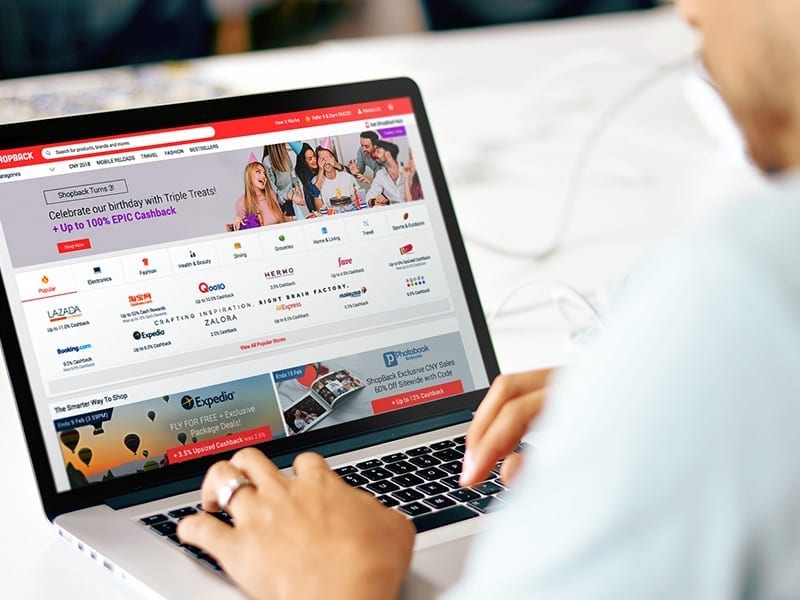
    Malaysians can now utilise cashback from ShopBack every time they refuel at petrol stations. The No.1 Cashback portal in the country recently inked a partnership with Petron Malaysia, becoming the first in the country to allow users to convert cashback to Petron Miles (PMiles) Points and vice versa.

    “Previously, after our users get cashback from their online purchases, they can choose to transfer the cash to their bank accounts or use it to offset Maxis phone bills. The collaboration with Petron is a first for both parties – the first long-term online to offline redemption for ShopBack, and the first offline to online redemption (PMiles Points to cashback) for Petron as well,” says Alvin Gill, Country General Manager of ShopBack Malaysia.

    He mentions that the number of users who accumulated five figures cashback savings through ShopBack is on the rise. Malaysians are getting more familiar with cashback benefits and the company has been exploring opportunities to continue shaping a smarter consumer spending habit offline, of which it feels the priority should be on ways that meet the practical needs of Malaysians’ daily life.

    “It is reported that about 23.9 per cent of Malaysians’ disposable income was spent on petrol, housing and utilities in 2016. Hence we decided to pursue petrol redemption as the second non-cash withdrawal option. ShopBack is excited to launch this with Petron and we definitely look forward to similar collaborations in the future.”

    The PMiles Points redemption option is now available on all ShopBack platforms (web, mobile web, and app).

    To convert cashback to PMiles points, users just need to log onto their accounts, select withdraw – points redemption and thereafter fill in the required information. For every RM10 cashback, users can convert it to 600 PMiles points.

    According to Choong Kum Choy, Head of Retail Business for Petron Malaysia, the collaboration with ShopBack underscores Petron’s commitment to provide the best customer experience for PMiles members. “We are committed to giving our customers the best products, the best service, and the best rewards. Our collaboration with ShopBack gives our PMiles holders more value with the cashback option, while significantly enhancing their shopping experience.”

    Currently, Petron Malaysia has more than 620 service stations in the country. PMiles members can also convert their points at Petron Service Stations Nationwide or download the form from PMiles Website. Every 1000 PMiles points can be converted to RM10 Cashback, which will be credited into the user’s ShopBack account.

  • Korea’s brand Tonymoly inked partnership with Moschino

    Korea’s brand Tonymoly inked partnership with Moschino

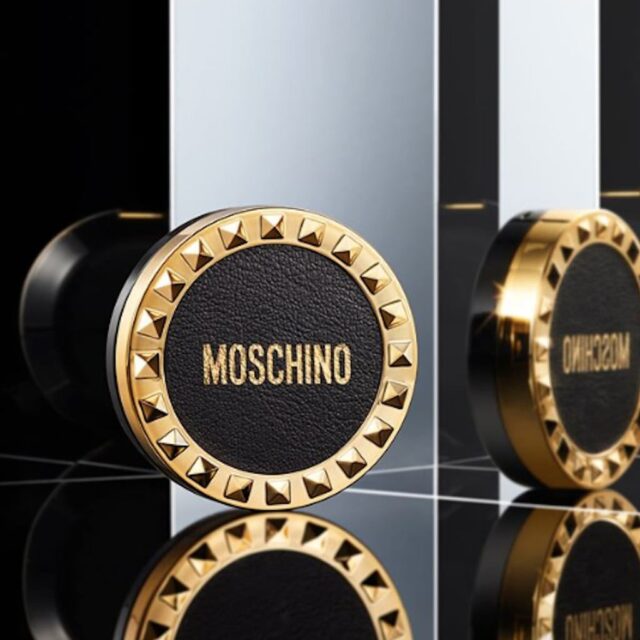
    Italian fashion design house Moschino has released a collaboration with South Korean cosmetics brand Tonymoly on a collection of makeup and skincare products. The collection includes a cosmetics line and a few skincare items in sleek black, white, gold and rainbow packaging. The full range will be available from Tonymoly’s US web store throughout December.

    Moschino also collaborated on a reportedly fast-selling fashion line with H&M earlier this year. South Korean cosmetics brand Tonymoly sees the US as a key market in its plan to accelerate international growth.

  • El Corte Ingles inked global distribution deal with Alibaba

    El Corte Ingles inked global distribution deal with Alibaba

    Spanish department store operator El Corte Ingles is to open a flagship store on Alibaba’s Tmall as part of a broad collaborative approach to reaching Chinese consumers. In a wide-ranging agreement, El Corte Ingles and Alibaba will enable a raft of Spanish and international brands commonly sold in El Corte Ingles department stores, to be sold worldwide via both AliExpress and Tmall.

    AliExpress will consider opening a number of physical stores at El Corte Ingles shopping centres in Spain to create a unique and engaging shopping experience while promoting some of its latest products available to Spanish shoppers. This follows a trial pop-up store in the El Corte Ingles Sanchinarro shopping centre in Madrid earlier this month during Alibaba’s 11.11 Global Shopping Festival.

    El Corte Ingles and Alibaba say they will also explore closer cooperation in delivery and supply-chain infrastructure and channels, allowing Alibaba to benefit from the Spanish company’s logistics knowledge and capabilities in the country, and explore the use of its distribution centres as collection points for online purchases made through AliExpress.

    Smart payments

    El Corte Ingles signed an agreement with Alibaba’s Alipay in March to bring seamless payment experience to Chinese tourists visiting Spain. This may now be expanded, as El Corte Ingles and Alibaba will work on creating new shopping experiences for Chinese visitors.

    El Corte Ingles CEO Victor del Pozo said the agreement will allow the two companies to combine both the physical and online worlds to offer the best shopping experience to its customers.

    “Together, we are writing the future and placing ourselves at the forefront of trade and technology. El Corte Ingles owns department stores in the best locations of the main cities of Spain and Portugal, and is granted with the confidence and trust of national and international customers. All of this, joined to Alibaba’s technology, will allow us to offer a proposal of unbeatable value.”

    Alibaba Group MD for Italy, Spain, Portugal and Greece, and BDM for Tmall in Europe, Rodrigo Cipriani Foresio, said digital transformation and innovation in all fields are fundamental drivers of Alibaba’s mission of making it easy to do business anywhere, with the ultimate goal of better serving consumers and stakeholders worldwide.

    “Hence, we are confident that the expertise and skills brought by both companies will generate incredible value and opportunities as the cooperation takes shape.”

    El Corte Ingles, which opened in 1940, is Europe’s largest chain of department stores.

  • Xiaomi takes over Meitu’s phone business, manufacture co-branded products

    Xiaomi takes over Meitu’s phone business, manufacture co-branded products

    Meitu and Xiaomi have formed a strategic partnership to jointly launch Meitu-branded phones and other smart devices. The partnership between Meitu – best known for its selfie app – and Xiaomi, a fast-growing technology company with smartphones at its core – will have a far-reaching impact on the brand development of Meitu and Xiaomi as well as the smartphone market as a whole, according to research house IDC. It will allow both companies to expand their customer base and signals a further consolidation in the highly competitive Chinese smartphone market.

    A spokesperson for IDC said that during the last year, Xiaomi has stepped up its efforts to improve the camera capabilities of its products and has done a lot in AI-powered photography research and development. “Leveraging Meitu’s image processing technologies and selfie algorithms will help Xiaomi further boost its AI-powered photography and photo quality and reduce its gap with leading vendors such as Huawei.”

    IDC says Meitu is popular with females which will help draw more women to Xiaomi products which are currently “overrepresented by male users”.

    “Introducing the Meitu brand also enables Xiaomi to offer greater diversity of smartphone products under multiple brands and series, including Redmi, Xiaomi, Black Shark, Pocophone, and Meitu. Xiaomi is gradually forming a multi-brand portfolio targeting different user groups, thereby laying the foundation for it to compete in the market in the long term.”

    The spokesperson said that through Xiaomi’s sales network, Meitu’s software products will reach a larger group of customers via smartphones. “Moreover, licensing its hardware business to Xiaomi allows Meitu to focus on software development and the upgrade of its image processing technologies.”

    And finally, with the top five vendors in China’s smartphone market taking up nearly 83 per cent market share, the growth potential will increasingly diminish for small vendors in areas such as marketing and supply chain resource integration.

    “Going forward, more small vendors are expected to seek strategic cooperation with large vendors and drive consolidation in the China’s smartphone market.”

    Meitu was founded in Xiamen in 2008 as a developer of selfie apps such as MeituPic and BeautyCam, and has been focussed on selfie algorithm development. In 2013, the company ventured into the smartphone market and launched smartphones targeting female users and the selfie market. Despite a higher profit per phone sold and a higher brand premium, the company has become increasingly marginalised in China’s brutally competitive smartphone market due to its meagre shipments.

    According to IDC’s Worldwide Quarterly Mobile Phone Tracker, Meitu only had a mere 0.5 per cent market share in China with shipments of approximately 1.5 million units as of the third quarter of this year.

  • JD and Toyota partner to expand auto services business

    JD and Toyota partner to expand auto services business

    FAW Toyota, a joint venture between Toyota Motor Company and First Automobile Works, has launched a flagship store on JD.com, China’s largest retailer, allowing customers in China to purchase and schedule maintenance services online and then bring their vehicles to FAW Toyota’s offline service centers at their convenience.

    In addition to auto services, customers can easily purchase a variety of automobile parts and related products.

    After making their online purchases, customers will receive a verification code on their phones, which they can use at FAW Toyota’s offline ‘4S’ stores to redeem their parts, supplies, installation or repair services.

    Auto parts and supplies can also be delivered directly to customers’ homes.

    The partnership was concluded to improve customers’ level of convenience while FAW Toyota will gain insights from the various data it will collect from the platform such as age, gender, and purchasing behavior of shoppers.

    As one of the latest applications of its “Boundaryless Retail” strategy, last month JD launched a new offline automotive initiative called JD Auto Service, known in Chinese as Jingdong Jingche Hui.

    The initiative already includes nearly 200 third-party offline car repair stores.

    Through JD Auto Service, customers can buy auto parts or maintenance services on JD.com, and then go to a JD Auto Service location for installation.

    To ensure high-quality service, each of the offline stores is screened to meet JD’s strict standards before joining the network.

    JD has been leveraging its advanced e-commerce capabilities and offline resources to expand into China’s booming automotive aftermarket business.

    The company’s omnichannel model now covers the entire purchasing process for car parts and services.

    JD currently has partnerships with over 30,000 authorized offline auto stores for complementary service.

    Chinese car owners have so far responded enthusiastically to JD’s omnichannel network.

  • Jessica Jung to Launch an Exclusive Bag Collection with Zalora

    Jessica Jung to Launch an Exclusive Bag Collection with Zalora

    Online fashion retailer Zalora is partnering with Blanc & Eclare by Korean-American singer and fashion icon Jessica Jung. The collaboration will involve a limited edition bag collection that will be available exclusively on the Zalora website and mobile app across Southeast Asia. It is Blanc & Eclare’s first bag product.

    The “Poppy” bag reflects Jessica Jung’s understated design aesthetic featuring subtle unexpected elements.

    Zalora’s CCO Saskia De Jongh said that as one of the region’s most fashionable and successful multi-hyphenated celebrities, Jessica’s style is admired across the world, and Zalora is proud to give fashion consumers in the region a piece of Jessica’s most coveted fashion must-haves.

    “This collection is a testament to Jessica’s position as a formidable curator of style as she brought her modern interpretation of a classic bag design.”

    Jung said of the collaboration: “I’ve always believed in the power of social media and technology to bring fashion closer to everyone. Zalora has transformed how people shop fashion in their part of the world, and we at Blanc & Eclare are fortunate to have the opportunity to reach consumers and fans across the region and offer them a beautiful and practical bag collection through our partnership with Zalora.”

    The exclusive collection will be available on all Zalora websites and app from October 26.

  • Sanrio Teams Up With The Créme Shop Launching Hello Kitty Skincare

    Sanrio Teams Up With The Créme Shop Launching Hello Kitty Skincare

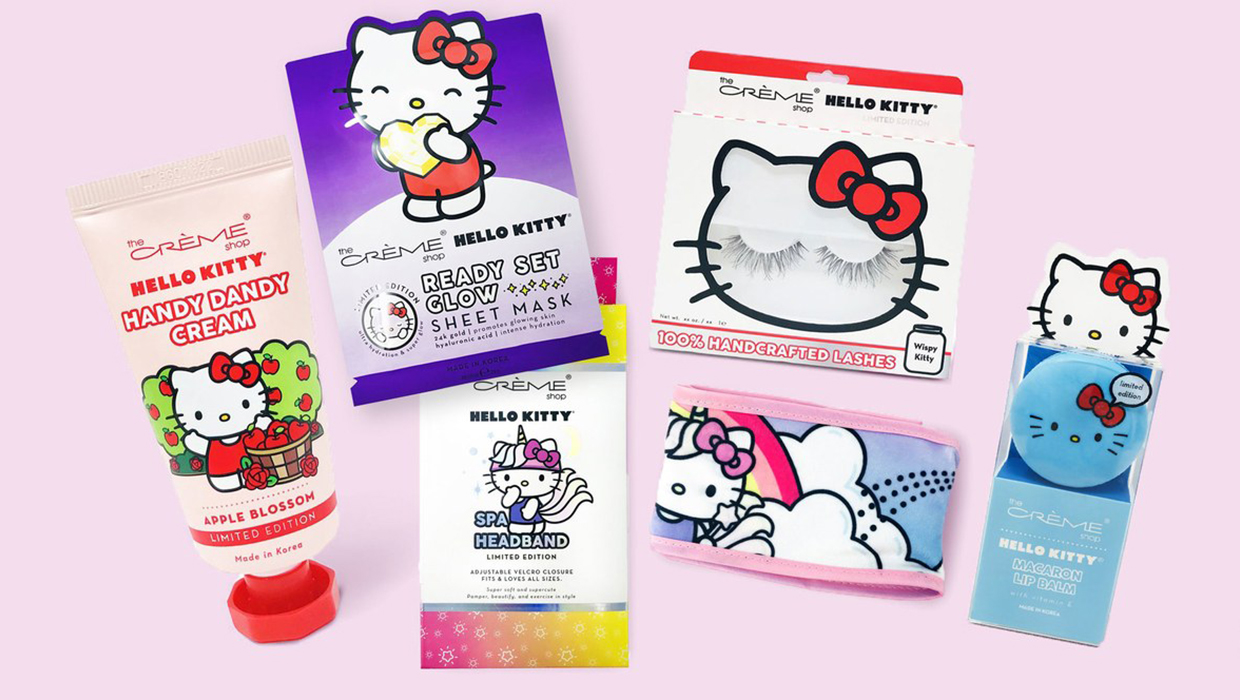
    Skin-care retailer The Creme Shop has released a collaboration with Hello Kitty. The new product range features 51 items adorned with the world-renowned Sanrio character, including face masks, lip balms, hand creams and bath bombs.

    The Creme Shop’s executive director Olive Kim said: “As a brand that loves to create fun and eclectic products for our customers, a partnership with Sanrio felt natural to us. We’ve always adored Sanrio’s whimsical aesthetic and feel that this collaboration will only enhance the enjoyment our customers receive from our products. The best news is, this is only the beginning of our collaboration, and we can’t wait to create more exciting beauty and skin-care products with Sanrio.”

    While the products are currently only available online and at the Sanrio flagship Los Angeles store, they will eventually be made available for sale at a range of offline chain stores.