Retail News CRM

Tag: paypal

  • 4 Reasons Why Crypto Transactions Could Dominate the Payment Markets in the Future

    4 Reasons Why Crypto Transactions Could Dominate the Payment Markets in the Future

    Over time, the position of the payment markets in the global economy has been invariably shaped and defined by the traditional payment systems. However, as with all technologies, it is not without its pitfalls.
    While these payment systems are equipped to handle the level of transactions well enough, they still have several faults. Thus, in the bid to survive the rapid pace at which revolution is taking place globally, the payments market had to accept the innovative power wielded by cryptocurrencies.

    As a result, these traditional payment systems have to compete with cryptocurrencies for dominance. However, given the pace at which crypto adoption is going, experts believe that crypto transactions could dominate the payments market at some point in the future.
    Let’s see why.

    Crypto Transactions have Blockchain Technology as their Backbone

    With blockchain technology being the primary backbone of crypto transactions, the payments market get to experience innovations in various ways. One such way is decentralization. No one wants to wake up to find their accounts frozen for something they are not aware of. Centralized services do this to people — with central authorities in control, there is limited freedom for flexibility in transactions. PayPal, for instance, imposes daily transaction limits on users and sometimes suffers from delayed services due to many glitches.

    Blockchain technology, on the other hand, is glitch-free. Furthermore, there are no limits as users get to transfer as much money as they want to anyone they want. This, of course, is a recipe for a high influx of people into the payments market.

    Let’s Talk About Scalability

    No one wants to wait for several hours or days before getting their transactions confirmed. A slow system can be really frustrating. This is where crypto transactions stand out. Created as an electronic cash system, they are better equipped to deal with the high demand for services.

    Cyber Security

    The evolution of technology means that keeping one’s transactions and accounts protected from prying eyes is quite difficult. This is particularly true of traditional online transactions.
    With the immutable force of tamper-proof ledger system offered by blockchain, crypto transactions are safe from these threats. Blockchain technology works in such a way that transactions and data can only be added to it but cannot be altered afterward.
    Thus, with crypto transactions, chances of intercepting transfers or installing malicious software are curtailed. This is particularly the case with crypto transactions performed through cold wallets and decentralized exchanges.

    The Future is Going Cashless

    The world is increasingly adopting digital economy which means that soon fiat currencies could be ditched and replaced with different forms of electronic cash systems. The fact that cryptocurrencies were introduced to the world as digital money means they could one day be the way to go. Even though the possibility of crypto transactions being used with different businesses is limited at the moment, the future appears to be bright. In fact, cryptocurrencies like Ripple and Stellar are gradually making the cut in larger circles.
    IBM, for example, recently announced that it was adopting Stellar as its native currency. This is definitely a move in the right direction for all cryptocurrencies.

    Learn more about crypto transactions and related subjects by checking out the infographic originally published at Bitcoinfy.net.

  • Regulating Facebook could hinder small businesses

    Regulating Facebook could hinder small businesses

    Digital platforms provide a host of challenges for governments. Questions about how to best protect privacy, democracy, and speech online become more pressing every year.

    But policies that affect online platforms also affect international trade. Many Australian small businesses rely on digital platforms to stay on par with their international competitors.

    As Australia starts tackling the challenges wrought by digital platforms, policymakers should be careful not to undo the good things that stem from an evermore connected world. That includes the critical role of these platforms in helping retailers sell their products to overseas customers.

    Platforms facilitate exports

    As my new research with colleague Danielle Parks shows, digital platforms appear to significantly reduce the economic distance and trade costs between buyers and sellers.

    Take Facebook, for example. Facebook is both a social networking platform and digital market platform, where Facebook’s Marketplace helps business owners connect with potential customers.

    The social networking interface allows buyers and sellers to message each other and exchange information about what the seller has, and what the buyer wants. Meanwhile, Marketplace features like identity verification and buyer ratings help to facilitate connections more quickly, and with more trust, than might otherwise be possible.

    There isn’t a lot of large-scale data on cross-border e-commerce, so researchers must get creative to study digital platforms and trade. The findings are extraordinary.

    One study found that 97% of US-based eBay sellers export product to overseas buyers. Another found the “economic effect of distance” to be 65% smaller on eBay. In other words, the digital platform reduces the challenges of selling to people in other countries.

    Research conducted by PayPal showed that 79% of US small businesses on its platform sell to foreign markets. And PayPal merchants that exported, outperformed businesses in general. Interestingly, that finding held for coastal and non-coastal businesses, and for rural and urban businesses alike.

    In our new study, we surveyed Australian businesses on Facebook. We found that those with a Facebook presence were 63% more likely to export their products internationally than other businesses. The propensity to export was higher across all business sectors and nearly all company sizes.

    This emerging pattern shows how world markets are opening up to smaller businesses that might not otherwise be able to compete with their larger, multinational rivals. These findings can partly be attributed to export-prone firms being more likely than others to use digital platforms. But there is no question that the platforms can also enable trade.

    Most governments recognise the need to dismantle barriers to foreign market access, and any new policies regarding digital platforms should not make it harder for small and medium sized businesses to engage in trade.

    How regulation could hurt small businesses

    The Australian Competition and Consumer Commission (ACCC) is currently conducting an inquiry into digital platforms at the request of the treasurer.

    The ACCC’s preliminary report recognises how digital platforms have revolutionised the ways consumers and businesses communicate with one another. The report also highlights concerns over data privacy and the influence of bad actors producing and spreading misinformation.

    The final report, expected in June, will make policy recommendations that aim to address these concerns. But these policies could also inadvertently threaten the revenue streams of businesses that advertise on these platforms or that use them to facilitate online sales.

    Restrictions on the cross border flow of consumer information could interfere with everyday business practices. For example, a key advantage of e-commerce, especially for small businesses, is using search engine techniques to reach larger audiences, and target potential customers. So, search engine restrictions could limit the way businesses target customers with advertising, therefore limiting a business owner’s ability to reach customers abroad.

    Other regulations could restrict business owners from storing the personal information of customers – such as credit card information, consumer preferences and purchase history. That would then limit businesses in how they interact with customers at home and abroad.

    What’s happening at the moment

    Australia is not alone in considering these tough issues. The landscape of digital data flows, data privacy, and e-commerce is a work in progress for governments across the globe.

    The EU recently enacted data privacy regulation called the General Data Protection Regulation (GDPR), which is designed to:

    […] fundamentally reshape the way in which data is handled across every sector, from health care to banking and beyond.

    Meanwhile, the United States Congress will likely consider new internet privacy legislation this year.

    Provisions on digital data flows have been included in major recent international trade agreements. Both the United States-Mexico-Canada Agreement (USMCA) and the Trans Pacific Partnership (TPP) bar data localisation requirements. That means foreign companies would only be allowed to work in a country if they built out or leased separate data infrastructures in that country – a costly endeavour, especially for smaller businesses.

    On the other hand, USMCA and TPP do not allow participating countries to require that platforms disclose their source code or algorithms. These provisions do not necessarily preclude countries from adopting privacy protections, but they do make it easier for platforms like Facebook to operate without fear that they will be asked to handover important intellectual property.

    As the government considers the Australian Competition and Consumer Commission report, one thing should be clear: any policy changes should not overlook the role of these platforms in helping Australian small businesses sell goods to customers in the global marketplace.

  • India is next plan for PayPal

    India is next plan for PayPal

    Global technology platform and digital payments company PayPal Holdings has launched in India.

    This enables Indian consumers to use PayPal to shop online. Merchants offering PayPal will be able to process both local and global payments, gaining access to the brand’s more than 218 million customers across 200 global markets.

    Offering cross-border payments in India for nearly a decade, PayPal has now rolled out secure transactions and such benefits as One Touch, Buyer and Seller Protection and Refunded Return Shipping.

    India has all the ingredients to become a true digital economy, says PayPal Private CEO Rohan Mahadevan.

    “India is transitioning away from our biggest competitor, cash, and our digital platform and technology has immense scope to enable this at scale,” says PayPal India MD Anupam Pajuja. “For us, the marathon has just begun.”

    PayPal has set up a customer service centre in India with multilingual support and on-ground sales team.

    As digital payments become more mainstream in India, PayPal is partnering with government and state-owned banks on such initiatives as a digital financial literacy program and an eTourist visa.

  • Paypal launches innovation labs in India

    Paypal launches innovation labs in India

    Online payments company PayPal has set up two new innovation labs at its Chennai and Bangalore tech centers in India.

    These are the first of such facilities in India set up by the company and third globally after the US and Singapore.

    These labs will support projects in machine learning, artificial intelligence, data science, IoT, software-defined radio, virtual and artificial reality and basic robotics, among other fields, according to a release shared by the company.

    They will also be integrated with some of the company’s ongoing initiatives, such as the PayPal Incubator, to develop and nurture fintech startups, the statement added. Launched in 2013, PayPal’s startup incubator offers office space, mentoring and technical training, and networking opportunities to companies incubated.

    “The focus will be on fuelling new-age technology and giving rise to unconventional ideas with the potential to transform the ecosystem we operate in,” said Mike Todasco, director of Innovation, PayPal.

    Paypal is one of the companies that have made a play for India’s fintech space after the government’s recent demonetisation move.

    To strengthen its position in the market, PayPal has reportedly sought a wallet (prepaid payment instrument) licence from the Reserve Bank of India.

  • HKMA grants stored value licences to eight more issuers including PayPal

    HKMA grants stored value licences to eight more issuers including PayPal

    The Hong Kong Monetary Authority (HKMA) said on Friday that it had granted stored value facilities (SVF) licences to eight more issuers including Paypal Hong Kong Limited, bringing the total to 13.

    “We are pleased to see companies with diverse backgrounds offering a variety of SVF products which will enhance retail payment convenience in Hong Kong,” said Howard Lee, Senior Executive Director of the HKMA.

    The implementation of a supervisory regime by the HKMA will strengthen public confidence in using stored value products and services which, in turn, will encourage innovation in the local retail payment industry, Lee said.

    The other issuers granted licenses are 33 Financial Services Limited; Autotoll Limited; ePaylinks Technology Co., Limited; K & R International Limited; Optal Asia Limited; Transforex (Hong Kong) Investment Consulting Co., Limited; and UniCard Solution Limited.

    The city’s de-facto central bank granted the first batch of licenses to SVF issuers such as Alipay Financial Services (HK) Limited in August.

    The Payment Systems and Stored Value Facilities Ordinance started operation on Nov. 13 last year and provided a one-year transition period for application for SVF licences.

    Upon the expiry of the one-year period, it will be illegal for any person, unless being exempt, to issue or operate SVF without a license, the HKMA said.

  • Asia Pacific leads for mobile cross-border shopping

    Asia Pacific leads for mobile cross-border shopping

    Asia Pacific leads the world in mobile cross-border shopping, according to the third PayPal Annual Global Report, released in conjunction with global market research company Ipsos.

    With its investigation of the online domestic and cross-border shopping habits of more than 28,000 consumers in 32 countries, the report reveals international opportunities for merchants.

    Of the Asia Pacific shoppers interviewed, 68 per cent said they had made a cross-border purchase by smartphone in the past 12 months.

    There has been a marked shift to mobile purchasing in China, with an average of 35 per cent of cross-border purchases being made on a smartphone this year compared to 27 per cent last year.

    Fewer than 15 per cent of shoppers in both western and eastern European as well as North America, however, used a smartphone for cross-border purchases.

    Meanwhile, their online spending will increase in the next 12 months according to 64 per cent of internet users in China, 39 per cent in Russia and 26 per cent in the UK. This is primarily driven by convenience (76 per cent), changes in disposable income (30 per cent), faster shipping (35 per cent) and cheaper shipping (27 per cent).

    “Selling internationally is a substantial opportunity for merchants around the globe to grow their business,” says PayPal director of global initiatives Melissa O’Malley. “We’ve seen our cross-border volume grow 38 per cent in the past two years, from $14 billion in the third quarter of 2014 to $19 billion in the same quarter this year.

    Merchant benefits

    “PayPal’s mobile payment volume is also up 56 per cent over last year, so we see the direct benefits merchants can reap by optimising their mobile shopping offerings.”

    For the first time in the survey’s three years, China is the most popular online cross-border shopping destination – 21 per cent of online shoppers interviewed claimed to have shopped from Chinese websites in the past 12 months, followed by the US (17 per cent) and the UK (13 per cent).

    What is attractive about cross-border shopping? Of the global consumers in the survey, 76 per cent cited better prices, while 65 per cent said they could buy items not available in their own country.

    Factors that would make online shoppers more likely to buy from a website in another country include free shipping (46 per cent of respondents) and secure payment system (44 per cent).

    In 24 of the 32 countries surveyed, PayPal is most used for payments. Key factors for choosing particular payment methods include security (53 per cent of respondents), convenience (44 per cent) and acceptance by retailers (41 per cent).

    Of the shoppers using PayPal, 44 per cent say it is their preference as they do not need to share financial details with the seller.

    On behalf of PayPal, Ipsos interviewed a representative quota sample of about 800 to 2000 (28,012 in total) adults who use an internet-enabled device in each of 32 countries, including China, India, Japan, Singapore and Thailand. Interviews were conducted online between late August and early October.

  • Chinese shoppers lead way in digital commerce

    Chinese shoppers lead way in digital commerce

    While digital commerce is strong in the world’s two largest economies, Chinese shoppers use smartphones and tablets more than shoppers in the US.

    This is shown in a new study from IAB (Interactive Advertising Bureau) and IAB China, Understanding Digital Commerce in the US and China. Conducted by consulting firm Hypothesis Group, the research shows that both China and the US have achieved near-full adoption of digital commerce, with 89 per cent of Chinese digital users aged from 18 years upward and 84 per cent of US digital users in the same age bracket saying they had bought a product or service digitally over the previous 12 months.

    When it comes to mobile commerce, China leads the way in several areas:

    • 67 per cent of Chinese digital users had made a mobile purchase over the previous 12 months vs 34 per cent of US digital users.
    • 24 per cent of Chinese mobile shoppers purchase via mobile every day vs 15 per cent of US mobile shoppers.
    • 89 per cent of Chinese mobile shoppers are interested in making a mobile purchase over the next month vs 78 per cent of U.S. mobile shoppers.
    • 59 per cent of all monthly purchases in China are digital compared to 42 per cent in the US. Of those purchases, 48 per cent are made via mobile in China, while mobile commerce accounts for 26 per cent in the US.

    Plentiful cross-channel opportunities are available in both markets, says the report, with a similar percentage of Chinese and US digital shoppers using both digital and offline channels when deciding on a purchase (31 per cent in China vs 29 per cent in the US).

    Digital research

    Chinese shoppers are more likely to research and compare prices digitally while within a physical store, with 38 per cent saying they do so all the time or most of the time, while 23 per cent of US shoppers do the same. They are also more likely to use more than one digital device over the course of the purchase process (67 per cent China vs 43 per cent US).

    Americans tend to favour multi-product retailers when buying digitally, with 72 per cent of US digital shoppers buying from one of these outlets compared to 61 per cent of Chinese shoppers. Meanwhile, Chinese digital shoppers are more likely to buy from sites or apps that highlight discounts (63 per cent China vs 37 per cent US) or that let them compare prices from different sites or apps (51 per cent China vs 29 per cent US).

    Chinese shoppers are also more likely to make a purchase via a messaging app (29 per cent China vs 16 per cent US), while US shoppers are more likely to buy via auction sites (33 per cent US vs 25 per cent China).

    When it comes to making a purchase, American shoppers are much more likely to use a credit or debit card (63 per cent US vs 34 per cent China on computer; 37 per cent US vs 6 per cent China on mobile). In China, payment is much more likely to be through a digital payment service like PayPal or WePay (47 per cent China vs 15 per cent US on computer; 36 per cent China vs 17 per cent US on mobile) or a mobile wallet service like Apple Pay (21 per cent China vs 2 per cent  US).

    Security concerns

    While these numbers indicate strong adoption of digital shopping, obstacles still remain, says the report. The main concern is security, with only 13 per cent of Chinese digital shoppers and 30 per cent of US digital shoppers feeling completely safe shopping digitally. While American shoppers are mainly concerned about information safety and privacy, Chinese shoppers fear digital fraud and scams.

    The top benefits of digital shopping are listed as including convenience, ease of use, price and selection.

    “This study confirms that mobile is a crucial and growing part of the eCommerce experience,” says IAB senior VP/GM mobile and video, Anna Bager. “While China has always been a mobile-first culture, as its initial adoption of the internet was driven by mobile devices, we are now seeing tremendous year-over-year upticks in terms of mobile growth in the US. We expect to see that trend extend to US mobile commerce going forward.”

    IAB China head Chen Yong, who is also secretary-general of the Interactive Internet Advertising Committee of China (IIACC), says it is vital to note how much commerce happens on small screens.

    “Marketers who want to reach Chinese shoppers need to follow their lead by investing in mobile advertising so they can bring their messages to the right people at the right time and right location.”

    The IAB comprises more than 650 media and technology companies responsible for selling, delivering and optimising digital advertising or marketing campaigns.

  • PayPal appoints Somwang Luangphaiboonsri as Country Lead for PayPal Thailand

    PayPal appoints Somwang Luangphaiboonsri as Country Lead for PayPal Thailand

    PayPal, a global leader in digital payments, has appointed Somwang Luangphaiboonsri as Country Lead of its Thailand subsidiary. 

    As Country Lead, Mr. Somwang will be responsible for assisting PayPal to capitalize on the explosive growth of cross-border e-commerce in the Thai market. Together with the newly-established PayPal Thailand team, Mr. Somwang will also be focused on educating Thai merchants on the growth opportunities available in the global e-commerce marketplace. 

    Rahul Shinghal, General Manager for PayPal Southeast Asia said, “I am pleased to announce Somwang’s appointment as the Country Lead for the Thailand office. Somwang has been instrumental in many of our partnership dealings with Thai merchants, including Thai Airways.  I am excited to see the growth of our offerings to customers in the market.” 

    Having spent more than 16 years in the finance and technology industries, Mr. Somwang is a veteran in the e-commerce space. Prior to joining PayPal, Mr. Somwang co-founded a domestic online payment service provider and built the company to be the platform of choice for many Thai consumers. He is well-entrenched in the Thai payments scene, and is also a secretary of the Thai E-Commerce Association and the secretary of Thailand ePayment and eMoney Association.

    “Fintech is a hot topic right now and Thai businesses will need guidance to help them navigate through the fast-changing payment innovations in order to tap on the consumer growth opportunity. I am looking forward to PayPal introducing new solutions for its Thai merchant partners for their evolving customer needs and building PayPal’s presence in Thailand,” said Mr. Somwang. 

    The appointment of Mr. Somwang is just one of the latest steps taken by the digital payments company to reinforce its position in Thailand this year. PayPal has been actively building its merchant portfolio to enable Thai businesses to have access to a seamless cross-border payment experience. In August 2016, an MoU was signed with the Department of International Trade Promotion (DITP) to promote and facilitate cross-border trade for Thailand’s small and medium sized businesses. PayPal also onboarded leading travel businesses including Centara Hotels & Resorts, Centre Point Hotels Group, and Thai Airways as merchant partners that same month, being the sole payment provider for their cross-border online payments. 

  • Discovery Japan Mall opens online

    Discovery Japan Mall opens online

    Tokyo-based craft products retailer DigitalStudio has launched Discovery Japan Mall, a cross-border eCommerce venture.

    Specialising in Japanese brands, the mall’s initial catalogue includes mainly toys, fishing gear, cosmetics, food, watches and fashion. About 100 Japanese companies have opened stores on the mall, offering about 15,000 items.

    Shipping is available to more than 120 countries and regions, and as part of the opening campaign free international shipping is offered for orders worth JPY 20,000 (US$190) or more until the end of this month.

    As well as credit cards, the mall supports payment by AliPay, PayPal, UnionPay and WeChat. The website is available in English, simplified and traditional Chinese, Indonesian, Korean and Thai. Purchases can be made by smartphone, and all orders include tracking and shipping insurance, plus delivery from Japan.

    Discovery Japan Mall representative Norio Itabashi says many hidden Japanese products do not reach the overseas market, and the mall is working with craftsmen and manufacturers to sell unique products.

    DigitalStudio was established in 2003 with the aim of “continuing to bring Japan to the world”.

  • TravelersBox rolling out in Asia

    TravelersBox rolling out in Asia

    TravelersBox kiosks are being launched in Asian airports allowing travellers to deposit their leftover foreign coins into their preferred online accounts.

    More than 40 are expected to be service by the end of the year.

    TravelersBox is the first service allowing travellers to convert foreign currency into usable digital currency at airports. First rolled out at Manila airport in the Philippines, the latest kiosks have just come online in Narita International Airport in Japan.

    In parallel to the expansion, the company is also launching additional products and services in the kiosks tailored to the Asian market.

    Baidu wallet is the first offering, specifically aimed at the Chinese market, the largest travelling population in the world.

    “For the Asian market we’ve given specific attention to each traveller’s nationality,” says TravelersBox co-founder/CEO Tomer Zussman. “Services such as Nets FlashPlay Card for Singaporeans, Lazada for Southeast Asian travellers and more will soon be available in the TravelersBox around the world.”

    TravelersBox has more than 75 kiosks internationally where travellers can convert their leftover foreign change into digital money with options including iTunes, PayPal, Skype and gift cards such as Gap or Starbucks. There is also a donation button.

  • New Ippin mall offers Japanese goods

    New Ippin mall offers Japanese goods

    An eCommerce company that sells printer inks and sanitary napkins, C-Connect, has launched Ippin, an online shopping mall that specialises in direct sales and distribution from Japan to other countries.

    Ippin not only sells products made in Japan, but also “Produced by Japan” and “Popular in Japan” items. Customers can buy directly from 18 regions and countries, though the initial target is mainly China and Southeast Asian countries.

    Categories include food, fashion, cosmetics, children’s and baby items, and electric appliances.
    Independent websites are provided for each country, such as China, Singapore and Malaysia, with recommended item rankings and payment methods (16 currencies) to suit the market, such as credit cards, Alipay and Paypal.

    Users can choose from three languages (English, Chinese and Japanese) with more to be introduced.

    C-Connect was founded in 2009.

  • Paypal now available for iPay88 merchants

    Paypal now available for iPay88 merchants

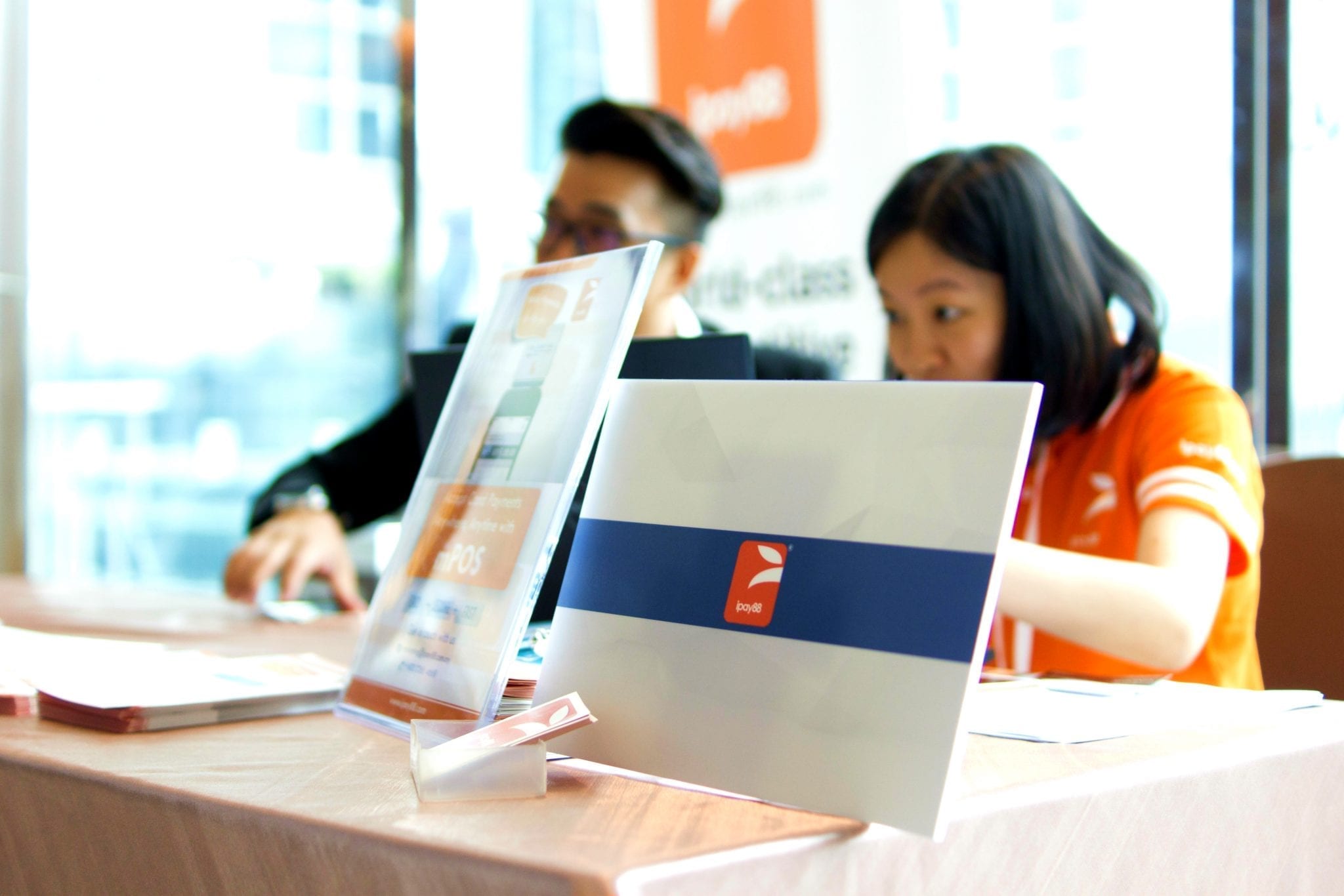
    Malaysian online payment service iPay88 has entered a collaboration with online payment company PayPal to promote and support cross-border trade for iPay88 merchants.

    For small businesses in particular, cross-border eCommerce provides a chance to sell to the world, and iPay88 believes the collaboration will enable its merchants to leverage PayPal’s 184 million active accounts and presence in more than 200 markets.

    OLYMPUS DIGITAL CAMERA

    Executive director KL Chan says iPay88 has nearly 10,000 e-merchants, including SMEs and conglomerates, but there is also a large, untapped market of businesses and companies still considering moving into eCommerce. “This collaboration with PayPal is timely as it will help capture this market effectively by offering both online banking and credit-card payment options.”

    Merchants signing up for a PayPal account can now do so through iPay88. Approvals will be sent to merchants within three working days. Aside from the quick sign-up process, iPay88’s online merchants will also be able to benefit from PayPal’s multi-currency checkout.

    Chan estimates the collaboration will drive extra revenue for iPay88 in 12 months.

    “It has always been a challenge for businesses, especially small ones, to expand and sell overseas,” says PayPal Southeast Asia GM Rahul Shinghal. “PayPal is committed to helping them grow by leveraging the power of eCommerce, which gives them a level playing field when competing with larger export houses.”

    A subsidiary of NTT Data Corporation, iPay88 was set up in Kuala Lumpur in 2006 and has an established presence in Indonesia, Singapore, Thailand, the Philippines and Vietnam.

  • China online payments tightened

    Service providers and their millions of users are affected by a significant regulatory change to China online payments announced by the Chinese Central Bank.

    From July 1, third-party online payment service providers must ensure that all user accounts bear the real name of the account holder. In addition, accounts will be categorised into three types based on security requirements, capped with maximum annual payments.

    The policy was created with an aim of preventing large deposits of money into third-party payment accounts unprotected from bank deposit insurance.

    China’s third-party mobile payments market reached RMB9.31 trillion (US$1.4 trillion) last year, up 57.3 per cent from 2014. Analysts expect the industry will continue to grow at a fast rate in the coming years, reaching RMB52.11 trillion by 2018.
    Mobile payments have become a useful tool for companies in their China market strategy. The two largest third-party online payment platforms in China are Alipay and WeChat.

    Dominant player

    Dominating with roughly half of the market, Alipay is a subsidiary of Alibaba Holding Group, serving Alibaba’s B2B eCommerce network similar to how PayPal works with Amazon and eBay. Alipay co-operates with Visa and around 65 banks, including the Bank of China, China Construction Bank, the Agricultural Bank of China, and the Industrial and Commercial Bank of China.

    As well as being the primary payment method for Alibaba.com and Taobao, it serves more than 500,000 external merchants, covering online retail, gaming, communications, air tickets, commercial services and utility bill payments.

    Its international version, Alipay Global processes payments in RMB and automatically converts them to the merchant’s currency of choice. It supports 12 currencies, with exchange rates decided by either the Bank of China or China Construction Bank. Alipay Global’s transaction fee is 2 to 3 per cent.

    Account procedure

    To set up a service account with Alipay China, a company must first register an account, providing company information for verification. Once approved, an application can be made and a QR code issued.

    Applicants must provide a business licence, ID card information and public bank account details. If the applicant is not the company’s legal representative, a power of attorney must be provided.

    WeChat Payment was launched by Tencent Holdings in 2013. It is different to Alipay in that it serves as both a payment platform and an instant messaging service. It also differs from Tencent’s TenPay, which is similar to Alipay. WeChat Pay can be used to pay in stores, on websites, WeChat shops and third-party apps, with its payment procedure easier and for both customer and company alike.

    Paying through WeChat has revolutionised how retailers and customers interact, with a huge number of customers depending on its social media and instant messenger service.

    To set up a service account, a company first needs to apply for an official WeChat account, specifying reasons for the application and supplying the category or type of company.

    Applicants need to supply the full name of the contact person, phone number and email address; the website address of the company (not necessary for non-IT companies); full company name; description of the product; customer service number; and company bank account information.

    For non-financial entities such as Alibaba and Tencent to provide third-party online and mobile payment services in China, a payment business licence must first be obtained. Regulations stipulate that the business scope, qualifications and contribution ratio of foreign-invested institutions applying for the licence will be decided by the People’s Bank of China and State Council separately.

    Pile of documents

    Meanwhile, Apple Pay has entered the China market, partnering with China UnionPay and nearly 20 Chinese banks. In its first two days, more than three million bank cards were linked to its service, which uses Near-Field Communication (NFC) contactless payments as opposed to QR codes, which are used by Alipay and WeChat Pay.

    Apple Pay, along with Edenred and Sodexo, is among the few foreign-invested companies with a Chinese payment business licence.

    Applicants for the licence must be companies established in the China and must submit a pile of documents to a local branch of the People’s Bank of China – a written application specifying the name, domicile, registered capital and organisational structure of the applicant business, payment business being sought, a copy of the company’s business licence, articles of association, verification certification, financial and accounting reports audited by an accounting firm, feasibility study report, acceptance materials on anti-laundering measures, certification on technical safety testing and authentication, resumes of senior management personnel, certification that the applicant and senior management personnel are free of criminal records, relevant materials of major capital contributors, and an authenticity statement regarding the application materials.

    Entry into China’s lucrative third-party online payments can unlock huge market potential, but the requirements are strict and the application process and approval is by no means easy.

    In comparison, the process for obtaining an online payment QR code is relatively straightforward, but the recent restrictions imposed on payment account types and security checks might change both the way third-party online payment platforms work as well as consumer behaviour.

    • From China Briefing, published by Dezan Shira & Associates. Dezan Shira is a specialist foreign direct investment practice providing corporate establishment, business advisory, tax advisory and compliance, accounting, payroll, due diligence and financial review services to multinationals investing in China, Hong Kong, India, Vietnam, Singapore and other ASEAN countries.
  • PayPal completes eBay split

    PayPal completes eBay split

    Having finalised its split from eBay, PayPal is now an independent public company trading on the Nasdaq  as PYPL.

    Dan Schulman, president and CEO of PayPal, said the business would be focussing on enabling digital payments on a “technology agnostic platform that creates value for our consumers and merchants online, in apps, and increasingly in stores.”

    “As the world’s open, digital payments platform and most trusted and popular digital wallet, we are excited to celebrate our listing day and embark on our next chapter,” said Schulman.

    “Mobile technology is transforming payments, making it easier, safer and more affordable for people to move and manage their money than ever before. As an independent company, we see a tremendous opportunity for PayPal to expand our role as a champion for consumers and partner to merchants, and to help shape the industry as money becomes digital at an increasingly rapid pace.”

    PayPal previously was listed on the Nasdaq under the same ticker symbol, PYPL, before it was acquired by eBay in 2002 for $1.5 billion. “We’d like to thank our friends at eBay for their tremendous support and partnership over the past 12-plus years,” said Schulman.

    In 2014, PayPal processed $235 billion in total payment volume and generated more than $8 billion in revenues. Also last year, PayPal processed $46 billion in mobile payment volume. The company serves more than 169 million active customer accounts in 203 markets around the world.

  • As PayPal split looms, eBay plans to think small

    As PayPal split looms, eBay plans to think small

    EBay plans to grow by thinking small as it prepares for life apart from PayPal.

    The company says it is focusing on expanding the number of small- to mid-size businesses and individuals who buy and sell items on its popular online marketplace. That comes as it attempts to address investor concerns about how eBay will fare later this year after it spins off its PayPal payments division, which has long been EBay’s fastest growing segment.

    EBay’s first-quarter earnings may have mitigated investors’ concern somewhat. The results beat expectations and revenue, excluding the impact of the stronger dollar, grew in both segments. A stronger dollar cuts into revenue generated overseas when it’s translated back into dollars.