Retail News CRM

Tag: pharmacy

  • Indian pharmacy MedPlus new openings in Mumbai

    Indian pharmacy MedPlus new openings in Mumbai

    Indian pharmacy retail chain MedPlus is preparing to launch in Mumbai.

    The firm, which already has around 1700 locations predominantly in South India, plans to open 100 stores annually in the new territory. A hundred of its current locations are run as franchises.

    “In Mumbai, we will be setting up our own stores,” said MedPlus founder and CEO Madhukar Gangadi.

    The brand’s stores are serviced by hub warehouses linked via digital technologies to optimise supply-chain management.

    Department of Industrial Policy and Promotion data suggests that the Indian pharmacy retail sector is worth roughly US$18 billion, and should reach $50 billion by 2025. There are around 850,000 retail pharmacies in the country, only 6000 of which are structured pharmacy stores.

    “The combined market share of the big four e-pharmacies isn’t more than 2.4 per cent,” said Gangadi, “and that is on top of basically losing money like crazy, because they don’t have any value proposition … Now they have started talking about omnichannel; we are already omnichannel.”

    The firm raised around US$28.25 million from Wipro Chairman Azim Premji’s family office PremjiInvest last April.

  • Ebos confident about future growth

    Ebos confident about future growth

    Christchurch-based pharmacy and animal healthcare firm said it is confident it will see a significant increase in earnings in FY20 after reporting a less than stellar result for the year ending June.

    Company chief executive John Cullity said 2019 was a year of high activity and strategically important for the group, as it set the foundation for the next wave of growth.

    “The group continues to operate in highly competitive markets and this year was no exception,” Cullity said. “We have withstood the changing market dynamics and competitive pressures and delivered both solid underlying earnings growth and another strong cash result.”

    Ebos has posted an increase in annual net profit to $137.7 million from the $137.3 million on the previous year while sales fell 0.8 per cent to $6.93 billion, reflecting lower hepatitis C medicine sales in Australia and the impact of reform of Australia’s pharmaceutical benefits scheme. The two combined have caused reduced revenue by $425 million.

    The company posted a 5.2 per cent increase in its underlying profit.

    A loss on the sale of surplus property, transition costs for new major warehouses and transaction costs all had a $6.7 million one-off impact on the bottom line.

    Ebos spent $93.6 million on acquisitions and raised $175 million in fresh capital during the year.

    “We commenced operations in two brand new facilities in Brisbane and Sydney providing further warehouse capacity,” Cullity said.

    “We also moved to 100 per cent ownership of TerryWhite Chemmart, signed the Chemist Warehouse Group pharmaceutical contract and retained Blooms The Chemist, one of our largest independent pharmacy group customers. These were all great outcomes for our Community Pharmacy division.”

    The group’s healthcare segment generated a 4.6 per cent increase in underlying EBITDA for the year, underpinned by solid growth from their Australian business unit. In Australia, healthcare revenue declined by 3.5 per cent to $183 million, however excluding the impact of the reduction in hepatitis C sales and the impact of PBS price reforms, revenue growth increased 5.2 per cent.

    The company said the New Zealand healthcare segment delivered earnings in line with last year, with revenue growth of 8.7 per cent largely offset by higher labour and freight costs in our wholesale businesses.

    Revenue growth in community pharmacy, excluding the impact of lower Hepatitis C sales and PBS reforms, rose 3.0 per cent.

    Ebos has also announced Mark Waller will retire as director and company chair at the end of the annual meeting scheduled for October 15.

    Waller, who joined Ebos in March 1984 as chief financial officer before assuming the position of executive officer in 1987, led the group on an ambitious yet disciplined growth strategy, overseeing many successful mergers and acquisitions, including the purchase of Symbion in 2013 for $1.1 billion.

    According to the company, under Waller’s leadership, Ebos grew to become the largest trans-Tasman healthcare and animal care company with revenues in excess of $6 billion.

    After handing over the reins as CEO in 2014, Waller remained on the board before assuming the position of chairman in 2015.

  • ACT’s first drive-thru pharmacy Concept Wins Interest

    ACT’s first drive-thru pharmacy Concept Wins Interest

    The ACT’s first drive-thru pharmacy, Gold Creek Discount Drug Store, has proven a hit with the local community a year on from opening, highlighting the importance of accessible healthcare in rural areas.

    The ‘door-to-door’ service has offered greater accessibility, convenience and flexibility to the community, with the elderly, pregnant women and those with mobility issues, in particular benefitting from the service.

    The pharmacy’s drive-thru offers over-the-counter medication, script collection as well as a click-and-collect service through Discount Drug Stores’ e-commerce site.

    “Our drive-thru pharmacy has enabled local patients, both young and old, to become more independent on their journey to better health and has been of particular benefit to pregnant women, the elderly and those with chronic conditions,” Gold Creek Discount Drug Stores partner, Nader Ibrahim, said.

    “We now see customers who we hadn’t seen in years due to their inability to be mobile. Rather than having to ask their friends, family or neighbors to assist, the drive-thru enables patients to feel more self-sufficient.

    The service has also proved popular with time-poor parents, with the store recording a 34 percent increase in baby care purchases such as formulas and medication, via the drive-thru.

    Ibrahim said the concept “makes life easier” for stay-at-home parents, who can avoid the hassle of taking their kids in and out of the car.

    Gold Creek is the first and only Discount Drug Store with a drive-thru service at this time.

  • API doubts Sigma plans

    API doubts Sigma plans

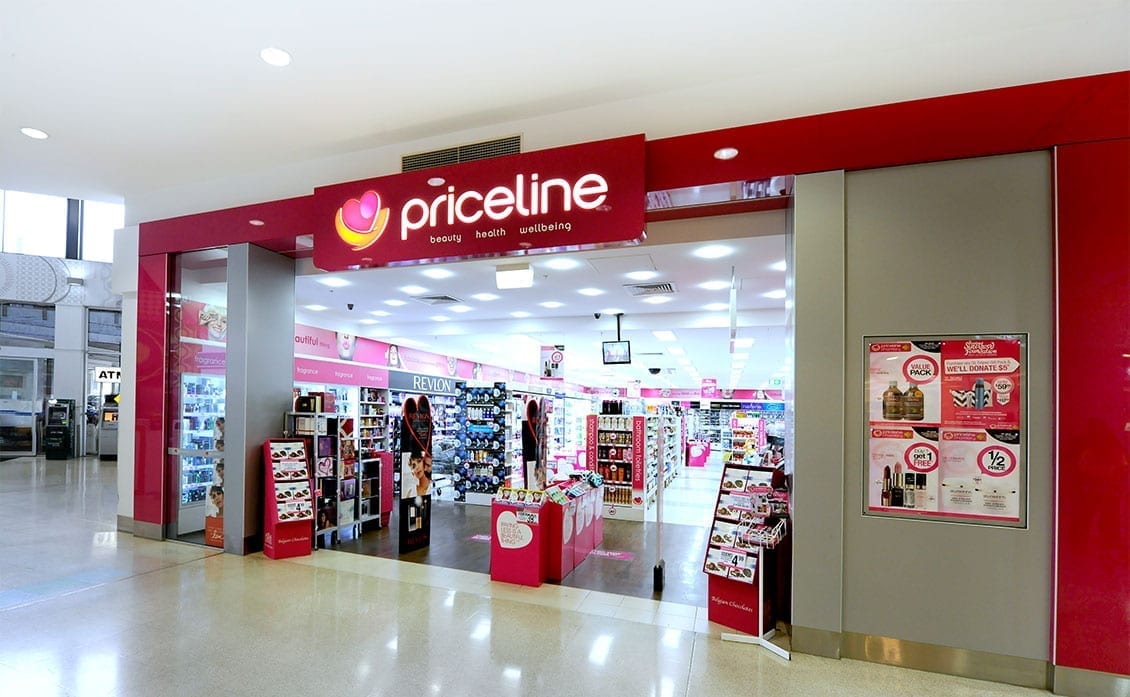
    The proposed merger between the owners of the Priceline and Amcal pharmacy chains is off after Sigma Healthcare rebuffed an approach by its rival.

    Amcal owner Sigma, which is restructuring after losing a contract to supply Chemist Warehouse, said on Wednesday that October’s cash-and-scrip approach by Australian Pharmaceuticals Industries had undervalued its long-term prospects.

    Instead of responding with an increased offer, API questioned Sigma’s plans and said it would now decide what to do with the 12.85 per cent stake it bought late last year.

    “The Sigma Board has chose a path to restructure its significantly downsized business, rather than pursue a merger to create a future that benefits consumers, pharmacists and both sets of shareholders,” API said.

    Sigma said it agreed the tie-up could save the combined company $60 million a year through supply chain consolidation, but that a business review completed last month found $100 million in potential savings through cost-cutting as a stand-alone company.

    It also said that a decline in API’s share price also meant the offer was worth 12 per cent less than when it was made in October.

    The offer was worth about $727 million when it was made public in December.

    API countered by saying the cost savings that Sigma was citing were uncertain and unclear, and would mostly be offset by revenue lost by Chemist Warehouse’s decision to take its business elsewhere.

    It also pointed out its offer represented a 41.8 per cent premium to the average price of Sigma shares in the month before the offer was announced.

    “API notes that very little information has been provided by Sigma in relation to its intended restructure,” API said.

    Sigma shares slumped on the development, dropping 14 per cent to 52.5 cents by 1423 AEDT, their lowest since before the merger proposal was made public.

    API shares were down 3.57 per cent, at $1.35.

    Sigma is the owner of franchise brands Amcal, Chemist King, Discount Drugs and Guardian.

    API owns the Priceline, Soul Pattinson and Pharmacist Advice brands.

  • Improved penalty rates and conditions for Priceline workers

    Improved penalty rates and conditions for Priceline workers

    Retail workers’ union SDA has secured a new agreement for Priceline Pharmacy workers that improves penalty rates and leave conditions for staff.

    The new agreement, which came into effect on Friday March 8, will see annual pay increases backdated from July last year, through to July 2020.

    “Wage growth for Australian workers is at an all time low and we’re proud we’ve been able to lock in strong annual pay increases for Priceline workers for the next three years,” SDA national secretary Gerard Dwyer said.

    “Priceline workers will receive an immediate 3.5 per cent pay increase backdated from 1 July 2018, and 3 per cent pay increases from 1 July 2019 and 1 July 2020. This means the permanent hourly rate for Priceline workers will increase to A$21.81 and the casual hourly rate will increase to A$27.26 per hour. With the rate of inflation at 1.8 per cent these pay increases will make it a little easier for Priceline workers and their families to make ends meet.”

    The new agreement also includes five days paid and five days unpaid Family and Domestic Violence Leave for all employees per year.

    “Unions, employers and government must all take responsibility for addressing family and domestic violence and we’re pleased we’ve taken the first steps in this agreement,” said Dwyer.

    Workers will also be paid superannuation on all paid leave, including paid parental leave. The SDA said this will help address the gender pay gap, as previously superannuation was not paid when parental leave was taken.

  • Daigou retailer to expand into over 150 pharmacies

    Daigou retailer to expand into over 150 pharmacies

    Daigou retailer AuMake has inked a deal with pharmacy network Chemsave which will see its own branded products distributed through a network of 150 pharmacies across the country.

    The announcement, which follows the listed retailer declaring a trading halt earlier this week, will see Aumake’s own-branded health supplement and honey products distributed initially, prior to further expansion.

    Cross promotional marketing will accompany the products, with AuMake’s recently launched live streaming functionality to move into some Chemsave pharmacies.

    The listed retailer hopes that the partnership will bolster its credibility of its private label range, while Chemsave is looking to increase its exposure to the Chinese market.

    “Aumake is thrilled to have formed this strategic partnership with Chemsave, which is a significant milestone,” Aumake executive chairman Keong Chan said of the deal.

    “This partnership with Chemsave allows us to significantly expand the reach of our products across Australia … this is not simply a distribution agreement but a long-term mutually beneficial strategic alliance.”

    Chemsave CEO Michael Dixon concurred, saying that the Chinese market represents a lucrative opportunity for its network.

    “Over the last year we have had the opportunity otm eet with a number of groups with a view to forming a partnership that will allow us to grow our members’ businesses and increase our presence with the important and influential Chinese consumer,” he said.

    The initial terms of the contract are set out across two years, with an option for a further two-year extension if mutually agreed.

    Aumake shares rose 10 per cent to 27 cents in early Wednesday trading.

  • Tigas Alliance opens innovative flagship pharmacy

    Tigas Alliance opens innovative flagship pharmacy

    Tigas Alliance, the pharmacy chain owned and run by Berjaya Pharmacy Retail, has opened a flagship at Plaza Berjaya in Kuala Lumpur.

    Farmasi Tigas Ekspres features an innovative service format that includes health advice.

    With the tagline “A pharmacy you can talk to”, Tigas Alliance focuses on providing consultation services with its own licensed pharmacists, termed #rockstarpharmacists.

    “We believe pharmacists are an essential stakeholder in the partnership with doctors to deliver holistic and effective patient care,” says Tigas Alliance pharmacist/senior manager Jennifer Tan.

    “Our mission is to promote excellence in preventive health consultations.”

    Tigas ensures its #rockstarpharmacists are kept informed of the latest industry guidelines through regular professional development sessions. No appointments are needed for customers at the store’s private consultation areas.

    Pharmacy services include health assessment and monitoring, medicine review, weight management, smoking cessation, family planning and dietary advice.

  • Vietnam’s Mobile World plans pharmacy chain

    Vietnam’s Mobile World plans pharmacy chain

    Vietnam’s Mobile World is recruiting pharmacists, with a plan to expand into pharmacy retailing.

    In a job ad on Pharmalink, Mobile World is seeking experienced pharmacists to set up business, train employees and help operate a pharmacy chain.

    Mobile World’s representative confirmed its plan to test new business model without revealing the numbers of stores to be set up.

    In shareholders’ meeting in March, Mobile World’s president Ngo Duc Tai shared the group’s expansion plan by merger and acquisition (M&A) deals in groceries, pharmacy and others, with a budget of US$110 million.

    Ngo revealed that in upcoming years, the group might test medicine retailing via M&A with some pharmacy chains which already has 10-15 stores, and would expand to 500 stores.

    In August, Mobile World finished its first M&A deal with Tran Anh electronics chain.

  • China’s e-pharmacy eyes prescription drug for full-bloom growth

    China’s e-pharmacy eyes prescription drug for full-bloom growth

    China’s e-commerce giants are getting a hand in pharmaceuticals as the government directs prescription drug sales away from hospitals and into retail.

    China’s online pharmacy business has grown from virtually nothing five years ago to more than 7 billion yuan (1.1 billion U.S. dollars) in 2014, accounting for 3 percent of all retail sales of medicine in the country, Boston Consulting Group (BCG) said in a report Thursday.

    But analysts say the boom in online medicine sales is only a preview of explosive growth to come, provided that authorities allow online pharmacies to sell prescription drugs. So far online pharmacy sales consist mostly of over-the-counter medicine, which contributes very little to margins.

    One of the key themes in China’s ongoing medical reform is to reduce hospital reliance on drug sales for revenue. Over the long term this will enable patients to choose between hospitals and retail pharmacies for prescription drug purchases.

    Authorities also consider allowing prescription drugs to be sold online, giving e-commerce firms such as Alibaba and JD.com the opportunities to get involved in the lucrative prescription drug business.

    “E-Pharmacy business is changing very quickly in China with new regulations and different competitors entering the space. Each one is trying to grab a piece of the business,” said John Wong, a partner for BCG’s pharmaceutical practice.

    While regulations are ushering more prescription drug sales toward retail channels, including online pharmacies, the pace of that transition remains uncertain.

    Such uncertainties have forced Alibaba to scrap last week a plan to inject its online pharmacy business into its health subsidiary. Its plan to operate in the country’s medical tracking system also drew backlash from brick-and-mortar pharmacies.

    Online pharmacies are working with hospitals and local governments on separate trial programs to allow patients to buy drugs online with a doctor’s prescriptions.

    Access to prescriptions is the key for online pharmacies to get into prescription drug sales. Some local trials have managed to extend medical insurance coverage to online medicine purchases, an important incentive for patients to buy online.

    But analysts are cautiously optimistic about potential nationwide trials, given that China’s social security system is still managed by fragmented jurisdictions, creating discrepancies in coverage policies across the country.

    Another challenge, says another BCG partner Magen Xia, is for authorities to figure out a way to cap expenditure online. Under the current scheme, the cap for insurance coverage has been maintained by hospitals that prescribe these drugs.

    Regulatory challenge aside, Xia said online pharmacy cannot thrive in the prescription drug sale business alone. Given the importance of access to doctor’s prescription, retailers need to penetrate upstream.

    “Pharmacies can’t just limit themselves to selling drug online. They have to either extend to consultations and diagnosis or find upstream partners that can refer prescriptions to them,” Xia said.

    Unlike the United States where brick-and-mortar pharmacies like CVS and Walgreens holds dominance in retail prescription drug sales, the lack of nationwide pharmacy chains in China puts them in a much weaker position. This creates opportunity for e-commerce to consolidate the fragmented national market through online platforms. And once they gain access to prescription, they can ask local pharmacies to become a distribution channel for prescription drugs.

    “China’s online pharmacy will grow, but whether it grows faster or slower depends on regulation on the separation between drug prescribing and dispensing,” Wong said.

    “Right now hospital still wants money from drugs but as soon as the government says ‘stop’ you will see the industry rapidly, rapidly transform,” Wong said.


  • Malaysia’s Caring Pharmacy value soars

    Malaysia’s Caring Pharmacy value soars

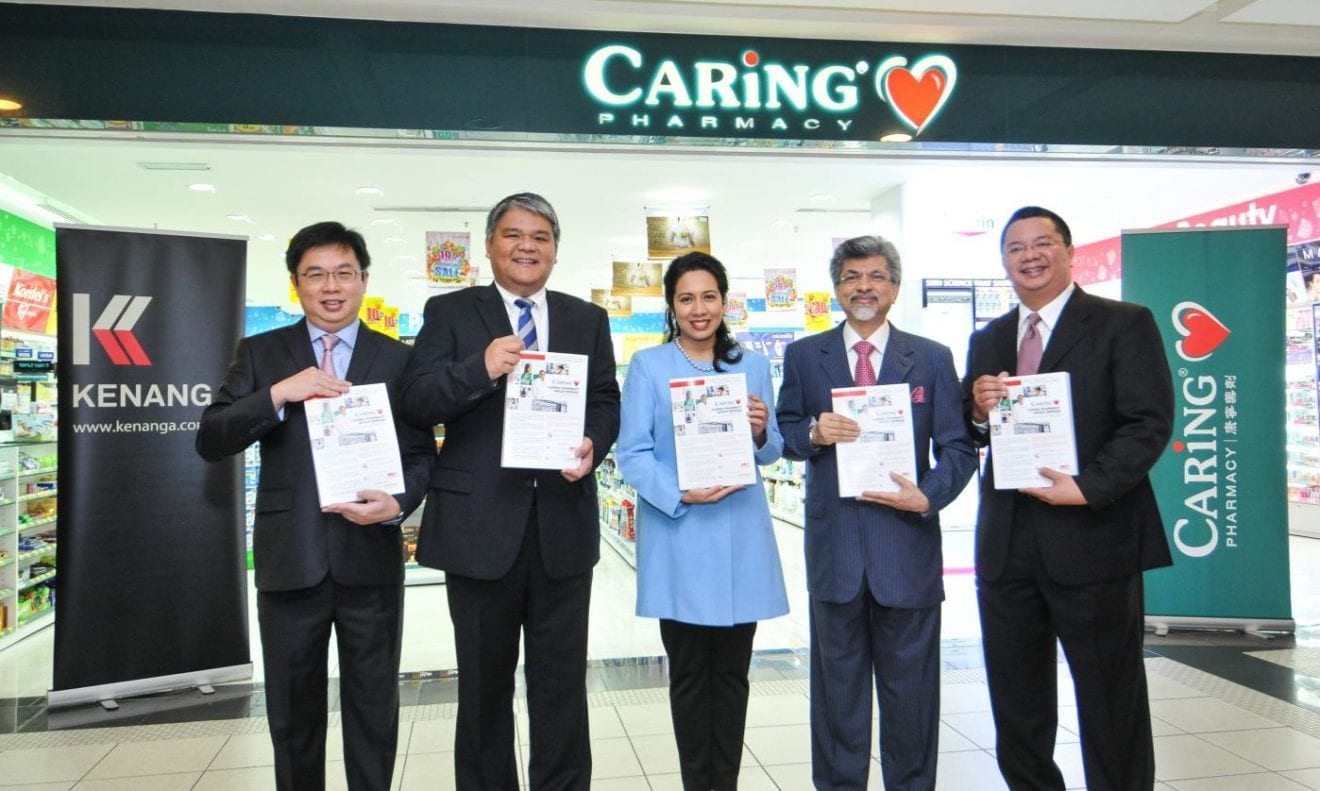
    Malaysian listed retailer Caring Pharmacy has seen its share value soar 85 per cent in just two months.

    And no one seems to know why…

    The company has 106 pharmacies across Malaysia, just two more than it had three months ago, and has projected expansion at a rate of 10 to 12 outlets next year – barely one a month.

    Even more remarkable, is that such a rise has occurred in a depressed retail climate and a decidedly sluggish business environment, at best.

    A survey released by Nielsen this week showed consumer confidence in the country has reached a 10 year low of 78 points – 11 points lower than three months ago. That seems driven by the unpopularity of the GST introduced on April 1 and a massive depreciation in the local currency – in part at least, linked to evidence of massive corruption in government leadership.

    The only theory behind Caring Pharmacy’s sudden popularity is that the chain may have been marked down unfairly in a generally bearish market, and its value is now being restored to reasonable levels.

    Year on year, the company has delivered a net profit in the latest first quarter jumping 83.94 per cent to RM1.02 million from RM 554,000 a year ago.

    One analyst urges caution” Hong Leong Investment Research (HLIR) said Caring Pharmacy could yet face further challenges ahead.

    “We feel there will be more downside risk on its expansion plans due to high competition and start-up costs,” HLIR said in a research note.

    “Also with inflationary cost pressure as well as weak consumer sentiment, we believe its profit margin will be under pressure with longer gestation period.”