Retail News CRM

Tag: plan

  • Sygnum Capitalizes on Blockchain Growth in Lugano’s Retail Landscape

    Sygnum Capitalizes on Blockchain Growth in Lugano’s Retail Landscape

    Swiss digital asset banking group Sygnum has launched its latest office in Lugano, aiming to strengthen collaborations within the burgeoning Bitcoin and digital asset ecosystem of Ticino. This move coincides with the city’s ambitious Plan ₿ initiative, which promotes broad blockchain adoption.

    Driving Digital Innovation in Ticino

    With the opening of its Lugano office, Sygnum takes another significant step in its growth journey. “Lugano is emerging as a crucial innovation hub, bolstered by robust support for digital assets, institutional adoption, and increasingly clear regulatory frameworks,” explained Mathias Imbach, Sygnum’s co-founder and Group CEO, during the launch event.

    A Progressive Stance on Digital Assets

    In recent years, Lugano has established itself as a leader in digital asset acceptance. Residents now have the convenience of settling municipal taxes in Bitcoin and can use various digital currencies for purchases at numerous local businesses, reflecting a growing consumer trend towards cryptocurrency.

    The Ambitions of Plan ₿

    Plan ₿ is not just about fostering a crypto-friendly environment; it seeks to revolutionize the city’s financial infrastructure using Bitcoin technology. The initiative encompasses groundbreaking projects, including Bitcoin investment pools, sustainable mining efforts, specialized education programs, and notable events like the Plan ₿ Forum.

    “It’s inspiring to witness institutions like Sygnum leverage the opportunities Lugano presents in the fields of digital and financial transformation. Innovation is relentless, and the financial sector is no exception,” added Michele Foletti, Mayor of Lugano and President of the Plan ₿ Foundation.

    Implications for the Retail Sector

    Sygnum’s expansion in Lugano highlights the intersection of finance and retail as consumer demand for digital asset options continues to rise. This move could reshape how companies engage with customers and accept payments, paving the way for more widespread adoption of cryptocurrency in everyday transactions. As brands expand their presence in the digital finance space, the retail landscape is poised for significant transformation.


  • Subaru Is Building A Dedicated EV Plant In Japan

    Subaru Is Building A Dedicated EV Plant In Japan

    Subaru is another Japanese automotive player which is suddenly turning turtle and announcing massive investments in electric powertrains. It has announced plans to build a dedicated EV assembly plant in 2027 as a part of a multi-billion dollar investment toward electrification in the next 5 years. Its CEO Tomomi Nakamura has outlined a plan which was announced on May 12 when it announced its earnings.

    Its 2023 Solterra EV will be made at Toyota’s Motomachi assembly plant in Japan which is the same plant where Toyota is making its first EV the bZ4X. But in the future, the plan for Subaru is to make its EVs in-house.

    Nakamura has said that initially, Subaru will make its EVs in a mixed production scenario with internal combustion engine vehicles in its Yajima plant in Japan in the mid-2020s. But from 2027, the EVs will be made at a dedicated factory on the site of the Oizumi plant which is currently making engines and transmissions.

    “Two or three years ago, U.S. retailers were not asking about EVs at all. But in this last year, it’s suddenly increased,” said Nakamura indicating that this transformation is being driven by the US market.

    Subaru has announced an investment of $2.05 billion. It expects 40 per cent of its global sales to come from EVs and hybrids by 2030. The Solterra EV will be the first model which starts at $44,995 in the US and will also be eligible for the $7,500 tax credit and other state incentives.

  • Chinese Automaker Geely Auto Scraps STAR Market Listing Plan

    Chinese Automaker Geely Auto Scraps STAR Market Listing Plan

    China’s Geely Automobile Holdings Ltd said on Friday it is dropping plans to list new shares on the mainland’s Nasdaq-like STAR Market.

    Zhejiang-based Geely Auto, China’s highest-profile automaker thanks to parent Zhejiang Geely Holding Group’s investments in Daimler AG and Volvo Cars, is listed in Hong Kong with a market capitalization of HK$255 billion ($32.85 billion).

    In September, Geely Auto said in a filing that it planned to raise 20 billion yuan ($3.10 billion) from the STAR Market listing.

    Geely Auto is aiming to sell over 1.5 million vehicles this year. It also said would seek external funding for its newly-launched electric Zeekr brand.

    In February, Geely Auto said it abandoned the merger plan with sister company Volvo Cars.

  • Thai Airways Is On Track With Its Rescue Plan

    Thai Airways Is On Track With Its Rescue Plan

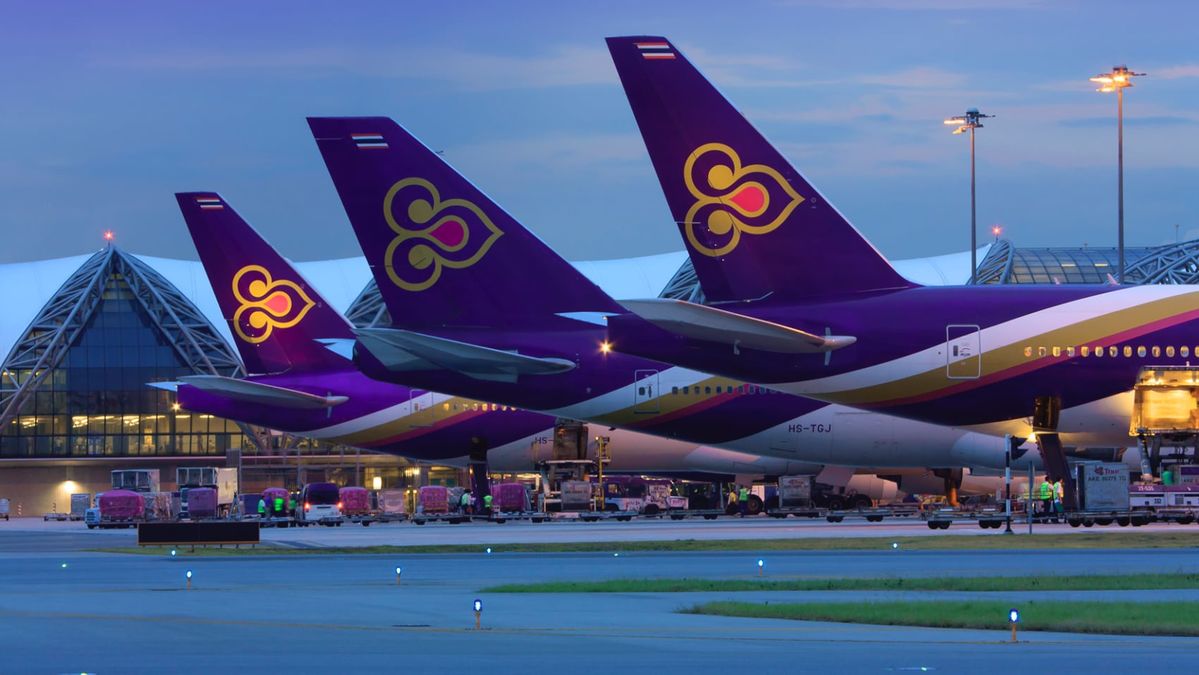
    Thai Airways acting president Chansin Treenuchagron claims the airline is still on schedule with its debt rehabilitation plan. Thai Airways has until February 2nd to submit its plan to the Central Bankruptcy Court in Thailand after it was granted a one-month extension.

    In an attempt to save Thailand’s national airline from going under, the country’s Central Bankruptcy Court approved its restructuring back in September. Having accumulated $11bn in debt, the carrier was set a deadline of January 2nd to submit its full rehabilitation plan. However, the courts gave Thai Airways an additional month to finalize its rescue plan, with a new deadline of February 2nd.

    The extension suggests Thai Airways has been struggling to reach a satisfactory agreement with all parties involved. In a statement, acting president Chansin Treenuchagron offered reassurance that the airline is still on track with its plan.

    The nature of Thai Airways’ debt is complex, with banks, aircraft lessors, lenders, and suppliers all looking for a satisfactory outcome. The airline is ‘moving closer and closer to an agreement’ with its creditors. Before it can submit its plan to the Central Bankruptcy Court, Thai Airways requires approval from its creditors.

    While Thai Airways initially planned to implement the restructuring plan by the first quarter of 2021, it wasn’t able to finalize and submit the details in time. The airline is also working with consultants and advisors to help it deal with all the complexities of the restructuring process. Mr. Treenuchagron added,

    Thai Airways has been in a difficult position for a few years now, with fierce competition from low-cost carriers contributing towards spiraling debt. The airline was in a precarious position before the COVID pandemic had begun, with the downturn in air travel only adding to its woes. By July 2020, Thai Airways had defaulted on over $3bn worth of debt and suspended most of its operations.

    Domestic air travel has remained steady in Thailand for most of 2020, with the country faring better than most in its domestic market. However, a second COVID wave sweeping across Thailand has led to a 60% drop in air travel since the beginning of the year. Thai Airways has resorted to increasingly novel methods of raising capital during the pandemic. This includes selling surplus consumables like salt shakers, aircraft tires, and wine glasses, as well as auctioning off 32 widebody planes.

  • Geely’s New EV Plant Will Build Premium Polestar Cars

    Geely’s New EV Plant Will Build Premium Polestar Cars

    An electric vehicle (EV) factory planned by the Chinese automaking group Geely will produce cars under the premium Polestar marque, two people with direct knowledge of the matter told Reuters on Monday. Zhejiang Geely Holding Group Co Ltd plans to build a plant with an annual manufacturing capacity of 30,000 premium EVs in the western city of Chongqing, run by a wholly-owned, newly registered company, showed documents on its website.

    Geely and Polestar declined to comment on the marque. The plan comes as foreign automakers including BMW AG and Tesla Inc expand EV production in the world’s biggest market, sourcing major EV components such as batteries locally and often exporting the end product.

    Hangzhou-based Geely is China’s most internationally known automaker. It owns Volvo Cars and Lotus, almost half of Proton and 9.7% of Daimler AG. Its Hong Kong-listed Geely Automobile Holdings Ltd is planning a Shanghai float.

    Through wholly-owned company Polestar, it builds low-volume Polestar 1 hybrid performance cars in the western city of Chengdu and Polestar 2 volume sedans in Taizhou in the east.

    It also plans to begin production of the Precept sedan, displayed at this year’s China auto show.

    Polestar aims to eventually offer bigger, more sporty vehicles at its showrooms, which currently span nine countries and whose number it plans to raise to 45 from 23 by year-end.

    Polestar Chief Executive Thomas Ingenlath told Reuters the firm is scouting markets in Asia-Pacific and the Middle East.

    Geely is also building a factory in China to make sport-utility vehicles under the Lotus marque, Reuters reported.

  • Hyundai India Postpones Investment Plans In New Plant

    Hyundai India Postpones Investment Plans In New Plant

    The slowdown in the Indian auto market has also dented long term plans of automakers in India. Hyundai which was gearing up to set up a new plant in India has now postponed its plans by two or three years. Hyundai Motor India Managing Director (MD) & CEO, S.S. Kim told Times Of India in an interview that the company has sufficient production capacity to meet its domestic and global demand.

    Kim also added that buyer sentiments in India are not very positive at present and it may take around three years to restore the volumes and meet the sales performance targets like 2018. For the time being, the Korean carmaker will continue to focus on new launches that have already started with the launch of the Grand i10 Nios and Aura subcompact sedan.

    Hyundai Motor India has registered 37,953 units in the domestic market in December 2019, as compared to 42,093 units which is a de-growth of 9.8 percent. It’s domestic sales in the calendar year 2019 declined by 7.2 percent at 510,260 units as compared to 550,002 units which were sold in the calendar year 2018.

  • UOB Launches Comparison Website for Utilities

    UOB Launches Comparison Website for Utilities

    United Overseas Bank on Monday launched Singapore’s first online utility marketplace by a bank, as part of the Open Electricity Market initiative. United Overseas Bank (UOB)’s utility marketplace will add to an existing array of comparison websites under Singapore’s Open Electricity Market initiative by the Energy Market Authority. Featuring 10 utility providers on a single website, customers can now search and sign up for the best deals for electricity, gas, water, broadband and TV services.

    With utility bills making up an average of about 10 percent of monthly household expenses, we want to help people stretch their household budget, said Jacquelyn Tan, UOB’s head of personal financial services Singapore in a media statement.

    With more than 50 different plans offered by electricity retailers under the Open Electricity Market rollout, Singapore consumers could find it time-consuming to find the right electricity plan.

    The UOB Utility Marketplace aims to make it easy for consumers to compare providers and plans through its Electricity Price Plan Recommender. Users simply need to indicate if they prefer a fixed price or discounted price plan, their preferred subscription tenure, and their monthly electricity bill budget.

    A list of suitable electricity plans and potential savings will then be generated based on their selection. Consumers are then directed to the electricity partner’s website to sign up for their plan of choice. In all, the process takes less than 10 minutes to complete, the bank said.

  • TradeGecko launches Founder Plan giving commerce startups the technology superpowers to build amazing businesses

    TradeGecko launches Founder Plan giving commerce startups the technology superpowers to build amazing businesses

    TradeGecko, a leading technology company that provides cloud-based inventory and order management solutions for small and medium-sized businesses (SMBs), today launched its Founder Plan, expanding access to its powerful technology platform to early-stage commerce businesses. 

    The plan enables founders to integrate TradeGecko’s leading inventory and order management solution from the get-go, so that they can build their commerce businesses to scale quickly. This limits cumbersome and complex manual processes that may inhibit future growth, empowering entrepreneurs with the ability to level the playing field with bigger competitors. 

    Recent research by TradeGecko has shown that operational challenges are among the biggest headaches for commerce entrepreneurs. 31 percent of businesses under US$1 million still rely on spreadsheets for their inventory management, with another 24% using pen and paper and 19% not using anything at all. On average, 90 hours a month are spent on backend functions such as order and inventory management as well as product sourcing.

    From as little as US$39 per month, subscribers of the Founder Plan can access a fully automated system that consolidates operations management functions into one central location. This ensures that inventory levels, sales channels and accounting systems are always up-to-date and accurate. It also gives commerce businesses the power to add new sales channels, integrates with other business-critical functions and provides analytics to support decision-making.

    “At TradeGecko, no founder gets left behind. Our mission is to give founders the technology superpowers to compete in the global market. The Founder Plan is an accessible launchpad that enables entrepreneurs to scale, while ensuring they have the time and information they need to do what they do best – build amazing businesses,” said Cameron Priest, Co-Founder and CEO of TradeGecko. 

    The Founder Plan allows users to manage their total inventory starting with one eCommerce channel, integrated with accounting, manage sales orders and purchase orders, shipping and email support. It also gives access to TradeGecko Payments, TradeGecko Mobile App and TradeGecko Intelligence sales and inventory reports.

  • Vietnam targets $10 bln seafood export

    Vietnam targets $10 bln seafood export

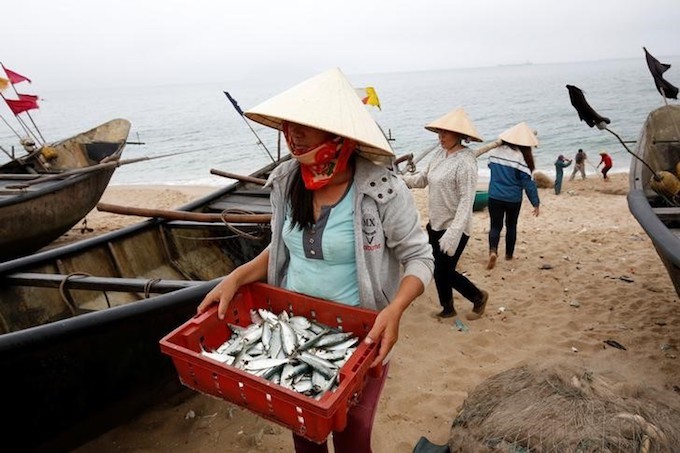
    Vietnam hopes to export $10 billion worth of seafood this year, meeting its 2020 goal a year early. The Vietnam Association of Seafood Exporters and Producers (VASEP) said at a recent conference it would include $4.2 billion worth of shrimp, $2.3 billion worth of pangasius fish and the rest from other products. Minister of Agriculture and Rural Development Nguyen Xuan Cuong said the $10 billion target is high but achievable since Vietnamese seafood is liked in international markets.

    VASEP president Ngo Van Ich said shrimp exported to the U.S. is expected to face a lower anti-dumping tariff this year.

    Vietnam’s recent accession to the Comprehensive and Progressive Agreement for Trans-Pacific Partnership would also help increase exports, he said.

    But there are also challenges.

    Truong Dinh Hoe, VASEP general secretary, said the country faces difficulties like shrinking catches and intense competition from other exporting countries.

    A major hurdle is the ‘yellow card’ restriction slapped by the European Union since 2017 for illegal fishing.

    The European Commission has said it would ban seafood imports from Vietnam unless it does more to tackle illegal fishing by Vietnamese vessels in other countries’ territories.

    After an evaluation done last May the European Commission said it would consider lifting the yellow card in 2019.

    Vietnam ranks among the top ten seafood producers in the world, according to the U.N. Food and Agriculture Organization.

    Last year its exports were worth $9 billion against a target of $9.5 billion.

  • StarHub offering free local calls to prepaid customers

    StarHub offering free local calls to prepaid customers

    Singapore’s StarHub has started offering prepaid customers free outgoing local calls as long as they have an active data plan. The company will continue offering prepaid customers free local calls for the duration of their data plan, even if they run out of data.

    StarHub offers customers a choice of six prepaid data plan over its Happy Prepaid app, starting at S$2 for 30MB of data and free outgoing calls for three days. An S$8 mid-tier option adds 1GB and free calls for seven days, while an S$25 plan offers 5GB of data and free calls for 30 days.

    “Just by being on our new prepaid data plans, customers can enjoy the best of two worlds – surfing on Singapore’s fastest 4G network and chatting with family, friends and co-workers easily and affordably,” StarHub VP of marketing Donovan Kik said.

    “Simplicity is key and we will continually enhance our services to ensure we deliver the best possible experience to customers.”

  • Singtel debuts unlimited mobile data plan

    Singtel debuts unlimited mobile data plan

    Singtel has launched what it says are Singapore’s first mobile plans with unlimited data, talktime and SMS, following a nationwide network upgrade to 500Mbps on compatible handsets.

    The operator’s new Singtel Combo 3, 6 and 12 mobile plans will be upgraded with unlimited talktime and SMS, will come with an optional add-on providing unlimited local data for S$39.90 ($29.68) per month. The price for the entry-level Combo 3 plan is S$68.90.

    The DATA X INFINITY add-on is subject to a fair use cap of 50GB above the data bundle allocated in the base plan (3GB, 6GB and 12GB respectively), after which data speeds will be capped at 1Mbps until the next billing cycle.

    Singtel also reserves the right to implement a daily fair use policy that prioritizes network data allocations away from heavy users.

    At launch, customers subscribing to the Combo 6 (S$95.90) and 12 plans will also be provided with a monthly free data roaming plan and will be able to bundle additional data roaming options to stay connected while overseas.

    “We recognise that our customers want flexibility and control over their mobile plans… With our nationwide network upgrade to 500Mbps supporting the latest iPhone 8 and iPhone X, as well as Samsung Note8, our customers can now enjoy the full potential of their devices at blazing speeds,” Singtel CEO consumer Singapore Yuen Kuan Moon said.

  • Problems with City pork plan

    Problems with City pork plan

    HCM City’s technology-based programme to control and trace the origin of pork that began recently is encountering difficulties, according to the Department of Industry and Trade.

    Speaking at a regular department press briefing, Nguyễn Phương Đông, its deputy director, said 713 pig farms have registered to participate in the programme, but only 99 put rings with an electronic stamp on their pigs’ legs to aid in individual identification of the animals.

    Even the number that agreed to join the programme had not met the expectations of its managers, he said.

    The reason for this is that the main source of supply for the city is farms and household breeders in neighbouring provinces, who need time to change their farming and trading habits.

    But to ensure the safety of consumers, the department is working with those provinces to organise training programmes for the farmers, he said.

    The city provides small-scale breeders with a 50 per cent subsidy of the cost of the electronic rings for the first month, he said.

    Almost all wholesalers at the city’s Bình Điền and Hóc Môn wholesale markets are taking part in the programme.

    They meet 70-80 per cent of the city’s pork demand.

    Consumers can currently check the origin of pork they buy at nearly 385 modern outlets (supermarkets, convenience stores and food shops) and 140 booths at 23 retail markets.

    The project management board is now working with poultry producers and distributors in the city and neighbouring localities to implement a similar programme in June.

  • Hanoi announces transport plan to 2030

    Hanoi announces transport plan to 2030

    According to the plan, from now to 2030 Hanoi will develop a system of highways with 4-8 lanes linking Hanoi-Lang Son, Hanoi-HCM City, Hanoi – Thai Nguyen, Ha Noi – Hai Phong, Hanoi – Ha Long, Hanoi – Hoa Binh, Tay Bac – Highway 5, Hanoi-Ho Chi Minh Highway, and turn Thang Long Boulevard and Phap Van – Cau Gie Highway into urban highways.

    From now until 2030 Hanoi will also complete its belt roads and build 18 bridges crossing the rivers of Red, Duong, Day and Da.

    The city will give priority to developing public transport systems, which aims to serve up to 50-55% of the travel demand in the inlying areas and 40% in the suburbs.

    The plan also specifies that about 33,237 hectares of land will be devoted to traffic system development and the total funding needed for this plan is estimated at over $55 billion.

    The capital is expected to come from the state budget, ODA loans, and from private investors through transport projects in the forms of BT (build-transfer), BOT (build-operate-transfer), PPP (public private partnership), and BOO (build-own-operate).

    The capital city of Hanoi was extended in accordance with Resolution No. 15/2008/NQ-QH12 on May 29, 2008 of the National Assembly with a total area of more than 3,344 sq.km. However, its transportation system has fallen short of requirements for urban development at present and for the future.

    In late 2012, Hanoi submitted to the Ministry of Construction a Master Transport Plan for 2030, with a vision to 2050, and the master plan was approved by the prime minister on March 31, 2016.

    Accordingly, the population of Hanoi is forecast to grow to 7.44 million by 2020, around 9.2 million by 2030, and 10.8 million by 2050. The plan sets a target to increase the public transit share to over 30-35% by 2020, 50% by 2030, and 70% after 2030.

  • Philippines to develop national broadband plan

    Philippines to develop national broadband plan

    Philippine president Rodrigo Duterte announced in his first State of the Nation Address (SONA) on Monday that he wants the newly created Department of Information and Communications Technology (DICT) to develop a national broadband plan to accelerate the deployment of fiber and wireless technologies to improve internet speed.

    He also announced that Wi-Fi access shall be provided at no charge in selected public places, including parks, places, public libraries, schools, government hospitals, train stations, airports, and seaports.

    A previous government initiative to establish a National Broadband Network (NBN) was scrapped in 2007 after the $329-million contract awarded to Chinese telecommunications firm ZTE for the project had been investigated in the Senate.

    In 2011, the then Commission on Information Communications Technologies (CICT) had also released a five-year digital roadmap that aimed to craft a vision for ICT use in governance, including the creation of a national broadband policy that would enable the environment for broadband development and use.

    Duterte’s call for a new national broadband plan came on the heels of a wide public clamor for fast and affordable internet. The Philippines had ranked poorly in many global indices for digital readiness.

    The country trails behind its Southeast Asian neighbors, for example, in the latest Network Readiness Index published by the World Economic Forum, which measures how economies use the opportunities offered by ICT for increased competitiveness. At 77th place in a 139-country study, the Philippines was behind Singapore (1st), Malaysia (31st), Thailand (62nd), Indonesia (73rd).

    Duterte’s assumption into office on June 30 came at a favorable time as the law mandating the creation of the DICT as the primary body that would create policies and drive the national ICT agenda was signed by former President Benigno Simeon Aquino III last May.

    The country’s first appointed DICT Secretary Rodolfo A. Salalima affirmed in his first media interview that the government cannot expect the commercial service providers to be in all parts of the country and there would be a need for the government to establish an ‘infostructure’ in the countryside and provide service.

    Shortly before Duterte’s inauguration as the country’s 16th president last June, Globe Telecom had called on the government to help develop broadband access in the Philippines by investing in internet infrastructure in rural and far-flung areas.Globe President and CEO Ernest Cu said in a media statement that telecommunication operators in the country are unable to deploy infrastructure in rural areas due to business viability issues.

    “There are a lot of localities in the country that cannot be reached economically. What we propose is for the government to build the infrastructure, such as submarine cables, and then rent these facilities out to telco operators,” he said, citing the case of Sulu and Basilan provinces in the Autonomous Region for Muslim Mindanao.

  • Singapore government to spend $2b on ICT this fiscal

    Singapore government to spend $2b on ICT this fiscal

    Singapore’s soon-to-be-formed Government Technology Agency (GovTech) will continue to partner the ICT industry and invest in technologies such as data analytics, ICT infrastructure, and platform-as-a-service to develop citizen-centric services.

    GovTech, which will be established at the end of this year, will replace the Infocomm Development Agency of Singapore (IDA) and aim to lead technological transformation in government.

    The agency is expected to continue to partner the industry to co-create such digital solutions and will be calling for a projected S$2.82 billion ($2.04 billion) of ICT tenders across fiscal year 2016.

    These ICT tenders will comprise mainly infrastructure and ICT security bulk contracts due to some multi-year contracts ending in FY16, as well as contracts relating to agency-specific systems. Last year, SMEs accounted for more than half of the total contracted value of ICT tenders.

    One key focus for government procurement this year will be to enhance ICT infrastructure to better support the data and digital services needs of a Digital Government in a Smart Nation.

    For example, increased data center virtualization will allow the government to modernize its hosting of ICT applications and ensure faster time to production for new digital services.

    Wi-Fi will be extended to more areas within government schools to support smart learning. The government will also continue to invest in its cybersecurity efforts, with a bulk tender for IT security services to be called in this fiscal year.

    “We want to empower Singapore with possibilities through technology. To do that, investment in infrastructure is necessary so that innovative citizen-centric services can be built and enhanced on a strong foundation,” IDA managing director Jacqueline Poh said.

    “There will be opportunities abound for the government and industry to collaborate and build a smart nation together.”