Retail News CRM

Tag: Policy

  • Pandora asked to fix refund policies

    Pandora asked to fix refund policies

    Jewellery retailer Pandora has been told by the consumer watchdog to amend its refund and warranty policies in Australia following complaints from some of their customers.

    The Australian Competition and Consumer Commission said they have received complaints from customers who were told by Pandora sales staff that they do not offer refunds to faulty products and that its own warranty policy applies instead of the protections afforded to consumers under Australian Consumer Law (ACL).

    According to ACCC Commissioner Sarah Court, the jewellery retailer acknowledged they may have misled customers about their legal rights.

    “Pandora has acknowledged that it may have misled customers about their consumer guarantee rights to refunds when there was a major fault with their product,” Court said. “They also have admitted that by doing so they likely breached the Australian Consumer Law.”

    Court said consumer rights to a repair, replacement or refund cannot be excluded, restricted or modified by a business’ warranty policy.

    “If consumers have purchased a product that has a major fault, they can request a full refund from their place of purchase,” she said.

    The ACCC has accepted a court-enforceable undertaking from Pandora to review its consumer rights policies and staff training after Pandora acknowledged it is likely to have contravened the ACL by making misleading representations to consumers about their consumer guarantee rights.

    The ACCC’s investigation showed that Pandora’s website contained confusing or inaccurate information on consumer guarantee rights under the ACL.

    It also noted that information on Pandora’s website about its product warranty failed to include mandatory text that states that consumers are entitled to a replacement or repair, and in some cases a refund, if their goods are faulty.

    The ACCC said Pandora has undertaken to arrange for an external review of its policies and procedures relating to exchanges, repairs and refunds, to ensure customer claims for refunds and other remedies are dealt with appropriately and in accordance with the ACL.

    “Pandora will also conduct a review of its ACL compliance program and improve its staff training and complaints handling systems,” Court said.

  • Frost & Sullivan calls for strong incentive policy for electric vehicles in Malaysia

    Frost & Sullivan calls for strong incentive policy for electric vehicles in Malaysia

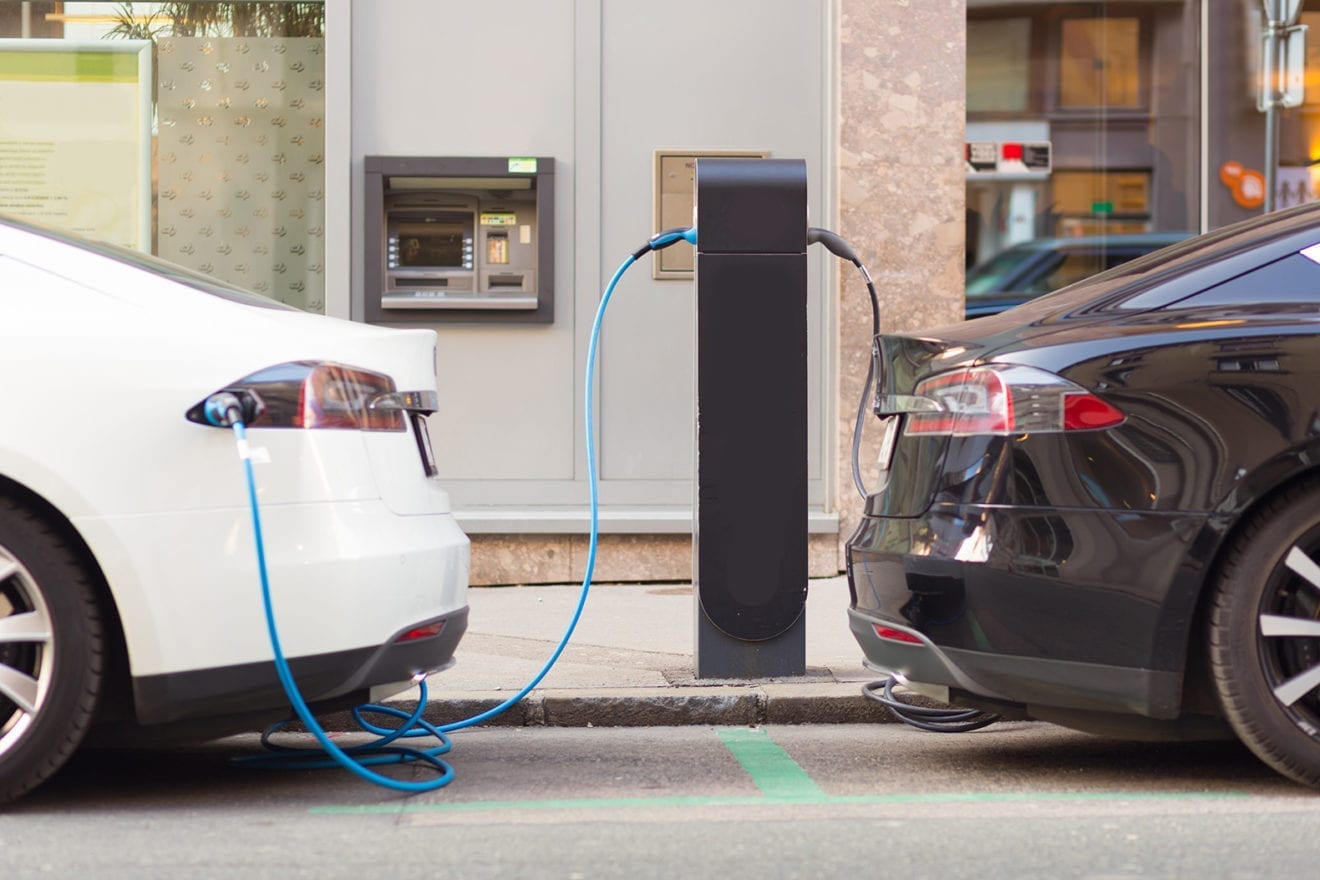
    Frost & Sullivan which is “mildly positive” on growth of total industry volume (TIV) for vehicles in 2019, said a strong incentive policy is required for electric vehicles (EVs) to take off in Malaysia. “Currently what we are waiting for is if the (NAP) National Automotive Policy mentions anything about EV. Unless there is a strong policy coming up focused on EV, otherwise we will not see any major uptake in EV sales in Malaysia,” said associate partner and senior vice president of mobility at Frost & Sullivan, Vivek Vaidya.

    He said the uptake for EV will also depend on factors such as incentives for manufacturers, forward distributors and customers coupled with the development of infrastructure for charging stations. Vivek added that there is a possibility of the new national car being an EV given leads of it being low energy and technology neutral.

    A survey carried out by Frost & Sullivan found that 30% of its respondents were willing to consider EVs even though such vehicles are yet to make a presence in Malaysia, signaling a latent demand for EVs.

    On the overall automotive market, Vivek expects Malaysia to registers vehicle sales of 609,700 units in 2019, 1.4% growth against 601,300 units in 2018, driven by growth in domestic consumption, private investments and new model launches.

    The passenger vehicle segment is expected to perform better than the commercial vehicle segment, which is likely to be impacted by low public spending.

    The passenger vehicle volume is projected to grow to 544,121 units in 2019 from 536,371 units in 2018, while the commercial vehicle volume is estimated to rise to 65,579 units from 64,929 units.

    Worth noting is that demand for vehicles went up by 4.2% during the tax holiday period last year.

    “Usually after a tax break period, the volume shrinks in the subsequent quarter but in 2018, strong consumer sentiment ensured Q4 volume matched last year figures to end the year on a positive note,” Vivek said.

  • Chinese e-commerce policy to benefit foreign sellers

    Chinese e-commerce policy to benefit foreign sellers

    The Chinese government last week announced that it will improve its e-commerce retail import policy to boost consumption. “We need to take a holistic approach, exercise prudent yet accommodating regulation to fully unleash the growth potential of cross-border e-commerce,” Li Keqiang, Premier of the State Council of the People’s Republic of China, said at a cabinet meeting on November 21, when the policy was laid out.

    The policy has been cheered by Australian exporters to the market, such as AuMake, the ASX-listed retail company that connects local suppliers with Chinese personal shoppers, daigous, who buy and ship products on behalf of friends, family and customers in China.

    The retailer released a statement on Friday saying the new policy is expected to stimulate daigou activity through 2019.

    The new policy ensures that China’s existing approach to cross-border e-commerce continues, and no new requirements around licensing, registration or record-filing for first-time imports will apply to sales through cross-border e-commerce platforms, as was expected to apply from January 1, 2019. Instead, these goods will continue to receive the more relaxed regulation for personal use imports.Adtech Ad

    The Chinese government is also expanding its preferential import duties to another 63 tax categories of high-demand goods and increasing the quota of goods eligible from 2000 yuan to 5000 yuan per transaction, and from 20,000 yuan to 26,000 yuan per head per year. This quota will be further adjusted in light of an individual’s personal income.

    “AuMake welcomes the latest development to further stimulate the CBEC [cross-border e-commerce] with the continuation of current licensing requirements, extension of tariff/VAT/consumer tax concessions and value per transaction/head limit also being increased,” the retailer said in a statement.

    “These measures are anticipated to increase the total size of the CBEC and it is anticipated that legitimate cross border e-commerce participants, including AuMake and professional daigou, will increase their market share as illegitimate operators are phased out with increased regulation.”

  • Indonesian Tourism Industries Support Visa-free Policy

    Indonesian Tourism Industries Support Visa-free Policy

    Indonesian tourism industries have expressed support to the adoption of visa-free policy by the government so far, citing positive impact on the tourism sector.

    The general chairman of the Association of Indonesian Tourism Industries (GIPI), Didien Junaedy, said here on Saturday (Feb. 4) that the adoption of the policy is essential to boost tourism in the country.

    He said that the policy has been proven to significantly increase the arrival of foreign tourists in their countries.

    Through Presidential Regulation Number 21, 2016, the Indonesian government has provided visa-free facility to visitors from 169 countries for a short visit.

    The regulation was produced in March 2, 2016, and so it is not yet a year old. According to me, the evaluation should be done after two years of its implementation,” he said, adding that it would take several months to familiarize.

    Junaedy added that tourism industrialists grouped in GIPI have seen and felt the positive impacts of the policy.

    He stated that consistency in the implementation of the policy would be needed with regard to building public trust in foreign countries.

    Supervision on the other hand, however, is also needed to minimize possible violations of the regulation, he noted.

    “GIPI has planned to gather tourism industrialists eight times in the first semester this year to strengthen its support for the implementation of the Presidential Regulation Number 21,” he asserted.

    Junaedy admitted that there had also been negative excesses coming from the policy, such as visa overstay problem and illegal worker problems.

    “Their number however is relatively small compared to millions of foreign tourists visiting Indonesia legally, like in other countries that implement the same policy,” he added.

    He also said that the negative impacts of the policy must be overcome, and solution to the problems must be found through joint efforts.

    “We must not blame each other over trivial problems but must cooperate to overcome them,” he stated.

    He said that the visa-free policy has so far been one of the strong factors that has played a major role in meeting the target of foreign tourist arrivals, which was set at 15 million this year and 20 million by 2019.

  • Apple Criticized by Korean Game Developers for its App Store Refund Policy

    Apple Criticized by Korean Game Developers for its App Store Refund Policy

    It took me a while to figure out what the big deal was. It’s not that people buy a $1.99 game, then get a refund and keep playing.It’s that people buy $100 in in-game “currency” using an in-app purchase, then get a refund, and keep the $100 of in-game “currency”. Then do this again. And again. And again.

    Oh, you want to have the best fort in Clash of Clans? $100 in in-game gold, and you can do it quickly! Then get a refund on that in-game gold. Want to get good Pokemon faster? $100 in in-game gold and you can lure more Pokemon to you (for a long time.) Then get a refund on that in-game gold.

    It took me a while to figure out what the big deal was.

    It’s not that people buy a $1.99 game, then get a refund and keep playing.

    It’s that people buy $100 in in-game “currency” using an in-app purchase, then get a refund, and keep the $100 of in-game “currency”. Then do this again. And again. And again.

    Oh, you want to have the best fort in Clash of Clans? $100 in in-game gold, and you can do it quickly! Then get a refund on that in-game gold. Want to get good Pokemon faster? $100 in in-game gold and you can lure more Pokemon to you (for a long time.) Then get a refund on that in-game gold.

    Not quite true. In clash of clans, if you request a refund in $100 worth of gems, the game takes the gems spent from you and you end up with thousands of gems in debt. You can still earn gems the normal way but it goes to offset that negative gem count.

    Don’t know how clash of clans can do this but Koreans can’t figure out what the refund was for…

    So… Commenters, we don’t need to be specifying “Korean developers” or calling them out by their nationality. This is a problem to *ALL* nationality of developers, it just happens that this article was in a Korean newspaper, so the developers they interviewed are Korean. Saying things like “These Korean developers whining about…” or “I wish these Korean companies would…” is unnecessarily adding nationality (and by proxy race) in to a complaint. Would you have made the same comment if the developers had been from California? Or Texas? Would you have specified “These Californian developers…” or “I wish these Texan companies…”?If not, then leave “Korean” off the description you post. Their “Koreanness” has nothing to do with the issue.

    I hate in app purchases. I disable them from my settings.So pretty simple. Get rid of in app purchases. Than they wouldn’t have an issue tracking down people who ask for refund. One time fee payment for full game.

    A non issue really. The developer has access to the receipt for each purchase and can check if it is still valid at any point in time.
    They just need to keep track of the receipts, basic in-app programming ffs.
    To be consistent Apple should have the same policy for their stores – so I can buy an iPhone/MacBook then call to request a refund without returning it. I’m sure there’ll only be a “small” number of people abusing it 😉

    And what exactly are people “stealing” by “returning” 100 gold coins in an app – a couple bytes of database space?

    I operate my own small business, a small hardware device with an online system connected – getting in on the “smart home” craze. Manufacturing is outsourced, so we don’t have to deal with manufacturing shrink, we just pay a per-unit contracted cost. The online service, as with any of these games, is practically zero cost-per-unit. If someone cancels a service, or asks for a refund (which we always offer). Yes, hardware space and bandwidth cost money, but there is no “direct cost” per-user.

    Hardware-wise, in the past month, we’ve had $2388 which I’d classify as shrink at retail price, $912 at cost price. That includes:

    – 1 unit damaged in warehouse
    – 3 units lost by couriers shipping to customer
    – 4 “change of mind” hardware returns that couldn’t be re-sold
    – 1 unit that was bought via PayPal with a stolen credit card (we had to swallow the cost)
    – 3 units that were returned as being faulty, which we determined was fraudulent – 1 had a smashed screen which couldn’t have happened during qa/shipping (impact mark), one which was obviously dropped and cracked but otherwise seemed to work fine, and 1 which was returned because apparently only the accessories were in the box, not the unit itself (even though we could see the unit was online, and connected to our service – not for long though!)

    At cost price, for us that was around 0.9% shrink vs revenue, and around 1.4% vs per-item profit margins (not taking into account operating costs here). That’s something we have to budget for – we *know* it’s going to happen, and we take that into account. 100% of our shrink costs come from hardware, not software. Out of that, only a third of shrink was down to “fraud”.

    Saying shrink can’t happen with a digital product is silly. Of course it’s going to happen. If you’re dealing with people, at some point you’re going to deal with fraud. Fact of life. The only difference is the physical cost behind it doesn’t scale the same way as with physical products.

    Here’s two examples:

    1. Company A sells a video streaming service for $10/month. Someone purchases a subscription uses a stolen credit card, and watches 50 films. The credit card company (rightfully) does a chargeback 14 days later, and the company cancels the service. A movie averages at 1.5GB, using 75GB bandwidth. They pay AWS $0.06/GB for bandwidth, which equates to $4.50. They also have to pay the rights holders $0.10 per viewing as part of their agreement. That’s $5, meaning that the total cost of the fraud is $9.50 – that’s $9.50 worth of shrink.

    2. Company B offers a mobile video game for free on the App Store, and sells packs of “100 gold coins” for $5. When a user buys coins, they can use them to buy items in the store – the transaction is purely in the game, and the only result of buying the coins is a database entry to tell the game “hey, user X bought 100 coins”. Somebody buys 100 packs of coins for $500, buying all sorts of virtual items for their character, again, all database entries. The user claims their child accidentally bought the coins, and Apple refunds the $500. Company B hasn’t lost money, other than perhaps a couple of cent in bandwidth costs. Shrink is effectively 0.

    That’s why I don’t understand them chasing so much – unless there is a physical per-unit cost behind it, it’s really not worth it. So what if someone buys a game or coins and returns them, they’ve lost a sale, sure, but they haven’t lost money.

    you work for company A and i’m another customer. i don’t give a flying f*** if Fred next door can or can’t watch the latest Star Wars movie because of his fraudulent dealings with you. it literally has no material affect on the outside world.

    you work for company B and i’m a customer on the same server as Fred. While you haven’t lost money, what you’ve done is enabled Fred to gain an unfair advantage over me and many others who have not bought the coins and got the stuff for free. of course, we don’t know that he hasn’t paid for them – perhaps he’s just a mr moneybags. but word gets out, the big spenders get upset that people competing with them are doing so by fraud and a ********* goes down on the game’s message boards. shrink isn’t measurable in terms of lost sales – yet – but is high in terms of lost reputation and goodwill. it could well have a material effect an order of magnitude higher than company A’s issues going forward.

    comparing a video streaming service which serves one end user at a time, to a MMO game where the actions of one gamer affect the others is silly.

    But you can’t *not* have a refund policy. I have, myself, gotten a refund for a game, when the game stopped working after upgrading from iOS 6 to iOS 7. The app was still installed and could still run (well, as far as it ever did after upgrading), but couldn’t be updated or re-downloaded.IMO, the amount of money they’re going to spend chasing down and suing the small % of customers who abuse it isn’t worth it. All businesses have to deal with a small % of fraud – how many retail places have had TVs returned as faulty when a new one comes out, or people had “left” their laptop in the trunk of their stolen car, or had their iPhone suddenly develop an intermittent fault just after a small scratch appears on the screen.

    It’s a cost of doing business.

    But you can’t *not* have a refund policy.
    It’s a cost of doing business.

    Very true. I wish these Korean companies would get a life and wake up. They are probably losing far more money from employee theft and laziness than a few app users.

    Every business has shrink built into their monthly costs. Shrink is everything from stuff people return that they cannot get credit for, employee theft, customer theft, stuff that gets broken on the floor, etc. You have to expect these things to occur and build it into your costs.

    I always assumed that Apple was able to remotely delete refunded apps.

  • Indonesian markets panic over Trump’s policies

    Indonesian markets panic over Trump’s policies

    Panic hit domestic financial markets on Friday as investors showed concern over the anticipated policies of US president-elect Donald Trump that may negatively affect Indonesia’s economy.

    The Jakarta Composite Index (JCI) — the benchmark of the Indonesia Stock Exchange (IDX) — ended in the red on Friday after falling 4 percent to 5,231.97 points, its lowest level in the past two months.

    Almost all sectors ended in negative territory, as investors sold a net of Rp 2.46 trillion (US$184.27 million) worth of securities throughout the trading day.

    Net sales jumped more than eightfold from the previous day, when investors ditched less than Rp 300 billion worth of securities.

    The situation was just as bad in the foreign exchange (forex) market, with the rupiah sinking as low as Rp 13,865 per US dollar, the lowest point since June 24. Market intervention by Bank Indonesia (BI) propped up the currency, enabling it to end at Rp 13,383 to the greenback.

    Friday’s development sent the government, financial authorities and analysts rushing to calm panicked investors.

    They attributed the market rout to speculation that Trump might push up fiscal spending after taking office.

    Higher spending may translate into higher inflation and interest rates in the US, which is not good news for Indonesia and other emerging markets that rely heavily on foreign funds, as some of those funds would return to the US.

    “Up to this day, the developments of the rupiah, the JCI and securities are greatly affected by regional and global sentiment impacted by the US political situation,” Finance Minister Sri Mulyani Indrawati said Friday.

    “It is natural to see that every decision made in the US, as the world’s largest economy, even in the form of a statement, can have a significant impact.”

    She said investors, including those holding government debt papers (SUN), did not have to be worried, as Indonesia had a low debt risk with a relatively long maturity profile and a relatively small state budget deficit.

    Moreover, with various fiscal measures to control the state budget deficit, spending and tax revenues, government debt papers had a very low risk profile.

    “There is no need to be trapped in groundless fear,” she stated.

    The IDX and the Financial Services Authority (OJK) also tried to calm investors, saying any impact of Trump’s policies would be temporary.

    BI senior deputy governor Mirza Adityaswara admitted the central bank had intervened in local forex and sovereign bond markets to stabilize the rupiah.

    Selling by forex traders, particularly in non-deliverable forward (NDF) derivative contracts, he went on, had triggered the market volatility.

    NDF contracts, unlike forex forwards, are settled in dollars determined by reference to a daily fixing, which in some jurisdictions is set by a survey of lenders.

    “The NDF market weakened and affected traders without considering Indonesia’s economic fundamentals. That’s why the rupiah was traded at Rp 13,400 [per US dollar] during opening, because the market followed what occurred in Mexico, Brazil and other places,” he said.

    Mirza emphasized that the country’s fundamentals remained strong, with economic growth of 5.02 percent in the third quarter, higher than in most of Indonesia’s Southeast Asian peers.

    Meanwhile, stock market analysts deemed investors’ reaction exaggerated and urged a more cautious manner. They said the market should actually have priced in the expectation of a December rate increase in the US, with further increases in 2017 and 2018.

    Separately, Trade Minister Enggartiasto Lukita said investors should wait until Trump formed his team. He expressed optimism that economic relations between the two countries would remain positive, despite Trump’s seemingly protectionist stance.

    “But we also need to keep our market strong. With a population of 250 million people, we have enough bargaining power,” he said.

    We’ll push local industries here, so that money circulation will happen much more domestically,” he added.

  • Brazil Challenges Indonesia`s Halal Certification Policy

    Brazil Challenges Indonesia`s Halal Certification Policy

    Brazil has filed a complaint against Indonesia to the World Trade Organization (WTO), challenging Indonesia’s halal certification requirements for imported meat.

    The trade dispute has been registered in Indonesia-Measures Concerning the Importation of Chicken Meat and Chicken Products No. DS:484. The second substantive meeting was held on October 11-12 at the headquarters of the WTO in Geneva, Switzerland.

    Ahmad Firdaus Sukmono, head of Trade Advocacy Bureau, the Trade Ministry, said that the policy is implemented as part of the government’s consumer protection efforts. “The dispute is focused on Indonesia’s rights to ensure compliance with food safety and halal requirements,” he said on Friday.

    Brazil has also lodged claims against Indonesia for its import restrictions, namely the positive list, usage requirements, transportation modes in import and suspension of sanitation requirement approval. Brazil claims that such policies have hampered Brazil’s export to Indonesia.

    Being the world’s largest chicken exporter, Brazil sees that the access to Indonesian market has been shut down in the past seven years. Because Indonesia only allows exported halal whole chickens which are slaughtered individually in henhouses. “We suspect that Brazil has yet to implement it,” Firdaus said.

    Firdaus said Indonesia has responded to Brazil’s claims. “Indonesia has been very transparent in import regulations and requirements.”

    Malaysia had also filed complaints about the difficulty in obtaining halal certification in Indonesia even though Malaysia has got its products halal certified by Jabatan Kemajuan Islam Malaysia, according to Malaysia’s International Trade and Industry Minister Dato’ Sri Mustapa Mohamed. However, Indonesia requires imported products to be halal certified by the Indonesian Ulema Council.

  • American Apparel bans work romances

    American Apparel bans work romances

    What do you do if you manage a company that has just ousted its founder following a string of sexual harassment allegations? The answer is to ban workplace romances – at least according to the fashion chain American Apparel.

    The retailer has barred managers from relationships with “subordinates”, while any romantic entanglement between staff “where one person may have perceived or actual influence over the other’s terms of employment must be disclosed by the participants to the Human Resources Department”, according to the group’s new code of conduct.