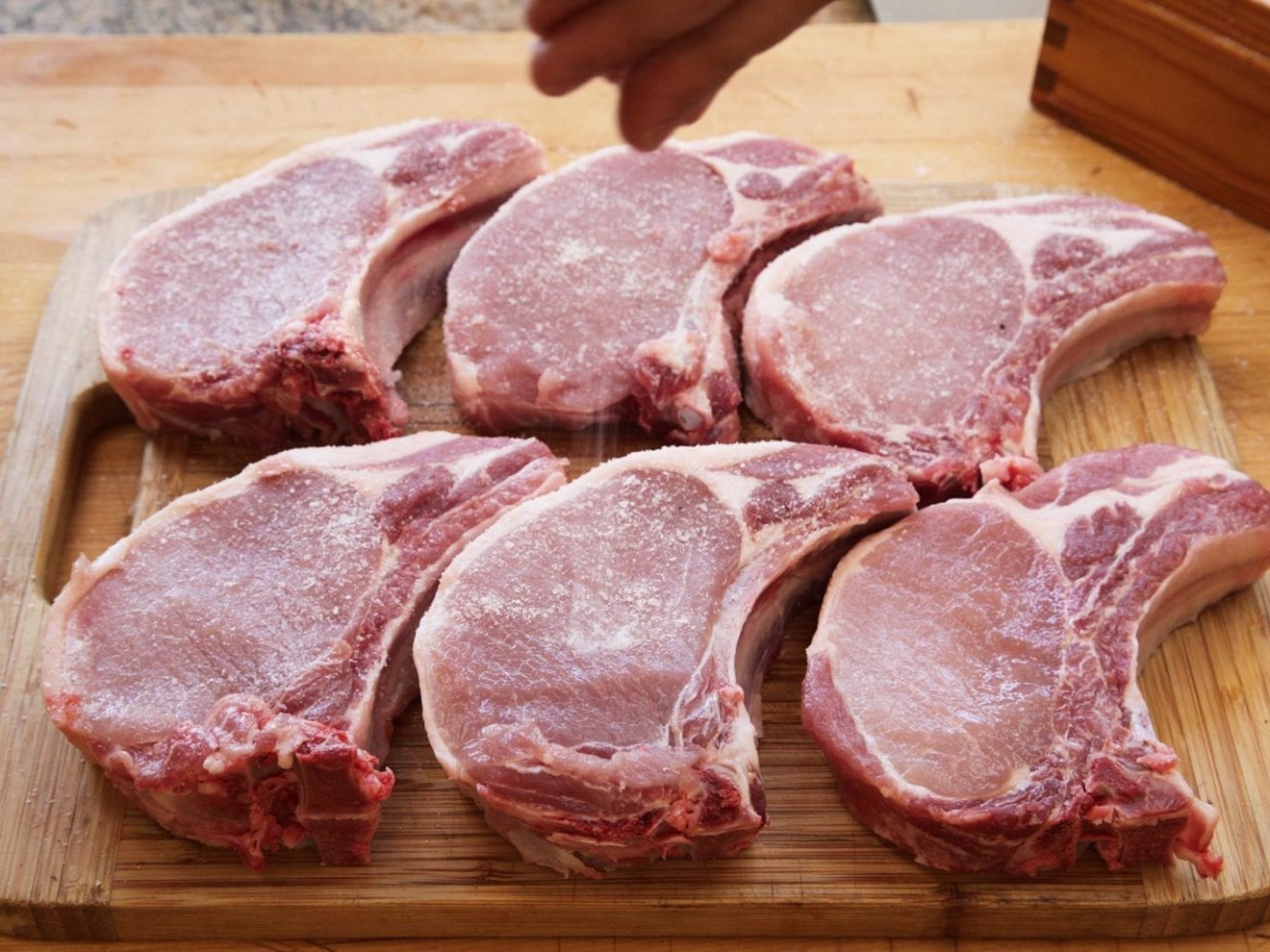
Vietnamese farmers have been hit by a glut in supply for months.
Tag: pork
-
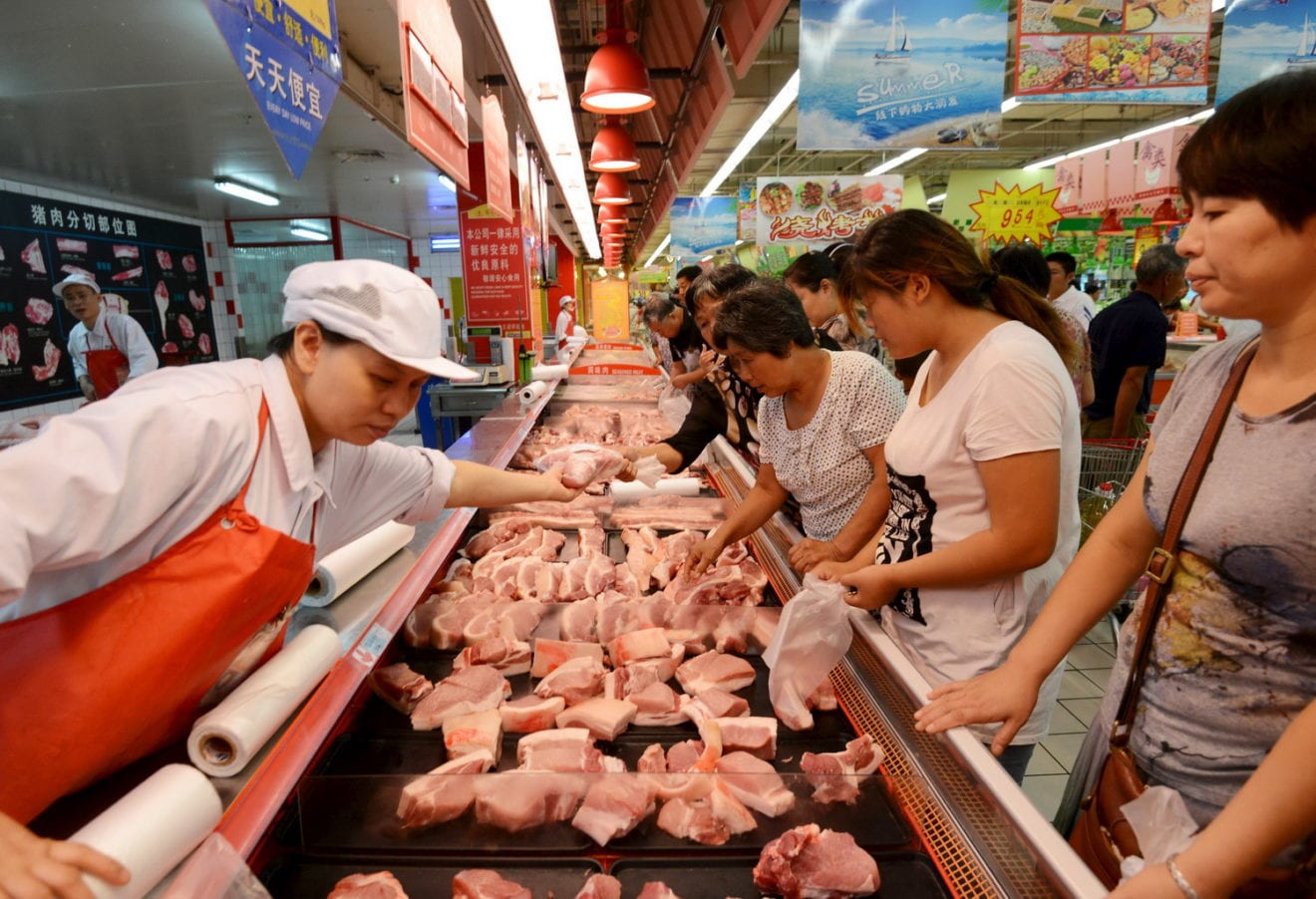
Vietnam to export pork to China amid supply glut
Local farmers have seen prices fallen sharply as a surplus of 200,000 tons of pork is expected this year. Vietnam is working to export some of its pork to China soon, a deal that could help many farmers stricken by an oversupply and massive price drops.
Necessary procedures are being finalized and China will only import pork, instead of live pigs, said Nguyen Xuan Duong, deputy head of the husbandry department under the agriculture ministry.
China, the world’s biggest pork consumer, wanted to officially open its market for Vietnamese pork years ago, but in 2012, the foot-and-mouth disease made headlines in Vietnam, prompting the northern neighbor to halt the plan.
As for now, China has asked Vietnam’s authorities to control diseases in animal farms and monitor the quality of pork.
Chinese officials will come to Vietnam to check the production process before working on related procedures, Duong.
He said China has not decided on how much it will import, but it is likely that Chinese consumers will need around one million tons of Vietnamese pork a year.
Chinese buyers currently pay VND40,000-42,000 ($1.70-1.80) per kilogram of pork. Prices of pork have fallen sharply in Vietnam this year, currently hovering around VND23,000-25,000 per kilo.
Vietnamese small traders used to be able to sell live pigs across the border, but China has recently ended this practice.
In May 2016, the agriculture ministry started warning traders of a possible glut.
Farmers have been expanding their herds hoping to increase exports to China despite warnings from the ministry, and “this has caused the pork supplies to exceed domestic demand,” the ministry said in a statement on April 28.
Vietnam’s pig herd expanded by nearly 5 percent to more than 29 million heads last year. By the end of March this year the number had edged up by at least 1.5 percent, according to official data.
The agriculture ministry estimated that Vietnam will face a surplus of 200,000 tons of pork this year. It is trying to also export live pigs and pork to the Philippines and Singapore.
-

Pork prices plummet again, testing farmers
Farmers need to be rescued again as prices of yet another item collapses. In recent days pork prices have dipped to a record low and also the lowest in the world. Pig on the hoof is sold at VND25,000-VND28,000 (US$1.11-1.24) per kilogramme.
The situation is blamed by market observers on oversupply of pork. The Ministry of Industry and Trade estimates the country will have a surplus of 200,000 tonnes of pork this year. If the glut is not addressed, many pig breeders, including large farms, are likely to go bankrupt, and animal feed, veterinary care, and slaughter and pork trading businesses will suffer badly.
The Ministry of Agriculture and Rural Development (MARD) has sent officials to China to solicit buying.
Some food processing firms have already suspended imports and increased local purchases to aid pig farmers.
Cau Tre Export Goods Processing Joint Stock Company, for instance, normally processes both local and imported pork, but it has temporarily stopped imports. The company plans to buy and stockpile 200-250 tonnes, which is equivalent to three months’ requirement.
Vissan has also stopped pork imports and increased its local purchase from 1,500 pigs a day to 1,800.
Retailers are also pitching in to help rescue pig farmers by rolling out several promotions to stimulate pork demand.
Saigon Co.op has been offering 10-20 per cent discounts on pork prices since April 25, and sales has increased by 20-30 per cent.
Lotte Mart supermarket is also offering discounts of 10-20 per cent.
Soldiers, police officers and the public have been urged to consume more pork in their daily food.
This year alone this is the third time that the country has had to scramble to settle agriculture-related problems by oversupply.
In February banana farmers in several provinces were hit as prices plummeted from VND14,000-17,000 per kilogramme to VND1,000-3,000.
In April several campaigns were launched to rescue watermelon farmers in the south-central province of Quang Ngai, who suffered severe losses after being unable to sell their harvests.
Analysts said Vietnamese farmers often suffer despite bumper crops since prices collapse.
The rescue measures are only band-aid solutions and do not address the oversupply problem basically, and so the problem is repeated year after year.
What causes these periodic gluts?
MARD blames it on difficulties in exporting to China, which is by far the biggest importer of Vietnamese farm produce.
In fact, in the first nine months of last year, at nearly $4.9 billion, China’s imports accounted for around 20 per cent of Viet Nam’s total agricultural exports.
An expert from the Institute of Policy and Strategy for Agriculture and Rural Development said, thus, any changes in that market affect consumption of Vietnamese farm products.
Many analysts also blamed the glut on unplanned cultivation by farmers, saying many rush to grow items that fetched high prices the previous season, without considering if the prices would remain high.
Most have little or no knowledge of the local market or global demand and price trends.
Product quality is another big problem.
According to deputy agriculture minister Vu Van Tam, demand for farm produce like bananas, watermelon and pork is very high both in the domestic and overseas markets.
But because the quality and productivity of local produce are not good enough, many consumers turn to imported products, he added.
Some analysts blamed the agriculture and trade ministries for not providing farmers with enough information about the market to enable them to make timely adjustments, ensuring supply and demand are balanced.
They admitted, however, that only macro solutions outlined and implemented by the Government would help settle the problem.
The solutions must include changing the entire agricultural process from market forecast and production planning to harvesting and consumption.
A system to forecast demand for and prices of farm produces in the domestic and overseas markets is an imperative for the ministries to help localities regulate their production plans.
The Government should have policies to encourage businesses to apply modern agricultural technologies to improve the quality of agricultural products and cut costs.
Back to the pork story, which seems headed for a happy ending for the farmers. Prices are recovering as many farmers have reduced their stocks of sows and piglets.
But we have to wait and see if farmers refrain from rearing pigs again if pork prices reach a certain level.
Otherwise, and if no sensible measures are taken in time, the story will only be repeated.
Consumer main profit source
In the first quarter of this year VPBank’s profit was VND1.924 trillion, up 85 per cent year-on-year.
Significantly, its FE Credit–Consumer Finance Service Company contributed over VND1 trillion to this.
In the first four months profits at several lenders topped VND1 trillion, including Vietcombank, VietinBank, BIDV, Techcombank, and MB.
Industry insiders said a majority of the profits came from consumer lending.
Not surprisingly, many banks have set up or are in the process of starting consumer finance companies.
Sai Gon-Ha Noi Commercial Joint Stock Bank (SHB) plans to open the SHB Consumer Finance Company in the third quarter of this year, and targets a profit of VND100 billion from it this year. The profits are expected to multiply in the coming years.
Vietcombank plans to close its finance leasing company to set up a consumer finance company in an effort to increase its retail segment growth to 40 per cent.
Under the State Bank of Viet Nam (SBV)’s current regulations, a bank can own either a consumer finance company or a finance leasing company, not both.
The rapid increase in the number of consumer finance companies and their booming success are attributed to the SBV’s recent changes in policies.
A circular the central bank issued last year removes all interest rate caps on consumer loans.
Before that finance companies’ consumer loan rates were regulated by the SBV based on the lending activities of financial institutions and foreign bank branches.
While their consumer loan interest rates are not regulated, finance companies must report to the SBV on the interest rate range they offer clients and notify it if there are any changes to it.
These changes have made consumer lending much more attractive to the banks in the context that they can charge high interest rates on this and lending to businesses has become difficult due to various reasons.
Analysts said that this decade market demand for unsecured loans has grown to adapt to the current financial scenario in Viet Nam, which sees an increasing amount of retail lenders and personal borrowers.
The growth is attributed to favourable legal and socio-economic conditions that have brought changes to incomes and spending habits.
The central bank has licensed 15 finance companies in addition to banks.
Analysts said while consumer lending has the potential for explosive growth, that can only happen with significant improvements in consumer satisfaction with credit institutions and loan conditions.
They also warned that the lending interest rates are too high and make it difficult for borrowers to repay, increasing the threat of bad debts.
The SBV considers a loan to be a consumer loan if it is made in dong, the borrower is an individual and not an institution, the purpose of the loan is to meet personal spending needs and the borrowed amount does not exceed VND100 million.
-
Problems with City pork plan
HCM City’s technology-based programme to control and trace the origin of pork that began recently is encountering difficulties, according to the Department of Industry and Trade.
Speaking at a regular department press briefing, Nguyễn Phương Đông, its deputy director, said 713 pig farms have registered to participate in the programme, but only 99 put rings with an electronic stamp on their pigs’ legs to aid in individual identification of the animals.
Even the number that agreed to join the programme had not met the expectations of its managers, he said.
The reason for this is that the main source of supply for the city is farms and household breeders in neighbouring provinces, who need time to change their farming and trading habits.
But to ensure the safety of consumers, the department is working with those provinces to organise training programmes for the farmers, he said.
The city provides small-scale breeders with a 50 per cent subsidy of the cost of the electronic rings for the first month, he said.
Almost all wholesalers at the city’s Bình Điền and Hóc Môn wholesale markets are taking part in the programme.
They meet 70-80 per cent of the city’s pork demand.
Consumers can currently check the origin of pork they buy at nearly 385 modern outlets (supermarkets, convenience stores and food shops) and 140 booths at 23 retail markets.
The project management board is now working with poultry producers and distributors in the city and neighbouring localities to implement a similar programme in June.