Retail News CRM

Tag: Reliance

  • Reliance Jio gains wireless subscribers contrary to rival operators

    Reliance Jio gains wireless subscribers contrary to rival operators

    According to data issued by the Telecom Regulatory Authority of India (TRAI), total wireless subscribers reached 1,166.30 million at the end of October 2021, with the urban areas accounting for 637.44 million and rural areas totaling 528.86 million.

    As on 31 October, 2021, private access service providers held 89.99% market share of wireless subscribers, with the two PSU access service providers, namely BSNL and MTNL possessing a 10.01% market share.

    Reliance Jio had the largest market share at 36.58%, followed by Airtel at 30.35% and Vodafone at 23.07%.

    Reliance Jio reportedly added 1.7 million subscribers in October, bringing its subscriber base to 426.59 million. Airtel, however, has a subscriber base of 353.97 million after shedding some 0.48 million in the same month. Vodafone’s subscriber base also dropped, totalling 269.02 million after losing 0.96 million subscribers.

    Data published by TRAI previously revealed that Reliance Jio has the highest average data download speed of 24.1 MB/s among 4G service providers in India.

  • Reliance Retail to launch 7-Eleven stores in India after Future’s exit

    Reliance Retail to launch 7-Eleven stores in India after Future’s exit

    Reliance Industries Ltd’s retail arm said on Thursday it would roll out 7-Eleven convenience stores in India, days after Future Retail Ltd ended a similar deal with the US chain.

    Reliance Retail Ventures Ltd will open the first 7-Eleven round-the-clock convenience store in a neighborhood in India’s financial capital of Mumbai on Oct 9.

    The deal marks the latest by the Reliance Group, led by billionaire Mukesh Ambani, to rapidly expand its retail and e-commerce businesses to better compete with Amazon.com and Walmart Inc’s Flipkart in India’s nearly trillion-dollar retail market.

    The oil-to-telecoms conglomerate’s US$3.4 billion deal for the retail assets of Future Group has been stalled following Amazon’s legal challenge.

    Irving, Texas-based 7-Eleven, known for its iconic products including the Slurpee, operates and franchises more than 77,000 stores in 18 countries and regions.

    Future Retail said on Tuesday it had mutually terminated an agreement with 7-Eleven as the companies were not able to meet targets of opening stores and paying franchise fees.

    In 2019, Future Retail – India’s second-largest retailer with more than 1,700 stores, including the popular Big Bazaar supermarkets and local chains Food Hall and Nilgiris – had said it plans to set up 7-Eleven stores from scratch and convert some of its existing operations into the U.S. brand.

    The unit formed to run 7-Eleven stores in India had reported a loss of 173 million rupees without opening any stores, Future Retail’s annual report showed.

    Reliance’s shares rose 1.22 percent in morning trade, while Future Retail stock gained 3.7% in a strong market.

  • India’s Reliance Retail to buy Just Dial for $469 million

    India’s Reliance Retail to buy Just Dial for $469 million

    Reliance Retail is to buy nearly 41 percent of search and database firm Just Dial for US$468.84 million.

    Billionaire Mukesh Ambani-owned Reliance Retail will also make an open offer to public shareholders of Just Dial to acquire an additional 26 percent, according to regulatory requirements.

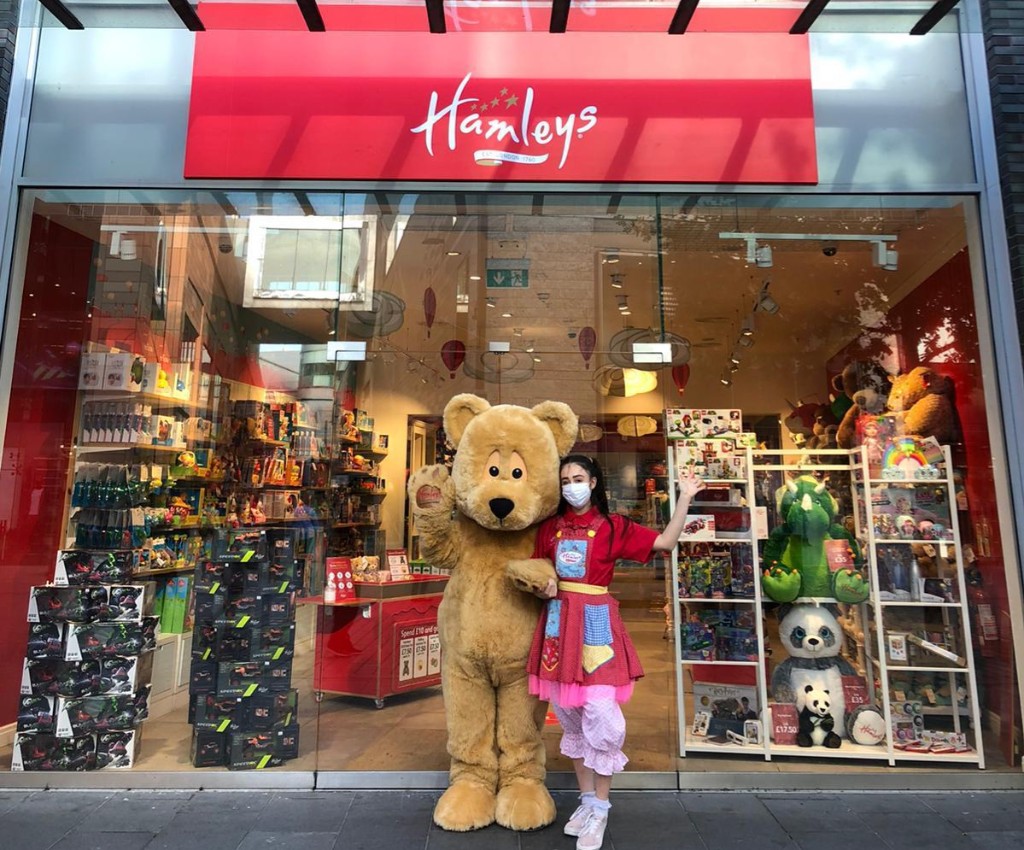
    Reliance has been on an acquisition spree to ramp up its online retail offerings and, over the past three years, has bought British toy retailer Hamleys, music streaming service Saavn, online furniture retailer Urban Ladder and e-pharmacy Netmeds.

    The deal with Just Dial, subject to shareholder and other approvals, will help Reliance get access to the company’s massive merchant database that spans across the country.

    The deal will boost “the digital ecosystem for millions of our partner merchants, micro, small and medium enterprises,” Isha Ambani, a director at Reliance Retail, said in the statement.

    Just Dial has a database of about 30.4 million listings as of March 31 and gets consumer traffic of about 129.1 million unique users each quarter.

    The capital infusion from the deal will help Just Dial expand discovery on its platform and boost transactions for millions of its products and services.

    Just Dial’s MD VSS Mani will continue to lead the company, the statement said.

  • Reliance to boost Hamleys India network to 500 stores

    Reliance to boost Hamleys India network to 500 stores

    A struggling 261-year-old U.K. toy-store chain is seeking a new lease of life in the hands of billionaire Mukesh Ambani, who’s looking to India where about a fifth of the world’s babies are born to fuel its revival.

    Hamleys, a British retail icon that hasn’t made a profit for a number of years, plans to quadruple its outlets in the former British colony to more than 500 in three years despite the pandemic, according to Darshan Mehta, chief executive officer of Ambani’s Reliance Brands Ltd. Besides the main growth market, the company is also adding stores from Europe to South Africa and China, he said in an interview.

    Ambani, 63, bought Hamleys in 2019 to strengthen his retail footprint as part of the ongoing transformation of his oil-and-chemicals conglomerate Reliance Industries Ltd. into a consumer and technology behemoth. The deep pockets of Asia’s richest man and India’s demographics could help breathe new life into Hamleys, whose share of global toy sales was estimated at 0.6% last year by Euromonitor International, and see it avert the pitfalls faced by rivals such as Toys “R” Us Inc.

    With a backer whose net worth is $72 billion, Hamleys is seeking to tap into what it sees as an inadequately serviced section of India’s almost 1.4 billion people, of which about 27% are children under 14. The country accounts for just 1% of the $90 billion global toy industry, meaning the potential for growth is high, Mehta said.

    “There is a lot of headroom and India is no way near saturation,” Mehta said. “We are now mulling how we can roll out stores in newer geographies and new formats.”

    Hamleys stores are famed for the carnival-like experience, allowing children to race toy cars, enjoy model train sets and play various games. In a country like India, with its densely packed cities and limited entertainment options, such an environment could be a hook to get customers to visit again. Product prices appealing to buyers of modest means as well as the super-rich make Hamleys an “elastic brand,” said Mehta.

    In Asia, Hamleys is seen as “high class and it’s on par with Harrods in some ways,” said Marc Alonso, a London-based senior research analyst at Euromonitor. “So it’s attracting that customer base, which is why in some places like India and China, it has been seeing some good sales growth in the past few years.”

    While the pandemic has been hitting parts of India’s economy, Mehta sees the toy industry as ”recession-proof’’ because many families choose the happiness of kids over anything else.

    But other chains have struggled before the virus. Toys “R” Us was the biggest victim of the U.S. retail apocalypse when it filed for bankruptcy in 2017, crushed by debt and felled by competition from online sellers such as Amazon.com Inc. Though the American chain is on a recovery path now under a new owner, a protracted pandemic points to an uncertain future for retailers.

    Nailing online sales is key to avoiding the fate of other high-end toy chains, according to Reliance. As part of Ambani’s e-commerce and technology pivot, his group is building Jiomart, a shopping portal, to take on giants such as Amazon.com and Walmart Inc.’s Flipkart in the local market. Reliance Industries has roped in Facebook Inc. and Google as investors to fuel those ambitions.

    With Covid-19 accelerating the group’s digital strategy, Mehta expects 30% of Hamleys’ sales coming from orders online in five years, versus 20% now. Direct selling over the phone or via WhatsApp would account for 20% in the same period, he said.

    Euromonitor’s Alonso said that target may be too ambitious because some customers could go to another portal that offers cheaper prices. “You can get the same product much cheaper by going straight to Lego, for example, on their e-commerce site,” said Alonso.

    Founded by William Hamley in 1760, Hamleys has seen its share of troubles. Ownership of the London-based chain has changed at least three times in the past decade alone — from an Icelandic bank to a French group and then to a Chinese fashion retailer. Two years ago, Ambani snapped it up for about $89 million in cash. Hamleys’ most recent books for 2019 show a loss of almost 9 million pounds ($12.4 million) on revenue of about 48 million pounds.

    Environmental services clean outside of the Regent Street store ahead of a reopening last year, on June 11. The flagship store has been closed for much of the past year. Photographer: Chris J. Ratcliffe/Bloomberg

    The onset of the pandemic just months after Reliance took control compounded Hamleys’ financial distress in the U.K., where it runs 21 outlets. Like most shops in the deserted streets of London, its grand seven-story Regent Street flagship store that opened in 1881 remained closed for much of the past year until earlier this week, while it cut a quarter of its staff to weather the crisis.

    Mehta believes the U.K. operations will “come out very strongly” with non-essential stores reopening this week following the easing of curbs. Another coronavirus wave could temporarily disrupt the business globally — like delayed plans for the U.S., a market it wants to crack.

    Prior to the acquisition of the chain, Reliance had the master franchise for Hamleys in India. The retail unit of Reliance is also the local partner for over 45 international brands including Burberry, Hugo Boss, Jimmy Choo and Tiffany & Co., according to the company’s website.

    The pandemic has limited Hamleys’ India target to just about 50 new stores this year before the roll out picks up pace. The toy retailer is looking at outlets in the U.S. this year or next, depending on travel restrictions, as well as in tourist hot spots in European countries, including France and Italy, the Reliance executive said.

    Hamleys Toy Store Chain Expanding Across Asia under Ownership of Asia’s Richest Man

    Ambani bought Hamleys in 2019 to strengthen his presence in retail. Photographer: Prashanth Vishwanathan/Bloomberg

    Still, India is likely to be a key market, said Arvind Singhal, chairman of Indian retail consultancy Technopak Advisors. With about 26 million children born in the country each year, Hamleys is unlikely to be short of customers there even if only the top 5% of the population can afford to shop at its store, he said.

    “Toys is one category where emotions sometimes overtake your financial abilities,” said Singhal. “Hamleys is probably one of the best investments from Mr. Ambani’s point of view in retail — the visibility the Hamleys brand has in India is unparalleled.”
  • Reliance Jio increases spectrum footprint by 55% in India

    Reliance Jio increases spectrum footprint by 55% in India

    Through this acquisition, RJIL’s total owned spectrum footprint has increased significantly, by 55%, to 1,717 MHz (uplink+ downlink). RJIL has the highest amount of sub-GHz spectrum with 2X10 MHz contiguous spectrum in most circles. It also has at least 2X10 MHz in 1800 MHz band and 40 MHz in 2300 MHz band in each of the 22 circles. RJIL has achieved complete spectrum derisking, with an average life of owned spectrum of 15.5 years. RJIL’s spectrum has been acquired in the most cost-efficient manner with an effective cost of Rs 60.8 crore per MHz.

    With the enhanced spectrum footprint, especially contiguous spectrum, and pan-India infrastructure deployed, RJIL has enhanced network capacity to service its existing users as well as hundreds of millions of more subscribers on its network.

    The acquired spectrum can be utilized for the transition to 5G services at the appropriate time, where Jio has developed its own 5G stack.

    Sh. Mukesh D Ambani, Chairman, Reliance Industries, said, “Jio has revolutionized the digital landscape of India with the country becoming the fastest adopter of Digital Life. We want to ensure that we keep on enhancing experiences, not only for our existing customers, but also for the next 300 million users that will move to digital services. With our increased spectrum footprint, we are ready to further expand the digital footprint in India as well as get ourselves ready for the imminent 5G rollout.”

  • Delhi High Court rejects Amazon challenge to $3.4 billion Reliance deal

    Delhi High Court rejects Amazon challenge to $3.4 billion Reliance deal

    The Delhi High Court on Monday refused to restrain Jeff Bezos-led Amazon from interfering in Kishore Biyani-headed Future Retail’s $3.4 billion deal with Mukesh Ambani-owned Reliance Retail by writing to statutory authorities.

    The order was pronounced by a Single Judge Bench of Justice Mukta Gupta in the suit by Future Retail Ltd after an Emergency Arbitrator of the Singapore International Arbitration Centre (SIAC) restrained Future Group from taking any steps in furtherance of the transaction with Reliance Retail, according to the information available on law platform Bar & Bench.

    “However, the court passed a neutral observation that the balance of convenience lay both in favor of FRL and Amazon and also observed that the statutory authorities were free to form their own opinion as per law,” said Salman Waris, managing partner at technology law firm TechLegis Advocates and Solicitors, after doing an analysis of the development. “The Court opined that it was ‘a matter of trial’ to determine whether Amazon’s case outweighed FRL’s claim and for now, it was for the statutory authorities (or) regulators to come to their own right conclusion.”

    In August, retail conglomerate Future Group struck a $3.4 billion asset sale deal with Reliance Industries Ltd (RIL). Amazon then sent a legal notice to Future, alleging the retailer’s deal breached an agreement with the American e-commerce giant. This was because last year, Amazon had bought a 49 percent stake in one of Future’s unlisted firms Future Coupons Pvt Ltd (FCPL) for Rs 1,430 crore. As per the conditions of the deal the disputes was arbitrated under SIAC rules and Amazon won a favorable ruling. Future Retail then approached the Delhi High Court seeking relief against the arbitration order passed by the SIAC with regard to its deal with Reliance.

    The Delhi High Court, prima facie, found that the suit filed by Future Retail was maintainable, the Emergency Award was valid, and that Future Retail’s resolution approving the transaction with Reliance was also valid, according to Bar & Bench.

    Waris of TechLegis said for Amazon, the court held that the ‘control’ as per the conflation of 3 agreements is not permitted under FEMA (Foreign Exchange Management Act) FDI (Foreign direct investment) rules, without the government’s approval. Thus, prima facie Amazon’s plea is void. However, Waris said the breach of the agreement by FRL would make a strong case for Amazon since it owns a stake in Future Coupons Pvt Ltd, which is, in turn, has a 9.82 percent shareholder in FRL.

    Without challenging the Emergency Award before the High Court, FRL had prayed Amazon be prevented from writing to statutory authorities such as the Securities and Exchange Board of India (Sebi) in an attempt to stall the deal, according to Bar & Bench.

    Also, FRL had asserted that the Emergency Award was of no consequence as it was not enforceable in the Indian regime.

    Earlier Future Retail’s representative had told the arbitration panel that if the deal with Reliance Retail fails, then the company would go into liquidation. The closure of the company would lead to over 29,000 job losses. Also, the company lost Rs 7,000 crore in revenue in the first three to four months of the pandemic phase.

    “(As) For Future, FRL does not want Amazon to interfere in the $3.4 Billion asset sale deal,” said Waris. “Moreover, it also contended that being an investor in Future Coupons Pvt Ltd and not FRL, Amazon had no say in a transaction between FRL and Reliance.”

    Waris said Reliance supported FRL’s case before the High Court, arguing that Amazon was “playing mischief” by stalling the deal that would save FRL from going under. “The said deal would get the benefit of economies of scale as Reliance Retail is India’s largest, most profitable retail business and is the fastest-growing retailer in the world thus far,” said Waris.

    Last month the court witnessed a lot of drama in this case. Future Retail which was represented by senior advocate Harish Salve likened Amazon to the “East India Company’” and told the court that its interference in the Future-Reliance deal would result in thousands of job losses and make FRL bankrupt. Amazon, represented by senior advocate Gopal Subramanium, told the court that it has invested $6.5 billion all over India and created 900,000 jobs. He had said some comments were made which were misplaced and said that the rhetoric should be kept aside on Amazon being called “East India Company.”

    Meanwhile, in November, the Competition Commission of India (CCI) cleared Reliance Industries’ (RIL) bid to buy Future group’s retail, wholesale and logistics assets even as Amazon had sought to block the transaction, alleging contractual violations by Future.

  • India’s Reliance Industries set to buy into online pharmacy Netmeds

    India’s Reliance Industries set to buy into online pharmacy Netmeds

    Indian conglomerate Reliance Industries is holding talks to purchase a controlling share in e-commerce pharmacy business Netmeds.

    The talks, which according to the Economic Times are in advanced stages, could see a Reliance subsidiary pay US$130–150 million for the shares and fund a potential expansion of operations.

    The deal, if it goes ahead, will be Reliance’s second major investment in the pharmaceutical industry since acquiring 82 percent of C-Square Info Solutions last year, a producer of pharmaceutical software.

    “The deal is happening at a slight premium to their last funding round valuation,” a source said, which also shared that conversations between Reliance and Netmeds began before the coronavirus pandemic.

    The firms involved have not issued public statements about the prospective dea

  • India’s Reliance Retail opens over thousand new stores

    India’s Reliance Retail opens over thousand new stores

    India’s Reliance Retail opened 1533 new stores last fiscal year, taking its network to 11,784 as it boosts its strength across the food, fashion, and digital sectors.

    In results published this week the company says pre-tax earnings grew 55.7 percent to Rs 9654 crore (US$12.75 million) on sales up 24.8 percent to Rs 1.63 lakh crore. Fourth-quarter revenue rose by 4.2 percent as lockdowns across the nation restricted customer footfall in stores.

    However, grocery store sales reached record levels in March due to the advent of Covid-19 restrictions, but despite supply-chain challenges.

    During the lockdown period, daily orders quadrupled, with the company’s Smart and Reliance Fresh chains leading the growth.

    “In a response to the lockdown situation, all grocery stores were kept open for extended hours to provide access and availability of essential products to customers in these trying times,” Reliance Retail said in a results release.

    Including the company’s fashion and lifestyle business, the year saw solid growth for the business, despite the “tepid” March, the company said.

  • Reliance Retail buys Indian department-store chain

    Reliance Retail buys Indian department-store chain

    Reliance Retail Ventures Limited has bought Indian retailer Shri Kannan Departmental Store for US$20 million.

    “The investment will further strengthen the group’s retail operations and presence in the state of Tamil Nadu and will further enable retail and new commerce initiatives,” said a spokesperson for Reliance.

    With this acquisition, Reliance Retail has started a “new commerce” plan which links producers, traders, small merchants and customers through digital innovation.

    Incorporated in 1999, Shri Kannan Departmental Store operates 29 stores across Coimbatore and nearby areas with a retail area of more than 600,000sqft.

    Reliance Retail is India’s largest retail conglomerate, with more than 4000 stores covering multiple categories. It is a subsidiary of Reliance Industries.

  • Reliance Brands plans to launch a fresh luxury e-commerce platform

    Reliance Brands plans to launch a fresh luxury e-commerce platform

    Indian conglomerate Reliance Brands is planning to launch a luxury fashion in the e-commerce portal through its online fashion site Ajio.

    The launching of the e-commerce portal is aimed at widening the company’s market share as online marketing in the country booms. The move pitches the company against established e-commerce players including Flipkart, Amazon and Myntra.

    While an Ajio spokesperson shared information about the business with Vogue, they added that no brand partnerships with labels have yet been signed and declined to comment on the timing.

    The luxury fashion move will be built upon Ajio Gold, Reliance Brands’ premium retail site that carries known brands including Superdry and Steve Madden.

    “Data-driven insights from the ‘bridge to luxury’ brands that retail on Ajio have indicated strongly the possibility for Ajio to craft a luxury vertical, and we are exploring that,” the Ajio spokesperson told Vogue.

    Reliance owner Mukesh Ambani has partnered with 46 international brands including Tiffany & Co, Burberry and Kate Spade and operates 882 physical stores.

  • Reliance to launch Balenciaga in India

    Reliance to launch Balenciaga in India

    Indian retailer Reliance Brands is to launch Spanish fashion label Balenciaga in India.

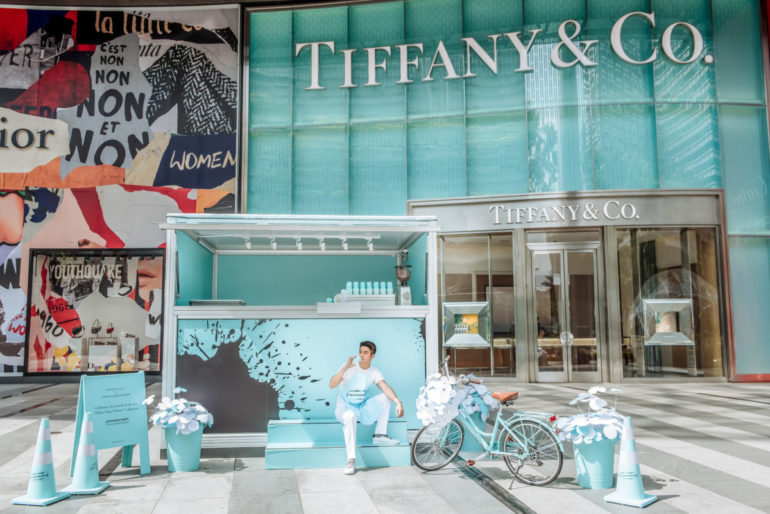
    The move comes shortly after Reliance signed a deal to bring US luxury jewelry brand Tiffany and Co to India last July, with the first store opening last month in New Delhi.

    The first Balenciaga in India store will open in the Jio World Centre mall in Mumbai.

    Reliance now holds a portfolio of more than 45 international luxury and premium brands.It operates more than 682 stores.

    Balenciaga is a Basque heritage label that was acquired by Kering nearly 20 years ago. It sells in several locations in Asia, including Hong Kong, Indonesia, and Mainland China. It achieved US$15 billion in sales in 2018.

  • How Reliance’s JioMart platform will reshape India’s online grocery market

    How Reliance’s JioMart platform will reshape India’s online grocery market

    Reliance Industries has entered India’s online grocery retailing market via a new e-commerce platform JioMart, which started pilot trials last month in Mumbai.

    Through JioMart, it is planning to offer more than 50,000 products and connect 30 million offline retailers with more than 200 million households across the nation.

    The value chain created by JioMart connects local offline retailers on a large scale with its merchant point-of-sale solution, where it provides user-friendly digital platforms for inventory management, customer care services and other services required by the retailers. JioMart plans to bring in electronics and clothing and footwear under its scope in the near future.

    The food-and-grocery (F&G)sector is tipped to be the next business battle for online retailers in India. Retailers, both domestic and international, have been proactive in their approach towards the rapidly growing online F&G sector in a bid to capture a large customer base.

    GlobalData estimates that the online F&G market in India grew at a compound annual growth rate (CAGR) of 71.2 percent between 2013 and 2018 and is set to grow at a CAGR of 45.5 percent during 2018-2023 as the urban working population is rising in Indian cities and retailers are venturing into non-metro cities. This growth is also supported by the rapidly growing mobile internet and smartphone penetration.

    RIL’s JioMart eyes the massive potential in online F&G retailing, which is estimated to reach US$9.12 billion in 2023. Reliance is known for its disruptive ideas and business approach, and the same can be said for its latest venture, JioMart.

    With its retail wing in cash and carry outlets through Reliance Fresh and Reliance Supermart, and a massive customer base with India’s largest telecom network in the form of Jio, capturing the market is not going to be tough for JioMart.

    As a domestic company, Reliance gets the advantage that Amazon and Walmart-owned Flipkart miss due to the new e-commerce regulations to safeguard the interests of domestic offline retailers in the country.”

  • Reliance to open Armani Cafe in India

    Reliance to open Armani Cafe in India

    Indian conglomerate Reliance Industries is launching a Michelin-star restaurant in Mumbai in partnership with Italian luxury firm Emporio Armani.

    The first Armani Cafe venue is set to open in the firm’s upcoming luxury Bandra Kurla mall, the Jio World Centre.

    Armani restaurants have opened in several major cities among 20 international locations.

    Reliance is the luxury brand’s master franchisee in the Indian territory, and already operates Emporio Armani, Giorgio Armani and Armani Exchange outlets nationwide. It is expected to roll out Armani’s sportswear brand EA7 in March.

  • Reliance Industries taking on Amazon in India

    Reliance Industries taking on Amazon in India

    Indian conglomerate Reliance Industries is moving to take on Amazon in India by founding a new digital retail platform.

    The firm, led by billionaire Mukesh Ambani, has of late been engaged in testing to refine its new online shopping portal JioMart, which is expected to list more than 50,000 grocery items. Select customers who pre-register have been offered free home delivery and no-questions-asked return policy.

    The service will initially only operate within three neighborhoods in the vicinity of Mumbai, taking on both e-commerce market leaders within the territory, Amazon and Flipkart.

    Ambani has recently made several investments outside Reliance’s core industrial businesses, including telecommunications and retail acquisitions that are projected to account for 50 percent of the firm’s profits within a few years. He has previously spoken of ambitions to totally transform India’s unorganized retail market.

  • Reliance-Tiffany partnership in India wins the right approval

    Reliance-Tiffany partnership in India wins the right approval

    The Reliance-Tiffany partnership in India will allow Tiffany & Co to offset subdued demand in US and Europe, says data and analytics company GlobalData.

    The US-based luxury jeweler Tiffany & Co formally announced last week it was forming a joint venture with India’s Reliance Brands Limited (RBL), a part of the Reliance Industries Limited (RIL), to open a line of stores in India. That move was widely predicted earlier.

    Shagun Sachdeva, consumer insights analyst at GlobalData, says India is the fastest-growing luxury market in the Asia-Pacific region, expected to grow at a compound annual rate of 14.2 percent between 2017 and 2022, to reach US$7billion by then.

    “The projected healthy growth can be attributed to the positive economic outlook, growing younger upper-middle-class population coupled with growing brand-consciousness, and the increasing popularity of the online channel for luxury shopping.”

    Sachdeva said Tiffany & Co, famous for its diamond engagement rings and famous blue boxes, has been trying to enter the Indian market for a long time.

    “By leveraging Reliance’s long-standing brand presence and product positioning, it will be able to expand globally and offset the subdued demand in the US and Europe.

    “After the deployment of omni-channel model and the introduction of the iconic British toy retailer Hamleys in India earlier this year, the latest move by Reliance to open Tiffany stores in Delhi later this year and in Mumbai in 2020 through a joint venture is in line with its strategy to bring the best-in-class products to the emerging Indian luxury market,” she said.

    “It provides a unique opportunity for Reliance to bolster its consumer-focused units, retail, and telecoms, to match the strength of its leading oil and gas business.”