Retail News CRM

Tag: Research

  • Logistics heading to personalisation in digital era

    Logistics heading to personalisation in digital era

    The biggest trend in logistics right now is arguably not artificial intelligence, blockchain or even visibility, it’s hyper-personalization – which is ushering in a new era of delivery once only accessible to big global companies and corporates.

    For Asia’s legions of entrepreneurs and small businesses – more than 70 percent of whom are now exporting beyond Asia Pacific – personalization offers new opportunities to compete and create competitive advantage.

    Already, the transport and logistics industry is at a threshold moment in terms of the use of personalization – the ability to dynamically and uniquely tailor the shipping experience to any customer or individual.

    Yet while many micro-businesses believe in the power of personalisation for their brand – allowing consumers to choose the color of a dress, say, or add a monogram to a handbag – far fewer know that tapping new customization and personalization strategies in logistics is easier than ever.

    So just how can Asia’s small businesses deliver greater personalization in the shipping experience? And use logistics to gain ground against often older, larger or more established brands?

    Logistics made just for you

    FedEx, for example, has always operated beyond the norms of what’s expected for a shipping company. We know that our company is more than just packages shipped – it’s what we deliver that matters, such as dreams when a start-up sends out its first packages; joy at Chinese New Year; even hope when shipping relief supplies.

    What’s more, while the most important aspect of the growing US$4.5 trillion e-commerce economy is shipping, we recognize that to many, it’s largely invisible.

    So what’s changing and what’s important when it comes to customization and personalization, in a world where 11 percent of global GDP is already directly attributable to digital technologies?

    The first step is to change our mental model that logistics is something that happens after services and products are sold.

    Just as WeChathas evolved into a billion-dollar ecosystem of apps, products and services creating hyper-personalized experiences from start to finish – be it in food, clothing, paying utility bills or even shipping a package using the likes of FedEx, so too is the delivery experience starting sooner.

    For instance, we now help SME e-tailers at the frontend to close more business on their website, or on the backend in after-sales service, matching shipping strategies with customer needs.

    Innovation itself is also more mobile – it’s estimated that around 90 percent of logistics today happens behind the mobile phone – meaning that we must deliver differently.

    Our ‘new normal’ of personalized logistics is all about connecting customers with greater convenience – same-day deliveries, more ‘last mile” choices including self-collection locations; even new, advanced tracking that can nickname shipments and create personal ‘watch lists’.

    Visibility is yet another way to personalize the shipping experience – since knowing the status of packages and having control over them is at the top of any customer’s wish list. Take FedEx Delivery Manager for instance, which can request delivery notifications, sign for deliveries in advance, have shipments delivered to a secure location, suspend deliveries and more.

    Here, hyper-personalization is about driving greater flexibility – with the ability to customize and select day and delivery options – usually at no extra cost to an SME or its customers.

    More than ever, consumers want more from their supply chain and logistics – the ability to return goods to a physical location; the ability to get a text message saying goods are about to be delivered; track product requirements online; vary the delivery window and location, even the ability to “click and collect” – collecting goods from a secure location like a locker box or a 7-Eleven store.

    We’ve also seen growth in customisation and postponement which is giving SMEs more options to manage inventories more efficiently. By delaying product packaging and assembly for as long as possible, exact customer specifications can be met whenever products are needed.

    But that’s just the start. Our industry is at a tipping point, barely scratching the surface of what’s possible as customers expect more, and demand more.

    The personalisation of everything

    The future of logistics is set to be ‘personalised everything’.

    Already, shipping is moving further away from a generic or one-size-fits all approach to a highly personalised pattern of world commerce – with the ability to customise, flex and individualise delivery in ways that are just only beginning to become clear.

    Just as brands that create a personalised experience are growing two to three times faster than their peers – and seeing revenue increases of up to 10 per cent[4] – so too will small businesses be able to create one-of-a-kind supply chains that help them grow, compete and connect globally.

    As Alan Kay once said: “The best way to predict the future is to invent it” – so we are working on a number of technology innovations that will further change the way we do business and the way we serve our customers. But what can we expect to see?

    Among a multitude of on-demand style innovation, the day is coming where the ultimate personalised logistics accessory of the future will be the ability to book a shipment by talking to your digital personal assistant.

    Picture a small business customer initiating the process, answering questions from the digital assistant, hands-free and paper-free, to complete a booking with a courier – or robots, zipping to your home or SME office to pick up the package.

    So why should Asia’s entrepreneurs and SMEs care?

    Such hyper personalisation innovation – existing or futuristic – is impressive. We are at an unprecedented moment in history in terms of connectivity, where more and more consumers are becoming hyper-connected across multiple devices – ranging from mobiles to smart phones to wearables and even home appliances.

    This personalisation of connectivity – where we’ve moved from walking among 100,000 products in a store to accessing more than 10 million products on a phone – is giving today’s small businesses the opportunity to compete on customer experience on a scale never seen before.

    This year is shaping up to be a banner year for small businesses – four in five of whom are already using e-commerce, and 64 per cent of which expect to see an increase in e-commerce revenue in the next year.

    As we move closer to 2020 – a year when customer experience is expected to overtake price and product as the number the key brand differentiator – the opportunity for Asia’s SMEs is now.

    The ability to compete on customer experience using hyper personalisation is open to businesses of all sizes. And it may just be small businesses that win the future battle for personalisation.


  • IoT to drive BLE market to 1.6b devices by 2023: ABI

    IoT to drive BLE market to 1.6b devices by 2023: ABI

    ABI Research forecasts that Bluetooth Low Energy (BLE) devices will exceed 1.6 billion annual shipments by 2023. Growth in segments like smart home, beacons and asset tracking, emerging IoT applications, alongside growth in existing key markets and the emergence of audio over BLE will enable the technology to achieve a CAGR of 27% between 2018 and 2023, tripling in size.

    Andrew Zignani, senior analyst at ABI Research, says the growth in BLE stems from continued technical enhancements that take advantage of opportunities arising from growing number of applications in various vertical markets.

    “BLE’s ubiquitous support in mobile devices, combined with its ability to support mesh networking, beacon functionality, and most recently, centimeter level location accuracy with the introduction of Bluetooth 5.1 and radio direction finding (RDF), is enabling BLE to be increasingly leveraged within smart consumer devices, larger scale home and commercial building automation environments, and RTLS deployments with more stringent accuracy requirements,” says Zignani.

    By 2020 Bluetooth is anticipated to enable high-quality audio streaming over BLE, providing a boost for the existing headset market and the emerging True Wireless audio device market.

    Zignani cites announcements at CES2019 such as Dialog Semiconductor demonstrating an audio over BLE proof of concept utilizing their SmartBond SoCs. “From 2020, we expect the Bluetooth audio market to take advantage of upcoming enhancements to better support truly cable-free earbud experiences while enhancing the battery life and user experience, though it may take some time for the standardization process to translate to wider mobile and ecosystem support,” explains Zignani.

    BLE chipset providers continue to innovate to provide further improvements in power consumption, further extending battery life and enabling support for battery-free devices via energy harvesting.

  • CIMB IB Research expects higher operating costs

    CIMB IB Research expects higher operating costs

    CIMB Investment Bank Research (CIMB IB Research) has retained its “reduce” call on AirAsia Group Bhd as it forecasted the company to face higher operating costs and gearing levels until 2021.

    The research house lowered its target price for AirAsia to RM1.50, from RM1.82 previously, as it expects lower core earnings per share and dividend of 13 sen.

    At 11.00am, AirAsia was trading down 1 sen or 0.38% at RM2.64 with 1.55 million shares transacted. Its market capitalisation stood at RM8.86 billion.

    In a note today, CIMB IB Research analyst Raymond Yap pointed out that AirAsia had sold 79 aircraft to lessor BBAM Ltd Partnership in 2018 and is expected to sell a further 25 planes to lessor Castlelake LP by the third quarter of this year.

    Given this, Yap explained that together with other existing operating lease aircraft, AirAsia is expected to capitalise RM11.8 billion worth of borrowings related to the operating leases in financial year 2019, effectively bringing back to the balance sheet what had previously been off-balance sheet.

    “The impact would be to raise reported gross gearing of 19% in FY18 to 198% on a pro forma basis after MFRS 16.

    “The overall impact to P&L (profit and loss) earnings from the above sale and leasebacks (S&LB) is negative because AirAsia would have to pay for the lessors’ profit margin as well as provide for a higher level of maintenance charges based on lessors’ conditions for lease returns, which tend to be strict. The net result would be a squeeze on AirAsia’s profit margins,” he said.

    Yap added that with the squeeze in profitability, AirAsia will experience greater operating leverage from unexpected changes in fuel prices, exchange rates, competitive dynamics, and airport taxes and levies.

  • Mobility driving China’s economic growth

    Mobility driving China’s economic growth

    China’s mobile ecosystem added 5.2 trillion yuan ($750 billion) in value to the country’s economy in 2018, according to a new GSMA report.

    Mats Granryd, director general of the GSMA says the report confirms how China’s mobile industry has been a key driver of economic growth, inclusion and modernization – creating a new generation of digital consumers and transforming industry and society.

    Grandryd says China’s mobile operators will invest a further 401 million yuan with the rollout of 5G.

    Numbers speak volumes

    • China is the largest mobile market in the world with 1.2 billion unique mobile subscribers at the end of 2018, about 82% of the country’s population;
    • 69% of mobile connections in China are smartphones, with smartphone adoption expected to reach 88% by 2025;
    • 4G networks cover 77% of China’s connections peaking in the coming years before falling as consumers migrate to 5G services;
    • By 2025, there will be 460 million 5G connections – this will, however, only account for 28% of China’s total network connection;
    • By 2023, mobile connection will contribute 6 trillion yuan to the economy, up from 5.2 trillion yuan in 2018;
    • China’s mobile ecosystem directly and indirectly supported 8.5 million jobs in 2018 and contributed 583 yuan in tax revenue;
    • The number of licensed cellular IoT connections in China stood at 672 million at the end of 2018, supporting various industrial and smart cities applications.


  • Telcos to use AI to fight SMS fraud and drive A2P messaging revenue

    Telcos to use AI to fight SMS fraud and drive A2P messaging revenue

    Juniper Research is forecasting that total operator revenues from A2P (Application-to-Person) messaging services will reach $62 billion by 2023, up from $43 billion in 2019.  This represents a growth of 42% over the next 4 years.

    The research firm also claimed that revenue growth will be driven by operator efforts in mitigating messaging fraud over grey routes, alongside the emergence of rich-media messaging technologies including RCS (Rich Communications Suite).

    The Juniper research, A2P Messaging: SMS, RCS & OTT Business Messaging 2019-2023, also found that increased investment in SMS firewalls and AI (Artificial Intelligence) will drive down operator loss due to grey route SMS messages to $4 billion by 2023. This represents a fall from $10 billion in 2019, further contributing to operators’ messaging revenue growth over the next four years.

    Grey route SMS includes A2P messages disguised as P2P (Peer-to-Peer) traffic to exploit the lower costs compared to directly connected A2P SMS. Juniper estimates that 24% of A2P SMS messages will be delivered via grey routes in 2019, however efforts in improving SMS firewall capabilities will drive this down to below 10% by 2023.

    Meanwhile, RCS business messaging will account for under 10% of operators’ A2P messaging revenue by 2023. However, the research claimed that RCS business users will continue to use SMS for simple notifications, such as OTPs (One Time Passwords) owing to the low cost and simplicity. The research identified the integration of mobile payment capabilities directly into the RCS client to provide a differentiation point to SMS and increase RCS traffic.

    Research author Sam Barker added “RCS will provide operators with additional revenue opportunities beyond simple message termination. Operators must explore the advertising ecosystem and mobile payments over RCS to exploit their substantial subscriber bases to generate fresh revenue streams.”

  • Six great marketing lessons Learned from MarketingPulse

    Six great marketing lessons Learned from MarketingPulse

    “Great ideas should be scary,” advocates Marcelo Pascoa, head of global brand marketing at Burger King, one of the keynote speakers at the recent MarketingPulse event in Wanchai. “When new things come to be, it is often associated with fear. So, my advice to marketers is: be very afraid! If you sleep well the night before your project launches, then the promotion wouldn’t be too spectacular.”

    Pascoa’s projects are known to be bold and daring, even making fun of competitors in the market. One example was a marketing stunt in which people were asked to open the Burger King app at a McDonald’s to win a free burger. As a result, there was a huge leap in interest in the Burger King app and it became the most downloaded app on the store. He said that knowing your work aligns with the brand value is key when facing challenges and criticism. “My biggest fear is being irrelevant. Marketers live in fantasies where they control everything, but social media has proved that we cannot control everything.”

    MarketingPulse second edition

    Pascoa was one of many speakers at the second edition of MarketingPulse, Asia’s premier conference for marketers and brands, held at the Hong Kong Convention and Exhibition Centre. Organised by the Hong Kong Trade Development Council (HKTDC), the key morning session at the event, “Dear Brands, Let’s Sail to the Future!”, featured a heavyweight line-up of industry experts who shared their tricks and tips on how to keep ahead of marketing trends to develop successful brand stories.

    Respect cultural differences

    Endeavor is a brand focusing on entertainment, sports and marketing services. Bozoma Saint John, the company’s chief marketing officer, shared her success stories at Endeavor and in previous high-profile marketing roles at Uber and Apple Music.

    St John recounted some of the marketing stunts that helped to push her brands, from inviting Beyonce to perform at the Super Bowl and promoting Apple Music’s breakup song services through private chat messages between three famous black actresses, to featuring two superstar athletes sharing their thoughts on cultural differences during an Uber ride. These stunts were not only successful in capturing the attention of consumers, but also raised discussions on cultural issues relevant to society as a whole.

    “I am addicted to popular culture,” she declared. “I am always fascinated by the latest and most trendy things and would like to know how they come to be and how they connect with history. People working in the marketing sector represent various cultural differences between different places. We have to know its meaning, why it comes to be, and how cultures interact in order to use popular culture as a marketing tool.”

    Saint John pointed out that there are currently tensions in society which make it important for marketers to understand different communities well and build connections through various emotions in order to avoid controversies such as cultural appropriation.

    Think before you speak

    One of Hong Kong’s best-known creative talents, Juno Mak, creator at Kudos Films, began his presentation by sharing his experience in the entertainment industry and explaining how marketing became part of his everyday life.

    “We do not need to be a businessman to do marketing, as we are already marketing ourselves in our daily lives − our sitting posture, our favourite colours, and our watches, these are all making a promotion out of a life. When you know yourself better, you will know how to do marketing,” he said.

    Mak also made the bold suggestion that we should abandon two things: our resumes, and thoughts that come from the mouth, not the head.

    “Things you write in your resume are tasks completed in the past. But we have to think: what’s next? We should also give up on thoughts that come from our mouths, as they might be copies of other people’s ideas. Thoughts should come from your head − a creation that you agree with.”

    Storytelling techniques

    Jonathan Mildenhall, co-founder and CEO of TwentyFirstCenturyBrand and former chief marketing officer at Airbnb, offered the audience a whole new definition of marketing in the 21st century. “Marketers create assets for the company, including its finance, consumers, employees and cultural assets. Marketing with a clear focus creates unparalleled value,” he said.

    Mildenhall emphasised that storytelling techniques are key to any marketing campaign.

    “I am 100 per cent a supporter of emotional storytelling. If a marketing campaign does not contain a story behind it, it is only market pollution. Stories help us build a signature super-brand that people care about.”

    He shared his experience at Airbnb to illustrate how consumption begins with emotion − for example, bringing the room in a Van Gogh painting to life, or sharing true stories from the community to bring out cultural values.

    “We rationalise our choice of consumption after we create the emotion,” he explained.

    Understanding local tastes

    Keiei Sho, executive officer, GM of overseas business division at Calbee, distributed his company’s popular grilled corn sticks to conference visitors to demonstrate how market tastes can change.

    “People used to say that the corn sticks were too hard and that consumers would not like them,” he said, before revealing that sales were now in the region of US$300-400 million. Sho recounted Calbee’s history, explaining that after the Second World War, Japan was left with devastated industries and faced food shortages. Calbee stepped in to manufacture prawn crackers using the flour left behind by the US Army and shrimps from the Seto Inland Sea, which proved to be a hit.

    The company continues its creative legacy, recently working with 47 Japanese prefectures to create a successful campaign by developing 47 different flavours of chips.

    “We collaborated with local governments to learn about local tastes, hoping to know what would resonate with consumers, while showcasing promotions from various prefectural governments on the back of the bag,” he explained.

    Using its advantages in the areas of food safety and convenient packaging, the brand has continued to push the envelope by launching breakfast food items to attract Chinese visitors and promoting Kyoto’s breakfast culture using online celebrities.

    Embracing consumer insights

    The lingerie brand created by Michelle Cordeiro Grant, founder and CEO of Lively, has embraced the concepts of female empowerment and body acceptance. The company created a new definition of what sexiness means, building a brand that brings community, experience and products together.


    Advocating “high style and comfort”, the brand has been communicating with 100 brand ambassadors right from the start to learn about consumers’ needs and elicit useful feedback. Many of Lively’s new underwear lines are launched in accordance with customer preferences.

    Grant said Lively is an experience-focused brand, with its retail stores devoting only 30 per cent of the space to products while the rest is used for events such as hip-hop experiences and movie nights.

    “Lively is an organism with a human soul,” she said. “Normally, females purchase underwear once or twice a year, while our consumers purchase underwear on average four to five times per year. This shows that they are purchasing not out of their ‘needs’, but their ‘desires’.

    “This is key to how we create our market share.”

  • 5G to account for 57% of China tech spend in 2019

    5G to account for 57% of China tech spend in 2019

    Spending on 5G will account for the majority of China’s technology spending in 2019 as the nation continues to spend heavily to ensure it leads the global race to implement the mobile technology, Forrester Research predicts.

    China will spend a total of $256 billion on technology goods and services this year, with 5G spending to account for 57% of this, the research firm said in a new report.

    The nation is best positioned to win the global race to implement 5G after having outspent the US in this area by around $24 billion since 2015.

    Meanwhile China and Japan are set to dominate technology spending in Asia-Pacific, collectively accounting for 60% of the total market. India will be third with anticipated spending of $70 million, Forrester said.

    India, China and the US will also see the strongest growth amid a slowing global technology market. Total growth in spending is expected to slow to 4.5% in 2019, and to 3.8% in 2020.

    The report also found that Asia-Pacific still lags the US and Europe in terms of cloud adoption, because the infrastructure in most Asia-Pacific markets is not mature enough to support cloud solutions.

  • Vietnam Retail Steap Climb in Retail Growth

    Vietnam Retail Steap Climb in Retail Growth

    The Vietnam retail sector is forecast to record double-digit growth from 2019 to 2024, according to a report by ResearchAndMarkets.

    While a number of Vietnamese consumers still choose to shop in traditional markets as they can buy ingredients in smaller portions, supermarkets are offering ready-to-cook packages better suited to the daily needs of the average consumer, says the report. Thus, supermarkets and convenience stores are taking an increasing share of the overall food and grocery market.

    Food products, non-food products, and home appliances are also sold in larger supermarkets, offering more range and convenience for local customers under one roof.

    Modern retail outlets also offer private brands/products that can be exclusively purchased in their stores.

    Some newer stores have in-house bakeries and cafes where consumers can hang out and enjoy with family or friends.

    Growth of convenience

    The growing Vietnamese middle and affluent classes and the younger population increasingly value convenience and comfort. That is driving growth in the convenience store market, met by the expansion of companies such as Circle K, which is now expanding across Hanoi after establishing a strong presence in Ho Chi Minh City, FamilyMart, 7-Eleven and GS25, among others.

    The increasing presence of local players, such as Vinmart+, which has nearly 900 stores nationwide, and test stores trading as Bach Hoa Xanh, operated by Mobile World, are helping expand the Vietnam retail market.

    Traditional food-and-beverage retailers still dominate the sector.

    As of last year, traditional retailers accounted for 94 per cent of the retail grocery sales, and the remaining 6 per cent sales were attributed to modern retail.

    According to industry experts, modern retail sales are expected to reach 18 per cent of total food retail sales by 2024.

  • Data-sharing Algorithm launched for Indian rural store owners

    Data-sharing Algorithm launched for Indian rural store owners

    Data platform Next Billion is collaborating with data exchange service Ocean Protocol to pilot a new data-sharing model that gives Indian rural store owners an extra income stream.

    Next Billion, which creates insights to enable companies to expand in high-growth emerging markets, provides free point-of-sale platforms to rural store owners to record real-time inventory and sales data. It is building a data marketplace and piloting a new data sharing model based on Ocean Protocol, the first general platform for borderless data sharing that marries blockchain, data and AI.

    Through the pilot, Indian rural store owners will capture real-time transactions via the POS platform and are incentivised to consistently use this platform to submit verified data. When companies buy their syndicated data, transactions can be traced back to the source via Ocean Protocol, enabling Next Billion to reward these rural store owners with royalties.

    “We believe global companies’ needs for commercial data can unlock sustainable and inclusive business models that empower local data providers to share fair value from their data,” said Next Billion MD Oliver Gilbert. “Ocean Protocol enables Next Billion to monetise data and share it with companies in a safe and secure manner.”

    Despite the lack of digitisation in retail practice in rural Asia, sales are climbing. Driven by the rise of the middle class, the consumption of fast moving consumer goods (FMCG) in rural areas is growing across Asia. From 2009 to 2012, spending by India’s 800+ million rural residents reached $69 billion, some 25 per cent more than their urban counterparts over the same period.

    According to recent estimates, consumption in rural areas is growing at 1.5 times the rate in urban areas. The current $12 billion consumer goods market in rural India is expected to reach $100 billion by 2025.

    FMCG companies are eyeing this new opportunity and have revved up their distribution channels in rural areas.

    This has been reflected by a significant rise in demand for rural market-research data. However, traditional market-research firms lack rural reach, maintain outdated platforms premised on different environments, and their costs remain prohibitively expensive.

    Ocean Protocol is a blockchain-based platform for the safe sharing of data that enables companies and data services to build on top. Its technology allows organisations to put a value on, own and control their data while addressing many frictions around data sharing today – including privacy concerns, trust, and auditability. Ocean also allows algorithms and models to come to the data, get trained and then leave without exposing the data or taking a copy, thereby retaining privacy and freeing up data to advance the economy and society.

    “A lot of data is generated today, yet they are locked up in silos because people are scared of losing control and not getting rewarded. Ocean helps to solve this by giving the tools for people to own and control their data and develop new data-driven business models,” said Ocean Protocol founder Bruce Pon. “Data owners can program the conditions of access which are then executed precisely. In addition, data can be traced back to its source, enabling incentives to be spread across all stakeholders in the data sharing process.”

    “Being incentivised, along with transparency on how data is being used, increases the willingness of people to share data,” Gilbert added. “We hope to provide high quality and agile retail insights at a fraction of what the traditional market research firms would charge while targeting an increase in sustainable livelihoods by 30-50 per cent.”

  • RCS and OTT to fuel A2P business messages to 3.5tr by 2023

    RCS and OTT to fuel A2P business messages to 3.5tr by 2023

    A new study from Juniper Research found that 3.5 trillion business A2P (Application-to-Person) messages will be delivered by 2023, up from an estimated 2.5 trillion in 2019, a 40% growth.

    The new Juniper Research paper, A2P Messaging: SMS, RCS & OTT Business Messaging 2019-2023, forecast that the rich media interactivity of RCS (Rich Communications Suite) would make the emerging messaging technology popular for retail and marketing business use cases.

    It claimed that this enhanced functionality will drive RCS traffic to an average annual growth of 290% over the next 4 years, to help the growth of operators’ total messaging revenues.

    Not enough

    However, despite strong growth, RCS will account for only 2% of all A2P traffic by 2023, reaching 56 billion A2P messages. The research suggested that A2P messaging users will continue to use SMS owing to the familiarity of the protocol. As a result, it claimed that the growth of RCS will be mostly driven by new traffic, rather than the migration of existing traffic from SMS.

    Research author Sam Barker remarked, “Future growth of RCS traffic will be driven by users migrating away from dedicated mobile apps. The technology will develop to become the first point of contact for RCS users to engage with brands over mobile devices within 5 years”.

    OTT business messages future slowed by fragmentation

    The research also found that OTT business messaging platforms, such as WhatsApp for Business, will deliver 236 billion messages by 2023. However, they will continue to suffer from a fragmented user base across multiple messaging applications.

    The research cited the use of CPaaS (Communications-Platform-as-a-Service) solutions as essential to enable fallback onto the ubiquitous SMS protocol to ensure message termination. Additionally, it found these platforms will allow the collection of insightful data, including contact preferences, to enable A2P business users to optimize messaging campaigns.

  • Hyperscale operator capex jumped 43% in 2018

    Hyperscale operator capex jumped 43% in 2018

    New data from Synergy Research Group revealed that hyperscale operator capex reached over $32 billion in Q4, outperforming the first three quarters of the year, which had themselves set records.

    Full-year hyperscale capex jumped 43% to almost $120 billion. Meanwhile telco capex was over double that of hyperscale operators, but notably telco spending remained at the same level as the previous two years. The top five hyperscale spenders in 2018 were Google, Amazon, Microsoft, Facebook and Apple. Coincidentally their aggregate 2018 capex was almost identical to the capex of the top five telco spenders – China Mobile, AT&T, Verizon, NTT and Deutsche Telekom.

    The hyperscale data is based on analysis of the capex and data center footprint of 20 of the world’s major cloud and internet service firms, including the largest operators in IaaS, PaaS, SaaS, search, social networking and e-commerce.

    Outside of the top five, other leading hyperscale spenders in 2018 included Alibaba, Tencent, IBM, JD.com and Baidu. Much of the hyperscale capex goes towards building, expanding and equipping huge data centers, which have now grown in number to 439.

    The telco data is based on tracking and analysis of the world’s 40 largest telcos, which in aggregate account for 85% of the communications services market.

    “The hyperscale operators are quickly becoming the capex kings of the IT world,” said John Dinsdale, a chief analyst at Synergy Research Group. “On average hyperscale operator revenues are growing by 20% per year driven by expansion of cloud services, e-commerce, social media and online advertising; and it is notable that the leading players are investing an ever-increasing share of their revenues into capex. This is in stark contrast to telcos who are seeing neither revenues nor capex growing. We do not see these trends changing any time soon.”

  • Apple’s AirPods 2 will help the ‘hearables’ segment to grow

    Apple’s AirPods 2 will help the ‘hearables’ segment to grow

    According to Counterpoint Research, wireless ‘hearables’ are the next big thing. The segment, which contains Apple’s AirPods and the Samsung Galaxy Buds, saw global sales of around 46 million units last year. But with the help of AirPods 2, this could catapult to 129 million units as early as next year.

    Samsung, Google, Bose, and LG are all expected to grow

    As noted by Research Director Pete Richardson, “2019 will be the year that hearables evolve into an important market.” For the most part, new releases from major brands will boost sales across the globe. However, the evolving digital habits of consumers are also expected to propel demand.

    The likes of Samsung, Bose, Huawei, and LG all hold relatively small market shares at the moment. But as interest in the segment picks up throughout this year and next, each one is set to experience relatively strong growth which should translate into larger market shares.

    New Google Pixel Buds and other releases from the likes of Amazon are expected to play an important role too. After all, these should integrate the likes of Google Assistant and Alexa, both of which are becoming increasingly popular among consumers.

    AirPods 2 will propel the ‘hearables’ segment to new levels

    As mentioned in the opening paragraph, for the foreseeable future Apple is expected to remain the biggest driving force of growth. Rumor has it that the brand is preparing a second-generation of its AirPods which should integrate a variety of new features and potentially some small design changes.

    From afar, AirPods 2 are expected to look identical to the originals. But upon closer inspection, a new frosted glass-like coating should be visible. This, according to rumors, will improve grip and reduce the slipperiness, which means the new AirPods shouldn’t fall out of your ears so easily.

    AirPods 2 should also introduce always-on Siri, which will allow users to activate the assistant with the words “Hey, Siri.” This feature was actually first teased way back in September by Apple but still hasn’t been confirmed officially.

    Joining the improved Siri will apparently be some kind of water resistance and potentially some health-related features. More specifically, an earlier report suggested Apple was researching the possibility of a built-in heart rate monitor. However, this extra is far from guaranteed. One feature that does seem extremely likely at this point is support for wireless charging through a new charging case. Allegedly, this feature, which will charge both the case and AirPods simultaneously, will take the battery level from 0% to 100% in just 15 minutes.

    Also expected from the new wireless accessory is Apple’s W2 Bluetooth connectivity chip. This can currently be found inside the Apple Watch Series 4 and halves the power consumption with respect to the W1 chip. As a result, battery life improvements are to be expected.

    Of course, Apple’s AirPods are primarily meant for music and Apple is set to bring some improvements to the overall sound quality.

    Most AirPods buyers aren’t bothered about sound quality

    Rather ironically, despite the fact AirPods are meant for music, consumers aren’t buying them because of their sound quality. Counterpoint Research recently conducted an online survey of over 200 people regarding their preferences. In the case of AirPods, 68% of correspondents cited “comfort & fit” as a key reason for buying them. This was followed by “ease of use” and “portability,” which were mentioned by 56% and 44% of people respectively.

    As it turns out, just 41% of the people surveyed cited “sound quality” as a reason for buying AirPods. For comparison, this factor was the key driver when it came to Bose products, with a whopping 72% listing it. “Noise cancellation” was also important with Bose headphones as it was cited by 68% of people.

  • MWC2019 was a “reality check” for telcos

    MWC2019 was a “reality check” for telcos

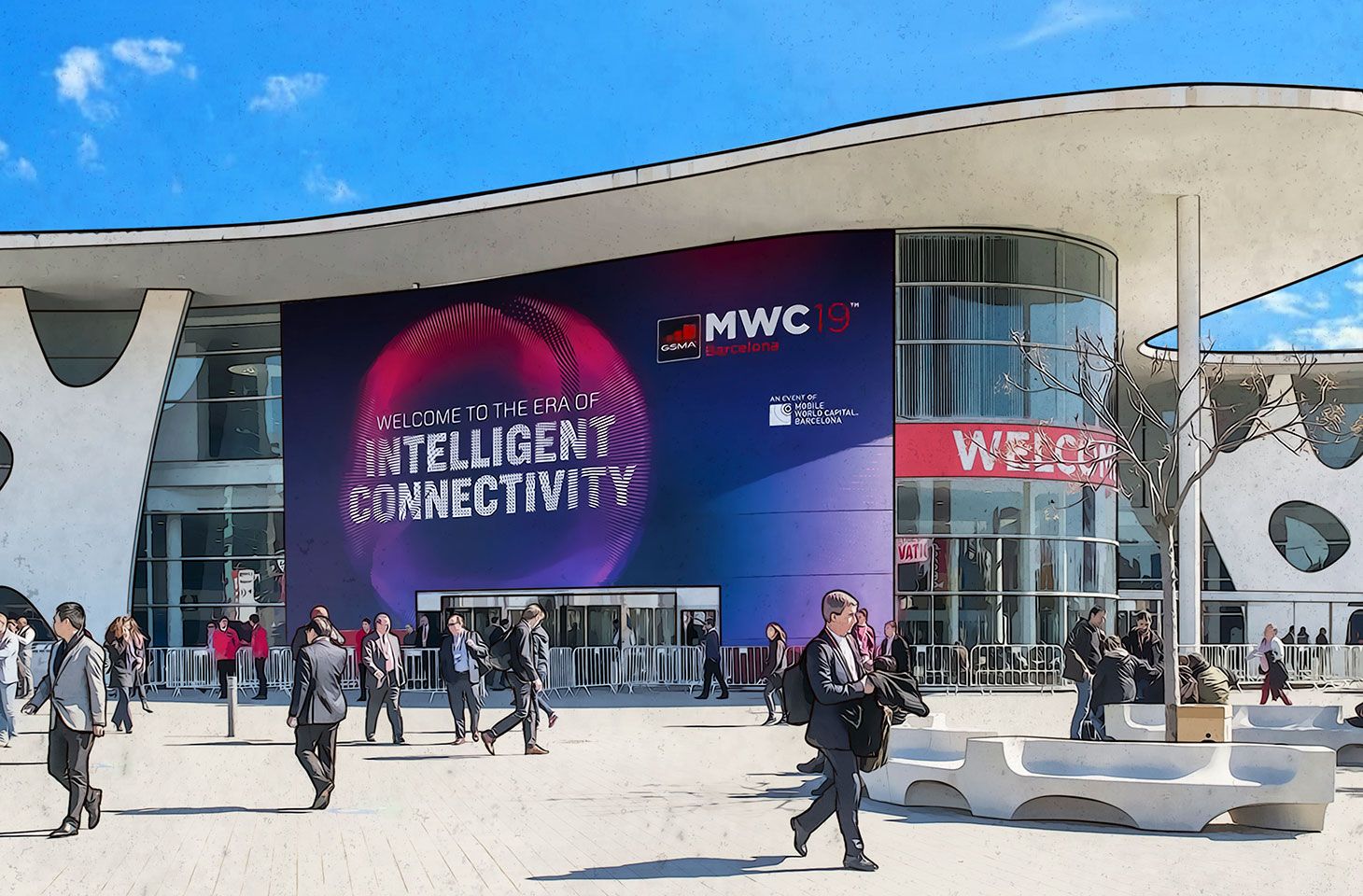
    MWC 2019 demonstrated the mobile industry knows it needs to change and without that change and a massive recalibration of its fundamental business model and modus operandi, it will become obfuscated, according to ABI Research.

    “MWC 2019 could best be characterized as displaying an anxiety borne from an industry suffering from a combination of split personality disorder and ADHD,” wrote Stuart Carlaw, Chief Research Officer at ABI Research, in the firm’s post-conference whitepaper: A Reality Check from Mobile World Congress 2019.

    One half of the industry encompasses an emerging band of technology companies that are addressing some pressing industry-centric issues with real-world solutions based on direct vertical market customer need.

    “The other half of the industry is made up of a carrier community that is moving at the same pace as the Titanic attempting to turn and avoid the iceberg. Too slow and too late,” added Carlaw.

    ABI Research had seven analysts at MWC 2019, which was held in Barcelona, Spain, between Feb. 25-28, 2019. The analysts focused on the following compelling transformative technologies:

    • 5G & Mobile Network Infrastructure
    • Digital Security
    • M2M, IoT & IoE
    • Smart Cities & Smart Spaces
    • Smart Mobility and Automotive
    • Smartphones and Wearables

    Some of the analysts’ conclusions about 5G and mobile network infrastructure from the whitepaper include:

    • Mobile Service Providers (MSPs) are becoming more rational in discussing what 5G can and cannot do. And, are realizing that 5G will be a slow affair.
    • Telcos and their partners will first use 5G to target the consumer market as that is the area where telcos have the know-how, reach, and experience.
    • Private LTE is slowly getting momentum in a market where 5G takes all the headlines. MSPs and network vendors already have well-tested and reliable technologies that can be used to deliver solutions in the enterprise space.
    • A new trend is emerging in the convergence of MSPs and cloud giants as the two categories need each other. This is part of the wider discussion around edge computing, network cloudification, and the role of 5G in creating new applications and supporting the growth of vertical markets.
  • Telcos fear surging energy costs due to 5G

    Telcos fear surging energy costs due to 5G

    More than 90% of mobile operators fear that the arrival of the 5G era will result in significantly higher energy costs, according to research from data center equipment provider Vertiv and 451 Research.

    A survey of mobile operators, released at Mobile World Congress in Barcelona, found high interest in technologies and services that can improve energy efficiency of 5G networks.

    More than 90% of respondents expressed an interest in the emerging energy savings as a service (ESaaS) model of reducing energy costs.

    This model involves working with energy partners to use technologies including IoT sensors, artificial intelligence and other connected technology to gain real-time insight into energy consumption patterns and where improvements can be made.

    Vertiv has predicted that the move to 5G will increase total network energy consumption by up to 170% by 2026, with the largest increases expected in macro, node and network data center areas.

    Despite this and other challenges ahead, the survey also indicates that operators are optimistic about the potential of 5G, and believe the 5G era will start in earnest in 2021. Nearly nine in 10 (88%) respondents to the survey are planning to deploy 5G in 2021-2022.

    To support the transition to 5G, 37% of operators have deployed multi-access edge computing technology, with a further 47% planning to do so.

    451 Research research vice president Brian Partridge said the survey sought to deliver clarity around operators’ hopes and fears around 5G and edge deployments,

    “The two toughest connectivity challenges for supporting 5G topologies were revealed to be upgrading access and aggregation layer networks and adding new backhaul links,” he said.

    “Survey respondents indicated that the availability of high quality connectivity to distributed POPs and ease of site acquisition were viewed as the most critical enablers to 5G success. We were frankly surprised by some of these results and believe it brings clarity to the level of transformation the industry now faces.”

  • Report urges auto industry to go electric

    Report urges auto industry to go electric

    Korea needs to give equal emphasis to the development of battery electric vehicles and fuel cell cars, considering the estimated future demand and the country’s competitiveness, a report said Thursday. “It’s a well-known fact that our car manufacturers have the mass-production technology for fuel cell automobiles,” the report from the Korea Institute for Industrial Economics & Trade (KIET) said. “However, the accumulated sales of fuel cell electric vehicles (FCEVs) worldwide stopped at 10,000 as of the end of 2018. The demand for fuel cell vehicles in 2030 will be less than 2 percent of the global sales of new automobiles.”

    In comparison, sales of battery electric vehicles (EVs) are estimated to exceed the demand for hybrids this year, 10 years since their commercialization, and show fast-paced growth, the report argued. Global rivals are due to market more than 100 different EV models by 2022, it noted.

    Korea’s high competitiveness in EV batteries is another reason why the government should not neglect investment in electric cars, the report said, warning that the relative weaknesses in the availability of charging stations and other networks could drag down the industry, despite efforts by local automakers to diversify their EV models. The report responded skeptically to the government announcement in December to give 2 trillion won ($1.79 billion) in assistance to reform the car parts industry.

    “If the auto industry, the recipient, is unable to fully accommodate, it could be difficult for the assistance to have the desired effect,” it said.

    The same report predicted hard times ahead for local auto companies, affected by the global slump in the car industry.