Retail News CRM

Tag: Research

  • Flipkart corners more than 50 pc share in India festive sale: RedSeer Consulting

    Flipkart corners more than 50 pc share in India festive sale: RedSeer Consulting

    Increased buying in smartphones and fashion verticals helped Walmart-backed Flipkart corner over 50 percent share during the first leg of the festive sale, according to research firm RedSeer Consulting. As per RedSeer’s latest report, Flipkart had a 51 percent share, while Amazon India had 32 percent share of the festive sale from October 9-14.

    “Flipkart accounted for more than half of GMV for the entire industry. Between Flipkart and Amazon, the share was 62-38. Higher share for Flipkart was driven by higher sales in both mobiles and fashion verticals,” RedSeer said.

    An Amazon spokesperson termed the report as ‘speculative’ that ‘lack robust and credible methodology’.

    “We received an overwhelming response to the Great Indian festival, with first 36 hours nearly surpassing the entire first wave last year and the entire wave growing by 96 percent versus last year…the festive season so far has exceeded our most aggressive plans,” the spokesperson said.

    Other players like Snapdeal, Paytm Mall and ShopClues also ran their festive offers and accounted for 17 percent share of the sales.

    Flipkart in a statement said the company “pushed the boundaries on many fronts and hit some of our biggest-ever numbers during its Big Billion Days (BBD).

    “We maintained a clear leadership in deep-penetrated and high ASP categories,” it added.

    As per the RedSeer report, the fashion and smartphone verticals grew by 78 percent and 70 percent, respectively.

    However, consumer electronics grew by only 45 percent despite large investments by both players in supply chain and affordability initiatives like debit card EMIs, it added.

    RedSeer said its report is based on interview with experts from supply chain, banking ecosystem and brands, seller views, customer surveys and other research.

    The report said Day 2 of the five-day sale was the biggest in terms of gross merchandise value (GMV) as it saw the launch of multiple new exclusives in mobile phones and offers on other platforms as well.

    Post second day, the growth of GMV stalled a bit with last three days accounting for only 42 percent of sales compared to 60 percent in the first two days, it added.

  • Uncertain reward will keep customer playing and buying: research

    Uncertain reward will keep customer playing and buying: research

    Marketers everywhere are looking for what will entice consumers to make a purchase—not just once but repeatedly—and new research points to a rather surprising result.

    While conventional wisdom says that people don’t like uncertain gains or rewards, a study from the University of Chicago Booth School of Business finds that uncertainty can play an important role in motivating repeat behaviors.

    “People repeat a task more for an uncertain incentive than for a certain incentive, even when the uncertain incentive is financially worse,” say Chicago Booth Professor Christopher Hsee and the Chinese University of Hong Kong’s Luxi Shen, a recent Booth graduate, in the study, “The Fun and Function of Uncertainty: Uncertain Incentives Reinforce Repetition Decisions.”

    One reason uncertain incentives motivate behavior is the psychological boost consumers get in moving from the unpleasantness of uncertainty to the satisfaction of certainty resolution.

    The popularity of WeChat Pay, one of the largest mobile payment apps in the world, is one example. After tapping to pay with WeChatPay, a mobile payment user is sometimes awarded a bonus of an uncertain size. This strategy motivates the user to pay with this specific app again.

    The same is true of many consumer goods companies. Meal-kit delivery services such as Blue Apron send their subscribers a box of unknown groceries every week. Apple music pushes a list of new music to their subscribers. Birchbox mails out boxes of skincare and makeup samples, and BarkBox gives pet owners a box full of surprise dog treats and toys based on that month’s theme.

    “These services all share one important feature,” says Hsee. “They keep the box mysterious and let their customers have fun opening the packages and discovering the products. The uncertainty keeps the customers coming back.”

    In the study, published in the Journal of Consumer Research, the researchers performed four experiments in Hong Kong and Chicago and found uncertain rewards consistently motivated consumers more than certain rewards in both lab and field settings, and in both small and large magnitudes.

    In one experiment, students at a running club in Hong Kong were told they could earn points by running, jogging, or speed walking on a 400-meter outdoor track during a 15-day event.

    Half of the members were randomly assigned to a group certain of its reward—after each lap, each member would receive five points. The other half were randomly assigned to a group uncertain of its reward—after each lap, each member would randomly receive either three or five points. At the end, participants could exchange their points for a gift card at a local café for the equivalent in Hong Kong dollars.

    As the researchers predicted, the running club members who didn’t know in advance which reward they would get logged more laps than those in the group guaranteed the five points per lap, even though the uncertain-point condition promised a worse financial outcome. “In other words, people literally ran ‘the extra mile’ (precisely, 2.59 more kilometers) for the uncertain incentive,” the study says.

    This uncertain reward is particularly beneficial for marketers who want their existing customers to return. “However, for the marketers whose solo goal is to recruit one-time customers, they should be cautious and not just mindlessly add uncertainty into their product design or pricing strategy,” Shen adds. In the study, the researchers show that uncertain rewards are effective only if the uncertainty is resolved immediately, and only after, not before, one has engaged in repetitions.

    Marketers have had success already in getting consumers to repeat behaviors. Grocery stores encourage shoppers to bring cloth bags and coffee shops encourage drinkers to bring their own mugs, both for the reward of a small percentage off their purchase. But the study suggests that such efforts may be even more successful if consumers don’t know the amount of the reward in advance.

    “Our research reveals that human reactions to uncertainty are more complex and nuanced than commonly thought,” they say.

  • Robots the future of customer service?

    Robots the future of customer service?

    When consumers walk through physical aisles of a supermarket or browse online catalogues these days, it is easy to overlook a vital and emerging trend – robots in retail.

    Robotics play a crucial role in cultivating a holistic retail experience for consumers in ways that have not been seen or thought of before. In warehouses, robots boost productivity and speed up the shipping of goods to stores and customers. Robots have also been drafted in stores, ready to serve customers with efficient inventory management. As the role of robotics in retail advances, we will see the same increase in speed and efficiency apply to the shopping experience as it has for industrial applications.

    Robots are making a timely appearance in the retail landscape as businesses today face pressure from multiple angles. Besides facing intense competition, they are also having to cater to a business environment that is being turned topsy-turvy as e-commerce grows.

    Consumer preference is also going through rapid transformation as shoppers become accustomed to e-commerce experiences that allow for cross-site comparisons, competitive prices and the convenience of shopping anytime, anywhere as they are connected via a computer or mobile device.

    The retail industry stands to gain as a whole with the entrance of robotics technology. Robots are being deployed, both in e-commerce businesses and brick-and-mortar establishments, to enhance efficiency and strengthen logistical and operational functions. Indirectly, this should translate to improved service levels and shopping experiences, and perhaps even lower costs.

    Workers in the retail industry too stand to benefit as robots can take on menial, mundane or dangerous tasks, freeing them up for knowledge-driven work.

    “Can.I.Help.You.Mdm?… Beep”

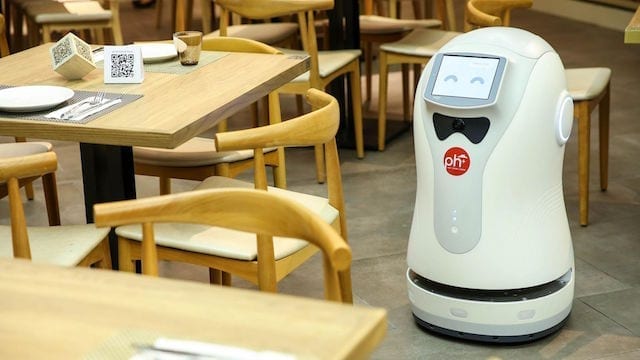
    Robots in retail can take on frontline, customer-facing roles too. As artificial intelligence capabilities grow, robots are emerging from beyond behind-the-scenes operations. Retailers have started to accommodate in-store robot assistants, able to direct traffic and perform important roles such as inventory management, freeing staff to handle more complex tasks.

    One such retailer is Walmart, which has installed robots into 50 of its stores across the US. These robots cruise along supermarket aisles checking shelves for items that need to be restocked, as well as merchandise that is misplaced or incorrectly priced. This vital information is then communicated to store staff who take necessary action. Equipped with cameras, these robots scan shelves three times faster than humans and are more accurate in picking irregularities. The engagement of robots is a pivotal component of Walmart’s plan to boost efficiency and accessibility of shoppers.

    Warehouses and delivery: hardwired for efficiency

    To satisfy today’s customer expectations of receiving goods faster, and with low or no delivery charges, retailers must develop an effective logistics system. Robots can help ease the pressure on retailers by improving logistical functions that are otherwise time-consuming. One example is how automation and robotics are used in smart warehouses to move large volumes of items through storage systems in a quick and reliable fashion, while still monitoring the exact location of each item at all times.

    Global retail stalwart Amazon built its success on automating its warehouse operations while maintaining its top-10 status in the ranks of the biggest employers. Fuelled by the support of the 55,000 robots employed last year, Amazon offered quicker deliveries at lower costs and led the retail industry in sales growth.

    Closer to home, robots have progressively proven themselves at Alibaba. The company recently introduced ‘Steel Soldiers’, a film about human and robots fighting shoulder-to-shoulder together. Its renowned smart warehouse is laden with sensor-charged robots who perform 70 per cent of tasks and can each carry up to 500kg of goods.

    Its competitor JD.com has also started using robots for the transportation of goods within 20km. Using robots has reduced JD’s unit delivery cost by 80 per cent and it’s fully automated sorting centre handles 9000 online shopping orders per hour – an operation previously performed by 180 human sorters.

    Alibaba and JD are testament to the idea that robotics can add value to shoppers by reducing delivery costs and speeding up logistical processes, even if they never meet them.

  • IDTechEx Research Releases Brand New Report on 3D Printing Software

    IDTechEx Research Releases Brand New Report on 3D Printing Software

    The 3D printing software market was characterised by multiple free and open source build processors, with one or two organisations catering to the industrial user with commercial offerings. In 2017, the landscape has changed considerably: there have been several new entrants following acquisition of smaller start-ups with both established CAD/PLM developers and 3D printer manufacturers keen to carve out a share of this rapidly growing market. The push to develop software that enables Design for Additive Manufacture for users looking to fully leverage the design freedoms offered by 3D printing is one of the key drivers of this growth. Given these market trends, the new IDTechEx Research report 3D Printing Software 2018-2028: Technology and Market Analysis forecasts that the global market for 3D printing metals will grow at a CAGR of 22% and will be worth $966 million by the year 2028.


    3D printing software encompasses all software required to realise a 3D model from CAD to print. This report provides a detailed overview of the functions of different 3D printing software technologies including this includes scanning for reverse engineering, CAD, CAE, CAM and workflow management, as well as evaluating the strengths and weaknesses of the most common file formats for 3D printing and their potential alternatives. Areas in which users’ needs remain unmet by current technologies are highlighted.


    New developments and trends within the 3D printing software market are discussed in the report including printer-specific software solutions developed by printer hardware manufacturers, as well as recent applications of leading-edge software tools for generative design, mass customisation and multimaterial printing.


    This report forecasts the overall 3D printing software market to 2028, with in-depth SWOT analyses of the major CAE, CAM and workflow management products available on the market today. The current state of the 3D printing software market is analysed, and long-range forecasts from 2018-2028 for revenue per annum segmented by commercialised CAE, CAM and workflow management product groups are evaluated.


    IDTechEx conducted exhaustive primary research with companies within the 3D printing value chain for key insights into the trends impacting growth to 2028. Over 25 company profiles have been included in the report including Materialise, Dassault Systèmes and Autodesk, among others.

  • Global e-commerce expected to double in next five years

    Global e-commerce expected to double in next five years

    Global e-commerce continues to revolutionise the air cargo industry, and is forecast to increase 19 per cent a year over the next five years, from US$1.9 trillion in 2016 to US$4.5 trillion in 2021, according to the annual E-Commerce Revolution Report released recently by Air Cargo Management Group (ACMG). The 2017 E-Commerce Revolution Report provides an in-depth look at the explosive growth of global e-commerce air logistics.

    The report features fresh and insightful analysis of the major marketplaces, sellers, and logistics providers that are fuelling this revolution. It is not just the best-known participants, such as Amazon and Alibaba, driving this revolution, but also global express airlines, along with players lesser known outside their home countries, such as JD.com in China and Otto in Germany. The report tracks the companies using and providing e-commerce air logistics, and offers insights on global trends in the industry.

    “E-commerce has disrupted retail and is now revolutionising logistics,” said Alan Hedge, senior director of Air Cargo Management Group. “This, our second annual report, builds on the strengths of the first and covers new territory by offering descriptions of additional e-commerce companies and additional discussion of fulfilment networks in China, the largest e-commerce market on the planet.”

    New for the E-Commerce Revolution Report this year is a web-based companion database tool for exploring relationships between major e-commerce players and logistics providers. The tool allows users to search particular logistics providers and users to isolate logistics transactions worldwide. Additionally, the tool can be used to quantify e-commerce air logistics transactions on a global basis.

  • Three reasons why we are addicted to smartphones

    Three reasons why we are addicted to smartphones

    Apple recently announced the launch of its iPhone 8 and iPhone X, which come with sleek, new features. Apple also hopes to start a new community around the iPhones. Ahead of the launch, Angela Ahrendts, head of retail at Apple, said their stores will be called “Town Squares,”and would double as public spaces, complete with outdoor plazas, indoor forums and boardrooms.

    The much-anticipated product launch was followed by millions who watched the event via livestream and on internet forums, blogs and in the news media.

    I, too, was among them.

    So, what draws people to these phones? Surely, it is not just the groundbreaking design or the connection with a community. As a minister, psychotherapist and scholar studying our relationship with hand-held devices, I believe there is much more going on.

    In fact, I’d argue, as I do in my book “Growing Down: Theology and Human Nature in the Virtual Age,” the phones tap into our basic yearnings as humans.

    Here are my three reasons why we love our phones.

    1. Part of an extended self

    Our sense of self is shaped while we are still in the womb. The development of the self, however, accelerates after birth. A newborn, first and foremost, attaches herself to the primary caregiver and later to things – acquiring what has been called an “extended self.”

    The leading 20th-century American psychologist William James was among the first to argue for an extended self. In his “Principles of Psychology,” James defined the self as “the sum total of all that a man can call his, not only his body and his psychic powers, but his clothes and his house, his wife and children.” Losing any of this extended self, which could include money or another prized object, as he explained, could lead to a sense of great loss. In early childhood, for example, babies and toddlers cry if they suddenly lose their pacifier or favorite soft toy, objects that become part of their extended selves.

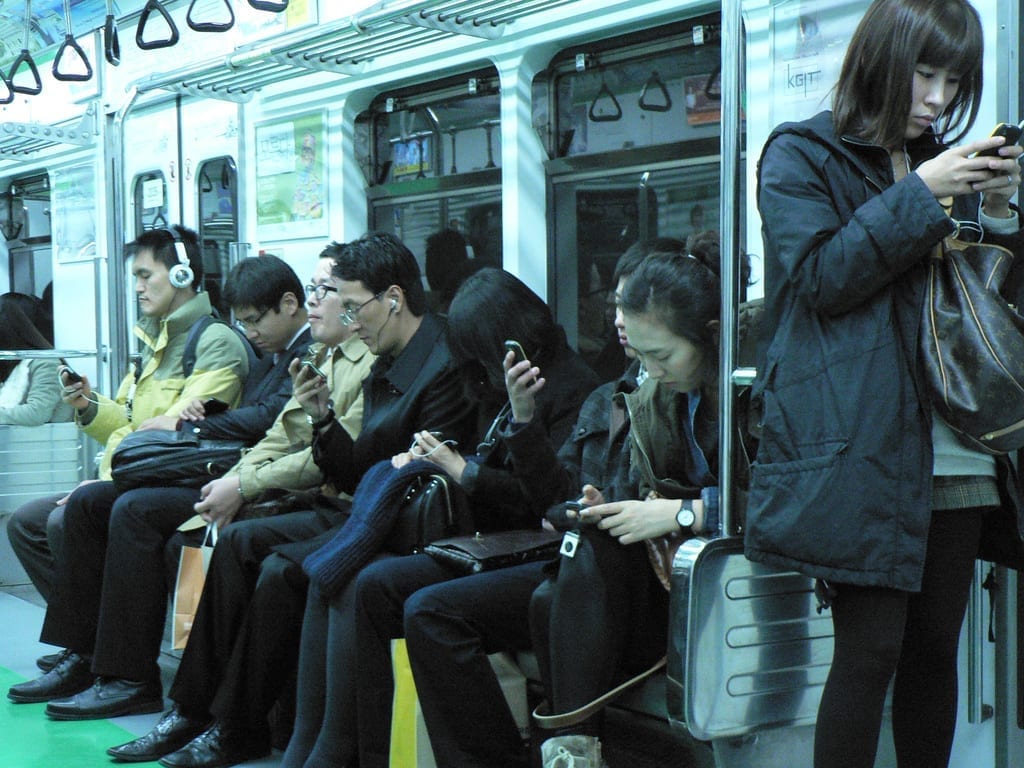
    Phones, I argue, play a similar role. It is not uncommon for me to feel a sudden onset of anxiety should I drop my phone or am unable to find it. In my experience, many individuals feel the same way. It is also reflected in how often many of us check our devices.

    Psychologist Larry Rosen and his colleagues at California State University found that 51 percent of individuals born in the 1980s and 1990s experienced moderate to high levels of anxiety when they were kept from checking in with their devices for more than 15 minutes. Interestingly, the percentage drops slightly – to 42 percent – for those born between 1965 and 1979.

    This is primarily because they came into being during a time where hand-held technologies were only beginning to make their entry. For this group, phones became part of their extended self only as late teens or as young adults.

    2. Recalling caring relationships

    Not just extended selves, smartphones in particular, with their games, apps and notifications, have become an essential aspect of our sense of self.

    And here’s how:

    Drawing on psychodynamic theory, which holds that childhood experiences shape personality, I argue that our relationship with technology mirrors the environment our parents created in caring for us. This environment, as British psychiatrist Donald W. Winnicott writes, functions around touch, a keen awareness of what the infant needs, and establishing and maintaining eye contact.

    In the same way, we, as adults, reexperience touching and belonging through our phones. Technology affords a space where the self can be satisfied, play and feel alive – a space previously provided by caregivers.

    When we hold our phones, it reminds us of moments of intimacy – whether from our childhood or from our adult life. The brain chemical dopamine and love hormone oxytocin, which play a role in the addiction “high,” kick in. These chemicals also create a sense of belonging and attachment.

    Holding our phone has the same effect as when a parent looks lovingly at her child or when two lovers gaze into each other’s eyes. In the words of Apple executive Philip Schiller: The iPhone X “learns who you are.”

    Theological reflection also supports what we have learned about dopamine and oxytocin. The Judeo-Christian tradition, for example, identifies God as an intimate God who seeks face time and creates caring environments. In Bible, Numbers 6:24-26, we read:

    “The Lord bless you and protect you. The Lord make his face shine on you and be gracious to you. The Lord lift up his face to you and grant you peace.”

    3. Fulfills need to produce and reproduce

    Anthropologist Michael Taussig reminds us that it is in our “second nature to copy, imitate, make models, [and] explore difference” as we try to become a better or different self.

    Phones help us do that. We take pictures, manipulate images, join discussions, curate a selfie and reach out to others. By texting back and forth, we weave together a conversation. Through searching, we become knowledgeable (even if we lack wisdom). Thus, we join ancestors who painted on cave walls and told stories around fires.

    It should not come as a surprise then that smartphones currently account for 46 percent of all internet use. This is expected to grow to 75 percent by 2021. We are destined, it seems, to live with our phones in hand.

    Living with technology

    Having said this, sometimes, however, I would argue, we need to show up in person and make a difference.

    We can be disappointed if we limit our spaces and relationships to small screens or to “town squares.” We need intimate relationships where we give and receive touch, where we gaze into someone’s eyes. We also need spaces – some will be online – where deep connections can be made, where we can rest, play and discover.

    So, as some of us head over to the Town Square to purchase the latest iPhone or venture online, it would be best to remember the dictum of historian of technology Melvin Kranzberg:

    “Technology is neither good nor bad; nor is it neutral.”

  • Mobile phone insurance market to hit $27b by 2020

    Mobile phone insurance market to hit $27b by 2020

    The global mobile phone insurance market is on track to grow to over $27 billion in revenue by the end of 2020, research from SNS Telecom indicates.

    The telecoms market research company estimates that the global market will account for $20.5 billion by the end of this year, and is in line to grow at a CAGR of around 10% over the next three.

    An SNS Research report notes that most major mobile operators, insurance specialists, device OEMs, retailers and even banks now offer insurance plans that specifically cover theft, loss, malfunctions and damage of mobile phones, with a particular focus on smartphones.

    Many policies also combine with enhanced technical support and additional protection features such as secure cloud-based data backup facilities to give consumers additional peace of mind.

    In light of the findings, smartphone insurance could be an additional avenue for mobile operators struggling with the continued erosion of their once-core voice and data revenue streams in the face of OTT substitution.

  • Indonesia’s e-commerce market set to hit $130b by 2020

    Indonesia’s e-commerce market set to hit $130b by 2020

    Indonesia has the biggest and fastest growing online retail sector in Southeast Asia, according to Research and Markets.

    In this environment, RTB House, a provider of retargeting technology for advertisers, anticipates that Indonesia’s e-commerce players will increase adoption and reliance on retargeting to improve customer engagement and conversion rates, strengthen branding, and enhance ROI on their marketing spends.

    Personalized retargeting is a mechanism by which ads are tailored to the behavior and preferences of particular internet users.

    This form of online advertising helps keep brands on top of customers’ minds at every step of the customer journey, after they visit and left certain websites before they could make a purchase.

    The online consumption market has seen an alarming increase in e-commerce cart abandonment from 60% in 2006 to 78% in 2016, according to a Baymard Institute report. Retargeting technology will allow brands to prompt higher conversion rates among these users.

    The 2017 Digital Yearbook report by Hootsuite and Wearesocial estimates that 51% of Indonesians have access to the Internet. With mobile subscription standing at 142%, there is recognition that the country represents one of the largest online marketplaces in the world flanking China and India.

    Next to investment and manufacturing, the consumption market which includes e-commerce is among the largest economic segments in Indonesia. E-commerce is expected to grow to up to $130 billion in 2020, according to Indonesia’s Information and Communications Technology Ministry.

    Indonesia’s burgeoning digital environment presents companies like RTB House a lucrative opportunity to deliver advanced retargeting solutions to a wide array of customers including e-commerce, online travel sites and classifieds.

    A report by eMarketer and Interactive Advertising Bureau Singapore (IAB Singapore) forecasted digital advertising spending in Indonesia will double up to 20.5% of the total media ad spending by 2020 due to rapid internet adoption, particularly through smartphones.

    “We expect a substantial growth in Indonesian e-commerce players’ adoption of retargeting and what will really drive this is improved ROI on their marketing spend as our technology based on deep learning, helps to profitably and effectively drive new customer acquisition and entice existing users to their online marketplace,” RTB House country director for Southeast Asia  Chandra Kuncara said.

    “Deep learning is currently the most promising subfield of artificial intelligence. We believe these new digital ways will help our customers (marketers) succeed.”

  • Inflight Wi-Fi essential for 2 in 3 APAC travelers

    Inflight Wi-Fi essential for 2 in 3 APAC travelers

    Two thirds of airline passengers in Asia-Pacific feel that inflight Wi-Fi is not merely a luxury but a necessity, according to Inmarsat-commissioned research.

    A survey of travelers in the region, conducted by market research company GfK, found that 79% are willing to pay for inflight connectivity even on short leisure flights. In addition, 61% believe quality inflight Wi-Fi is more important than onboard entertainment.

    The survey found that inflight broadband is changing the airline industry and transforming travelers’ expectations of the onboard experience.

    Inflight Wi-Fi is becoming so important that over half (52%) of passengers in the region say they will stop using their preferred airline within the next year if it does not introduce the technology.

    Passengers who have experienced high-quality in-flight Wi-Fi also rate it as the third most important consideration when choosing an airline, behind ticket price and flight slots.

    Passengers in China are more likely to be conscious of the quality of Wi-Fi (55%) than those from other countries in the region. Notably, the top three airlines that passengers expect to offer in-flight Wi-Fi and eventually lead the inflight connectivity market in APAC are airlines from China – Air China (46%), China Eastern Airlines (22%) and China Southern Airlines (21%).

    “Good quality Wi-Fi in the air is changing the way people think about flying. Whether using the time to work, to connect with friends and family, or to pass time shopping or viewing entertainment, the availability of inflight broadband has become a major factor when choosing an airline,” Inmarsat Aviation vice president for APAC Otto Gergye said.

    “It’s clear the opportunity that connectivity presents to airlines cannot be underestimated. Airlines in Asia Pacific are recognising this, and can now take advantage of having a high quality onboard Wi-Fi option available in the region.”

  • The economics of the money-back guarantee

    The economics of the money-back guarantee

    “Returning the product to Amazon ASAP!” complained one disgruntled Amazon customer as they gave a one-star review for a digital camera on the company’s site. This is despite the same product having an average rating of four-and-a-half stars out of five from 242 other customers.

    Companies like Amazon aren’t just ignoring these disgruntled customers and their product-returning ways. In fact, retailers are increasingly offering extra services such as warranty plans, free shipping and guarantees to reassure them. Selling with the “money-back guarantee” is a prime example of this.

    This is because the economics of the money-back guarantee can work for retailers. These businesses allow customers to return products that do not meet their expectations — as a result of poor quality or a mismatch in taste — for a full or partial refund. Essentially offering their customers an insurance against the perceived risk of the product.

    And research shows these retailers make a profit with this type of guarantee, given specific conditions. Other research also shows the money-back guarantee increases customers’ feeling of satisfaction with their purchase experience, making them likely to return to the store.

    This type of guarantee is particularly important for retailers who sell products online or through mail-order catalogues. This is because customers can’t enjoy the benefits of the traditional “touch-and-feel” shopping experience, to reassure them they are making the right decision.

    Customers rorting the scheme

    Customer returns cost retailers more than US$260 billion (equivalent to 8 per cent of total retail sales) annually in the United States alone. The return rates vary significantly by category, and by channel type. It can reach as high as 35 per cent for high fashion apparel sold in traditional stores, and the rates are higher again for internet and catalogue sales.

    However, in most cases, the returned products are not defective. Customers abuse the money-back guarantee, so much so that buying a product with the intention of returning it has become a trend known as wardrobing or barrowing. In the US, fraud associated with returns costs retailers around US$2 billion during the holiday season alone (US$9 billion annually).

    Retailers try to get around this by offering partial instead of full money-back guarantees for products. The refund is usually less a “restocking fee” charged for returns.

    For example, compare the 30 day money-back guarantees from two Australian furniture retailers, Zanui and Rogerseller. Zanui offers a full refund, whereas Rogerseller charges its customers a 15 per cent restocking fee (it pays back only 85 per cent of the selling price rather than the full amount).

    In most cases, restocking fees can range between 10% and 20% of the original purchase price, some even as high as 50 per cent.

    A survey by professional services company Accenture reported that in the computer electronics industry, most customers returned their products because they simply “did not meet expectations.” More specifically, for 68 per cent of returns, there was “no trouble found” by the customers; 27 per cent of the products were returned due to “buyer’s remorse”.

    And only 5 per cent of the products returned were truly defective. However, regardless of the reason, returned products cannot be sold as “new,” even though the product could be new in the sense that it was never used.

    Major consumer electronics retailers such as Best Buy and Walmart restock these returned items and sell them as “open-box items” at discounted prices. Open-box simply means the product is marked as being opened or used previously. A retailer’s ability to sell returned products as open-box creates an opportunity to attract more price conscious consumers.

    The downside of such product differentiation is that open-box products can have a negative impact on the demand for the new products in a store. The retailer might also have to incur additional costs for handling returns and repackaging them as open-box.

    Making or losing money on the money-back guarantee

    Balancing the benefits and costs of the money-back guarantee is a delicate task for retailers. In studying the guarantee we worked out how retailers could use it to increase sales and profits.

    We looked at product pricing, refunding and inventory stocking decisions in money-back guaranteed sales. We took into account uncertainty in demand, the possibility of a customer’s dissatisfaction with the product after purchase, as well as the lower value customers place on an open-box product, relative to brand new products.

    Using this model, we figured out the best prices retailers could use reselling returned products and the restocking fees to encourage or discourage returns, for the highest possible net profit.

    Even though reselling returned products meant less stock for the retailer it also reduced inventory-related costs adding to profits. In essence, retailers can claim back at least some of the costs associated with return fraud, with reselling.

    In areas of retail with higher risk of returns, the temptation is to tighten returns policies, to limit them. This is especially true for highly innovative products, new technologies, or fashion-driven products (especially high-end ones).

    Interestingly, our study shows that reselling returns complements the money-back guarantee. So these type of high-risk products are likely to give retailers the most benefit, when they are resold after being returned.

    Retailers also feel the benefit of reselling when there are more price conscious customers who are more inclined to buy a product that is being resold, because it’s at a discount.

    So the economics of the money-back guarantee can work for retailers by improving brand value and through reselling via open-box products

  • Things to know about Bitcoin

    Things to know about Bitcoin

    Bitcoin is the world’s most widely used crypto currency. Mark Karpeles, the former CEO of collapsed Bitcoin exchange MtGox, went on trial in Tokyo on charges stemming from the disappearance of hundreds of millions of dollars worth of the virtual currency from its digital vaults.

    Here are some key facts about the world’s most widely used crypto currency:

    What is Bitcoin?

    Bitcoin is a virtual currency created from computer code. Unlike a real-world unit such as the US dollar or euro, it has no central bank and is not backed by any government.

    Instead, Bitcoin’s community of users control and regulate it. Advocates say this makes it an efficient alternative to traditional currencies because it is not subject to the whims of a state that may devalue its money to boost exports, for example.

    Just like other currencies, Bitcoins can be exchanged for goods and services — or for other currencies — provided the other party is willing to accept them.

    Where does it come from?

    Bitcoin was launched in 2009 as a bit of encrypted software written by someone using the Japanese-sounding name Satoshi Nakamoto.

    Last year secretive Australian entrepreneur Craig Wright said he was the creator of Bitcoin, but some have raised doubts over his claim.

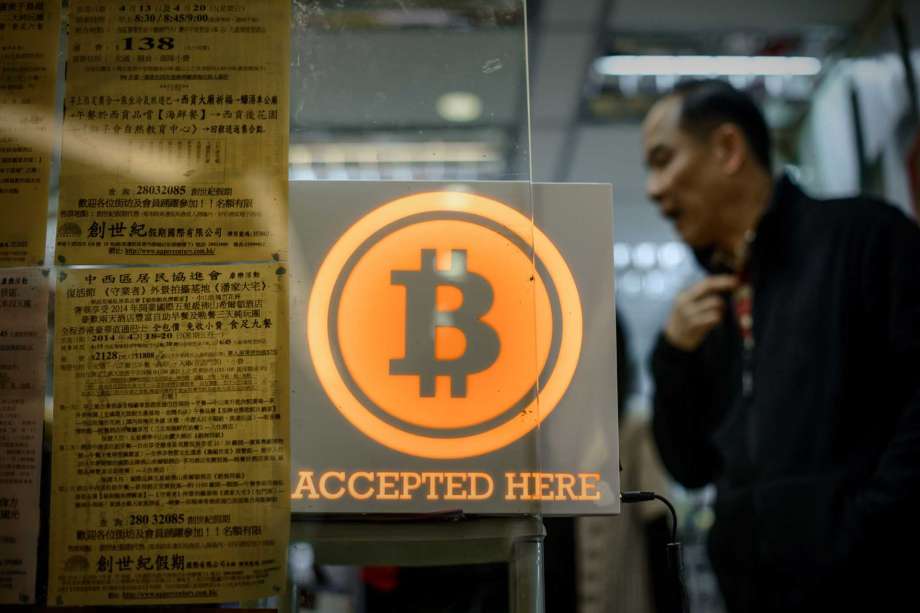
    Hundreds of other digital currencies followed but Bitcoin is by far the most popular, with an increasing number of merchants accepting digital currencies for payments.

    Transactions happen when heavily encrypted codes are passed across a computer network. The network as a whole monitors and verifies the transaction in a process that is intended to ensure no single Bitcoin can be spent in more than one place simultaneously.

    Users can “mine” Bitcoins — bring new ones into being — by having their computers run complicated and increasingly difficult processes.

    However, the model is limited and only 21 million units will ever be created.

    What’s it worth?

    Like any other currency, it fluctuates. But unlike most real-world units, Bitcoin’s value has swung wildly in a short period.

    When it first came into existence it was worth a few US cents. Several years later Bitcoin topped $1,000. It’s now worth more than $2,300, with commentators suggesting some are buying it as an alternative bet in times of global economic uncertainty.

    The chaotic withdrawal of high-value notes in India, and Chinese controls on the purchase of foreign currency have also been cited for its meteoric rise.

    There are presently more than 16 million units in circulation. Some economists say the limited number of Bitcoins mean its price will increase over the long run, making it less useful as a currency and more a vehicle to store value, like gold.

    But detractors point to Bitcoin’s volatility, security issues and other weaknesses as flaws that will eventually undermine it.

    What’s the future?

    Some commentators say that like many technological developments, the first iteration of a product will encounter difficulties, possibly terminal ones. But the trail it blazes might smooth the way for the next crypto currency.

    Problems include an apparent vulnerability to theft when Bitcoins are stored in digital wallets.

    A major Hong Kong-based Bitcoin exchange suspended trading last year after $65 million in the virtual unit was reportedly stolen by hackers.

    The virtual currency movement also faces legitimacy issues because of the way it allows for anonymous transactions — the very thing that libertarian adopters like about it.

    Detractors say bitcoin’s use on the underground Silk Road website, where users could buy drugs and guns with it, is proof that it is a bad thing.

    If Bitcoin does become more widely accepted, experts say, it could lead to more government regulations, which would negate the very attraction of the concept.

  • India’s big data market set to hit $16b by 2025

    India’s big data market set to hit $16b by 2025

    India’s big data analytics sector is set to record impressive growth in the coming years, WNS Global Services has predicted.

    The sector is expected to witness eight-fold growth to reach $16 billion by 2025 from the current $2 billion, according to industry experts. The sector is also looking at registering compound annual growth rate (CAGR) of 26% over next five years.

    India is currently among top 10 big data analytics markets in the world.

    “The government, industry and academia can collaborate to build an ecosystem to generate sustainable solutions by harnessing the power of big data and digital innovation,” said WNS Global Services Group CEO Keshav Murugesh.

    “The combined power of harnessing big data and digital solutions can drive tremendous results in improving the citizen experience, implementation efficiency and boosting the nation’s economy.”

    Murugesh was speaking at the Emerging Worlds Conference workshop organised by Indian School of Design and Innovation (ISDI) in collaboration with MIT Media Labs. “India is a diversified country with a wide array of challenges, and it is pertinent that we as citizens of this country, innovate to find effective solutions that can make a difference to the billion lives that live here,” he said.

    “If big data can be put to cutting-edge use for our corporations and clients, it can very well be a catalyst for the economy and the country.”

    The workshop brought together industry leaders, technical experts, data scientists, innovators, academic institutions, implementation collaborators and progressive corporate collaborators to source national challenges and potential solutions.

  • Global vendor revenue from cloud hits $32.6b in 2016

    Global vendor revenue from cloud hits $32.6b in 2016

    Vendor revenue from sales of infrastructure products (server, storage, and Ethernet switch) for cloud IT, including public and private cloud, grew by 9.2% year over year to $32.6 billion in 2016, IDC estimates.

    Vendor revenue for the fourth quarter meanwhile grew at 7.3% year-on-year to $9.2 billion, the research firm said.

    Cloud IT infrastructure sales as a share of overall worldwide IT spending climbed to 37.2% in 4Q16, up from 33.4% a year ago. Revenue from infrastructure sales to private cloud grew by 10.2% to $3.8 billion, and to public cloud by 5.3% to $5.4 billion.

    In comparison, revenue in the traditional (non-cloud) IT infrastructure segment decreased 9.0% year over year in the fourth quarter. Private cloud infrastructure growth was led by Ethernet switch at 52.7% year-over-year growth, followed by server at 9.3%, and storage at 3.6%.

    Public cloud growth was also led by Ethernet switch at 30.0% year-over-year growth, followed by server at 2.4% and a 2.1% decline in storage. In traditional IT deployments, storage declined the most (10.8% year over year), with Ethernet switch and server declining 3.4% and 9.0%, respectively.

    “Growth slowed to single digits in 2016 in the cloud IT infrastructure market as hyperscale cloud datacenter growth continued its pause,” said Kuba Stolarski, research director for Computing Platforms at IDC.

    “Network upgrades continue to be the focus of public cloud deployments, as network bandwidth has become by far the largest bottleneck in cloud datacenters. After some delays for a few hyperscalers, datacenter buildouts and refresh are expected to accelerate throughout 2017, built on newer generation hardware, primarily using Intel’s Skylake architecture.”

    From a regional perspective, vendor revenue from cloud IT infrastructure sales grew fastest in Japan at 42.3% year over year in 4Q16, followed by Middle East & Africa at 33.6%, Canada at 16.6%, Western Europe at 15.6%, Asia/Pacific (excluding Japan) at 14.5%, Central and Eastern Europe at 11.6%, Latin America at 9.9%, and the United States at 0.1%.

  • Where is Indonesian e-commerce headed?

    Where is Indonesian e-commerce headed?

    With a population of over 250 million and rapidly growing internet adoption, the Indonesian archipelago could offer a booming market for online shopping — and current projections say it will reach $130 billion by 2020.

    “The great thing is that there are a lot of investments… There are choices for consumers that love innovative solutions that are coming out from Indonesia itself,” William Gondokusumo, the CEO of Campaign.com and director of Tororo.com told.

    Recently, the Indonesian government altered regulations to allow more foreign investment in the sector. Indonesia’s investment service agency only recently allowed 100-percent foreign ownership for investments above 100 billion Indonesian rupiah ($7.53 million) for the establishment of an e-commerce company in the country.

    However, even with “big boys” such as Alibaba and JD.com coming in — and Amazon soon following with a reported $600 million investment — Gondokusumo predicted that domestic e-commerce firms won’t be pushed out as they are “more community focused.”

    The slowing Indonesian retail growth numbers of February, and indications that price pressure will continue over the next few months do not affect Gondokusumo’s bullish view on the retail and e-commerce in the country.

    “The way we see it,” he said. “All retail and media companies will eventually become their own social network.”

    On the contrary, Ken Dean Lawadinata, former CEO and chairman of Kaskus Networks, who invested alongside Gondokusumo in Tororo, held a less optimistic attitude.

    “At the moment, I have a more bearish attitude towards the IT industry, where I believe most investors and owners are pushing their company to a quick sell or short term mentality. This is not sustainable and bad for the industry itself,” he told in an email.

  • 5G indoor wireless market to be worth $509m by 2025

    5G indoor wireless market to be worth $509m by 2025

    The global equipment market for in-building wireless system, including active distributed antenna systems (DAS), passive DAS, and repeaters, is expected to grow to $10 billion in 2025, according to ABI Research.

    Yet, out of this market, 5G in-building wireless equipment will account for only 5% or $509 million in 2025, due to one year or more delay of 5G deployments indoors and in venues compared to outdoor 5G deployments starting from 2020, the research firm says.

    “As 5G nears full specification, mobile network operators will face challenges for indoor mobile coverage, including signal propagation, next-generation fronthaul/backhaul, and massive MIMO,” says Nick Marshall, research director at ABI Research.

    According to Marshall, early 5G deployments indoors and in venues will be a migration building on the features of LTE-Advanced and LTE-Advanced Pro. This will happen technology by technology and frequency by frequency, avoiding costly ‘rip and replace’ style deployments, the analyst notes.

    Marshall further points out that future 5G networks – which will comprise of a combination of different cell types and access technologies to seamlessly adapt to an array of use cases and applications – will rely on network functions virtualization (NFV) and mobile edge computing (MEC) to alter the architecture and topology of the RAN by leveraging telco data centers to virtualize signal processing in the cloud.

    NFV migrates cellular signal processing to a remote telco data center, while MEC, in a countervailing trend, migrates IT compute and storage to the network edge within the building or venue for low latency use cases and applications.

    With 5G standards yet to be finalized, many equipment vendors are actively researching and developing 5G equipment with a variety of approaches. These companies include Nokia with its AirFrame/AirScale Radio Access, Ericsson with its ERS, and CommScope with its OneCell.