Retail News CRM

Tag: Research

  • Retail trends for 2017: AI shopping, mini stores

    Retail trends for 2017: AI shopping, mini stores

    Today’s consumers are increasingly looking for specific and engaging experiences while shopping, according to an analysis from Lotte Department Store’s research team for retail trends. The team proposed a set of guidelines to help retailers prepare next year’s business strategies.

    “For modern customers, shopping is not only about buying products, but a complex experience,” said Na Hyun-jun, head of Lotte Department Store’s retail research team. “The key would be how successfully retailers provide new shopping experiences while catering to the increasingly segmented needs of consumers.”

    The first is the trend for smaller department stores that focus on catering to tastes of specific demographics. Mini department stores are frequent in Japan. Tokyo-based retail giant Isetan Mitsukoshi has more than 120 small and midsized stores nationwide near airports and train stations. Lotte Department Store opened three “el CUBE” stores in a similar concept this year, and their contents slightly differ according to visitors’ demographics.

    Personal curation for shoppers is another target selected by the team. Item choice is becoming more difficult for consumers as new products are constantly released. In the past retailers used personal shopping assistants, but recently shoppers have been using new technology like artificial intelligence and big data. In March, KT released the app Shodoc, which recommends products according to consumer demographics.

    Lotte also pointed out that consumers are more impulsive due to the development of technology related to shopping, like easy payment methods via apps. This has helped consumers purchase items immediately after seeing them online or via smartphones. The human-less supermarket Amazon Go launched this month, marked the start of a trend of moving offline.

    Retailers are providing virtual reality services at brick-and-mortar stores. Virtual reality is a field especially favorable in the fashion industry. In May, eBay and U.S. retail brand Myer launched a VR department store that is accessible by a VR headset and an app. For luxury or high-end brands, however, expanding contact with consumers and providing the chance to experience products will become a core task in establishing brand image. In the past, companies had the image of being too difficult to relate to due to their premium images. This year, high-end car brand Bentley set up a showcase “studio” in a London mall just for brand image rather than sales.

    In terms of product category, retailers are slowly expanding their reach outside industrial goods to products they have not carried in the past. This year, Harrods Department Store in London had a pop-up store to display Emaar Properties’ real estate in Dubai.

  • Mobile Research Starts The Purchase Cycle; 78% Buy Within The Day

    Mobile Research Starts The Purchase Cycle; 78% Buy Within The Day

    Once a consumer starts researching products on their smartphone, the actual purchase of a product is pretty close behind.

    In the U.S., the final purchase is most likely to occur in a physical store, which is not the case in some other countries.

    While different countries have varying degrees of penetration, the smartphone is considered the most important device for retail research by almost a third (30%) of all retail shoppers, according to a new report.

    The Global Mobile Path to Purchase study was conducted by xAD and Millward Brown and examined shopping behaviors in five countries (U.S., U.K., Germany, China and Japan).

    The importance of the smartphone as a research tool for retail purchase varies by country, with the device taking on more importance than desktops in China. Here’s the breakdown of where mobile is the most important device for shopping:

    • 50% — China
    • 44% — Japan
    • 32% — United Kingdom
    • 31% — United States
    • 29% — Germany

    There are a wide range of items that people are shopping for on phones. Consumers in Japan and China use phones for grocery shopping way ahead of other countries. In China, 88% of consumers use phones for grocery shopping, and 63% of consumers in Japan.

    By contrast, just over half (57%) of U.S. consumers use their phones for grocery shopping, with clothing and apparel talking the top spot. Here’s what consumers in the U.S. use their phones for when shopping:

    • 58% — Clothing and apparel
    • 57% — Grocery
    • 41% — Electronics
    • 39% — Home goods and improvement
    • 37% — Beauty and wellness
    • 31% — Games and entertainment
    • 23% — Sports and leisure

    While more consumers in Japan make purchases on their phones, U.S. shoppers head to the store for that final purchase. For example, 67% of consumers in the U.S. make a trip to the store to complement their mobile research compared to fewer than half (45%) in Japan.

    The real key in all of this is that once consumers start researching on their phones they are in the market to make a purchase relatively soon. Mobile research is the beginning of the intent to purchase cycle.

    Chinese and U.S. consumers are the quickest to convert, while Japanese consumers tend to take a bit more time. When shoppers start their mobile researching, here’s the breakdown of how many make a purchase within the day or sooner:

    • 86% — China
    • 78% — United States
    • 78% — United Kingdom
    • 73% — Germany
    • 49% — Japan

    After they begin their mobile research, more than half (54%) of U.S. consumers end up making the purchase in a physical store. In China and the U.K., more consumers make their final purchase via mobile rather than in person or via desktop.

    This may be a factor in the adoption of mobile payments, at least in stores.

    In the U.S., in-store mobile payments account for only 2% of all retail transactions, according to new research form GfK.  In China, it accounts for 24% of transactions.

    Shoppers in the U.S. may pass on mobile payments and prefer to make most of their purchases in a physical store, but that does not leave mobile out of the process.

    Smartphones are used all the way to the final purchase, for comparing products and checking prices of competitors. The consumer may end up buying at the store, but they likely used their smartphone to determine the product, the store and the timing of the buy.

  • Apple targets Indonesia with $44 million in R&D investment

    Apple targets Indonesia with $44 million in R&D investment

    Apple is working hard to break into the Indonesian smartphone market, announcing plans to invest roughly $44 million in a research and development (R&D) center over the next three years.

    The investment will let the company sell its iPhone 7 there after the Indonesian government recently announced that as of January 2017, all 4G-enabled phones sold in the country must include at least 30% local content, which can be reached via hardware, software, or an investment.

    Indonesia presents a massive growth opportunity for Apple, which posted its first annual decline in revenue in 15 years during Q3 2016. The year-over-year decline is primarily due to the decelerating global smartphone market since the iPhone comprises almost two-thirds of the company’s total revenue.

    Nevertheless, Apple is unlikely to find immediate success in Indonesia, much as it has in other emerging markets such as India. The smartphone market is largely controlled by Samsung, which accounted for 26% of smartphone shipments in Q2 2016, according to IDC. Meanwhile, low- to mid-tier devices from local and Asian vendors such as OPPO, ASUS, Advan, and Lenovo make up the rest of the top five vendors, by share.

    The low- to mid-tier smartphone market is a key area in which Apple does not yet have a significant presence. This is a missed opportunity Piper Jaffray analyst Gene Munster noted during Business Insider’s IGNITION conference in December. And while the iPhone SE at $400 could be seen as an attempt by the company to partly capture the mid-tier market, it’s still marginally more costly than those being offered by local and Asian vendors. The OPPO F1, for instance, retails for around 3.8 million Indonesian Rupiah (roughly $283 USD).

    The global smartphone market is expected to slow considerably over the next few years. Despite a record-setting holiday quarter, 2015 was likely the last year of double-digit growth for smartphone shipments.

    Mature markets were at the heart of this year’s deceleration. Adoption has reached new highs in key markets in the United States, Europe, and China. The pool of first-time buyers in these countries is shrinking rapidly, and sales are now primarily coming from phone upgrades.

    Meanwhile, emerging markets will continue to see robust shipment growth. India and Indonesia, in particular, will help fuel a large share of the shipments growth within the global smartphone market over the next few years.

  • 3 in 4 shoppers demand loyalty rewards from retailers

    3 in 4 shoppers demand loyalty rewards from retailers

    They want more personalised reward programmes, not just the traditional point-based ones. Amidst Singapore’s retail doldrums, more than 75% of Singapore consumers indicate that the will buy more from retailers if they are better rewarded for their loyalty.

    According to a study by ICLP, this is despite the fact that many consumers are currently lukewarm about their relationships with brands and retailers, giving average to low scores in terms of passion, commitment, and intimacy.

    The study noted that only 3% of consumers considered themselves to be devoted to their preferred brands.

    The research suggested that in order for retailers to take their relationships with customers to the next level, they have to go beyond just giving traditional-points based reward programmes.

    “Much like in a relationship with friends and loved ones, they would engage more when they receive genuine gestures that surprise and delight them,” the study explains.

    ICLP country manager Bruno Tay said many Singaporean consumers still relate to brands and retailers at a transactional level, so when times are uncertain, they easily resort to the myriad of choices that are at their disposal.

    “It’s not too late to turn things around, though. In fact, retailers now have a chance to truly stand out if they appeal to the heart too – by approaching communication, reliability, consistency, reward and recognition from a human perspective,” he noted.

  • Cellco IoT revenues reach $11.7b in 2016

    Cellco IoT revenues reach $11.7b in 2016

    Mobile operators worldwide earned a combined €11 billion ($11.7 billion) in revenues from the IoT in 2016, but revenues remain relatively low compared to lofty industry projections, according to Berg Insight.

    Despite a significant early install base, low monthly ARPUs are restraining growth, Berg Insight senior analyst Tobias Ryberg said.

    The global monthly ARPU for cellular IoT devices is estimated at €1.40 this year, but with major variations between regions. In some emerging economies ARPUs were less than €0.30, and in some less competitive developed markets, ARPUs exceeded €3.00.

    “Until recently, the principal financial metric for IoT has been projected, not actual, revenues. Now the market has entered a new phase in which hard business facts take precedent over lofty projections,” Ryberg said.

    “Wireless connectivity is now near ubiquitous and there will be half a billion cellular IoT connections in 2017, but revenues are still relatively small.”

    But in the third quarter Vodafone and Verizon each generated €200 million in IoT sales revenues, and next year Berg Insights predicts that a handful of major operator groups will generate over €1 billion each from the IoT.

    Many early operator-led IoT efforts have focused on the automotive market as a starting point, with major players including  AT&T, Vodafone, Verizon and Deutsche Telekom establishing dedicated ventures centered on the connected car.

    But Berg Insight said a better strategy for smaller operators is to develop a broad IoT ecosystem and sell IoT solutions from preferred partners through existing B2B channels.

  • Corporate-issued mobile device adoption still low

    Corporate-issued mobile device adoption still low

    Mobile device adoption in the workplace is not yet mature, research from Gartner indicates. Although 80% of workers surveyed by the analyst company received one or more corporate-issued devices, desktops are still the most popular corporate device among businesses, with more than half of workers receiving corporate-issued desktop PCs.

    The survey findings are based on the 2016 Gartner Personal Technologies Study, which was conducted from June to August 2016 among 9,592 respondents in the US, the UK and Australia.

    Thirty-six percent of workers received laptops, including convertible laptops. Adoption of convertible laptops as a corporate-issued device is still very low, but has been gradually increasing.

    Gartner analysts expect that more employees will receive convertible laptops in the next three years, driven by the Windows 10 refresh that can enhance the user experience with touch-based input. Adding desktops and laptops (including convertible laptops) together, 75% of workers will receive at least one PC-type device in mature countries.

    In contrast to the high numbers of corporate-issued PCs in the workplace, relatively few workers receive mobile devices. The majority of smartphones used in the workplace are personally owned devices — only 23% of employees surveyed are given corporate-issued smartphones.

    “The low adoption of corporate-issued mobile devices underlines the fact that large numbers of personally owned mobile devices are used in the workplace,” said Mikako Kitagawa, principal research analyst at Gartner. “In fact, more than half of employees who used smartphones at work rely solely on their personally owned smartphones.”

    The usage rate of personally owned tablets lags behind that of personally owned smartphones. Only 21% of employees use tablets — regardless of whether they are corporate issued or personally owned.

    “In the era of mobility, it comes as something of a surprise that corporate usage of smartphones and tablets is not as high as PCs, even when the use of personally owned devices is taken into account,” said Kitagawa. “While it’s true that the cost of providing mobile devices can quickly escalate, proper usage of mobile devices can increase productivity, which can easily justify the extra costs.”

    When employees are provided with corporate-issued devices, they are generally happy with the devices that they receive. Less than 20% of respondents said they were dissatisfied with their employer-provided devices. The satisfaction level is higher with tablets and smartphones compared with desktop and laptops.

    “Usage of personally owned devices in the workplace is nothing new, but the survey results confirm that this trend has become a new workplace standard. Two-thirds of survey respondents said that they use a personally owned device or devices for work,” said Kitagawa.

    “Smartphones and phablets are the most popular personally owned devices used for work, with 39% of employees using them, compared with just 10% who are only using corporate-issued smartphones and phablets.”

  • Huawei forges 5G research partnership with BT

    Huawei forges 5G research partnership with BT

    Huawei has announced a partnership with UK-based operator BT to conduct joint research into potential new 5G applications.

    The companies will work at the BT Labs in Ipswich and other locations in the UK to explore aspects of 5G including future network architecture, a new air interface between devices and base stations, network slicing to proportion resources for specific services, 5G IoT applications and security technologies.

    The partners said they hope that the research will drive the development and industry-wide standardization of 5G technologies.

    “[Working with BT] we can explore the potential of 5G networks and analyze how this vital technology can best be delivered,” Huawei rotating CEO Ken Hu said.

    “The partnership also demonstrates Huawei’s continued commitment to partnering with world-leading business and academic organizations in the UK to further research and development. We have operated in the UK for 15 years and we look forward to continuing to help build a better connected UK in partnership with BT.”

    Huawei and BT have been collaborating on telecommunications R&D for 11 years. Most recently, the companies announced breakthroughs including a 3Tbps data transfer over BT’s core network, as well as research into 40Gbps speeds on the Openreach access network.

  • Internet freedom shrinks globally in 2016

    Internet freedom shrinks globally in 2016

    Internet freedom around the world declined for the sixth consecutive year, according to the Freedom on the Net 2016 report released recently by Freedom House.

    The US government-funded advocacy group has published Freedom on the Net 2016, which assesses internet freedom in 65 countries, accounting for 88% of internet users worldwide.

    For the second consecutive year, China was the world’s worst abuser of internet freedom, followed by Syria and Iran, the report asserts.

    An amendment to Chinese criminal law added seven-year prison terms for spreading rumors on social media (a charge often used to imprison political activists). Some users in China belonging to minority religious groups were imprisoned for watching religious videos on mobile phones.

    Globally, the study found that two-thirds of all internet users (67 percent) live in countries where criticism of the government, military, or ruling family was subject to censorship. Governments in 24 countries also impeded access to social media and communication tools, up from 15 in the previous year. Moreover, authoritarian countries most frequently blocked access to these tools during political protests.

    “Popular social media sites like Facebook and Twitter have been subject to growing censorship for several years, but governments are now increasingly going after messaging apps like WhatsApp and Telegram. Messaging apps are able to spread information quickly and securely — and some governments find this threatening,” said Sanja Kelly, director for Freedom on the Net.

    “Jailing of internet users led to a significant chilling effect in many countries under study. When authorities sentence users to long prison terms for simply criticizing government policies online, almost everyone becomes much more reluctant to post anything that could get them in similar trouble.”

    Meanwhile, digital petitions or calls for protests were censored in more countries than before, as were the views of political opposition groups and the LGBTI community. Nearly half (47%) of internet users live in countries where alleged insults to religion can lead to censorship or arrest.

    Image-sharing platforms were blocked, and world leaders took strong action when their photos were mocked on social media. In Egypt, a photo depicting President Abdel Fattah al-Sisi with Mickey Mouse ears resulted in a three-year prison term for the 22-year-old student who posted it on Facebook.

    “When faced with humorous memes and cartoons of themselves, some world leaders are thin-skinned and lash out” said Kelly. “Instead of enjoying a good laugh, they try to remove the images and imprison anyone posting them online.”

  • Over half of APAC connected consumers use m-payment

    Over half of APAC connected consumers use m-payment

    The Asia Pacific region is leading the world in mobile payment adoption, with over half of connected consumers in the region using their mobiles to pay for goods or services at point of sale via apps.

    This is among the key findings of a survey of more than 70,000 consumers, conducted by consultancy Kantar TNS. The study pegged mobile payment penetration for Asia Pacific at 53%, compared to 33% in North America and 35% in Europe.

    With smartphone users across Asia Pacific numbering over a billion, one key driver behind this trend would be the significant mobile penetration here. Moreover, the evolution of Asian chat apps to include payment options and the lack of legacy banking structures has only served to accelerate adoption.

    Chat apps such as WeChat and LINE have developed numerous payment services such as WeChat Pay, Line Pay, Alipay and O! ePay to facilitate everything from taxi bookings to e-commerce sales.

    Mobile payment options within these apps allow consumers to complete their purchase journey seamlessly, and also serve to help to establish these behaviors.

    Many mobile-first markets such as India, Malaysia and Indonesia are also taking up the behavior, fueled by the lack of legacy banking structures. The study noted that this makes that mobile payment an especially attractive solution for connected consumers in these countries.

    China, Hong Kong and South Korea are the top three mobile payment markets globally for weekly use, while Singapore is in the fourth position with the use of mobile payment identified as most prevalent among middle-aged consumers.

    In Singapore, 57% of connected consumers have used mobile payment, with more than a quarter (27%) doing so on a weekly basis. This number rises among younger Singaporeans ages 16-30, where 31% use mobile payment weekly, but is highest (33%) amongst middle-aged consumers in the 31-45 age group.

    Only 11% of those ages 46-65 use mobile payment on a weekly basis, however, 37% have tried it in the past, showing that they are open to sampling this kind of new technology.

  • Global Threat Index shows rise in malware attacks

    Global Threat Index shows rise in malware attacks

    The number of malware attacks increased in October, according to Check Point Software’s monthly Global Threat Index.

    Check Point’s Threat Intelligence Research Team found that both the number of active malware families and number of attacks increased by 5% during the period, pushing the number of attacks on business networks to near peak levels, as seen earlier this year.

    Locky ransomware attacks continued to rise, moving it up from third to second place, while the Zeus banking trojan moved up two spots, returning it to the top three.

    The reason for Locky’s continued growth is the constant variation and expansion of its distribution mechanism, which is primarily through spams emails. Its creators are continually changing the type of files used for downloading the ransomware, including doc, xls and wsf files, as well as making significant structural changes to the spam emails.

    The actual ransomware itself is nothing exceptional, but cyber criminals are investing a lot of time into maximizing the number of machines that become infected by it.

    For the seventh consecutive month, HummingBad, an android malware that establishes a persistent rootkit to carry out an array of malicious purposes, remained the most common malware used to attack mobile devices.

    Once again Conficker retained its first place position as the world’s most prevalent malware, responsible for 17% of recognized attacks. Both second placed Locky, which only started its distribution in February of this year, and third placed Zeus, were responsible for 5% of known attacks.

    “With the number of attacks and malware families increasing, the scale of the challenge organizations face in ensuring their networks remain secure is tremendous,” Check Point head of threat protection Nathan Shuchami said.

    “It is particularly concerning that a malware family as established and well known as Conficker is so effective, suggesting that organizations aren’t using the latest, multi-layered defenses.”

  • Singapore shoppers look to online shopping for good deals

    Singapore shoppers look to online shopping for good deals

    The extended season will lead to an eleven percent ($9.1 billion) increase in online sales to a total of $91.6 billion, according to Adobe’s 2016 Digital Insights Shopping Predictions report. Large retailers expected to account for the bulk of the growth, with an average growth rate of 16.6% compared to smaller retailers at 7%.

    “We expect to see a five percent spike in online shopping in early November and a record 24 percent increase in the last two weeks of December,” said Mickey Mericle, the vice president of marketing and customer insights at Adobe.

    “‘Click and collect,’ faster shipping and retail promotions starting earlier than ever are all contributing to the extended shopping season. Despite the uptick in sales we expect to see slower growth in total online sales this year,” he says.

    Singapore shoppers

    Closer to home, findings specific to the Singapore market show that consumer budgets are tight and the savvy shopper prefers online shopping due to the higher likelihood of finding good deals and bargains this way.

    Marketers can also expect fewer last-minute shopping rushes as respondents are now shopping slightly earlier in November. This suggests that marketers should make the effort to reach out to these early birds accordingly.

    Notably, consumers report visiting an average of 3-5 sites before making a purchase, which offers marketers a critical chance to target these potential customers once more and bringing them back on-site via remarketing

    Almost half of Singaporean millennials (49%) surveyed value experiences more than material goods, with a sizeable 41% echoing this sentiment when all local consumers who are surveyed are factored into the picture.

    Finally, the study shows that mobile shopping is king as consumers praise retailers for better optimizing their sites for mobile browsing, allowing them to shop on the go with their hectic schedules.

  • Tax free shopping spend drops in Asia and Europe

    Tax free shopping spend drops in Asia and Europe

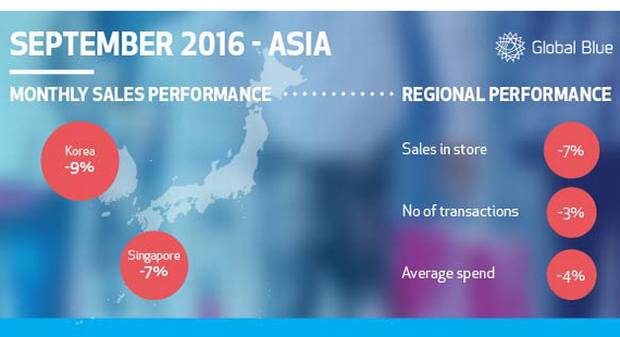
    Tax free shopping sales in Asia fell -7% year-on-year in September, compared to declines of -13% in August, according to Global Blue. The number of transactions dropped -3%, while average spend was also down -4% over the same period. Global Blue said Singapore, Japan and South Korea all saw declining tax free sales for the first time in three years.

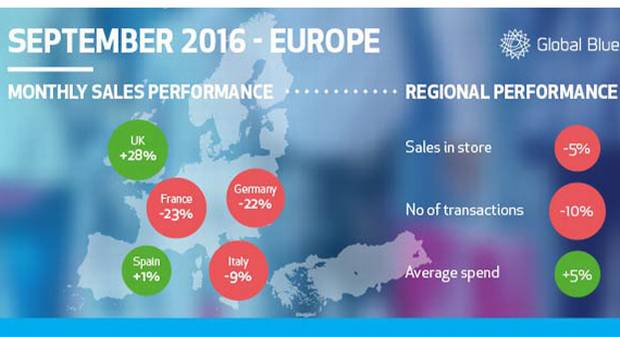
    In Europe, tax free shopping declined -5% year-on-year during September, compared to -3% in August.

    European transactions were down -10%, but average spend was up +5% year-on-year.
    asia_600x300

    Asian countries

    Global Blue said the increase in arrivals by middle-class Chinese travellers supported growth in tax free sales and the number of regional transactions, but was not enough to offset the decline in spend in Singapore, Japan and South Korea.

    Both Japan and South Korea saw a -9% dip in sales, while in Singapore sales fell -7%.

    The positive momentum seen earlier in the year has now gone, Global Blue said, reflected by the deep drop in average spend in Japan of -30% year, and the -13% fall in South Korea.

    In these two countries, the rise in arrivals was offset by the decline in average spend as a result of the strengthening currency in both countries. In September, the Japanese yen was +21% and the Korean won was +10% against the Chinese yuan, Global Blue noted.

    A shift in the Chinese traveller profile towards value seekers and experiential Free Independent Travellers is becoming the “new normal” across the region, the retail intelligence company said, which also had a negative impact on sales.

    Global Blue said it was witnessing a change in shopper profile in Japan’s department stores, as Millennials and Free Independent Travellers look beyond the country’s department stores and head to more niche or independent fashion and luxury retailers outside the Global Blue merchant network.

    With increasing numbers of less affluent Chinese arriving in Singapore from second- and third-tier cities, the country’s duty free retailers have been slow to offer a more diverse retail mix, Global Blue said.

    Chinese travellers are using Singapore as a departure point for cheaper shopping over the border in Malaysia.

    The number of travellers entering Singapore by land is rising (up +55% according to the latest Singapore Tourism Board figures reported in Jing Daily). Some of these tourists are on overland tours and therefore take in cheaper markets as well as Singapore’s high-end malls, unlike the higher-spending visitors who arrive by air.

    Singapore is also facing a challenge this quarter due to health concerns over the Zika virus outbreak, which is reducing visitor numbers, Global Blue noted.

    Chinese shopping across South Korea and Singapore saw tax free sales declines of -15% this month.

    While the tough comparison with 2015’s MERS-hit summer period has ended in South Korea, the Chinese are not returning in any great numbers due to the political tensions between the two countries, Global Blue noted.

    Hong Kongese tax free sales in South Korea and Singapore significantly declined in September (-77% and -98% respectively). While the local currency is strong, the legal context for the largely daigou traders is negatively impacting on sales, according to the company.

    Indonesians and Thais are now making up for the tax free spend at both destinations. In Singapore, Indonesian tax free sales are up +7% year-on-year, fuelled by positive currency exchange rates. In South Korea, Thais contributed to a massive sales spike of +87% year-on-year. Singaporean sales were also up +17% in September, a result of high net worth individuals who are regular shoppers in the region.
    eu-600x300

    European countries

    The tax free shopping decline in Europe is a slight improvement compared to the first half of the year, the company said, although countries hit by terrorism last year saw a reduction in sales.

    France and Germany continued to feel the effects of the downturn in visitors from Asia, with tax free sales down -23% and -22% respectively in September.

    The most serious decline in spending in France came from the Chinese, at -40%, while in Germany, Chinese spending was down -26%.

    Spain and southern European countries continued to outperform the continental Europe average of duty free sales, Global Blue said. Spain saw an increase in tax free sales of +1% compared to last September, while Greece increased total sales by +18%.

    The UK benefited from the fall in the pound and currently remains the best value luxury destination for duty free shoppers. The pound is now around -14% down on the euro since the Brexit vote, and almost -20% against the US dollar, Global Blue said.

    However, this situation is unlikely to last beyond next spring, the company noted, as most luxury goods are imported into the UK. From next season price increases on all imported goods will inevitably lead to higher prices in UK stores.

    The UK also benefited from the end of Ramadan and the annual back to school period for Chinese students, characterised by visiting families’ gift spending.

    The Chinese are the most valuable nation of shoppers for UK retailers, and they increased their spending by +25% during September.

    Saudi Arabia, Qatar, the UAE and Kuwait contributed to a +8% uplift in European sales in September.

    Cutbacks by the Saudi government, where well over half the population are state-employed, will put pressure on Saudi citizens’ outbound travel plans and spending in the medium term, Global Blue noted.

    Morocco posted a +28% rise in total sales in Q3 year-on-year, as shoppers avoided destinations that have suffered terrorist attacks. Cyprus saw a +11% uptick during the same period; Global Blue attributed this to an increase in Russian shoppers.


  • Global 5G subscribers to reach 500m by 2022

    Global 5G subscribers to reach 500m by 2022

    Global 5G subscriptions will grow rapidly once the technology is available, Ericsson has forecast, with the vendor predicting that subscriptions will reach 500 million by 2022.

    North America is expected to lead the way in 5G uptake, with 5G projected to account for 25% of subscriptions in the region by 2022. But APAC will be the second fastest growing region, with 5G accounting for 10% of subscriptions.

    Ericsson’s latest Mobility Report also projects that global mobile subscriptions will grow to 8.9 million, with 90% of these for mobile broadband, and 6.1 billion unique subscribers in 2022.

    As of the third quarter of this year, there were 84 million new mobile subscriptions being added per quarter, for a total of 7.5 billion. India had the most net additions for the third quarter of 15 million, followed by China’s 14 million, Indonesia’s 6 million and Myanmar and the Philippines’ 4 million each.

    By the end of 2016 there will be 3.9 billion smartphone subscriptions worldwide, Ericsson said, with nearly 90% of these registered on WCDMA/HSPA and LE networks. This is expected to grow to 6.8 billion and 95% of subscriptions by 2022.

    The report also shows that mobile video is projected to grow by 50% annually through to 2022 to account for nearly 75% of all mobile data traffic. Increased use of live video streaming to contact friends, family and followers is meanwhile expected to contribute to a 39% annual growth in social media traffic.

    Finally, the report suggests that IoT will account for around 18 billion of the 29 billion connected devices forecast by 2022.

  • Mobile money halves overseas remittance costs

    Mobile money halves overseas remittance costs

    The average cost of sending international remittances with mobile money is less than half that of using global money transfer operators (MTOs), a new GSMA report reveals.

    Such lower prices contribute directly toward achieving targets within United Nations sustainable development goal (SDG) 102. Lower transaction fees also translate directly into additional income for remittance recipients.

    “Through mobile money services, the industry is directly supporting the goal of expanded financial inclusion for migrants and their families by reducing international remittance costs,” GSMA Chief Regulatory Officet John Giusti said. “The potential gains of achieving this target could be as high as $20 billion in additional income for remittance recipients.”

    The report noted that if people were able to send remittances from a mobile money account, the average cost of sending $200 was 2.7%, compared to 6% when using global MTOs.

    GSMA estimates that there are more than 400 million registered consumer accounts for mobile money across over 90 countries.

    “While today mobile money services are largely used for domestic transactions, international transfers represent the fastest-growing segment of mobile money services. In just a few years’ time, mobile money has moved from a purely domestic service to one that allows migrants to send remittances between more than 20 countries globally,” Giusti explained.

    World Bank data shows that more than 250 million people live outside their country of birth and regularly send money home, providing a financial lifeline to their families and contributing to the economies of their home countries.

    In 2015, global remittances totalled $581.6 billion, of which $431.6 billion, or nearly 75%, was sent to the developing world. However, the cost of international transfers remains high and directly impacts the income of remittance recipients.

  • Despite Climate Agreements and Court Decisions, Indonesia Keeps Betting Big on Coal

    Despite Climate Agreements and Court Decisions, Indonesia Keeps Betting Big on Coal

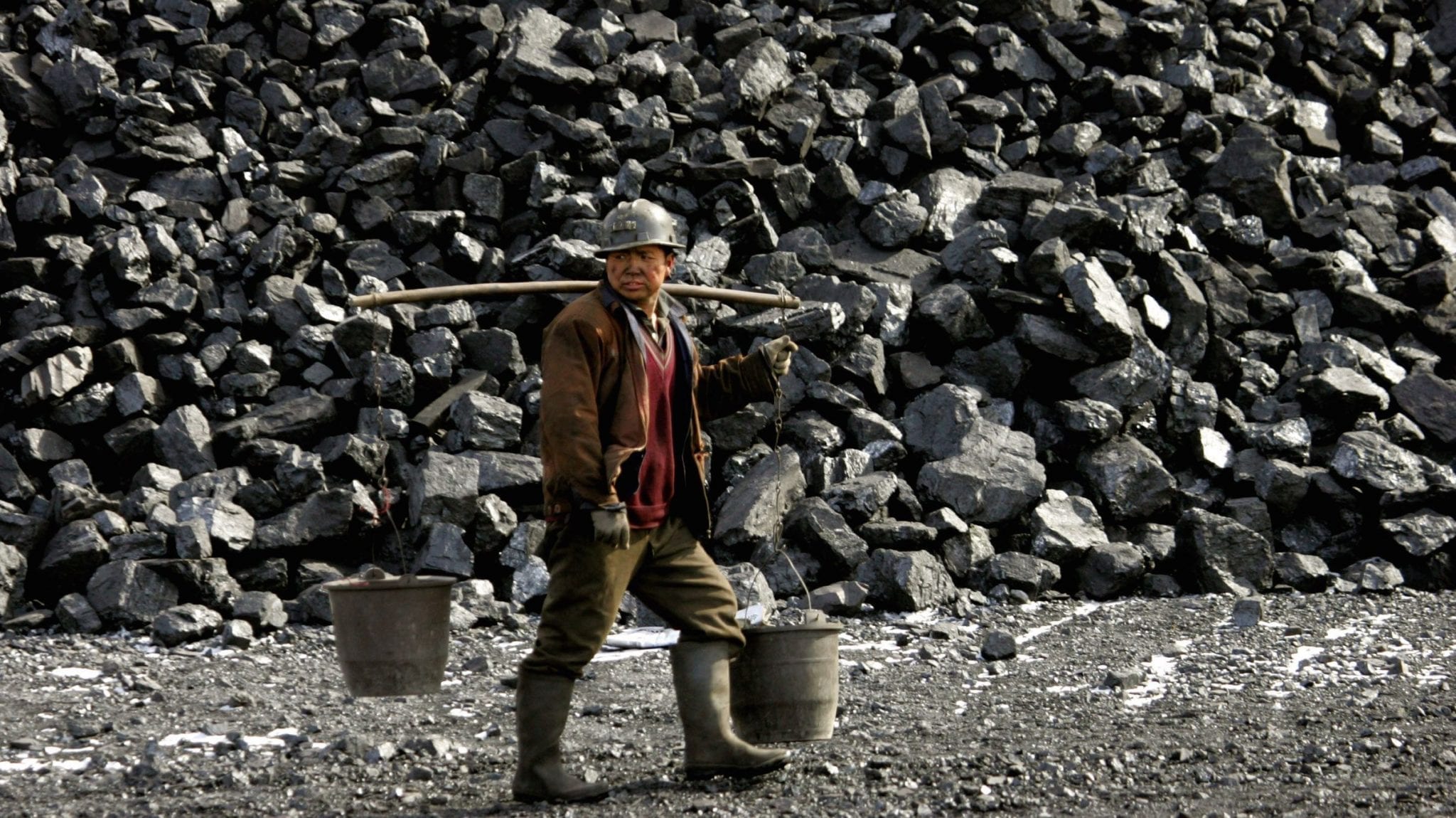
    Though Indonesia has one of the world’s fastest-growing economies, its electrical grid is faltering, with blackouts common and many factories and homes relying on expensive diesel-powered generators as backup. In 2011, Indonesian coal mining magnate Samin Tan and his company, Borneo Lumbung Energi & Metal, stepped into this energy void. Tan hoped to acquire the rights to a potentially rich coal mine in Borneo, one of the more heavily forested of the islands comprising the 3,000-mile-long tropical archipelago. But he needed $1 billion to do it. That deal’s unraveling reveals how years of effort by environmentalists and regulators may in the end have proved less effective at limiting greenhouse gas emissions in Southeast Asia than was a pistol-packing attorney, with enormous potential ramifications for how the fourth-most-populous nation on Earth develops its energy sector—and for the global climate.

    Tan’s company found itself in trouble when the price of coal crashed last year, driven by falling demand from China, where manufacturing has cooled and the government has ordered cuts to imports to protect its mining industry. One of Indonesia’s most important markets for its abundant coal was flagging. In April, the British bank Standard Chartered, the largest investor in a group that loaned Tan $1 billion to finance the mine, suddenly worried Tan wouldn’t be able to sell the coal and called in the paper. Tan refused to repay the bank.

    Coal projects in Indonesia have been able to race ahead not only because the country needs the energy but because investors outside the country have been happy to provide the funding and often receive help from their home governments’ export credit agencies. “National export agencies can support export of technologies,” said Jan Vandermosten, sustainable finance policy officer at World Wildlife Fund’s European Policy Office in Brussels. For example, Indonesian coal mining companies lacking the capital or a key technology to build a coal-fired electrical plant often strike deals with partners overseas, whose home governments help finance the investment, assisting companies in their country to get lucrative deals over foreign rivals. “It’s not about mining coal. It’s about companies that go to developing countries and construct coal plants, importing technology like boilers or other equipment,” said Vandermosten.

    In January, a $3.4 billion coal power project financed in large part by Japan’s public export credit agency, the Japan Bank for International Cooperation, moved forward in Central Java, a large province on Indonesia’s most populous island, where it will provide electricity for nearly 13 million people. JBIC is providing $2 billion, or nearly 60 percent of the project’s capital, and it will be operated by a partnership of Japanese and Indonesian energy companies. The 1,900-megawatt installation is slated to come online in 2020, when it will be the largest coal-fired plant in the country of 250 million people. Elsewhere in Asia, new coal plants in Bangladesh and India have been made possible with American and European financing and expertise.

    Coal’s share of Indonesia’s electrical portfolio has been climbing over the last decade, from 36 percent in 2007 to 41 percent in 2015, according to Kurnya Roesad and Frank Jotzo, climate researchers at Australian National University. In September, they reported that 55 percent of Indonesia’s new electricity will be from coal by 2025, if the expansion of the grid continues at its current pace—despite the government’s pledge to get 23 percent of all electricity from renewable sources by then. But the financing behind complex, expensive coal projects is proving a weak spot in the country’s energy plans.

    In January 2017, a new agreement among Organisation for Economic Co-operation and Development member countries will curtail many coal projects’ ability to receive necessary financing from overseas. Negotiated before last year’s Paris climate talks, the deal could restrict as much as three-quarters of the world’s coal energy pipeline, though early estimates are untested. Indonesian miners may be able to avoid the agreement’s most stringent restrictions, said Vandermosten, who was involved in its conception, by opting for cleaner coal technologies. But they would nevertheless crowd out funding for renewable technologies.

    Where financing can’t be publicly backed, that will drive Indonesian miners and their foreign partners to private financing like the deal with Standard Chartered.

    Which is where a flamboyant attorney named Hotman Paris Hutapea comes in. Hutapea became famous during a high-profile drug smuggling trial a decade ago for sporting a hairstyle reminiscent of mid-1980s Van Halen, keeping a white-handled pistol in a holster in his suit, and flaunting romantic relationships with local celebrities.

    Tan hired him to fight Standard Chartered’s insistence that it be paid. The trial quickly became a test case for a string of other coal projects in Indonesia, including the Japanese-backed project. If digging up coal to fire power-generating plants using 19th-century technology was to be Indonesia’s energy policy of the future, the industry would need to show—even more than that it had the coal—that it could finance the multibillion-dollar infrastructure projects needed to dig it up and turn it into electricity.

    Reports vary, but the British bank’s liability on just the single loan is usually estimated to fall between $630 million and $750 million. That’s a large enough amount that a problem with just this one client could kneecap a major London institution’s stock price and send the rest of the coal market tumbling. The overall package of loans to Tan was the largest debt extended to a single person in all of Asia that year.

    Other large multinationals not in the habit of throwing away millions had been minority partners in the deal, and if the Indonesian court invalidated the terms of the loan—blocking Standard Chartered’s attempt to collect from a company Tan said was not bankrupt—they too would lose between tens and hundreds of millions. Among the investors was Caterpillar, the Peoria, Illinois–based manufacturer of bulldozers and other heavy equipment used in the mining industry, which was in for just over $100 million.

    The trial would take place in Jakarta, and a better place for a show trial about a coal mine may not exist. The capital of a nation of coral reefs and dense rainforest, Jakarta is home to 20 million residents surrounded by toxicity. It’s hard to take a walk along Jalan M.H. Thamrin, the heart of the business district, without the risk of stepping into an open sewer. “The combination of untreated domestic sewage, solid waste disposal, and industrial effluents has led to a major public health crisis” along Jakarta’s main river, the soupy Ciliwung, the Asian Development Bank found in 2012. (ADB helps arrange funding for many public works projects, such as water treatment plants, in Indonesia and elsewhere. Little evidence exists for any improvement in water quality or sanitation since the ADB’s report.) Air pollution—mainly from vehicle exhaust—is so bad that in May, U.S. Ambassador Robert Blake proudly announced that two air quality meters had been installed in a complex housing American diplomatic staff, whose worries about the city’s pollution had converted it into a hardship posting. Sixty percent of people in Jakarta had seen their health harmed significantly by the smeary air, said Blake, citing results of a 2013 joint Indonesian-American study. If a lawyer ever wished to argue against a coal mine by bringing the judge to the courthouse steps to sniff the air, Jakarta was the place.

    As the trial got under way in March, Hutapea was preparing to argue that a bank enabling a coal mine should not be allowed to collect on a $1 billion loan. It wasn’t his first time arguing in court that an Indonesian company working in an environmentally shady industry shouldn’t have to pay back a foreign partner: In 2001, he represented local companies in a $14 billion case brought by American creditors against Indonesian logging company Asia Paper & Pulp, which owned plantations in Borneo. Hutapea argued that the contracts establishing the loans had been invalid. He won.

    His argument in the Standard Chartered case: There had never been a loan to Borneo Lumbung in the first place, the $1 billion that changed hands notwithstanding.

    The Standard Chartered–led consortium had lent Tan the money so he could buy a stake in a rival mining company called Bumi Resources (“bumi” means “Earth” in Indonesian). Tan used mines owned by his company as collateral. But Hutapea argued that Indonesia’s coal is a state asset, even if mined privately. So Tan needed the Indonesian government’s approval to use his own coal mines as collateral for the loan—and he hadn’t requested that. Standard Chartered hadn’t either. The loan, Hutapea maintained, was therefore invalid. There was nothing to collect.

    In April, the court ruled in Tan’s favor. As with the Asian Pulp & Paper case 15 years earlier, Hutapea had saved a company led by an Indonesian oligarch hated by local environmentalists. “You screw my country’s laws, my country’s laws will screw you,” he told a finance industry newsletter.

    Yet Hutapea became the environmentalists’ most unlikely ally, because the victory fouled the entire Indonesian coal economy as badly as the air above Jakarta.

    The world of energy finance, predictably, went nuts. “Any creditor on the hook to Indonesia’s coal mining industry will not be sleeping easily these days,” wrote International Financing Review, a trade publication. Like most commentators, IFR seemed unclear why Indonesia wanted to continue digging coal mines in the first place. Despite plans to expand the country’s coal portfolio, wrote credit analyst Jonathan Rogers, “the fact is that Indonesia’s coal sector is a sunset industry that is likely to shrink substantially in size in the face of collapsing demand from China, its biggest client.”

    China was shifting to wind and solar power, another reason it was buying less Indonesian coal.

    Hutapea’s victory has been closely watched beyond Jakarta and London. In Tokyo, where $3.4 billion was riding on the Central Java coal-powered electrical plant, JBIC issued a statement saying it intended to stick with the project and had faith its loan would be repaid even if the plant went bankrupt. The announcement had the effect, presumably unintended, of telling the world that the Japanese interest was worried. By persuading an Indonesian court to approve what appeared to be an Indonesian company’s swindle of $1 billion from Standard Chartered’s consortium, Hutapea sent a chill across every banking office from New York to Tokyo with a bet on a coal mine in Indonesia, one of the places still aggressively courting those bets.

    Will that money dry up? So far, it hasn’t. But if Indonesia keeps investing in coal, it may not be the environmentalists fighting hardest against it. It’ll be the bankers. It’s hard to breathe most days in Jakarta. But lose your shirt in London, and you’ll end up twice as sick.