Retail News CRM

Tag: rupiah

  • Indonesia seen holding rates on rupiah, inflation concerns

    Indonesia seen holding rates on rupiah, inflation concerns

    Indonesia’s central bank is widely expected to keep its benchmark policy rate unchanged on Thursday as it monitors the rupiah’s movement at a time of global uncertainty and price pressures at home.

    Bank Indonesia (BI) cut its benchmark six times last year, by 150 basis points, to 4.75% to aid economic growth. During 2016, the inflation rate was low, current account deficit comfortable and the rupiah relatively stable.

    All 22 analysts in a Reuters poll predicted the central bank will leave the main rate unchanged on Thursday.

    “BI’s monetary policy easing cycle may have come to an end,” the World Bank said in a report published on Tuesday.

    It said the space for easing is more constrained than in October – when BI made its last trim – “given US interest rate normalisation and downward pressure on the rupiah”.

    Capital Economics said BI is also likely to consider risks of higher inflation due to government plans to hike some liquefied petroleum gas prices and electricity tariffs.

    “BI expects this to push inflation towards the top of its target range, weakening the case for further monetary loosening,” the consultancy wrote on Monday.

    Higher Inflation Seen

    Earlier this month, BI deputy governor Perry Warjiyo said that although the central bank has room for more easing, it needs to “calibrate” an expected acceleration in inflation when deciding its main rate.

    He said inflation may rise to 4.6% in 2017 due to adjustments in administered prices, from 3.02% in December.

    Warjiyo, hinting at a hold on Thursday, said BI may prefer to use liquidity management tools to support economic growth, while its main policy rate will be used to maintain financial market stability.

    Some analysts said South-East Asia’s largest economy still needs loosening to lift sluggish growth, which slowed to 5.02% in the third quarter and may slow again to 4.97%, according to BI’s forecast.

    Out of seven analysts who gave views for the benchmark at the end of March, three saw BI making a 25-basis-point cut to 4.50% while the other four projected no change.

    Taimur Baig, Deutsche Bank’s chief Asia economist, said “Indonesia’s economic turnaround, which seemed apparent in the first half of last year, appears to have stalled” and that might prompt BI to cut before April.

    DBS economist Gundy Cahyadi also sees a cut, but not until 2017’s second half.
  • The rupiah may soon have three fewer zeros

    The rupiah may soon have three fewer zeros

    Indonesia’s central bank governor said yesterday that the bank is seeking to slash three zeros off the face value of rupiah notes to simplify its currency system.

    Bank Indonesia Governor Agus Martowardojo said he has asked President Joko Widodo to revive a previously shelved plan to redenominate the rupiah to make it “more efficient and simpler”.

    A draft law backing redenomination was submitted to parliament in 2013, but it was put aside due to instability in Indonesia’s financial markets then

    If approved, the central bank would need two years to prepare new notes and another seven years of transition, Mr Martowardojo s.aid.

    “Prices of goods and services have to also be simplified. Because of the transition period, in which people can use both the old and new rupiah denominations, we are sure it wouldn’t affect inflation,” he said at the launch of a new series of new currency designs.

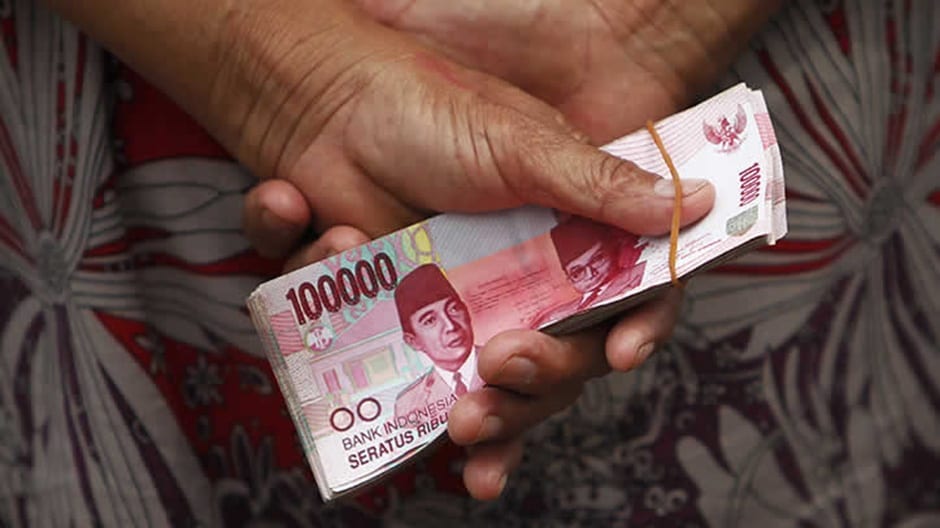
    The largest rupiah denomination is currently 100,000 and the smallest is 1,000.

    Indonesian Finance Minister Sri Mulyani Indrawati said she would discuss the proposal with parliament. However, it is not on the list of current legislative priorities for next year.

    “A redenomination would strengthen assurance in Indonesia’s currency, but it does not affect anything nominally,” she told reporters.

  • Bank Indonesia releases new notes, coins

    Bank Indonesia releases new notes, coins

    Bank Indonesia released on Monday seven new banknotes and four coins bearing the pictures of 12 national heroes. The launch of the new notes and coins was attended by President Joko “Jokowi” Widodo and Bank Indonesia governor Agus Martowardojo in Jakarta, Antara news agency reported.

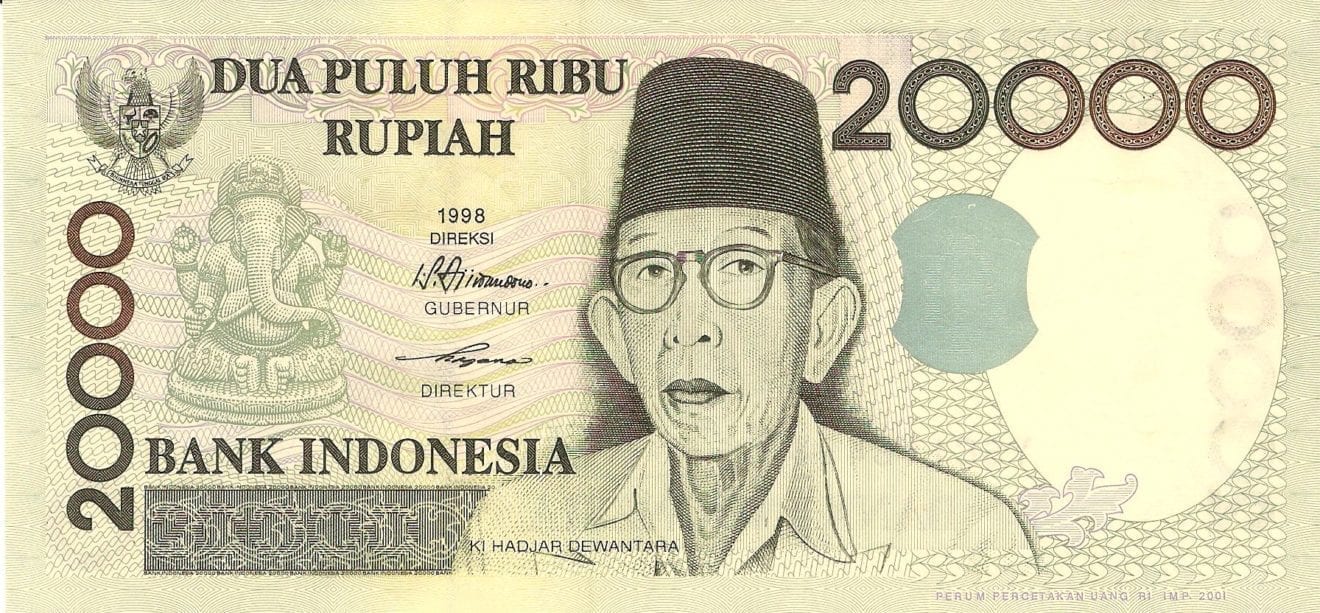
    The new notes are the Rp100,000, Rp50,000, Rp20,000, Rp10,000, Rp5,000, Rp2,000 and Rp1,000, while the new coins are Rp1,000, Rp500, Rp200, and Rp100.

    Indonesia’s founding fathers, Soekarno and Mohammad Hatta, will be featured on the Rp100,000 note, while Djuanda Kartawidjaja and Sam Ratulangi are on the Rp50,000 and Rp20,000 notes, respectively.

    Other national heroes featured are Frans Kaisepo, Idham Chalid, Mohammad Hoesni Thamrin, Tjut Meutia, I Gusti Ketut Pudja, TB Simatupang,  Tjiptomangunkusumo and Herman Johannes.

  • Rupiah continues to fall to Rp13,529 per dollar on Friday evening

    Rupiah continues to fall to Rp13,529 per dollar on Friday evening

    The Indonesian rupiah fell 20 points to close at Rp13,529 per dollar in the Jakarta interbank spot market on Friday evening, compared to the previous close of Rp13,509 per dollar.

    “The US dollar continued its rally against the majority of the main global currencies, including rupiah, along with investors optimism about the looming Fed rate hike in December 2016,” chief researcher Ariston Tjjendra of Monex Investindo Futures said here on Friday.

    The US dollars appreciation was also supported by US president-elect Donald Trumps plan to raise fiscal budget and slash taxes to boost economic growth and curb inflation rate.

    “The faster-than-expected US economic growth will lead to an increase in the inflation rate, which may encourage the Fed to tighten its monetary policy in 2017,” he stated.

    Under these circumstances, funds parked abroad in developing nations will move to the US, which will automatically cause the dollar to appreciate against other currencies, he noted.

    On the other hand, the prices of global crude which dropped this weekend also influenced commodity currencies, including rupiah.

    On Friday evening, WTI Crude fell by 0.88 percent to US$47.54 per barrel, while Brent Crude dropped 1.18 percent to touch US$48.42 per barrel.

  • Rupiah falls against dollar to 13,414 on Friday

    Rupiah falls against dollar to 13,414 on Friday

    The rupiah fell 54 points to close at Rp13,414 per dollar in the Jakarta inter-bank spot market on Friday evening, compared to the previous close of Rp13,360 per dollar.

    The dollar appreciated at the weekend, sending a signal that the Fed has indicated the possibility of raising its interest rate this year end, Ariston Tjendra, chief researcher of Monex Investindo, said here on Friday.

    “The signal about a hike in the US interest rate is in line with the US optimistic economic data,” he added.

    The release of data about US jobless claims at low level and the increase in home sales are among the reasons for the Fed to tighten its monetary policy, he noted.

    “The majority of global currencies also tend to weaken against the US dollar,” he commented.

    Lukman Leong, an analyst of PT Platon Niaga Berjangka, reminded that Bank Indonesia which remains in the foreign currency and bond market to control the fluctuation of local currency has prevented the rupiah from further weakening against the dollar.

    On the other hand, the tax amnesty program has added to the rupiah enjoying a positive sentiment, he observed.

    According to the BI mid-rate, the rupiah weakened to Rp13,408 per dollar, compared to Rp13,385 per dollar the day before.

  • Rupiah strengthens to 13,045 as of Monday afternoon

    Rupiah strengthens to 13,045 as of Monday afternoon

    The interbank exchange rate of rupiah in Jakarta moved higher by 23 points, reaching 13,045 rupiah per one US dollar compared to 13,068 rupiah previously.

    “Rupiah strengthened against US dollar in line with the growth indicated in the just released domestic economy data,” said Woori Saudara Indonesia Tbk money market watcher Rully Nova in Jakarta on Monday.

    According to the Central Bureau of Statistics, Indonesias economy experienced a 5.02 percent growth in the third quarter of 2016, thus reflecting that the cumulative growth has reached 5.04 percent by the third quarter of the year.

    The strengthening of the domestic currency has a lot to do with the market players confidence in Indonesias economy amid an uneven global economic scenario, spurring an interest in assets with rupiah denomination.

    At the same time, Nova believed the strengthening of the currency was still relatively limited, corresponding with commodity prices, especially the worlds crude oil price which is still at US$50 per barrel, indicating the psychological level of investors.

    The WTI Crude Oil was at US$44.76 per barrel as of Monday evening, while Brent Crude Oil was at US$46.11 per barrel.

    “The crude oil prices are expected to show an upward trend, sustaining rupiahs fluctuation in a positive area,” he noted.

    Meanwhile, Indonesias Central Bank recorded on Monday that rupiahs the middle exchange rate moved higher to 13,082, compared to 13,103 on Friday.

  • Rupiah weakens 43 points against USD

    Rupiah weakens 43 points against USD

    The rupiah weakened 43 points to close at 13,015 per US dollar in the Jakarta interbank spot market on Friday evening, compared with the previous close of 12,972.

    “The rupiahs exchange rate depreciated against the US dollar along with the weakening of exchange rates in Asia,” economist Rangga Cipta of Samuel Sekuritas said.

    He said sentiment towards the upward revision of the US second-quarter gross domestic product growth was one of the factors causing the dollar to appreciate against several global currencies.

    Data for US inflation rate, which is projected to increase, has boosted the dollar to move into the positive zone, Rangga explained.

    After all, the relatively stable and rising crude prices and domestic optimism about the tax amnesty program has prevented the rupiah from falling further, he added.

    “The condition will make the rupiah depreciate against the dollar only in a short term,” he said.

    Money market expert Rully Nova of Bank Woori Saudara Indonesia Tbk said the rupiahs depreciation is relatively limited following the market expectation of a low inflation rate in September this year.

    “It is expected the data for inflation rate will be released early next week (Monday),” he said.

  • Indonesian shoppers flock to Singapore as rupiah surges

    Indonesian shoppers flock to Singapore as rupiah surges

    Tourist arrivals will spike this year.

    Buoyed by the resurgent rupiah, Indonesian holidaymakers are once again trooping to Singapore to shop and splurge, according to a report by Bloomberg.

    The rupiah has surged 9.9 percent against the U.S. dollar over the past six months, second only to Malaysia’s ringgit among emerging markets, as slowing inflation and a nascent commodity-price recovery lured money to the nation’s assets.

    “The rupiah has done really well this year and it makes things look cheaper elsewhere for Indonesians,” said Nizam Idris, head of foreign-exchange and fixed-income strategy at Macquarie Bank Ltd. in Singapore. “The currency will find support from decent yields and bottoming commodity prices.

  • Rupiah strengthens 72 points

    Rupiah strengthens 72 points

    The Indonesian rupiah strengthened 72 points to Rp12,980 per dollar on Friday evening, compared to Rp13,052 per dollar the day before.

    Developed countries decision to adopt a zero interest rate policy made the yield less interesting and money market investors diverted their funds to developing countries, money market observer Rully Nova said here on Friday.

    “Yields in Indonesia, which still adopts a positive interest rate policy, have attracted investors to invest in rupiah-denominated assets,” he said.

    On the other hand, the fact that sentiment regarding the Fed fund rate faded as several economic indicators did not fully recover has made the US dollar-denominated assets less attractive, he said.

    After all, the rupiahs significant appreciation against the US dollar may have a negative impact on Indonesias export performance, he said.

    “Hopefully, the fluctuation in the rupiahs strengthening will not be too wild and market agents and businesspeople will find it easy to predict it,” he said.

    Market analyst Lukman Leong said the downward trend in Indonesias inflation rate this year is one of the factors behind the rupiah strengthening.

    “The low inflation rate will prompt Bank Indonesia to further lower its interest key rate and consequently, lending rate will fall and domestic consumption will increase in favor of economic growth,” he said.

  • Credit Suisse: Tough Days for Retailers Next Year as Weak Rupiah and Spending Linger

    Credit Suisse: Tough Days for Retailers Next Year as Weak Rupiah and Spending Linger

    Indonesian retailers could see tough days persisting next year as they wade through a storm of weak rupiah and waning consumer demands, analysts at Credit Suisse Securities Indonesia says.

    Retailers in the country have grappled with volatility in the rupiah this year — with an 11 percent decline to 13,872 against the US dollar year-to-date — which are hiking costs of imports as well as interest from dollar-denominated debt against the backdrop of a slower economy.

    Credit Suisse Securities Indonesia is now underweight on local retailers next year, especially those with high imported content such as fashion and lifestyle retailer Mitra Adiperkasa and household store operator Ace Hardware. Credit Suisse Securities Indonesia is the the sixth-biggest broker in total value in November taking some 4 percent of the trading, data from the local bourse authority showed.

    “I’m worried about retailers with a lot of imported content because the rupiah has weakened a lot, so their merchandise is becoming more expensive for the local population to buy,” Jahanzeb Naseer, head of research for Indonesia at Credit Suisse Securities Indonesia, told reporters in Jakarta on Monday.

    “The government is also expecting a lot of machinery and infrastructure-related imports next year that they may put pressure on consumption imports.”

    Consumer spending on discretionary items, such as electronic devices and apparel, is also unlikely to improve until the second half of next year due to higher prices, according to Naseer.

    Credit Suisse forecasts the rupiah to weaken by between 6 and 8 percent next year due to pressure from the US Federal Reserve’s monetary tightening as well as a possible rate cut by Bank Indonesia.

    Meanwhile, it sees the economy growing by 5.2 percent next year — roughly in line with the government’s 5.3 percent target — on the back of accelerated government spending as well as a potential rate cut of 75 basis points by Bank Indonesia.

  • Rupiah strengthens to Rp13,774 against dollar

    Rupiah strengthens to Rp13,774 against dollar

    The Indonesian rupiah closed stronger at Rp13,774 per dollar in the Jakarta interbank market on Monday evening, up 143 points from the previous close of Rp13,917 per dollar.

    The rupiah strengthened against the US dollar as uncertainty about the money market eased following the Federal Reserves decision to raise its rate, Chief Researcher of NH Korindo Securities Indonesia, Reza Priyambada, said here on Monday.

    “The euphoria due to the US central banks decision has revived investors demand for assets of risky countries. The fact that Indonesia has regained its investment grade rating is one of the factors prompting investors to reinvest in the country and, accordingly, the rupiah is strengthening,” he said.

    Investors are also optimistic about Indonesias economic outlook in 2016 as a result of aggressive capital expenditure and monetary stimuli aimed at pushing economic growth, he said.

    Economist Leo Rinaldy of Mandiri Sekuritas, meanwhile, said the Federal Reserves plan to raise its rate gradually in 2016 has received positive responses from money market investors.

    He said the investors also believed that Indonesias macroeconomic fundamentals will be better next year.

    However, the domestic economic performance, which is far from expectation, and the Fed rate which may increase at a faster pace to more than 1.25 percent in 2016, may send out signals of a negative sentiment about the rupiahs exchange rate, he said.

    “The Fed rate hike will entail a risk if it does not meet market expectation,” he said.