Local IT giant Naver announced plans Thursday to make its Naver TV service an open platform where anybody can freely upload videos, pitting it in direct competition with YouTube. The company said it would apply the change during this year’s first half. Originally, only people with more than 300 subscribers on other video platforms were permitted to create a channel on Naver TV.
Unlike YouTube, considered the playground of individual creators, most traffic at Naver TV is to come from short videos from TV shows uploaded by broadcasting or cable channels, like TvN or JTBC. Lowering the bar is intended to draw in the legions of individual creators who have begun to emerge in Korea over the last two years.
“Naver TV was originally focused on offering video from TV for users that flow in via our search engine,” said a company spokesperson.
“We gradually had small- or mid-sized studios upload web dramas or famous beauty creators joining our platform and by that experience we learned the patterns of how original content is consumed. Now we want to make it accessible to more creators.”
Last week, Naver lowered the bar to 100 subscribers and simplified the process required to set up a channel, as a first step to earn feedback and find areas that need improvement before fully opening the door to everyone.
As a strategy to boost users, Naver is devising a compensation system to reward creators according to their performance. Channels with more than 300 subscribers and whose videos were played for more than 300 hours will be offered the choice to roll advertisements.
Naver CEO Han Seong-sook publicly stressed the importance of online videos multiple times last year, expressing a will to develop that sector.
“The internet market is rapidly restructuring to be centered on videos – Naver will also invest more in line with this change,” she said in a conference call in July, pointing out how the younger generation no longer spends time on portal sites or social networks, but on video platforms.
Naver’s traditional strengths are not in video but other services, such as its search engine, blogs and online communities. Regardless, the company has invested in its video services. Apart from Naver TV, its other main video service is V LIVE – a platform via which K-pop idols can host live streamed videos with fans. Around 70 to 80 percent of users at V LIVE are based overseas.
“Instead of running a single platform like YouTube, our direction at the moment is to divide platforms according to usage and optimize the service that fits their respective purposes – V LIVE for fans and Naver TV for general creators,” said the Naver spokesman.
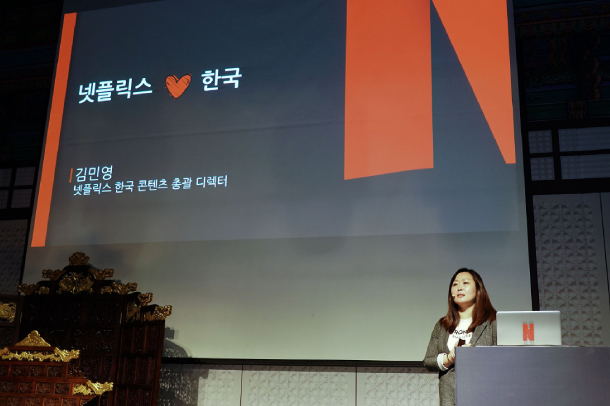
Ahead of the launch of Netflix’s first original Korean drama series today, executives from the streaming giant expressed confidence in the global popularity of Korean content at a press briefing in Seoul, Thursday. Kim Min-young, the director of content at Netflix in Korea, said that she expected to win over fans with the company’s first-ever original Korean drama series “Kingdom,” a highly-anticipated zombie series that launches on the streaming platform.
“‘Kingdom’ will launch in 190 countries in 27 languages at the same time, with dubbing provided in 12 different languages,” Kim said.
“We expect many users will want to watch it, as it can appeal to both people who like zombie thrillers or just Korean content … I believe in our creators and [the popularity] of Korean media, which is also the reason why Netflix launched Korea’s own content team in the country last year.”
Before last May, the team that produced and licensed content to Netflix for the Korean market worked from Singapore at the company’s Asia-Pacific headquarters. Following the relocation, the Korean content team has been pursuing licensing and production activities more actively, working with domestic content producers like JTBC and Studio Dragon.
Regarding original production in Korea, Kim said she benchmarks successful foreign Netflix original dramas like Spanish title “Elite” and Turkey’s “The Protector” that became huge hits with users across the world.
“Our ultimate goal is to present entertainment to consumers, and from our experience, we found it necessary to give creators the freedom to tell the story they want to share,” said Kim.
“As you can see with ‘Black Mirror: Bandersnatch,’ we will help producers to not be hindered from doing what they want because of technological limits.”
“Black Mirror: Bandersnatch” is a choose-your-own-adventure film by Netflix that allows users to choose one of many action courses for the characters throughout the movie to determine how the plot progresses. Kim hinted that the impressive technological feats as shown via the interactive video could also be made possible in Netflix’s Korean programs.
“We were also satisfied with the performance of our original entertainment program ‘Busted!,’ as reflected by our decision to produce a second season,” she said.
The Netflix team also addressed concerns that Netflix provided limited service offerings and imposed unfair deals on its Korean partners.
“Although we can’t provide all content available out there, we conduct analyses to discover what content users want,” Kim said. “But we have contents like ‘Friends,’ ‘Walking Dead’ and ‘Kim’s Convenience’ which users can’t access elsewhere.”
In response to a rumored nine-to-one profit division between Netflix and Korean distributors like IPTV operator LG U+, Nigel Baptiste, director of partner engagement at Netflix, said that he could not “go into the specifics of what the deals are with our partners,” but the goal was to help “everyone in the ecosystem benefit.”
The team did reassure users that subscription fees will not rise anytime soon in Korea.
“We did increase prices in the U.S. … but we don’t have plans to do so right now [in Korea],” said the vice president of Asia-Pacific communications, Jessica Lee.
Netflix is planning to release several new series in Korea this year – the first seasons of “Love Alarm,” “My First First Love,” “School Nurse Ahn Eun Young” and the second season of “Busted!”
Mobile app research company WiseApp reported that some 900,000 Koreans used the Netflix mobile app on Android phones alone last September.
SK Telecom is teaming up with three major broadcasters to launch a new video content service in a bid to challenge the popularity of foreign services like Netflix. On Thursday, SK Telecom and broadcasters KBS, MBC and SBS signed an MOU to combine their current over-the-top (OTT) media service businesses and launch a new and improved service by the first half of this year. OTT refers to content that is delivered directly to users over the internet without going through intermediaries like television.
The four companies will also establish a joint venture that combines the OTT operations of each party. SK Telecom CEO and President Park Jung-ho said he is seeking around 200 billion won ($177.9 million) in investment for the new firm.
SK Telecom’s subsidiary SK Broadband currently operates Oksusu, a television and movie platform released in 2016. The three broadcasters have Pooq, a joint venture that MBC and SBS both have a 40 percent stake in, while KBS holds 20 percent.
Videos from over 70 channels are available on Pooq, including drama series from the 1990s and early 2000s.
All four companies are expected to benefit from the partnership. Pooq has already established ties with Southeast Asian companies, having partners in Hong Kong’s Viu, Malaysia’s iflix and China’s iQiyi.
During the MOU signing, SK Telecom CEO Park said he hoped to see the new strengthened service launch in Southeast Asia by June.
In return, the three TV channels will have access to SK Telecom’s financial resources, which can be invested in original content production.
The partnership is seen as an effort by the domestic companies to combine forces to fend off growing foreign competition, especially that posed by Netflix.
Oksusu has 9.46 million registered users while Pooq has 3.7 million. Netflix is estimated to have around 900,000 domestic registered accounts, still trailing far behind the local companies.
These figures only tell half the story, however.
While Oksusu is the No. 1 OTT service in Korea in the number of accounts, its number of monthly active users is only estimated to be two-thirds of registered users. OTT services from competing mobile carriers like KT’s Olleh TV and LG U+’s Video Portal are also catching up quickly in total users.
Also, very few original videos produced by Korean OTT service providers have enjoyed success.
Netflix, on the other hand, saw tremendous growth in the three years it has been operating in Korea.
As of last September, users spent a total of 283 million minutes a month on Netflix’s mobile app on Android according to WiseApp, which analyzes mobile app usage. Just two years ago, users had spent 14 million minutes a month on Netflix, or 20 times less.
During the same period, the time that Oksusu and Pooq users spent on the apps increased less than twofold.
Users spent a total of around 600 million minutes a month on both apps as of last September.
Experts believe that the content budget is largely to explain for the differences in growth.
Netflix is estimated to have spent around $8 billion on content production and licensing last year. Oksusu spent only around 10 billion won in content investment, however, a fraction of Netflix levels.
“Through this partnership, Korean OTT service providers can strengthen the competitiveness of their content, which has been their weakest point,” said Jung Ji-soo, an analyst at Meritz Securities. “[The companies’] goal of becoming Korea’s Netflix will also help in energizing the domestic media ecosystem.”
Reliance Communications’ Global Cloud Xchange (GCX) subsidiary and Broadcast Media Communications (BMC UK) have teamed up to deliver end-to-end connectivity for the live broadcast of the FIFA World Cup 2018 to audiences around the world.
The tournament kicked off in Russia on June 14. This event will be carried across GCX’s network, via BMC, from Frankfurt to the London Broadcasting House of British Broadcasting Corporation (BBC) and used exclusively by BBC Sport to broadcast the matches to British audiences.
GCX’s end-to-end network solution will provide fast, dedicated and reliable connectivity, enabling BMC to deliver live video contributions into BBC’s coverage of the FIFA World Cup, as well as active monitoring of the transmission over GCX’s global network, ensuring consistent broadcast quality for global audiences.
FIFA World Cup matches are among the most watched and followed sporting events in the world, especially important for soccer fans across Europe and the Asia-Pacific region. It is, therefore, critical for us to provide these fans with smooth, uninterrupted access to the game,” said Lee Russell, operations director at BMC UK.
“With GCX’s expansive Global Network and its proven media capabilities, we are confident that we will once again deliver an unrivaled viewing experience to our viewers.”
“We are delighted to partner with BMC UK again to provide high-quality connectivity, enabling live broadcasts of the FIFA World Cup to global viewers who can enjoy this highly anticipated event,” said Mark Russell, managing director, GCX International.
“The broadcast from Frankfurt to BBC London Broadcasting House is being facilitated through the integration of GCX’s privately-owned Global Network with BMC’s resilient Media Quality Network, tailored to meet the high-quality connectivity standards of sports, news and special broadcast events.”
GCX’s privately-owned global network offers geographic coverage and the ability to provide both subsea and terrestrial connectivity across the globe, optimized for the high-performance delivery and distribution of content, typically required by media and broadcasting companies.
The FIFA World Cup concludes with the Finals being held at Moscow’s Luzhniki Stadium on July 15, 2018.
Well, they certainly wasted no time. Two days after a federal judge nixed the federal government’s objections to the deal, AT&T has completed its acquisition of Time Warner.
The final purchase prices was $42.5 billion in cash plus 1,185 million shares of AT&T’s common stock. AT&T now expects $1.5 billion in cost synergies by the end of year 3, as well as another $1 billion in revenue synergies.
AT&T CEO Randall Stephenson will lead the combined company, while John Donovan will lead the US communications side, John Stankey will lead the media business, Lori Lee will lead the international business, and Brian Lesser will head up the ad and analytics business. Time Warner’s now former CEO Jeff Bewkes will remain on for a transition period as a senior advisor.
The deal significantly reshapes the content and network markets, combining AT&T’s fixed and wireless network reach with the likes of Warner Bros, HBO, and CNN. Mixing content and distribution like this is of course the hot topic of the year, but there are dangers alongside the opportunities.
The communications side will have to keep the focus on network quality and investment even as the headlines go where they’ve been tending to lately, to the content side of things.
Attention will now shift to the next potential mega deals, with Comcast’s bid for Fox taking its turn in the spotlight. But I suspect the integration process at AT&T may be the key action to watch over the next few quarters.
There are a lot of synergies to achieve, and most of them involve finding a new balance between very different business cultures. It’s one thing to say that the federal government shouldn’t stand in the way, and an entirely different thing to prove that the whole shebang was a good idea in the first place.
Industry insiders say local Over-The-Top service providers should act together instead of against each other. Vietnam is seeing a trend of people switching from traditional TV to over-the-top (OTT) media services which allow them to watch movies and other shows on the internet.
In a recent survey done by Kantar Media Vietnam, an information and consultancy group, 84 percent of the respondents aged 15-54 said they use the internet every day. In Hanoi, people spend 229 minutes each day on the internet, almost an hour and a half higher than the time for TV, which is only 145 minutes, the survey found.
A significant 45 percent of respondents in Hanoi, Ho Chi Minh City, the central city of Da Nang and southern Can Tho said they watched video on demand (VOD).
Vietnam is one the leading countries in the online video trend, with 90 percent of the respondents saying they watch online videos every week, said market research firm Nielsen.
“People nowadays want to watch what they want, whenever and wherever they want,” said Bui Huy Nam, CEO of state-owned cable TV provider VTVCab, adding that this trend makes the transition from traditional TV to OTT inevitable.
YouTube remains the largest OTT service in the country, with 87.3 percent of respondents in the Kantar Media survey saying they use this website frequently to watch videos online.
Local sites such as PhimMoi.net [New Movie] and ZingTV rank second and third with 28.9 percent and 26.4 percent respectively, the report said.
With such a large market demand, local OTT providers are adopting different strategies to eke out an advantage in this tight race.
National broadcaster VTVCab is looking to work with internet service providers to provide free content to users, earning revenue from advertisements. The company’s ambition is to create a platform where users can share their own video content.
FPT Play, a cross-platform application which allows users to watch TV shows and movies online, is focusing on improving its content by working with strong media production companies in the country.
While there is strong competition between legal OTT providers, they also need to fight the battle with illegal ones. Illegal content makes up about 95 percent of OTT services in Vietnam, said Ngo Thi Bich Hanh, vice chairwoman of media firm BHD.
“There is an intense competition between OTT firms in the country. It’s a competition between local firms and between them and foreign providers,” Hanh said.
To ensure the success of OTT services in Vietnam, local businesses need to cooperate on a shared platform, said Nguyen Thanh Lam, director of the Department of Radio and Television Communication and Electronic Information. “They should not go alone in this market,” he added.
Echoing Lam, Le Quang Minh, director of the VTV24 News Center, said that working together will keep OTT businesses from “hitting the bottom.”
“We want local OTT providers to sit down together to create a sustainable market which is strong enough to compete with the leading video streaming services in the region and in the world instead of racing against each other,” Minh said.
A study by OTT provider Muvi estimates Southeast Asia market revenues reaching $650 million a year in the next three years. On the global scale, Netflix, Hulu, Amazon and Youtube have a total of 2 billion subscriptions, taking 40 percent of the world’s OTT market share, the study said.
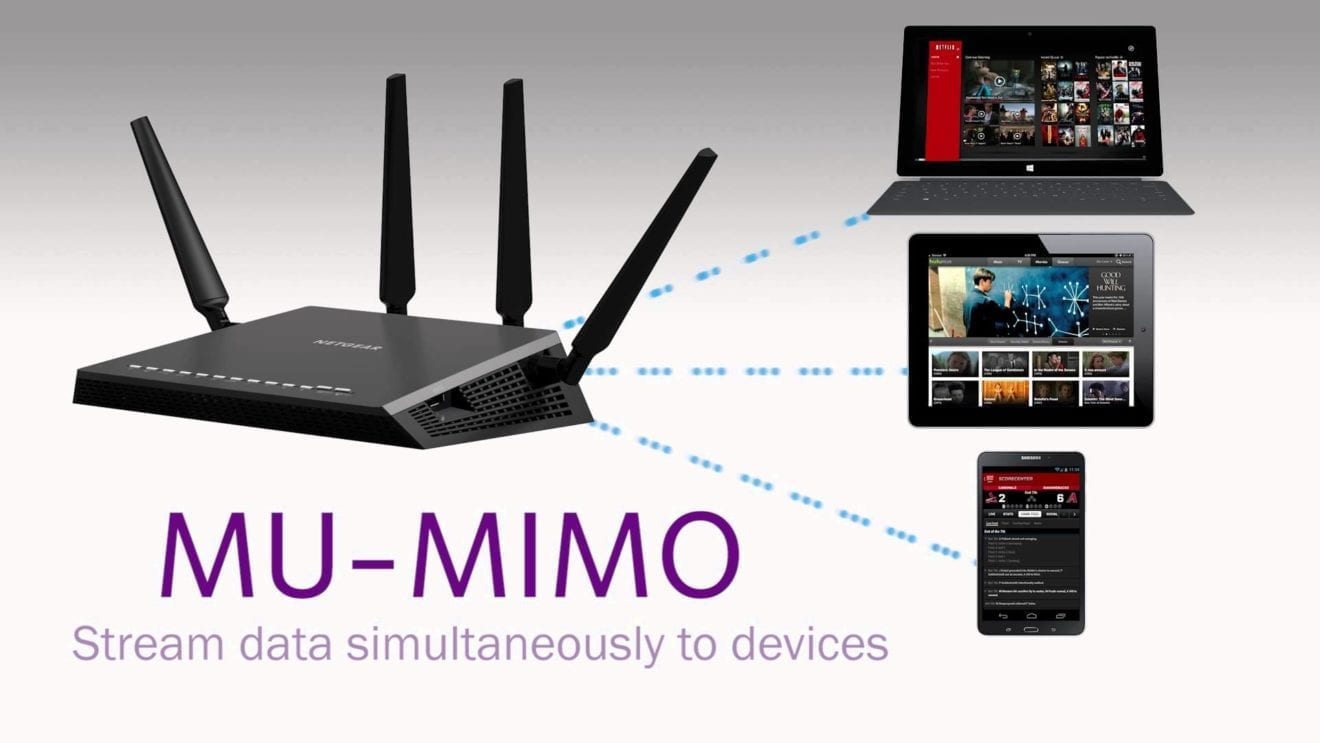
Ericsson and Hong Kong mobile network operator SmarTone have begun to trial FDD (Frequency Division Duplex) massive MIMO (Multiple Input, Multiple Output) technology as part of the operator’s network evolution plan towards 5G, said the companies in a press event in Hong Kong Monday.
The trial, involving FDD massive MIMO on 1800 MHz, represents the first of its kind for operators in Hong Kong. The trial comes ahead of 2018’s planned deployment of AIR 3246, Ericsson’s new radio that can support massive MIMO over 4G/LTE with Ericsson’s 5G massive MIMO plug-in, said the companies.
“Our extension of the strategic partnership with Ericsson in October last year includes a five-year network evolution plan towards 5G,” said Stephen Chau, CTO, SmarTone. “Ericsson’s FDD massive MIMO solution will play an instrumental part in providing our customers in dense urban environments with [the] enhanced user experiences they have come to expect from SmarTone.”
“We are working closely with SmarTone to develop, trial, and deploy key 5G technologies that will further enhance the user experience,” said Nishant Batra, head of product area network infrastructure, Ericsson. The recent LAA field trial, and now the trial of FDD massive MIMO, enable us to jointly shape the next-generation network technology.”
Ericsson recently launched its first radio, AIR 3246, supporting FDD massive MIMO for both 4G and 5G. The technology is designed to enable operators—especially in metropolitan areas—to bring 5G to subscribers using today’s mid-band spectrum and boost capacity in their LTE networks.
The Swedish company has more than double the base of nearest competitor Apple Music.
Spotify said Monday that it had 60 million paying subscribers, expanding its lead in the fast-growing world of music streaming.
The Swedish company has more than double the base of nearest competitor Apple Music, which in early June said it had 27 million subscribers.
Apple Music, however, achieved its growth rapidly as it was launched only two years ago by the tech giant.
Spotify — started in 2008 and available in 60 countries — gave the figure in its first update since March, when it had announced that it had 50 million subscribers.
The company said in June that it had more than 140 million overall users — meaning most people listen on its free, advertising-backed tier, which is controversial with many artists.
The next competitor to Spotify is Paris-based Deezer, which is especially strong in continental Europe and said in January 2016 that it had six million paying subscribers.
Other streaming sites include rap mogul Jay-Z’s Tidal, a service launched last year by retail giant Amazon and early streaming site Rhapsody, which has rebranded itself as Napster.
Most music industry watchers expect streaming to keep growing sharply, with the subscriber numbers a small fraction of the potential global market.
Streaming has helped the music business chart two years of bumper growth after long stagnation, although artists often question how much of the money comes back to them.
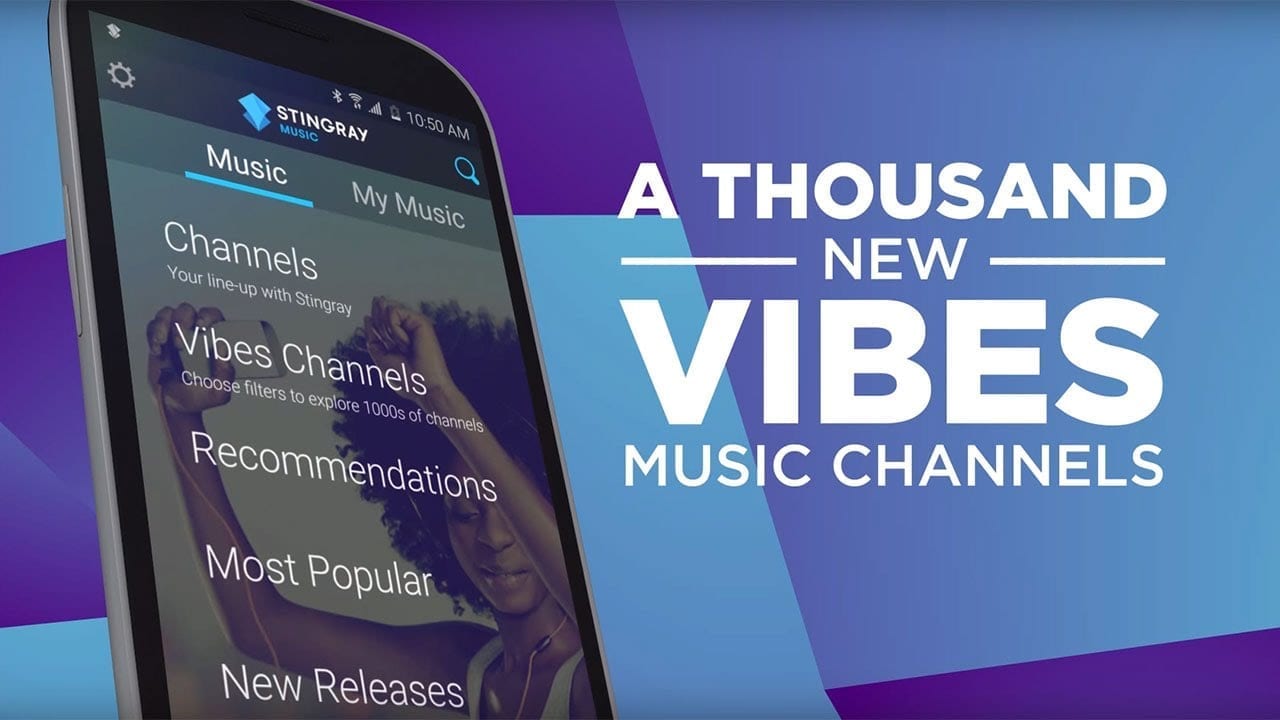
Singtel has launched a promotion granting its Singtel Circle quad-play customers free access to 50 live music stations operated by Canada-based music service Stingray Music.
Subscribers to Singtel’s postpaid mobile, fier broadband and Singtel TV plans will be granted complementary 24/7 access to music genres in English, Mandarin, Malay, Tamil and other languages.
The service will be available on Singtel TV, mobile devices and computers and will be added to the list of benefits available to quad-play customers.
Singtel Circle also offers perks including free local data on Sundays, mobile plan discounts and an annual handset upgrade discount worth S$350 ($250).
“We are always keen to explore new ways to add value to our customers’ lifestyle experiences,” Singtel CEO consumer Singapore Yuen Kuan Moon commented.
“Singtel is pleased to be the first in the Asia Pacific region to introduce Stingray Music and provide countless hours of music entertainment for our Singtel Circle customers’ listening pleasure. We’re not stopping here and will continue enhancing Singtel Circle’s suite of benefits.”
Southeast Asian Netflix competitor Iflix is playing a new game: it’s going to start streaming live sports events. That’s uncharted territory for the Malaysian on-demand video platform. Netflix, which launched in several Southeast Asian countries late last year, has so far avoided going down that route.
Iflix announced today it will launch this feature in Indonesia first – its largest market, where it launched in June 2016. Iflix will live stream all matches of Indonesia’s first and second soccer league, in partnership with local broadcaster TVOne. It’s not the only tech startup associating itself with the sport.
TVOne is a free-to-air channel known in Indonesia for its news and sports programming.
Live streaming runs against what on-demand platforms typically stand for, as they’re fixed to a particular time and schedule.
In 2015, Netflix content boss Ted Sarandos told that live events don’t fit with Netflix’s watch-anytime model. Users subscribe to Netflix to watch movies, TV shows, or documentaries whenever they please.
But Sarandos didn’t rule out the possibility of Netflix eventually changing its attitude.
Amazon’s already doing it
Amazon recently entered live TV broadcast territory in the US by live-streaming 10 NFL games, in a deal that cost US$50 million.
Major social networks like Facebook and Twitter are also showing interest in the event live-streaming business.
Outrunning Netflix
What Iflix plans to gain from streaming sports events was not addressed in today’s press release. It may be an incentive for users to give the service a try – but the first and second league matches are also available on free TV, and live streams are found on YouTube and other sites, for those who prefer to watch on computers or smartphones.
But while streams of some matches may be available on other sources online, “these are not always consistent nor reliable,” argues an iFlix spokesperson.
The startup last reported 5 million subscribers across all markets – but raising that figure isn’t the most important target for now. “Iflix is focused on measuring viewership and usage, rather than subscriber numbers,” says the spokesperson. By introducing the soccer league, the startup intends to demonstrate its commitment to offer localized content for Indonesian viewers.
Soccer, especially the local league, is growing in popularity in Indonesia and seems to have overcome some of its major challenges, like corruption.
Iflix isn’t the only tech startup associating itself with the sport. Local unicorn startups Go-Jek and Traveloka are the main sponsors of the first and second league.
Founder Patrick Grove is likely happy that his firm is outpacing Netflix in this regard. In an interview with us, he said his main weapon to stay competitive is speed. He wants to secure a firm footing in emerging markets, one that’s impossible to dislodge.
Iflix and other Southeast Asia-focused streaming sites like Hooq have been able to address regional customer demands faster than their US competitor. Knowing internet connections in the region are often slow and unreliable, both sites offered subscribers the option to download a few titles for offline viewing.
Video streaming coverage of the 2017 presidential inauguration in the United States is the largest single live news event that Akamai Technologies has delivered, the company said.
Live video streaming of the inauguration peaked at 8.7Tbps on the Akamai Platform at 12:04pm Eastern Time on Friday, January 20, during the opening of the President Donald Trump’s speech.
This exceeded the previous record of 7.5Tbps set during Election Day coverage on the evening of November 8, 2016.
Akamai supported 4.6 million concurrent viewers of the inauguration at peak on behalf of its broadcaster customers.
“The presidential inauguration is the latest in a series of record-breaking live, online video streaming events that we have supported over the last year,” said Bill Wheaton, EVP and GM of Media at Akamai.
“More people than ever are watching video online, and it’s being done across more devices at increasingly higher levels of quality.”
On a historical note, the 2009 US presidential inauguration reached 1.1Tbps on Akamai and the British Royal Wedding in 2011 hit 1.3Tbps.
More recently, the 2016 Euro soccer tournament final peaked at 7.3Tbps and the Rio women’s team gymnastics final hit 4.5Tbps.
As we enter into the new year, it seems only natural that we share all the Singapore technology trend in 2017 what we’re excited about, and what we foresee happening in the digital space this year.
Here are our top 6 picks!
1. The Rise Of Chat Bots
Chat bots have been made popular especially since June 2016 – when Facebook launched them in Messenger.
Over the past few months, developers have been experimenting with various chat bot use cases, and according to Facebook, while the early chat bot attempts by developers have been “really bad“, the quality of chat bots have generally improved over time.
According to David Marcus, Facebook’s vice president of messaging products, the best use cases include driving people toward subscriptions, facilitating small transactions, and customer service.
This year, we definitely expect companies in Singapore to come out with smart use cases for Chat Bots and integrate them into their product offerings. We also expect a rise of companies offering professional services around Chat Bots.
2. Mega Apps
One of the fastest growing regions in the world now is China – and if you have been following its development closely, the dominant platform now is undeniably WeChat.
WeChat introduced the idea of “apps in apps” or “instant app”, and is literally the “one app to rule them all” in China.
Its concept is very interesting, because with it, you can perform everything beyond just chatting with your contacts – from product purchases to payment, to joining interest clubs (WeChat has a fitness tracking feature called WeRun), to booking a cab and making restaurant reservations, there’s a high possibility of relying on the app for most everyday processes!
If you are interested in finding out more, here are 10 WeChat travel industry case studies where companies integrating their business with WeChat’s platform – very fascinating.
And who knows, we might just see a mega app in Singapore to rule them all this year.
3. Breakout Gaming Apps
The third thing we’re excited about this year is in the mobile gaming space.
We’re expecting at least 2 or 3 mega breakout gaming apps this year. While we have no clue on what would pop up, we expect more gaming developers to take the cue from Pokemon GO’s brilliant use of augmented reality to create a real world interactive gaming experience. Pokemon GO was (still is) a game that transcends age, gender and race, and sets very high standards in the gaming community.
We have yet to see a huge breakout gaming app from Singapore – and hopefully, 2017 is the year we will see one that will fly our Singapore flag high and proud in the global gaming arena.
After all, there’s a dedicated area by the government called Pixel Studios dedicated to catalyse the creation of valuable gaming apps in Singapore.
4. Smart Companies Taking Up Dead Retail Space
One of the biggest trends is that retail vacancy is at its highest in decades. With recession (Singapore only reported an overall economic growth of 1% in 2016, and projects a growth of 1% this year) looming, as well as competition from e-commerce, it’s no wonder that retailers are unable to make ends meet, and some are even forced to move out from their physical locations.
Of course, not all is doom and gloom though – we’re expecting resourceful and entrepreneurial individuals to negotiate contracts and/or deals with shopping mall operators which would be flexible and thus beneficial to the former.
We expect smarter usage of spaces, with digital companies taking up physical locations around in Singapore as an extension of their business.
Take Naiise for example. Originally a design centric e-commerce company, it has now expanded to 6 physical locations around in Singapore. Or take co-working space operator Spacemob for example, which raised almost S$8 Million in funding last year.
Both Naiise and Spacemob are examples of smart innovators taking advantage of retail space in Singapore, and bringing the arrangement’s benefits to both space owners and consumers alike.
5. Live Streaming
Another space that we (ok, maybe just me) are personally very excited about is the live streaming space.
At this moment, I think that we are still barely scratching the surface of the possibilities of live streaming. Live streaming is something different from usual platforms, and allows brands and personalities to appear more authentic and spontaneous. It also helps garner immediate interaction with the public – something which brands are all severely lacking nowadays, as they seem to chase quantity over quality.
Another thing about live streaming is that it is completely powered by millennials, given how they often have FOMO (fear of missing out), and want to always be in-the-know of the latest trends and happenings. Where stock images and highly-edited content flood our social feed, live streamed content also offers experiences that are more ‘honest’.
Live streaming has already exploded in China, but we have yet to see mainstream adoption in Singapore – but that’s something we’re expecting to change dramatically this year.
6. Government Becoming Increasingly Digitised
The last thing that we are excited about this year is that Singapore is becoming increasingly digitised.
Taking the lead for digitising Singapore is GovTech, which sits under the newly-formed stat board IMDA. As the agency responsible for most of the digital applications used by the different government bodies, they are helping government services to move online and become mobile-friendly, all in the name of convenience for the average Singaporean.
They also constantly monitor data from these e-Government services and get user feedback so as to keep improving what’s offered.
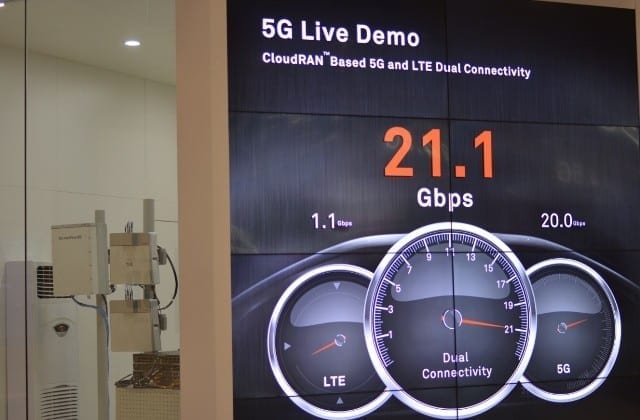
Huawei has conducted a live demonstration involving 5G and LTE dual connectivity for a 4K video-on-demand service, achieving single user peak throughput of 21.1Gbps.
At last week’s Global Mobile Broadband Forum, Huawei conducted a demonstration based on its CloudRAN architecture.
With the development of new high-bandwidth services such as AR/VR and 4K video streaming and cloud-based services, Huawei said 5G new radio technologies will need to be deployed in central hotspots first to deliver the required capacity.
LTE networks are meanwhile continuing to evolve with the introduction of new technologies including 3D Massive MIMO.
Combining 5G and 4G networks has the potential to help operators protect their existing investments while improving network capacity, spectrum efficiency and coverage in urban areas.
“It is of vital importance to guarantee end users with a ubiquitous high data rate experience in densely populated urban city areas with high buildings and complex roadways,” Huawei CMO of wireless network products Dr Yuefeng Zhou said.
“Recently, 3GPP standardization has made significant progress in 5G and LTE dual connectivity. We expect to strengthen our cooperation with industry partners on 5G innovations based on these real application scenarios.”
Average viewing times on mobile devices has grown by more than 200 hours a year since 2012, driving up overall TV and video viewing by an additional 1.5 hours a week, according to the latest Ericsson ConsumerLab TV & Media Report.
The surge in mobile viewing is offset with a decline in fixed screen viewing of 2.5 hours a week, however the appetite for TV and video is not waning.
Weekly share of time spent watching TV and video on mobile devices has grown by 85% (2010-2016). On fixed screens it has gone down by 14% over the same period.
Also, 40% of consumers globally are “very interested” in a mobile data plan that includes unrestricted video streaming.
In the US, 20% of mobile viewing is paid-for content using services such as Netflix, Hulu, and Amazon Prime.
A major issue is low consumer satisfaction when trying to find something to watch, 44% of US consumers say they can’t find anything to watch on linear TV on a daily basis, an increase of 22% compared with last year (36%).
In contrast, US consumers spend 45% more time choosing what to watch on VOD services than linear TV.
Paradoxically, 63% of consumers claim that they are very satisfied with content discovery when it comes to their VOD service, while only 51% say the same for linear TV.
The findings suggest that although the VOD discovery process is more time consuming than with linear broadcast TV, consumers rate it as less frustrating, as it implicitly promises the opportunity to find something they want to watch, when they want to watch it.
Music streaming is quickly becoming a favored service, offering Indonesia’s music-seeking public a legal means to access music. However, with a majority of Indonesians possessing low-end smartphones, the outlook may not be as rosy as some think.
According to a new report by McKinsey, the prevalence of low-cost smartphones among mass market consumers in Asia, including Indonesia, has hindered the take-up of music streaming apps.
Indonesia experienced a particularly busy time for music streaming services in the first half, with the entrance of foreign-based names such as Spotify, Apple Music, Yonder Music and JOOX coming in around the same period, tapping into the potentials and eagerness of the largest Southeast Asian digital market.
Services that previously entered and operated in Indonesia include Guvera, Deezer and Rdio, which closed operations in November last year.
It turns out that 34.7 percent of Indonesians listen to JOOX, followed by 12 percent with Musixmatch, 10.2 percent with SoundCloud, 10.1 percent with Langit Musik and 9.8 percent with Spotify, the report shows.
However, “in markets such as Indonesia, low-end smartphones cost as little as [US]$75 per device. These devices are slower and possess less memory capacity than other smartphones, posing a dilemma for music streaming services”, the report said.
“They can optimize music streaming apps for these lower-end smartphones at the cost of functionality that is critical to the customer experience of more affluent consumers or retain the full functionality of streaming apps to maximize the customer experience for affluent customers at the cost of limited access to mass market consumers.”
Among the most popular smartphone brands in Indonesia in the second quarter of 2016 were Samsung, OPPO, Asus, Advan and Lenovo, all of which offer low-end smartphones.
Services usually offer an “offline” option, through which listeners can download certain tracks onto their phone for internet-less listening. Usually, streaming relies on an internet connection, making online connectivity necessary.
Many services offer rates that have adjusted with the market’s emphasis on affordability, with fees as low as Rp 35,000 ($2.67) to Rp 50,000 per month, and varying payment methods aside from the usual credit card option.
To make their products affordable and wide-ranging, the services partnered with telecom companies, with partnerships including Spotify with Indosat Ooredoo, Yonder with XL Axiata and JOOX and Guvera with Telkomsel.
However, in terms of low-end smartphone capacity, some services are confident that their apps will give listeners optimum quality regardless of weak Indonesian bandwidth or poor connectivity in some areas.
For one, Guvera operations and marketing director Onny Robert said that because its service primarily targeted “users who prefer not to pay for their music”, its bundling plans included latching onto smartphones themselves such as Lenovo devices in order to secure listeners.
After evaluating field connections, Onny said Guvera was able to deliver a capable service even at 3G speed.
“Bandwidth or phone capacity won’t really matter to Guvera users because our app is practically small in size, 20 megabytes, and because it is bundled with Lenovo devices, it will drive more interest into using our service,” he said recently.
Guvera has 1.5 million active subscribers, with under-25s dominating their demographics.
Yonder Music CEO Adam Kidron earlier said the service aimed to further cultivate the music streaming tradition and make it more affordable and accessible.
Spotify, meanwhile, has seen its users stream over 100 billion minutes of local and international music and listen to an average of 90 minutes of music per day, since its launch in March.