Retail News CRM

Tag: streaming

  • China Unicom developing 5G VR streaming tech

    China Unicom developing 5G VR streaming tech

    The China Unicom Network Technology Research Institute is working on a new use case for advanced technologies including 5G and VR – panoramic VR streaming of live video using drone technology.

    China Unicom and wireless broadband technology provider Baicells are developing a prototype mobile edge computing VR live video technology using Artesyn Embedded Technologies’ MaxCore mobile edge computing acceleration platform.

    The technology uses the emerging panoramic video collage algorithm and transmission protocol to provide VR video streaming from drones equiped with 360-degree high-definition cameras.

    Users can manipulate their perspective in real-time, providing a more immersive live VR experience.

    “This end-to-end solution can be applied not only to concerts, sporting events, films and other entertainment industries, such as the Mid-Autumn festival, live CCTV broadcasts using VR panoramic technology, but it can also be applied to public safety, emergency communication, UAV inspection, and much more,” Baicells research director Mingyu Zhou said.

    “We believe China Unicom and Baicells’ joint research and development can help users experience live HD VR video transmissions more quickly and smoothly.”

    “MEC provides a distributed computing environment for application and service hosting, bringing cloud technologies closer to the RAN and ultimately, closer to consumers,” Artesyn marketing VP Linsey Miller added.

    “Carriers are telling us that for these applications they need telco-grade features, which is Artesyn’s expertise.”

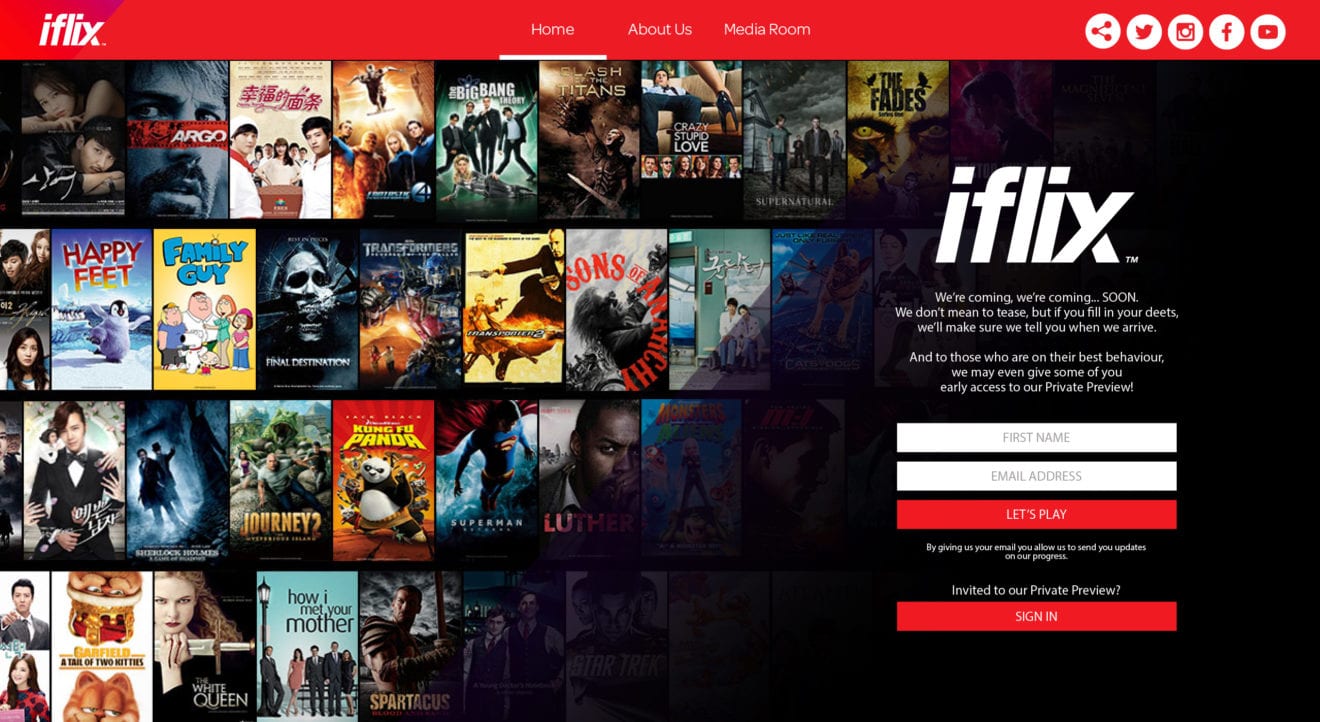
  • Iflix wants to become a social media platform for TV

    Iflix wants to become a social media platform for TV

    Emerging subscription-based streaming video service iflix intends to set itself apart from Netflix by becoming a social media platform for television, according to company executive.

    “Netflix is very much into an original production base… they are really focusing their investment on content and user experience and interface,” Cam Walker, chief executive of iflix Indonesia, told telecomasia.net at the sidelines of Communic Indonesia and Broadcast Indonesia 2016, which kicked off Wednesday at the Jakarta International Expo in Kemayoran, Central Jakarta.

    “We have just most recently decided to venture beyond entertainment into becoming a truly social platform for television.”

    To do that, Walker said the company is planning to introduce more social media components and interactive features to the service. For instance, the company will offer a social feature later this year where users can chat with others or interact with local celebrities who have drawn up movie playlists for them.

    Iflix launched its service in Indonesia in mid-June this year and garnered 250,000 activations in about two-and-a-half months.

    Walker said the Indonesian market is relatively new from an OTT perspective and doesn’t see other streaming services as competitive, as they are all heading in different paths.

    “We’re the new kid on the block. We started a couple of years as a cool internet TV concept, with a vision to provide a better service to piracy and a viable alternative at an affordable price point,” he said.

    iflix is now offering 2,000 seasons of 900 programs, 5,000 episodes of 200 kids programs and local content acquired from partners for its Indonesian viewers.

    Walker said iflix will soon produce its first local Indonesian content that will open more opportunities for local actors, producers, directors, scriptwriters and “the new breed of Indonesian talents.”

    “We’re going to be investing heavily in local productions and local acquisitions as well, which I think will differentiate us from the major international players,” he said.

  • Napster taps Terada for next-gen music streaming products

    Napster taps Terada for next-gen music streaming products

    Napster is upgrading its analytic ecosystem to implement the Teradata Unified Data Architecture (UDA).

    The deployment includes multiple nodes of the Data Warehouse Appliance with Teradata QueryGrid for seamless data and systems integration and, in addition, a Teradata Appliance for Hadoop with Cloudera.

    Digital streaming is one of the most widely accepted methods of distributing musical content. With a catalog of over 40 million songs, Napster delivers a premium music streaming experience to more than three million paying subscribers in 34 countries across the globe.

    “This upgrade establishes Teradata’s UDA technology as the go-forward foundation for analytics to drive Napster’s next-generation music streaming products,” said Brian Ringer, CTO of Napster. “Our newest product offerings such as the Listener Network — which measures music taste overlap among like-minded music fans around the world to help them discover more music they love — demands more advanced big data tools and techniques for understanding and leveraging customer behavior.”

    Ringer said Teradata helps Napster optimize detailed customer level data — including content and application usage, and gives them the ability to more effectively analyze and predict lifetime customer value through customer behavior and usage data.

    “As we leverage big data through our UDA and new Hadoop Appliance with Cloudera, we expect to understand and serve our customers with deeper personal relevance and even greater listening enjoyment,” he said.

    Also, Napster is deploying Teradata QueryGrid, which works to connect a Teradata and Hadoop system to massive scale, with no effort, and at speeds of 10 Gbps.

  • North Korea’s KCTV said to launch streaming service

    North Korea’s KCTV said to launch streaming service

    An unlikely new player has reportedly entered into the video streaming business, according to reports – North Korean state broadcaster KCTV.

    BBC News notes that the broadcaster’s new set-top-box, Manbang, has been called North Korea’s version of Netflix in some reports.

    Manbang is said to connect to the North Korean intranet and allow viewers to watch documentaries on demand and five TV channels.

    While KCTV claims that consumer demand for the price is high, connectivity in North Korea remains at very low levels.

    This is not the first time that North Korea, notorious for keeping a tight grip on the control of information entering into and coming out of the country, has been found been developing its own limited versions of popular internet services.

    In May, researchers found a rudimentary social network, resembling a crude version of Facebook, designed for users of North Korea’s intranet. But this was quickly pulled down after pranksters started creating spoof profiles, including one for Kim Jong-Un.

  • Telstra ramps up mobile offers as streaming go small screen

    Telstra ramps up mobile offers as streaming go small screen

    New research reveals mobile video streaming is growing at more than 30% a year and on-demand TV, sports and music is changing when and where Australians watch their favorite entertainment, according to Telstra.

    To help customers make the most of the mobile streaming revolution, Telstra has included a three-month subscription to all three leading streaming video providers Netflix, Stan and Presto on selected mobile plans.

    Also, Telstra mobile plan customers can now enjoy Apple Music with data-free music streaming which means listening to all your favorite songs, albums and playlists without tapping into their data allowance.

    Further, Telstra launched a new app that makes it easy to discover all the sports and entertainment content included in Telstra mobile plans.

    “Telstra mobile customers can now get Netflix, Stan and Presto, unmetered Apple Music and free access to live NRL or AFL, Netball and Basketball, providing an unmatched mobile entertainment experience,” said Michele Garra, Telstra’s executive director for media.

    She said Australians have embraced streaming video services like Netflix in their lounge rooms and that appetite is now seen translated to phones and tablets outside the home.

    “Network traffic surges during the morning and afternoon commute, suggesting two new prime-time periods are emerging, as people discover how easy it to continue watching their favorite shows on the go,” said Garra.

    Garra said to make it easier for customers to discover the full range of entertainment options available to them as part of their plan Telstra is introducing the Telstra TV+ app for mobiles.

  • Time Warner signs up for Hulu joint venture

    Time Warner signs up for Hulu joint venture

    Time Warner will become a 10% owner of Hulu, joining The Walt Disney Company, 21st Century Fox, and Comcast in the joint venture.

    Turner’s entertainment, sports, news and kids networks including TNT, TBS, CNN, Cartoon Network, Adult Swim, truTV, Boomerang and Turner Classic Movies will be available live and on-demand on Hulu’s new live-streaming service, which is slated to launch early next year.

    With no set-up costs or installation, Hulu’s new service will offer an intuitive and personalized interface, and instant access to live and on-demand content, across hundreds of living room and mobile devices.

    Hulu will continue its current offering of ad-supported and ad-free subscription video on demand products to complement both traditional pay TV packages as well as the new streaming service.

    Also, the company said it remained focused on acquiring iconic and award-winning programming like Empire, Homeland, Seinfeld, Curious George, South Park and Fear The Walking Dead, as well as creating original programming that builds upon its success with shows such as The Mindy Project, The Path, Difficult People, 11.22.63 and the Golden Globe-nominated Casual.

    “Our investment in Hulu underscores Time Warner’s commitment to supporting and developing new platforms for the delivery of high-quality content and great consumer experiences to audiences around the globe,” said Jeff Bewkes, chairman and CEO of Time Warner.

  • Netflix teams with Globe in the Philippines

    Netflix teams with Globe in the Philippines

    Netflix has entered into a partnership with Globe Telecom, to provide access to viewers the Philippine telco’s mobile or broadband service.

    Globe customers will be able to subscribe to Netflix through Globe, and enjoy its content anytime, anywhere, on nearly any internet-connect screen, while conveniently charging the monthly subscription to their Globe mobile or broadband accounts.

    “The Filipino’s swift adaption to the digital lifestyle and our shift to smartphones also changed the way we enjoy entertainment,” said Globe chief commercial officer Albert de Larrazabal.

    “Our partnership with Netflix gives us this extensive library that will allow us to give our customers their much-awaited TV and movie titles whether they are at home or on-the-go,” said Larrazabal.

    Tony Zameczkowski, Netflix VP of business development in Asia Pacific, said Netflix content is now available to over 81 million members in 190 countries.

    “Our partnership with Globe brings us closer to consumers who love entertainment and enables us to connect even more Filipinos to our top-quality Netflix original shows and movies like Marvel’s Daredevil, Orange is The New Black, Narcos and many more,” said Zameczkowski.

    Netflix will also soon be available to customers on Globe’s new customized Broadband plans. Customers can now mix and match their preferred internet speeds that can be bundled with access to  content and entertainment devices ranging from smart HD TVs, speakers, streaming devices, gaming consoles and even security cameras.

  • Singtel launches Singapore’s first OTT video portal app

    Singtel launches Singapore’s first OTT video portal app

    Singtel has expanded its media content portfolio with the launch of Singapore’s first OTT video portal app, open to the operator’s postpaid mobile customers.

    The operator’s new Cast portal will offer content from major providers including Viu and Nickelodeon, delivered over Singtel’s nationwide 4G network.

    Cast offers a choice of four content packs – premium, kids, Asian hits and Hallyu – with each priced at S$4.90 ($3.63) per month for a 12-month contract or S$6.90 per month contract-free. Customers can choose to pay an additional S$3 per month for an add-on pack including 1GB of data

    The premium pack offers a range of Korean and Japanese dramas, while the kids pack includes programming from the Nickelodeon and Nick Jr pay TV channels.

    Asian hits include popular movies from Singapore, Taiwan, Hong Kong and China, while Hallyu offers the most popular Korean entertainment.

    “Our customers are huge fans of entertainment on-the-go and we know that they want greater flexibility with what they watch and also when and how they watch it,” Singtel managing director of home consumer Singapore Goh Seow Eng said.

    “We are forging ahead in the OTT space through more strategic partnerships with strong content providers such as Viu and Nickelodeon. We look forward to partnering more top content providers to offer an ever-growing selection on Cast that will give our customers greater choice and the best entertainment experience.”

  • IP traffic set to nearly triple over next five years

    IP traffic set to nearly triple over next five years

    Global IP traffic is on track to nearly triple over the next five years as more than a billion new internet users come online, according to Cisco’s latest Visual Networking Index.

    IP traffic is forecast to grow at a CAGR of 22% over the period of 2015 to 2020 to reach 194.4 exabytes per month, Cisco said

    APAC will account for more than a third of global IP traffic in 2020, the study predicts. Total traffic in the region is expected to grow at a 22% CAGR to 67.8 exabytes per month.

    By 2020, the company predicts that there will be around 4.1 billion internet users worldwide, up from 3 billion in 2015. Smartphone traffic accounted for 47% of total global IP traffic in 2015, and is expected to grow to account for a wide majority (71%) by 2020.

    Due in part to the rapid growth of the IoT, global IP networks are expected to support up to 10 billion new devices and connections over the five-year forecast period, bringing the total up to 26.3 billion, or 3.4 devices and connections per capita.

    Internet video will continue to dominate traffic, accounting for 79% of global internet traffic by 2020, up from 63% in 2015. Global networks will relay the equivalent of one million video minutes per second, Cisco predicts. HD and ultra HD video will make up 82% of internet video traffic.

  • CatchPlay Launches Streaming Service in Indonesia Amid Land Grab

    CatchPlay Launches Streaming Service in Indonesia Amid Land Grab

    Taiwanese film distribution and production company CatchPlay group has launched a streaming video-on-demand service in Indonesia with the country’s state-owned telecommunications giant Telkom Indonesia after offering such a service in Taiwan in March.

    The cost of the service is $1.42 for local or Hollywood library titles, $2.15 for new releases, or a paid subscription of $4.81 per month.

    With a population of 260 million people, Indonesia is a logical market to expand outside of Taiwan, said Daphne Yang, CEO of CatchPlay, which will provide the latest Hollywood movies, as well as local films to subscribers. “It’s the biggest market in Southeast Asia. Also, not just in population, it’s a very vibrant market in terms of social networks,” Yang tells. “It’s the number four Twitter country in the whole world [and] number four in terms of user base on Facebook as well. We think that level of involvement in social networking would definitely help entertainment content consumption. We see a lot of potential in this country.”

    Indonesia has seen such online video players coming into the market as Neftlix, Hooq and iFlix in the past six months. “The market’s at a very early stage of development and it’s a land grab – it’s all about driving up consumption and then converting that to payment and using the telecommunications integration and carrier billing model as the way forward for that,” said Vivek Couto, executive director of research and consulting firm Media Partners Asia.

    However, there are only 5.5 million fixed broadband users in the country, and the infrastructure is insufficient to provide for the growth of the OTT market, he said. But the number of mobile broadband users will be close to 90 million by the end of 2016, according to Couto. “While Indonesia lags Singapore and Hong Kong and is also trailing Thailand and Malaysia, there is growing investment in next-generation fixed and mobile infrastructure, but progress is slow, especially outside Jakarta,” said Couto.

    “There has been an increasing trend of OTT adoption in Indonesia,” says Harsh Upadhyay, analyst at Singapore’s Analysys Mason. “This growth suggests that interest from end users has been high.” But he also highlights that fixed and wireless high-speed coverage “is not entirely available even in big cities of Indonesia.”

    CatchPlay thinks the key to entering the Indonesian market is to find the right partner, in their case the telecommunications giant Telkom, which is the top IPTV service provider in Indonesia. Over the past nine months, it has reached 1.6 million subscribers for its IPTV service, explains Yang. As was evident in the blocking of Netflix at the beginning of the year in Indonesia due to content deemed inappropriate by Telkom, the telecommunications giant holds the power in the bargain. Yang said its new service would be provided only to adults who have a password to the Telkom’s Indihome IPTV service.

    The Indonesian government has also brought out suggested regulations in the past few months regarding OTT services. Foreign companies should set up permanent business establishments, pay taxes and evaluate joint ventures with local OTT players, they suggest. In the recent draft regulation, the government is also trying to restrict access to certain content and services.

    Said Upadhyay: “The regulation also specifically mentions the objective of protecting Indonesian telecom operators, and hence raises important questions around net neutrality and competition. The regulation threatens the openness of the Indonesian OTT market and is likely to discourage international OTT providers from offering services to Indonesians.”

  • Spotify Launched in Indonesia

    Spotify Launched in Indonesia

    Spotify is finally kicking back into expansion mode in Asia. Nearly two years after its last country launch in the region and close to four years after it first stepped into Asia, the music streaming service has confirmed plans to go live in Indonesia at the end of March.

    Indonesia could have serious potential for Spotify. The fourth most populous country on the planet, Indonesian smartphone sales are projected to grow by 20 percent this year as its population of 250 million becomes increasingly more affluent and connected to technology.

    Last October, we reported that Spotify was close to launch in Indonesia and Japan, too, and the company has been quietly upping its efforts in Tokyo, where it established an office some time ago. In one sign of its imminent arrival, Spotify inked a partnership with Japan’s top messaging app Line which, similar to its agreement with Facebook, lets users share Spotify tracks through the Line app.

    Beyond that deal, which is only available in markets where Spotify has launched (i.e. not Japan right now), and in another big hint at an impending launch, Spotify is currently hiring for 12 roles in Japan — including telling positions like head of consumer marketing, head of communications, social media marketing manager — while its central team tasked with market expansions has made trips to the Tokyo office.

    TechCrunch understands that, as was the case in October, the challenging landscape for music streaming services in Japan — where CDs still rule for music sales — has delayed Spotify’s Japan launch longer than the company would have liked. Already, though, Apple Music and a competing music service from Line (both a friend and rival, it seems) are among the services available in the country. Thus Spotify wants to act quickly and join them.

    Spotify declined to comment on its launch plans in Asia, Indonesia aside, when we asked. But we have come to learn from a source close to the company that it has begun to look at India.

    That interest is exploratory at this point, but Spotify would enter a challenging race were it to bring its service to India. Apple entered the country last summer when Apple Music launched globally, but local services like Tiger Global-backed Saavn and Times Internet’s Gaana lead the mobile music space. We haven’t heard much about how Apple Music is faring in India, but Spotify could be a better fit for the country since it offers a free version of its service and has a more robust Android app — both of which are essential in India.

    Asia marks a potentially important focus for Spotify, which recently hit the 30 million paying user milestone. Large swathes of the region are mobile-first or mobile-only, with many consumers reliant on their phone to provide all of their entertainment options. That opens an obvious window for mobile music services, but monetization is a huge challenge since Asia is less developed when it comes to paying for digital content and piracy reigns supreme.

    Spotify’s initial foray into Asia saw it land in small and fairly Western-influenced countries like Hong Kong and Singapore, markets where it was likely to see uptake, but now the Swedish company appears to have its sights set on larger challenges, starting with Indonesia.

  • Telkom Indonesia Blocking Netflix For Pornographic Content

    Telkom Indonesia Blocking Netflix For Pornographic Content

    News of the service’s entry was quickly embraced by social media by Indonesia’s young and urban population who were familiar with the service due to pop culture references, as well as Netflix’s award-winning productions.

    Netflix has indicated that it is willing to adhere to Indonesia’s laws and regulations, but it believes that it doesn’t have to follow the same procedures as cable networks.

    Be that as it may, it’s hard to imagine that the decision wasn’t also influenced by a desire to protect the company’s own business interests. Uber argued that it does not own any vehicles, but eventually said it will set up a subsidiary to better comply with local regulations.

    Regardless, many worry that Telkom’s move suggests that a blanket ban on Netflix is imminent.

    Some Telkom competitors were capitalising on the ban Thursday, promoting their Netflix packages in a bid to lure Telkom customers angered by the move. The ministry now monitors websites and blocks content on a case-by-case basis.

    Arif Prabowo, Telkom’s vice president for corporate communications said in a statement that Netflix needed to adjust to Indonesia’s regulations-namely a 2009 film law. With technological advancement comes both increased access to tools such as virtual private networks, and the debate on censorship.

    On the other hand, Netflix is also posing a threat to Telkom’s pay TV business, which is jointly operated with an Indonesian conglomerate.