Retail News CRM

Tag: Suv

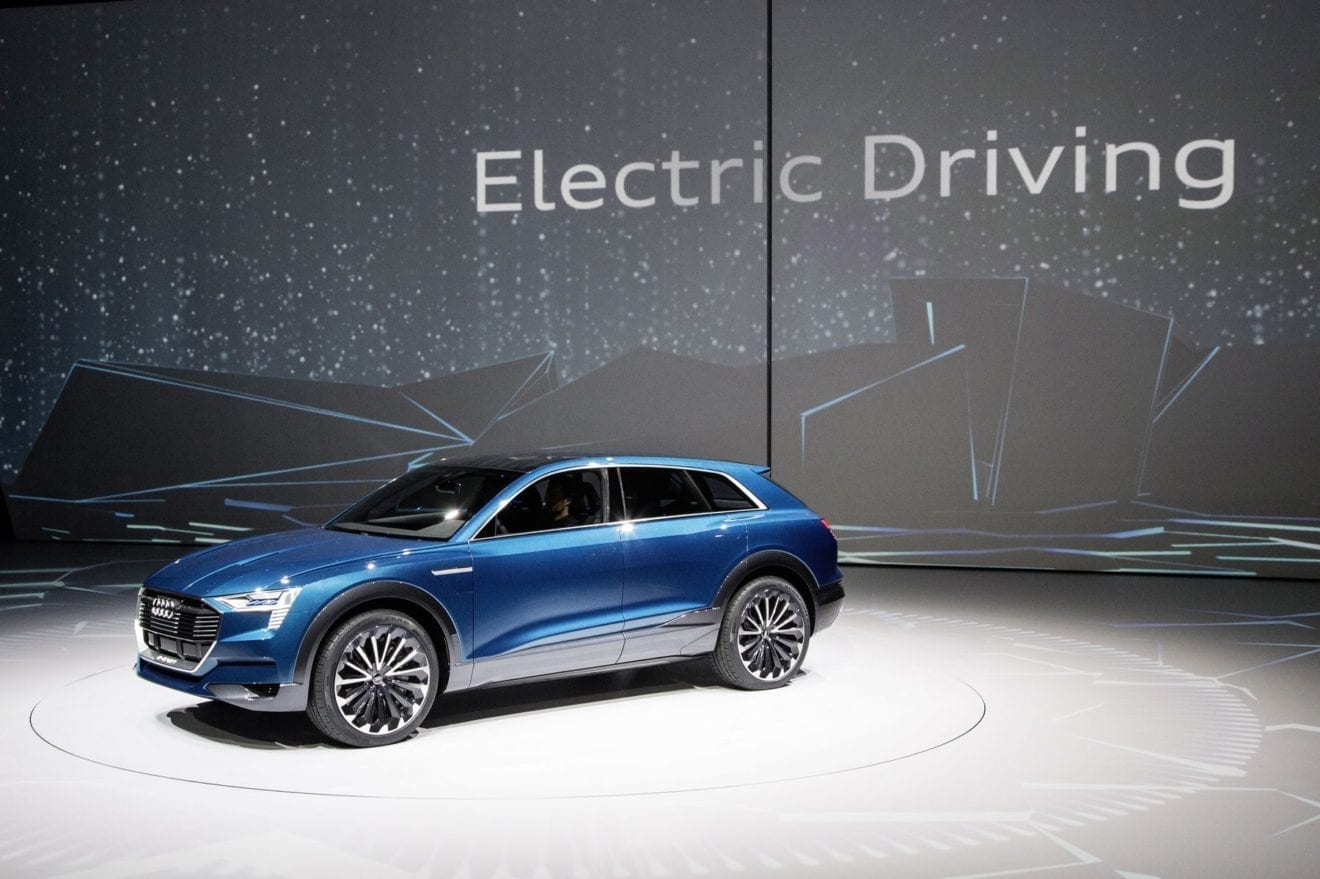
  • Audi’s Electric SUV Faces Four Week Delay Due to Software Issues

    Audi’s Electric SUV Faces Four Week Delay Due to Software Issues

    Audi’s first electric sport utility vehicle (SUV) will hit showrooms four weeks later than planned because of a software development issue, a spokesman for the German luxury car brand said on Sunday. The spokesman said Audi’s e-tron midsize SUV faced delay because the carmaker needs new regulatory clearance for a piece of software that was modified during the development process.

    Audi staged a global launch of the e-tron in San Francisco last month as part of its effort to expand the market for premium electric vehicles and grab a share from California-based Tesla, which has had the niche largely to itself.

    The e-tron delays were first reported by German newspaper Bild am Sonntag, citing sources close to the company. The paper said delivery could be delayed by several months. The paper also said Audi was locked in price negotiations with LG Chem, the South-Korean supplier of batteries for its electric vehicles, which wants to increase prices by about 10 percent because of high demand.

    LG Chem supplies electric vehicle batteries for Audi, its parent Volkswagen and Daimler. An LG Chem official declined to comment on the report, citing the confidentiality of its relationship with a client. The Audi spokesman also declined to comment on price negotiations with LG Chem.

  • Kodiaq GT SUV to be Skoda’s flagship in China

    Kodiaq GT SUV to be Skoda’s flagship in China

    Skoda has said its new, coupe-styled Kodiaq GT SUV will become its flagship model in China. The midsize SUV, shown in pictures for the first time, will increase Skoda’s SUV range in China to four when it goes on sale later this year. The new model reshapes the design of the Kodiaq seven-seat SUV to give it more of a coupe profile to the rear and make it look more sporty and dynamic, the brand said.

    The new model reshapes the design of the Kodiaq seven-seat SUV to give it more of a coupe profile to the rear of the car. Skoda said the Kodiaq GT will be its flagship model.

    “It will be a key driver of the brand’s image,” Skoda said in a statement.

    China is Skoda’s biggest market, accounting for about a quarter of the brand’s global sales, the Czech automaker says. This year Skoda launched the China-only Kamiq small SUV to sit below the Karoq. The Kamiq sits on the low-cost PQ platform and is priced to rival Chinese offerings outside the country’s biggest cities.

    Skoda has said it wants to double its Chinese sales to 600,000 a year by 2020, largely through its SUV launches. A fifth SUV is to be added in 2019, CEO Bernhard Maier said in March without providing details.

    Skoda’s vehicle sales in China rose 2.5 percent last year to 325,009, according to company data. That puts that country ahead of the automaker’s No. 2 market of Germany at 173,300 and the Czech Republic in third at 95,000.

    Skoda has said the Kodiaq GT would not be sold in Europe. “I would love to do so,” Maier said in March, “but we do not have any production capacity.”

    Technology available in the Kodiaq GT includes the VW Group’s Virtual Cockpit with its customizable digital dials, as well as wifi connection, adaptive cruise control, and blind spot detection.

    The car will be sold with a 2.0-liter turbo gasoline engine with either 186 hp or 220 hp. The higher power model comes with all-wheel drive and a seven-speed dual-clutch transmission as standard.

    The Kodiaq GT will be revealed at the Guangzhou auto show next month.

  • How luxury car brands in China show that bigger is better

    How luxury car brands in China show that bigger is better

    China specialises in big numbers and the car market is no different, from 6.7 million passenger vehicle sales in 2008 to 24.7 million in 2017.

    While many articles about business in China tend to wring their hands over the ‘whys’, this topic does not need much social pondering of why Chinese people like cars – people in all countries opt for car ownership when financially able, and you just may have read that the Chinese economy has grown somewhat in the last decade.

    The more intriguing poser is how do car brands ignite passion for their marque in China’s competitive environment?

    The experience of the drive – and the brand

    In something of a pole position in China, Porsche has captured the spirit of Chinese drivers. Popularity rocketed with the launch of the Cayenne and the Panamera. In terms of cars, bigger is always better in China, and flashiness reigns supreme.

    The recent World Premiere of the new Porsche Macan was held in none other than Shanghai, as the CEO, Jens Puttfarken, explained that Porsche was committed to creating not only a vehicle but a lifestyle brand for Chinese customers. The customer in China is, in general, an entire generation younger than in other countries – and China is Porsche’s biggest single market for the third year in a row.

    Porsche have one of the most interactive WeChat mini-programs of car brands. With a campaign of ‘follow your voice’, their mini-program allows the user to choose a car colour, seat their friends on selected seats and then record a voice message which is sent to their chosen friends in WeChat.

    Porsche doesn’t only aim to create a vehicle brand, but a lifestyle brand. The Porsche Experience Center Shanghai is the sixth worldwide and first in Asia, newly completed besides the International F1 Circuit in Jiading district. Potential customers can book test drives via WeChat, and on site there are interactive elements such as racing simulators, kids zones, a café and restaurant, as well as versatile test tracks and even an off-road course for pushing the Cayenne to its limits. As well as ‘experiential’, it’s all ultra-ripe WeChat-posting fruit for each visitor.

    The keyword: ‘Me’

    Mercedes Me is a ‘lifestyle venue’ in a swanky location within Shanghai’s new Bund Financial Center. After the first Mercedes Me was built in Beijing in 2016, the concept clearly works, hence this 2018 addition.

    Quoting directly from the Mercedes press release, the venue delivers “an integrated and personalised customer journey, encompassing three distinct products and services: Food & Beverage, Test-drive and Retail. The overall experience is designed to engage both new and existing customers, and connect them to the lifestyle attributes of the Mercedes-Benz brand.”

    There’s a restaurant, bar and WeChat-photo-friendly designs such as a large, flashy (and flashing) logo outside. Using special on-site tech, visitors can also digitally dream up their personalised car, down to the finest interior details.

    For the car itself, Mercedes have also adapted well to Chinese tastes; WeChat is integrated directly within the infotainment system – no matter how alarming ‘texting + driving’ may sound – and the voice system has regional dialects such as Cantonese and Sichuanese alongside the usual Mandarin option.

    While many car brands have purely functional WeChat mini-programs that let you book a test drive and see the car models (note that in China, people don’t go to their browser and find a website or enter a URL, WeChat is your website in China), Mercedes’ WeChat stands out with richness of information and detailed payment plan details.

    Tesla were first in electric, but will they remain so?

    The Tesla brand immediately switched on interest in China. Chinese consumers like tech, gadgets and a brand that takes them into the desired category of ‘internationalised pioneer’ – someone who is on the edge of the new and not afraid to be first to try. Owning a Tesla is just that, and Tesla focused its energies on the digital gizmos now commonplace in the country:

    Tesla in China took full advantage of WeChat mini-program capability – they show the driver a real-time map of the electric charging stations and with details such as their own acceleration, speeds and energy consumption. If you don’t own a Tesla, you can still use the mini-program to book a test drive. They also promote regular exhibitions and events on the mini-program, and showcase content such as short videos on sustainable living and CO2 reduction.

    Tesla stole a charge on EVs in China, yet they will soon have competition from all brands. The advantage of having an electric car in somewhere like Shanghai is that you pay a drastically reduced price for the registration plate – which currently commands almost RMB 100,000 for a standard petrol car. There was recent announcement that China will remove foreign ownership caps for companies that make fully electric and plug-in hybrid vehicles in 2018, for commercial vehicles in 2020, and the wider car market by 2022. This will likely see a strong influx of not only existing brands offering fully electric cars, but a slew of entirely new brands.

    When a gizmo becomes a gimmick

    Last year, Alibaba rolled out a ‘car vending machine’ which grabbed a few easy headlines, yet was in fact a pure marketing gimmick and not a functional sales platform. Firstly, car buyers in China need to go through plenty of red tape to simply buy and register a car: several trips to various administrative buildings in inconvenient locations. But more importantly, the car-buying aspect is a key momento of affluent life for the Chinese consumer. The sales service, the showroom experience and the like are still all-important, particularly for luxury vehicle purchase. The takeaway? Don’t always believe the headline-grabbing tech news.

    Who wants to share?

    Luxury car ‘sharing’ puts brands on thin ice. While ride-sharing and easy car-hire apps have been very popular, the affluent demographics are not so keen. BMWs were tried in a ‘shared’ concept, only to find that owners who had also chosen a blue BMW were miffed that their own car now looked ‘cheapened’, as it was similar to a general car-for-hire. No other luxury car brand has since attempted a sharing scheme.

    Bigger really is better

    As mentioned, bigger is better. The CEO of Aston Martin, Andy Palmer, was as open as could be with his recent quote: “The DBX SUV exists because of the booming China market,” Palmer told Wards Auto. “Would Aston Martin have done an SUV if not for the China market? Probably not.”

    Aston Martin also revealed a strong trend towards female buyers, as the DB11 Volante was launched in Melbourne a few months ago, with Vice President Simon Sproule telling media:

    “What we can say with fact, is we are now seeing more women as the outright owners and main drivers of the car. In certain markets we’re seeing quite an extraordinary swing towards female buyers. On the V12 coupe in China last year, full year, 50 percent of sales were women. We’ve never seen that for our brand in any market.”

    This also tallies well with Porsche stating that China leads the way for gender balance, with 47% female buyers, after which Russia and the U.S. are second and third with 33% and 22% respectively.

    The takeaways for any brand

    The car market in China reveals modern-day truisms on the expectations of affluent Chinese consumers – you have to be personal, digital and allow your customer to ‘brand’ themselves in the same high-end way that you are strategising for your brand itself.

    Online and offline are both must-haves for any strong luxury brand. Interactive content and booking, locating, testing functionality on a WeChat mini-program as well as branded venues are more than abstract ‘engagement’; they implant the lifestyle values of exclusivity and fun that make Chinese consumers tick.

    Women are the drivers and decision-makers for many luxury sectors, including for the luxury auto industry. As shown above, female buyers make up half of the ownership – and anyone who has lived in China for a while would be able to safely surmise that a good portion of male owners/buyers choices were actually led by their partners.

    The oncoming boom of the EV car market is a society-shaping happening. While the instigation of the global move towards electric cars is related to many factors, the opportunity in marketing communications will have a strong ripple effect to many other luxury categories – related to eco-friendliness, hi-tech connectivity and ‘clean’ living.

    The changes in import tariffs mean that looking only at 2018 H1 sales statistics would be very mis-leading. The word from car companies is that they expect a strong 2H to make up for any deficit, and more importantly, all are still investing into China with full belief of the long-term benefits. Simply put, those with a ‘go big or go home’ China strategy, such as Porsche and other brands mentioned, are the ones that end up winning.
  • Hyundai will launch pickup, more SUVs to reverse U.S. sales slide

    Hyundai will launch pickup, more SUVs to reverse U.S. sales slide

    Hyundai Motor plans to launch a pickup truck in the United States as part of a broader plan to catch up with a shift away from sedans in one of the Korean automaker’s most important markets, a senior company executive told Reuters.

    Michael J. O’Brien, vice president of corporate and product planning at Hyundai’s U.S. unit, said Hyundai’s top management has given the green light for development of a pickup truck similar to a show vehicle called the Santa Cruz that U.S. Hyundai executives unveiled in 2015.

    Hyundai currently does not offer a pickup truck in the United States.

    O’Brien also said Hyundai plans to launch a small SUV called the Kona in the United States later this year.

    People familiar with the automaker’s plans said the pick-up truck is expected to be launched in 2020.

    They said separately that Hyundai plans to introduce three other new or refreshed SUVs by 2020.

    Under the plan, Hyundai Motor plans to roll out a new version of its Santa Fe Sport mid-sized SUV next year, followed by an all-new 7-passenger crossover which will replace a current three-row Santa Fe in early 2019 in the United Sates. A redesigned Tucson SUV is expected in 2020.

    So-called crossovers – sport utilities built on chassis similar to sedans – now account for about 30 percent of total light vehicle sales in the United States. Consumers in China, the world’s largest auto market, are also substituting car-based SUVs for sedans.

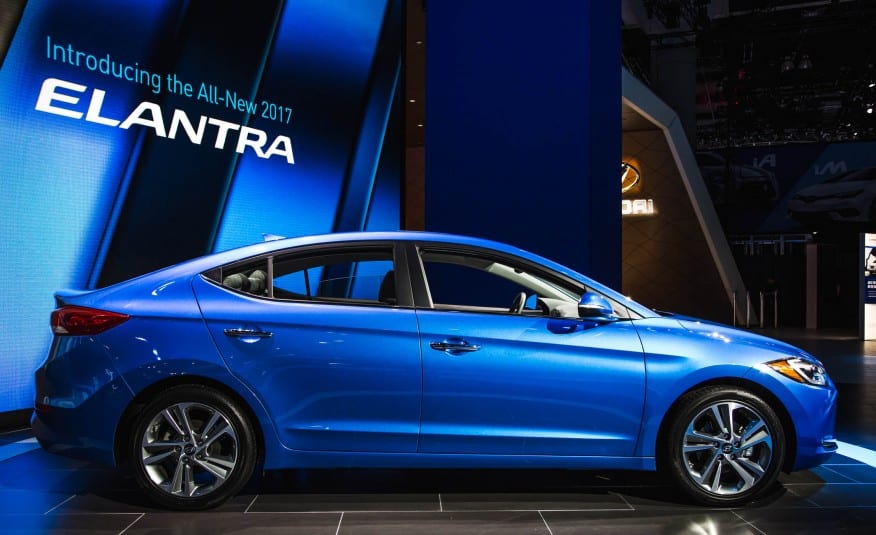
    Hyundai’s U.S. dealers have pushed the company to invest more aggressively in SUVs and trucks as demand for sedans such as the midsize Sonata and the smaller Elantra has waned.

    “We are optimistic about the future,” said Scott Fink, chief executive of Hyundai of New Port Richey, Florida, which is Hyundai’s biggest U.S. dealer. “But we are disappointed that we don’t have the products today.”

    Hyundai’s U.S. sales are down nearly 11 percent this year through July 31, worse than the overall 2.9 percent decline in U.S. car and light truck sales. Sales of the Sonata, once a pillar of Hyundai’s U.S. franchise, have fallen 30 percent through the first seven months of 2017. In contrast, sales of Hyundai’s current SUV lineup are up 11 percent for the first seven months of this year.

    “Our glasses are fairly clean,” O’Brien said. “We understand where we have a shortfall.”

  • Hyundai Motor bets on new small SUV as China sales skid

    Hyundai Motor bets on new small SUV as China sales skid

    Hyundai Motor unveiled its first subcompact sport utility vehicle Kona for advanced markets, including the United States, Europe and South Korea, as it tries to offset sliding sales in China and catch up with rivals in the segment.

    The South Korean automaker said it would also launch an electric version of the Kona small sport utility vehicle (SUV) next year and a smaller SUV and a large SUV by 2020.

    This comes at a time when Hyundai looks set to miss its sales target for a third straight year due to the unpopularity of its mainstay small sedans and political tensions between Beijing and Seoul that have battered sales in China, the company’s biggest market.

    Hyundai, which together with its affiliate Kia is the world’s No.5 automaker, previously sold subcompact SUVs only in emerging markets, missing out on strong growth in the segment in South Korea, the United States and Europe.

    The subcompact SUV is the top-performing segment globally, growing at an annual average of 46 percent from 2010 to 2016, Hyundai said, citing IHS Automotive data.

    “Even as the global SUV market is nearing saturation, we believe that extra small or small SUVs have more room for growth than large SUVs,” Hyundai Motor Co Vice Chairman Chung Eui-sun said during a launch event near Seoul.

    The automaker launched the Kona in South Korea on Tuesday, and said it would roll out the small SUV in Europe in August and the United States in December. It aims to sell over 200,000 of the vehicles globally next year.

    The Kona will compete with Nissan’s Juke and Honda’s CR-V in the United States.

    Hyundai and Kia in January said they aimed to increase global sales by 5 percent this year, but their combined sales fell 7 percent over January to May, hit by slowing Chinese and U.S. sales.

    “Our sales plan has suffered a setback, but we will use this as an opportunity to overhaul our products,” said Chung, the only son of Hyundai Motor Group Chairman Chung Mong-koo.

    He also said Hyundai would beef up cooperation with technology firms like Cisco, Baidu and Uber instead of buying other automakers.

    Kia will join Hyundai in the launch of the former’s subcompact SUV, Stonic, starting next month.

  • Toyota’s new SUV C-HR becomes best-selling model in Japan

    Toyota’s new SUV C-HR becomes best-selling model in Japan

    Toyota Motor’s newly launched C-HR crossover sports utility vehicle grabbed the top spot in monthly domestic sales in April, becoming the first SUV to top the list in Japan since at least 2007, data from industry bodies showed on Tuesday.

    The country’s largest carmaker by volume sold 13,168 units of the C-HR subcompact crossover in the reporting month. The Japan Automobile Dealers Association and the Japan Light Motor Vehicle and Motorcycle Association said the model rolled out last December is the first SUV to become the best-selling model since they began compiling data in 1968 and 2007 respectively.

    The C-HR, which uses the same platform as its popular gasoline-electric hybrid car Prius, attracts fuel-cost sensitive customers with its fuel-efficiency. Its hybrid model runs 30.2 kilometres per liter of gasoline, among the best in the segment. Toyota plans to market the model in over 100 countries on the back of growing demand for compact SUVs worldwide.

    Honda Motor’s minicar N-Box came in second with 12,265, up 4.9% from the same month last year, ceding the crown to the C-HR after maintaining the No. l position for four consecutive months through March. The Move minicar of Daihatsu Motor  — Toyota’s subsidiary — was third, as sales of the minicar model more than doubled to 12,004 units in the month.

    Five minivehicle models with engines no larger than 660 cc made it into the top 10 ranking, according to the two associations, as they continue to entice customers with a relatively low tax levied on them and their fuel-economy.

    Daihatsu’s Tanto minivehicle ranked fourth with 11,926 units, up 8.5%, followed by Toyota’s Prius hybrid, the best seller in 2016, with 9,920 units, down 52.2%.

  • Volkswagen to build new SUV

    Volkswagen to build new SUV

    Volkswagen AG plans to build another new sport utility vehicle at its Chattanooga, Tennessee, plant as demand surges for larger vehicles, the German company’s top U.S. executive said on Wednesday.

    VW Group of America Chief Executive Officer Hinrich Woebcken told reporters at the New York auto show that the automaker planned to build a five-seat SUV in Tennessee, but he declined to say when production would begin. The news follows VW’s 2014 announcement that the company would spent $900 million to build a new SUV in Tennessee.

    VW, the largest automaker worldwide by sales, will start selling its new seven-seat VW Atlas SUV next month.

    Woebcken said VW was shifting focus in the United States from a mainly car brand to a “family friendly” automaker offering larger, U.S.-built SUVs.

    At the show, major automakers said they expected the popularity of SUVs to increase in the United States. SUVs’ share of U.S. vehicle sales rose to nearly 40 percent in 2016 from 32.6 percent in 2014.

    Woebcken would not say whether VW would add additional workers in Tennessee to build the new SUV.

    VW will sell four separate SUVs in the United States later this year, a figure that does not include the new one.

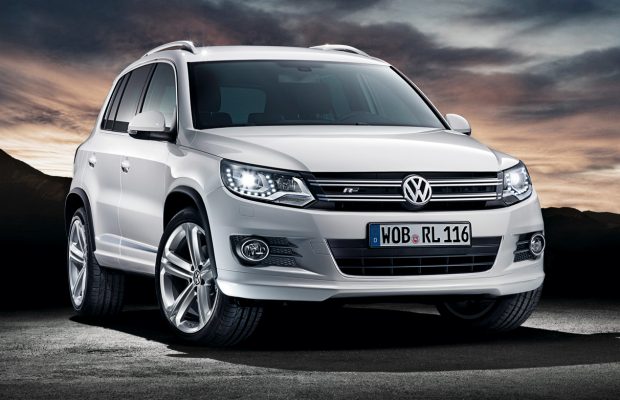
    The company said on Tuesday that it would continue selling the current Tiguan as the “Tiguan Limited” for several years even as it plans to offer a completely new, larger version later this year. The company also announced it was offering an industry-leading six-year, 72,000 mile warranty on its new SUVs.

    As part of its diesel emissions settlement, Volkswagen has agreed to add at least three additional electric vehicles, including an SUV, in California by 2020 and must sell an average of 5,000 electric vehicles annually there through 2025.

    Woebcken said he hopes that decision will help boost the company’s image in the United States. VW has agreed to spend up to $25 billion to buy back vehicles and resolve claims from U.S. regulators, dealers, owners and states.

  • Volkswagen’s Seat returns to profit; to launch third SUV in 2018

    Volkswagen’s Seat returns to profit; to launch third SUV in 2018

    Volkswagen’s Spanish division Seat reported on Thursday its first annual operating profit since 2007 and announced plans to launch a third sport-utility vehicle (SUV) in as many years in 2018 to try to build on its recovery.

    Seat said it made an operating profit of 143 million euros ($154 million) last year compared with a 7 million euro loss in 2015, helped by selling more models with higher specifications and integrating its R&D operations with parent Volkswagen (VW).

    “Seat is now preparing itself for development and growth,” chief executive Luca de Meo said in an emailed statement.

    The 2018 SUV, which follows the launch of the Ateca crossover in 2016 and its smaller sibling Arona later this year, “will boost brand image and will have a very big effect on our ability to generate margins,” the CEO said.

    “This car will bring new customers to us.”

    Seat’s third SUV model will be built at VW’s main Wolfsburg factory and use the German group’s cost-saving MQB modular platform that underpins VW’s top-selling Tiguan SUV.

    VW, which bought Seat in 1986 to increase its exposure to the then fast-growing Spanish market, has long battled to reverse losses caused by under-utilised capacity at Seat’s factory in Martorell near Barcelona.

  • Ford’s Lincoln plans to produce new luxury SUV in China by late 2019

    Ford’s Lincoln plans to produce new luxury SUV in China by late 2019

    Ford Motor Co’s luxury unit Lincoln on Monday said it plans to produce a new luxury SUV in China by late 2019.

    “The new luxury SUV will be built in partnership with its joint venture partner Changan in Chongqing,” Lincoln China said in a press release.

  • Volvo Cars’ New XC60 SUV Will Automatically Steer You Out Of Trouble

    Volvo Cars’ New XC60 SUV Will Automatically Steer You Out Of Trouble

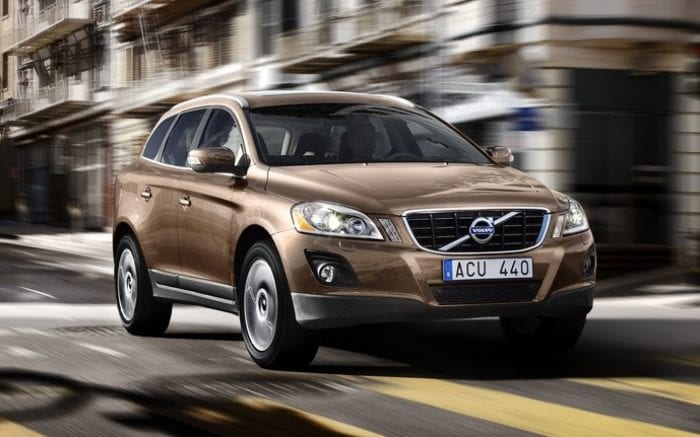
    Volvo Cars, the premium car maker, has announced that the new XC60 SUV – which will be revealed at the Geneva Motor Show – will feature three new advanced driver assistance features aimed at keeping the driver out of trouble.

    The new safety features are designed to provide the driver with automatic steering assistance or support – when required – to help avoid potential collisions. Volvo believes that these new features will make the new XC60 one of the safest cars on the road.

    “We have been working with collision avoidance systems for many years and we can see how effective they are. In Sweden alone we have seen a decline of around 45 per cent* in rear-end frontal crashes thanks to our collision warning with autobrake system. With the XC60 we are determined to take the next step in reducing avoidable collisions with the addition of steering support and assistance systems,” said Malin Ekholm, Senior Director, Volvo Cars’ Safety Centre.

    City Safety has been updated in the XC60 to include steering support, which engages when automatic braking alone would not help avoid a potential collision. In such circumstances, the car will provide steering assistance to avoid the obstacle ahead. City Safety helps to avoid collisions with vehicles, pedestrians and large animals. Steering support is active between 50-100 km/h.

    Volvo Cars has also added a system called Oncoming Lane Mitigation, which helps drivers to avoid collisions with vehicles in an oncoming lane.

    The system works by alerting a driver who has unwittingly wandered out of a driving lane by providing automatic steering assistance, guiding them back into their own lane and out of the path of any oncoming vehicle. This system is active between 60-140 km/h.

    “All three of these new features represent clear steps in our work towards fully autonomous cars,” added Malin Ekholm.

    Volvo Cars’ optional Blind Spot Information System, which alerts drivers to the presence of vehicles in their blind spot, has also received an update to include steer assist functionality that helps to avoid potential collisions with vehicles in a blind spot by steering the car back into its own lane and away from danger.

    “We have all of the benefits of the safety technology we introduced in our larger 90 Series cars in the new XC60. This is fully in-line with our strategic approach to develop automotive safety systems based on real-life, real-road safety. Our vision is that no one will be killed or seriously injured in a new Volvo car by the year 2020,” added Malin Ekholm.

    The XC60 will deliver a host of high-end safety systems, just like its larger 90 Series siblings, including Large Animal Detection, Run-off Road Mitigation and the semi-autonomous driver support and convenience system Pilot Assist as an option.

  • Toyota adds 400 jobs to boost Princeton SUV capacity

    Toyota adds 400 jobs to boost Princeton SUV capacity

    Toyota said on Tuesday it would add 400 jobs at its Princeton, Indiana, vehicle assembly plant as part of a US$600m spend to meet “strong and growing demand” for the Highlander midsize SUV and modernise the entire factory.

    Funding will be used for retooling, new equipment and technology to make the plant more competitive.  The project is scheduled to begin in autumn 2019 and will add capacity for 40,000 extra vehicles annually.

    “This expansion project is part of Toyota’s localisation strategy to build vehicles where they are sold,” the automaker – recently criticised by President Trump for its new NAFTA Corolla plant under construction in Mexico – said in a statement.

    Toyota reiterated CEO Jim Lentz’s recent Detroit show announcement Toyota Motor North America would “invest an additional $10bn in the US over the next five years. This investment will be used to make the existing plants even more competitive”.

    Toyota responded earlier to Trump’s pre-inauguration criticism by emphasising its contribution to the US economy. “With more than $21.9bn direct investment in the US, 10 manufacturing facilities, 1,500 dealerships and 136,000 employees, Toyota looks forward to collaborating with the Trump administration to serve in the best interests of consumers and the automotive industry,” the company said previously.

    Toyota said its Tuesday announcement showed its commitment to continued US investment. The 20 year old Princeton plant produced a record 400,000-plus vehicles last year.

  • Lamborghini to launch its first plug-in hybrid SUV

    Lamborghini to launch its first plug-in hybrid SUV

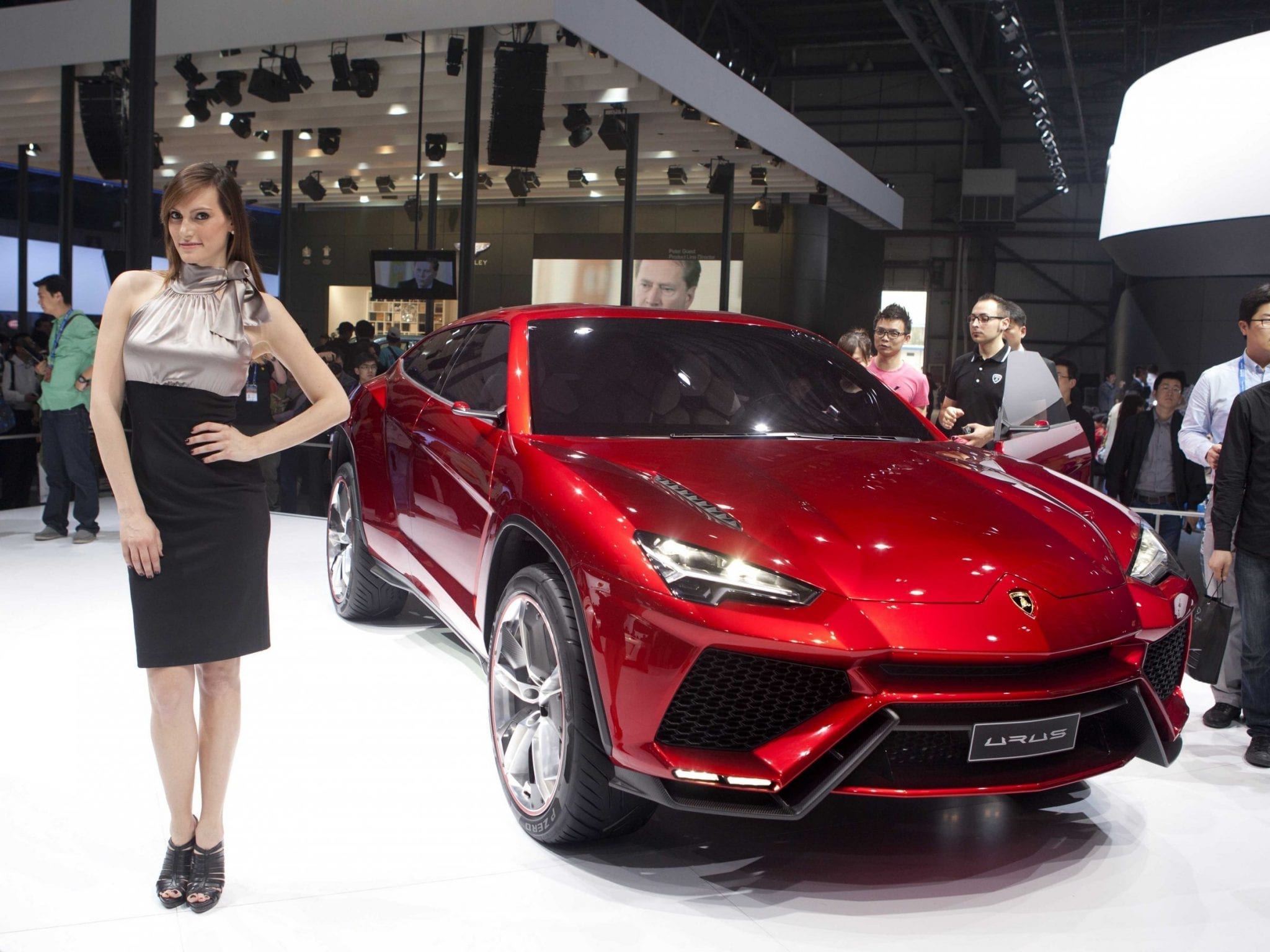
    Italy based luxury sports car manufacturer Lamborghini is all set to launch its Urus SUV range, informed the company in an interview to a popular media publication. The company also confirmed that Urus will also feature the brand’s first plug-in hybrid, and that it will be the brand’s first and only SUV to get a plug-in hybrid system.

    Lamborghini Urus shares its platform with its cousins Audi Q7 and Bentley Bentayga and will also feature 48V-powered active anti-roll suspension. This is also the company’s first SUV since the LM002 which was on sale from 1986 to 1993.

    Lamborghini R&D chief Maurizio Reggiani has assured that there won’t be any compromise when it comes to the power of the car and all other variants of its SUV will get naturally aspirated engines.

    He added “A supersports car is completely different; you need the responsiveness of the engine, to feel the spark of every cylinder. We will keep normally aspirated engines for our other models. They are still the best choice.”

    The company also sees a strong distinction between its front-wheel-drive models and the increasing number of Rear-Wheel-drive variants in its portfolio. Lamborghini will continue to offer both the driveline systems as Reggaini explains that “a modern electronic chassis control system like that of the Huracan LP580-2 is no substitute for the ability of four-wheel drive to transfer power to the road.”

  • Mercedes bets on SUV next year

    Mercedes bets on SUV next year

    In a sluggish automobile market, German automaker Mercedes-Benz aims to push up sales of sports utility vehicles (SUVs) in 2017, which may see strong demand from young and successful people.

    SUVs accounted for 35 percent of Mercedes’ total sales of 2,724 cars in the first 10 months of this year, almost unchanged from the same period last year. Sixty five percent of the company’s sales derived from sedans and other models.

    The contribution of SUV sales surged by 7 percent as of October, up from only 28 percent last year, Kariyanto Hardjosoemarto, deputy director of sales operations and product management at Mercedes-Benz Indonesia (MBI), said on Wednesday.

    “According to market trends, SUV sales will increase higher than sedans next year,” he said on the sidelines of the 2016 Mercedes-Benz Star Expo.

    Many customers preferred buying SUVs due to poor road conditions in the country, triggered by a number of ongoing infrastructure projects, while some also considered the risk of flood, Kariyanto said.

    Despite the continuing domination of multi-purpose vehicles (MPVs) in Indonesia, the SUV market is expanding rapidly as seen by tighter competition among car manufacturers.

    Major automakers like Toyota and Honda rolled out new models to tap into this potential market throughout this year.

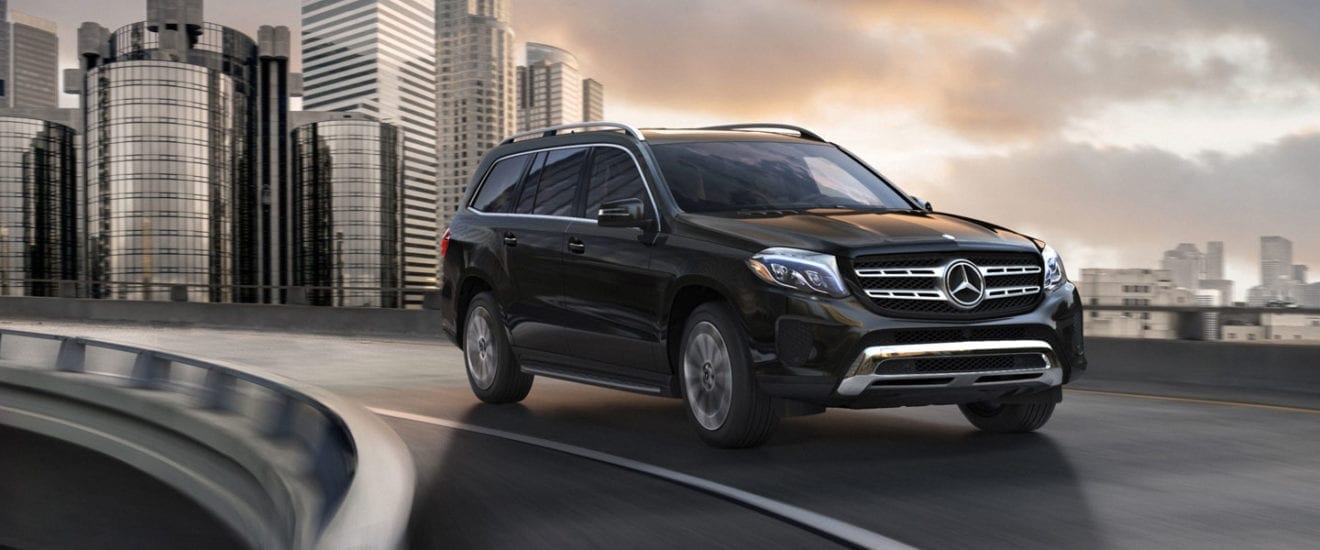
    In the premium SUV market, Mercedes has made a similar play, introducing its GLC model, along with its rival BMW, which launched the X3.

    Although he declined to specify the firm’s sales target for next year, Kariyanto said Mercedes’ top-selling SUV models so far were the GLC, with prices ranging from Rp 899 million (US$66,494) to Rp 1.23 billion, and the GLE, sold for between Rp 1.09 billion and Rp 1.56 billion.

    Behind the growth of Mercedes’ SUV segment are female customers, who apparently choose the model for reasons of safety combined with the comfort that resembles a sedan, according to MBI deputy director of marketing communication Hari Arifianto.

    “Women accounted for 20 percent of our SUV buyers,” he told.

    Amid a persistent economic slowdown that has squeezed people’s purchasing power, the domestic automotive market has gone through a bleak few years of late.

    Car sales, an indicator of consumption in Southeast Asia’s largest economy, only rose by 2.55 percent to 874,847 cars in the January-October period from last year, according to data from the Indonesian Automotive Manufacturers Association (Gaikindo). Sales in October alone went up by just 3.8 percent to 91,846 cars.

    Citing data from Gaikindo, Kariyanto said premium car sales had increased by 0.3 percent year-to-date.

    Despite the flat growth, the firm is optimistic that the luxury car market will recover next year on the back of Indonesia’s demographic bonus, which is marked by a large pool of productive people.

    This outlook underpins the company’s plan to focus on selling cars to young and successful people.

    “CEOs of online marketplaces or owners of app-based startups are all our targets,” Hari said.

    The company hopes that the so-called new generation compact cars, which consist of the A-Class, the CLA and the GLA, will attract younger buyers.

    Comprising sedans and SUVs, the cars are sold at more affordable prices, starting from around Rp 600 million.

    Mercedes launched more than 10 product line-ups this year. On Wednesday, the company unveiled its two latest models, namely the Mercedes-Benz AMG S 63 Coupe and the Mercedes-Benz SL 400, sold for around Rp 6 billion and Rp 2 billion, respectively.

  • Honda plans North American production shifts to make more SUVs

    Honda plans North American production shifts to make more SUVs

    Honda Motor Co is shifting around its North American vehicle production mix and may raise imports from Japan to squeeze out more SUVs as it struggles to keep up with strong U.S. demand for larger models, a factor which has prompted the automaker to trim its annual sales forecast.

    From early next year, Honda will dedicate production at its Alabama plant to its Pilot SUV, Ridgeline pick-up truck and Odyssey minivan, shifting production of its luxury Acura MDX SUV to its plant in Ohio as part of efforts to align its overall production of popular models to better reflect market demand.

    Demand for multi-tasking vehicles from cost-conscious consumers and historically low gasoline prices have ramped up demand for SUVs and other larger models over that of passenger cars.

    So far this year, roughly 59 percent of all new vehicles sold in the world’s No.2 auto market have been light trucks, versus 41 percent passenger vehicles, compared with 55 percent and 45 percent, respectively, a year earlier.

    In comments scheduled for release on Thursday, American Honda Motor Co CEO Toshiaki Mikoshiba told reporters that by also shifting more production of its popular CR-V model to its Indiana plant from Mexico, and producing more of its HR-V models in Mexico, the company planned to lift its production weighting between light trucks and passenger cars more in favor of light trucks, from an even balance currently.

    “While maintaining our current overall capacity (in North America), we’d like to also consider our production options in Japan … to produce more light trucks to respond to strong demand,” Mikoshiba said.

    “So long as we don’t see a sudden reversal in gasoline prices, we believe this would be the right move for the market.”

    Japan’s third-largest automaker by vehicle sales also said that it was considering producing the CR-V and the Civic sedan in Japan to be exported to North America to fill any gaps in local production.

    Honda is planning to market the recently revamped Civic in Japan, which a company spokeswoman said would add to production capacity, while it is also considering marketing the latest CR-V at home.

    Last month, Honda lowered its annual North American vehicle sales forecast to 1.985 million, from its previous expectation for 1.990 million, due in part to the skew in market demand.

  • GM to add SUV production line at China JV in 2017

    GM to add SUV production line at China JV in 2017

    General Motors Co (GM.N) plans to launch a new SUV production line at its joint venture factory in the Chinese central city of Wuhan during the first half of 2017, the official Xinhua News Agency reported on Sunday, citing company sources.

    SAIC General Motors (SGM), a joint venture between China’s SAIC and General Motors, started operations at the Wuhan plant last year. The new production line will be able to produce 360,000 vehicles a year, bringing the combined capacity to 600,000, Xinhua said.

    SGM said it has invested 7.5 billion yuan ($1.1 billion) for the new production line, which has been under construction since January 2015, the news agency reported. It will manufacture a new generation of GM Chevrolet Equinox SUVs.

    The plant generated revenue of nearly 23 billion yuan ($3.4 billion) in the first nine months of this year, Xinhua said.

    GM’s China chief Matt Tsien told a press conference in March that Wuhan plant was operating at maximum utilization, and a planned second phase is being added there that will double capacity.

    He said that sport-utility vehicles, multi-purpose vehicles and luxury cars will continue to be hot segments in China going forward, with SUVs and MPVs accounting for 40 percent of firm’s overall China growth to 2020.