Retail News CRM

Tag: tobacco

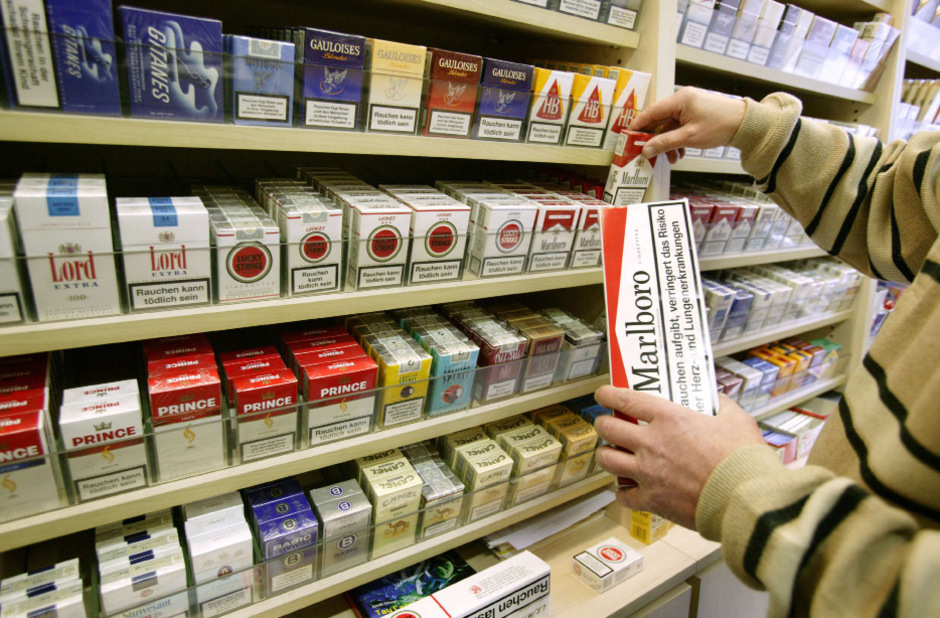
  • Philip Morris: Singapore’s ban on tobacco display won’t curb smoking rate

    Philip Morris: Singapore’s ban on tobacco display won’t curb smoking rate

    Philip Morris Singapore said the forthcoming ban on the display of tobacco products at retail outlets will have no impact on the smoking rate in Singapore.

    The comment by the leading tobacco company in Singapore was in response to the announcement by the Ministry of Health (MOH) on Wednesday (9 December) that retailers selling tobacco products will no longer be allowed to display such items near the cashier counters of their outlets from 2017.

    The ban on point of sale display (POSD) will take place after the Tobacco (Control of Advertisement and Sale) Act has been amended, MOH said. The amendments will be tabled in parliament, whose opening session is in January 2016.

    “The POSD ban aims to protect the health of Singaporeans. By removing tobacco products from the public’s line of sight, we want to prevent our youth from picking up the smoking habit, and to help individuals who are trying to quit smoking,” said MOH in a press release.

    In an email statement to Yahoo Singapore, Philip Morris Singapore said based on its experience in working with countries that have similar regulations, there has been no clear evidence of a decrease in the smoking rate of these countries after such a ban took effect.

    “From the retail perspective, this will bring significant operation burdens to retailers. From our perspective, it will stiffen competition…when all products are hidden, how can you compete?” said a Philip Morris spokesperson, who declined to be named.

    “You can’t scientifically demonstrate with evidence that it (POSD ban) will reduce smoking rate,” he added.

    Iceland, Canada and Thailand are some of the countries in the world that have imposed a ban on POSD.

    PMI is one of the leading tobacco companies in Singapore, owning brands such as Marlboro and L&M, according to Euromonitor International.

    Retailers will be given a 12 months grace period after the ban has been gazetted, to give them “time to effect the changes and smoothen the transition process” so that they can comply with the rules, MOH said.

    “Support from the community and businesses is crucial in our fight against tobacco use. Retailers can help create the right environment for Singaporeans who are trying to stay away from cigarettes,” it added.

    On Wednesday morning, Senior Minister of State for Health and Environment and Water Resources, Amy Khor, attended a meeting with tobacco retailers to inform them of the implementation of the new guidelines.

    The Health Promotion Board (HPB) has also prepared a brochure to assist tobacco retailers in implementing the ban.

    Since 2013, MOH, HPB and Health Sciences Authority (HSA) have had a total of 14 dialogue sessions on the POSD ban.
  • Tobacco producers refute Sicpa taking credit score for fall in unlawful cigarettes

    Tobacco producers refute Sicpa taking credit score for fall in unlawful cigarettes

    The Confederation of Malaysian Tobacco Producers (CMTM) at this time refuted strategies that safety marking provider Sicpa had contributed to the most important drop within the historical past of unlawful cigarettes in Malaysia.

    Sicpa is a Swiss-based safety ink, authentication traceability options supplier, which operates in Malaysia via Sicpa Product Safety Sdn Bhd.

    The corporate just lately took the credit score and claimed that the unlawful cigarettes within the nation had declined 6.6 proportion level from 38.9% in 2013 to 32.three%, as recorded within the Illicit Cigarette Research (ICS) 2014 by analysis agency Nielsen, because of the deployment of its merchandise on cigarette packs.

    Nevertheless, CMTM has immediately issued a press release to counter the claims made by Sicpa on the effectiveness of their safety markings towards the decline of illicit cigarette commerce.

    As an alternative, the confederation highlighted that the current giant decline was attributed to the concerted and enhanced efforts by enforcement businesses, primarily the Royal Malaysian Customs (RMC).

    “The character of unlawful cigarettes in Malaysia is such that they’re wholly smuggled into Malaysia from different nations with none required safety marking. To recommend instantly or not directly that the sharp decline recorded within the ICS 2014 statistics was because of the deployment of Sicpa merchandise, in our view, is a deceptive assertion on the effectiveness of the system in addressing unlawful cigarette commerce in Malaysia.

    “It doesn’t present the entire image of the state of affairs since 2004 when it was launched,” CMTM stated within the assertion.

    CMTM is a cigarette producers’ affiliation that was established by the three main gamers within the nation, specifically British American Tobacco Malaysia Bhd, JT Worldwide Bhd and Philip Morris (Malaysia) Sdn Bhd.

    To recap, it was reported final month that Sicpa has been working via its long-term Malaysian know-how companion Lembah Sari Sdn Bhd to allow RMC to fight the unlawful commerce of tobacco and imported alcohol within the nation.

    The corporate belonged to Datuk Haris Onn Hussein, the brother of Defence Minister Datuk Seri Hishammuddin Hussein.

    Referring to the current media reviews in April, quoting Sicpa, the CMTM stated they seen with critical concern the impression created by Sicpa that its merchandise, specifically using safety ink marking on regionally manufactured cigarettes packaging and tax stamps on imported cigarettes, led to the stated largest drop.

    The CMTM went on to say that the decline highlighted by Sicpa in 2014 was particularly attributed to the robust enforcement efforts of the RMC by way of operations like Ops Pacak and Ops Outlet and had little or no or nothing to do with the safety ink marking or tax stamps on cigarettes.

    Via anti-illegal cigarettes commerce operations, stated CMTM, the RMC has made vital progress in addressing demand for unlawful cigarettes by arresting and remanding unlawful cigarette retailers, together with penalising them with deterrent sentences that led to the growing pressures on unlawful cigarette buying and selling actions.

    “What is obvious is that since 2004 when safety markings have been first launched within the Malaysian cigarette market, the Unlawful Cigarettes Market rose sharply from 14.four% in 2004 to 33.7% in 2014. All via this era, the safety markings requirement was enforced and carried out by the cigarette producers,”CMTM added.