Retail News CRM

Tag: travelling

  • Bamboo Airways on 5-star roadmap

    Bamboo Airways on 5-star roadmap

    Dubbed the most intriguing airline startup in 2020 by Forbes, Bamboo Airways is now among three leading carriers in Vietnam, proving an ideal option for a 5-star oriented flight experience.

    Inspired by its founder’s dream of exploring the sky at the age of 19, Bamboo Airways was established as the torchbearer leading Vietnamese airline service to the next level. Hence, the international 5-star rating has become Bamboo Airways’ ultimate goal since its earliest days.

    Bamboo Airways adheres to its target of quickly updating service quality and getting 5-star certification by 2023. Therefore, the airline has entered into official cooperation with Yates and Partners, the world’s premier aviation and hospitality consultancy with the most experience in 5-star service consultation and guest experience design. Bamboo Airways has taken drastic actions in achieving its initial goal, even during this period of turmoil for both domestic and international aviation.

    Only 10 airlines have achieved the international 5-star rating in the world, accounting for roughly 4 percent. That number demonstrates the level of difficulty in reaching the 5-star rating as encountered by every airline, even in countries with the most developed aviation industry.

    Each carrier will identify and promote one or several decisive strengths. Qatar Airways takes the top spot in the “World’s Best Business Class” category. Singapore Airlines leads in the “World’s Best Cabin Crew” and the “World’s Best First Class.” Meanwhile, Hainan Airlines is rated the “World’s Best Business Class Amenities” airline.

    Bamboo Airways has identified two of its initial goals on the 5-star roadmap, which are “the airline with the best customer service” and “airline with best business lounges.”

    “5-star human” resources

    In the roadmap towards an international 5-star rating, numerous strict flight attendant requirements are mapped out regarding standard TOEIC score, appearance, BMI (Body Mass Index), female attendant number, etc.

    Bamboo Airways has selected and provided standardized training courses for its very first cabin crew, passing numerous criteria like communication skills, English proficiency, customer service, first aid…

    Flight attendants must reach a height above 1.7 meters (for males), and above 1.6 meters (for females) with an arm reach of at least 2.12 meters. The airline also focuses on criteria for appearance, customer interaction, problem-solving skills, taking women’s tenderness as the basic standard for customer service on each flight.

    “Bamboo Airways always prioritizes the sense of hospitality and responsibility when selecting its ‘sky ambassadors’. As Bamboo Airways aims to provide “more than just a flight” experience, its flight attendants need to provoke passengers’ feelings of trust, being secured and cared for through words, actions and professional problem-solving skills,” said Le Dang Khoa, captain of Bamboo Airways’ cabin crew.

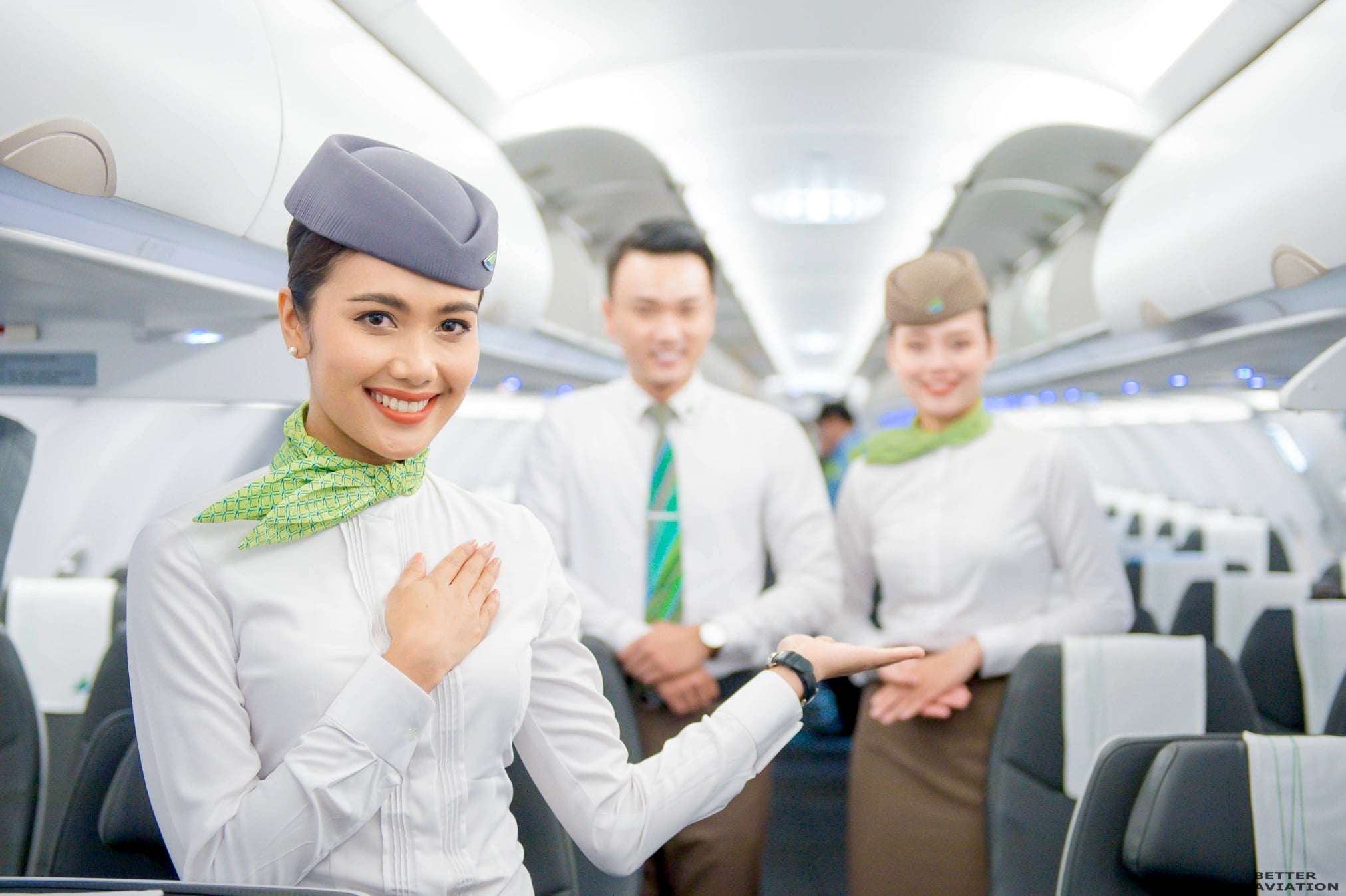
    A hand on the heart with a broad smile has become the symbol of Bamboo Airways at every customer touchpoint, from ticket offices, waiting rooms to boarding gates.

    First Vietnamese private airline to operate business lounges

    In addition, Bamboo Airways has put its business lounge system into operation. In 2020, Bamboo Airways became the first Vietnamese private airline to launch a business lounge at Noi Bai International Airport and Con Dao Airport.

    The business lounge is a crucial customer touchpoint at airports for not only carriers but also business enterprises. Now, more and more leading banks in Vietnam aim to operate business lounges at airports to provide customer services for VIP guests.

    Acknowledging the importance of this customer touchpoint, Bamboo Airways has standardized its 5-star oriented business lounge service at airports. It offers first-class amenities and services, from restaurant-quality dishes, smoking and working areas to stunning runaway views.

    Despite the demanding period for the aviation industry, Bamboo Airways has constantly developed and expanded its lounge system at numerous domestic airports such as in Quy Nhon, Phu Quoc, etc. to provide consistent 5-star oriented services to customers.

    Even in the process of fleet expansion, the customer experience factor remains Bamboo Airways’ priority when choosing aircraft, apart from other factors that control the exploitation of resources.

    For instance, Bamboo Airways is a pioneer in utilizing Embraer jets in Vietnam. Built by the world’s third-largest manufacturer of civil aircraft, Embraer 190 and 195 not only attribute to Bamboo Airways’ monopoly on routes connecting Con Dao but also turns the airline into the first and only carrier to provide business class services to Con Dao.

    Bamboo Airways has made substantial investments in fleet expansion and pilot training courses to achieve excellent service quality. In 2019, Bamboo Airways welcomed the first Boeing 787-9 Dreamliner to its fleet, becoming the first Vietnamese private carrier to operate wide-body aircraft.

    Besides modern narrow-body aircraft like the A320NEO and A321NEO, Bamboo Airways expanded its fleet to 30 aircraft with the constantly upcoming Boeing 787-9 Dreamliners, aiming to increase capacity and service quality.

    Highly evaluated core value and service mindset

    According to aviation experts, passenger expectations regarding an airline service derives from the carrier’s prestige.

    In cooperation with Bamboo Airways, the chairman of Yates and Partners highly evaluated the airline’s core value and service mindset, which are important factors for any carrier in the path towards the international 5-star rating.

    Consultants of Yates and Partners will accompany Bamboo Airways on a long-term roadmap, supporting the airline in setting international 5-star service standards at all customer touchpoints, including standards for business and economy class services, F&B strategies, catering services on each flight, personnel training for staff and cabin crew on domestic and international flights.

  • Trip.com to raise US$1.09bn in Hong Kong listing

    Trip.com to raise US$1.09bn in Hong Kong listing

    Syndicated lending in Asia Pacific plunged to the slowest quarter in eight years as the coronavirus pandemic took its toll with several countries imposing lockdowns and grinding a range of business activities to a halt.

    Loan volumes in Asia Pacific (ex-Japan) dropped 39% to US$68.92bn in the first quarter from US$113.79bn a year ago, while deal flow shrunk to 221 from 377 loans completed in the same period, according to Refinitiv LPC data.

    The volumes for the first three months of 2020 represent the lowest quarterly tally since the first quarter of 2012 when lending in Asia Pacific slumped to US$62.21bn from 231 deals in the aftermath of the 2011 eurozone crisis.

    “Overall, the market has been off to a really slow start and outlook for Q2 is uncertain and changing by the day,” said Bryan Liew, regional head, loan syndications, ASEAN at Standard Chartered Bank in Singapore. “I think we will see more caution and maybe asset repricing.”

    The market volatility from Covid-19 has forced borrowers to shelve fundraising, acquisition, and capital expenditure plans, and seek covenant amendments or waivers from lenders. Every market across the region posted declines with Singapore being the worst hit, nose-diving over 84% year-on-year to US$1.09bn in the first quarter of 2020.

    Two financial sponsors terminated their proposed acquisition of New Zealand-listed dental service provider Abano Healthcare Group, dealing a blow to a NZ$190m (US$107m) five-year loan for the buyout that had been in syndication since November.

    Earlier this month Australian retail property group Vicinity Centres suspended a A$300m (US$176m) seven-year loan until further notice. Lenders to Singapore-listed Eagle Hospitality Trust issued a notice of default and mandatory prepayment on a US$341m loan signed last May. MGM China Holdings asked lenders in February to waive the leverage covenants on a HK$9.75bn (US$126m) loan for the next 12 months after Macau’s government closed all casinos for 15 days that month.

    Although G3 currency bond issuance from Asia Pacific (ex-Japan) has ground to a halt since March 11, the volumes for the first quarter posted only a 5.81% year-on-year decline to US$96.32bn. Bankers expect some bond issuers to turn to loans, which historically have been more resilient during times of crisis.

    “The coronavirus-induced market volatility will create a heightened focus for all corporates on what their funding strategy is going to be for the next 12 months,” said Gavin Chappell, head of syndications Australia at ANZ in Sydney. “I think we will see some transactions that couldn’t have been done in other markets come into the bank market.”

    In a report released on Monday, rating agency S&P warned of a risk of recession across Asia Pacific, likening the current situation to that during the 1997-98 Asian financial crisis. It noted that corporate and institutional borrowers in the region, unlike their US peers, continue to borrow a huge amount from banks rather than from other sources.

    Credits from the hardest-hit industries of aviation, tourism and hospitality, among others, are grappling with challenges, while cash-strapped companies with impending debt maturities in other sectors are also facing the heat.

    “We often see a polarisation effect during times of market disruption – strong credits in stable sectors continue to receive support from their relationship banks, while weaker credits or those in volatile sectors may struggle to raise financing or see their terms become less competitive,” said Andrew Ashman, head of loan syndicate Asia Pacific at Barclays in Singapore.

    The outcome pf syndication for Chinese travel agency Trip.com Group’s US$1.2bn loan will provide a gauge of sentiment. Singapore Airlines, Australia’s Qantas Airways, Air New Zealand and Hong Kong’s Cathay Pacific Airways took steps to lock liquidity with support from their governments and other lenders.

    StanChart said it will commit US$1bn in financing for manufacturers and distributors in the pharmaceutical industry and healthcare providers, as well as non-medical companies that have volunteered to add manufacturing capabilities for goods such as ventilators, face masks, protective equipment, sanitisers and other consumables.

    NOT ALL GLOOM AND DOOM

    Leaders of the Group of 20 major economies pledged on March 26 to inject over US$5trn into the global economy to keep Covid-19 from tipping the world into a recession. Whether this and other stimulus measures are enough to help borrowers survive through the crisis remains to be seen.

    “As perception of credit risk goes up, so too should credit spreads,” said Ashish Sharma, head of loan syndications Asia Pacific at HSBC in Hong Kong. “But as interest rates have come down, and given quantitative easing by a number of central banks, some of the stronger borrowers may see their overall interest cost come down with the significant decline in benchmark rates, even if their credit spreads go up.”

    It is not all gloom and doom, however, with event-driven financings providing the silver lining. Thai billionaire Dhanin Chearavanont’s Charoen Pokphand Group is raising a bridge loan of about US$7.5bn for its proposed acquisition of Tesco’s Asian business, the largest from the South-East Asian country. Freeport Indonesia is preparing launch of a US$2.8bn five-year loan for copper smelter in East Java into general syndication as early as April.

    Vodafone Hutchison Australia and TPG Telecom are forging ahead with a larger A$5.25bn loan for their proposed merger, returning to the loan market after cancelling a A$4.75bn facility that backed the exercise last year.

    “When the situation hopefully settles, the level of activity should come back up,” said HSBC’s Sharma. “Even though things may not be back to exactly as they were in January, there should be opportunities in the loan market, particularly in M&A financing and other financings to help rebuilding in various economies.”

    StanChart’s Liew is also optimistic of the region’s prospects and expects a pick-up of activities from the third quarter.

    “Fundamentally, the outlook in Asia remains intact with three of the largest economies – China, India and ASEAN – all in growth mode and several at the start of industrialisation,” he said.

  • Vietjet eyes aircraft purchases as it relies on vaccine rollouts to revive air travel

    Vietjet eyes aircraft purchases as it relies on vaccine rollouts to revive air travel

    Budget carrier Vietjet Air plans to expand its investment in new aircraft and technical facilities this year after reporting a small profit in 2020 despite the Covid-19 pandemic.

    “In 2021, we expect to continue to receive new modern planes and will invest in maintenance and training facilities, and the investment will be higher than in 2020,” Vietjet CEO Nguyen Thi Phuong Thao said in an interview recorded on Jan. 9 and broadcast on Thursday at the Reuters Next conference.

    Vietjet said separately on Wednesday it raised $28 million via a bond issuance last month to fund its development plans in 2021. It did not provide further details about the bond sale.

    Vietnam has been successful in containing the coronavirus with a series of quarantine and tracking measures. With just over 1,500 infections and 35 deaths in total, it has resumed economic activities earlier than much of Asia.

    While all international commercial flights have been suspended since late March, domestic air travel has been subjected to few restrictions.

    Vietjet’s cargo transport in 2020 rose 75 percent from 2019, she said, adding that its overall domestic operations recorded positive growth in 2020, without giving comparative figures.

    With the early Covid-19 vaccine roll-out around the world, Thao expects the global aviation industry to recover rapidly.

    Vietjet’s Thai unit increased its aircraft fleet to 15 last year, while its market share there also increased, she added.

    “Air travel demand is extremely high for business, investment, education and healthcare purposes, and we have been actively conducting flights to repatriate Vietnamese people from overseas,” Thao said.

    She said the company is considering options to raise funds for its investment plans for this year, though she did not name an amount.

    “Our debt-to-equity ratio is 1.0, compared with over 3.0 for the aviation industry, so we have room to mobilize funds for our development,” Thao said.

    The airline continued to take delivery of Airbus SE narrow- body jets last year despite some supply chain interruptions at the manufacturer but Boeing Co did not meet its delivery schedule, she said.

    Vietjet has 200 737 MAX jets on order, according to Boeing, but the plane has not yet returned to service in Asia following a near two-year global grounding.

  • AirAsia Philippines reports 30% jump in sales

    AirAsia Philippines reports 30% jump in sales

    AirAsia Philippines said ticket sales were increasing as it gradually ramped up operations and offered flexible rebooking options amid the new coronavirus pandemic.

    The budget carrier, part of Malaysia’s AirAsia Group, said June ticket sales rose by 30 percent versus May, when major cites around the Philippines were still under lockdown rules.

    “AirAsia’s road to recovery has started and this has kept us in good spirits knowing that we are in the midst of the aviation industry’s upturn,” AirAsia Philippines CEO Ricky Isla said.

    “We are committed to gradually restoring our network. This month, we are glad to resume international flights, starting with Kuala Lumpur, where AirAsia’s headquarters is located,” he added.

    The company said it contributed to AirAsia Group’s recent record-breaking 41,000 single-day seats sold last June 24.

    For local flights, popular routes were Manila to Puerto Princesa and Davao. Flights to and from Davao similarly showed consistently high load factors throughout the month.

  • AirAsia won’t be missed, says ex-aviation chief

    AirAsia won’t be missed, says ex-aviation chief

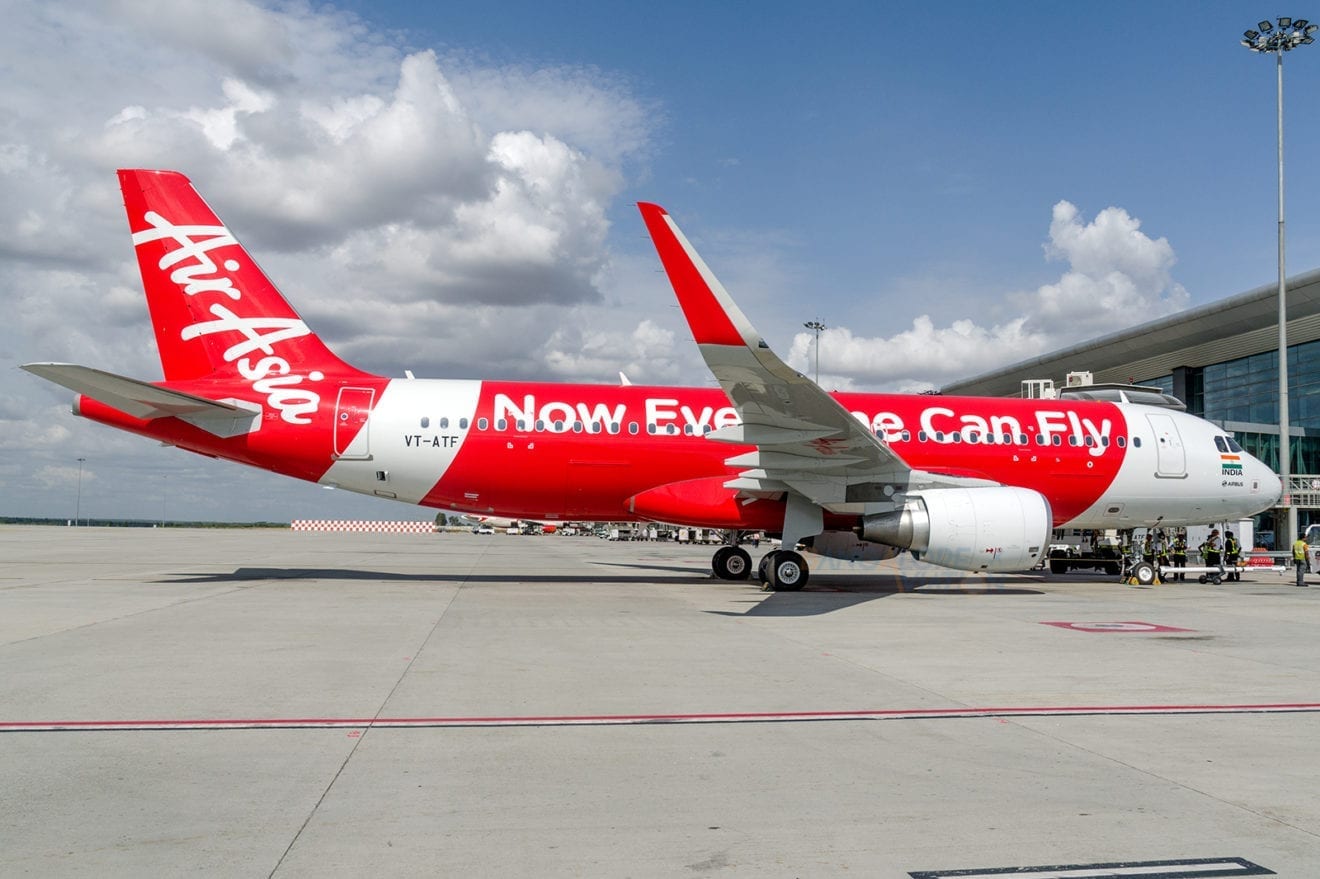
    Low-cost air travel will remain largely unaffected if AirAsia were to cease operations because of lost revenue caused by the Covid-19 pandemic, says an aviation expert.

    Malaysia’s former head of civil aviation, Azharuddin Abdul Rahman, said the impact on air travel and tourism would only be felt initially. Low-cost air travel would soar again after other airlines take up AirAsia’s flight slots. Aviation specialist and researcher Roger Teoh agrees, saying new airlines would be created to take the place of insolvent airlines in a survival of the fittest. Azaruddin said AirAsia’s flight slots would be a precious aviation commodity. The carrier had hundreds of slots every day.

    He could not imagine AirAsia closing shop after the airline had “changed the landscape of air travel, not only in this region but in Asia Pacific as well”. Azharuddin said there was a place for both low-cost carriers like AirAsia and legacy full-service carriers such as Malaysia Airlines.

    The two airlines have been at the center of recent speculation about a merger, with Malaysia Airlines suffering the impact of its long-standing financial problems.

    AirAsia recently announced that 96% of its 255-strong fleet had been grounded because of the Covid-19 pandemic. Its staff has been required to take pay cuts of between 15% and 75%, and aircraft manufacturer Airbus recently announced it would sell six aircraft on order by AirAsia.

    Azharuddin said the two airlines should form a partnership but remain as separate entities in order to stay competitive.

    The partnership could capitalize on the large 600 million population of Southeast Asia, with the Asia Pacific area as another catchment area, he said.

    Azharuddin said a MAS-AirAsia partnership could compete with Singapore Airlines (SIA).

    SIA recently merged with its low-cost spinoff airline SilkAir in February, before the height of the pandemic.

    ‘Root of AirAsia’s problems’

    Teoh, a researcher with Imperial College London specializing in aviation, said a merger between AirAsia and MAS would raise airfares over the long term from lack of competition.

    He said while it was not certain if AirAsia would cease operations, any potential exit of low-cost carriers would only affect the tourism industry temporarily.

    New airlines would be created to take the place of insolvent airlines, in a “survival of the fittest” with potential consolidation among existing airlines.

    Teoh said AirAsia management decisions were partly to blame for the airline’s problems. A sale and leaseback policy (in which aircraft was sold and leased back from the buyer) had resulted in higher operating expenses.

    He claimed that since this model was adopted in 2019, “AirAsia has not made an annualized profit”.

    RM5 billion raised from the sale of aircraft was then redistributed to shareholders as special dividends from December 2018 to August 2019, a move which cost AirAsia’s long-term financial health and resilience.

    Hedging on fuel prices at the end of 2019 had caused the airline to lock in its fuel costs, Teoh added.

    “They are not able to benefit from the cheap oil prices that we see today,” he said.

    “This is expected to result in a very large derivative loss in their coming financial statement.”

  • Cebu Pacific, PAL to resume Taiwan flights after travel ban lifting

    Cebu Pacific, PAL to resume Taiwan flights after travel ban lifting

    Two local airlines will again mount flights to and from Taiwan after the government lifted the travel ban on the territory.

    Cebu Pacific flights will resume February 17.

    In an advisory, the airline will have one flight from Manila on Monday and only arrival flights from Taiwan beginning February 18.

    On February 21, there will be two flights from Manila and two from Taiwan.

    “We are notifying passengers both on those flights on the resumption of scheduled flights starting Monday,” said Cebu Pacific spokesperson Charo Logarta- Lagamon in a phone patch interview.

    Lagamon said the airline has carried out safety measures since the coronavirus disease (COVID-19) outbreak.

    “Ever since the situation with the COVID-19 broke out, we have implemented precautionary measures — disinfection of aircraft, measures for personnel — and we try as best as we could to keep them in place all through these weeks,” she said.

    Meanwhile, Philippine Airlines announced in an advisory that Taiwan flights will begin February 21. Trips will initially be four times weekly — Monday, Wednesday, Friday, and Sunday — until February 29.

    Daily flights will resume March 1.

    “Passengers originally confirmed on canceled MNL-TPE and TPE-MNL flights now have the opportunity to book on the restored PR890 and PR891 flights,” said PAL.

    Presidential spokesperson Salvador Panelo earlier said that the Inter-Agency Task Force for the Management of Emerging Infectious Diseases lifted the travel restriction given Taiwan’s strict security protocols against the COVID-19.

  • AirAsia’s inflight WiFi is getting faster

    AirAsia’s inflight WiFi is getting faster

    WiFi on planes is the next-gen convenience, or potential annoyance, depending on your attitude to people being ‘connected’ all around you. But for business people, parents with families or bored flyers, it will be a welcome addition to the low-cost flying experience.

    Now, passengers, onboard AirAsia can look forward to an “enhanced inflight entertainment and connectivity experience” with the low-cost airlines’ recently upgraded WiFi services.

    Six AirAsia Malaysia planes and two aircraft operated by Thai AirAsia have now been equipped with Inmarsat’s high-speed Ka-band platform, GX Aviation. AirAsia Group president (RedBeat Ventures) Aireen Omar said this development is the “next logical step” for the airline.

    AirAsia formerly carried a system called ‘Rokki’ but has phased that out in preference to the newer, faster system.

    “As the pioneer of low coast inflight WiFi in the region, we are always looking for ways to redefine the digital inflight experience for our guests.”

    Guests will be able to stay connected throughout their journey and perform data-intensive activities, including live streaming. Ka-band claims to provide connectivity beyond basic broadband, supporting real-time video, music streaming and more.

    The AirAsia WiFi Internet plans range between 9 Ringgit (65 baht) and 58 Ringgit (420 baht) with the most basic plan capped at 10MB speed. There is also the top of the range 200MB plan which is best for streaming.

    The service will be rolled out to the rest of the Air Asia fleet over the next 12 months.

    The Thaiger tried out the new system on a flight from Kuala Lumpur to Phuket on Tuesday. We were only using the 10MB speed internet but was perfectly adequate for our work and saving documents in the ‘cloud’.

  • Strandbags unveils new retail store experience at Chadstone

    Strandbags unveils new retail store experience at Chadstone

    Luggage and handbag retailer Strandbags launched a new concept flagship store in Chadstone Shopping Centre over the weekend – the first step in a new bricks-and-mortar strategy which will see some stores triple in size over the next three to five years.

    With handheld payment devices freeing up staff and digital screens showing video and digital content, the Chadstone flagship store is Strandbags’ effort to deliver a world-class shopping experience.

    Strandbags managing director Felicity McGahan said the store was fitted to be unique and engaging, but also to give customers the freedom to shop for what they want, how they want, when they want.

    “Digitisation is giving the customers complete control. They’re in control of us, they’re savvy,” McGahan said.

    “Sixty-four percent of our customers have already researched online before they walk into our stores. So, how do we create a space that supports that? Where they can come in and really engage with the brand?

    “We’ve got to give them a reason to get off the couch and come in-store, and not let them down when they get in there. Trying to find that balance has been really important.”

    According to McGahan, the Chadstone flagship is the first in a new line of Strandbags stores, underpinning a complete redesign and refresh of the core brand.

    Contrary to many of its peers, this refresh is not part of a turnaround strategy, or an effort to stave off slowing sales – with the business selling a handbag every five seconds, a wallet sold every six seconds, and a suitcase every 12 seconds.

    “There’s a saying: The time to fix the roof is when the sun’s shining,” MacGahan said.

    “It’s not a broken business, and I’ve spent a lot of time understanding what makes it successful. This is about evolution. We’ve got to keep moving, keep changing. Retail is changing, and the experience is very important.”

    The luggage retail market is growing at a rate of five percent year-on-year, according to McGahan, which has enabled the brand to quietly grow its footprint.

    In the last year, Strandbags has up-sized 25 of its stores and is looking to do the same across many more over the next three to five years with the improvements seen in the Chadstone flagship to be rolled out across its store fleet.

    “We see a mega-store opportunity. We see large stores as well, and then obviously core stores as well. Chadstone is just another proof point to say that this is the right strategy,” McGahan said.

  • Rimowa Elements Hong Kong store relocates

    Rimowa Elements Hong Kong store relocates

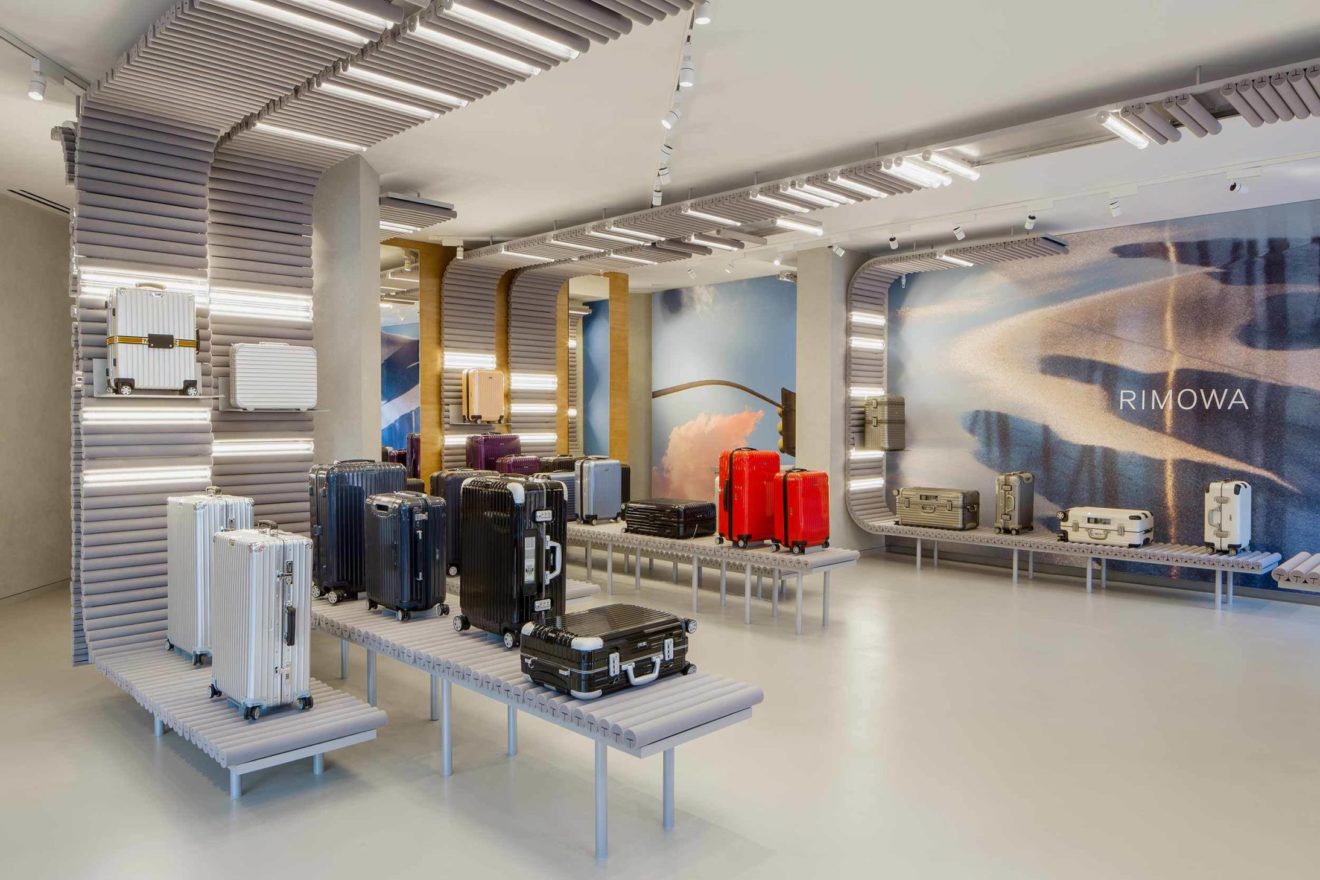
    Premium luggage label Rimowa has relocated and reopened its Hong Kong Rimowa Elements store.

    The new 1510sqft Rimowa Elements store features the brand’s latest store design concept and incorporates site-specific details, such as the wood and recycled rubber flooring that allows customers to roll-test their suitcases on a variety of surfaces before purchase.

    In addition to showcasing the brand’s latest luggage collections, the Rimowa Elements store features an in-store client-care center that can process most repairs – such as wheel exchange and handle & lock repair.

    As part of this fresh design, Rimowa Elements is introducing a hot stamping service, inviting customers to personalize their Rimowa leather travel accessories.

    Located in West Kowloon, Elements is one of the top tier shopping malls in Hong Kong, covering more than 1 million sqft of shopping, dining, art, and entertainment.

  • Fjallraven opens huge Sydney flagship store

    Fjallraven opens huge Sydney flagship store

    Swedish heritage outdoor brand Fjallraven has opened a flagship store in Sydney nearly one year after making its brick-and-mortar debut in Australia.

    The store, located on York Street in Sydney’s CBD, stocks the brand’s popular Kanken rucksack, as well as a broader range of outdoor apparel, including men’s and women’s jackets, tops and trousers.

    It is the brand’s second brick-and-mortar location in Australia. The first opened in Melbourne Central in October 2018, and marked Fjallraven’s inaugural location in the Southern Hemisphere.

    Susan Park, Fjallraven’s brand manager in Australia and New Zealand, said the Melbourne store has been trading well over the past year.

    “Opening our retail store was an important stage of brand development in Australia. We were optimistic about our performance before launch as we knew the demand was there,” she said.

    Fjallraven launched in Australia in early 2017 through retail partnerships and online, which helped the team better understand which products to range in the Melbourne store.

    Now, the team is further refining its decision-making through in-store feedback.

    “We review and incorporate our customers’ feedback into what we range and how we present our products in-store and it’s been a process of constant improvement,” Park said.

    According to Park, the Kanken rucksack is still a best seller, though interest in trekking equipment – especially trousers and jackets – has grown significantly as a result of increased access and awareness.

    More broadly, the store is driving an uplift in Fjallraven’s overall wholesale and e-commerce business in Australia, Park said.

    “We are really seeing the benefits of a controlled omnichannel approach and we anticipate this will be the case for Sydney as well,” she said.

    The Sydney store, like the Melbourne store, will also offer shoppers a daily ‘fika’, a Swedish tradition which translates roughly to a coffee break.

    The retailer serves complimentary coffee, tea, and small snacks to customers at certain times of the day and invites them to spend time in the store and chat with the staff.

    In addition to this in-store experience, the brand is planning to launch ‘Fjallraven Discovery Australia’ in 2020 – a three-day and two-night hike in the Grampians, designed to get people outdoors and back to nature.

    The hike will incorporate indigenous history and is in keeping with a growing theme of Fjallraven hikes all over the world.

  • AirAsia to spend millions for new jets

    AirAsia to spend millions for new jets

    The AirAsia Group is shelling out $350 million to acquire seven more planes for its Philippine unit, according to its chief.

    Talking to reporters in Bangkok late last week, AirAsia Group Chief Executive Officer Tony Fernandes said the move was the Malaysia-based low-cost carrier’s way of strengthening its presence in the country, as this would allow AirAsia Philippines to open new routes and bolster passenger capacity.

    AirAsia Philippines’ domestic market share currently stands at 18 percent, nearly double from 2014’s 9.7 percent.

    The local unit ended the second quarter with 23 aircraft, operating them from hubs in Manila, Cebu, Kalibo in Aklan province, and Clark in Pampanga province.

    While there is no clear timeline yet on when the group expects to reach the number of airplanes to 30, Fernandes said they have started working on it.

    Each plane would cost $50 million, according to him.

    He said they would “come close” to having 50 aircraft in the next three or four years, “which is something I never thought would be possible.”

    Fernandes is optimistic about growth opportunities for AirAsia in the country, banking on the booming tourism industry here.

    “I feel we are going to keep growing. We see so much tourism potential in the Philippines, [and not just domestically]. [W]e think many Filipinos want to travel and see the rest of the world,” he said.

    AirAsia Philippines flies to and from Manila, Cebu, Kalibo and Clark, as well as the cities of Tacloban in Leyte province, Tagbilaran in Bohol province and Puerto Princesa in Palawan province. It also has 13 international destinations from Manila, namely Kuala Lumpur and Kota Kinabalu in Malaysia; Bangkok, Thailand; Bali, Indonesia; Seoul, South Korea; Taipei and Kaohsiung in Taiwan; Shanghai, Guangzhou and Shenzhen in China; Hong Kong; Macau; and Ho Chi Minh City, Vietnam.

  • Cebu Pacific launches P99 domestic seat sale starting Monday

    Cebu Pacific launches P99 domestic seat sale starting Monday

    Budget carrier Cebu Pacific on Monday announced a P99 seat sale for domestic flights one-way from Clark International Airport.

    In an advisory, the airline said the sale started Monday, August 19, and will end on Wednesday, August 21.

    The travel period is from October 1, 2019 to January 31, 2020.

    The P99 one-way flights are Clark to Bacolod, Bohol, Boracay (Caticlan), Cebu, Clark, Davao, Iloilo, and Puerto Princesa.

    Aside from Clark, Cebu Pacific operates flights out of six other strategically placed hubs in the Philippines: Manila, Kalibo, Iloilo, Cebu, Cagayan de Oro (Laguindingan) and Davao.

    The carrier operates over 2,000 weekly flights across 37 domestic and 26 international destinations.

  • Cebu Pacific offers P88 fare promo for domestic flights

    Cebu Pacific offers P88 fare promo for domestic flights

    Cebu Pacific early Thursday announced a seat sale promo for all domestic and international flights.
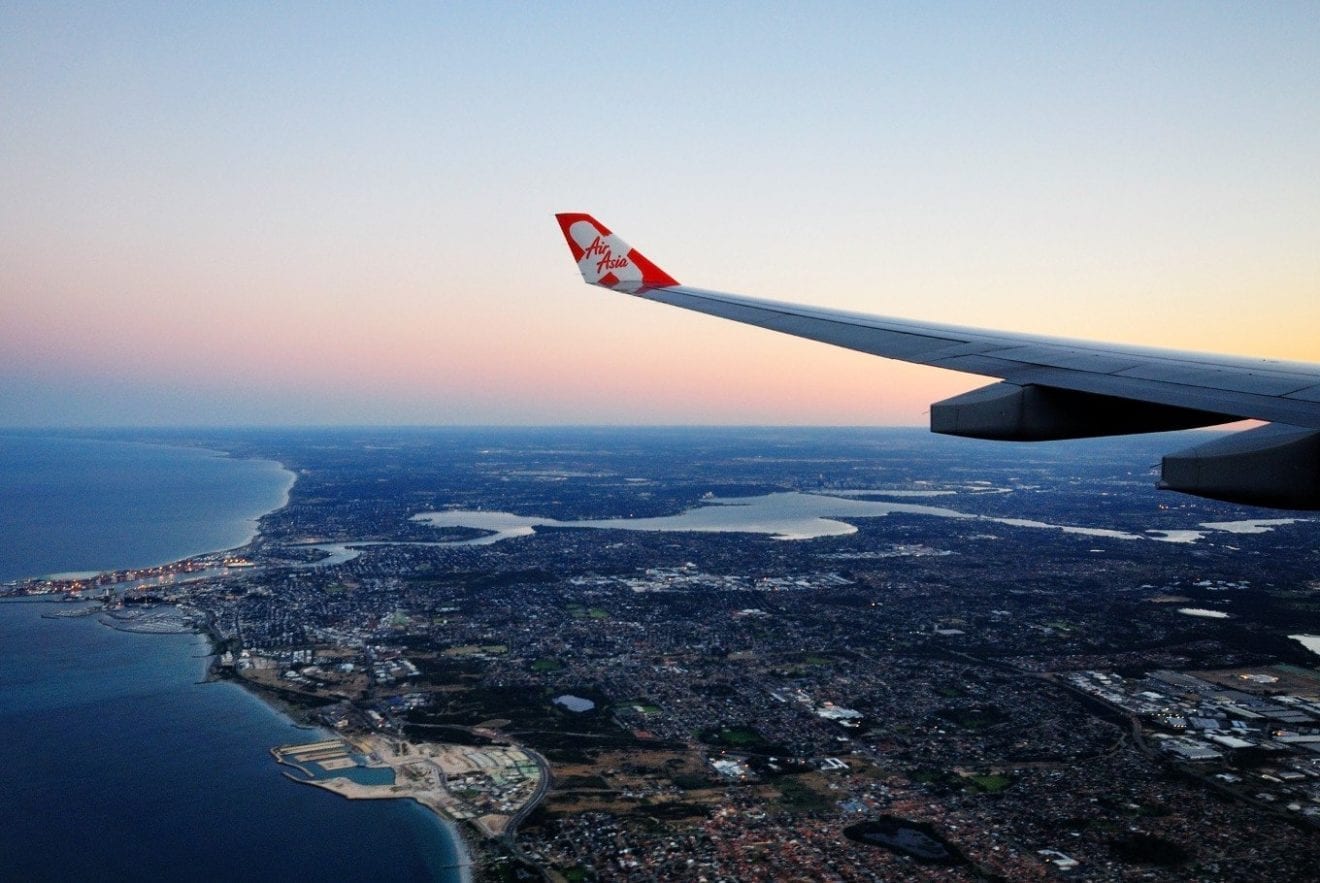
    Passengers can avail of the P88 one-way base fare for local flights while one-way base fare for international flights starts at P888.

    Booking period is only available from Aug. 8 to Aug. 9, the airline said.

    Travel period for promo flights are from Dec. 1, 2019 to April 30, 2020.

  • Ingenico TravelHub opens up new payments routes fortravel companies

    Ingenico TravelHub opens up new payments routes fortravel companies

    Ingenico Group, the global leader in seamless payment has launched TravelHub, a solution built to connect travel companies with Ingenico’s global end-to-end payment processing capabilities and regional gateways across Asia, Latin America and Europe.

    TravelHub allows travel companies to easily access more than 150 payment methods – including credit cards and alternative payment solutions – and currency options relevant for their customers. It offers smart transaction routing capabilities across all payment platforms, improving conversion rates and, as a result, increasing revenue from online travel sales.

    Ingenico’s TravelHub offers a simple direct connection to global payment capabilities, as well as integration with the leading airline global distribution systems (GDS), such as Amadeus, Sabre and Navitaire, and hotels’ property management systems (PMS). This helps travel businesses tackle the complexity of managing multiple systems, payment service providers (PSPs) and acquirers.

    The sophisticated solution marks Ingenico’s increased focus on travel, an industry where it already celebrates a strong portfolio and a long history of working with some of the world’s most famous airlines, hotels and online travel agents (OTAs). It is built by a dedicated team of seasoned professionals from the travel payments industry, and this combination of technology and expertise positions Ingenico to help travel companies grow and expand globally.

    Kevin Weber, Chief Projects Officer and Chief Information Officer at Viva Air, who has been using TravelHub already, said: “Ingenico’s TravelHub helped us to increase authorization rates and revenue significantly, and supported our expansion to new countries.”

    Gabriel de Montessus, SVP Global Online for Ingenico Group, said: “We are very proud to be launching TravelHub, a state of the art solution that helps travel companies increase revenue from online channels. TravelHub combines the global reach of Ingenico’s online payment platforms that can now be accessed with a simple connection.”

    Eric Liebman, Global Head of Travel at Ingenico ePayments, said: “Online travel businesses are looking to navigate the complex technology ecosystem while growing quickly in a very competitive space. TravelHub helps travel companies provide the best digital customer experience, offering payment methods and currencies travelers want to pay with.”

    As the solution continues to gain popularity among travel businesses, ongoing developments will be made to add new travel technology connections and improve direct connections, making it easier to access new markets.

  • Cebu Pacific targets 300 millionth passenger milestone

    Cebu Pacific targets 300 millionth passenger milestone

    Cebu Pacific, the Philippines’ largest airline, said Monday its goal was to fly a total of 300 million passengers by 2022, as it increases capacity and invests in digital tools to drive demand.

    The 300 million milestone can be reached 4 times faster than the 150 million passengers flown in 1996, 21 years after the Gokongwei-led carrier was founded, said its vice president for marketing and distribution, Candice Iyog.

    Cebu Pacific sees “accelerated growth” with the delivery of 12 new Airbus jets this year, president and CEO Lance Gokongwei earlier said.

    The two-fold challenge for Cebu Pacific is making bookings more convenient while handling online traffic, Iyog said.

    “As we continue to invest in brand new higher capacity aircraft, the challenge that we have for us now is flying our next 150 million passengers in just 5 years, 4 times faster than when we did it the first time around,” Iyog said.

    “So the first challenge really was, how might we make ourselves relevant by tapping into user shopping behavior. And then the second job to be done was addressing and improving the customer booking experience,” she added.

    To lure more passengers, Cebu Pacific said it would maximize online tools to make booking easier. It also introduced a “new crazy” seat sale strategy, offering seats in clustered destinations every 2 hours, Iyog said.

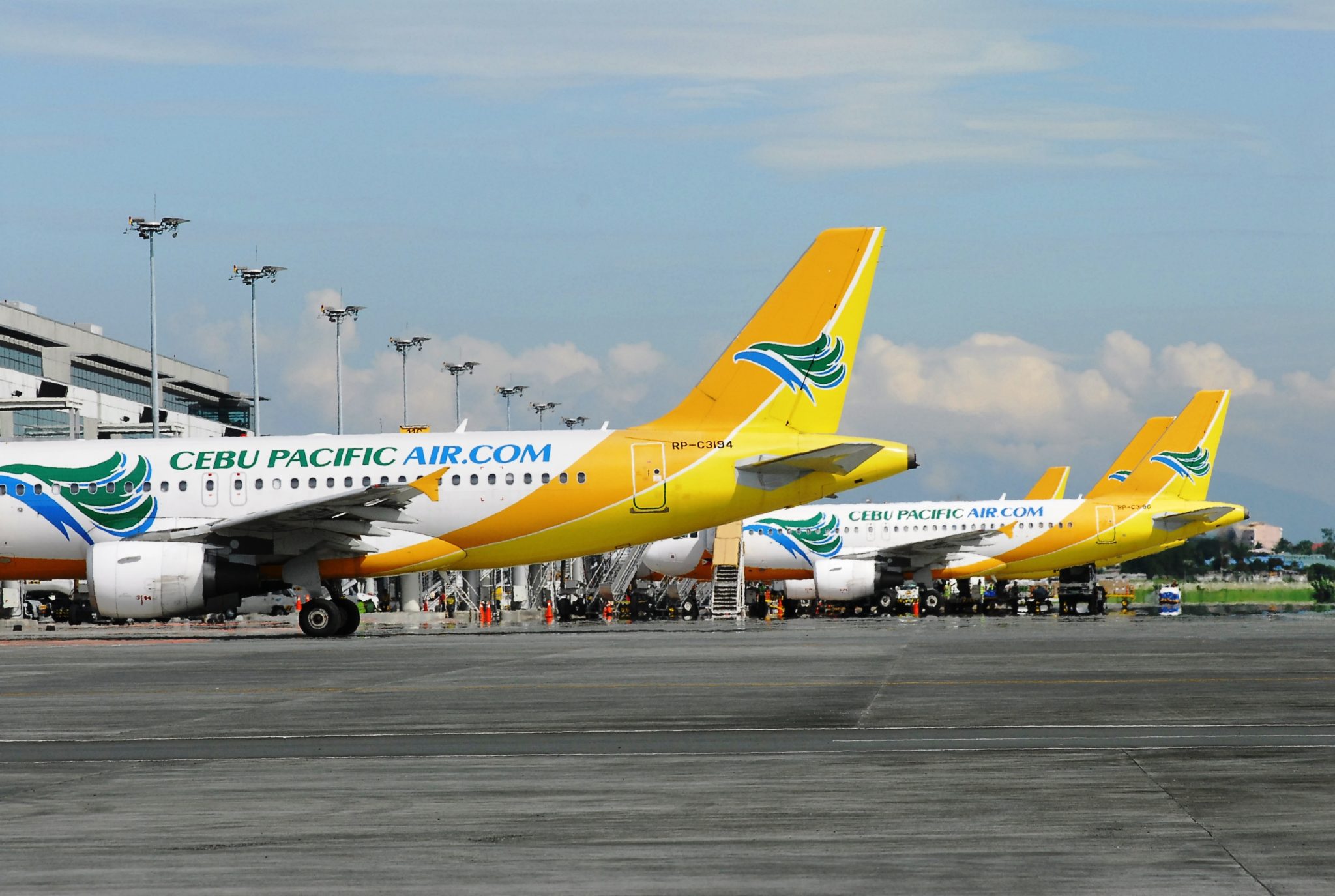
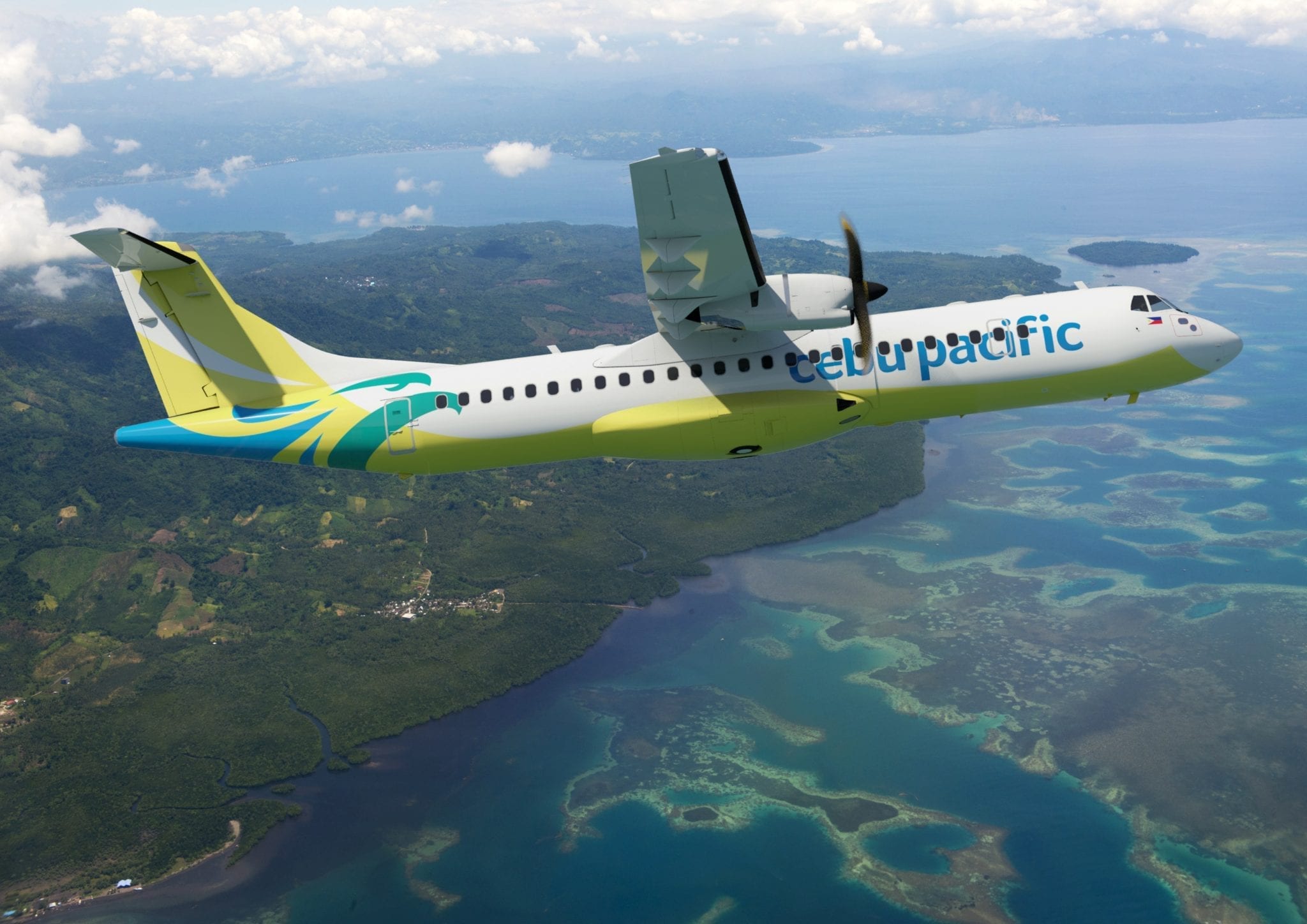
    Cebu Pacific currently operates 1 Airbus A321neo, 36 A320, 7 A321ceo, 8 A330, 8 ATR 72-500, 12 ATR 72-600 as of January 2019.