Retail News CRM

Tag: ups

  • UPS expands alcohol shipping to consumers around the world

    UPS expands alcohol shipping to consumers around the world

    UPS is expanding its ability to ship alcohol, wine and beer to consumers around the world. Using one of the UPS Express shipping services, wine connoisseurs can have their favourite cases of wine shipped directly from the vineyards to their home.

    UPS is helping wineries reach consumers living in 24 of the top 35 wine importing countries, and distilleries in 9 of the top 25 spirit importing countries. Depending on the destination, orders can arrive at the business or consumer’s home within 3 days. All alcohol shipments require an adult signature upon delivery.

    According to the International Organization of Vine and Wine, 43% of all wine is consumed in a country other than where it is produced. The global wine market is expected to reach US$380 billion by 2022.[1] The countries producing and exporting the most wine include Italy, Spain, France, Chile, Australia, South Africa and the United States.[2]

    Europe is the market leader in wine production and consumption. UPS will ship to 23 countries in Europe including these primary markets: Belgium, France, the Netherlands, Switzerland and the United Kingdom.

    Wine consumption is growing rapidly in Asian markets. By 2020, China is expected to surpass the U.S. as the world’s third-largest largest wine importer.[3] The fast growing middle class is driving the demand for premium alcohol. Last year, China imported US$890 million worth of spirits globally.[4]

    UPS will now ship wine, beer and liquor to consumers and businesses in 11 countries throughout Asia Pacific including: China, Hong Kong, Japan, Macau, New Zealand, Philippines, Singapore, South Korea, Taiwan and Thailand. In Malaysia, only businesses can import wine and beer.

    Mexico is earning its place at the table of major wine countries, as consumption has increased by more than 40% in the last 10 years.[5] UPS is shipping wine to Mexico, Argentina and the Dominican Republic. Mexicans are also thirsty for America’s beer, importing $187 million worth in 2016.6

    Canada and the U.S. are key trade partners and as more Canadians buy products online they’re also adding alcohol to their shopping carts. With the expansion, UPS can deliver to 5 of the Canadian Provinces covering 95% of all alcohol imports.[7] The Provinces include Alberta, British Columbia, Manitoba, Ontario and Quebec.

    Boeger, a small family-owned winery in Northern California, recently started global shipping. “It was hard telling our international visitors they couldn’t have our wine because we couldn’t get it to them,” said Tara De La Rosa, hospitality and logistics manager. “We are always looking for ways to expand globally and have our wines on tables around the world.”

    De La Rosa and her team use Paperless Invoice to simplify customs clearance. The UPS shipping system helps wineries, breweries and distilleries avoid delays by uploading all of the required alcohol-related documentation for each country electronically.

    UPS provides automatic tracking and visibility allowing the consumer to follow an order on its global journey. Boeger winery visitors will receive an email notification, in their own language, the day before the scheduled delivery.
    The UPS Express shipping portfolio features three unique service levels: UPS Worldwide Express Plus for early morning delivery, UPS Express for midday deliveries and UPS Express Saver for end-of-day deliveries.
  • UPS rolls out new peak shipping surcharge

    UPS rolls out new peak shipping surcharge

    UPS announced a new peak charge applicable during selected weeks in November and December 2017 for US residential, large packages and packages over maximum limits. The new charge is designed to enable UPS to continue to provide best-in-class value to customers while offsetting some of the additional expenses incurred during significant volume surges.

    “We’re focused on helping our customers achieve success during some of their most important selling seasons,” said Alan Gershenhorn, UPS chief commercial officer. “To meet their requirements, UPS flexes its delivery network to process near double our already massive regular daily volume, and that creates exceptional demands.”

    To meet peak volume demand, among many other investments, UPS acquires on a temporary basis and often at shorter-term premium rates, additional air and truck cargo capacity, temporary facilities, and additional sorting and delivery personnel.

    Further, shipments which are larger, heavier, or have unconventional shapes or sizes create even greater operational complexity during high-demand periods.

    “Our goal is to help every customer obtain the delivery capacity they need, combined with predictable and timely service they count on from UPS, even when there is limited capacity in the UPS network,” Gershenhorn continued.

    The company’s new per-piece peak charge* for the US 48 contiguous states and intrastate Alaska and Hawaii** for applicable package types and periods is summarized in this chart***:

    Nov 19 to
    Nov 25
    Nov 26 to
    Dec 2
    Dec 3 to   Dec 9 Dec 10 to
    Dec 16
    Dec 17 to
    Dec 23
    UPS Next Day Air Residential

    n/a

    n/a

    n/a

    n/a

    $0.81

    UPS 2nd Day Air Residential

    n/a

    n/a

    n/a

    n/a

    $0.97

    UPS 3 Day Select Residential

    n/a

    n/a

    n/a

    n/a

    $0.97

    Ground Residential

    $0.27

    $0.27

    n/a

    n/a

    $0.27

    n/a = no additional charge during this period
    * Peak Surcharge to be published Sept 1, 2017 in a revised version of the UPS U.S. Rate & Service Guide
    ** For packages to and from Alaska and Hawaii, the surcharge is posted on ups.com/rates
    ***Chart does not show all potentially applicable peak surcharges. 

    “With the new peak charge, per-package costs for many shipments will only marginally increase during this very busy time of the year.” Gershenhorn continued.

    For example, a five-pound UPS Next Day Air package shipped from Atlanta, GA to a residential address in Philadelphia, PA will increase about one percent, compared to non-peak shipping times. A similar package shipped to a commercial address would experience no additional cost.

    From November 19 through December 23, UPS will also apply peak surcharges to Large Packages and packages that exceed maximum size limits. These charges are in addition to normal surcharges applicable to such packages. When shipping packages that exceed UPS’s published maximum size limits, customers are encouraged to consider using UPS Freight.

  • UPS study finds traditional distributor model faces mounting risk

    UPS study finds traditional distributor model faces mounting risk

    Companies must adapt amid rapid change fuelled chiefly by millennials and a shift to e-marketplaces; A surge of purchases coming directly from manufacturers and e-marketplaces, bypassing distributors

    Asset-light e-marketplaces and other nontraditional shopping channels, combined with shifting demographics, are upending industrial distributors’ inventory-heavy model more rapidly than previously thought. As a result, distributors must quickly adapt and address threats with everything from sharper mobile offerings to upgraded customer service, a new white paper from UPS shows.

    According to the UPS Industrial Buying Dynamics Study: Buyers Raise the Bar for Suppliers, the biggest shift comes from millennials (defined for this study as those currently ages 21-34) who grew up in a digital era and are bringing their tech-savvy and nontraditional purchasing habits – for example, bypassing the middle man and working directly with the manufacturer – with them into the workplace. The impact on the future of industrial products purchasing may be among the most profound of any modern generation of buyers and provide a glimpse of the future.

    The report, the third such study compiled since 2013, captures a sector undergoing demand changes and channel shifts at a startling speed: 81 percent of buyers have purchased directly from manufacturers, up from 64 percent in 2015. Meanwhile, 75 percent of buyers surveyed have shopped at an e-marketplace, soaring from just 20 percent in 2013. What’s more, 80 percent of buyers are likely to shift to suppliers with a more user-friendly web presence, up from 72 percent two years ago.

    “With e-commerce, industrial buyers can choose from numerous suppliers with the click of a button, leaving the traditional business-to-business distributor model threatened,” said Matthew Guffey, vice president of UPS segment marketing. “Maintaining the status quo, even just for now, is not an effective solution. Distributors have to up their game.”

    The paper identifies four main ways for distributors – including those with smaller ambitions or limited funds – to remain competitive and offers solutions to reach these young corporate buyers where and how they want to interact:

    1. Recognise rising threats: It is imperative to consider strategic investments that bring services to parity with competitors. The paper found that more than half of respondents working primarily with distributors intend to increase e-marketplace spending, representing a looming risk to distributors.

    2. Think digital: Online channels are a necessity and distributors need to strengthen e-commerce capabilities, particularly for mobile ordering. Thirty percent of corporate buyers use mobile channels to order industrial products, and 24 percent are “extremely likely” to do so in the future. Nearly half of all buyers – and 69 percent of millennials – indicated they would likely shift business to a distributor offering a mobile app.

    3. Address buyers’ needs by product: Partnerships can help make businesses more competitive. Look into purchasing insurance on products and shipments to mitigate risk and to help protect and improve cash flow; leverage a logistics provider’s global network to ramp up service more quickly and reach more pockets of growth.

    4. Go beyond the sale: Buyers want interaction beyond the sale (i.e. post-sales support), with half of respondents stating they would switch to a supplier offering assistance with returns, training and on-site maintenance or repairs. Thirty-six percent of millennials need services at least once per month, compared with just eight percent of Baby Boomers, according to the study.

    UPS and TNS conducted the survey of 1,500 buyers of industrial products who are between the ages of 21 and 70 in the United States. Respondents purchased industrial parts, products or supplies in five product categories: equipment sold in a business-to-business transaction; final assembly OEM (original equipment manufacturer) parts; MRO (maintenance, repair and operations) parts; consumables/raw materials – input items used in a manufacturing process; and janitorial and sanitation. Participants came from companies of all sizes, with roughly one-third reporting annual revenue of US$1 million; one-third reporting between US$1 million and US$10 million; and one-third reporting more than US$10 million.

  • UPS and SF Holding To Establish a Joint Venture

    UPS and SF Holding To Establish a Joint Venture

    UPS and SF Holding, the parent company of SF Express, today announced plans to establish a joint venture and collaborate to develop and provide international delivery services initially from China to the US, with expansion plans for other destinations. Through this agreement the parties will leverage their complementary networks, service portfolios, technologies and logistics expertise. The joint venture is subject to regulatory approval.

    UPS is the world’s largest express delivery company and a leading global supply chain integrator. SF is a market leader in express delivery in China, with extensive China-wide network coverage, comprehensive service capabilities, and the highest brand recognition in the Chinese small package market.

    “UPS is excited to form a joint venture with SF.  This joint venture will support products that provide competitive benefits to our Chinese customers who trade or seek to trade internationally,” said Ross McCullough, President of UPS Asia Pacific. “Our combined efforts will result in new logistics products and services to simplify and accelerate B2B and B2C customers’ cross-border trade.”

    The joint services offerings combine the strengths of SF’s extensive Chinese network, encompassing more than 13,000 service points in the world’s largest and fastest growing package delivery market, with UPS’s market leading globally integrated network with coverage between more than 220 countries.

    Alignment of the partners’ shipping networks will provide customers with greater coverage, additional routing options, increased capacity, and more choice in transit times and service options.  The joint venture will initially focus on supporting these highly competitive joint service offerings on the China-to-US lane, with planned expansion to markets in the rest of the world.

    “China is leading the world in terms of e-commerce market size, growth, penetration and mobile business usage[i]. Coupled with a rapidly growing and internet-savvy consumer base, it’s imperative thatSF and UPS collaborate to revolutionize the logistics sector.  Together, we aim to bring greater competitive advantages to our customers in China, to succeed globally,” said Alan Wong, Group Vice President of SF.

    The joint venture supports the creation of competitive synergies for UPS and SF through the combined scope and scale of both companies’ complementary networks.  Both companies will utilize their own assets to enhance operational effectiveness and efficiency while aligning business processes in order to provide seamless customer care for all parties shipping out of China.

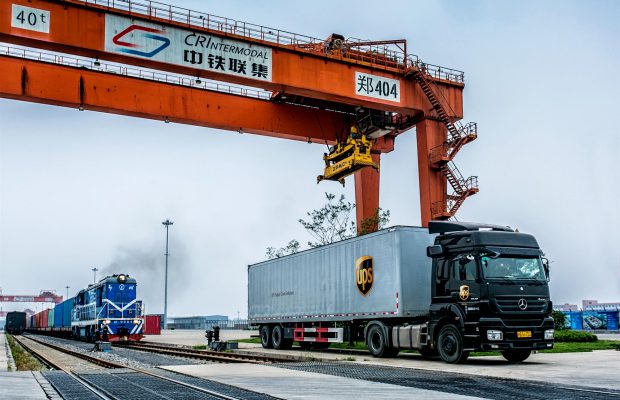
  • UPS expands China-Europe rail service

    UPS expands China-Europe rail service

    UPS announced the addition of six stations to its Preferred full and less-than-container load (FCL and LCL) multimodal rail service between Europe and China. The additional stations will give customers moving goods on the world’s largest trade lane more options to reduce supply chain costs and better balance cost/time-in-transit requirements.

    Changsha, Chongqing, Suzhou and Wuhan Stations were added in China to the existing stations of Zhengzhou and Chengdu. In Europe stops in Duisburg, Germany and Warsaw, Poland were added to the existing stops of Lodz, Poland and Hamburg, Germany.

  • UPS has entered into a definitive purchase agreement to acquire Marken

    UPS has entered into a definitive purchase agreement to acquire Marken

    UPS has entered into a definitive purchase agreement to acquire Marken, a supply chain company dedicated to the pharmaceutical and life sciences industries.

    The transaction is expected to close by December 31, 2016.

    “Healthcare logistics is a strategic market for UPS,” said Teresa Finley, chief marketing and business services officer at UPS. “Our acquisition of Marken strengthens our portfolio and demonstrates our commitment to customers. We plan to offer new solutions to our customers and generate further growth opportunities for UPS.

    Marken will be operated as a wholly owned UPS subsidiary and will have access to the UPS integrated global network.

    “We are excited to join the UPS organization,” said Wes Wheeler, chief executive officer of Marken. “UPS’s capabilities, particularly in mature markets, will provide many opportunities for us to enhance our service offerings in clinical trials logistics. With UPS, we will improve our efficiency, while continuing to provide our clients with the high-touch, personalized services that they have come to expect from us.”

    Marken has more than 650 employees in 44 locations worldwide and operates 10 depots that are compliant with Good Manufacturing Practices, according to UPS.


  • UPS Orders 14x 747

    UPS Orders 14x 747

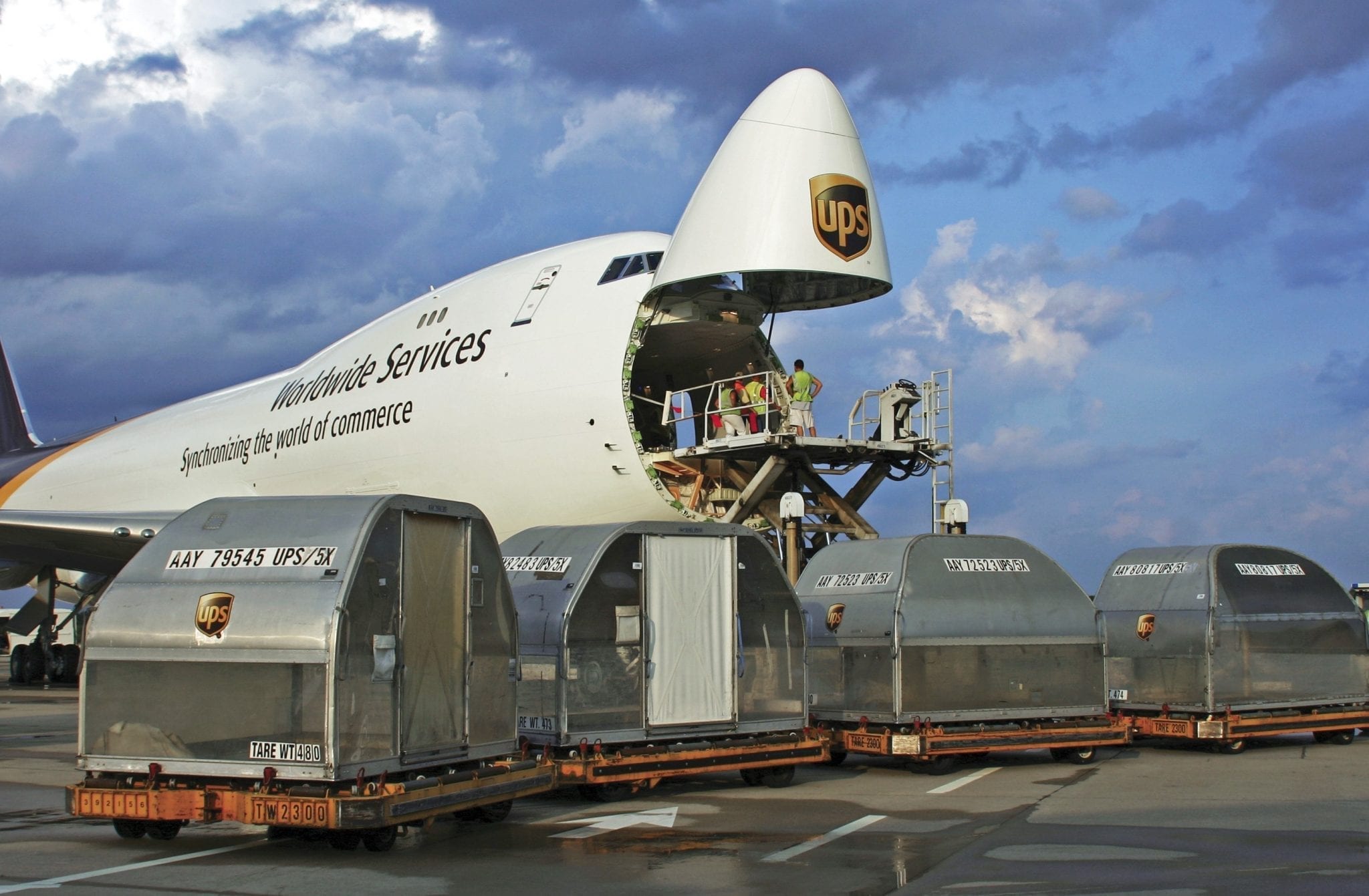
    “These aircraft are a strategic investment for increased capacity for UPS customers around the globe,” said Brendan Canavan, president of UPS Airlines. “The 747-8 will allow UPS to upsize our network in both new and existing markets.”

    The aircraft will be delivered between 2017 and 2020. Each 747-8F offers 16 percent more cargo capacity than the 747-400F and can carry approximately 137 tonnes. Pilots of the carrier’s 747-400F fleet will be able to fly the -8F after a short training course.

    “We benefit from the youngest fleet in the industry and we are continuously investing for both operating safety and efficiency,” said Brendan Canavan, UPS Airlines president. “This investment supports our customers’ future capacity needs while also reducing fuel use and emissions, which enhances UPS Airlines’ position as an industry leader in sustainability.”

    Boeing lowered the production rate of the 747-8 programme to 0.5 per month because of reduced demand. Russia’s Volga-Dnepr Group finalized the acquisition terms for 20 747-8Fs at the Farnborough International Airshow in July 2016, including four that had already been delivered.

    Apart from the new UPS order, the only -8Fs left to be delivered are two for AirBridgeCargo, one for Korean Air Cargo, two for Nippon Cargo Airlines and one for Silk Way Airlines.

    “UPS could not have selected a better aircraft to meet its growing business needs,” said Brad McMullen, vice president of sales for North America and leasing at Boeing Commercial Airplanes. “We’ve continued to make the 747-8 Freighter even better, and we look forward to seeing UPS introduce it to its fleet.”

    UPS operates a fleet of 236 aircraft, consisting of Airbus A300-600Fs, 747-400Fs, 757-200Fs, 767-300ERFs and MD-11Fs, as well as 305 other aircraft that are chartered or on short-term lease.

  • UPS expands its on-demand 3D printing network to Asia

    UPS expands its on-demand 3D printing network to Asia

    UPS will expand its on-demand 3D printing network to Asia when Fast Radius opens a factory in Singapore by the end of the year.

    According to UPS, it will also set up a team in Asia to create a centre of excellence which will develop supply chain solutions and promote the use of 3D printing.

    “3D printing will have a significant impact on industrial manufacturing and 21st century supply chains,” said Ross McCullough, president of UPS Asia Pacific. “At UPS, we are embracing disruptive technologies and integrating them into our global logistics network. We believe that much like e-commerce digitized and transformed retail, 3D printing will have a similar impact on manufacturing.”

    Advantage of 3D printing include lower inventory for slow-moving parts, lower transportation costs, shorter production runs and better customization.

    “UPS’s 3D printing Centre of Excellence reinforces Singapore as an innovation-driven economy,” said Michelle Ho, managing director of UPS in Singapore. “Having Fast Radius’ factory connected to UPS’s network means customers can send their 3D printing orders by 5pm and have them delivered to their customers in most major Asian cities within 24 hours. The automotive, high-tech, aeronautic and aviation, healthcare and retail industries have a lot of opportunity to take advantage of this type of manufacturing.”

    Fast Radius will direct 3D printing orders to the manufacturing location in either Singapore or the US, depending on speed, geography and product requirements, according to UPS.

  • UPS to open 3D printing factory in Singapore with Fast Radius

    UPS to open 3D printing factory in Singapore with Fast Radius

    Package delivery company United Parcel Service Inc said on Monday it will expand its 3D printing services to Asia with a new facility in Singapore run by its partner Fast Radius that will open by the end of 2016.

    UPS rolled out a similar service in May in the United States. The company owns an undisclosed stake in Fast Radius, which has a 3D printing factory at the Atlanta-based package delivery company’s hub in Louisville.

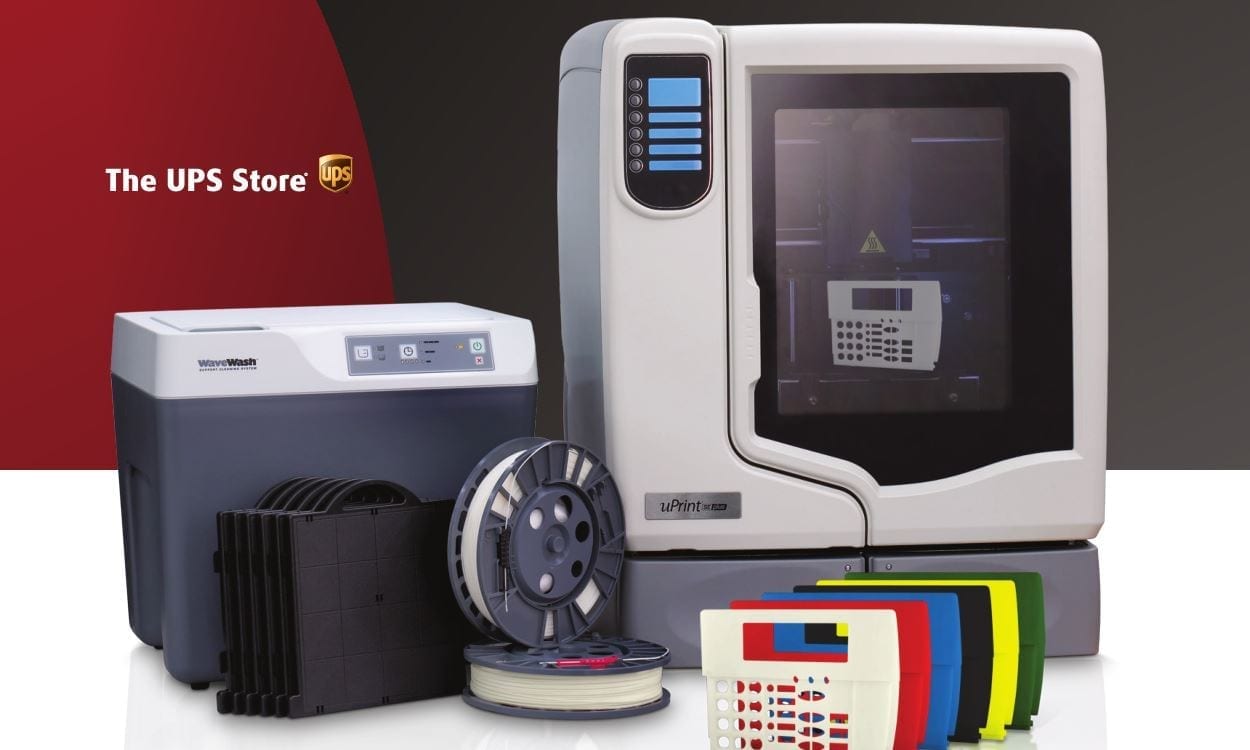
    In the United States, UPS customers can have parts printed at the Fast Radius factory or at one of 60 UPS Stores equipped with 3D printers and then shipped to them.

    UPS also plans a 3D printing hub in Europe. The company sees 3D printing as a potential threat to its warehousing business where it stores parts for manufacturers, so its strategy is to embrace the new technology and incorporate it into its business model instead.

    Also known as additive manufacturing, 3D printing works by laying down successive levels of material, mostly plastics at this point, to create an object.

  • UPS wins package network visibility tool award

    UPS wins package network visibility tool award

    UPS has been named to the 2016 CIO 100 listing for the successful launch and integration of the UPS Near Real-Time Service Performance Reporting tool (NRT) – marking the tenth time the company has been honored at the annual IDG CIO 100 Awards.

    The annual listing to recognize technology innovation is selected by the CIO editorial team, working with more than three dozen judges including industry experts, academics and former CIOs.

    A business intelligence platform, NRT uses advanced analytics to take traditional network management, package tracking and package visibility tools to the next level. It provides UPS operations with the ability to see the state and performance of the service network across all packages moving through all modes of transportation and all buildings, for all UPS customers.

    “NRT is an industry-first solution, designed to find new ways to improve our network performance, overall customer service, and ultimately, customer satisfaction,” said Juan Perez, UPS chief information officer.

    “NRT represent the next step in UPS’s big data and analytics journey, complementing proven customer visibility services like UPS My Choice, and our award-winning route optimization platform, ORION. It’s another example of how UPS is using data to transform our operations and continually improve the customer experience.”

    With the ability to execute complex analytics processes for over 1.5 billion information records daily, NRT consumes data at a rate of 8,700 transactions per second from multiple global sources around the clock, including pick-ups, sorting, transfers and deliveries being moved by truck, train or airplane.

    Applying predictive analytics, NRT provides the ability to proactively identify weather or other conditions that may require alternate plans to meet service commitments and maintain an on-time network. UPS ships more than four billion packages worldwide each year using this real time status monitoring platform.

    The end result is improved visibility across the supply chain and enhanced quality of service for millions of customers every day.

    “Delivering innovation and business value are top priorities for CIOs everywhere, and our CIO 100 awards program celebrates the leading IT organizations that excel at both,” said Maryfran Johnson, Editor in Chief of CIO Events.

    “Our 2016 winners are raising the bar even higher this year with their outstanding work in digital transformation, customer focus and IT-business collaboration.”

    The 29th annual award program recognizes organizations around the world that exemplify the highest level of operational and strategic excellence in information technology.

  • DHL, UPS Bid for South Korea’s Logen Logistics

    DHL, UPS Bid for South Korea’s Logen Logistics

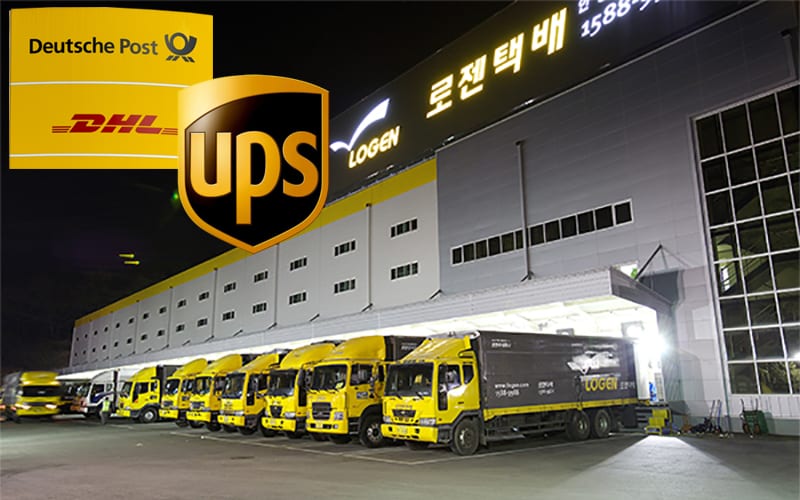
    Deutsche Post DHL Group and UPS are reportedly among the companies which have submitted preliminary offers for South Korean package delivery firm Logen Logistics.

    According to a report today, Affinity Equity Partners, CVC Capital Partners and STIC Investment were also among the bidders.

    Logen is currently wholly owned by Hong Kong-based Baring Private Equity Asia, which bought the delivery specialist from Mirae Asset Private Equity in 2013.

    Logen is reported to be the fourth largest courier services company in South Korea – behind CJ Korea Express, Hyundai Logistics and Hanjin Transportation.

    Global logistics companies UPS and DHL are eying Logen amid burgeoning e-commerce and online shopping in Korea and as part of expansion to the Asian market.

    Private equity firms also believe the logistics business is lucrative investment.

    Moreover, Logen is a solid company with a loyal client base and growing earnings.

    Unlike other parcel delivery service companies, Logen is based on the customer to customer (C2C) business that connects deals between merchants and consumers.

    Logen last year bought a 70 percent stake in KGB Logis Co. for 25.0 billion won, making it the industry’s fourth with a combined market share of over 10 percent.

    Logen recorded 20.7 billion won in operating profit on sales of 263.5 billion won last year.

    The combined earnings before interest, taxes, and amortization of the Logen and KGB Logis are estimated at 40 billion won for this year, up from last year’s around 30 billion won.

  • UPS expands Chinese operations

    UPS expands Chinese operations

    UPS has expanded its presence in 13 additional cities in China improving transit times and extending cut-off times.

    Customers in the cities, situated in Jiangsu, Shandong, Zhejiang, Guangdong provinces, and in Chongqing Municipality, will have direct access to UPS’ full portfolio of services.

    Nando Cesarone, president of UPS Asia Pacific, said: “As China continues to liberalise its economy, balance growth across the country, and improve its infrastructure through initiatives such as ‘One Belt, One Road’, UPS is committed to expanding our presence in China and enabling more businesses to achieve their cross-border pursuits. This expansion is part of UPS’ long-term Asia Pacific strategy to facilitate trade growth within and beyond Asia.”

  • UPS partners with 7-Eleven in Singapore for delivery

    UPS partners with 7-Eleven in Singapore for delivery

    Driven by the growth of e-commerce and online, cross-border transactions, UPS and 7-Eleven have entered into an exclusive partnership in Singapore for an innovative delivery system.

    The agreement will see 20 7-Eleven outlets at Shell petrol stations across Singapore serve as Alternative Delivery Locations (ADL) for UPS packages.

    “The online shopping market in Singapore is projected to reach SGD4.4 billion (USD) by 2015, and our customers have raised concerns about not being available to sign off on their purchases when they arrive,” said Ingrid Sidiadinoto, Managing Director, UPS Singapore.

    The new solution offers customers the flexibility of collecting packages coming from selected online retailers, at the closest participating Shell ADL, if they are not available when UPS makes the first delivery attempt.

    She said the new arrangement is expected to help raise the bar on customer service by giving customers greater control over their e-commerce shipments. With 7-Eleven operating 24 hours a day, 7 days a week, the 20 strategically-located outlets participating in the initiative would allow customers to retrieve their packages from a secure and staffed location at their convenience.

    In addition to the 7-Eleven partnership, Shell will also be fueling UPS’s 100-strong Singapore delivery fleet with Shell Diesel and Shell FuelSave, which help UPS to reduce harmful emissions and its carbon footprint in Singapore.

    “We look forward to welcoming UPS customers to our 20 ADL stations at any time of the day, and assisting them in retrieving their online purchases,” said Leong Chee Hoe, Regional Key Account Manager East for Commercial Fleet, Shell Singapore.