Retail News CRM

Category: E-Tailing

Retail News Asia is committed to providing both local and global retailers with the latest E-Commerce & Etail news throughout the Asian market. This on a daily base.

  • YouTube and Shopee plan Southeast Asian e-commerce collaboration

    YouTube and Shopee plan Southeast Asian e-commerce collaboration

    Alphabet Inc’s YouTube and e-commerce platform Shopee said on Wednesday they were launching an online shopping service in Indonesia and planned to expand it in Southeast Asia as competition picks up with a rival operator owned by TikTok.

    Under the YouTube Shopping tie-up, people will be able to purchase goods viewed on YouTube through links to Shopee, which is owned by Southeast Asian technology conglomerate Sea Ltd.

    Company executives told reporters they plan to expand the service to Thailand and in Vietnam in a few weeks. YouTube Shopping is already active in South Korea and the United States.

    Indonesia’s “energy and velocity around online shopping” is what prompted the launch, YouTube Asia-Pacific director Ajay Vidyasagar said in Jakarta.

    With YouTube Shopping, Alphabet Inc and Shopee will be competing against TikTok, the Bytedance-owned video app, which has increased its ambitions for the region after taking control of Indonesia’s biggest e-commerce platform Tokopedia.

    Asked about the size of the partnership with Shopee, Vidyasagar said it was very significant, but declined to give numbers. He said YouTube Shopping would be opened to partners other than Shopee “in a phased, sequenced manner.”

    Reuters reported last year, citing sources, that YouTube was planning to apply for a licence to operate e-commerce services in Indonesia, Southeast Asia’s largest economy.

    TikTok’s shopping service, TikTok Shop, accounted for $16.3 billion in 2023 in gross merchandise value in Southeast Asia, in a nearly fourfold jump from the previous year, consultancy Momentum Works said in a report.

    This has made the platform the region’s second largest e-commerce platform after Shopee.

    The region of nearly 700 million is one of the world’s fastest growing e-commerce markets. The Momentum Works report said Southeast Asia’s eight largest e-commerce platforms racked up $114.6 billion in gross merchandise value in 2023, up 15% from 2022.

  • Miniso to acquire 29.4 percent of Yonghui Superstores

    Miniso to acquire 29.4 percent of Yonghui Superstores

    Miniso Group Holding will acquire 29.4 percent of Yonghui Superstores from various shareholders for RMB6.3 billion (US$893.3 million).

    Miniso, through its PRC subsidiary Guangdong Juncai International Trading, entered into share purchase agreements with DFI Retail Group subsidiary The Dairy Farm Company and JD.com subsidiaries Beijing Jingdong Century Trade and Suqian Hanbang Investment Management.

    The transaction will result in Miniso becoming the largest single shareholder of the supermarket chain.

    Under the agreements, Guangdong Juncai will pay each seller RMB2.35 per share, representing a 3.1 percent premium to the closing price of Yonghui’s shares on the Shanghai Stock Exchange on September 20.

    Shares of Miniso Group Holding plunged as much as 39.2 percent to HK$20 ($2.57) on Tuesday after the deal was announced.

    The lifestyle products retailer’s shares dived to the lowest since December 2022, on track for the biggest one-day percentage drop since its debut in July 2022, and was the top percentage loser on the Hong Kong bourse. Reuters reported that compared to a 2.1 per cent rise in the benchmark Hang Seng Index.

    Yonghui has logged three years of net losses, reflecting the mounting costs of closing unprofitable stores.

    Guofu Ye, the Miniso chairman and CEO, said that acquiring the shares would allow his company to expand its access to the essential goods sector.

    “With our support and leveraging our expertise in design-led products, Yonghui will be poised to develop higher-quality self-branded products to cater to evolving consumer needs,” said Ye.

    “Furthermore, I believe that our collaboration with Yonghui in retail channel upgrade and supply chain will enable us to share resources to further enhance economies of scale, optimise the cost structure and create value for consumers.”

    Miniso’s newest flagship store – which opened early this month in downtown Jakarta – is among the first to include a range of snackfoods, all sourced from local suppliers, as the novelty retailer looks to expand into other categories, with blind boxes being another.

    DFI Retail Group will receive US$637 million for its stake, funds CEO Scott Price said would support the company’s plans to expand its other businesses in Mainland China, which remains a significant market for the company.

    “We are proud to serve millions of customers through Mannings China and 7-Eleven, and we have ambitious plans to increase the number of 7-Eleven stores in Guangdong Province in the coming years,” said Price.

    The deal is subject to Miniso shareholder approval and applicable regulatory conditions, including antitrust approval.

  • Amazon and Flipkart found to have breached India’s antitrust laws

    Amazon and Flipkart found to have breached India’s antitrust laws

    An Indian antitrust investigation has found US e-commerce giant Amazon and Walmart’s Flipkart violated local competition laws by giving preference to select sellers on their shopping websites, according to reports seen by Reuters.

    The Competition Commission of India (CCI) in 2020 ordered an investigation into Amazon and Flipkart for allegedly promoting certain sellers with which they had business arrangements and giving priority to certain listings.

    In a 1027-page report on Amazon and a separate 1,696-page report on Flipkart, both dated August 9, the CCI investigators said the two companies were found to have created an ecosystem where preferred sellers appeared higher in search results, elbowing out other sellers.

    “Each of the anti-competitive practices alleged … were investigated and found to be true,” said both reports, which are not public and are being reported by Reuters for the first time.

    “Ordinary sellers remained as mere database entries,” the two reports said in identical conclusions on both companies.

    Amazon and Flipkart, as well as the CCI, did not immediately respond to Reuters queries. They have previously denied wrongdoing and said their practices are in line with Indian laws.

    The two companies will now review the report and file any objections before CCI staff decide on any potential fines.

    The investigation’s findings are the latest setback for Amazon and Flipkart in a country where they continue to face criticism for their business practices from smaller retailers, who say their businesses have suffered in recent years due to deep discounts offered online.

    The investigation was triggered by a complaint from the Delhi Vyapar Mahasangh, which is an affiliate of the country’s biggest trade body, Confederation of All India Traders (CAIT), that represents 80 million retailers.

    In a statement to Reuters, CAIT welcomed the CCI investigation findings, saying it would study the reports and “escalate the matter” with the federal government.

    Amazon and Flipkart are leading players in India’s e-retail market which was estimated to be worth $57-60 billion in 2023, and set to top $160 billion in value by 2028, consultancy firm Bain estimates.

    In the United States, the Federal Trade Commission has sued Amazon alleging the company uses “anticompetitive and unfair strategies to illegally maintain its monopoly power”. Amazon has said that the FTC lawsuit is wrongheaded and would hurt consumers by leading to higher prices and slower deliveries.

    Indian investigators raided certain sellers of Amazon and Flipkart during the probe, following a Reuters investigation in 2021 which was based on Amazon internal documents and showed the company gave preferential treatment for years to a small group of sellers on its platform, and used them to bypass Indian laws.

    The company has denied any wrongdoing but the CCI previously told an Indian court the Reuters special report corroborated evidence it had against Amazon.

    The CCI investigation report on Amazon said preferred sellers on the platform “get the advantage in the (online) listing” and when a customer searches for any product, “his attention is drawn towards” those listings.

    The practice of preferential listings and deep discounting of mobile phones – including selling products below cost price – causes a “catastrophic impact on the existing competition in the market.”

    In the report on Flipkart, the CCI said preferred sellers were provided various services such as marketing and delivery at a “miniscule cost.” They were also enabled by Flipkart to sell phones with deep discounts which amounts to “predatory pricing” and forecloses competition, the CCI said.

    “The anti-competitive practies are not limited to sales of mobile phones. They are equally prevalent in other categories of goods,” both reports said.

    Flipkart and Amazon for months tried to block the investigation through legal challenges in courts, but the Supreme Court in 2021 allowed it to go ahead.

    Last month, India’s commerce minister publicly called out Amazon by saying the company’s investments were often used to cover its business losses.

    Amazon in June last year said it will increase its Indian investment to $26 billion by 2030, including for its cloud business. It is also targeting merchandise exports worth $20 billion from India by 2025.

  • JD invests US$141 million in building fashion platform

    JD invests US$141 million in building fashion platform

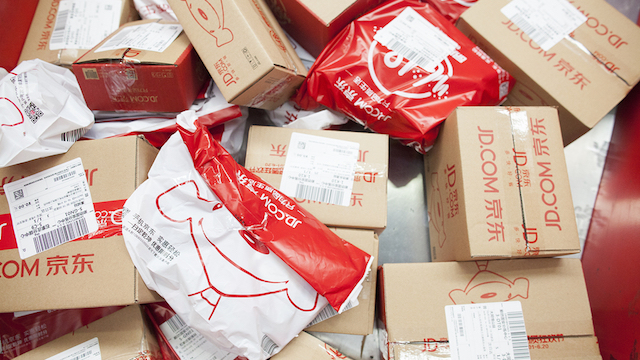
    Chinese e-commerce giant JD has announced a RMB1 billion (US$141 million) investment in the expansion of its apparel business.

    The investment, a combination of financial capital and market resources, aims to broaden and enhance the range of fashion offerings, providing a significant boost for both domestic and international brands.

    The company plans to introduce a variety of new products via simultaneous launches from thousands of brands on JD’s online platform. These launches will be bolstered by enhanced marketing initiatives, partnerships with celebrities and designers, and cross-industry collaborations.

    As part of this investment, the ‘10-billion-yuan Discount’ program will offer customers a RMB30 discount on purchases of RMB300 or more.

    In addition, the company will collaborate with platforms such as Vogue and Xiaohongshu to unveil upcoming fall and winter fashion trends next month.

    Since the beginning of this year, JD has seen a 60 per cent increase in leading apparel and footwear brands and a 200 per cent increase in third-party apparel merchants. The company has signed partnerships with fashion groups, including Inditex, H&M, and Gap, and offers selections from over 90 per cent of global luxury brands.

  • Apple gets blasted for its decision regarding AI in the EU

    Apple gets blasted for its decision regarding AI in the EU

    A little over a week ago we told you that Apple planned on keeping its new Apple Intelligence AI technologies out of iPhone units being sold in the European Union (EU). Apple is concerned that some of the AI features coming to certain iPhone models with the iOS 18 update could violate privacy regulations written into the EC’s Digital Market Act (DMA). Considering that such a violation could lead to a fine of as much as 10% of Apple’s $383 billion in global revenue for fiscal 2023, the tech giant would prefer to play it safe.

    Apple’s decision has angered Margrethe Vestager, the European Commissioner for Competition, who said in a response to a question poised in a Q&A session, “So Apple have (sic) said that they will not launch their new enabled features in the IRS environment, and they say that they will not do that because of the obligations that they have in Europe. And the obligations that they have in Europe, it is to be open for competition, that is sort of the short version of the DMA. And I find that very interesting, that they say we will now deploy AI where we’re not obliged to enable competition. I think that is the most stunning, open declaration that they know 100% that this is another way of disabling competition, where they already have a stronghold.”

    In other words, Vestager is accusing Apple of holding back its AI features in the EU because the company knows that Apple Intelligence wouldn’t be considered competitive by the EC. What Apple realizes is that if it never brings Apple Intelligence to the EU, its AI features cannot be accused of violating the DMA. Right now, Apple faces a huge fine after the EC announced last week that it made a preliminary ruling against Apple that says the company has violated the DMA due to the App Store.

    The European Commission has informed Apple of its preliminary view that its App Store rules are in breach of the Digital Markets Act (DMA), as they prevent app developers from freely steering consumers to alternative channels for offers and content. In addition, the Commission opened a new non-compliance procedure against Apple over concerns that its new contractual requirements for third-party app developers and app stores, including Apple’s new Core Technology Fee (CTF), fall short of ensuring effective compliance with Apple’s obligations under the DMA-European Commission

    Holding Apple Intelligence off the iPhone 15 Pro, iPhone 15 Pro Max, and the iPhone 16 series in the EU is certain to hurt iPhone sales in the region although non-AI changes to iOS 18, such as the ability to customize home screen app icons, will still be available to iPhone users in the EU. The hope is that Apple will eventually be able to add its new AI features to iPhone units in the market although that might require some compromise on the part of the EC and Apple.

  • 17 million Vietnamese products sold on Amazon in 2023

    17 million Vietnamese products sold on Amazon in 2023

    he number of Vietnamese products sold on Amazon soared by 300% in the previous five years to 17 million in 2023.

    The value of the goods exported through the U.S. e-commerce platform increased by 50% during the period, Trinh Khac Toan, northern regional director of Amazon Global Selling Vietnam, which supports sellers, said at a forum Thursday.

    The number of Vietnamese sellers with annual sales of $1 million increased 10-fold between 2019 and 2023, while those who have legitimized their brands through the Amazon Brand Registry program increased by 35 times, he noted.

    The figures demonstrate the astonishing potential of cross-border e-commerce, he said.

    Amazon Global Selling forecasts cross-border e-commerce in Vietnam and Southeast Asia to grow at 20% annually until 2026.

    Bui Trung Kien, vice chairman of the Vietnam E-Commerce Association, said developing cross-border e-commerce is crucial to boosting Vietnam’s exports.

    But the country’s legal framework for businesses could pose a hurdle to this, he warned.

    Cao Cam Linh, a representative of the Vietnam Association for Logistics Manpower Development, said logistics need to be developed to support e-commerce.

    Toan said online businesses need to invest in market research to identify customer needs, improve their products and build their own brands with a long-term vision.

    In Vietnam, Amazon has collaborated with the E-commerce and Digital Economy Agency to train 10,000 people for the cross-border e-commerce industry.

  • Shopee admits to violating Indonesian monopoly laws

    Shopee admits to violating Indonesian monopoly laws

    Indonesia’s antitrust agency on Wednesday said in a statement that e-commerce firm Shopee had admitted to having violated a monopoly rule for its courier service in Indonesia.

    The agency also said Shopee has agreed to make adjustments to its operating practices.

    Shopee did not immediately respond to a request for comment regarding the agency’s statement.

    The agency, known as KPPU, had accused Shopee’s local unit of violating anti-competition rules by directing customers to use certain delivery services, one of which has a Shopee Indonesia executive on its board of directors.

    Shopee, the market leader in Indonesia’s fast-growing e-commerce sector, is owned by Southeast Asian technology firm Sea Ltd.

    Aside from Shopee, KPPU was also investigating the local unit of another e-commerce platform Lazada, the Southeast Asian arm of Alibaba.

  • How livestreaming is taking over Vietnam e-commerce

    How livestreaming is taking over Vietnam e-commerce

    At the time GUMAC, the fashion company Van founded, was a small startup in HCMC, but seeing the potential of the new sales method, the then-CEO began to livestream eight to 10 hours each day.

    With hundreds of thousands of viewers watching some sessions, his brand grew quickly and allowed him to open 30 new stores within a year.

    Van never dreamed that, eight years later, livestreaming on social media would become one of the most successful marketing tools in Vietnam.

    Shops started to first come across livestreaming when it became a Chinese trend in 2016 after e-commerce giant Alibaba launched Taobao Live, a streaming platform that worked like TV shopping but allowed two-way real-time interaction between sellers and buyers.

    Taobao proved a success with nearly US$14 million in sales through livestreams and videos in 2018, and 34% of viewers making purchases.

    “Vietnamese picked up the trend quickly,” Chu Xuan Duc, chairman of digital media company DC Media Global, says.

    Vendors turned Facebook Live into a distribution channel, taking advantage of the large number of social media users.

    In a typical livestream one or two sellers would introduce a large number of products along with discounts and say the name of the customers who have made a successful order.

    “I was addicted to livestreaming,” Van, who livestreamed three sessions a day for three years, says.

    At one point he coughed blood due to overwork.

    Three years after Facebook Live was launched, e-commerce platforms began to see the potential of livestreaming and created their own versions of it, with Lazada making the first move, followed by Shopee and Sendo.

    But though these platforms made shopping through livestreaming easier, they were unable to take advantage of the large number of users on Facebook.

    TikTok saw the opportunity and launched its shoppertainment feature TikTok Shop in 2022 allowing sellers to reach millions of users via livestreaming.

    Nguyen Lam Thanh, policy director of TikTok Vietnam, says his platform provides a continuous experience for users who do not need to leave the app to shop.

    Owners of businesses also found it much easier to sell via TikTok compared to traditional marketing platforms.

    Nguyen Phuong, founder of fashion brand GUNO, says: “Thanks to TikTok’s livestreaming feature, I was able to make my brand so popular that there were times when I could not fulfill all the orders.”

    After a year of livestreaming on TikTok, GUNO’s monthly revenues surged 20-fold.

    Within a few months GUNO became one of the 10 best-selling vendors on TikTok Shop.

    In its most successful session, which had over 3,000 viewers, the company sold VND2 billion worth of goods.

    TikTok Shop has now surpassed Lazada in the number of vendors and is the second biggest e-commerce platform in Vietnam in terms of revenues behind Shopee.

    Duc says TikTok is able to retain users because it does not allow rewatching of livestreams, which means users lose the opportunity to get discounts if they do not turn on the app.

    The influence of reviewers and opinion leaders also plays a big role in making livestreaming popular.

    Around 53% of Vietnamese consumers are influenced by online communities when making shopping decisions, and 86% want to discover products and buy them on the same platform.

    As livestreaming expanded, big brands in Vietnam felt compelled to join the trend and began to sell expensive smartphones and TVs through this channel.

    Between just December 2023 and March 2024, over 13,000 stores opened on TikTok Shop, including FPT Shop, one of the biggest electronics retailers in Vietnam.

    FPT’s director of commerce, Nguyen The Kha, said the rise of shoppertainment and changes in young people’s shopping habits are among the reasons why FPT Shop sells on social media.

    Young people enjoy interacting directly with sellers on livestreams because it saves them time from going to a store, he says.

    “Livestreaming is turning things upside down in the e-commerce market,” Pham Thao Linh, head of e-commerce at the consumer product division of L’Oreal Vietnam, the biggest cosmetics company in the country, says.

    Some unknown brands have attained popularity in no time while established brands struggle to catch up with changes, she says.

    Big brands often have many protocols on how to advertise their products and they are inflexible in following social media trends, she adds.

    Traditional companies that want to dive into livestreaming often partner with opinion leaders and social media influencers, she says.

    One such company sold 1,000 products in two minutes during a livestream session, which was unprecedented for it, she says.

    The rise of livestreaming and social media shopping has created new jobs in Vietnam.

    Duc says there are over 400,000 content creators on TikTok and many “streamers,” people who broadcast livestreams.

    Pham Ngoc Duy Liem, cofounder of streaming service provider GoStream, says top streamers make VND200-300 million for a session plus commissions.

    While there are many streamers who work for legitimate companies, some admittedly take advantage of livestreams to sell fake goods.

    Nguyen Hong Son, a lecturer at Hanoi Law University, says strea

  • Coupang fined US$102 million for manipulating search algorithm

    Coupang fined US$102 million for manipulating search algorithm

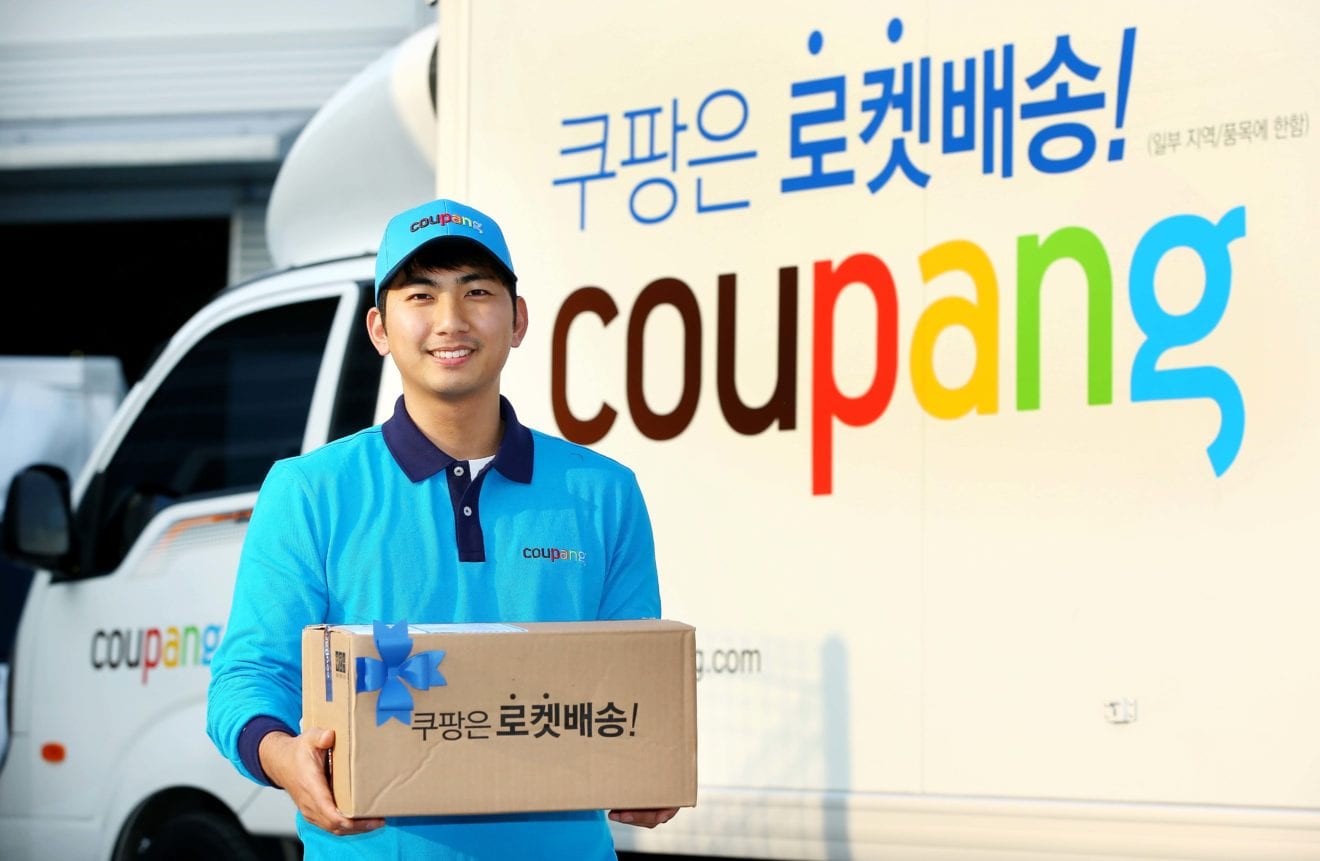
    South Korea’s antitrust regulator has fined e-commerce giant Coupang 140 billion won (US$102 million) for using unfair search algorithms and manipulating product reviews to boost sales of its own private-label items.

    The Fair Trade Commission (FTC) also referred the company, as well as one of its subsidiaries, Coupang Private Label Brands (CPLB), to the prosecution for further investigation and ordered the companies to take corrective measures.

    Coupang has used” deceptive algorithms” according to the FTC, giving them greater exposure to the retailer’s private-label products on its platform ahead of those from other suppliers since February 2019.

    By doing so, at least 64,250 kinds of products have been prioritised, which caused the total sales of such items to soar over 76 per cent during the period.

    The company also had 2297 employees write positive product reviews of private-label products since 2019 in an effort to boost its sales.

    They wrote a combined 72,614 reviews of 7342 kinds of private brand items so far, which helped those products to be exposed more easily in violation of the Monopoly Regulation and Fair Trade Act.

    “Such practices have prevented customers from making reasonable choices and hampered fair market competition,” the FTC said, vowing stern responses to such unfair business practices.

    Established in July 2020, CPLB is Coupang’s subsidiary in charge of selling private brand items.

  • Temu moves closer to Brazil debut after securing tax benefit from government

    Temu moves closer to Brazil debut after securing tax benefit from government

    Chinese e-commerce retailer Temu has been certified for a tax benefit program by Brazil’s government that exempts goods up to $50 from import fees, according to the country’s federal revenue office’s website on Monday, bringing the company closer to expanding its business to Latin America’s largest economy.

    Why it’s important

    Inclusion in Brazil’s tax exemption program “Remessa Conforme” is an advantage most cross-border retailers have in the country. Local media have reported Temu has been preparing the groundwork to enter Brazilian markets for a few months, although little detail is known so far.

    Context

    Temu is a popular shopping app from China’s Pinduoduo. Its rivals Shein, from China, and Shopee, owned by Singapore’s Sea, are already huge online shopping platforms in Brazil.

    The response

    Temu did not immediately respond to a Reuters request for comment. Its Brazilian website address said on Monday that Temu’s services should be available “soon” in the South American country.

  • JD’s first-quarter revenue beats estimates

    JD’s first-quarter revenue beats estimates

    Chinese online retailer JD.com on Thursday reported first-quarter revenue that beat market estimates, as deep price cuts helped boost sales that had been hit hard by cautious customer sentiment.

    US listed shares of the company rose about 3.5 per cent in premarket trading.

    JD.com and bigger rival Alibaba Group have been lowering prices and offering discounts to maintain market share in the world’s second largest economy where consumers are gravitating toward low-cost, discount-focused platforms. JD.com has also been growing its logistics, electronics and home appliances divisions. On Tuesday, Alibaba reported an 86% drop in quarterly profit, primarily due to valuation change from equity investment, though it beat revenue estimates.

    Net revenue rose 7 per cent to US$36.02 billion in January-March, versus the $35.662 billion average of 21 analyst estimates compiled by LSEG. Analysts see full-year sales growing 6.7 per cent.

    JD.com reported net income attributable to shareholders of $986.6 million, up nearly 14 per cent from $866.2 million a year earlier.

  • Shopee races past other e-commerce rivals

    Shopee races past other e-commerce rivals

    Shopee continued to dominate Vietnam’s e-commerce market with a 67.9% share in the first quarter, followed by TikTok Shop with a 23.2% market share.

    Lazada and Tiki are in third and fourth places at 7.6% and 1.3%, according to a new report by e-commerce intelligence firm YouNet ECI.

    Around 766.7 million products were sold, an increase of 83.2%.

    The figures far exceed experts’ forecasts of around 35% growth in the e-commerce market.

    The surge in online shopping aligned with the overall recovery of the retail sector, which grew by 8.2% during the quarter, according to the General Statistics Office.

    At a recent TikTok Shop event, the platform revealed that some 2.8 million small, medium and micro-sized businesses are currently selling on it.

    The number of merchants with steady sales tripled last year, while livestream sessions and short videos got 12 times more views, it said.

    Purchases made through the search feature on TikTok Shop increased 32-fold, indicating that people are actively looking for products on the site rather than buying randomly after seeing their videos while scrolling.

    Nguyen Phuong Lam, head of market intelligence at YouNet ECI, expected the e-commerce market’s annual sales to grow 25% this year to $16.8 billion in 2025.

    Shopping combined with entertainment, or “shoppertainment,” would be worth $8.1 billion then, he said.

    This is because Gen Z-ers, the group that accounts for over 73% of online shoppers, highly favor this form of shopping and have a habit of following new trends started by online content creators, he explained.

    TikTok Shop, a video-based platform, is ideally suited to capitalize on the shoppertainment trend, he added.

    But competition is imminent with Shopee recently launching Shopee Video, a feature that allows sellers to interact with buyers just like on TikTok Shop.

    It is also offering promotions to incentivize its users to watch videos.

    According to Amanda Murphy, head of commercial banking, the e-commerce development is helping speed up the growth of Vietnam’s digital economy, South & Southeast Asia at lender HSBC, and Ahmed Yeganeh, HSBC Vietnam’s head of wholesale banking.

    Vietnam’s digital economy growth has been topping Southeast Asia for the last two years, and it would continue to do so until 2025, they said.

    The country is forecast to have 67.3 million smartphone users, or 96.9% of its Internet user population, by 2026.

    A survey by the lender showed that 60% of businesses operating in Vietnam plan to invest in technology and digitization, especially digital payments, e-commerce and artificial intelligence, to improve efficiency and meet customer expectations.

    For enterprises embarking on digitization, experts recommend a focus on cost control and capital management.

  • Apple releases iOS 17.5 beta 2 giving EU iPhone users more unique capabilities

    Apple releases iOS 17.5 beta 2 giving EU iPhone users more unique capabilities

    Surely there are iPhone users living outside of the EU who wish that their country had something like the Digital Market Act (DMA) that forces Apple to unbutton locked-down iPhone capabilities. For example, with iOS 17.4, iPhone users in the EU could install browsers using browser engines other than Apple’s WebKit. It also allows iPhone users in the EU to sideload apps from third-party App Stores and use alternative payment options in the App Store among other things.

    Outside of the 27 member EU countries, none of the actions that Apple is forced to allow in the EU because of the DMA is available. What gives the DMA its bite is the penalty that can be imposed on tech companies that don’t follow the rules. The penalty could be as much as 10% of a company’s global revenue during the most recent year. If Apple, for example, failed to abide by DMA rules, it could face a fine as large as $38.3 billion

    Today, Apple released the second developer beta for iOS 17.5 and with this update, iPhone users in the EU can download apps directly from the websites belonging to app developers instead of having to install these apps from the App Store or another app storefront. Developers offering their apps through websites must protect iPhone users by meeting certain criteria. Developers need to be members of the Apple Developer program for at least two consecutive years.

    Apple has released iOS 17.5 beta 2 – Apple releases iOS 17.5 beta 2 giving EU iPhone users more unique capabilities
    Apple has released iOS 17.5 beta 2

    Apps that can be downloaded from a website must have rung up at least one million installs on iOS in the EU during the preceding year. Developers offering their apps through their websites will need to show their policies toward collecting data from users. Additionally, apps offered outside of the App Store need to include a way for iPhone users to get refunds, access customer service, and manage these apps.

    Apps distributed through developer websites avoid having to pay Apple its cut of revenue known as the Apple Tax. However, they must pay Apple a 0.50 euro Core Technology Fee for each install over 1 million over the past 12 months. Some organizations such as nonprofit organizations, accredited educational institutions, and government entities do not have to pay the fee.

    There might be a time when other countries institute their own versions of the DMA, but for now, installing apps from developer websites is limited to iPhone users in the EU.

  • Google rolls out new tool for online shopping that recommends clothes to match your style

    Google rolls out new tool for online shopping that recommends clothes to match your style

    Ready for some help with online shopping? Google’s got you covered with a new experimental personalized shopping experience for some users in the U.S. If you use a mobile browser or the Google app to shop for accessories or apparel, you’ll now have a new section called “style recommendations”.

    Users in the United States who have opted for Search Generative Experience (SGE) on Search Labs will have access to the feature. The new section will recommend different clothes or accessories, and you can rate the suggestions with a thumbs down or thumbs up.

    You are also able to swipe right or left to see personalized results. On top of that, more options will be provided if you don’t find what you need.

    Additionally, Google will remember your preferences, and next time you search for the same set of accessories or apparel, you will get personalized results based on saved preferences. You can also tap on the three dots next to the Search result and look for personalization options – they will be under the “About this result” panel.

    But that’s not all! You can specify brands you like – on mobile, desktop, and the Google app. Once you choose your brands, the search results will prioritize results from these brands. As with anything, you’re allowed to change your preferences.

    If you like something from the results, you can also use a virtual try-on (VTO) tool. The tool was first introduced to U.S. users last year.

  • Coupang launches overseas direct purchase service in Japan

    Coupang launches overseas direct purchase service in Japan

    Coupang customers in South Korea can now directly purchase products from Japan, thanks to the e-commerce platform’s expansion of its overseas direct purchase service.

    With Japanese products now available through the Rocket Jikgu direct purchase service, customers can now purchase food from brands such as Nissin, Meiji, LeTao, and AGF, and beauty items from brands such as Senka, Bioré, Fino, Tsubaki and P&G Japan.

    The platform will also offer home improvement brands Ishida and Joseph Joseph and stationery products from Zebra, Mitsubishi, and Pentel.

    The company first launched Rocket Jikgu in the US in 2017 and has expanded the direct purchase service since.

    The South Korean online retailing giant has then added China to its Rocket Jikgu network in 2021 and Hong Kong in 2022.

    Last year, the Japanese overseas direct purchase market grew by 11 percent, with food purchases surging about 45 percent.