Category: Logistics

Retail News Asia is committed to providing both local and global retailers with the latest Logistics news throughout the Asian market. This on a daily base.

  • FJT Logistics ships ocean cruising trimaran from Vietnam to New Zealand

    FJT Logistics ships ocean cruising trimaran from Vietnam to New Zealand

    FJT Logistics, a Pangea member in New Zealand, has shipped a brand-new ocean cruising trimaran constructed from light weight carbon fibre in Cat Lai, Vietnam to Auckland, New Zealand. The Trimaran departed from Tan Cang – Cat Lai port, near Ho Chi Minh city, which is the biggest and most modern container port in Vietnam.

    The Trimaran was secured with a special tailor-made wood support saddle and shrink-wrapped for protection against damages during the whole journey. The packed Trimaran measured 18m long, 4.8m wide and 5.33m high, with a total weight of 10,000kg.

    The boat was stowed under deck on a platform of 8 40’ Flat Racks and departed on 25th July. It was shipped from Vietnam via Kaohsiung Port in Taiwan and finally arrived at Auckland on board M/V OOCL Savannah on 18th August.

    Once the Trimaran arrived to Auckland, FJT Logistics coordinated the lifting and discharging operations as well as the delivery with a low bed truck to Silo Park boat yard, where the boat will be assembled and rigged. After sea trials are completed the ultimate Trimaran will begin cruising in the ocean.

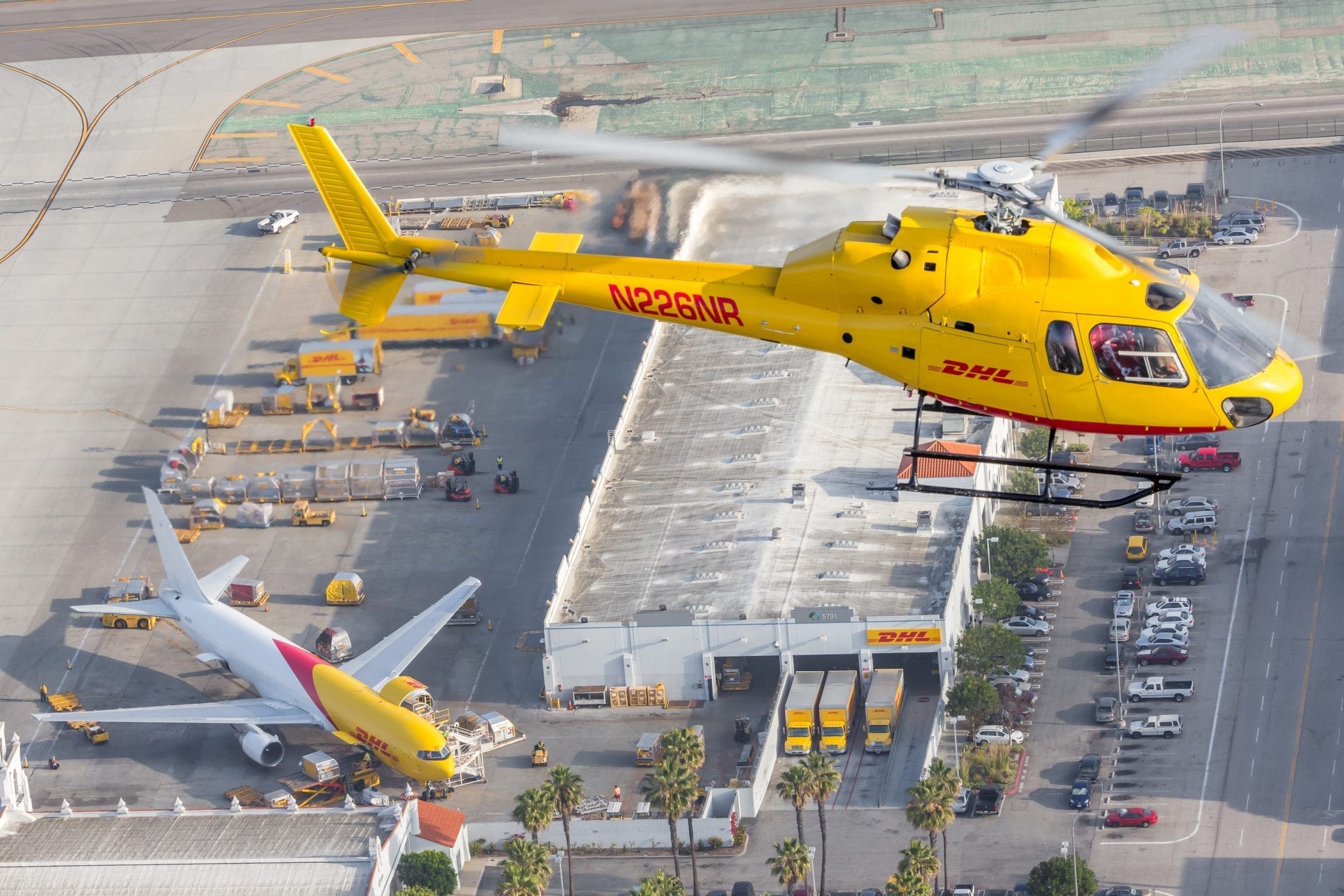
  • DHL eCommerce gets logistics technology platform – FarEye on board

    DHL eCommerce gets logistics technology platform – FarEye on board

    FarEye, a logistics management solutions company, became a partner of choice for DHL eCommerce to enhance its customer experience, optimise its resources and deliver its brand promise ‘real-time’.

    DHL eCommerce continuously invests in technology to improve processes and have better communication across all parties. FarEye’s platform became an apt fit as it seamlessly integrated with the organisation’s existing systems and made the IT infrastructure flexible and agile. Being a Software as a Service (SaaS) platform, FarEye gave DHL eCommerce the flexibility to the scale-up and down depending on the demand levels, which gave them an edge to adapt quickly to any work environment.

    DHL eCommerce measured vendors not only by the basis of the features they offered but evaluated them holistically from a ‘process proposed’ perspective.

    Charles Brewer, CEO DHL eCommerce, expressed: “With eCommerce growing at such a rapid pace we see a fantastic opportunity for high quality solutions that will offer a great customer experience and more choice, convenience and control for online shoppers. FarEye’s platform is scalable, future-oriented and flexible. With FarEye we can deliver ‘delight’ by having complete visibility of the logistics movement and keeping customer informed at every step, ‘real-time’.”

    Kushal Nahata, co-founder & CEO FarEye, said:“FarEye is an indispensable support system for brands whose focus is enhanced customer experience and complete visibility of their logistics. Our association with DHL e-commerce has been extremely gratifying as we were competing against giants. FarEye is an enterprise grade technology platform and this win is a testimony to our platform’s capability and defined processes. We shall continue to strive towards excellence and keep our customers at the center of all our activities.”

    FarEye has proved to be a partner of choice for DHL eCommerce by optimising their resources, enhancing their customers’ experience with real-time alerts & smart analytics and making parcel shops more efficient with complete visibility.

  • DHL holds groundbreaking for mega parcel centre in Bochum

    DHL holds groundbreaking for mega parcel centre in Bochum

    DHL Parcel is investing in the business location of Bochum with the construction of another highly modern mega parcel center, this time in the heart of the Ruhr region. Right on schedule, the official construction phase for this major project was heralded today with a groundbreaking ceremony attended by NRW Economics Minister Andreas Pinkwart, Bochum’s mayor Thomas Eiskirch, Jürgen Gerdes, Board Member for the Post – eCommerce – Parcel division at Deutsche Post DHL Group, Rolf Heyer, managing director of Bochum Perspektive 2022 GmbH, and Michael Dufhues, Board Member of general contractor Bremer AG. By the fall of 2019, the new facility will be able to process up to 50,000 shipments per hour thanks to innovative sorting technology, making the Bochum site one of the largest and most efficient parcel centers in Europe.

    “Our network – with an average of 4.3 million parcels per day – leads the way in Germany when it comes to capacity and quality,” says Jürgen Gerdes, emphasizing the project’s significance for the company’s customers and for the region. “Now we are making our network even more efficient – and making the lives of our customers even easier as a result. Our Packstations, parcel boxes and other innovative delivery services also have a hand in this.” Gerdes describes the location of Bochum as ideal: “The new parcel sorting center in the heart of the Ruhr region is a very important gateway to one of the largest metropolitan areas in Europe.” He also points out the benefits for business customers in the region. Thanks to their proximity to the parcel center, their shipments can be picked up very late and still be delivered anywhere in Germany the following day.

    “Logistics and trade are two important pillars of our economy in North Rhine-Westphalia. These are closely intertwined and changing fundamentally through digitization,” Economics and Digitization Minister Andreas Pinkwart emphasizes. “With modern parcel sorting centers like this one, DHL is creating the conditions to meet the requirements of e-commerce – as a dynamic growth engine of trade – in the future as well. I am particularly pleased that DHL has found an excellent location for this project here in Bochum at Mark 51°7.”

  • Kuehne + Nagel to provide production logistics to Mercedes-Benz

    Kuehne + Nagel to provide production logistics to Mercedes-Benz

    Kuehne + Nagel announced a new multi-year contract with Mercedes-Benz Vans, LLC, part of the Daimler AG Group, to implement a production logistics solution for its new assembly line and production facility in Charleston, South Carolina. The solution will provide flexible and efficient materials management as well as just-in-time deliveries for the assembly process.

    Kuehne + Nagel’s contract logistics team engineered a multi-year innovative production logistics operations plan utilizing a modern logistics center that will include vision picking smart glasses and automated guided vehicles (AGVs). Comprehensive services will include goods receiving, inventory management and just-in-time picking and sequencing for delivery to the car makers’ assembly line and production facility.

    For the implementation, Kuehne + Nagel is utilizing its successful customer transition and integration model, which includes multiple disciplinary project management and dedicated resources from the logistics provider’s national, regional and corporate organizations. In order to ensure reduce inventory, increase quality, and reduce total costs for each unit built, Kuehne + Nagel will use its KN Production System (KNPS), an in-house developed structured methodology based on lean supply chain principles.

    “We are delighted to expand our 15-year global relationship with Daimler AG and Mercedes-Benz,” said Bob Mihok, president and CEO, Kuehne + Nagel North America. “Our supply chain services in the new Charleston, South Carolina Sprinter van plant will improve assembly line productivity and enhance vehicle production. We look forward to adding value to our customer’s supply chain for many years to come.”

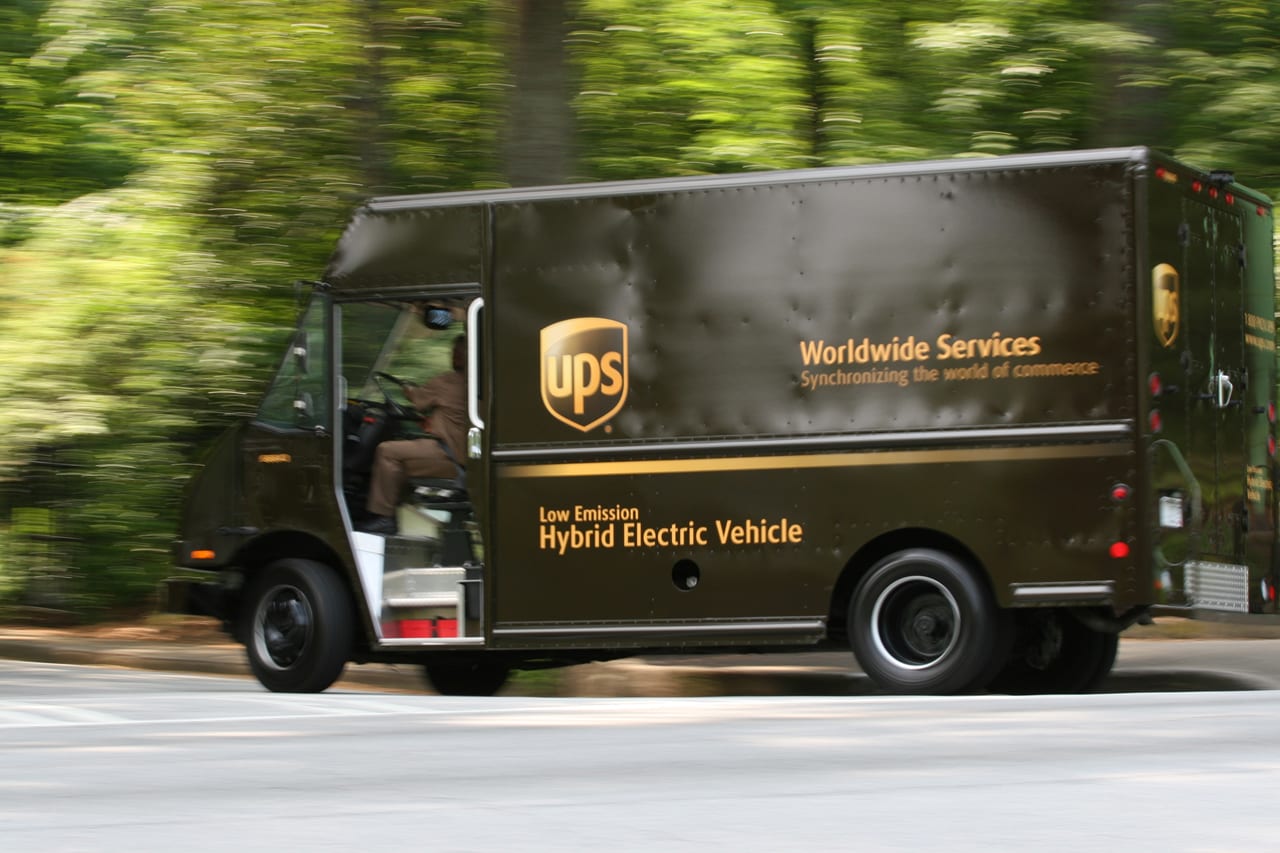
  • UPS enhances driver safety training with virtual reality

    UPS enhances driver safety training with virtual reality

    UPS said it will start training student delivery drivers to spot and identify road hazards using virtual reality (VR) headsets that vividly simulate the experience of driving on city streets while teaching a more memorable classroom lesson.

    The company will begin launching VR training in September at its nine UPS Integrad training facilities. The adoption of VR for driver safety training reflects UPS’s commitment to using the latest and best technology to protect its on-road employees and the communities they serve.

    IT experts at UPS created the VR training modules that users see and hear inside VR headsets like the HTC Vive. Students using the modules must verbally identify potential road hazards such as pedestrians, parked cars and oncoming traffic. The 360-degree view inside the headset is realistic down to the finest details.

    “Virtual Reality offers a big technological leap in the realm of driver safety training,” said Juan Perez, UPS chief information and engineering officer. “VR creates a hyper-realistic streetscape that will dazzle even the youngest of our drivers whose previous exposure to the technology was through video games.”

    The VR training modules replace the touchscreen devices UPS Integrad facilities currently use to teach lessons on road hazards. For now, the VR training is only for those who drive package delivery trucks. But the company is exploring VR and even Augmented Reality (AR) for training tractor trailer drivers and performing other duties throughout the operation.

    UPS currently operates eight UPS Integrad facilities in the United States and two others in Europe. Another U.S. facility is set to open this year, bringing the total to nine in the United States.

    UPS Integrad facilities teach students the fundamentals of driving delivery vehicles and delivering packages using a hands-on approach. Students even practice driving UPS delivery trucks in a replica outdoor city that has real streets and sidewalks and simulated delivery and pickup sites.

    UPS Integrad and its use of the latest technology supports the company’s safety culture. UPS has more than 9,000 drivers in its Circle of Honor, an elite group of drivers who have not had an avoidable accident in at least 25 years.
    The first UPS Integrad opened in Landover, Md., in 2007. The training – based on the philosophy “Teach me. Show me. Let me.” – occurs before students begin more intensive on-road training. Nearly 9,000 drivers have graduated from UPS Integrad locations since 2007.

    “This training is foundational, and Virtual Reality brings it to life,” said Jeanne Lawrence, UPS Integrad expansion director. “VR complements real-world training in a way that deeply engages our employees in the UPS Integrad curriculum.”

  • Rhenus selects winners of the Rhevo Initiative

    Rhenus selects winners of the Rhevo Initiative

    170 ideas, 28 countries and one goal: the 16 winners of the Rhenus corporate initiative entitled “Rhevo” were selected at the headquarters of the Rhenus Group in Holzwickede in July. Using one major final pitch, the finalists from all over the world had the opportunity to persuade the jury of experts drawn from the Rhenus world. The goal of the innovation competition, which was launched in the spring, is to develop new products and innovative business models with digital concepts.

    Each of the 43 finalists had just seven minutes to introduce their business ideas and advertise them to attract investments and other resources so that they can be introduced. They had checked, revised and refined their ideas during many months of work and had built and tested prototypes. They were supported by training sessions and entrepreneurs from the start-up scene during this time.

    The jury examined the finalists’ product ideas to see whether they were suitable for the future and might open up opportunities in the market place. “It was hard facing the jury’s questions. They tested our idea rigorously and examined it intensively from all sides,” said participant Usman Kahn.

    After the pitches were over, it was clear that three ideas would be included in existing internal product developments. 13 will others receive ongoing start-up support. “This will be different, depending on the project. Some providers of ideas will be given more time in order to continue testing the market opportunities for their product ideas; others will receive a budget to continue developing their product,” said the member of the Rhenus Board and jury member, Tobias Bartz, summarising the process.

    “We particularly liked a Spanish/German solution from the field of predictive analytics; it’s designed to help us better predict the needs and behaviour of customers,” jury member Petra Finke, who is Global CIO at Rhenus Freight Logistics, explained. An Asian platform idea for marketing free truck capacity and a Russian team with the prototype of an “instant quotation” solution were particularly singled out.

    The jury consisted of Rhenus Board Member, Tobias Bartz, Petra Finke (Global CIO Rhenus Freight Logistics), Vivek Arya (CEO Rhenus India), Jörn Schmersahl (CEO Rhenus Air & Ocean Europe) and Jan Harnisch (COO Ocean Freight Asia); this was an international group of Rhenus experts with great experience in the fields of digitalisation and business development.

  • Hansa Heavy Lift delivers six RTG cranes from Japan to Turkey

    Hansa Heavy Lift delivers six RTG cranes from Japan to Turkey

    Hansa Heavy Lift has transported six rubber tyred gantry (RTG) cranes, each weighing 135 metric tonnes and measuring 28.9 by 11.3 by 26.6 m, from Japan to Turkey.

    All units were loaded onto the vessel HHL Kobe at the port of Saiki in southern Japan, with two of the cranes being discharged at the port of Gebze and the remaining four at the harbour of Gemlik, in Turkey.

    “This was an unusually high number of RTGs being transported on a P2-800 vessel, compelling us to extend the deck as well as ensure there was sufficient space between the units, so that all cargo could be accommodated safely,” said Mohammad Abbas, project engineer, Hansa Heavy Lift.

    “Due to the sensitivity of the cargo units, additional precautions needed to be taken, including a motion response analysis to determine the effects of any accelerations on the cargo during the voyage.”

    “Strong cooperation between the crews and stevedores at the ports of loading and discharge ensured the project was executed seamlessly, within the tight timeframe that had been assigned.”

    The deck extension included six metres to the aft side and three metres to the starboard side, as well as a total of 11 tween deck pontoons being stowed on deck to accommodate all units.

    The strength of the extension tween deck panels was verified through a finite element analysis, to demonstrate that the overhung deck was sufficiently safe and durable enough to support the cargo.

    A 3D model assimilation was also created before the start of the voyage to check the clearance between the RTGs and vessels’ cranes due to the large size of the units.

    The project was carried out on behalf of Mitsui Engineering and Shipbuilding, with Yilport Konteyner Terminal Ve Liman Isletmeleri A.S. acting as the charterer.

    “By optimising the number of cranes transported on a single vessel, Hansa Heavy Lift presented us with a very cost-effective and efficient option,” said Selami Mercan, Engineering Service Director, Yilport Holding Inc.

    “The entire project, from planning to delivery, was handled with care and ease, and we would be eager to work with Hansa Heavy Lift again in the future.”

    Hansa Heavy Lift specialises in the super heavy lift 900+ metric tonnes industry, delivering best-in-class engineering solutions to customers, particularly in the subsea, oil and gas, and the offshore wind farm sectors.

  • 40% of logistics respondents view FaaS as key transformational trend

    40% of logistics respondents view FaaS as key transformational trend

    In a recent B2B technology survey of 455 U.S.-based companies across nine verticals, ABI Research finds 41% of logistics respondents view Freight as a Service (FaaS) as a key transformative technology trend. The rapid growth of e-commerce requires new transport modes such as delivery drones and robots, direct-to-car, and direct-to-home deliveries. FaaS will represent 30% or more than US$900 billion of total goods transportation revenues by 2030. Turning freight transport into a service allows cargo capacity to be ordered seamlessly and spontaneously in open marketplaces which will optimise capacity utilisation and reduce costs.

    “Only 2% of logistics respondents appear to comprehend the disruptive capabilities of ETE Supply Chain Visibility states Susan Beardslee, senior analyst at ABI Research “However transparency across multiple modes and suppliers drive material ROI through reduced inventory, lead-time, and losses, as well as enhanced service levels through responses to demand surges and external variables.”

    ABI Research found logistics firms are adding wearable technologies such as Apple watches, GoPro’s and Google Glasses, with 61% adopting as part of their technology innovation strategy. AI platforms are beginning to enjoy growing adoption rates. Data analytics is starting to “cross the chasm” along with the traditional role of monitoring with both leveraging the emerging capabilities of AI. Real time analytics of vast, evolving, and unstructured data are beginning to transform the supply chain.

    Key survey findings concerning attitudes towards and perceived benefits of key technologies include:
    Legacy systems: 42% of logistics respondents consider alignment with their existing legacy framework as the largest barrier preventing adoption. This highlights the importance of open systems and integration support to drive scalable interest and implementation.

    Co-opetition: Over a quarter of respondents expect to keep their data closed for internal use. This appears to be a trend as evidenced by only 6% highly considering sharing operational data with industry peers and only 12% with key partners.

    Robotics: Warehouse solutions, such as Kiva systems at Amazon, support advanced visioning, mobility, autonomous navigation, complex manipulation, and motion control. This reduces costs, increases productivity, and improves quality for material handling tasks. Nearly a quarter of respondents see this poised for a high level of disruption.

    Indoor-location and asset tracking: The value of goods tracking increases exponentially when it can be integrated into a comprehensive digital strategy with adjacencies like manufacturing, storage, and transportation; increasing potential revenues and reducing loss, and human investment. 58% of respondents in total prioritized the value of integration, TTD, and operational cost savings.

    These findings are from ABI Research’s Industry Survey: Transformative Technology Adoption and Attitude – Logistics report. This report is part of the company’s Intelligent Transportation & eFreight research service, which includes research, data, and analyst insights.

  • OIA Global launches new office supporting Malaysia’s growth

    OIA Global launches new office supporting Malaysia’s growth

    OIA Global, a logistics, packaging and material sourcing provider, announced its Southeast Asia expansion with the opening of its first company-owned office in Kuala Lumpur, Malaysia. OIA’s decision to open the office, is driven by customer growth, and the continued growth of the Malaysian economy.

    Peter Wong, OIA’s managing director Asia-Pacific, noted the country posted a strong 5.6% GDP expansion in the first quarter which ended March 31, 2017. “Our business continues to grow in Southeast Asia and specifically in Malaysia,” said Wong.

    The new Kuala Lumpur office supports the existing OIA Penang location led by Herlyn Choo, branch manager. “Malaysia continues to lead in exports of energy, electronic equipment, wood products, textiles and chemicals,” Choo stated. “The increased volume of imports and exports are a clear message for OIA Global to continue to expand here in Malaysia,” Choo added.

    The new office is located at located at Unit A505, 6th Floor, West Wing, Wisma Consplant 2, No 7, Jalan SS16/1 47500 Subanjaya Selangor Malaysia.

  • Arvato Takes Over European E-commerce Logistics for Doppler Labs

    Arvato Takes Over European E-commerce Logistics for Doppler Labs

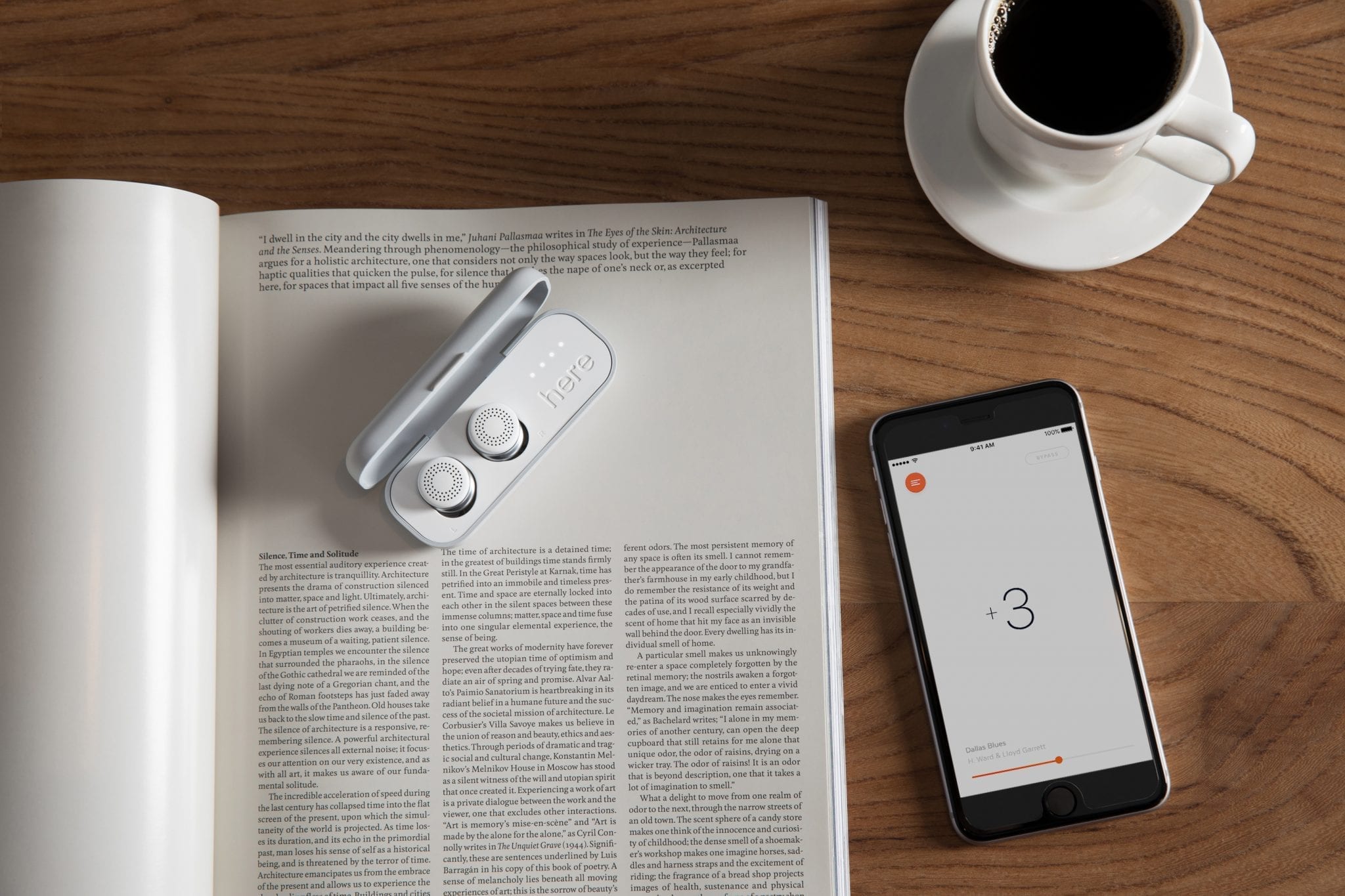
    Arvato SCM Solutions has acquired Doppler Labs as a new customer. This US start-up from San Francisco has developed the first 3-in-1 wireless smart earbuds, Here OneTM; and Arvato’s Hightech & Entertainment business unit is now handling the company’s e-commerce logistics for all of Europe.

    “In Arvato, we are pleased to have found a fulfillment provider that will promote our expansion to Europe with its network and e-commerce expertise,” says Kevin Lynch, Business Operations Manager, Doppler Labs. Founded in 2013, the start-up currently has more than 70 employees and specializes in the development of smart wireless earbuds that can dynamically increase or decrease the volume of real- world sound. The Here One earbuds can also stream music, take phone calls, and filter out and reduce ambient noise with the aid of a connected smartphone app.

    “Doppler Labs is a start-up company with strong potential, and we are happy to support their plans for expansion,” says Martijn Nielen, VP Netherlands at Arvato SCM Solutions.

    In addition to inventory management, the logistical services for Doppler Labs include picking, packing, shipping, and clearing the goods for customs. When an order is received, Arvato works with the online platform Salesupply, whose Shopify e-shop solution has an integrated order management system that manages all orders generated through the Doppler Labs webshop. The electronic processing of all information is handled by an SAP-Lite solution. “This is ideal for start-up companies such as Doppler Labs who are commencing the journey to scale globally,” emphasizes Martijn Nielen. “They benefit from being able to use a sophisticated system like SAP, in the ‘Lite version’, for an attractive price. Moving forward, I see great prospects for us to grow together.”

    Arvato is using its Dutch network for Doppler Labs’ B2C e-commerce business in Europe. The distribution of the smart earbuds throughout Europe is handled from the Arvato site in Gennep.

  • Swisslog Healthcare acquires Talyst

    Swisslog Healthcare acquires Talyst

    Swisslog Healthcare, a supplier of medication supply chain solutions and services, has acquired Talyst Systems, a market leader in pharmacy automation solutions for hospitals and long-term care facilities. Healthcare providers around the world share similar challenges with delivering medications safely and efficiently. The acquisition creates an unmatched portfolio of inpatient and outpatient pharmacy solutions that transform health systems’ performance. Talyst’s AutoCarousel, AutoPack and AutoSecure Storage Solutions represent the best-of-breed in current generation pharmacy automation technologies.

    “Swisslog Healthcare and Talyst are well known for developing innovative automation and software solutions,” said Stephan Sonderegger, CEO – Swisslog Healthcare. “The two companies share a similar mission and vision and the Talyst portfolio of enterprise software and pharmacy automation products completes Swisslog Healthcare’s pharmacy automation offering in North America. This acquisition adds critical components to our solutions strategy of providing customers with end-to-end integration for the medication supply chain across the continuum of care.”

    Founded in 2002, Talyst was recognized by KLAS Research’s most recent (2016) Pharmacy Report as a leader in Enterprise Medication Management Software that minimizes medication spending. “Talyst develops customer-centric technologies that enable providers to deliver better patient care. Our culture of innovation and accountability aligns well with Swisslog Healthcare,” notes Carla Corkern, Talyst CEO. “With Swisslog we can now scale our solutions globally, taking advantage of their sales reach, manufacturing, and R&D facilities across North America, EMEA and Asia. We’re excited to be part of a strong and dedicated organization building towards an important differentiated vision for health systems and hospital pharmacies.”

    “Swisslog Healthcare and Talyst customers will benefit from a total inpatient pharmacy automation offering fully integrated with the Swisslog transport automation portfolio of pneumatic tube systems installed in 2,300 hospitals in North America. The acquisition expands our product offerings which, combined with our manufacturing expertise and extensive field service network, gives health systems unprecedented access to a complete solution including data analytics, pharmacy automation and transport automation,” notes Sonderegger. “Our respective customers will benefit from a compelling technology and services road map that leverages the extensive resources and capabilities of the combined companies.”

    With the acquisition, the Talyst executive team along with the rest of the company will join the Swisslog Healthcare organization. Talyst CEO and Chairman of the Board, Carla Corkern, has elected to pursue other opportunities. The Talyst Seattle-area headquarters will become an important technology, product and business development hub for Swisslog Healthcare North America. Swisslog Healthcare is building a new state-of-the-art North America manufacturing facility and US headquarters in the Denver-Boulder area, which is planned for occupation in early 2018.

  • Australia Post launches services hub

    Australia Post launches services hub

    Australia Post is looking to draw a line under concerns that retailers are finding it increasingly hard to compete with the scale of global competitors, announcing a partnership with fintech company AlphaPaymentsCloud that promises to bring traders an integrated service platform.

    Incorporating everything from payments and identification to logistics, loyalty and fraud protection, Australia Post is touting its new service, called the AlphaCommerceHub, as an API solution to the myriad of different vendor contracts many retailers currently have to negotiate.

    Australia Post will instead bring on vendor partners into the system, allowing retailers to “switch” services off-and-on depending on their individual needs, while remaining PCI compliant.

    Chief digital officer at Australia Post, Andrew Walduck, told that the publicly-owned postie was looking to up its capabilities in identity verification, to drive the next wave of growth in the payments space.

    “We’re building capabilities in identity and payments as we see it as one of the critical things that will enable our economy to be able to thrive in the next wave of growth, driven by great customer experiences getting people things in the way they want,” he said.

    The platform has been designed to incorporate innovation in services, and will include both traditional payment options in conjunction with banking partners as well as mobile payment products like Apple Pay.

    Walduck said smaller retailers have been in a less advantageous position than larger players when it comes to sifting through an ever-growing number of retail services to maintain a leading customer proposition.

    “The platform provides the ability for retailers to integrate into a single place, reducing overall costs…they can move to provide a one click purchase process in a way that makes it really easy for a customer to be identified, and then control how that product is delivered.

    “It’s an absolute game changer in Australia’s fintech evolution so we’re incredibly excited about the potential this joint venture brings to both our banking partners and our customers,” Walduck said.

    Australia Post began trailing its recently launched verification of identity application earlier this month with initial discussions taking place with credit unions, mortgage brokers and government departments.

    Initial partners include Airtasker, Credit Union Australia, Travelex and the Queensland Police Service.

    Its internal research has previously estimated that the existing state of identity verification processes costs the Australian economy as much as $11 billion per year.

  • DB Schenker Partners Sichuan Jiuye Perishable Goods Supply Chain

    DB Schenker Partners Sichuan Jiuye Perishable Goods Supply Chain

    DB Schenker, one of the leading global logistics service providers, and Sichuan JiuYe Export, a China-based B2B food trading company, have signed a strategic partnership agreement at the A20 New Agriculture Fair in Hangzhou, China. The agreement between the two parties cements their future cooperation in logistic handling of perishable goods.

    Sichuan JiuYe provides cross border one-stop supply chain services to agriculture, food e-commerce and food companies in China and abroad. The company’s main export market is East Europe; major import markets comprise Australia, North America and Europe. By using DB Schenker as freight forwarding provider for its perishable goods, Sichuan JiuYe benefits from DB Schenker’s strong global network and extensive market experience. With an internationally leading and renowned logistics partner, JiuYe aims at growing its business scope by attracting more customers from existing and new markets.

    DB Schenker considers JiuYe as an important strategic partner to strengthen and develop its footprint in the perishable segment in China. While already having a well-established infrastructure for the logistic handling of perishables in JiuYe’s current import countries, DB Schenker sees the cooperation with the food trader as excellent opportunity to further build up its competencies in managing perishable shipments in and out of China.

    The partnership agreement between the two companies results from previous collaborations earlier this year. DB Schenker smoothly executed several air freight export shipments of fresh fruits from China to Russia, Singapore and Hong Kong. Based on the excellent and consistent service performance provided by DB Schenker JiuYe was convinced to have found the right logistics partner in DB Schenker.

    “We are honoured and thrilled by collaborating with Sichuan JiuYe. This is an important milestone for us and brings us closer to our goal to achieve a leading market position in the logistics of perishable goods in China”, says Thomas Sorensen, CEO North/Central China, Schenker China Ltd., at the New Agricultural Fair in Hangzhou.

  • Central Pattana lifts profit by 8 per cent

    Central Pattana lifts profit by 8 per cent

    Central Pattana Public Company (CPN) had a second-quarter consolidated net profit of THB2.4 billion (US$74.6 million), up 8 per cent year on year.

    Total revenues grew by 6 per cent to THB7.62 billion.

    CPN, which manages 30 shopping malls, says its performance was resilient as its has continually placed great emphasis on effective revenue generation from new malls, asset enhancement and efficient management of running costs.

    At the end of the quarter, the occupancy rate for its retail properties remained high at an average of 92 per cent, slightly lower that the first quarter’s 93 per cent because of major renovations at CentralWorld and CentralPlaza Rama 3.

    For the second quarter, the average rental rate of all retail properties was THB1636 a
    sqm/month. Same-store rental growth was primarily driven by rental rate growth with lower discounts in most projects, especially at CentralPlaza Chiang Rai with double-digit rental growth after contract renewal, together with impressive rental growth at CentralMarina after a renovation.

    Excluding new and renovated projects, same-store rental revenues for the quarter grew by about 3.4 per cent, while effective costs management resulted in a higher gross profit ratio of 50.1 per cent, says the group.

    It attributes the strong performance to several factors:

    • The CentralPlaza Nakhon Si Thammarat shopping mall launched in July last year, which had an occupancy rate of 88 per cent at the end of the quarter.
    • Asset enhancement, including CentralMarina (previously Central Center Pattaya) being inaugurated in December after a six-month renovation, with its occupancy rate reaching 90 per cent by the end of the quarter; plus a Food Destination Zone, incorporating a supermarket, being added at CentralPlaza Bangna, CentralPlaza Chaengwattana, CentralMarina and CentralFestival Phuket.

    On a quarterly basis, CPN had a 1 per cent drop in total revenues partly because of projects under renovation (especially CentralWorld), higher administrative expenses with the engagement of new senior-management staff members in preparation for expansion, and higher marketing and promotional expenses. As a result, net profit declined 11 per cent quarter on quarter.

    For the first half, CPN had 6 per cent growth in total revenues and a 12 per cent leap in net profit. Excluding new and renovated projects, same-store rental revenues grew by about 3.4 per cent.

    Meanwhile, CPN has participated in Malaysia’s Central i-City project as its pioneering shopping complex abroad. This is by way of a JV in which CPN, through subsidiaries, holds a 60 per cent stake. Its wholly owned subsidiary I-R&D holds the balance. The project is scheduled to launch next year. CPN has already secured key anchor tenants.

    Also, the board has approved entering into a JV to develop a theme park project in central Phuket, while CPN and Dusit Thani Public Company will jointly invest in a mixed-use development project in Bangkok including a shopping mall.

  • MBK launches “Bangkok Buddy” service

    MBK launches “Bangkok Buddy” service

    Thai shopping mall MBK Center has launched a “Bangkok Buddy” service aimed at providing a memorable customer experience for local and international shoppers.

    Available from 2pm every day, the two-hour experience starts with an exclusive hip hop and contemporary dance production combining electronic music with Thai instruments. The Bangkok Buddy team then walks around the mall to offer customers and tourists any shopping or travelling help they may need.

    Founded in 1985 as Mah-Boon-Krong, MBK Shopping Center is at Pathumwan intersection in the heart of the city. The eight-storey mall offers 140,000 sqm with more than 2500 shops and stalls plus 150 eateries. It has an average of 115,000 customers a day, including 35,000 tourists.

    MBK is close to Siam Centre, Siam Discovery, Siam Paragon and Siam Square with their shopping and dining experiences.