Retail News CRM

Category: Startups

Retail News Asia is committed to providing both local and global retailers with the latest Startup news throughout the Asian market. This on a daily base.

  • After Flipkart, Walmart eyes another Indian startup that specialises in AI

    After Flipkart, Walmart eyes another Indian startup that specialises in AI

    Walmart Labs India, the local product development division of US retail giant Walmart, last week announced it would hire key tech team from Artificial Intelligence (AI) and data analytics start-up Int.ai — its second acqui-hiring in the country within three months.

    Three engineers — including co-founders Vinay Kumar NP and Praneeth Doguparthy — from Int.ai will join Walmart Labs India.

    They will be part of the health and wellness portfolio under Customer Technology at Walmart Labs, the company said in a statement.

    “We are glad to welcome the Int.ai team to the big Walmart Labs family and believe that their expertise will be a great addition to our data analytics capabilities,” said Hari Vasudev, Country Head and Vice President – Technology, Walmart Labs India.

    This is the second acqui-hiring Walmart Labs India has made — after micro-app startup Appsfly in September where it merged Appsfly’s six-member team into its customer experience engineering group.

    Founded in 2016, Int.ai has invested and built expertise in architecting an analytics automation framework which will support Walmart Labs in developing solutions and supporting large-scale businesses.

    “After working for almost 3 years on it, we are very happy to let you know that our entire team will be joining Walmart Labs, India,” Vinay and Praneeth said in a separate statement.

    “We started Int.ai in the beginning of 2016 with an ambitious mission to build an AI-powered personal data analyst for every business executive,” they added.

    Int.ai developed expertise in blending Machine Learning with data analytics to uncover insights that significantly impact business metrics.

  • Go-Viet, Grab Vietnam to face tight competition

    Go-Viet, Grab Vietnam to face tight competition

    Vietnamese technology startup Be Group Corporation officially launched its ride-hailing platform Thursday, with beBike and beCar. The latest entrant to a market dominated by the likes of Grab and Go Viet has set an ambitious target of partnering with 10,000 drivers in a few weeks, by the end of 2018, and 100,000 drivers next year. Unlike the current ride-hailing firms, Be Group has registers its service as a transportation business.

    “We have gathered a lot of talent, and I personally have experience running start-ups for many years. With thousands of billions of dong ($1= VND23,287) mobilised, we are confident our platform can compete in this fierce market,” Be Group CEO Tran Thanh Hai said at the launch.

    Be Group apps will start operating in Hanoi and Ho Chi Minh City from December 17. The company has announced an initial 25-percent royalty for beBike and beCar drivers, while specific prices and discount schemes for customers have not been revealed.

    Be Group hopes to become a big player like Grab or Go Viet with a comprehensive super-app. In 2019, the company plans to roll out delivery and payment services. It aims to attract tens of millions of users in the next three years.

    Vietnam’s ride-hailing market has seen new entrants after Uber’s departure early this year, including Vietnamese firm FastGo, GoViet – a subsidiary of Indonesia’s Go-Jek, Aber and the latest Be Group.

    Grab, which counts Chinese ride-hailing firm Didi Chuxing and Japan’s SoftBank Group Corp among its backers, had 175,000 drivers and bikers in Vietnam as of September and is the most prominent player in Vietnam after it pushed out Uber, according to Reuters.

    Rival GoJek entered Vietnam in August eyeing to grab a share of the fast-growing market. Vietnam has 95 million people and many use smartphones.

    A number of local taxi companies in Vietnam have come together to compete against ride-hailing firms, while Grab has been in a legal battle for more than a year with local taxi firm Vinasun Corp.

  • Vietnamese government will share risks with startups, PM assures

    Vietnamese government will share risks with startups, PM assures

    The Vietnamese government is willing to make changes in regulations to facilitate timely funding of startups, Prime Minister Nguyen Xuan Phuc said. Addressing at the Youth Startups Forum 2018 in Hanoi on Thursday, he acknowledged the challenges that Vietnamese startups have highlighted, saying that it is the task of authorities to find a breakthrough solution for creative entrepreneurs to start and run a business.

    He asked the Ministry of Planning and Investment, the Ministry of Science and Technology, the Ministry of Finance and the State Bank of Vietnam to create more favorable conditions for startups by making changes in the legal framework.

    “We need a breakthrough innovation in policies from government bodies to help startups succeed with their ideas,” he told the forum, which attracted 300 entrepreneurs from across the country.

    The government is willing to share a part of the risks with startups, the PM added.

    He asked relevant ministries and other agencies to report in detail next month on the solutions they have identified for the problems that industry insiders have highlighted.

    Vietnam has seen an increasing number of startups in recent years. The country’s speed of startup development ranks third among ASEAN members. But regulatory obstructions are hindering their ability to attract funds they need to establish themselves and thrive in the market, entrepreneurs said at the forum.

    Thach Le Anh, founder of Vietnam Silicon Valley, a government-backed organization aiming to stimulate the growth of startups, said that angel investors are reluctant to invest due to a lack of incentives in tax and policies. Angel investors are people who inject money into a new business in the early stage.

    The early financial support is crucial for a startup to succeed, Anh said.

    Nguyen Manh Dung, a representative of the investment fund CyberAgent Veuntures in Vietnam, also said that many investors want to invest in Vietnam’s startups, as larger markets like the U.S., Japan and China require bigger capital and fewer opportunities.

    Investors are also reluctant about later stage investments, when profits can be extracted, because of slow administration procedures, he said.

    Disbursement procedures in Vietnam could take from six months to a year while the very nature of startups is that they need to act fast, he added.

    Dung also said that divestment was one the main concerns that investors have.

    “These challenges take opportunities away from startups,” he said.

    Dam Quang Thang, CEO of AgriTech Village, a company which assists local startups in agriculture, said that although startups often use new technological solutions, they have to go through a traditional testing method, which is more time consuming than it should be.

    A representative of Vietinbank, Vietnam’s fourth-biggest listed bank by market capitalization, said tight bidding procedures and long financial checks were preventing the bank from investing in a tech startup.

    “Startups struggle to sell their products to investors as they have to go through the traditional process. There must be a better way for them to sell their new solutions,” the representative said.

    Last year, Vietnamese startups received $300 million in investments in 92 different deals, according to startup accelerator program Topica Founder Institute (TFI).

  • ‘In startup world, being seen as crazy is normal’: Grab co-founder

    ‘In startup world, being seen as crazy is normal’: Grab co-founder

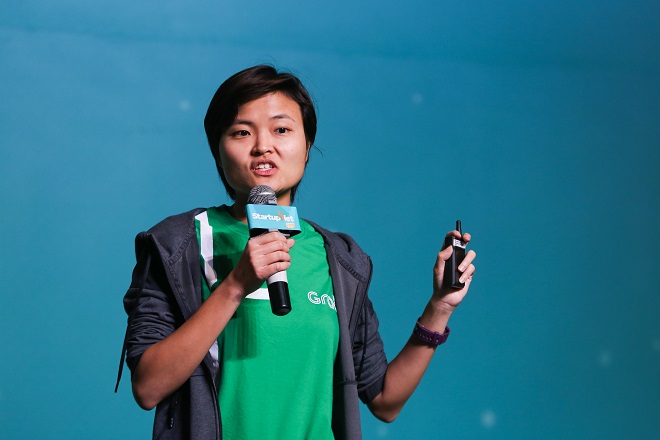
    Startup entrepreneurs need passion and should take risks and make sacrifices to succeed, says Tan Hooi Ling, co-founder of Grab. She said passion and commitment, not money making, should drive a startup, and that it was okay to be considered crazy. The co-founder of Grab was speaking at the closing ceremony of the 2018 Startup Vietnam contest in Ho Chi Minh City on November 15,

    She traced Grab’s journey to becoming one of the major ride-sharing services in the world. It all started seven years ago when she and co-founder Anthony Tan spoke about deploying a mobile call service. But no one could imagine what the application would be like and some even called the idea crazy.

    The skepticism and protestations did not dissuade the Grab team, which continued to plow ahead on its difficult journey.”When we shared our idea, they raised their eyebrows and asked, ‘What? What exactly do you want to do? How does this work?’”

    One of the big difficulties she and her colleagues faced frequently was finding partners and building a team with a vision and belief in the future of the startup.

    “At first, not many people understood our model, so we had to look around the world for engineers, scientists.”

    Grab is now present in 235 cities in eight Southeast Asian countries. Its application has been downloaded 125 million times, meaning every fourth smartphone user is a Grab user. Its annual revenue now tops a billion dollars.

    “It was the result of a grueling seven-year journey where we tried, failed, and stood up again so many times. This is an experience most startups would encounter.”

    A new idea could be considered crazy today, but make a tremendous impact on the world tomorrow; that is the key to innovation, Tan Hooi Ling said.

    She said another lesson to be learned from Grab is to know how to stop and ask questions whenever there is trouble or a stumble, instead of continuing with the same strategy.

    After each spill, the startup needs to calmly reflect on what has happened, why the failure, what is not going in the right direction, and how to change, she said.

    After drawing lessons, the entrepreneurs must pull themselves up and continue with their journey, she said. But that perseverance should be accompanied by a passion and the courage to take risks and sacrifice time, effort, money, and energy to realize the dream.

    “Do not start a business just because you want to make more money or you will lose a lot before seeing the light. Do it when and only when your heart races every day and when you think you have to achieve it completely and at any cost.”

    “If someone says you are crazy, let it go and move on. In startup world, being seen as crazy is normal.”

  • Start-up fund to create 11,000 jobs in Korea

    Start-up fund to create 11,000 jobs in Korea

    Local banks have invested an additional 345 billion won ($303.8 million) into start-up support. Based on past results, the latest funding could yield 11,000 jobs, D.Camp said on Wednesday. In 2012, 18 local banks teamed up to create and invest 500 billion won into D.Camp, a non-profit organization that supports early-stage start-ups. They decided to pour another 345 billion won into the non-profit in April.

    A total of 320 billion won of the total is being allocated to a private investment firm, K-Growth, to create a fund specializing in local start-ups. K-Growth will pull in other investors to join the new fund, with the total size targeted at 1.6 trillion won.

    The remaining 25 billion won will be utilized by D.Camp for the running of its co-working space and for the organization of various training and meet-up sessions for start-ups.

    D.Camp analyzed the number of jobs created by start-ups that received investments from the non-profit and K-Growth in the past in order to calculate how many jobs the new investment is likely to create.

    “K-Growth’s fund will produce 10,080 new jobs, while D.Camp’s support can add 960 to that figure, so the total will come to about 11,000” in the next three years, said D.Camp head Kim Hong-il at a press event in southern Seoul.

    D.Camp began investing in and incubating early-stage start-ups in 2015. Among 121 start-ups it invested in, 86.4 percent, or 110 companies, managed to survive and expand from seed stage. This is higher than the local survival rate of 38.2 percent and the Organization for Economic Cooperation and Development’s average of 57.2 percent.

    The enterprise value of the companies increased an average of 282 percent after receiving D.Camp investment. Among the 110 surviving today, 37.3 percent weren’t generating any revenue at the time the non-profit decided to participate.

    Kim said a big factor in keeping D.Camp’s success rate high is its monthly demo day, in which start-ups compete and present their businesses in front of other start-up entrepreneurs and investment managers at D.Camp. For teams with good evaluation results, D.Camp recommends investment and support.

    “D.Camp started out as something more like a social responsibility program, but today, we see it as a long-term investment for the country’s economy,” he said. “Start-ups nowadays offer services and products that even customers didn’t know they needed. That kind of innovation is something large-sized companies can’t do.”

  • Start-ups in Korea challenged by overregulation and lack of exits

    Start-ups in Korea challenged by overregulation and lack of exits

    Park Jong-hwan is a Korean start-up success story. Twenty years ago, he was living in a basement room with a friend. In 2015, he became a legendary figure after selling his Kim Gisa navigation service to Kakao for 62.6 billion won ($56.0 million).

    The co-CEO of Kim Gisa Company, who now also runs co-working space company Work&All and a start-up accelerator, met with JoongAng Ilbo on Nov. 2 to discuss the challenges faced by start-ups in Korea.

    During the interview, he expressed the need for a change in government regulations.

    “It is difficult for a second Kim Gisa to emerge in this regulatory environment,” said Park. “When I meet start-ups these days, they don’t have the confidence to start new things but instead worry about facing legal or social problems.”

    “In an environment that first regards new ideas or businesses as illegal, start-ups lose confidence and creativity,” complained the Kim Gisa Company founder.

    Park has struggled with regulations and a negative attitude towards the industry since his early start-up years. When nominated for an award, it was almost rescinded as his service didn’t provide location services inside buildings. When Kakao tried to implement Kim Gisa’s technology to match rides, it was met with government opposition. The government’s strong stance against the growing carpool and ridesharing industries is an issue that particularly frustrates the start-up pioneer.

    Park, whose father is a veteran taxi driver of 40 years, said he understands the opposition from the taxi industry but explained that the carsharing service provides a better alternative for taxi drivers.

    “If a company-owned taxi driver opts to operate on a car-sharing platform, the driver will pay two to three percent in fees instead of the payment to the taxi company, leading to increased income,” said Park. “If we set aside a partial fee for every service and provide it to the taxi industry, as it is done in Australia, private taxi drivers will be less opposed.”

    “The government should be a mediator in the changing times,” he added. Park also argued that Korea’s business environment, which make start-ups mergers and acquisitions (M&A) difficult, pose as an unseen stumbling block for tech-based start-ups.

    A positive cycle of investment, growth, profit return and reinvestment can only occur when there are numerous success stories of start-up exits. But complex tax-related regulations, difficult conditions for initial public offerings and a negative attitude toward start-up exits all prevent M&A from taking place, said Park.

    “If start-ups grow and are bought out by large corporations, they then fall under new regulations as they are considered an affiliate company of a large corporation, even if they maintain the same workforce and business structure,” explained Park. “M&A can only be undertaken by large corporations with enough cash, but the reality is that it’s difficult because of such regulations.”

    The start-up founder lamented the lack of successful exits since Kim Gisa, “There hasn’t been a large-scale M&A in the three years since Kim Gisa,” he notes. “Promising local start-ups are leaving to countries abroad.”

    Park’s co-working sharing company aims to ease some of the burdens faced by start-ups and provide an accommodating environment in the country’s tech hub in Pangyo, Gyeonggi. While tech giants such as NHN, Nexon and AhnLab are able to afford the high rent in Pangyo, it is difficult for start-ups.

    Park argues that acquisition of start-ups by tech giants will become more common if start-ups settle down in Pangyo and create an environment similar to Silicon Valley.

    “I would like to provide a mentoring space to help others reduce the time spent on trial and error,” said Park. “I am looking at two to three start-ups in which to make investments.”

    The start-up mentor said that updating regulations that stand in the way of start-up development could help create new jobs – one of the main promises of the government.

    “When the number of start-ups increases and their businesses grow, there will naturally be more recruitment. The quality of jobs will increase as the number of them rises.”

  • Indonesia’s Queenrides Uses Road Safety to Drive Women’s Empowerment

    Indonesia’s Queenrides Uses Road Safety to Drive Women’s Empowerment

    Iim Fahima Jachja cannot operate a vehicle and relies on a driver to get around Jakarta, but that did not stop her from putting road safety at the heart of her women’s empowerment startup.

    Since launching in late 2016, Queenrides has attracted 200,000 members to join its website.

    Aside from reading articles about lifestyle and financial management, members can also gather in person for workshops covering topics like sexual health and family planning.

    But road safety has been a focus from the beginning said Iim, a mother of two.

    “When you are safe on the road, you can be the best you want to be,” she told the Thomson Reuters Foundation by phone from Jakarta.

    Road deaths are high in Indonesia, according to the Ministry of Transportation, which counted 162,000 fatalities last year, compared with 136,000 in 2015.

    In a country undergoing rapid urbanization as incomes increase, more people are buying vehicles, putting stress on the road network.

    Many drivers avoid taking tests by paying corrupt officials for driving licenses, Iim said.

    She added that the road risks are rising for women in particular, because changing social attitudes mean that more of them are working and commuting.

    At the same time, relatively few women have taken driving lessons and tests to acquire licenses, she said.

    Only about 20 percent of 7,500 Queenrides members surveyed said they had taken a driving test.

    “This is a major issue – this is a crisis – but people haven’t noticed the situation,” Iim said about the number of road deaths in Indonesia.

    Low-income countries have fatality rates more than double those in high-income countries, according to the World Health Organization (WHO).

    There were 104 million registered vehicles in Indonesia, according to the WHO’s latest report on road safety published in 2015.

    Driving Safely

    As well as enabling its members to exchange views and learn more about road safety online, Queenrides arranges workshops with input from the transportation ministry and the traffic police.Participants have gone on to take driving lessons and tests, Iim said.

    That trend could make Indonesia’s roads safer, said Liviu Vedrasco, a road safety expert at the WHO in Bangkok.

    “There are some studies that suggest women are more careful and follow the rules better than men,” he noted.

    One of the Sustainable Development Goals set by the United Nations in 2015 is to halve the global number of deaths and injuries from road traffic crashes by 2020, Vedrasco said.

    As the number of female drivers increases, Indonesia’s transportation ministry has stepped up efforts to reduce crashes involving women by working with outside partners, said Budi Setiyadi, director of land transportation at the ministry.

    “Queenrides is needed for women riders in Indonesia to be given a good education in driving safely because women have a primary role,” Budi said in an email. “They can educate their children, their families, and the surrounding environment.”

    Growing

    As more Indonesian women join the workforce and take to the roads, Queensrides can also help them assert control in other areas of their lives, Iim said.

    For example, about 30 members gathered last month in a child-friendly cafe in Jakarta to discuss family planning and strategies for educating their teenaged children about sex.

    United States-based Johns Hopkins University sent experts to the workshop part of a program targeting “married women of reproductive age,” according to Dinar Pandan Sari of the university’s Center for Communication Programs in Jakarta.

    “The fact that in just two years, Queenrides has been able to grow from an idea to 200,000 women joining their movement is remarkable,” Sari added.

    Queenrides teams up with other organizations to provide information on issues such as women’s rights, while members can also receive financial planning advice from institutions, including Bank Mandiri.

    As Queensrides’ membership grows, revenue from advertising on the website should increase as well, allowing the startup to expand its program, Iim said.

    She said she aims to attract 5 million members over the next three years, making Queenrides the biggest women’s empowerment platform in Southeast Asia.

    “If you can conquer Indonesia, it is easy to conquer any other area in the world,” Iim said. “Conquering Indonesia is like conquering five countries at the same time.”

  • China Mobile Hong Kong names IoT startup competition finalists

    China Mobile Hong Kong names IoT startup competition finalists

    China Mobile Hong Kong has announced the four finalists who will represent Hong Kong in the semi-finals of the China Mobile OneNET Start-ups Marathon Competition later this month.

    Bravolinear Tech, IOTANET, Peacify and Stoneroad IOT will compete with IoT experts from across mainland China during the semi-final competition in Chongqing.

    Bravolinear Tech has developed a narrowband IoT (NB-IoT) based intelligent sensor system for elderly care. IOTANET developed a class consortium blockchain for smart community and device sharing. Peacify is working on a wearable device for monitoring the health of newborn babies. Stoneroad is applying IoT technology to monitor the health of trees on public property.

    The four companies won the first Hong Kong version of the marathon competition, which parent company China Mobile Limited has held in China for the past two years.

    China Mobile Hong Kong worked with HKSTP, the Communications Association of Hong Kong (CAHK) and the Hong Kong Wireless Technology Industry Association (WTIA) to organise the event.

    The startups competed with six other hand-picked teams of entrepreneurs. The teams were provided with free training sessions and technical support before the finals of the Hong Kong contest, which took place last month.

    Each of the four winners will receive a HK$50,000 seed fund as well as being invited to participate in the semi-final competition.

    The Hong Kong version of the competition was designed to align with the HKSAR government’s Smart City Blueprint. It focused on the six key themes of smart transportation, smart living, smart environment, smart city, smart government, and smart finance.

  • LG hosts fair to identify promising start-ups

    LG hosts fair to identify promising start-ups

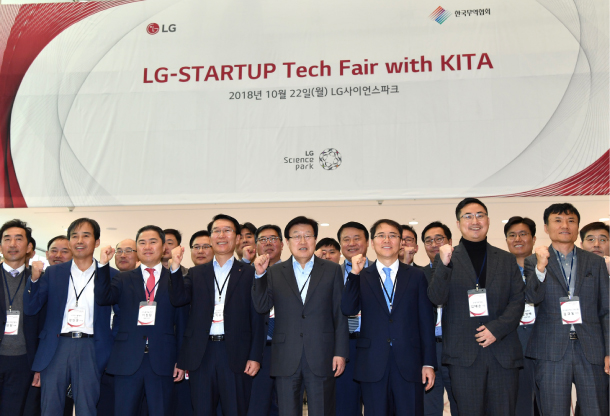
    Technology-related subsidiaries of LG hosted a fair on Monday in which 20 local start-ups presented their cutting-edge developments in areas such as autopilot technologies, artificial intelligence and big data. The small firms are seeking partnerships with and support from the fourth-largest conglomerate in Korea.

    LG picked the start-ups jointly with the Korea International Trade Association (KITA), hoping to revitalize local start-up ecosystem.

    The conglomerate is providing a venue for the fledgling firms to mingle with their larger counterparts and find new business opportunities.

    LG subsidiaries participating in the event include LG Electronics, LG Display, LG Innotek, LG Chem, LG U+ and LG CNS.

    Executives and researchers from those companies as well as KITA CEO Kim Young-ju paid a visit to the start-up fair, which took place at the LG Science Park in Magok, western Seoul, and had a closer look at technologies and services featured.

    Funnel, for instance, has developed a voice-recognition system that automatically collects information from television broadcasts. The resulting database can be used for artificial-intelligence smart speakers and voice-command chat bots.

    Venta VR owns a technology that is able to tape high-resolution 3D videos and calibrate the video images afterwards in a way that enhances the level of immersion and minimizes visual fatigue.

    LG will offer some of the participating start-ups office and research space inside the LG Science Park as well as technology-related consulting and funds.

    Companies under the LG umbrella have been increasing support for start-ups.

    LG Electronics is backing four start-ups that are in the web operating system business, whereas LG CNS and LG Display have been running their own programs.

    LG-led tech fairs aimed at locating and supporting promising local start-ups have been held in the United States, Germany, Israel and Russia.

    With a German start-up discovered during a tech fair in Europe, LG developed a linear compressor technology for refrigerators.

    LG says it will apply the cooperation system it developed overseas to Korean start-ups and smaller companies.

    “Future cooperation with start-ups will propel their global outreach,” said an executive at the LG Science Park.

  • Qnect rebrands to Get and raises $2.5m

    Qnect rebrands to Get and raises $2.5m

    Singapore-based campus social marketplace Get has closed a US$2.5 million funding round led by Vertex Ventures, the VC arm of Singapore sovereign wealth fund Temasek. Existing angel investor Click Ventures also joined in. Get will use the funds to further develop its product, build teams in the city-state, Hong Kong, and Australia, as well as expand to other markets. Launched in 2017, the app facilitates payments for stuff like merchandise, memberships, and events by university clubs and societies. More than 400 organizations with 220,000 members use Get across its three markets.

    The app has undergone a rebranding exercise – it was previously known as Qnect. The name change brings the startup “closer to its mission of helping students get their hands on the things they want,” says 23-year-old co-founder and CEO Daniel Liang.

    “Often, the things they want are heavily inspired and dictated by the actions of their peers, which is why the social aspect underpinning this platform is so important,” he adds.

    Vertex Ventures’ managing partner Joo Hock Chua believes Get’s social element is the missing gap in the online marketplace space.

    He says: “The younger [consumers] are inherently social, and Get is one of the few services that leverage this insight as the basis for a payments platform. This generation wants to buy what their friends are buying, and being able to provide that level of transparency on a scalable digital platform is incredibly powerful.”

  • Vietnam’s FastGo app looks to speed across borders

    Vietnam’s FastGo app looks to speed across borders

    FastGo CEO Nguyen Huu Tuat told on Friday that the app will have its own payment system and will “personalize” promotion deals that will match customers’ interests.

    “Our goal is to reach 30 percent of the market share after six months in these two countries,” he said.

    Explaining the choice of these two countries for the company’s first overseas expansion, Tuat said he wanted to start with the easiest neighboring countries to tap.

    “After looking at their national policies as well as the market’s current competitiveness, we believe that Indonesia and Myanmar would be the perfect destinations,” he said.

    “We also have strategic partners, networks and business strategies for us to be successful in these countries.”

    The company is in the process of hiring staff and renting facilities.

    After launching in Hanoi on June 12, the app is now available in Da Nang and Saigon.

    FastGo last month said it has 15,000 taxi and motorbike partner drivers in Hanoi and Ho Chi Minh City, but they are still not a common sight on the streets, unlike the ubiquitous red and green uniforms of Go-Viet and Grab drivers.

    Tuat said he wants FastGo to become one of Southeast Asia’s top 3 ride-hailing apps in the future.

    The company hopes to make its service available in 20 cities in Vietnam and five other Southeast Asian markets, including the Philippines, Cambodia and Thailand, by the end of next year.

  • Temasek Foundation and Indonesia To Develop Fintech Talents

    Temasek Foundation and Indonesia To Develop Fintech Talents

    Temasek Foundation International (TF INTL) and Ngee Ann Polytechnic (NP) has partnered with Indonesia’s Ministry of Research, Technology and Higher Education (MoRTHE) on Wednesday to deliver a new programme that encourages an exchange of knowledge among academia, industry partners and regulators in the financial technology (FinTech) sphere.

    «The digital economy is disrupting work and indeed, lives. This means that educators need to collaborate to reinvent and update their skills to keep pace with industry developments,» said Benedict Cheong, chief executive of TF INTL in a press statement.

    Educators To Benefit

    This programme will enable educators from Indonesia and Singapore to exchange knowledge and develop new ways to train aspiring youths in financial technology, Cheong said.

    «We hope to develop lecturers with high performance and good understanding in Financial Technology, to supply talent who can compete in the industry’s 4.0 era. This MoU will give a lot of benefits to Indonesia’s Higher Education, especially in universities and polytechnics in Indonesia,» said Ir. Paristiyanti Nurwardani, director of learning of MoRTHE.

    Commitment

    TF INTL has committed a grant of about S$523,000 for this cross-border programme, which will include experiential learning through lab crawls, hackathons, seminars and workshops.

    The course participants will get to visit and network with FinTech developers and users to gain fresh insights into the emerging field, as well as take part in challenges that will inspire innovative applications for the financial sector.

    Collaboration

    Over the next three years, the three parties will collaborate to implement a FinTech learning programme for higher education providers in Indonesia.  Some 180 academic leaders and faculty from Indonesian tertiary institutions will work towards developing FinTech curriculum and capability.

    The programme will span over two runs, ending in 2020. The institutions confirmed for the first run include: Institute Teknologi Bandung (ITB), Politeknik Negeri Jakarta (PNJ), Universitas Indonesia (UI), Universitas Pendidikan Indonesia (UPI), Universitas Padjadjaran (UNPAD) and Univeristas Airlingga (UNAIR).

  • Indonesia still a draw for startups despite rupiah

    Indonesia still a draw for startups despite rupiah

    The recent free-fall of the rupiah could have led to jitters among investors and Singapore companies exposed to Indonesia, but analysts say the country remains attractive for businesses – in particular, startups – to venture into on the back of strong fundamentals.

    More Singapore startups are also actively looking at opportunities in Indonesia, with about 30 of them currently seeking help from Enterprise Singapore to enter the market – a number that the government agency said has been ramped up in the last 18 months.

    “Coming into Indonesia is both risk and opportunity. It is a large market with demographics in its favour, but the risk is mainly on the financial depth of the market – currency is just one of them,” said UOB’s Indonesia economist Enrico Tanuwidjaja.

    Despite the risks involved, he noted a “sustained momentum” in interest from global investors and startups to enter the Indonesia market in the past few years through joint ventures with domestic partners.

    This is because key ingredients to spur innovation in Indonesia have remained intact, with a market seen to be large enough to allow more players in the innovation space, said Khairul Anwar, regional group director (Jakarta), Enterprise Singapore.

    These include a young and growing population of 260 million with half below of them below 25 years old, growing demand to get products and services across the sprawling archipelago, as well as cash-flushed firms looking to deploy their capital into startups.

    With four unicorns – Go-Jek, Tokopedia, Traveloka and Bukalapak – in its bag, Indonesia today boasts a “lively” startup scene that has rekindled a spirit of entrepreneurship and drawn interest from both major domestic and international players, said Mr Anwar. A unicorn is a startup with a valuation of US$1 billion.

    Investments have skyrocketed from US$50 million five years ago to US$3 billion in the first half of 2017.

    For Singapore startups to seize opportunities in Indonesia, Mr Anwar identified five in-demand areas: e-commerce services, logistics and fulfilment, fintech, e-health services, and deep tech.

    With the rise of e-commerce brings the need for related services that attract more SMEs and consumers to buy and sell online, such as fraud detection, e-commerce on-boarding and digital marketing.

    But the e-commerce market remains “highly fragmented and under- developed”, he said. The lack of locally-developed solutions presents an opportunity for Singapore solutions to be integrated with existing Indonesian service providers and platforms.

    The growth of e-commerce has also created new issues in terms of logistics and fulfilment due to Indonesia’s geography and low infrastructure provision.

    “Last-mile fulfilment is a crowded field with low profitability. It is better to work with existing distribution networks and provide the platform, algorithms, services and financing, rather than to own the trucks directly,” advised Mr Anwar.

    “We should work on our strengths in cross-border logistics and Singapore’s strength as a sourcing, distribution and logistics hub to serve Indonesia cost effectively.”

    Fintech in the form of e-payments is another area that local startups can look at as people need to pay for e-commerce and there is still no clear winner in the market, he added, urging Singapore businesses to explore being a gateway or integrator instead of creating a new form of e-payment, due to the difficulty of obtaining required licenses for foreign entities.

    But despite the abundance of opportunity, Indonesia remains a tough nut to crack, noted analysts.

    As an emerging market, the country comes with risks as seen in the latest currency crisis, where the rupiah fell to its lowest level since the Asian Financial Crisis in 1998.

    UOB’s Mr Tanuwidjaja said that the currency challenge can be mitigated through financial products such as hedging and options to take into account future movements.

    Joongshik Wang, EY Asean Digital Strategy – M&A Leader, also noted that a depreciating rupiah might not always work against startups looking to invest in Indonesia.

    “With the falling rupiah, market entry cost will be lower for startups to consider an aggressive approach to entering the market,” he said.

    “But they should be mindful that exiting may become more expensive, as valuation is dependent on the assets’ stability and visibility in the country.”

    Singapore startups currently in Indonesia say they are keeping a close watch on the situation, but most are not overly concerned as risks are part and parcel of venturing into emerging markets.

    Darius Cheung, CEO of 99.Co, said some steps that the business has taken to manage the currency crisis was to keep cash mainly in Singdollar or US dollar, and to change only when needed. He suggested that startups lock as much of their expense contracts in rupiah, while locking in as much revenue in either US dollar or Singdollar as possible.

    Indonesia accounts for half of 99.co’s business, and it is growing 20-25 per cent each quarter.

    Mr Cheung said the political uncertainty surrounding the Indonesian elections due next year is also something to look at. “It is hard to predict what can happen. We generally have to be ‘switched on’ and strategise around it,” he said. “For example, we are currently focused more on the ‘own-stay’ segment of properties because many investors are holding off buying luxury property until elections are over.”

    Carlson Lau, CEO and co-founder of co-working space operator Cocowork (formerly EV Hive), acknowledged that macroeconomic risks “exist in any country” and are often beyond the control of businessmen.

    Cocowork is Indonesia’s largest co-working space operator, with 21 co-working spaces and 30,000 square metres of space.

    Mr Lau’s advice for startups looking to successfully venture into Indonesia regardless of headwinds is to forge strong local partnerships to scale and customise products to fit the market.

    “What can be controlled is having a great product, a strong distribution network, good local partners and a committed team driving the business – and any business could ride out economic cycles,” he said.

    Enterprise Singapore’s Mr Anwar emphasised that if startups “tread wisely”, the upside of investing in Indonesia can be very high. With more unicorns expected to spring from Indonesia in the next few years, local startups need to catch this wave.

    “Singapore companies cannot be absent from this market if they are serious about the startup and tech sector, and be serious about growing big,” he added.


  • Indonesia’s online travel startup Traveloka in talks to raise US$400M

    Indonesia’s online travel startup Traveloka in talks to raise US$400M

    Jakarta-based online travel startup Traveloka is in talks with existing and new investors to raise about US$400 million in funding, citing multiple people privy to the development.

    The company intends to use the capital to “push beyond traditional airline tickets and hotel bookings into activities for travellers like concerts or amusement parks”, according to this report.

    When contacted, a Traveloka spokesperson said: “At this moment we cannot make a confirmation because as part of our corporate policy, we do not comment on rumor or speculation in the market. We will give updates at the soonest if we have new information.”

    Over a year ago, global online travel agency Expedia infused US$350 million primary minority investment into Traveloka. Its other investors are East Ventures and Global Founders Capital.

    Traveloka provides services including flights, hotels and trains booking services, besides tour packages for attractions and activities, connectivity products, airport transports, and buses.

    It has established partnerships with more than 100 domestic and international airlines, serving more than 200,000 routes worldwide, according to its website. It also has a direct accommodation inventory, varying from hotels, apartments, guest houses, homestays, to villas and resorts.

    Traveloka provides more than 40 payment options for customers in Indonesia, Thailand, Vietnam, Malaysia, Singapore and the Philippines. Its app has registered over 30 million downloads so far.

    Last May, the startup launched several new features, including car rental services. It already provides Traveloka Eats, and lending service PayLater.

  • Indonesian fintech startup Moka raises $24M

    Indonesian fintech startup Moka raises $24M

    Indonesia’s Moka, a startup that helps SMEs and retailers manage payment and other business operations, has pulled in a $24 million Series B round for growth.

    The investment is led by Sequoia India and Southeast Asia — which recently announced a new $695 million fund — with participation from new backers SoftBank Ventures Korea, EDBI — the corporate investment arm of Singapore’s Economic Development Board — and EV Growth, the later stage fund from Moka seed investor East Ventures. Existing investors Mandiri Capital, Convergence and Fenox also put into the round.

    The deal takes Moka  to $27.9 million raised to date.

    Moka was started four years ago primarily as a point-of-sale (POS) terminal with some basic business functionality. Today, it claims to work with 12,500 retailers in Indonesia and its services include sales reports, inventory management, table management, loyalty programs, and more. Its primary areas of focus are retailers in the F&B, apparel and services industries. It charges upwards of IDR 249,000 ($17) per month for its basic service and claims to be close to $1 billion in annual transaction volume from its retail partners.

    That’s the company’s core offering, a mobile app that turns any Android  or iOS device into a point-of-sale terminal, but CEO and co-founder Haryanto Tanjo — who started the firm with CTO Grady Laksmono — said it harbors larger goals.

    “Our vision is to be a platform, we want to be an ecosystem,” he told TechCrunch in an interview.

    That’s where much of this new capital will be invested.

    Tanjo said the company is opening its platform up to third-party providers, who can use it to reach merchants with services such as accounting, payroll, HR and more. The focus is initially on local services that cater to SMEs in Indonesia, but as Moka targets larger enterprises as clients, he said that it will integrate larger, global solutions, too.

    Moka offers services beyond point-of-sale, but the core offering is turning any smart device into a cash machine

    Moka itself is expanding its capabilities on the payment side.

    Indonesia, the world’s fourth largest country based on population and Southeast Asia’s largest economy, is in the midst of a fintech revolution with numerous companies pioneering mobile-based wallet services aimed at ending the country’s fixation on cash-based transactions. That’s mean that there are a plethora of options available today. Tanjo said Moka is working to support them all in order to help its merchants grow their businesses and consumers to have easier lives.

    There are so many wallets here in Indonesia,” he said. “There are more than 10 right now and maybe in the next few months there’ll be 15-20, we want to be the platform that works with all of them.”

    Already it works with the likes of OVO, T-Cash and Akulaku, and e-wallets including DANA and Kredivo. The startup is also working in another area of fintech: loans.

    As an extension of its platform, it has tied up with SME loan companies who can reach out to Moka businesses using its platform. With the merchant’s consent, Moka can provide business data — including revenue, profit, etc — to help provide data to assess a loan application. That’s important because the process is particularly challenging in Southeast Asia, where few organized credit checking facilities exist — it makes sense that Moka — which has built its business around encouraging business growth and management — uses the information it has access to help its partners.

    Tanjo said the company takes an undisclosed cut of the loan in cases where it has successfully connected the two parties. He said that he doesn’t expect that to initially become a major revenue stream, but over time he anticipates it will help its customer base grow and become a more important source of income for the startup.

    Sequoia India has some experience in POS startups having backed Pine Labs in India, which recently landed a big $125 million round from PayPal and Singapore sovereign fund Temasek. Still, there are plenty of local players across various markets in Southeast Asia, including StoreHub, which is backed by Temasek subsidiary Vertex Ventures, and Malaysia’s SoftSpace.

    While those two competitors have established a presence in multiple markets in Southeast Asia, Tanjo — the Moka CEO — said there are no plans to venture overseas for at least the next 12 months.

    “We’re still scratching the service,” he said. “So it doesn’t make sense to expand too soon.”