Retail News CRM

Tag: card

  • BNI prepares Indonesia-Hong Kong worker card

    BNI prepares Indonesia-Hong Kong worker card

    State-owned PT Bank Negara Indonesia (BNI) will be launching Indonesia-Hong Kong Worker Card (KPIH), a multi-function card for Indonesian employees in Hong Kong.

    The Bank had previously launched Indonesia-Singapore Worker Card (KPIS) in November 2016.

    The dissemination and soft launching event of the card was carried out in the presence of 500 Indonesian migrant workers in the Banks Hong Kong branch on Jan 22, and was attended by BNIs Vice President Suprajarto.

    “There are savings acquisition potentials, which reached 25 thousand Indonesian migrant workers in Hong Kong. This card has many functions. Apart from being a debit card, it can also act as a Worker Identity Card,” Suprajarto said in an official statement received by Antara here on Monday.

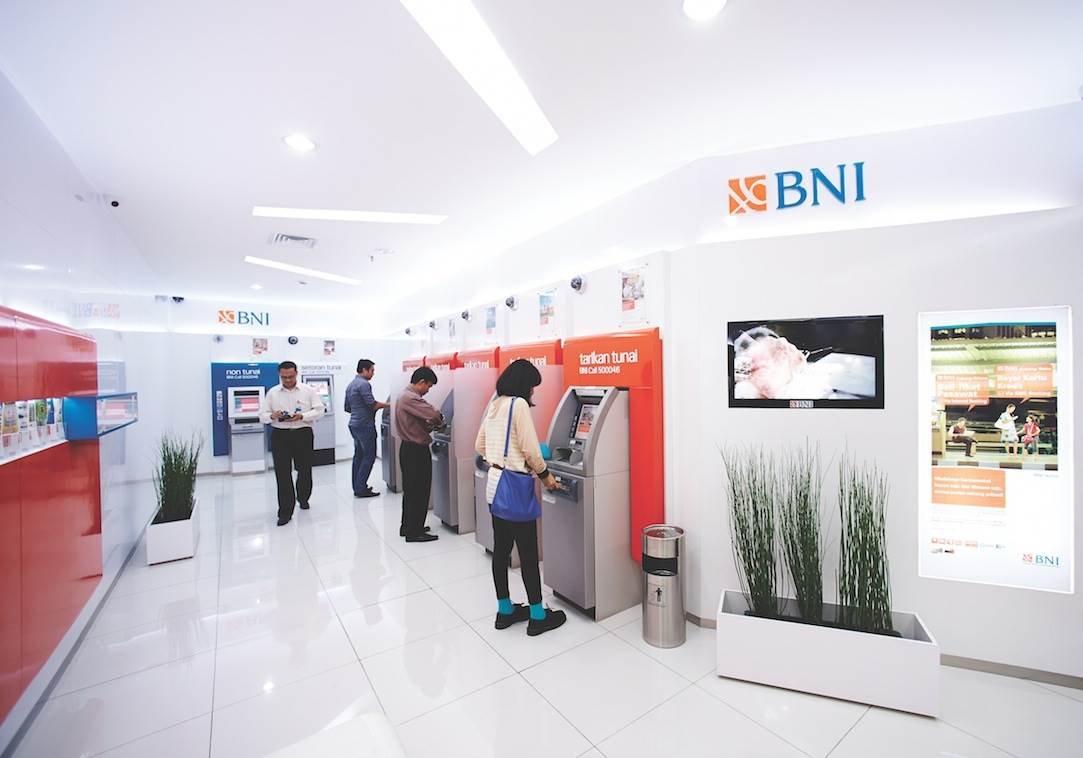
    The cards functions include Internet/Mobile/SMS banking facilities that ease transaction processes, access to the Banks programs information and remittance and/or bill settlement to Indonesia through BNIs Hong Kong branch or ATM machines.

    The card can also be used as a shopping card in stores with a MasterCard logo in their EDC s.

    Card holders also get a chance to join an entrepreneurship training program called “KAMI bersama BNI” (We are with BNI), as well get home credit facilities for new residential purchases or renovations through BNIs Hong Kong branch.

    As an appreciation to the Banks consumers, BNI is having a remittance fee discount program for money wiring services through the Hong Kong branch, in which transfer costs are being exempted for transactions among BNI accounts, he continued.

    Customers can also move their savings balance into a deposit account once the amount is considerably high, and they can also propose for the Worker Retirement account and auto-debit system for health and work insurances.

    For migrant workers who wish to start their own business in Indonesia, BNI also offers financial support through their Peoples Business Credit (KUR) program.

    They can simply contact the Banks small credit centers across Indonesia to submit their proposal.

    One of the programs selling points lies in its low interest rate, which is noted to be at 9 percent annually as per 2016.

    Until the end of 2016, BNI had given out credits to 386 migrant workers in Hong Kong through seven credit centers, with the loan reaching Rp5.3 billion.

    The loan is also being disposed to migrant workers who had been employed in Singapore, Japan and Taiwan.

    As of December 2016, there are 2,463 debtors, with the total amount reaching Rp38.9 billion.

  • Apple Pay for HSBC Cardholders in Singapore

    Apple Pay for HSBC Cardholders in Singapore

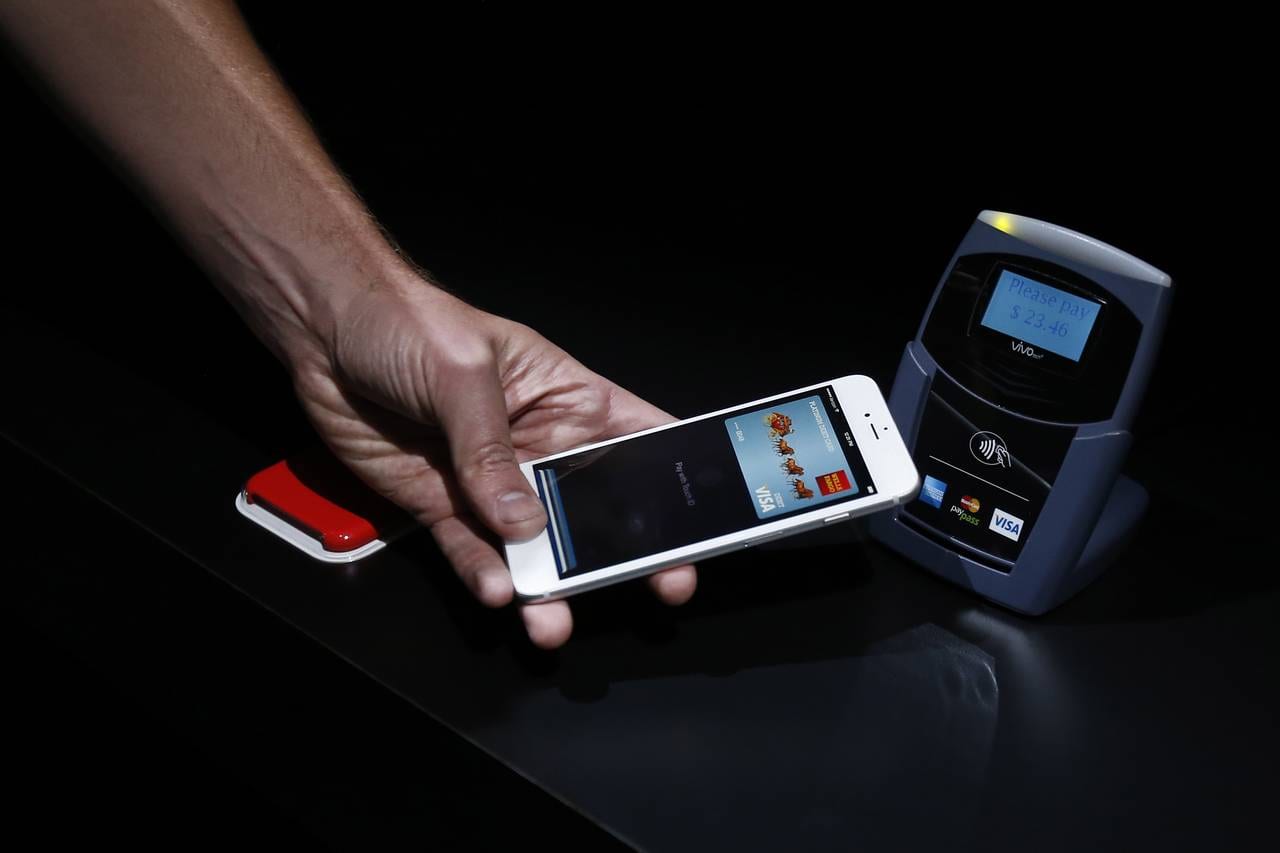
    HSBC Singapore is treating its HSBC Visa and MasterCard credit cardholders with Apple Pay, according to a statement sent on Monday. Customers using iPhone SE, iPhone 6 to higher versions, and Apple Watch can use Apple Pay in stores with Visa payWave or MasterCard contactless payment terminals in Singapore and overseas.

    As a kick off treat, HSBC customers will be given $5 off for every Apple Pay transaction with their HSBC credit cards, with a minimum spend of $10 per transaction. This promo will be on until January 15 next year.

    «Our findings show that awareness of contactless mobile payment is high amongst Singapore consumers (89 percent) and over half indicated interest to try this new payment method. We believe the security, privacy and convenience Apple Pay brings will appeal to all our customers, especially those who are also active users of our digital banking services,» Anurag Mathur, HSBC Singapore head of retail banking and wealth management said.

  • Mastercard launches credit card in Myanmar

    Mastercard launches credit card in Myanmar

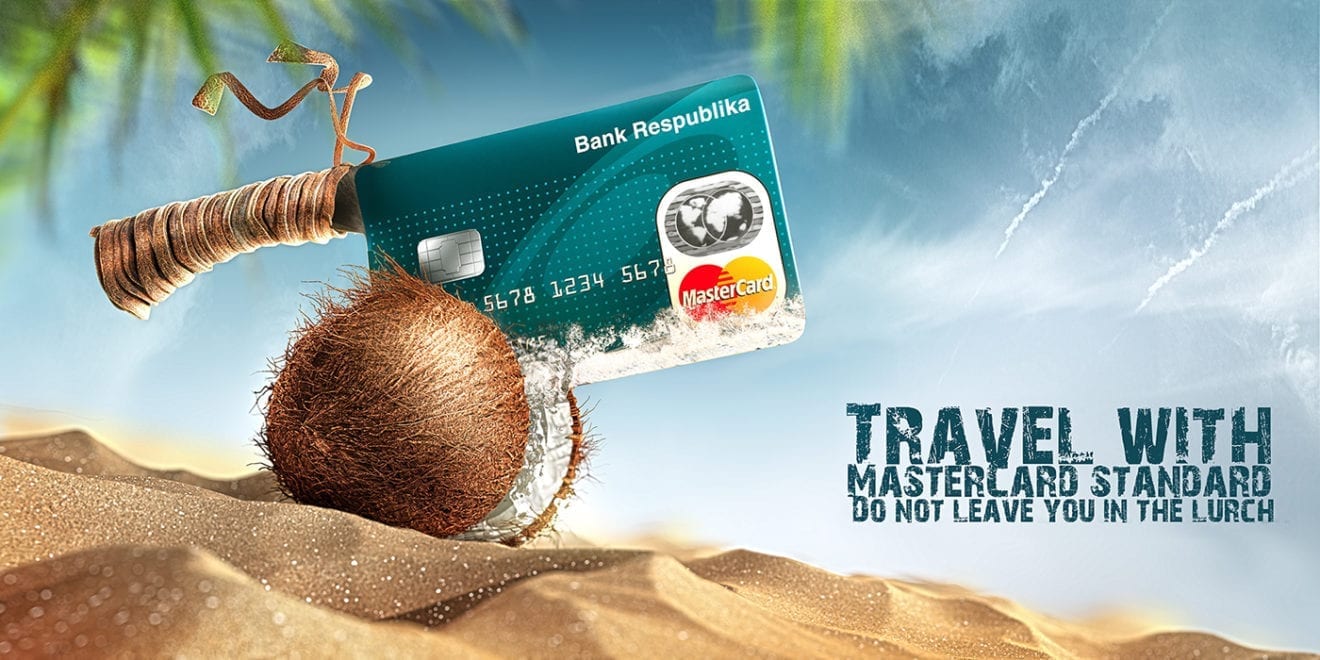
    MasterCard and CB Bank have announced their first payment product in the country – a prepaid travel card for locals called the CB Bank EASI Travel Prepaid MasterCard card.

    The reloadable prepaid card will be made available to Myanmar residents for when they travel outside of the country. It is the first such card product to be launched in Myanmar and is yet another stage in the evolution of the electronic payments ecosystem.

    MasterCard has been working very closely to enable CB Bank (which it licensed in September last year) to roll out its very first prepaid MasterCard card. CB Bank is already certified and has undergone full system testing as part of its efforts to be connected to the global payments network.

    Mr. Kyaw Lynn, Executive Vice Chairman and CEO of CB Bank said, “CB Bank continues to be first in the electronic payments sector in Myanmar and we are pleased to be able to collaborate with MasterCard to launch this travel prepaid card. Just as our country is opening up to the world, at the same time, the world is opening up to our countrymen and we’re seeing more and more locals travel abroad. We are so glad to introduce this travel prepaid MasterCard card to help make their travels safe and hassle-free without the worries of carrying large amounts of cash.”

    According to Matthew Driver, president, Southeast Asia, MasterCard, “Part of the allure of operating in such a frontier market is in seeing the vital steps of financial inclusion play out: a vast majority of people in Myanmar remain unbanked and don’t have access to financial services. But the payments infrastructure is rapidly developing – from the rollout of ATMs, point-of-sale terminals, and now the introduction of prepaid cards.”

    “This presents an alternative option for the growing number of locals who’ve had to carry wads of cash when they leave the country for business or leisure travel. It offers them a safe and secure payment method while abroad.”

    Overall consumer optimism is at an extreme high in Myanmar (96.0 Index points according to the latest MasterCard IndexTM of Consumer Confidence). According to the MasterCard survey of Consumer Purchasing Priorities, nearly two-thirds of people who have traveled abroad intend to do so again within the next 12 months, making the introduction of a prepaid travel card timely for the market.

    “Part of our financial inclusion strategy in Myanmar is to educate the local population about the value of electronic payments – we would like to help them understand the benefits of doing away with cash,” Driver added.

    The launch of a new prepaid card marks another vital step forward in the country’s reform of its banking and financial system. MasterCard was the first international payments network to issue a license to a Myanmar bank in September last year, paving the way international payment cards to be accepted in the country for the first time. In November, MasterCard and Co-operative Bank Ltd (CB Bank) teamed up to launch the first ATM transaction at one of the bank’s Yangon ATMs.

    It is expected that more than 500 restaurants, retail outlets and hotels in Myanmar will be accepting payment cards by the end of the year, following the rollout of Point-of-Sale (POS) terminals in March this year with CB Bank.

  • Co-Operative Bank to issue JCB Debit Card in Myanmar

    Co-Operative Bank to issue JCB Debit Card in Myanmar

    Co-Operative Bank (CB Bank), a major commercial bank in the Republic of the Union of Myanmar (Myanmar), Myanmar Payment Union Public Co.,Ltd (MPU), and JCB International Co. Ltd. (JCBI), the international operations subsidiary of JCB Co., Ltd., today announced that CB Bank will start to issue JCB debit card in December 2016.

    The CB MPU-JCB Co-Brand Card combines the MPU brand and JCB brand. Cardmembers can use MPU’s nation-wide merchant network in Myanmar and JCB’s international merchant network with over 31 million locations globally.

    The Card offers 3 different card types, Platinum debit card, Gold debit card, Standard debit card. All the cardmembers can enjoy JCB privileges such as JCB Plaza, staffed service counters for JCB cardmembers located around the world. Also cash back and discounts at selected CB merchants will be offered to Platinum and Gold CB MPU-JCB Co-Brand Cardmembers. JCB offers Platinum cardmembers exclusive JCB Platinum services, such as JCB Platinum airport lounge service, JCB Platinum Concierge Desk, and Special JCB Platinum Hotel Services.

    Kimihisa Imada, Deputy President of JCB International said, “I am delighted to have a partnership with CB Bank as the second JCB card issuer in Myanmar. JCBI entered into the market in 2012, and we have been committed to providing support to the expansion of the Myanmar payment market in cooperation with MPU. I am confident that the issuance of CB MPU/JCB Co-badged Card will grow the market even further and will contribute to the financial inclusion.”

    U Kyaw Lynn, Executive Vice Chairman & CEO of CB Bank commented, “On behalf of Co-operative bank, I am very pleased to announce that we are issuing CB-JCB debit card. This partnership between CB and JCB will strengthen ties between our business and our countries. Our customers here in Myanmar can enjoy all the benefits developed by CB and JCB when using in Myanmar and using in oversea countries.”

  • BRI Launches JCB Platinum Credit Card for Travelers

    BRI Launches JCB Platinum Credit Card for Travelers

    PT Bank Rakyat Indonesia (Persero) Tbk. (BRI) and PT JCB International Indonesia, a subsidiary of JCB International Co., Ltd., the international operations subsidiary of JCB Co., Ltd. (collectively “JCB”), today announced the launch of the BRI JCB Platinum Credit Card in the BRI JCB Indonesia Open 2016. The card will be ready in the market in the next spring 2017.

    Bank BRI is a leading bank in Indonesia with an extended network of more than 10,000 outlets and more than 100,000 e-Channel outlets. JCB brand cards are currently issued in 21 countries and territories with 95 million cardmembers around the globe. BRI has cooperated with JCB for JCB card acceptance at BRI merchants with BRI EDC machines since April 2016. The launch of this new product is the next step of the partnership.

    BRI JCB Platinum Credit Card is a strategic complement to the BRI product line for the consumer segment, especially as a credit card product to tap the traveler segment.

    BRI JCB Platinum Cardmembers can enjoy special features such as:

    1. Double BRI points at all merchants such as restaurants, airlines, golf courses and car rental.

    2. Triple BRI points for transactions overseas.

    3. 0% installment conversion for all transactions overseas for the first 12 months.

    BRI points earned by BRI JCB Platinum Cardmembers can be converted into airline miles, exemptions of card annual fees and a variety of other exciting promos.

    “We are optimistic about issuing 50,000 cards from early Q1 2017 until Q4 2017,” said Sis Apik, Managing Director of BRI.

    “BRI believes that this JCB brand credit card will grab the travel segment, increase the BRI number of cards and card usage for travel, for both domestic and overseas destinations,” he added.

    To give extra convenience to BRI JCB Platinum Cardmembers who travel abroad, JCB provides a variety of features that support travel needs such as free access to 28 airport lounges in Japan, 26 lounges in China, 2 lounges in Korea, and 1 lounge each in Singapore, Thailand, and Hong Kong.

    Besides that JCB provides JCB Plaza Lounge in several world-class business and travel destinations: Tokyo, Paris, Honolulu, Hong Kong, Guam, and Singapore. Last but not the least JCB also provides free wifi hotspot access and discounts at many selected merchants in Japan.

    “JCB is very excited and proud to have a partnership with BRI for the issuance of BRI JCB Platinum Credit Card that means JCB market share expansion in the premium credit card segment in Indonesia. Our strategy to tap the premium segment has resulted in 60% growth in the number of JCB cards in the market since 2014,” said Koichiro Wada, Director PT. JCB International Indonesia.

    “As you may know traveling overseas is increasing year on year especially to Asian countries, therefore we are confident that the BRI JCB Platinum Credit Card with special features for travelers will be very interesting for Indonesians who love to travel, and increase the cashless society in Indonesia,” he added.

    The uniqueness of the BRI JCB Platinum Credit Card is not only the card features, there is also the card design of the Nuri Irian bird which is an exotic bird from the jungle of Papua, East of Indonesia. It expertly mimics diverse sounds and has charming feathers, ranging from blue, red, and green that dominate the whole body as well as black on the head, back and neck.

    In addition to beauty, the Nuri Irian bird also illustrates openness and freedom as the species loves being outdoors and singing beautifully. This is in line with the purpose of the BRI JCB Platinum Credit Card issuance for the traveler as well as the spirit of BRI and JCB to always develop and present new products and give the best service to their customers.

  • Starbucks launches mobile payment app in Indonesia

    Starbucks launches mobile payment app in Indonesia

    Starbucks recently launched a mobile application in Indonesia to allow customers to pay for in-store purchases at the coffee marker’s more than 260 stores across the country.

    Building on the cashless payment system Starbucks Indonesia introduced in 2013 with Starbucks Card, the move is part of the broader plan to expand the company’s digital ecosystem.

    The new Starbucks Indonesia Mobile App for iPhone and Android allows customers to quickly pay for in-store purchases by scanning the barcode linked to a registered Starbucks Card. Customers can register multiple Starbucks Cards onto their account, which are linked to the Starbucks mobile app.

    The app also compiles the latest information on Starbucks products in a browsable menu of beverage, food, and merchandise, as well as feature a convenient store locator.

    “This is the latest Starbucks innovation which aims to provide an enhanced experience and meet customers’ needs in the digital space while continuing to provide an exceptional experience in our stores,” Starbucks Indonesia VP of marketing and operations Roger van Tongeren said.

  • Government Proposes Business Travel Card for Indian Ocean Countries

    Government Proposes Business Travel Card for Indian Ocean Countries

    The Chairman of the Indian Ocean Rim Business Forum (IORBF), who is also the Deputy Head of Maritime Affairs and Fisheries Division at the Indonesian Chamber of Commerce, Yugi Prayanto, has proposed to introduce a business travel card for all members of the Indian Ocean Rim Association (IORA).

    “The IORBF needs to come up with a concrete initiative to improve economic cooperation and business in the Indian Ocean region,” Yugi said here on Friday.

    He pointed out that the IORBF meeting, led by Indonesia and South Africa, aims to improve interaction and cooperation among IORAs businessmen and its dialogue partners in order to develop cooperation in economy, trade and investment in the Indian Ocean region.

    “The IORBF agrees that economic cooperation opportunities need to be explored further and these include the IORA Comprehensive Economic Partnership Agreement (IORA-CEPA ) and IORA Business Travel Card (IBTC),” Yugi noted.

    These initiatives are supported by IORA member countries, among others, South Africa, Australia, India, Indonesia, Kenya and Mauritius.

    According to him, the forum agrees that the establishment of IORA-CEPA is very important to improve economic cooperation, trade and investment in the Indian Ocean region.

    The IORA-CEPA, Yugi pointed out, is expected to become an umbrella for IORA economic cooperation in order to increase trade and investment, open market access, develop industry as well as strengthen regional value chain and structural reforms.

    Meanwhile, the IBTC, he underlined, is expected to ensure mobility of entrepreneurs and facilitate business interaction among the IORA member states.

    “The IBTC in time will strengthen people-to-people contact, including business-to-business links among IORA member nations,” Yugi stressed, adding that the IORBF really hopes these two initiatives will be discussed at the 20th Anniversary Commemorative Summit of IORA meeting in March 2017.

    He added that the agreements reached at this meeting will be reported to the Committee of Senior Officials on October 25-26, 2016 and to the Council of Ministers on October 27, 2016.

    Forty businessmen from various IORA member countries are participating in this 22nd IORBF meeting.The IORA focuses on economic, trade and investment cooperation. It comprises 21 countries, namely, South Africa, Australia, Bangladesh, India, Indonesia, Iran, Kenya, Madagascar, Malaysia, Mauritius, Mozambique, Oman, the United Arab Emirates, Singapore, Seychelles, Somalia, Sri Lanka, Tanzania, Thailand, Comoros and Yemen.Australia passed on the chairmanship of IORA to Indonesia in 2015. Indonesia is the IORA Chairman for 2015-2017.

  • Bank Saint Petersburg to Start Accepting JCB Cards

    Bank Saint Petersburg to Start Accepting JCB Cards

    JCB International Co., Ltd. (JCBI), the international operations subsidiary of JCB Co., Ltd. announced that Bank Saint Petersburg (BSPB), the leading bank in North-West Russia, started accepting JCB cards at POS terminals and ATMs.

    The bank network includes 7,100 POS terminals and 700 ATMs located not only in Saint Petersburg but also throughout the Leningrad region, in Moscow and Kaliningrad. JCBI started card issuing business with local banks in Russia in 2015 and cardmember base has been expanding. The partnership with BSPB will make JCB cardmembers feel more comfortable to use their cards, and enhance JCB presence in the market and increase JCB brand awareness.

    Commenting on the announcement, Kimihisa Imada, Deputy President of JCBI, said: “With this launch, JCB expands card acceptance in one of the most popular and famous destinations in Russia. Saint Petersburg has been recognized as Europe’s Leading Destination for the second consecutive year by the World Travel Awards and we are proud that JCB cardmembers from all over the world will be able to use their cards while travelling and sightseeing in the area.”

    Pavel Filimonenok, Deputy Chairman of the management board of BSPB, added: “It is very important for us that our bank is among the top ten banks in Russia certified by one of the leading worldwide payment brands – JCB. We highly evaluate the potential of our collaboration with JCB as the payment brand is actively growing and the global volume of transactions made by JCB cards has nearly doubled over the past 3 years.”

  • Mastercard Appoints President for Indonesia, Malaysia and Brunei

    Mastercard Appoints President for Indonesia, Malaysia and Brunei

    Now he will also be in charge of encouraging the implementation of digital payment technology.

    Previously based in Kuala Lumpur, Khan and his division will now be headquartered in Jakarta. Mastercard considers this a move towards recognition of Southeast Asia’s developing countries, whose economy has been predicted to be worth billions of dollars.

    The move was also triggered by the formation of ASEAN Economic Community (AEC), where the ongoing economic integration gives a potential for Mastercard to gain influence.

    “AEC stands as a landmark to integrate the region’s economy. Safdar Khan’s appointment would serve as evidence of Mastercard’s focus in building a strong, relevant and influential business in Southeast Asia. This appointment shows our continuing commitment to empower the great leaders who can encourage innovations and inclusion in a meaningful and interconnected way,” Mastercard Asia Pacific co-president Ari Sarker said.

    Sarker also appreciated Khan’s profound knowledge about the customers, regulators and government bodies.

  • Bank of Bhutan to Start Accepting JCB Card

    Bank of Bhutan to Start Accepting JCB Card

    JCB International Co., Ltd. (JCBI), international operations subsidiary of JCB Co., Ltd., and Bank of Bhutan Ltd. (BOBL), the first and largest scale commercial bank in Bhutan, today announced that BOBL started accepting JCB cards at the bank’s merchants.

    Bhutan is popular destination for people in Asia Pacific. According to Tourism Council of Bhutan, over 150,000 travelers visited the country in 2015, which has more than tripled over the past 5 years. Most of the travelers are from regional countries in Asia, where JCBI focuses on for its business. BOBL, established in 1968, is the first bank of the country and currently has about 45 branches throughout Bhutan. With this launch, JCB cards are accepted at more than 480 locations and it covers 90% of POS terminals and ATMs in the market.

    JCBI Deputy President Kimihisa Imada said, “This year is the 30th anniversary of the establishment of diplomatic relations between Bhutan and Japan and it is my pleasure to announce the launch of business cooperation of BOBL and JCB in such a historic year. South Asia is an emerging market and Bhutan is located in the middle of East Asia, Southeast Asia, and South Asia. Through the bank’s nationwide merchant network, we can meet JCB cardmember demand while travelling and sightseeing in Bhutan, especially cardmembers from neighbor countries, such as China, Bangladesh, and Thailand, which have about 13 million cardmembers.”

    Pema N Nadik, Chief Executive Officer of BOBL, said, “The introduction of JCB card acceptance has been long awaited given the popularity of Bhutan as a destination for Japanese travelers. With JCB cards now being accepted in Bhutan through the network of Bank of Bhutan’s ATM and POS terminals, visitors holding JCB cards have the option of making payments securely through this payment channel.”

  • CIMB’s Corporate Card Solutions to see big growth

    CIMB’s Corporate Card Solutions to see big growth

    CIMB Bank Bhd’s newly-launched Corporate Card Solutions is expected to gain significant growth momentum, given that it is a gamechanger in the market.

    In collaboration with MasterCard, the CIMB Corporate Card Solutions offers convenience, control and transparency for business operational expenditure, through its corporate card, purchasing card and virtual card solutions.

    “We are very excited about this launch because the corporate segment has been a domain of the consumer segment in the past.

    “This is a very new solution, for us and in the market as well.

    “A lot of banks now do not do this business,” said CIMB Group transaction banking head Thomas Tan after the launch ceremony yesterday.

    New cards: (from left) MasterCard South-East Asia Indonesia, Malaysia and Brunei group country manager and Islamic payments group head Safdar Khan, Zafrul, MasterCard Asia/Pacific co-president Ari Sarker, and Tan having a closer look at the mock credit cards at the launch of CIMB’s Corporate Card Solutions.

    The Corporate Card Solutions offers unique, customised solutions for companies, such as setting spending limits and customising merchant categories by each individual card holder, with real-time overview of employees’ travel and entertainment expenditure.

    Meanwhile, the purchasing card automates the company’s procurement process by capturing card transactions in real time, which facilitates account reconciliation.

    Companies also have the option to decide on the billing cycles, like a 45-day or 60-day credit interest-free period, unlike consumer credit cards which have one determined billing cycle.

    As for the virtual card solution, businesses can randomly generate a 16-digit virtual card number that is associated with a specific payment, which is then securely transmitted to a specific supplier when payment is due.

    Data is captured real time and matching a unique virtual card number to a specific payment improves reconciliation and aids data analysis.

    These solutions help optimise cash flow, enabling businesses to operate more efficiently through the entire value chain.

    “In today’s business environment where cost management is a high priority, it is our aspiration to help organisations to significantly improve their operational and cost efficiency by automating their transactional flows.

    “These solutions offer unique savings features by optimising cashflows and working capital.

    “Our digital banking solutions such as these are also a response to Bank Negara Malaysia’s call for a reduction in the usage of cheques from 207 million in 2011 to 100 million by 2020,” said CIMB Group chief executive Tengku Datuk Sri Zafrul Aziz.

    The CIMB Corporate Card Solutions is targeted towards government and state agencies, small and medium enterprises (SME) as well as corporate sectors.

    Prior to yesterday’s official launch, CIMB had converted five corporate clients to its Corporate Card Solutions during the soft launch.

  • Card, not cash, is king in South Korea

    Card, not cash, is king in South Korea

    Whenever she needs to use money – whether to take the subway, buy a drink from a vending machine or pay for lunch at a restaurant – Ms Kim Mee So, 29, will whip out her debit card.

    It is the only card the teacher carries with her in her bag, and the only one she needs for daily expenses.

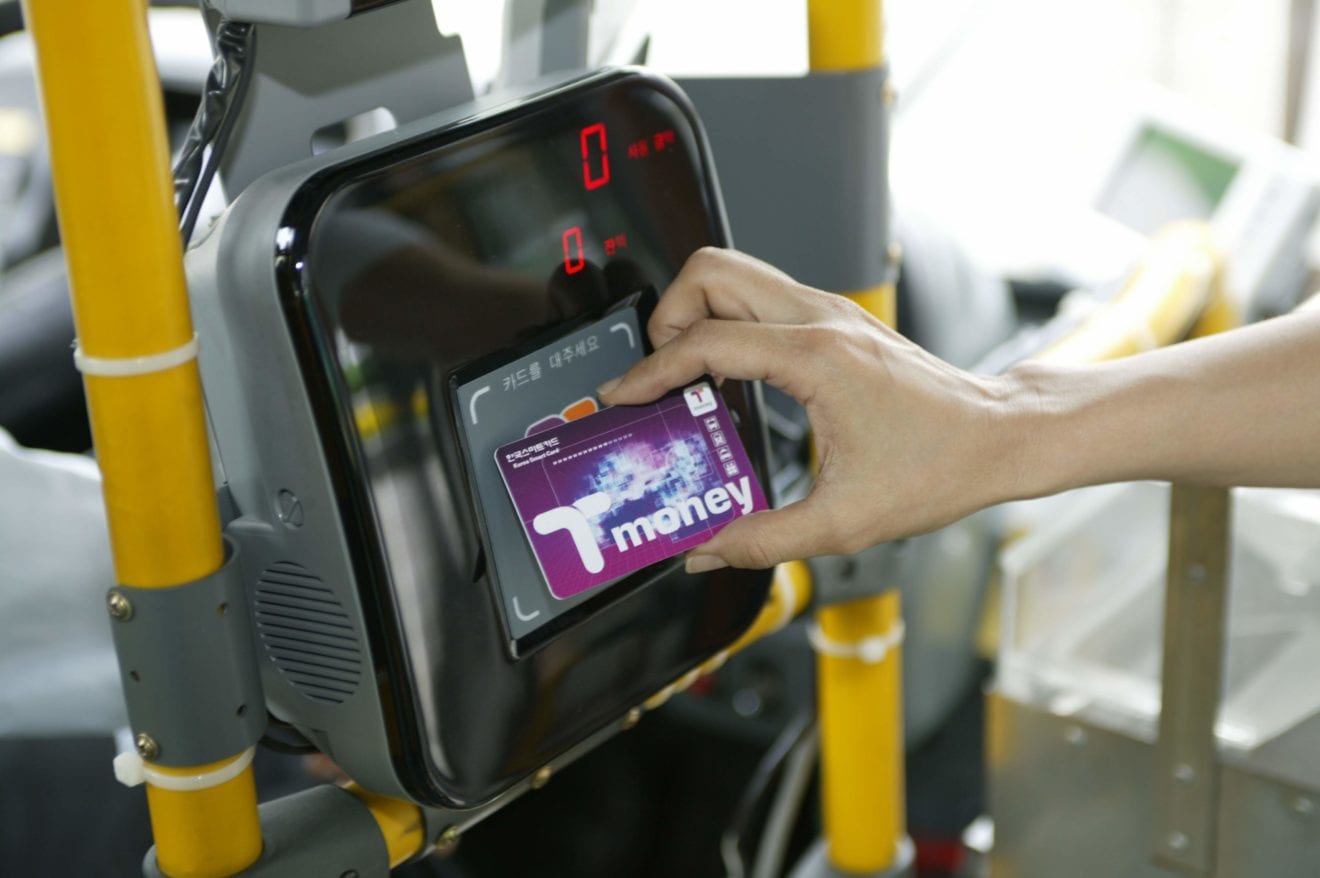
    The Visa debit card is linked to her bank account and equipped with a smart chip that also allows her to use it as a public transport payment card, known as T-money.

    “I don’t use real money because it’s heavy to carry around, and I don’t have a wallet so there’s no place to put it in. The only time I use cash is to pay for food delivery and give an allowance to my brother who’s in high school,” she said.

    Ms Kim is among a growing group of South Koreans who are relying less on cash and more on cards and electronic payments, as the world’s most wired country started early last year to open up its finance technology (fintech) industry and encourage more people to adapt to IT-based systems, including payments via mobile phones.

    NO ROOM FOR CASH

    I don’t use real money because it’s heavy to carry around, and I don’t have a wallet so there’s no place to put it in. The only time I use cash is to pay for food delivery and give an allowance to my brother who’s in high school.

    MS KIM MEE SO, a 29-year-old teacher who carries only a debit card in her bag for daily expenses.

    Only about 20 per cent of all payments here are made with cash – among the lowest in the world – according to the Bank of Korea (BOK).

    The central bank is now aiming for the country to go cashless by 2020, beginning with plans to phase out coins so as to reduce the cost of minting them. It has already cut back on issuing paper money.

    A system is being tested for retailers who receive cash to give back change not in coins but as credit in the customer’s T-money card or credit card.

    It will be rolled out by next year if pilot tests prove to be successful.

    Going cashless is a global trend, led by Scandinavian countries Norway, Sweden and Denmark. Singapore has also committed $225 million to grow fintech start-ups as part of its plan to go cashless.

    In South Korea, electronic payments gained popularity after the introduction of T-money in 2004, as the country sought to streamline public transport payments with a single touch-and-go smart card.

    What is T-money?

    South Korea introduced a smart card called T-money in 2004 to streamline public transport payments.

    Here is how it works:

    • •T-money is a stored-value card with a smart chip for fare deductions, much like Singapore’s ez-link card.

      •Modified T-money chips can also be fitted into credit cards and debit cards, and even into mobile phone SIM cards, which means one can just tap one’s phone to take the bus, subway or taxi.

      •It is also accepted at many convenience stores, retail shops and restaurants.

      •By the end of 2014, T-money was used in 43 million transactions daily.

      •There are 15 million users in Seoul and the surrounding Gyeonggi province, which have a combined population of 22 million.

    Much like Singapore’s ez-link card, T-money is a rechargeable stored-value card with a smart chip for fare deduction. The chip has been modified to fit credit cards, debit cards and even mobile phone SIM cards – which means people can tap their phones to take the bus.

    T-money can also be used at most convenience stores and some retail shops and restaurants.

    By end-2014, T-money was used in over 43 million transactions a day. There are more than 15 million T-money users in Seoul and the surrounding Gyeonggi province, which have a combined population of 22 million. Apart from the T-money card, credit and debit cards have also become a way of life.

    The success of T-money and the popularity of mobile devices have also prompted a new wave of fintech developments.

    Tech giants including Naver, Kakao and Samsung compete to build and bolster their mobile payment platforms to capture consumers shifting from computers to mobile devices.

    Text-messaging app company Kakao, for instance, has its own mobile payment platform KakaoPay that allows its seven million users to shop online as well as pay electricity bills.

    The Seoul Metropolitan Government jumped onto the bandwagon last December, launching an app called STAX to allow users to pay property and car taxes and water and sewage fees on mobile phones.

    Business consultant Lee Youn Joo, 31, said cash has become less important nowadays and is used only on special occasions like weddings and funerals, and when paying street vendors and for valet parking.

    “Koreans are used to convenient transaction means and… the use of credit cards and mobile banking will continue to increase,” he said, adding that he uses credit cards for 90 per cent of his monthly spending.

    But as more people choose to go cashless, there are concerns about credit card security, overspending and whether the elderly can adapt to electronic payments.

    Student Terry Nam, 21, is concerned about security, as the country has witnessed major data leaks involving big credit card companies.

    “Our distrust of privacy protection is very high. The government should explain what it has done to resolve this issue and strengthen the punishment for private data leakage crimes,” he said.

    Wary of credit card companies, graduate school student Kwon Joo Hyun, 27, uses a debit card instead and avoids online payments that require credit card details.

    But she still supports the BOK’s plan, adding that the government can introduce a kind of cashback card for elderly folks to use when coins are phased out.

    But Dr Sohn Sang Ho, senior research fellow at the Korea Institute of Finance, feels the BOK’s plan to go cashless by 2020 is “too ambitious”. He said there is still a big group of older people who rely mainly on cash transactions, especially in traditional markets, and it will take a long time for them to convert to electronic payments.

    “Going cashless can be our long-term goal, but it’s not possible in the near future,” he said.
  • Starbucks Cards with Swarovski crystals will be available in limited quantities in China, Hong Kong …

    Starbucks Cards with Swarovski crystals will be available in limited quantities in China, Hong Kong …

     Since the first Starbucks Card launched in 2001, designers have created hundreds of varieties of these collectible cards.

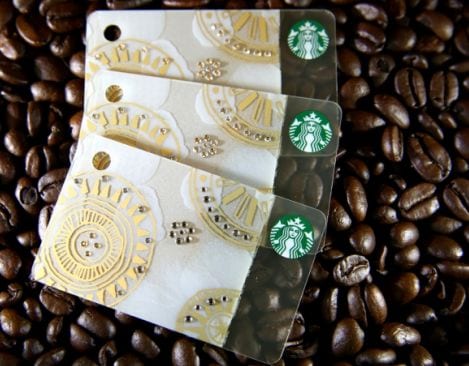
    One of this year’s new designs, available at participating Starbucks stores in Asia, is a Starbucks Card adorned with Swarovski crystals. The premium mini Starbucks Card – small enough to fit on your keyring – will be available in select markets across the region.

    The limited-edition mini Starbucks Card creates the feeling of a snowscape for holiday gift-giving. The design, awash in champagne and silver hues, is studded with 29 dazzling Swarovski crystals applied in Austria. This international exclusive will be available starting in November in limited quantities in China, Hong Kong, Indonesia, Philippines and Thailand.

    “We continually innovate to find convenient and expressive ways to pay,” said Brady Brewer, senior vice president of Category Brand Management for Starbucks China and Asia Pacific Region. “We’ve featured premium materials like sterling silver, and of course we introduced mobile payment in several Asia markets.”

    Production of the one-of-a-kind Starbucks Card with Swarovski crystals was a collaboration between the Austria-based company for crystal application and a U.S. supplier that printed the cards. The Starbucks Card features a barcode, rather than a magnetized stripe, to enable crystals to be placed across the entire face of the card. The Starbucks Card has a minimum load amount that varies by market.

    “This Starbucks Card is a premium option for customers looking to give a gift to themselves or their favorite Starbucks fan with something special,” Brewer said. “This is just the beginning of what we’re going to see for the holidays at Starbucks.”

    Starbucks Cards with Swarovski crystals will be available in limited quantities in China, Hong Kong, Indonesia, Philippines and Thailand this Holiday

    Starbucks Cards with Swarovski crystals will be available in limited quantities in China, Hong Kong, Indonesia, Philippines and Thailand this Holiday