Retail News CRM

Tag: domestic

  • AirAsia India mulls A320 aircraft option for UDAN

    AirAsia India mulls A320 aircraft option for UDAN

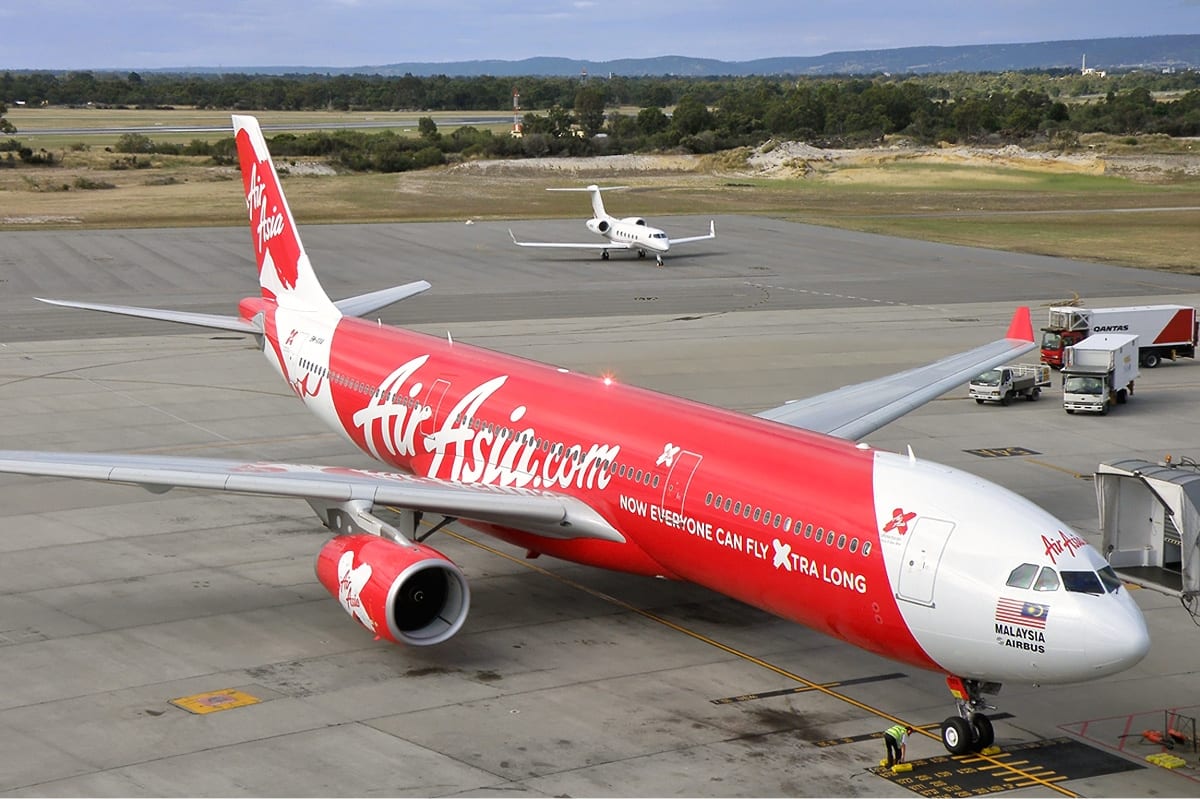
    Keen to expand its domestic presence, AirAsia India is evaluating the proposition of operating regional flights with A320 planes under the government’s UDAN scheme. The ambitious UDAN (Ude Desh Ka Aam Naagrik) scheme aims to connect unserved and under-served airports in the country while participating airlines would get various incentives, including viability gap funding and other financial concessions.

    AirAsia India, which currently has eight A320 planes, expects to have a fleet of 10 aircraft by end of this fiscal. According to a senior airline official, options of participating in UDAN are being evaluated and a decision would be taken depending on the commercial viability of the regional routes.

    “We are evaluating which routes can be served by A320. If it is viable, we will certainly look into it,” the official told PTI. Manufactured by Airbus, A320s are single-aisle planes that can have up to 180 seats depending on the configuration opted for by the carriers.

    Fares would be capped at Rs 2,500 for one-hour flights under UDAN and the first flight under the scheme is expected to take off in January 2017. Along with increasing its fleet size to 10 planes, AirAsia India also expects to have a headcount of around 1,000 by the end of March next year.

    In the three months ended September 2016, the budget carrier saw its loss marginally narrow to Rs 62.18 crore from Rs 63.14 crore in the year-ago period. However, revenues increased 31 per cent to Rs 175.11 crore in the latest September quarter. The same stood at Rs 132.95 crore in the same period a year ago.

    AirAsia India, now a joint venture between Tatas and Malaysia’s AirAsia Berhad, began operations in June 2014. Tata Sons owns 49 per cent stake while two of the airline’s directors — S Ramadorai and R Venkataramanan –have 2 per cent shareholding, and the remaining is with AirAsia Berhad.

    Meanwhile, Malaysia’s AirAsia Berhad has invested additional funds to the tune of Rs 115 crore in AirAsia India.

  • Malang Opens Courses for Domestic Workers

    Malang Opens Courses for Domestic Workers

    Dozens of domestic workers attended a course at Sanggar Kegiatan Belajar in Malang City on Tuesday. The course for domestic workers was held by the Institute for Community Research and Development (LPKP) Malang chapter and the International Labour Organization (ILO).

    “Domestic workers are trained to work effectively according to the applicable standards,” said Irfan Afandi, ILO promote project coordinator for East Java.

    Similar courses are also opened in South Sulawesi’s Lampung and Jakarta. East Java, along with Makassar and Lampung, is renowned for its supply of domestic workers. Whereas Jakarta is the destination market of the domestic workers.

    Community-based courses for domestic workers have been trialled in Malang, East Java. Education will be held in certain communities, comprising participants hailed from several areas in Malang. The courses for domestic workers are aimed at improving their skills, particularly ability to use home appliances.

    The first phase of the courses will include household management and cooking. Domestic workers will be given theoritical and practical training. The courses will last six months, with two meetings in a week.

    Improved skills are expected to put domestic workers in better position to seek employment rights, such as to negotiate employment contract, standardized and timely payment of wages, defined office hours, and request for breaks and holidays. Irfan said that according to ministerial regulations, domestic workers include nannies, drivers, gardeners, as well as caregivers for elderly persons and people who have disabilities.

    “A domestic worker would not be able do all things by themselves,” he said. After attending the courses, domestic workers will be given a certificate which would enable them to seek better pay and recognition as professional workers. Moreover, improved skills of domestic workers are expected to protect them from violence, sexual abuse, child exploitation and human trafficking.

    Data from ILO shows that Indonesia has 2.6 million domestic workers. Most of whom are hired to work in private homes, live in their employer’s home and are not given employee leaves nor holidays.

    Course participant Yuliati said she is interested to attend the course for domestic workers to get more experience. According to her, she had been learning to do domestic work by herself. “I’m paid Rp30,000 a day, without employment contract,” she said.

  • Domestic white pepper prices sink

    Domestic white pepper prices sink

    Domestic white pepper prices have fallen sharply in recent weeks, losing a hefty RM12,000 per tonne or 24% year-to-date after sustaining at an all-time high level of RM50,000 per tonne for months.

    Kuching Grade 1 white pepper dropped to RM38,000 per tonne on Friday (Sept 2) based on Malaysian Pepper Board (MPB) published price. The slide was particularly steep in the past two months, from RM48,500 per tonne in early July.

    For Kuching Grade 1 black pepper,its price has retreated to RM25,000 per tonne from a record high of RM30,000 per tonne or a drop of nearly 17%.

    The white and black pepper soared to RM50,000 and RM30,000 per tonne respectively in September, last year in a spectacular six-year rally, the longest in history, riding on the growing global demand for the spice that outpace supply. The run-up began in 2009 when the white and black pepper were hovering around RM11,300 and RM6,500 per tonne levels respectively.

    And what has caused the recent pullback in the prices?

    The correction in domestic pepper prices, according to a MPB senior official, comes ahead of the harvesting of new crop in Indonesia,the world’s second largest producer.

    “Indonesia has begun to harvest the new crop which will enter the market soon. Indonesia is a key producer of white pepper,” the official told.

    Last year,Indonesia produced some 71,500 tonnes of the golden crop against Vietnam’s (world’s No 1 producer) 130,000 tonnes. Other key producing countries,which are International Pepper Community (IPC) members, are India (65,000 tonnes), Brazil (41,500 tonnes) and Malaysia (28,000 tonnes).

    Due to the recent El Nino weather phenomenon,the market has anticipated Indonesia’s new crop output to be affected.

    The official said another reason for the drop in domestic white pepper prices was due to an anticipated increase in white pepper output during the traditional September-October period. Sarawak, which contributes some 95% of the country’s pepper production, is currently into the tail-end of harvesting the new crop,which normally begins in May.

    (Black and white pepper are processed differently. Pepper berries are harvested when ripe and after sun-dried,the outer layer will turn black and become black pepper. White pepper is the result of the outer layer being removed, normally after soaking in clean water in the river and then dried, leaving only the inner seed.)

    Due to the tedious processing procedures for white pepper,most farmers prefer to produce black pepper. Only some 20% of Malaysia’s pepper production are in white pepper.

    The official said despite the softening of pepper prices of late,there is no cause for alarm.

    According to IPC weekly price bulletin (August 22-26),with the exception of Malaysia,pepper prices at source markets remained stable,even increased in Sri Lanka. In India,local price of Malabar black increased almost daily during the week.

    The bulletin said a marginal decrease of local price in dollar terms seen in Bangka and Lampung Indonesia was due to the weakening of local currency against the US dollar.

    “The domestic white and black pepper prices are still firm at current levels even though they have come down quite a bit. The drop is temporarily and the prices will recover,” added the official,whose reason is that global supply remains tight and is unlikely to increase significantly in the near future.

    Based on IPC’s 2016 projections,global consumption for the year is about 463,000 tonnes against production of 414,000 tonnes,resulting in a supply deficit of 49,000 tonnes. Of the forecast production,only 312,000 tonnes are available for export against the export market’s requirement of 320,000 tonnes.

    In 2015,,global consumption was estimated at 439,282 tonnes against production of 407,158 tonnes. World demand for the spice grows at around 4% per annum against production increase of merely 0.7% per annum.

  • Garuda Indonesia Urged to Strengthen Domestic Market

    Garuda Indonesia Urged to Strengthen Domestic Market

    Indonesian Tourism Minister Arief Yahya has told national carrier PT Garuda Indonesia to continue strengthening domestic market due to its huge potentials.

    “Our domestic market is very strong. Last year, there were 255 million visits by domestic tourists. This year, the target is 260 million visits. If that amount is multiplied by Rp. 1 million, it means Rp260 trillion circulated,” Arief said in Jakarta on Friday (29/4).

    Arief added that once the domestic market is strengthened, it would be easy to develop international market.

    In comparison with domestic market of neighboring countries, Aried added, Indonesia is much bigger. He cited Singapore, which does not have domestic market or domestic market in Malaysia that is not too big.

    The Minister added that that the Government is gearing up to meet the target of 20 million tourists visiting Indonesia in 2019.

  • Indonesian charter operator orders 30 Bell Jetranger X

    Indonesian charter operator orders 30 Bell Jetranger X

    The aircraft will be used for air taxi operations throughout Indonesia and its more than 14,000 islands.

    PT Whitesky Aviation is a Jakarta based company specialising in non-scheduled (charter) flight. The company currently operates a fleet of six Bell Helicopter aircraft, including three Bell 429s and three Bell 407s.

    “This signing is testament to the growing demand for the Bell 505, especially in the corporate and VIP sectors,” said Matt Hasik, executive vice president of commercial business for Bell Helicopters. “There are now more than 380 letters of intent around the globe, and more than 130 Bell 505 LOIs in the Asia Pacific Region alone.”

    The Bell 505 is the company’s long mooted Bell Jetranger 206 entry-level replacement. With a cruise speed of 125 knots (232 km/h), range of 360 nautical miles (667 km) and useful load of 1,500 pounds (608 kg), the Bell 505 is designed to be safe and easy to fly while remaining affordably priced.

  • Domestic airfreight industry hits turbulence

    Domestic airfreight industry hits turbulence

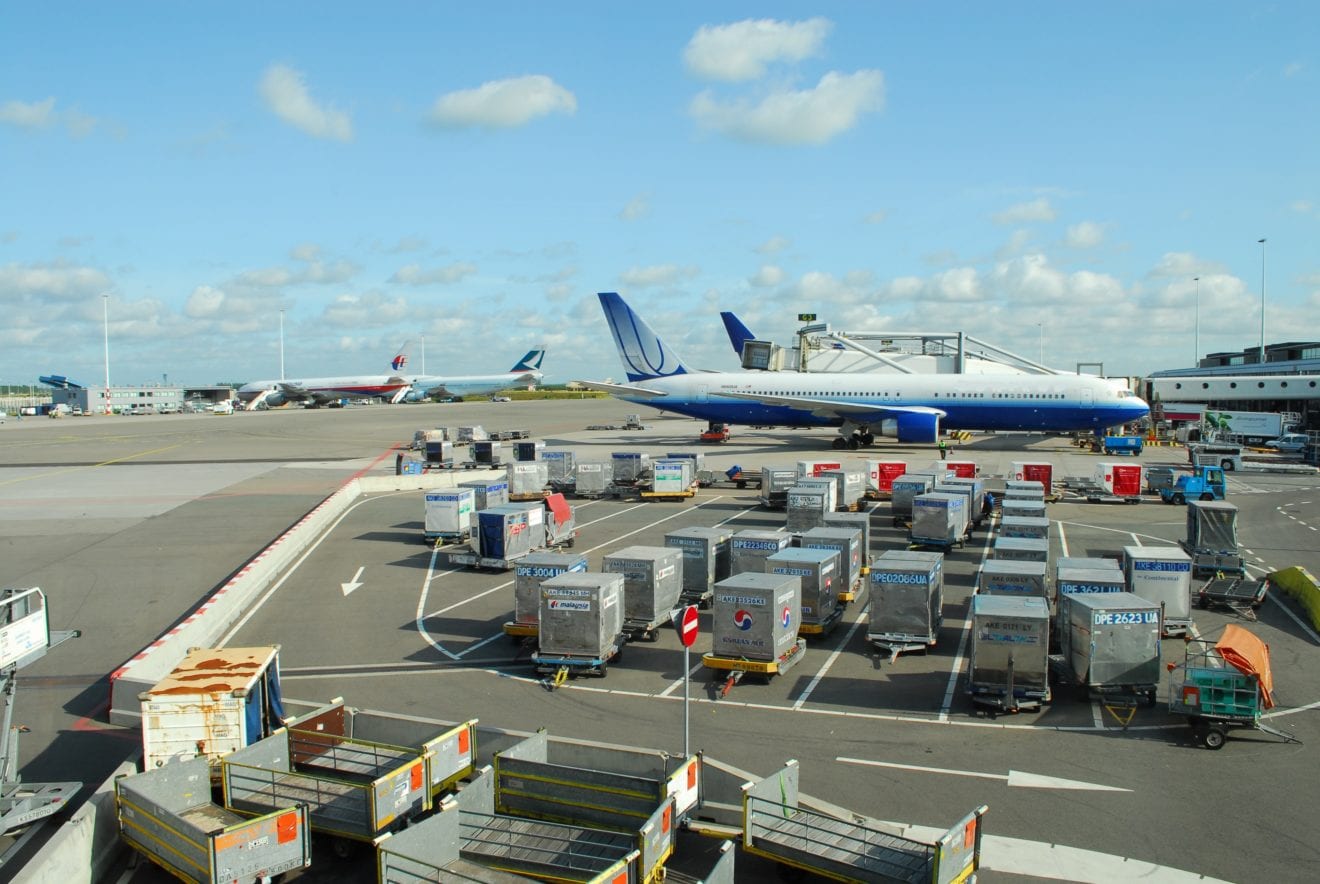
    The country’s airfreight services industry will likely flat line this year amid the domestic economic slowdown, which has affected exports and imports, an industry group has said.

    The International Air Transport Association (IATA) released data recently saying that the global airfreight market remains slow with respect to air cargo demand in June.

    “The mid-year report for air cargo is not encouraging. With growth of just 1.2 percent compared to June of last year, markets are basically stagnating. But overall it has been a disappointing first half of 2015, especially considering the strong finish to 2014,” IATA’s director general and CEO Tony Tyler said in a statement.

    “The remainder of the year holds mixed signals. The general expectation is for an acceleration of economic growth, but business confidence and export orders look weak. Air cargo and the global economy will all benefit if governments can successfully focus on stabilizing growth and stimulating trade by removing barriers,” he said.

    According to the report, Asia-Pacific carriers saw a drop in freight ton kilometers (FTKs), which measures actual freight traffic, of 0.3 percent in June from a year earlier. The region has experienced a notable slowdown in imports and exports over recent months, and the latest data shows trade in emerging Asian markets down 8 percent.

    In line with global and regional airfreight performance, during the first half of this year, national-flag carrier Garuda Indonesia’s cargo volume decreased to 176,000 tons from 193,500 tons in the same period last year, as stated in the company’s financial report.

    Garuda’s president director Arif Wibowo said that 60 percent of the cargo revenues were derived from the domestic market, while the remaining 40 percent came from the international market, mainly in China, South Korea and Japan.

    Garuda Indonesia Cargo currently operates around 70 cargo service centers across the archipelago, including in Medan, Jambi, Jakarta, Bandung, Yogyakarta, Surakarta, Semarang, Surabaya and Denpasar.

    The carrier’s acting vice president for communications Ikhsan Rosan said that it aimed at pushing for more cooperation with other air cargo operators and increasing international services to improve the performance in the second quarter.

    Meanwhile cargo airline Cardig Air CEO Boyke Soebroto said that he was pessimistic that the company would be able to reach the target cargo volume of up to 10,000 tons this year.

    “The government recently announced that economic growth in the first semester reached only 4.7 percent and they will push it to 5 percent in the second semester, I believe that the demand for air cargo will remain stagnate until the end of the year and it is highly unlikely to reach our target,” he said.

    The carrier transported a total of 6,000 tons of cargo with a value of around Rp 20 billion (US$1.5 million) last year, according to Boyke.

    Data from the Central Statistics Agency (BPS) shows that the country’s exports declined 11.86 percent to US$78.29 billion during the first six months of this year. From January to June, overall imports declined 17.81 percent to $73.94 billion.

    AirAsia Indonesia’s revenue and business head Rifai Taberi separately said that the carrier, which is the Indonesian affiliate of Malaysia’s AirAsia, also saw decreasing demand for air cargo with a 17 percent decrease in volume in the first semester of 2015 as compared to the same period in 2014.

    Without mentioning the volume, Rifai said that the steep decrease was seen in the domestic routes, particularly in Java.

    “Apart from the current economic slowdown, the improvement in land and railway transportation has highly affected the air cargo demand in Java as we see up to a 25 percent decrease in volume for the Jakarta-Surabaya route in the first semester,” Rifai

    Rifai said that the air cargo service could not outcompete the land and railway transportation in terms of costs, since air cargo require more cost components such as x-ray procedures and warehouses.

  • Singapore to remove distinction between international and domestic banking

    Singapore to remove distinction between international and domestic banking

    The Monetary Authority of Singapore (MAS) plans to change accounting rules that split domestic and offshore banking into separate ‘units’. 03 Jul 2015

    Since 1968, banks have had to separate operations into domestic banking units (DBSs) and Asian current units (ACUs). Domestic operations, which are predominantly denominated in Singapore dollars, are accounted for through a bank’s DBU, while offshore operations, which are entirely denominated in foreign currency, are accounted for through the ACU.

    However, global regulatory developments over the past five years have created a situation where the split system is no longer useful, Singapore’s minister of finance Tharman Shanmugaratnam said.

    The initial aim of the divide was to safeguard domestic financial stability, Tharman said.

    “For example, MAS imposed liquidity requirements on banks’ Singapore dollar liabilities – that is, only within the DBU. In addition, DBU activities were subject to large exposure and equity investment limits,” he said.

    The divide also made it easier to offer incentives to encourage offshore banking activities out of Singapore, Tharman said, but focusing incentives in the ACU.

    “The DBU- ACU divide served us well for decades, but has been losing its relevance,” Tharman said.

    “Since 2004, our development incentives have no longer been based on the domestic versus offshore distinction, and the divide between domestic and offshore banking has in practice become increasingly porous,” he said.

    In addition, global regulatory changes have meant that banks’ offshore activities are now subject to rules that are broadly similar to those governing DBUs in Singapore. These rules have increased the amount and quality of capital and the liquidity buffers that banks need, Tharman said.

    “These global regulatory reforms have put all banks on a sounder footing. It has also reduced the relevance of MAS rules that distinguish between offshore and domestic banking activities of foreign banks, since home regulators will now be requiring their banks to meet enhanced standards on a group-wide basis,” he said.

    Changes to MAS’s own regulations have also made the divide less relevant, Tharman said.

    All banks in Singapore will have to meet liquidity requirements across the entirety of their operations by January 2016, while banks that are designated as ‘domestic systematically important banks’ will be subject to extra measures on both domestic and offshore business, he said.

    In addition, Tharman said, “where a foreign bank branch has significant retail presence in Singapore, it will also be required to locally incorporate its retail operations. The subsidiary will be subject to the same suite of regulation as the local banks, and the same supervisory regime aimed at minimising risks to local depositors”.

    MAS will therefore remove the divide from banking regulations, and details will be released in a consultation paper by August, Tharman said.

    “There is no rush. We will implement the changes in close consultation with the banking community, and phase them in over time,” he said.