Retail News CRM

Tag: EU

  • EU could start enforcing Digital Markets Act rules on Apple, Google, Meta in Spring 2023

    EU could start enforcing Digital Markets Act rules on Apple, Google, Meta in Spring 2023

    You may have heard so far that the European Union has been preparing to have a say in how big tech companies like Apple, Google, and Meta operate. We are talking about a legislation dubbed the DMA (Digital Markets Act) which the European Commission has been rigorously preparing for a while. The European Commission’s

    executive vice president Margrethe Vestager has set her eyes on controlling (or at least, fining if uncontrollable) tech giants such as Apple, Google, Amazon, Meta, and others with the DMA. Previously, she expected the battle to begin in October, but it seems we are more likely to see some action in the Spring of next year.

    The waiting game depends on when the DMA will get implemented. The legislation is currently waiting for approval from the Council and Parliament.

    The EU is, however, gearing up for enforcement of the new laws. The legislation focuses on the so-called gatekeeper companies, that, if you’ve been attentive so far in this article, you might presume refers to those big tech companies we mentioned earlier.

    And you would be correct. If you’re curious, here’s the definition of what companies are considered gatekeepers: the company needs to have a market capitalization (a fancy way of saying the total of its stocks value) of over €75 billion ($82 billion) and own a social platform or app with at least 45 million monthly users.

    These companies could face fines of up to 10 percent of their total worldwide turnover (for the preceding year) if they fail to comply with the legislation. For the repeated offenders, the fine can grow to 20 percent, which could help the EU drive its point home.

    So, big tech companies will have three months to declare their status to the Commission, and then they’ll have to wait for up to two months to receive confirmation from the EU. Indeed, it seems like it could take quite a while for the giant mechanism to start working (you can’t expect tech giants and government commissions to fight a fierce Marvel-like battle that’s so quick it’s hard to see).

    And as you might imagine, the EU has a lot more work it needs to do beforehand. Hiring heroes (we mean, staff), preparing the hundreds of monitors and computers to analyze data (and possibly, the 007 coffee for the employees that are working there)… joking aside, it will indeed take some tremendous work to prepare such legislation to be executed. Vestager also mentions that they will need to prepare legal text on various procedures.

    However, when the DMA passes, it will possibly mark an end of an era. In case you haven’t heard of it yet, this is the legislation that could force Apple to allow users to download apps from outside the App Store (a possibility that freaks Tim Cook out and has him worried about the iPhone security), as well as require WhatsApp and iMessage to become interoperable with smaller chat apps.

    Sideloading (the process of downloading apps on iPhone from outside the App Store) is arguably the biggest change the DMA will force for Apple. Previously, Apple has raised concerns that this will weaken the iPhone’s security. By the way, Android users have been able to sideload apps for quite a while now.

    On the other hand, an even bigger cause of headache for Apple is that the DMA would make Cupertino allow App Store customers to make in-app payments through alternative payment platforms (you may have heard about the infamous Apple Tax, 30% cut, which Apple takes from developers when payments are made via the App Store).

    With all this being said, it will be quite interesting to see the DMA in action and what changes will big tech giants have to implement (and whether they will comply).


  • EU wants to force iMessage and WhatsApp to be able to chat with smaller chat apps

    EU wants to force iMessage and WhatsApp to be able to chat with smaller chat apps

    In the last couple of years, lawmakers, especially in the European Union, have been scrutinizing big tech companies. The latest proposal this time is related to instant messaging apps like iMessage, WhatsApp, and Facebook Messenger. The EU wants to make those apps forced to send and receive messages, calls, videos, and files from smaller chat apps.

    As you can see, this is a part of the European Union’s attempts to give space to competition in the tech world, as the EU Parliament has several antitrust proposals going on right now that address this issue. This rule is actually a part of a larger proposal for legislation that is called the Digital Markets Act (DMA) that we’ve reported on previously.

    Interestingly enough, the DMA wants major messaging platforms (like the ones we listed above) to allow their services to work with smaller messaging platforms – pretty much like Google Messages and iMessage can receive and send texts between Android and iPhone users.

    This rule, if the DMA gets accepted and turned into law, would apply to any company that sports at least 45 million monthly active users, and 10,000 annually active corporate users. Of course, this is only going to apply in Europe.

    And, when we’re talking about legislation, it’s also key to address what happens to companies that choose not to comply with it (if it becomes law). Pretty much, companies like Apple and Meta, among other tech giants, could be fined up to 10% of their global annual turnover if they fail to comply. If they continue to not comply, the fine can get up to a staggering 20% for repeated violations.

    Okay, that’s all fine but you may be asking yourself how can an interoperable platform like that address the issue of security. Well, the European Union thinks that this can be done safely, at least so does Andreas Schwab, the European Parliament’s Rapporteur for the file believes.

    He stated that the Parliament had always envisioned interoperability for messaging. He adds that if the Telecoms Regulators say that it is not possible to deliver end-to-end encrypted group chats within a certain time frame, it will come as soon as it becomes possible. Basically, the EU is willing to wait until end-to-end encryption is put in place to ensure the security of different messaging apps when they exchange messages, photos, videos, and files.

    But, as many of you may know, the DMA is not only about messaging. It would also force platforms to give users choice in terms of web browsers, search engines, and even virtual assistants that they use on their devices.

    So far, the DMA has not been made final yet. However, it is progressing to becoming law. The act is now awaiting approval for the legal text by the European Parliament and Council, and so far, there is no concrete timeline for when the messaging changes we mentioned above would occur.

    In 2020, the EU Parliament invited tech giants such as Apple and Google to participate in talks about the Digital Markets Act.

    All in all, the DMA aims to fight against anti-competitive practices that limit innovation and aims to give smaller developers more chances in competing with the big boys. Another thing that the legislation suggests is for Apple to allow alternate app stores on iPhones and iPads, again, for the sake of fair competition.

    Recently, there were expectations that the DMA will make it into reality by the end of March. We might be seeing what will happen and if the proposal will become law pretty soon.

  • Bamboo Airways signs $110-mln deal with European maintenance firm

    Bamboo Airways signs $110-mln deal with European maintenance firm

    Bamboo Airways has signed a EUR100-million ($110 million) contract with European aircraft maintenance firm Lufthansa Technik AG to service its airplanes.

    Lufthansa Technik would also supply materials for its Boeing 787 and Airbus A320 aircraft, the airline said in a statement.

    It also signed MoUs with two other European firms, AVIAREPS and Airbridge International Agencies for market expansion and cargo transport consultancy.

    One more, with Air France Industries KLM Engineering & Maintenance for engine maintenance, will be signed Thursday.

    The airline launched its first commercial flight between Hanoi and Frankfurt late last month, and plans to operate on the Hanoi-London route from March 22, it said.

  • Sanctions Hit First Banks

    Sanctions Hit First Banks

    The first Eurozone Banks get hit by sanctions while Switzerland is waiting to see if the Federal Government follows in the EU’s steps.

    To some degree or another, Swiss banks will not be able to escape sanctions against Russia, whether they affect corporate loans, commodity trade financing or business with wealthy clients from Russia.

    Switzerland’s second-largest bank, Credit Suisse, has stopped financing of commodity trades out of Russia, for example.

    Swiss financial watchdog Finma told finews.com it is in talks with banks about the risks posed by sanctions on their Russian business. It is unclear to what extent subsidiary institutions operating in Switzerland such as Sberbank (Switzerland), Gazprombank (Switzerland) and VTB Capital, primarily in financing commodity deals, will be affected.

    Sberbank, Gazprombank and the Association of Foreign Banks in Switzerland declined comment to finews.com on the current situation.

    In the Eurozone, Russia’s Sberbank subsidiaries are teetering on bankruptcy due to sanctions imposed by the EU, the U.S. and U.K.. According to the ECB’s banking regulator, they are no longer able to service their debts or other liabilities, and the parent company is also prohibited from injecting funds.

    According to the report, Vienna-based Sberbank Europe and its two euro-area subsidiaries, Sberbank in Croatia and Sberbank Banka in Slovenia, are affected.

    Sberbank Europe and its subsidiaries experienced significant deposit outflows as a result of the impact of geopolitical tensions on their reputations,» the banking regulator said in a statement. «As a result, their liquidity position has deteriorated. Moreover, no measures are available where there is a realistic prospect that this position will be restored at the group level and at the level of individual subsidiaries in the banking union.

    The Austrian Financial Market Authority (FMA) also reacted, temporarily suspending nearly all business operations of Sberbank’s European subsidiary. The Vienna-based bank is «not allowed to carry out any withdrawals, transfers or other transactions.» Depositors, however, are allowed to withdraw 100 euros per day to cover daily needs.

    We are making every effort and fully support the authorities to use their powers to address this unprecedented situation in the best interest of customers, Sberbank Europe CEO Sonja Sarkoezi wrote in a statement.

    Several banks in the group have seen a significant outflow of customer deposits within a very short period of time, she said, resulting in daily cash withdrawals being restricted in some cases.

  • EU deals on the Digital Services Act might get finalized by the end of June

    EU deals on the Digital Services Act might get finalized by the end of June

    As many of you may probably know, big tech companies have been going through a lot of scrutinies in the past couple of years, especially from EU antitrust regulations and US lawmakers. Now, The European Union’s Digital Services Act could be concluded by the end of June, and it will force tech giants such as Apple, Meta, Google to manage their behavior and how they react to content on their platforms.

    The Digital Services Act was introduced by the European Commission back in December 2020, and it has been discussed by European lawmakers as a way to make tech giants police the content published on their platforms more strictly. If the tech companies fail to comply with the law, they could be fined by the EU as much as 6% of their global turnover.

    Mor specifically, the Digital Services Act is focused on illegal and harmful content published on giant platforms, and it will require platform holders to take such posts and content down in a prompt manner. This includes a large area of online platforms such as online marketplaces, social networks, content-sharing platforms, digital stores like the App Store and Google Play, and many other online services.

    However, in order for the proposed legislation to become law, it has to reach a deal with EU member countries, which is usually a long process. But it could probably go quicker than that this time. EU lawmaker Christel Schaldemose is the one who is steering negotiations on that topic and stated that a deal could be made by the end of June.

    Schaldemose also stated that in terms of the negotiations, lawmakers are keen to increase how much the owners of big online platforms have to accomplish in blocking harmful content. This includes banning the so-called dark patterns, and to regulate companies based on where they are registered.

    For those of you who don’t know, dark patterns are tricks that websites and apps use to make you do something you didn’t mean to, like buying or signing up for something. In regards to such dark patterns, Schaldemose also stated that “We go into the business models of platforms. The Council is not so willing to go that far,” which pretty much means there is some difference of opinions on the topic. “The Council wants the ban only for online marketplaces. Parliament wants a ban on all platforms.”, she added.

    On top of that, lawmakers are also keen to ban targeted advertisements for minors. What’s more, targeted ads based on sensitive data such as sexual orientation or political beliefs might also get banned by the Act.

    That’s not the only legislation that the European Parliament has been working on. Parallel with the Digital Services Act, the EU introduced the Digital Markets Act, aiming to increase competition and limit anti-competitive practices by the big tech companies.

    Measures included in the Digital Markets Act include forcing Apple and Google to allow users to uninstall pre-installed apps on their devices, as well as forcing them to eliminate self-preferencing in search results. On top of that, these companies should provide more transparency over advertising metrics.

    Back in late 2021, progress on both of these legislations, the DSA and the DMA slowed down. So far, the Digital Markets Act is behind the Digital Services Act in terms of negotiations.

    The US has also been working on some proposals for legislation. Recently, a proposed bill that could make Apple allow sideloading on iPhones and iPads proceeded to be debated by the full Senate.

  • European carriers seek to block one key iPhone privacy feature

    European carriers seek to block one key iPhone privacy feature

    Last year Apple announced one new key privacy feature for iOS called Private Relay. This new feature is currently in beta in iOS 15, iPadOS 15, and macOS Monterey, and it is available only for users enrolled in the Apple beta software program.

    Even though the feature is still in beta, some major European telecom operators have signed an open letter to protest its future rollout. Carriers including Vodafone, Telefonica, and T-Mobile have voiced concerns that “Private Relay cuts off networks and servers from accessing vital network data and metadata” thus having “significant consequences in terms of undermining European digital sovereignty”.

    The open letter has raised more than a couple of eyebrows since its publication, mainly because Private Relay is a feature not much different from a regular VPN, and those have been around for ages. But let’s see what Private Relay is in more detail.

    When you browse the internet some information can be seen and recorded by your network provider – this includes DNS records, IP addresses, and more. Normally this information is used to build a profile of your browsing activity to be potentially used at a later date (usually for advertising purposes).

    The Private Relay feature is designed to hide all this information from third parties when you browse the net on your Apple device (you must use Safari browser for the feature to work, though). According to Apple, no single party – not even Apple itself – can see both your IP address and the sites that you’re visiting.

    This is done by using two internet relays – the first encrypts your DNS records (the sites you’re visiting), and the second generates a temporary IP address to connect you to the site you want to see. The first relay doesn’t have your DNS records, and the second relay doesn’t have your IP address.

    By using such a method Apple is able to effectively protect users’ privacy from third parties while still managing to offer a fast browsing experience. At the moment, you need to be enrolled in the Apple Beta Program to be able to use this feature. Follow the instructions on the site in order to participate. If you’re already a beta member, you can turn on Privacy Relay by following the next steps.

    How to turn on Private relay on iPhone, iPad, or iPod touch

    • Go to Settings
    • Tap on [your username]
    • Select iCloud
    • Then tap Private Relay.

    Private Relay is off by default in all beta releases so far but Apple has officially announced that when the feature reaches the final rollout phase it will be switched on by default. You can always turn off the Private Relay feature for specific networks by following the next steps: on you iPhone or iPad, go to Settings > Wi-Fi, then tap the More Info button next to the Wi-Fi network, then tap on “Turn off Private Relay.”

    The Telegraph says that telecom operators in the UK also support the open letter, with O2 filing official complaints to regulators in the country. Private Relay is highly dependent on local laws and regulations, and Apple has already restricted the availability of the feature.

    Private Relay won’t be offered in China, Belarus, Colombia, Egypt, Kazakhstan, Saudi Arabia, South Africa, Turkmenistan, Uganda, and the Philippines. It remains unclear whether any European countries will be added to this list.

  • TomTom Shares Rise 9% After European Union Decision

    TomTom Shares Rise 9% After European Union Decision

    Shares in Dutch navigation and mapping company TomTom closed 9.3% higher on Wednesday, after the European Union published rules specifying that cars must incorporate a technology that the company supplies, starting in 2022.

    TomTom works with carmakers to provide the technology that helps drivers comply with speed limits, called “intelligent speed assistance.”

    The publication in the Official Journal of the European Union specified that new car models must use the technology starting in July 2022, and all cars sold must have it by 2024.

    Chief Executive Harold Goddijn was scheduled to meet with investors at a conference during the day, though it was not clear whether he discussed potential financial benefits to the company.

    A spokesperson for TomTom could not immediately comment. Sebastian Marland, an equity research analyst at AFS Group, said he believed the news was the trigger for the stock’s surge.

    “This creates a momentary opportunity for TomTom as it provides the tech required to ‘add-on’ to the cars,” he said.

    However, “from 2024 onwards, all cars in the EU must have it installed, making TomTom’s tech redundant in the long term.”

  • European business sentiment inches up

    European business sentiment inches up

    The Business Climate Index of European companies rose 3 percentage points to 18.3 in Q3, showing improving perceptions on Vietnam’s economic outlook.

    The rise from the historic low of 15 points in September came as business leaders were more optimistic about Vietnam’s business environment as the country relaxed social distancing measures and aimed toward a new normal, according to a survey of European businesses by EuroCham.

    Forty-nine percent of business leaders and investors predicted a stabilizing and improving economic outlook next quarter, compared to less than 19 percent in the second quarter.

    “With the pandemic now back under control in Vietnam, the confidence and optimism of European business leaders should continue to climb as companies get back to normal and consumer confidence rises,” said EuroCham chairman Alain Cany.

    However, despite this positive progress, business leaders are still encountering challenges in their commercial operations, he added.

    Sixty-six percent of businesses were affected by staff leaving work after the fourth wave lockdown.

    Thirty-nine percent of respondents said they saw a reduction in operations after reopening.

    Prolonged international travel restrictions affected almost two-thirds of European businesses in Vietnam.

    The online survey polled 154 executives of European companies in Vietnam.

  • Vietnam remains magnet for EU investment despite Covid

    Vietnam remains magnet for EU investment despite Covid

    EU investments in Vietnam rose by $483 million year-on-year in the first nine months of this year to $22 billion despite the Covid-19 pandemic.

    In a recent report to the National Assembly, the Government said trade with European countries too increased sharply since the EU- Vietnam Free Trade Agreement (EVFTA) took effect in August last year.

    Investment by 26 out of 27 EU member countries increased in the year-to-date, and includes major names such as Shell Group (the Netherlands), Total Elf Fina (France – Belgium), Daimler Chrysler (Germany), Siemens, and Alcatel Comvik (Sweden).

    The Netherlands is the largest investor with nearly $10.4 billion in 382 projects. It is followed by France with $3.62 billion and Germany with $2.25 billion.

    European investment is forecast to keep increasing in the medium and long terms, mainly in high-tech industries.

    To attract EU investment, many provinces and cities are acquiring lands around industrial zones, building infrastructure and creating a skilled workforce in agriculture, manufacturing and logistics and simplifying administrative procedures.

    Trade between the EU and Vietnam has also prospered in the year since EVFTA took effect despite the hurdles caused by Covid.

    This year, it has risen by nearly 12 percent year-on-year to $54.6 billion, with Vietnam’s exports being worth $38.5 billion.

    Vietnam’s main exports have been phones and components, computers, other electronic products and components, shoes, textiles, garments, machinery, equipment and appliances, tools and spare parts, and iron and steel products.

    Vietnam is still struggling to comply with the stringent sustainability and other technical standards of the EU market. Besides, protectionism and use of trade remedies and non-tariff barriers is increasing in the bloc.

  • Apple Pay and iPhone NFC restrictions can get Apple fined by the EU

    Apple Pay and iPhone NFC restrictions can get Apple fined by the EU

    Antitrust investigations from the European Commission on tech giants such as Apple, Google, and Facebook have been going strong in the past couple of years, and tech giants have already faced fines from the EC on some dubbed ‘anticompetitive’ behaviors.

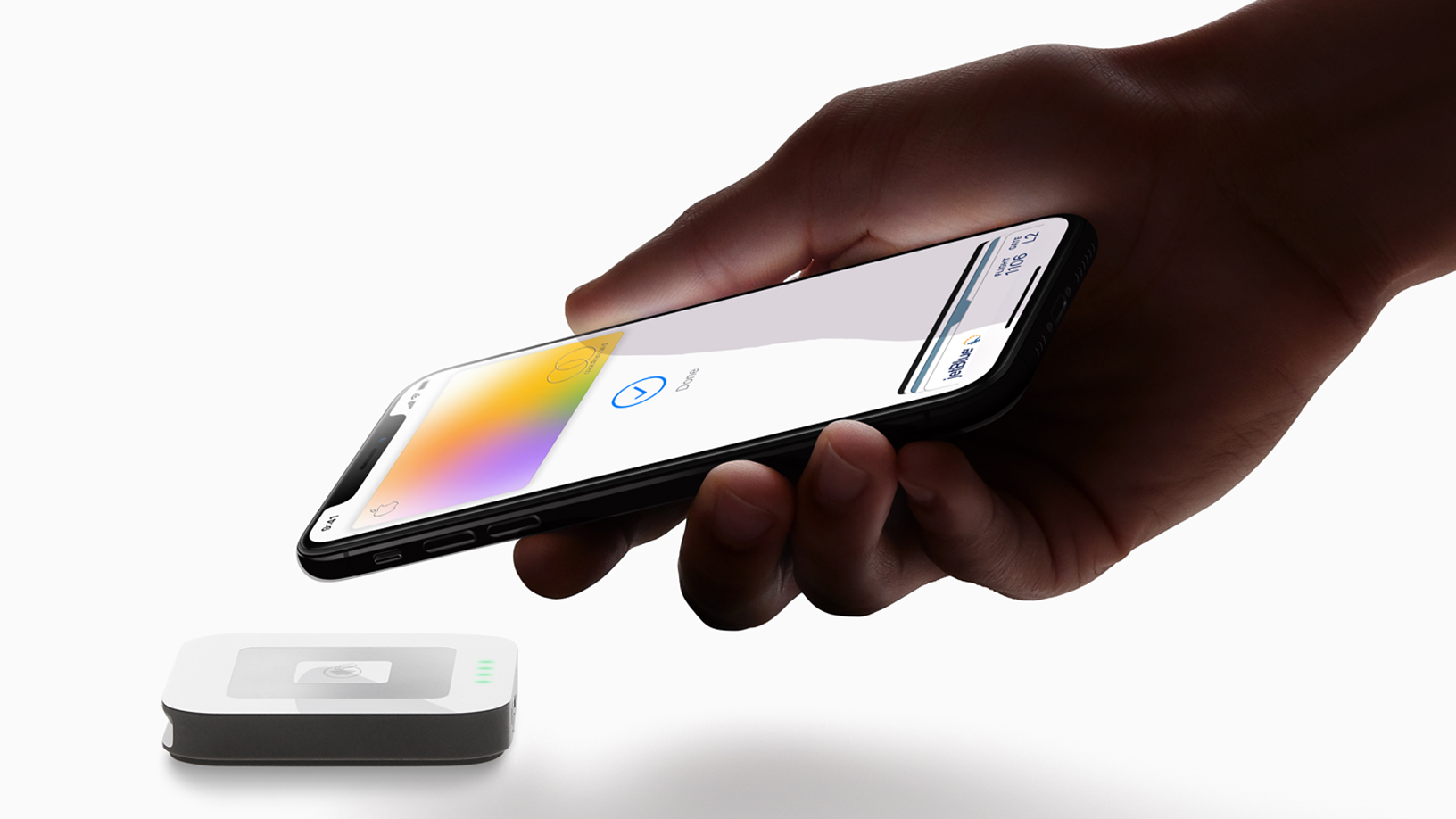
    Fines for anticompetitive behavior with Apple Pay and NFC against Apple are being finalized. The investigation has been going on since last year when the EC antitrust regulators have focused on Apple Pay and the iPhone’s NFC chip that makes contactless payments possible and began to scrutinize the practice. What the commission started investigating, in the beginning, was whether Apple unfairly locked out other contactless payment services by restricting the use of the NFC chip inside iPhones.

    The report from the EC states that Apple will get charged for “anti-competitive practices related to its NFC chip technology”, but the exact details are still unclear. It is possible these charges could force Apple to “open up its mobile payment system to rivals”.

    The EU competition enforcer is currently drafting a statement of objections that will express the concerns. The document is expected to be sent to Apple next year.

    Apple has been opening up access to the NFC chip in iPhones in recent years; however, third-party contactless payment systems have had a hard time in comparison to Apple Pay integration with iOS, so this could have been an issue for antitrust regulators. The way that the NFC chip in an iPhone works seems to give an advantage to Apple Pay which antitrust regulators do not like. For example, when an iPhone comes near to an NFC reader, the Wallet and Apple Pay interface is immediately automatically shown, something third-party systems cannot do on the iPhone.

    Earlier this year, the European Commission concluded in another investigation (this one is a preliminary conclusion at the moment, not a final decision, so keep that in mind) that Apple is indeed in breach of anti-competitive laws. More precisely, the investigation here was about Apple Music and music streaming services, and whether Apple was favoring its own solution on iPhones and thus making it harder for third-party music streaming services to compete.

    This anti-competitive behavior was related to the high commission fees that Apple imposed on third-party apps in the App Store and that the company does not allow app developers to tell users there are other payment methods… sounds familiar? Maybe yes, as this is the same complaint game maker Epic Games had against Apple and why the popular Fortnite game is no longer to be found on the App Store, for more than a year now.

    The aforementioned preliminary conclusion does not impose any fines or regulations yet, as it is not final. The next step is for the commission to review the case with Apple.In this case, after the period of reviewing it with Apple, the commission will decide whether to proceed with formal charges. If found in breach of competition law, the EC can force Apple to change the rules of the App Store or pay a fine for past offenses, which can go up to 10% of annual revenue.

    It is not only Apple that the EC is investigating for breaching competitive laws. Under investigation are also other tech giants such as Google, and even Amazon (for anti-competitiveness in the smart home market). The EC is also investigating the voice assistants on devices from Apple, Google, and Amazon, for the same issues.

  • Brussels Urges Volkswagen To Compensate All EU Dieselgate

    Brussels Urges Volkswagen To Compensate All EU Dieselgate

    Brussels on Tuesday called on Volkswagen to pay out all European consumers – and not just German ones – affected by the “Dieselgate” scandal in which the automaker tampered with vehicle emissions to cheat pollution tests.

    EU Justice Commissioner Didier Reynders said in a statement that VW “is not willing to work with consumer organisations to find appropriate solutions for consumers,” noting that it so far is only making payouts to German and US purchasers of its affected vehicles.

    “All consumers need to be compensated,” Reynders said.

  • Shopee launching platform in Poland

    Shopee launching platform in Poland

    Sea Ltd’s Shopee is preparing to launch in Poland and is currently recruiting sellers, two company sources with knowledge of the matter told Reuters.

    The move will be the first expansion into European e-commerce for the $190 billion Singapore-headquartered technology group, whose gaming arm Garena is already active in the region.

    Shopee is simultaneously preparing to launch in India, Reuters reported last week, after aggressively expanding in Latin America since earlier this year.

    One of the sources told Reuters that Shopee is cautiously scaling up its global expansion by testing out possible new markets.

    The two sources, who requested anonymity because they were not authorized to speak to media, said Shopee will also launch in Argentina in the coming months.

    The firm is already the dominant player in e-commerce in Southeast Asia, according to market researchers, bringing in $1.2 billion globally in revenue for the quarter ending June 30.

  • EU may force Apple to allow app side-loading

    EU may force Apple to allow app side-loading

    Apple has been in some hot water around the world for a while now, regarding its monopolistic practices in the App Store (not to even mention the whole right-to-repair movement).

    The inability for mobile developers to offer iOS apps anywhere outside the official App Store has been a long-standing issue and the cause for many a lawsuit so far. Now, Reuters reports Apple has received a special warning by Margrethe Vestager, who is both Tech Chief and Executive Vice President of the European Commission.

    Vestager has accused Apple of “using privacy and security concerns to fend off the competition on its App Store,” which is the driving reason the company cites for forcing all developers to publish through the App Store, where Apple can approve or reject them, and levy the 30% commission fee from one and all (Apple has since loosened up a bit in that regard, to its credit).

    Apart from the official warning to Apple last Friday, since 2020, Vestager has also been working on implementing a new Digital Markets Act (DMA), which is a set of rules meant to force Apple into allowing the side-loading of apps from outside Apple’s native App Store onto iOS devices, be that from external app stores or downloaded straight from the web.

    While Tim Cook rejected the idea at a public speech in June, saying that this would destroy the privacy and security of the iPhone ecosystem, Vestager agreed about the importance of security but claimed that the argument is not necessarily always relevant.

    The important thing here is, of course, that it’s not a shield against competition because I think customers will give up neither security nor privacy if they use another app store or if they sideload… I think privacy and security is of paramount importance to everyone.

    Vestager’s proposal is open to change, and would have to go through multiple EU countries and lawmakers in order to be finalized and leave Apple legally bound to allow apps outside the App Store within countries in the European Union.

  • EU Extends Investigation Into Samsung’s EV Battery Plant In Hungary

    EU Extends Investigation Into Samsung’s EV Battery Plant In Hungary

    EU competition enforcers have extended a near two-year investigation into Hungarian state aid for South Korean manufacturer Samsung SDI Co Ltd’s electric vehicle (EV) battery factory after Hungary submitted new data to back its case.

    Samsung SDI, an affiliate of South Korean tech giant Samsung Electronics Co Ltd, began production at the Hungarian plant in 2018, making batteries for 50,000 EVs a year.

    The European Commission opened an investigation in October 2019 to assess whether Hungary’s plans to grant 108 million euros ($128.5 million) in state aid complied with the bloc’s competition rules.

    “Hungary now argues that Samsung could have benefited from an investment grant and a tax exemption in an alternative location outside the EU, which would have increased the viability of the alternative location with respect to Hungary,” the Commission said.

    It said Budapest has also produced new documentary evidence to show that Samsung’s search for a location for the plant had also included a number of new production facilities in Europe and an alternative location in a less developed region in the EU.

    Extending the EU investigation will allow third parties to comment on the Hungarian aid.

    Earlier this year, Samsung said it would invest 942 billion won ($849 million) to expand the plant.

  • The EU comes after Apple with list of antitrust charges

    The EU comes after Apple with list of antitrust charges

    Apple is taking hit after hit in its continued struggle against antitrust accusations, as only last week Arizona passed a bill forcing the App Store to allow third-party payment systems within apps to circumvent the 30% commission fee.

    Reuters has revealed that EU antitrust regulators are currently finalizing a list of charges against Apple for violating antitrust laws. Apparently, Spotify, the Swedish music streaming service, had jumpstarted a set of four cases against Apple when it filed a report against the tech giant two years ago.

    Spotify had initially complained to the European Commission that Apple was giving an unfair advantage to Apple Music by restricting alternative platforms to keep them in its shadow. This has since galvanized further complaints against Apple’s 30% commission fee imposed on all apps without allowing alternative payment systems or other app stores onto the iOS.

    If Apple loses to these charges, it could spell the end of its App Store monopoly. In the US, Apple is waiting to go on trial in only two months to face Epic Games in a lawsuit for antitrust practices, which was launched last August. It looks like a freer mobile app publishing platform may loom on the horizon after all, which would be fortunate for smaller developers and businesses who have been impacted the most by this monopoly.

    Reuters states that the document listing the charges is set to be delivered to Apple sometime before this summer.