Retail News CRM

Tag: EU

  • EU cracks tax whip, demands Amazon pay up

    EU cracks tax whip, demands Amazon pay up

    Amazon has been told to pay about €250 million (A$374 million) in back taxes to Luxembourg, the latest US tech company to be caught up in a European Union crackdown on unfair tax deals.

    The fine was much lower than some sources close to the case had expected and is only a fraction of the €13 billion that Apple Inc was ordered to pay to Ireland last year.

    EU Competition Commissioner Margrethe Vestager, who has other big US tech companies in her sights, has taken a tough line on multinational companies’ approach to tax.

    Amazon said it was considering an appeal.

    Amazon shares were little changed in early Wednesday trading.

    While the exact amount Amazon needs to repay is yet to be calculated, the €250 million is significantly less than the 400 million euros which sources close to the matter told Reuters a year ago was under consideration by Vestager.

    The bill suggests the Commission believes Amazon shielded around 900 million euros in EU profits from tax, calculations by Reuters show.

    For most of its existence, Amazon has worked on razor thin profit margins to fuel its global expansion, making only US$2.4 billion (A$3.1 billion) profit on global revenues of US$136 billion in 2016.

    The Commission said Luxembourg allowed Amazon to channel a significant portion of its profits to a holding company without paying tax.

    Amazon’s corporate set up with subsidies in Luxembourg was also subject of a US$1.5 billion court case with US tax authorities, which Amazon won in March.

    Amazon, which employs 1500 in the grand duchy, is one of the biggest employers in the country of half a million people. It has a Europe-wide staff of some 50,000.

    Luxembourg, whose tiny economy has benefited from providing a European base for multinational companies, rejected the finding and said it was looking at its legal options.

  • European firms lose confidence in Vietnam’s market

    European firms lose confidence in Vietnam’s market

    The overall business climate index has fallen 7 points since the last quarter. The number of European businesses and companies with links to Europe that have a positive outlook about their futures in Vietnam has fallen slightly, according to the Vietnam Business Climate Index (BCI) for the first quarter released on Monday by the European Chamber of Commerce (EuroCham).

    When asked about their business outlook for the next quarter, 9 percent said the outlook was “excellent”, compared to 10 percent the previous quarter, and 60 percent said it was “good”, compared to 67 percent.

    The number of firms that forecast their outlook as “not good” jumped from zero to 7 percent, and “very poor” climbed from 2 to 4 percent.

    With regards to their current business situation, 67 percent of respondents described theirs as “excellent” and “good”, around a 5 percent drop from the previous quarter.

    A slight rise was seen in the “not good” and “very poor” answers, with 9 percent and 3 percent, respectively, compared to 3 percent and 2 percent in the last quarter.

    EuroCham members that expressed confidence in a stable and continuously improving macroeconomic scenario for Vietnam in the next quarter have dropped by around 10 percent to 43 percent.

    Conversely, businesses that believe the macroeconomic conjuncture could get even worse has risen 11 percent to 18 percent.

    In general, the index for the first quarter stood at 78, dropping 7 points.

    In an interview with Bloomberg at the Government Office in Hanoi on Saturday, Vietnamese Prime Minister Nguyen Xuan Phuc said he is confident that Vietnam’s economic growth this year will meet the government’s goal of 6.7 percent without adding to inflation, despite weak expansion in the first quarter.

    “The main economic indicators in May are all very good with a strong pickup in exports, foreign investment and agriculture production, laying the ground for faster growth in the third and fourth quarters,” he said, adding that the growth target was difficult but not impossible.

  • Amazon, channel for Vietnam’s apparel to enter EU

    Amazon, channel for Vietnam’s apparel to enter EU

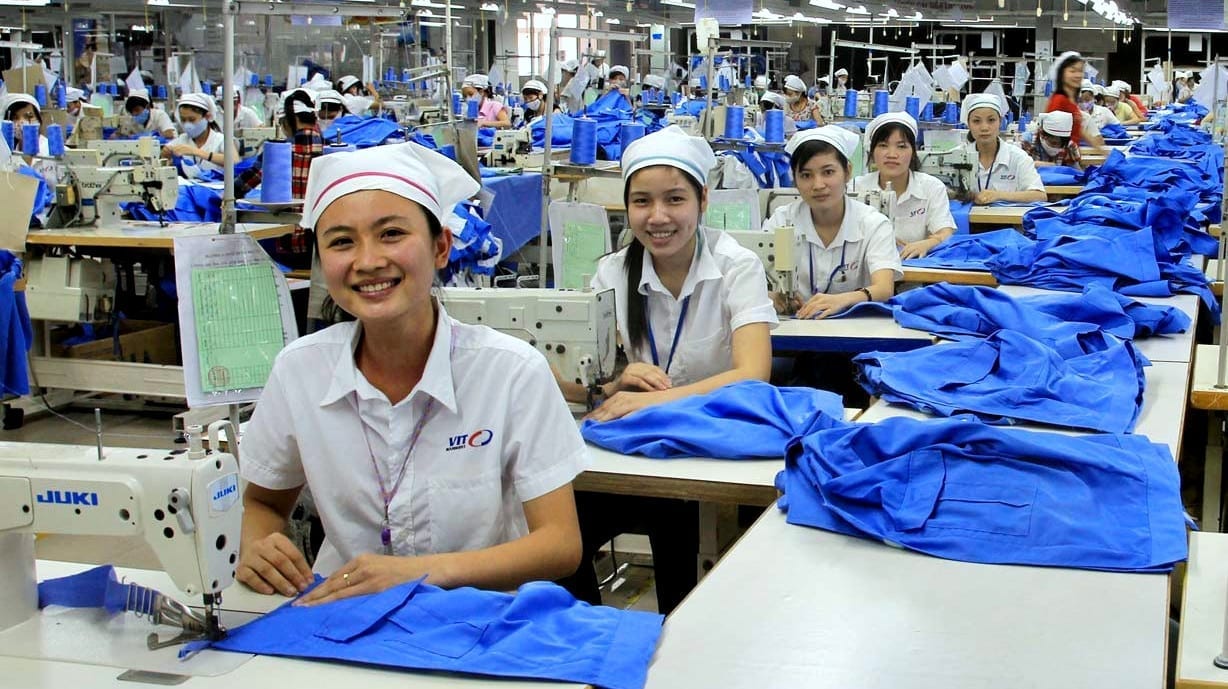
    Amazon, leading online shopping channel, has the potential to become a window for Vietnamese textile and garment products to gain access to European Union market. This was stated in Hanoi at a seminar, organised by Vietnam Textile and Apparel Association. Vietnamese businesses got advice on e-commerce by experts from Germany’s Vorwarts company at the event.

    Vorwarts CEO André M. Åslund said the quality of Vietnam’s garment products satisfied EU consumers. Many enterprises in Vietnam and Asia were selling their products to the EU via intermediaries or outlets. However, if products are sold on Amazon, intermediaries will not be needed, leading to reduction in cost and improvement in Vietnamese apparel’s competitiveness in EU markets, according to Vietnamese media reports.

    Up to 76 per cent of consumers use mobile phones to shop online, and 50 per cent of mobile phone users shop via Amazon, Åslund said.

    Noting that consumers’ behaviours were changing, he said instead of solely depending on products’ prestige, their interest and trust were now also framed by other factors such as product review and description, and other consumers’ assessment, the reports said.

    Therefore, businesses should pay more attention to quality information provision and product quality to get good assessments. Those evaluations will encourage EU consumers to buy Vietnamese products, Åslund said.

    However, businesses must comply with regulations of EU markets and improve product design to meet consumers’ taste. Once consumers are satisfied, they will introduce products to others, he said.

  • Uniqlo wants to double EU store count by 2020

    Uniqlo wants to double EU store count by 2020

    Uniqlo said it plans to take its European store count to 100 outlets over the next three years, in a bid to strengthen its retail presence outside of Asia.

    In doubling its current store number from 50 to 100, the fast-fashion chain will make its first foray into Spain and Italy, according to local media.

    A planned Barcelona location will mark Uniqlo’s entry into Spain this autumn, while a Milan store will open in Italy, according to a report by the Nikkei Review.

    The Fast Retailing-owned brand already operates some 50 stores in France, Russia, Germany, the UK and Belgium.

    The firm said it would be opening new locations in regional cities in some European countries too, those it is already selling in. This includes regional stores in smaller French cities such as Bordeaux and Toulouse.

    With the store openings in the EU, Uniqlo will be facing stiff competition from two global fast-fashion moguls. Namely Zara, which is operated by Spain’s Inditex, and Sweden’s H&M, both of which have a solid history on the continent and a loyal consumer following.

    The Japanese chain told the Nikkei Review that demand for its highly functional basic apparel, however, is strong enough to warrant such fast-paced and vast expansion. This is particularly apparent now, given the Japanese firm’s domestic sales growth has plateaued.

    “Overseas operations are what our growth hinges on,” said Fast Retailing CEO Tadashi Yanai.

    However, Uniqlo is heavily reliant on Asia.

    Overseas sales came to 655 billion yen in 2016, with China accounting for half of the firm’s fiscal 2016 revenues made in foreign markets.

    Yanai said Uniqlo is eyeing global sales of 3 trillion yen ($26.6 billion) by the fiscal year ending August 2020. Japanese sales lifted just 3% to around 800 billion yen in fiscal 2016. Meanwhile, the number of stores in Japan has remained steady at around 840 for several years.

  • EU expects free trade pact with Vietnam to take effect early 2018

    EU expects free trade pact with Vietnam to take effect early 2018

    The European Union is trying to capitalize on free-trade interest amid gloom over Trump policies.

    The European Union is seeing increased impetus around the world to move forward with Free Trade Agreements (FTA) with the bloc, which will make the most of uncertainty over the outlook for U.S. trade policy, the EU’s trade envoy said late last week.

    The EU was close to finishing or implementing FTAs with Japan, Vietnam and Singapore and was readying to start talks with Australia, New Zealand and Chile – all members of a U.S-inspired Trans-Pacific Partnership (TPP) devastated by Donald Trump’s decision to pull Washington out of the deal on day three of his presidency.

    “Today, there is political opportunity to say that those of us who believe in open markets and good trade, we are willing to do trade agreements,” EU Trade Commissioner Cecilia Malmstrom told in an interview.

    “Whether that (TPP) is dead, or partially dead, it is not for me to judge. But we have seen an increase of willingness to step up trade agreements.”

    One project thrust back on the table is an FTA between the EU and the Association of Southeast Asian Nations (ASEAN) that was abandoned in 2009 due to disparities in wealth and standards between its 10 markets.

    Malmstrom also said it should not be assumed an EU-U.S. trade deal had collapsed, despite indications the Trump administration would pursue a protectionist agenda.

    EU and U.S. officials were negotiating for more than three years on a Transatlantic Trade and Investment Partnership (TTIP) and that could be easily resumed, she said, and should not be impacted by Britain’s looming departure from the EU.

    “We have left in a tidy order, when we stopped negotiating before the change of administration,” she said. “It makes a lot of sense to facilitate trade between the EU and the U.S.”

    She added: “We need to be patient. But while waiting for more clarity from the American administration, there are lots of other partners as well.”

    Malmstrom said ASEAN, a region with combined $2.6 trillion GDP and some of the world’s fastest-growing economies, had become integrated “in an impressive way.”

    EU figures show trade between the EU and ASEAN region was worth $220 billion last year. The EU is its biggest source of investment, according to the EU-ASEAN business council.

    FTAs with Vietnam and Singapore should come into force early next year, Malmstrom said, while negotiations with Indonesia and the Philippines were “at full speed” and discussions had taken place about reviving plans for an FTA with Malaysia.

    Malmstrom said establishing a bloc-to-bloc trade deal would be a challenge, so an FTA with ASEAN might be less comprehensive that others.

    “There’s still a lot of differences between the richest and poorest countries here, so there will have to be different levels and it will not be as ambitious,” she said.

  • Indonesia ships first containers of timber under EU legality scheme

    Indonesia ships first containers of timber under EU legality scheme

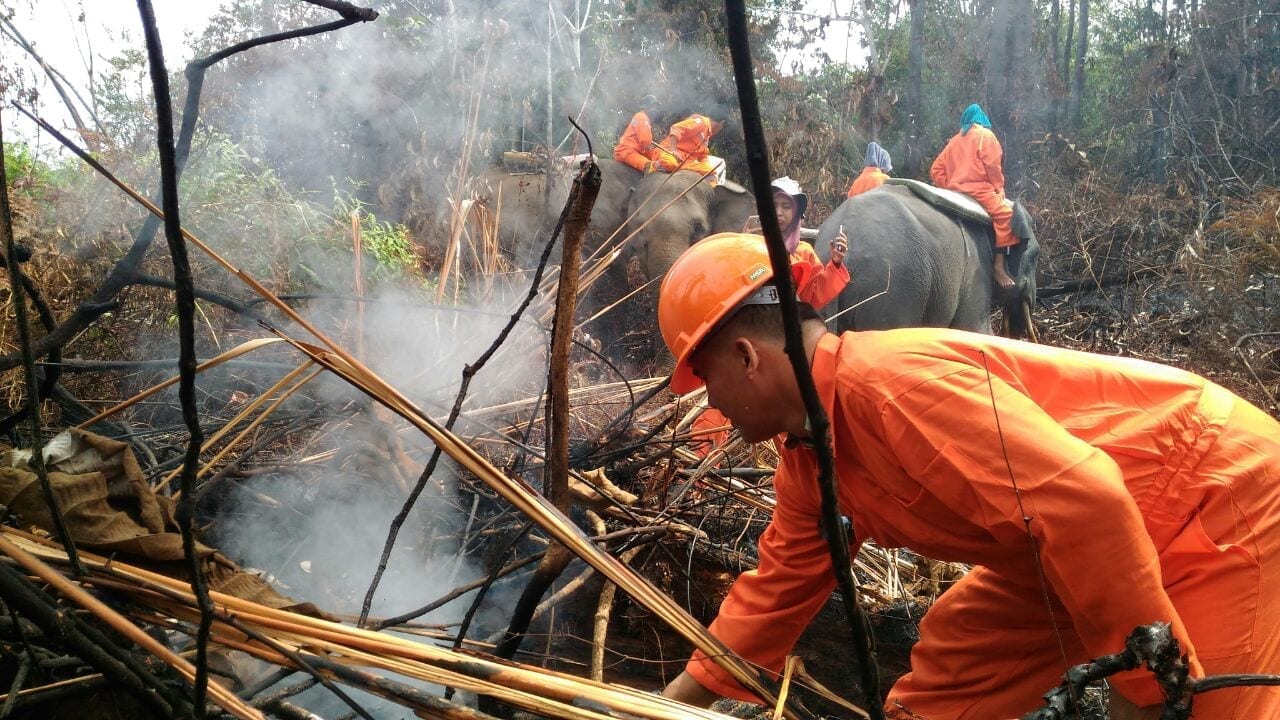
    Tesso Nilo National Park, Riau Province, Indonesia. This patch of forest is supposed to provide a habitat for tigers and elephants, but is constantly under threat of fire, illegal logging and encroachment. Image:

    The first containers of plywood certified as legal under the EU’s anti-illegal-logging action plan were shipped out of the Indonesian capital on Tuesday, a milestone in the fight against blackmarket timber in one of the world’s most heavily forested countries.

    Of the 15 nations that have agreed to take part in the scheme, Indonesia is first to succeed in establishing a national system for verifying the legality of its timber — a considerable achievement for a country where unscrupulous loggers pocketed a presumed $60.7-81.4 billion from illicit sales between 2003 and 2014, according to the nation’s antigraft agency. Indonesia lost nearly $9 billion in state revenue from unreported timber sales during the same period.

    “This signifies Indonesia’s commitment to combat illegal logging and the illicit timber trade,” said Rufi’ie, a director at the Ministry of Environment and Forestry.

    Rufi’ie, who like many Indonesians goes by one name, added that 36 certifications had already been issued under the scheme, known as Forest Law Enforcement, Governance and Trade (FLEGT). He said he hoped Indonesia’s compliance with the program would increase the value of its exports.

    With the adoption of the scheme, EU timber importers will not have to perform their own due dilligence on certified shipments from the archipelago country, increasing the competitiveness of Indoensian timber vis-a-vis other producers.

    Vietnam appears likely to be the second country receive the EU’s blessing to issue FLEGT licenses.

    A board member of the Indoesian Wood Panel Association (Apkindo), Gunawan Lim, said he expected plywood exports to jump 20 percent next year on the strength of the new certification, largely because not just Europe but other developed countries were also concerned with legality.

    Aida Greenbury, the head of sustainability at Asia Pulp & Paper, Indonesia’s largest pulp and paper company, agreed: “As nations around the world from Japan to Australia look to tackle illegal logging, Indonesia will benefit from major first-mover advantage for buyers looking for legal products.”

    The focus now shifts to maintaining the credibility of Indonesia’s Timber Legality Assurance System (SVLK), on which the issuance of FLEGT licenses is based.

    Indonesia is home to hundreds of thousands of forestry enterprises, many of which operate informally and on a small scale, and which can be difficult to monitor.

    Large companies break the law, too. On Wednesday, the Supreme Court convicted PT Merbau Pelalawan Lestari of logging outside the boundaries of its permit area on Indonesia’s main western island of Sumatra.

    NGOs called on the Indonesian government to make sure the scheme was properly enforced and monitored.

    Faith Doherty, forest campaign leader at London-based the Environment Investigation Agency, urged the EU to “swiftly [follow] up information on illegal timber trade entering the EU, including information submitted by independent investigators.”

    The WWF urged greater transparency, calling on the Indonesian government to ensure that civil society groups “will be granted full access to information including relevant data and planning documents,” Aditya Bayunanda said. “Holding up such information would greatly decrease the credibility and transparency of the system.”

  • EU wants more access to Indonesian F&B market

    EU wants more access to Indonesian F&B market

    The EU demands Indonesia to ease trade barriers in the food and beverage (F&B) sector to give European producers more access to  Southeast Asia’s largest market, an official representing the world’s largest trading bloc has said.

    EU Commissioner of Agriculture and Rural Development Phil Hogan said many European producers had expressed their interest to enter the Indonesian market. However, both tariff and non-tariff measures, such as import quotas and local content requirements, held them back from doing so.

    “Many businesses are interested in Indonesia but they are waiting for improvement in market access,” Hogan said during the 6th EU-Indonesia Business Dialogue in Jakarta on Tuesday.

    He also mentioned the requirement to provide halal certificate as an obstacle for European F&B companies that wanted to explore opportunities in the world’s largest Muslim-majority country. Some European producers, Hogan said, had experiences in producing halal products, but some others did not.

    “We respect religion, but it [halal certification] prevent exports to Indonesia,” he said.

    He suggested that halal certification should be an option instead of being obligatory. Then producers that had not yet obtained certification could still export their products to Indonesia.

    Indonesia and the EU are currently in talks for the Comprehensive Economic Partnership Agreement (CEPA). The anticipated agreement, expected to be concluded by 2019, will remove various trade barriers between both parties.

  • Arrivals of European tourists in Bali up 59.4%

    Arrivals of European tourists in Bali up 59.4%

    The number of European tourists arriving in Bali in this summer season increased 59.4 percent from 76,822 in June to 122,455 in July 2016.

    “The increase of European tourist arrivals is the fruit of the efforts made by the government and tourism industries in promoting Indonesia, especially Bali, in Europe and Asia,” tourism observer Dewa Nyoman Putra said here on Tuesday.

    Besides the impact of the intensive promotions and expanded security, the increase in European tourist arrivals is also triggered by the visa-free facility the Indonesian government provides for a number of countries.

    The tourism service of Bali recorded the average European tourist arrivals in Bali at some 76,000 per month.

    However, it rose to 122,455 in July, so that in the January-July 2016 period, the number of foreign tourist arrivals from Europe reached 583,463.

    Thus, European tourist arrivals in Bali account for 21.17 percent of the total foreign tourists arriving in Bali in the same period, in which 2.7 million foreign tourists visited Bali.

  • Indonesia’s Lion Air removed from EU air safety blacklist

    Indonesia’s Lion Air removed from EU air safety blacklist

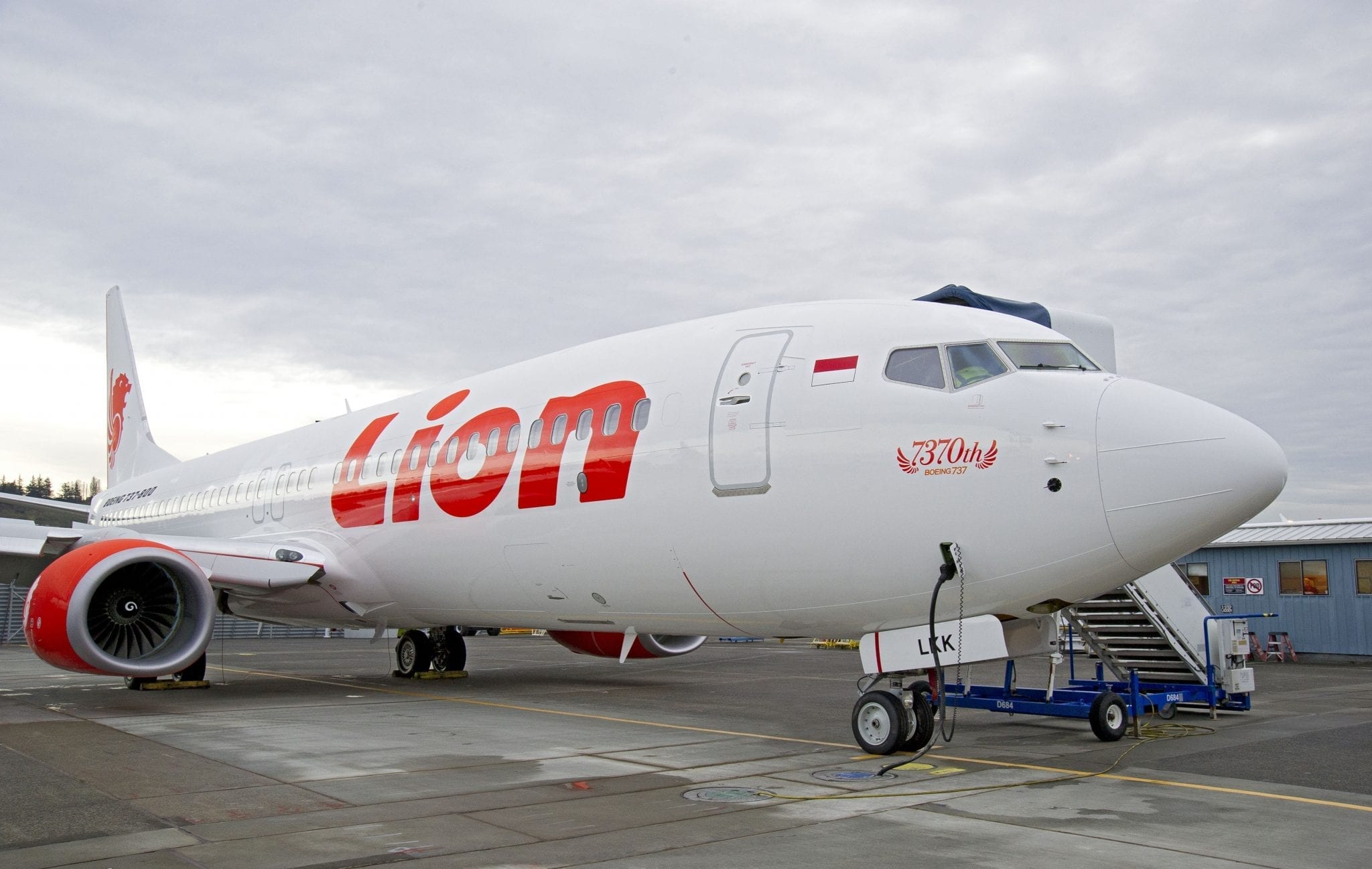
    Indonesia’s Lion Air, a major buyer of Airbus and Boeing jets, was removed from the European Union’s air safety blacklist, the European Commission said in a statement on Thursday.

    That means Lion Air is no longer banned from flying in the 28-nation EU.

  • New EU funding to help boost Myanmar garment exports

    New EU funding to help boost Myanmar garment exports

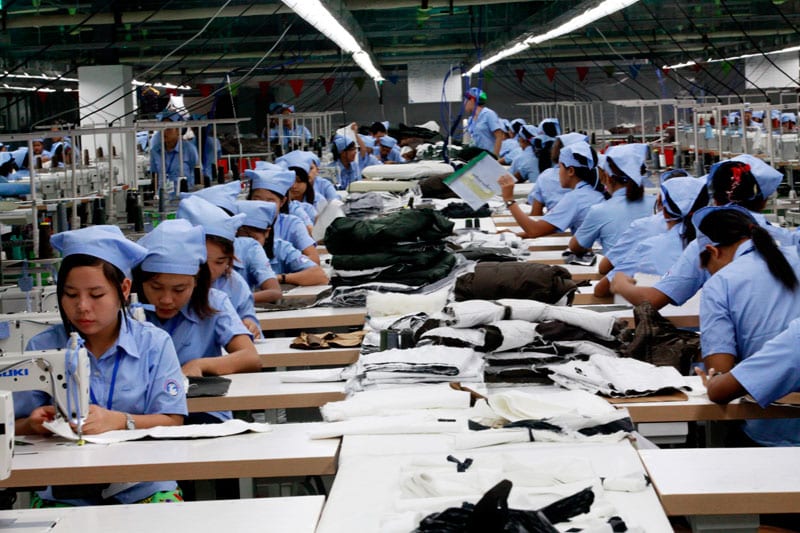
    Myanmar’s garment sector is targeting a 300% increase in garment exports to the European Union (EU) by end of 2019 thanks to a EUR2.8m (US$3m) funding boost as the second phase of the SMART Myanmar project gets underway.

    The EU-funded SMART Myanmar project – SMEs for Environmental Accountability, Responsibility and Transparency – aims to build the sustainable recovery of the Southeast Asian country’s garment industry.

    Phase two of the initiative launched last week, with the goal of boosting productivity and creating over 300,000 jobs for low-skilled workers during the next four years. It has been implemented by a consortium of partners including Germany’s Sequa, the Foreign Trade Association of German Retail Trade (AVE), sustainable fashion group Made-by, the Myanmar Garment Manufacturers Association (MGMA), and the Association of Development Financing Institutions in Asia and the Pacific (ADFIAP).

    More specifically, Jacob Clere, team leader with SMART Myanmar II, told just-style: “The project focus is on improving social and environmental compliance in garment factories, in particular, upscaling and mainstreaming some of the activities piloted and launched during the first project phase from 2013-2015. We’re targeting social compliance improvements in 100 factories during the next four years, as well as delivering HR management to 400 factory managers. As well, we plan to continue capacity building activities with the MGMA and with the training of local technical staff on compliance issues.”

    Other activities will include educating factory workers on labour and OHS laws, working with the government on public procurement procedures, and educating local banks on financial products and services – including introducing the concept of green finance.

    The ultimate goal of the SMART project, which has been running for three years, is to help Myanmar’s garment industry compete in the global market. At its inception, EUR2m was invested in a bid to improve the production and consumption of sustainably manufactured garments in the country.

    Project partners hope other results will be achieved, such as a 20% reduction in waste production in 100 garment factories. Garment exports are also targeted for a 300% increase from 2015 to the end of 2019.

    The consortium is also expecting that at least 150 garment factories will improve their working conditions as a consequence of participating in the SMART Compliance Academies, and that up to 30 banks will take part in at least eight workshops on green finance. In addition, the programme is targeting the training of 15 Safer Consumer Products (SCP) consultants to advanced level to deliver factory improvement programmes. And it is hoping the initiative will create new business opportunities, such as joint ventures between factories in Myanmar and EU brands.

    Speaking at the launch ceremony, EU Ambassador Roland Kobia celebrated the achievements of Myanmar’s garment industry, noting that the value of garment exports has more than doubled in recent years, making it “a catalytic sector of Myanmar’s economic transition”.

    SMART Myanmar is an EU-funded SWITCH Asia project, which, while promoting and supporting the sustainable production of ‘Made in Myanmar’ garments, strives to increase the international competitiveness of small and medium enterprises (SMEs) in the sector. It works alongside companies and business support organisations located in the country, helping build capacity and increase skills and knowledge in local partner organisations, facilitating the development of marketing and export strategies for the garment sector.

    From 2013-2015 the project engaged with dozens of local garment factories on social and environmental compliance issues, providing technical support and capacity building. The project also assisted in boosting the capacity of business associations, helping the Myanmar Garment Manufacturers Association (MGMA) draft a first-ever Code of Conduct for its members.

    Project director Simone Lehmann said at the press conference in Yangon that the focus of the next phase will be on “technical support and capacity building” through workshops engaging dozens of factory employers. She added that there will not be a focus on labour disputes in the sector, but instead, “developing the sector and providing professional support for MGMA”.

    She added: “The garment sector has quickly become Myanmar’s main export sector after oil and gas. The value of exports has more than doubled in less than two years and is projected to continue to grow almost exponentially for the next several years. The growth of the garment sector will contribute to the growth of the industrial sector and create many new jobs.”