Retail News CRM

Tag: flipkart

  • Flipkart acquires Israeli startup Upstream to strenghten pricing capability

    Flipkart acquires Israeli startup Upstream to strenghten pricing capability

    India’s leading e-tailer Flipkart on Tuesday said it has acquired Israel-based Upstream Commerce startup for an unspecified amount to strengthen its selection and pricing capability.

    “The acquisition enables us to help sellers boost sales and serve customers better with Upstream’s advanced and data science-based intelligent solutions,” said the city-based retail giant Walmart-owned company in a statement here.

    A leader in real-time pricing and product assortment optimisation solutions, the eight-year-old Tel Aviv-headquartered startup builds cloud-based, automated competitive pricing and product analysis tools.

    “The acquisition will also help us to have an overseas centre to support our business in India with its 20-member team based in Israel,” a company spokesperson told IANS.

    Post-acquisition, the startup will continue to work in Tel Aviv and become one of Flipkart’s global centers for data science work.

    “Upstream’s solutions will enable us to give insights to our sellers, help them optimise product assortment, pricing strategy and find gaps in the market,” noted the statement.

    The buyout is in line with Flipkart’s vision to solve e-commerce challenges through innovations and will help provide wider selection and better pricing for its customers.

    “We have spurred e-commerce growth across the country and solved local problems through innovations. With Upstream, we will have tech and talent presence across Asia, Israel, the US and some global hubs for innovation,” said company’s Chief Executive Kalyan Krishnamurthy on the occasion.

    Backed by YL Ventures as a leading investor since its inception in 2010, the startup will be one of Flipkart’s excellence centres to do cutting-edge data science work.

    Upstream Chief Executive Amos Peleg said Flipkart’s choice to have presence in Israel through the acquisition was a vote of confidence in his team, technology and domain expertise.

    “We share the same passion for technology and vision for the contribution of data science in future and success of online retail as Flipkart,” said Peleg.

    Though Flipkart has been developing machine learning algorithms to improve the selection and pricing parametres for sellers and helped thousands of small and medium businesses get online, it is betting on Upstream providing it with automated pricing and planning better selection.

    “Upstream’s expertise will be a huge addition for us and our in-house AI capabilities, which will share actionable insights with sellers to help them make informed decisions on products and their pricing,” added Flipkart’s Marketplace Head Anil Goteti.

    The 11-year-old e-shopping portal claims to have over a lakh sellers and offers a whopping 80 million products across 80 categories, including smartphones, books, media, consumer electronics, furniture, fashion and lifestyle.

  • Amazon, Samara Capital buy India’s retail chain More

    Amazon, Samara Capital buy India’s retail chain More

    Samara Capital, a private equity company, has teamed with Amazon to buy Indian grocery retailer More from Aditya Birla Retail.

    While the value of the deal has not been disclosed, it is reported a person close to the transaction putting it at around ₹4,200 crore (US$584 million).

    It is believed Amazon’s stake in the business will be capped at 49 per cent to comply with Indian foreign investment regulations. The balance will be held by Samara Capital, which is an Indian entity founded by former Citigroup executives.

    Amazon has already committed US$500 million to build its food retailing business in India, where it sees massive opportunity for growth.

    Analysts say that by investing in More, Amazon can build both online and offline food retailing operations simultaneously and find ways to marry the two. But it faces intense competition from Walmart which spent $16 billion acquiring Flipkart in a deal completed last month.

    More operates more than 500 supermarkets and 20 hypermarkets, ranking it fourth among Indian grocery retailers.

  • Flipkart gets over Rs 3,462 crore infusion from Singapore entity

    Flipkart gets over Rs 3,462 crore infusion from Singapore entity

    Flipkart Internet, the online marketplace arm of the Walmart-backed company, has received over Rs 3,462 crore fund infusion from Flipkart Marketplace, Singapore, as per regulatory documents.

    According to a PTI report: The fund infusion — done in two tranches — will provide more ammunition to Flipkart, which is locked in an intense battle with US-based Amazon for leadership in the burgeoning Indian e-commerce market.

    “…in accordance with the Letter of Offer dated August 14, 2018 circulated by the company for the rights issue of shares, the board of directors of the company be and hereby allot 14,57,598 Class A equity shares…for an amount aggregating to Rs 30,07,02,46,740 for cash to Flipkart Marketplace Private Ltd, Singapore,” regulatory documents filed with Corporate Affairs Ministry said.

    The resolution was passed at the board meeting held on August 30, 2018. The board, during the same meeting, also passed another resolution (in accordance to a Letter of Offer dated July 18) for allotting 2,21,002 equity shares for Rs 455.92 crore for cash to Flipkart Marketplace, Singapore.

    The fresh capital also comes close on the heels of festive sale season that not only brings in discounts and deals for customers, but is also an annual showdown of sorts between the two largest players in the segment — Flipkart and Amazon India.

    Market watchers expect the competition between the two to be even fiercer this year as both companies have invested significantly through the year to ramp up product offerings as well as logistics infrastructure to ensure speedier delivery.

    While Flipkart now has the backing of US retail giant Walmart (via a Rs 16 billion deal signed earlier this year), Amazon India too has received millions of dollar in funding through the year from the US parent across operations like marketplace and payments business.

    About 20 million people are expected to shop on various e-commerce platforms during the festive sale next month, translating into sales of around Rs 3 billion for players like Amazon and Flipkart, according to a report by research firm RedSeer.

    In a statement Tuesday, Flipkart said it expects to see a surge of 8-10X in sale of perfumes on its platform during the sale season. This growth, it said, would be on the back of an overhaul undertaken by the company.

    “Project ‘Authenticated’ promises a revamp of Flipkart’s portfolio comprising over 2000 perfumes and a seal of authenticity on the listing image, a new feature that showcases brand-approved sellers,” it said.

    The company will also add more exclusive partnerships and expand its collection of globally recognised labels in coming months, it added. The size of the perfume industry as a whole is predicted to grow 50 percent to Rs 3,000 crore over the next five years, the statement said.

  • Flipkart unveils Indian version of eBay for refurbished goods

    Flipkart unveils Indian version of eBay for refurbished goods

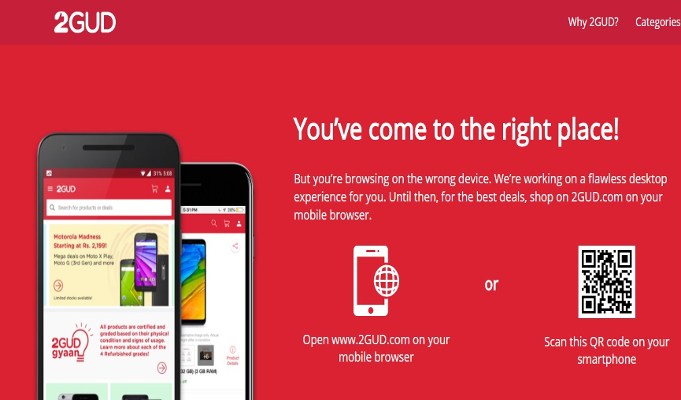
    Retail giant Walmart-owned leading e-tailer Flipkart on Wednesday unveiled a dedicated portal ‘2GUD’ for refurbished goods, including mobile phones, laptops and tablets, a week after shutting its eBay India operations.

    “The independent platform ‘2GUD’ aims to bring affordability, accessibility and availability to the refurbished market, while also addressing the problem of trust and convenience,” the company said.

    The platform offers refurbished mobile phones, tablets, laptops and other electronic accessories along with a 3-12 month warranty.”

    Through 2GUD, we aim to remove the trust deficit that exists in the refurbished goods market,” the city-based company’s Chief Executive Kalyan Krishnamurthy told reporters here.

    The platform has been launched on mobile browsers initially through the site 2gud.com, and it will soon be accessible through desktop browsers and a mobile application.

    The company’s executives, however, declined to give the investment being made in its new arm.

    “Every product that is sold on the platform goes through about 47 rounds of checks and is sold in five grades based on their physical condition — ‘Like New’, ‘Superb’, ‘Very Good’, ‘Good’ and ‘Okay’,” the company’s Vice President heading 2GUD operations Anil Goteti said.

    The prices of products on the platform will vary based on their condition.

    With the refurbished goods market remaining “highly fragmented and unorganised”, 2GUD will remove the buyer-seller interaction by performing the necessary quality checks itself, Goteti said.

    The platform also allows customers to return their products, he added.

    The company estimates the refurbished goods market in India to be worth US $20 billion in the coming five to six years.

    The launch of the independent platform for old goods, which was developed over the last 10 months, comes a week after Flipkart shut down the eBay India operations on August 14.

    Several of eBay India’s staff are now working with Flipkart’s new arm for refurbished goods, the company’s executives said, though they declined to share the specifics.

    The Bengaluru-based Flipkart in 2017 acquired eBay India’s operations in a US $1.4 billion fund-raising deal from several investors, including eBay, which invested US $500 million and received US $200 million worth stocks in Flipkart.

    With Walmart acquiring a majority stake (77 percent) in Flipkart in a US $16 billion (Rs 1,07,662 crore) deal in May this year, California-based eBay had announced that it would sell its stake in Flipkart back to the company for about US $1.1 billion and relaunch its India business soon.

  • Flipkart acquires AI-led startup to get next 200 million online shoppers

    Flipkart acquires AI-led startup to get next 200 million online shoppers

    In a move aimed at getting the next 200 million online shoppers to its platform, e-commerce major Flipkart has acquired Liv.ai, an artificial intelligence-led speech recognition startup. The company, however, did not disclose the deal amount.

    Post the acquisition, Liv.ai will become a Flipkart centre of excellence for voice solutions, and help accelerate an end-to-end conversational shopping experience for its users, Flipkart said in a statement.

    Founded in 2015, Liv.ai is the first Indian company to build speech to text application programming interfaces (APIs) that enable speech to text conversion in 10 Indian languages including Hindi, Bengali, Punjabi, Marathi, Gujarati, Kannada, Tamil, Telugu and Malayalam.

    US retail giant Walmart has recently completed its US $16 billion transaction to buy 77 percent stake in Flipkart.

    “The next wave of growth of internet users is coming from tier II+ cities and 70 percent of these current internet users are native/vernacular language speakers and this proportion is only increasing,” Flipkart CEO Kalyan Krishnamurthy said.

    Given the complexities in typing on vernacular keyboards, voice will become a preferred interface for new shoppers, he added. He explained that building a voice interface is complex, especially in Indian context given multiple languages and accents.

    The team at Liv.ai has been able to solve this through multiple technological innovations including deep neural net-based methods and this expertise is a big capability add-on for Flipkart, he said.

    “Ultimately, we want to give our customers a conversational e-commerce experience and believe that with the voice interface the opportunities are endless including discovery, search, engagement, transactions etc,” Krishnamurthy said.

    Flipkart said this will help build voice and speech capabilities to help get next 200 million online shoppers, who will prefer native language interaction on the web. As per industry studies, Hindi internet user base is likely to outgrow English user base by 2021 and along with Marathi and Bengali users, will drive the volume growth.

    Liv.ai co-founders Subodh Kumar, Kishore Mundra and Sanjeev Kumar, along with the entire Liv.ai team will join Flipkart as a part of the deal.

    The team under the leadership of Ravish Sinha, Vice President Flipkart, will act as a centre of excellence to drive further developing the voice solutions, integration with Flipkart app and developing use cases for various categories.

  • Alcis Sports Ties Up With Flipkart to Rollout 2018 World Cup Fan Wear Merchandise Online

    Alcis Sports Ties Up With Flipkart to Rollout 2018 World Cup Fan Wear Merchandise Online

    After bagging the rights for the upcoming 2018 FIFA World Cup Russia Licensed Apparel Merchandise for India, Nepal, Sri Lanka and Pakistan, Alcis Sports today announced their partnership with Flipkart to bring Indian fans the official fan-wear merchandise of the biggest single-sport event in the world – the FIFA World Cup. Alcis Sports has inked an exclusive deal with Flipkart to retail fan-wear merchandise on the online platform.

    The World Cup in Russia promises to be one of the biggest tournaments in the world and Alcis Sports expects an unprecedented response from football fans in India. Alcis Sports has lined up a comprehensive range of over 550 articles that will be exclusively available on Flipkart. The exclusive merchandise that will be available on Flipkart includes popular apparel categories such as T-Shirts, Polo T-shirts, Shorts, Track pants, and Tracksuits.

    “Football has always been popular among fans in our country and it got a further boost when we hosted the U-17 World Cup in India. With the Russia World Cup just a matter of few days away, it is the right time to introduce these products to these fans”, said Roshan Baid, Managing Director, Alcis Sports.

    “Ours is a young and youthful brand and with our audience being online, this medium is a very important channel for us. And for that Flipkart was an obvious choice for us,” he further added.

    Anuj Batra, President, Alcis Sports said, “The mandate from FIFA for the 2018 Russia World Cup licensed apparel merchandise is a wonderful opportunity for us at Alcis Sports to showcase our manufacturing capabilities and prowess. AlcisSports is known for its advanced apparel technology at attractive price points, and we are confident that this range will find great traction among football lovers of the country. Besides online with Flipkart, products will also be available across all our 5 exclusive stores and large format retail outlets such as Lifestyle, Shoppers Stop, Central, Globus, Sports Station, etc.  ”

    Allowing football lovers to cheer for their favourite country, the licensed apparel range also incorporates country-specific merchandise for some of the fan favourites such as Brazil, Germany, England, Spain, Portugal, France, Uruguay, Belgium and Sweden.


    The licensed apparel merchandise for the World Cup starts at Rs. 399 and comprises of apparel categories such as T-Shirts, Polo T-shirts, Shorts, Track pants, Tracksuits, Hoodies, Jackets, Sweatshirts, Jerseys and Caps. This comprehensive range consists of over 550 unique articles.

  • Walmart India, Flipkart top executives meet CCI

    Walmart India, Flipkart top executives meet CCI

    Top executives of Walmart India and Flipkart on Wednesday met fair trade regulator CCI to explain their activities in the country, days after submitting an application seeking approval for their $16-billion mega merger deal.

    While there was no official word on the meeting, sources said it was a “courtesy call” by the executives of the two companies during which they also apprised the regulatory authority of Walmart’s global sourcing from India, including from the farmers, and its work towards kirana stores and supplier development programmes.

    Those present in the meeting included Walmart India president and CEO Krish Iyer and the company’s senior vice president and chief corporate affairs officer Rajneesh Kumar, besides Flipkart CEO Kalyan Krishnamurthy and its group legal head R Baweja, sources said.

    In their meeting with CCI member Sudhir Mittal, the officials of the two companies briefly explained about their individual businesses, development programmes and other activities.

    The meeting comes days after Walmart approached the Competition Commission of India (CCI) for approval of its proposed acquisition of a majority stake in e-commerce major Flipkart. In their application filed last week, the two companies have said the acquisition, proposed through Walmart International Holdings, deal doesn’t raise any competition concerns.

    Mergers and acquisitions beyond a certain threshold require the approval of the CCI.

    In their plea, Walmart has told the regulator that Flipkart is a Singapore-based investment holding firm, which along with its direct and indirect subsidiaries, both in India and elsewhere, is primarily engaged in the business of wholesale cash and carry of goods and providing marketplace based e-commerce platforms to facilitate trade between customers and sellers in India.

    According to the notice submitted to the CCI by Wal-Mart International Holdings, the proposed transaction will be effected pursuant to the share purchase agreement and the share issuance and acquisition agreement entered into on May 9 by and among Walmart’s subsidiary and Flipkart.

    Retailers have joined hands to approach CCI against $16 billion Walmart-Flipkart deal as they apprehend that it would lead to massive job loss and be a “nightmare for retail trade” of the country.

    Earlier this week, traders body CAIT also said it will approach the CCI to file objections on the proposed Walmart-Flipkart deal, claiming that the agreement would lead to an uneven playing field and massive job losses.

    On the other hand, an online sellers industry body has already moved the CCI against Flipkart India Pvt Ltd, a wholesale company, for allegedly abusing its dominant position on Flipkart’s online marketplace.

    Walmart seeks to acquire 77 percent stake in the homegrown e-commerce firm with a buyout of $16 billion.

    Opposing the deal, the Confederation of All India Traders (CAIT) has also written to Commerce Minister Suresh Prabhu, seeking to know the steps being taken by the government to scrutinise the deal.

    CAIT alleged that the deal involves important issues related to FDI policy, cyber security, apprehension of using e-commerce for entering retail trade by circumventing the law etc.

  • Walmart closes in on $15bn Flipkart e-commerce deal

    Walmart closes in on $15bn Flipkart e-commerce deal

    Walmart may have secured a key victory over Amazon in India, with reports surfacing that the board of Flipkart Online services, one of the fast-growing nation’s largest retail platforms, has approved a deal to sell 75 per cent of the company to the grocery giant for around US$15 billion.

    Citing sources familiar with the deal Bloomberg has reported that the world’s largest retailer is closing in on an official offer for the Indian retailer after Amazon, which was also reportedly looking at the business, took itself out of the race.

    The deal is expected to close in the next 10 days, although final terms remain uncertain. A Walmart deal is thought to be more appealing to regulators given Amazon’s position as the number two competitor in the market.

    Should a transaction progress it would represent a significant international capital reallocation for US-based Walmart, which only last week agreed to offload most of its stake in UK supermarket chain Asda in a £10 billion merger with Sainsbury’s.

    For Amazon, which has been investing heavily in its own Indian platform in recent years in a bid to cash in on growing consumption in the world’s second fastest growing economy, the deal represents a renewed competitive threat.

    Flipkart is an online marketplace founded in 2007 by former Amazon employees Sachin Bansal and Binny Bansal, valued at around $20 billion after garnering investment from the likes of Ebay, Microsoft and Tencent.

  • Flipkart’s Singapore parent infuses Rs. 4500cr into India wholesale arm

    Flipkart’s Singapore parent infuses Rs. 4500cr into India wholesale arm

    the wholesale arm of the country’s largest e-commerce company, has received almost Rs 4,500 crore in what is one of the largest capital infusions for the entity, as per latest regulatory filing at the Registrar of Companies (RoC). This large investment in to the wholesale arm from its parent indicates the aggressive plans that Flipkart has charted out to counter its closest rival Amazon which too runs a wholesale arm. Since raising $4 billion from marquee investors like SoftBank last year, Flipkart has been largely been pushing its logistics and payments businesses adding big bucks to rev up these verticals.

    Flipkart India is one of the core companies that controls the e-tailer’s India operations. The wholesale arm buys products in bulk from various manufacturers and then sells it to merchants who work closely with the online retailer as well as to independent third party vendors. These merchants, in turn, sell these products to consumers on the Flipkart platform. Flipkart Internet is the other significant entity which runs the marketplace for the e-commerce major. This entity too received an investment of about Rs 370 crore recently.

    In March 2016, the Indian government allowed 100% FDI in online retail of goods and services under the marketplace model with riders which restrict a seller from contributing more than 25% of overall sales generated on any e-commerce site. This is why companies like Flipkart and Amazon, which cannot work on the inventory model, prop up few big merchants and help them cater to the growing consumer demand. Having a wholesale arm helps in doing that as they e-tailers cannot directly sell to shoppers. As per the RoC documents, Flipkart’s Singapore parent was issued each share of Flipkart India for Rs 23,900 for raising the new capital.
    An email sent to a Flipkart spokesperson on the development did not elicit a response. The e-tailer’s wholesale entity reported revenues of Rs 15,264 crore for the financial year 2017 compared to Rs12, 818 crore in the previous year showing a growth of about 18%. After a tough 2015- 2016, Flipkart had managed to make a turnaround last year with a bump up in growth numbers on the back of smartphone sale. It also successfully raised massive funds to fight Amazon as Japan’s SoftBank came on board as its largest investor.
    Both Amazon and Flipkart are vying for the largest pie of the Indian e-commerce market and are investing in their businesses at a staggering pace. Amazon has already infused over $3 billion in the Indian market and its international losses–majority of which is credited to India–stood at $3 billion for the full year of 2017. Flipkart Singapore parent reported a 67% jump in losses at Rs 8,771 crore for the financial year ending March 2017. Both the players are also ramping up their infrastructure for new businesses as they look to drive up growth. While Flipkart is setting up new fulfilment centres for its TV and large appliances business, Amazon recently announced it has opened up 15 new warehouses or what it cals Fulfillment Centres to push its grocery and daily consumables business.
    Flipkart is currently engaged in talks with Walmart, the world’s largest offline retailer, for a deal that may give the American retailer a big stake in the homegrown comoany valuing it at upwards of $20 billion, as TOI reported in our February 8 edition.
  • SoftBank invests $2.5b in Flipkart to stop Amazon

    SoftBank invests $2.5b in Flipkart to stop Amazon

    SoftBank has just announced its biggest investment in India: a whopping US$2.5 billion in Indian ecommerce company Flipkart.

    With this latest funding round, Flipkart boasts of over US$4 billion in cash on its balance sheet and SoftBank has become its largest shareholder.
    It’s the biggest ever private investment in an Indian technology company. “This is a monumental deal for Flipkart and India,” said Binny Bansal and Sachin Bansal, co-founders of Flipkart in an announcement made today.

    Neither SoftBank nor Flipkart disclosed the exact amount of funding which came from SoftBank Vision Fund, but sources said it is a little over US$2.5 billion.
    Last week, Tech in Asia reported that SoftBank was in talks with Flipkart for an investment after rival company Snapdeal, whose biggest investor is SoftBank, walked out of a distress sale to Flipkart. The deal was being negotiated for months.
    SoftBank is the largest investor in Snapdeal and Paytm, India’s two other homegrown ecommerce leaders. It made a solo investment of US$1.4 billion into Paytm earlier this year. “India is a land of vast opportunity.

    We want to support innovative companies that are clear winners in India because they are best positioned to leverage technology and help people lead better lives,” said Masayoshi Son, founder, chairman, and CEO of SoftBank.
    Last year, Jeff Bezos announced an additional investment of US$3 billion in Amazon India, on top of an initial US$2 billion back in 2014.

    The investment by SoftBank is part of the April funding round in which Flipkart had raised US$1.4 billion in capital from Tencent, Ebay, and Microsoft.

    The latest capital infusion by SoftBank – a mix of primary and secondary capital – will give Flipkart enough ammunition to fight the giant Amazon further.

    Launched in October 2007, Flipkart is India’s biggest homegrown ecommerce marketplace and has raised nearly US$5 billion in capital.

  • Despite Snapdeal Setback, SoftBank May Invest $2 Billion In Flipkart

    Despite Snapdeal Setback, SoftBank May Invest $2 Billion In Flipkart

    SoftBank Group is still in talks to invest in Flipkart – despite the collapse of discussions to fold a smaller rival into India’s largest e-commerce site – but it would do so through its Vision Fund, according to sources familiar with the matter.

    SoftBank, already invested in Indian online grocer Grofers and cab hailing firm Ola, tried for months to engineer a share swap transaction between Snapdeal and Flipkart, India’s two main homegrown e-commerce companies.

    That deal would have given SoftBank, as Snapdeal’s largest shareholder, a significant stake in Flipkart – but it was scuppered on Monday, in the face of opposition from Snapdeal’s founders, Kunal Bahl and Rohit Bansal.

    Three sources, who declined to be identified as the discussions were private, said SoftBank founder Masayoshi Son was still eager to invest in Flipkart through his Vision Fund, in which Saudi Arabia is also a major stakeholder.

    The Vision Fund’s planned investment is not dependent on a deal between Snapdeal and Flipkart, one of the sources said.
    Flipkart, the most significant Indian challenger to US retail giant Amazon’s ambitions in the country, declined to comment on the matter.

    A spokeswoman for SoftBank said the Vision Fund “follows an independent process and judges every investment on its own merit”. Snapdeal also declined to comment.

    Bloomberg reported earlier on Tuesday that the fund could invest up to $2 billion in Flipkart.

    The Vision Fund, created by the tech-to-solar conglomerate, has raised more than $93 billion from investors including Saudi Arabia’s main sovereign wealth fund and Apple.

  • India’s Flipkart planning offline venture

    India’s Flipkart planning offline venture

    India’s Flipkart is planning to enter the brick-and-mortar space as a master franchisee for foreign brands. This follows other e-commerce companies opening on-ground ventures as the online market slows down.

    Flipkart is already in advanced talks with Giordano for a licensing deal to sell the Hong Kong­ apparel and accessory retailer’s products both offline and online in India. The plan is to set up a chain of Giordano­-branded stores along with a digital platform, says an insider.

    Flipkart will appoint sub-­franchisees with brick-­and-­mortar expertise to run the physical stores.

    Meanwhile, pure-play companies such as Faballey, Lenskart, Myntra, Nykaa, Pepperfry and Urban Ladder have already set up physical stores.

    Fashion retailer Myntra this year acquired the Indian franchisee agreement for Spain’s Mango and is appointing two sub-­franchisees for the label – Jaipur-­based Samarth, which runs more than 100 outlets of Benetton, Calvin Klein, Lee, Puma, Tommy Hilfiger, US Polo and Wrangler, and New Delhi­-based G&B which has 25 Benetton stores in the National Capital Region.

    Myntra is also selling its own brands. It opened its first brick-and-­mortar store in Bengaluru in March under its private brand Roadster on the 100 Feet Road.

    Beauty retailer Nykaa.com is also expanding on the ground. Its head of offline retail strategy, Adwaita Nayar, says touch and feel is important for customers in India. “Almost 90 per cent of the market for beauty products is still offline.”

    Nykaa.com intends to have large-format experiential stores as well as smaller outlets. Its aim is to have 30 stores at malls and high streets as well as travel retail by 2020.

  • Flipkart fashion sale clocks 2x sales jump

    Flipkart fashion sale clocks 2x sales jump

    Running on its 3rd day, Flipkart said its Fashion Sale event has witnessed a 2x sale jump in the first 3 days of the total 9 day sale event. The ecommerce player said, it is confident about receiving similar response on the remaining 6 days of the sale event.

    Flipkart Fashion Sale which started on 10th of June’2017 is majorly offering theme based discounts including ‘Brand Stock Exchange, Late Night, Early Morning Shows, Fashion Tribes, Lucky Size Store etc.

    “The purpose of the sale isn’t to get a onetime spike but to shift the baseline itself. With learning from this sale, Flipkart will make several of these first time constructs regular engagement activities for its fashion shoppers,” said Rishi Vasudev, head-Fashion, Flipkart.

    Flipkart said, the biggest attraction for shoppers has been the Brand Stock Exchange, where over 20 brands such as Benetton, Puma, Fila, Fossil, Vero Moda, American Tourister, etc have participated.

    “Basis demand, discounts surged and prices were slashed every hour. As demand for a brand increased, discounts reduced. The construct proved to be very engaging for customers, and categories like kids, clothing & footwear spiked the maximum. Multiple editions of the Stock Exchange are expected to come again during the sale. Almost 25% of all customers who visited Flipkart for the day interacted with the Stock Exchange, thereby leading to 2X surge in sales volumes,” Vasudev added further.

    At an overall level, the sale has seen a healthy mix of repeat and new customers on the platform, with women customers again seeing a surge for both western & ethnic wear, the company said.

  • Flipkart to acquire eBay India

    Flipkart to acquire eBay India

    Three days after closing a funding round of US$1 billion, Flipkart is taking steps to acquire eBay India.

    Insiders say eBay India will be folded into Flipkart, reports start-up specialist publication E27.

    After Flipkart, Amazon, Shopclues, PayTM and Snapdeal, eBay is India’s six-largest e-commerce company.
    Flipkart’s latest funding round involved eBay, Microsoft and Tencent Holdings, setting its value at US$10 billion, up from US$5.39 billion last month.

    Launched in 2007, Flipkart is battling against Amazon to dominate the e-commerce market in India. Amazon arrived in India in 2012, ending Flipkart’s five years of supremacy.

    In 2014, Flipkart raised US$1 billion, a record for an Indian company, from such investors as Accel Partners, Russia’s DST Global and Tiger Global.

  • India’s Flipkart closes $1 billion funding round

    India’s Flipkart closes $1 billion funding round

    Indian e-commerce giant Flipkart has closed a US$1 billion funding round, with plans to raise an equal amount over the next few months.

    Investors who have contributed to this round include eBay, Microsoft and Tencent Holdings, Bloomberg reports.
    The funding comes at a valuation of $10 billion, up from $5.39 billion when its minority investor and the mutual fund managed by Morgan Stanley slashed Flipkart valuation by 3 per cent last month. Its peak valuation was $15.5 billion in 2015.

    Launched in 2007, Flipkart was one of the first Indian tech companies to enter the global Unicorn startups club. It had an invincible run until Amazon entered India in 2012.

    In 2014, Flipkart raised $1 billion, a record amount for an Indian company, from investors including Accel Partners, Russia-based DST Global and Tiger Global, whose former MD Kalyan Krishnamurthy has joined Flipkart as CEO.