Retail News CRM

Tag: future

  • Samsung steps up Microsoft cooperation

    Samsung steps up Microsoft cooperation

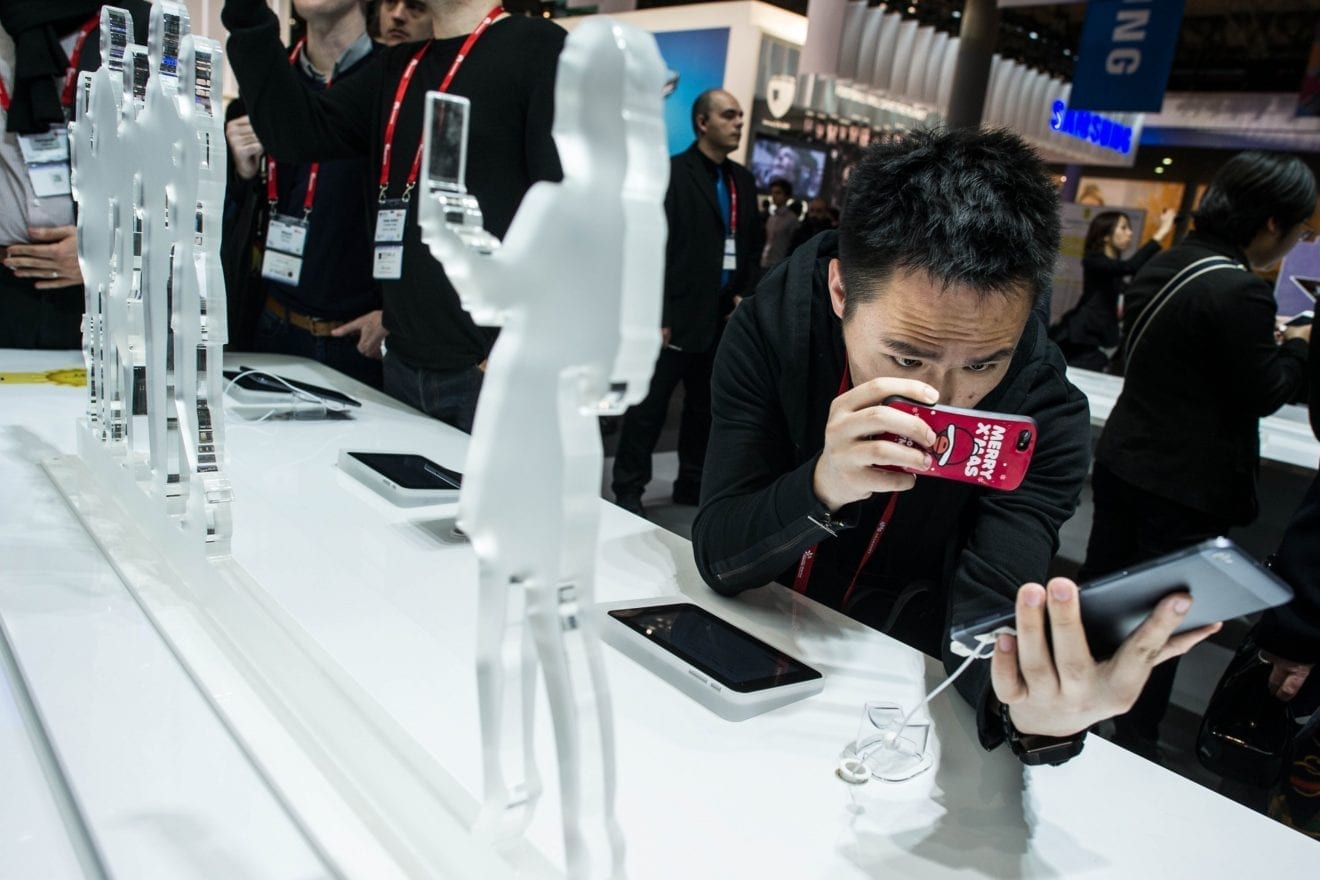
    Samsung Electronics Vice Chairman Lee Jae-yong met with Microsoft CEO Satya Nadella in Seoul Wednesday and vowed to increase cooperation with the U.S. company in artificial intelligence and cloud computing. Nadella is visiting Seoul this week for the first time in four years and delivered a keynote speech at Microsoft Korea’s “Future Now” artificial intelligence (AI) conference Wednesday.

    The two met in the morning before the conference and agreed to step up partnership in artificial intelligence, cloud computing and big data, said a Samsung spokesman.

    Microsoft currently uses Samsung’s semiconductors for cloud servers, and Samsung could sell more of its chips to the American partner in the near future.

    Media reports in Seoul say, as a result of the meeting, some Samsung devices, including smartphones, will be embedded with Microsoft cloud services in the future. Samsung already uses Azure, a Microsoft cloud computing platform, for its system air conditioners to collect data on the surrounding environment, including temperature and humidity, so the machines run more efficiently.

    The two executives might meet on a regular basis and exchange ideas on tech development, according to reports. The two leaders met in Seoul four years earlier.

    During his keynote speech at the conference at a hotel in western Seoul, Nadella mentioned Samsung as one of several Korean companies that had developed offerings based on Microsoft’s Azure platform.

    “Take the example of Samsung Electronics’ IoT [Internet of Things]-based air conditioner that runs on Azure. By taking into account environmental factors, like the number of people, the smart air conditioner can save up to 25 percent in energy and 30 percent in costs,” he said.

    Other sections of the Microsoft CEO’s speech were centered around the need to use artificial intelligence responsibly.

    “We need to ask ourselves not only what computers can do, but what computers should do,” he said, addressing an audience of over 1,500 programmers and businesspeople.

    He also spoke of the necessity to find ways to develop AI for “people who don’t have the ability to participate” in the digital economy.

    As an example, Nadella shared the case of Korea University Prof. Lee Seong-whan using Microsoft’s deep learning Cognitive Toolkit. Lee, who heads the brain and cognitive engineering department, analyzes brain signals in the development of computer systems that amputees can use to move prosthetic arms or robotic arms.

    Earlier on Tuesday, Samsung hosted “Tech Forum 2018,” an event for developers in Silicon Valley. Around 150 developers and designers were invited to the Samsung Research America center there.

    Kim Hyun-suk, president and CEO of Samsung’s consumer electronics division, said in opening remarks that the company was developing many “unfamiliar acquaintances,” which he believes will shape Samsung’s future innovation.

    “Samsung encounters a vast number of customers, rapidly changing technologies and new staff from various backgrounds,” he said. “Our strength is in selling more than 500 million consumer devices a year. We will expand contact points with our customers to reach into the smallest corners of their living spaces and bring innovation to their lifestyles in general.”

    Kim added that in terms of working with various employees, the company will continue to develop a corporate culture where global staff can cooperate and freely suggest ideas. Samsung also introduced the company’s developments in future technologies and held open discussions.

  • Lenovo opened an unmanned store in Beijing

    Lenovo opened an unmanned store in Beijing

    Lenovo China has launched an automated store in Beijing based on facial recognition technology. The Lenovo Go store also features a mobile payment system. A blog post put out by the Taiwanese tech giant reads: “Shopping at the store is quite simple. You walk up to the door, cameras recognise your face, you browse the aisles, pick out what you want as usual, then – and here’s the magic – you just walk out, and your account is automatically settled via your mobile payment.”

    Lenovo’s head of research and technology Daryl Cromer said: “We can now understand some of the technologies and challenges our customers face, allowing us to make better devices and tailored solutions.

    The store becomes a powerful pilot program for technologies that move beyond the Lenovo campus.”

    Lenovo plans to use data gathered at the store to power future technologies, such as an espresso machine that can brew coffee to individual preferences based on facial recognition.

  • LG, E-mart develops smart-cart robot

    LG, E-mart develops smart-cart robot

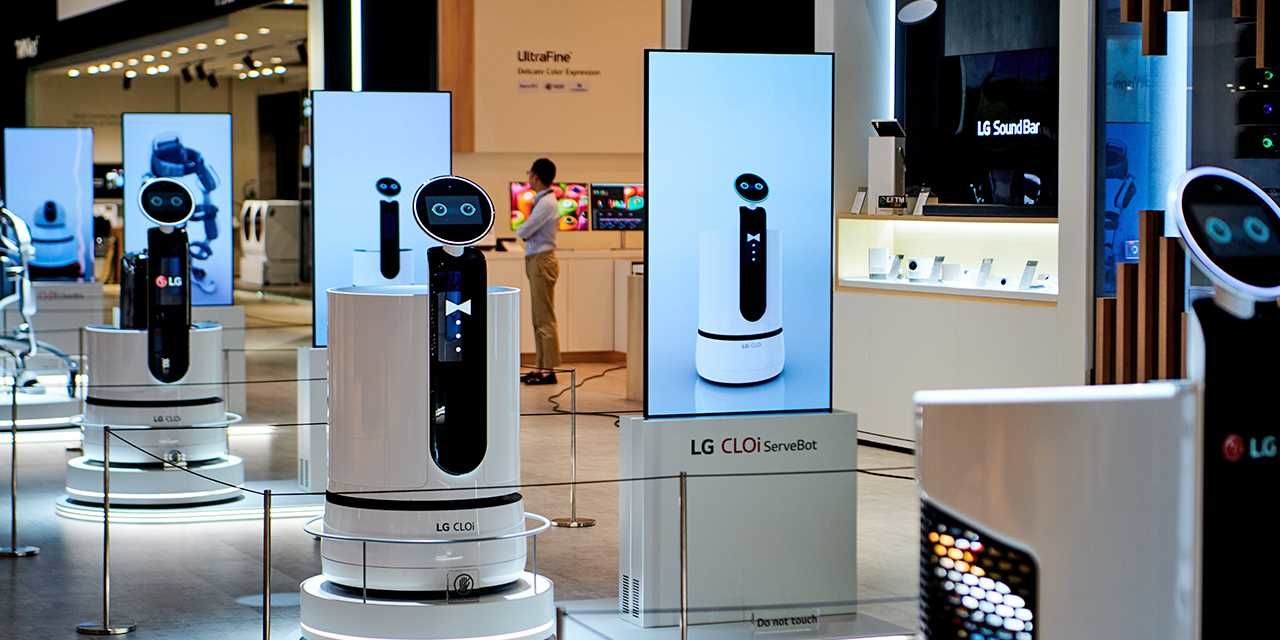
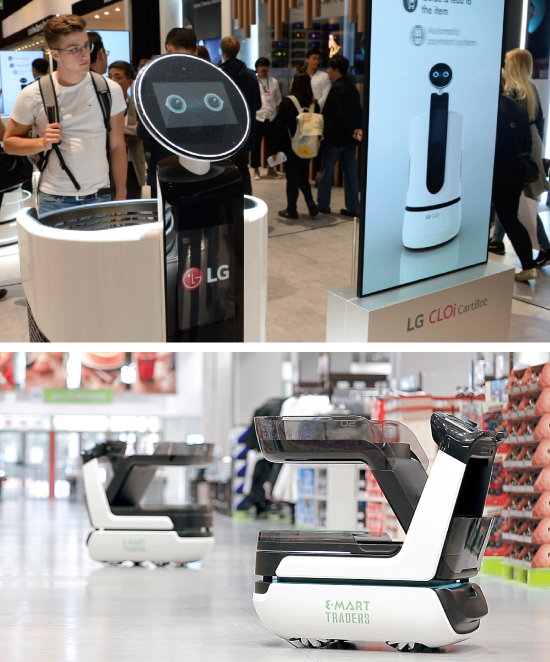
    LG Electronics has signed an agreement with E-mart to develop a new type of service robot that can assist shoppers at its South Korean supermarkets. Under the agreement, the two companies will develop what they call a smart-cart robot that can automatically identify obstacles and follow shoppers as they walk through aisles. LG said the new robot will free visitors from the hassle of pushing heavy carts by themselves.

    The South Korean tech giant said the robot will be developed by its research lab, which has been releasing various robots under the CLOi brand.

    So far, LG has released eight different products under the brand, which are suited for different tasks, including guiding, cleaning and even mowing lawns. The company unveiled the CLOi SuitBot, which can help workers lift and move heavy objects easier as well.

    LG said it has been making efforts to bolster its robot business by joining forces with different clients, including airports, bakeries and retail shops.

    CLOi stands for clever, clear, close operating intelligence, LG said.

    The company has been making investments in robotic firms, including Robotis, AI startup Acryl and US-based robot maker Bossa Nova Robotics.

  • Twenty4 opens cash-free retailer in Ipoh Malaysia

    Twenty4 opens cash-free retailer in Ipoh Malaysia

    Malaysian convenience store Twenty4 has opened in Ipoh as the region’s first cash-free retailer of its kind. The “smart” convenience store accepts only cashless transactions, earning it a spot in the Malaysia Book of Records. The brand’s CEO Kenny Ng said: “The shop is open round-the-clock and customers can purchase a variety of items, including food and personal care items, through cashless transactions.

    Customers can buy products at the store using debit cards, credit cards, Paywaves, Samsung Pay, Apple Pay or use other E-Wallet payments. We hope the concept will set the pace … be a pioneer in Malaysia, where people buy items without using cash.”

    Twenty4 sells various local and international products via self-service machines.

  • HTC Opens Flagship Vive Store in China

    HTC Opens Flagship Vive Store in China

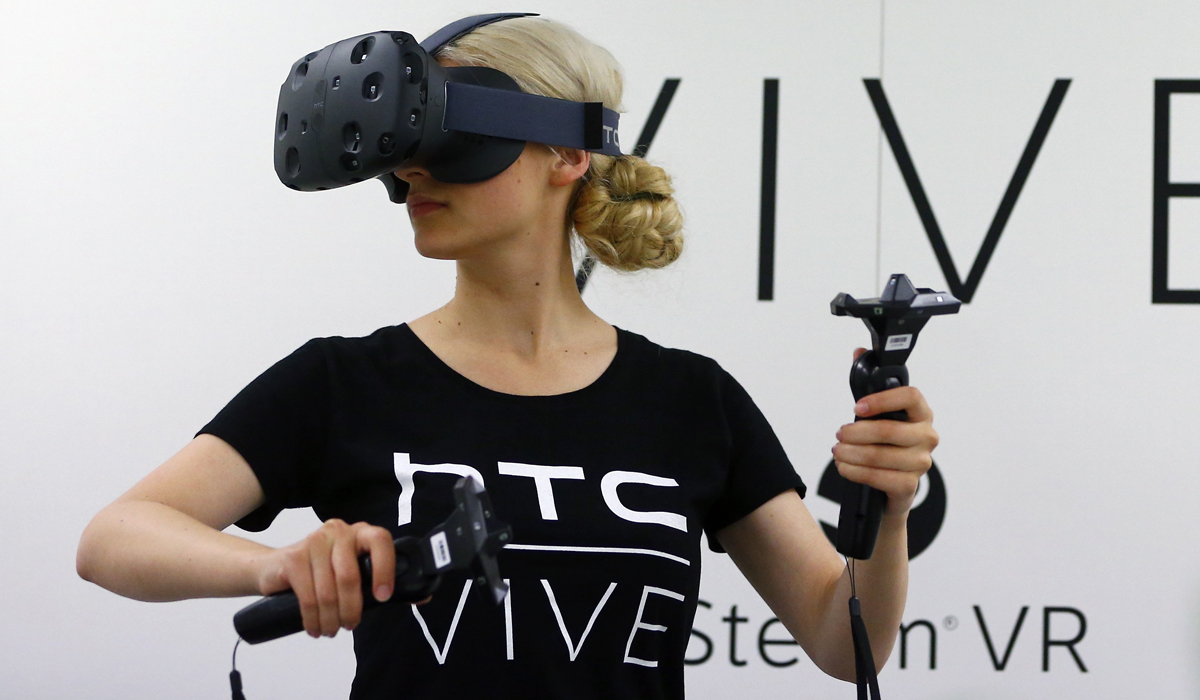
    Taiwanese smartphone maker HTC has opened the doors of its first global flagship store for its Vive VR headset. The Shenzhen store will offer consumers the chance to experience VR technology in a relaxed in-store environment. The brand wants consumers to build a better understanding of how VR works, the content available, and how it can enhance their lives – through entertainment and practical applications.

    HTC launched its first Vive headset three years ago and is now a predominant player in the Chinese VR market, claiming 82 per cent market share at one point last year.

    It is now partnering with video game maker Ubisoft Entertainment, Warner Brothers and the McLaren Formula 1 team to participate in the China Digital Entertainment Expo and Conference, nicknamed ChinaJoy, where it will have a VR gaming carnival.

    HTC has long been running at a loss as sales of its handsets fall in the highly competitive smartphone market and it sees VR technology as an opportunity to return to profitability.

  • Ikea Southeast Asia talks about copycats, culture and the new competition

    Ikea Southeast Asia talks about copycats, culture and the new competition

    Swedish furniture and homewares retailer Ikea faces some unique challenges – and opportunities – as it expands its footprint across Southeast Asia.

    Copycats in Vietnam; cultural differences between Asians and Europeans; competition from other Ikea franchises are all part of the puzzle for Ikea Southeast Asia (Ikano) as it makes its mark in Asia.

    Ikano is one of 10 Ikea franchises worldwide, but it is different in that it is owned by members of the retailer’s founding Kamprad family. But that family link does not mean it has any special perks.

    “We had to apply for the Philippines,” says Christian Rojkjaer, MD of Ikea Southeast Asia. “We also applied for Indonesia, but it was given to Jardine.”

    So Jardine, through its retail subsidiary Dairy Farm International, runs Ikea in Hong Kong, Indonesia and Taiwan. Ikano has the stores in Thailand Malaysia, Singapore and – coming soon – the Philippines.

    “I think is super healthy that the founding family still has some retail interest, hopefully to show the way and show how it should be done,” says Rojkjaer. “That being said, are we better than the other guys out there? We love to beat them, but they are very, very good as well.

    “We learn from each other, share our experiences … and we compete a bit to be the best, the most successful in terms of visitation and in lowest pricing reality – their study to have the best prices per category, the lowest prices. Ingrad Kamperft set this up in the 1980s in order to keep we retailers on our toes.”

    ‘Quite challenging’

    Asia is one of the few places in the world where Ikea is launching in developing markets, where incomes are lower than in more established regions like Europe, the US and Australia. Rojkjaer admits it has been “quite challenging”.

    “We want to be for the many in a country, but when we go into the Philippines, for a while it will be for a lot, but not for everybody. Then we will grow our presence and become more for the many, as we say. But, of course, not everybody in the Philippines can afford us today. But we will work on that and adapt our range and become better and better to become something for many more people.

    “That will certainly be the same in Vietnam, Myanmar, Laos, Cambodia. It is a challenge to be something for everybody. However, our range will fit a lot of people in all those countries from day one.”

    While integrating shopping malls with Ikea stores has proven successful in Europe, Ikano is the first franchise to try this in Asia-Pacific. Rojkjaer is sure it has not only been successful so far, but has actually been easier than developing malls in Europe.

    “In Asia we love the day out, we love the family time when the outing in itself is less practical. In Europe, you go out to buy something specific, whereas in Asia you go out to have a good time, have a cup of coffee, some food, and maybe you buy a little at the same time, but you go more often.”

    That is the philosophy behind the company’s newest, boldest mall development yet: the 1.1 million sqft Toppen centre being built in Tebrau, in the south Malaysian border city of Johor Bahru.

    Bigger and brighter

    After Mega Bangna in Bangkok and MyTown in Kuala Lumpur, Toppen promises to be bigger and brighter, with four floors of retail and an indoor/outdoor rooftop experience zone with cinemas, food and recreational space.

    “This destination … is not just about shopping, it’s about having a great time. We have air-conditioned walks, and maybe if you even just look the first four or five times you visit, on the sixth time you buy something. So we are not so hard on selling, selling, selling. We are much more focused on what it takes to have a great visit.

    “This means that maybe the tenant mix is a bit different from Europe: more food and beverage, more leisure and more education and tuition, that sort of stuff. If you visit Mega Bangna you’ll see we have come quite far on that offer. For instance, the children’s education is growing out of the shopping centre.”

    An extra building is under construction, connected to Mega Bangna purely to house education offerings such as music lessons, ceramics and art classes, language centres and the like.”

    Rojkjaer is targeting 6.5 million visitors to Toppen in its first full year of trading. Ikea Damansara in Kuala Lumpur achieves 6 million a year, ranking it among the 10 most-visited Ikea stores in the world. Little more than four months after opening in Johor Bahru, Ikea.

    Within reason

    Tebrau had surpassed 2.5 million shoppers, so given the store will have been trading about two years by the time Toppen is complete late next year, the target is well within reason.

    “We use Ikea to warm up the place, then we open up the centre,” one Ikea executive joked at a retailer event launching the leasing program in Johor Bahru last month.

    “Toppen is unique,” says Rojkjaer. “Nobody will ever, ever have an Ikea-anchored shopping centre in Johor Bahru, I can promise you. It’s not going to happen, because we are the owners of the Ikea brand.”

    And therein lies a key advantage for retailers considering taking space in the mall, Rojkjaer explained at the launch. “We are retailers just like you, which means we have more opportunities to understand you better than most, and we are doing our best to do so. And one way of doing that is that we are incredibly stubborn, not in terms of negotiations but in terms of making our destinations a success. They will be a success. They must be a success, because we don’t do that many of them.”

    Ikano plans to build only five or six – “seven at the absolute maximum” – Ikea-anchored shopping centres in Malaysia. Toppen will be the third and another is possible in Penang, in East Malaysia.

    Given the massive migration of shoppers from physical stores to online in most Asian markets, is building a mall on this scale a risk? Not at all, says Rojkjaer.

    “We are still human beings – a day out, a destination, is what shopping is all about. For years and year to come we will still go out to the cinema. For years and years to come, we will still go out to eat something together, because it is our human nature to do so. So this destination is much more than a shopping centre, it is a destination in itself.”

    And as a colleague commented during the launch event: “You can’t buy an ice cream after you’ve bought a sofa online.”

    Scouting exercise

    After establishing beacheads in Singapore, Malaysia and Thailand, the Philippines and Vietnam are the next markets on Ikea’s radar in Southeast Asia. Ikano already has the Philippines rights sewn up and will open its first store there next to Mall of Asia in Manila in 2020. Further stores will open in other parts of the country either attached to Ikano’s own centres or, where there are synergies, existing centres.

    Vietnam is at a much earlier stage of planning, with Ikea head-office executives heading to the country this month on a further scouting exercise before recommending locations and a timeline to head office in Sweden.

    “We are very cautious not to commit too much on time, but we are looking into the country,” says Rojkjaer. “How many Ikea stores can we have? Where should they be? Where could we create some great destinations for Ikea? And there must be a possibility for Ikea together with our shopping centre concept to go in there.

    “I think there is enough space for us without creating crazy competition with other mall players in the market. I think we could co-exist there. We don’t have to go in alone, solo, but it is more tempting to do so in Vietnam.”

    Singapore-based Rojkjaer says he “loves” Vietnam and is a frequent visitor with his family for holidays. His belief in the nation as a future market for Ikea has been fuelled by the Starbucks’ experience. “It seems like half of Ho Chi Minh City is drinking super-expensive coffee. The same with the gyms. They consume way more than their disposable income would suggest.

    “Our vision is to create a better everyday life for the many, and that’s why we have to argue the investment case to the Ikea family. They are saying, ‘But we are there for the many’.

    Copycats and potential customers

    While Ikea may not be there for the many upon launch there, to be there ‘for a lot’ we have to be there for some years.

    Many people will be potential Ikea customers, he believes. “We need to get in there and get going.”

    Ikea already sources products from Vietnam, its largest manufacturing source after China, with Thailand in third.

    Rojkjaer is aware of unauthorised vendors of Ikea products in Vietnam, but says they are not harming the brand for now.

    “I am actually not sure where they buy the products … not from us. Maybe they buy them from China. We have chosen not to pursue them, but when we start they will not exist any more. I mean, they can’t. We will set the pricing and we will beat them on pricing. We’ll be cheaper, more available, more accessible, much better than them.”

    As it expands across Asia, Ikea is working in markets with quite different levels of GDP and disposable incomes. So how does it create a pricing strategy to cover such diverse markets?

    “We price to market,” says Rojkjaer.

    “Of course, we know as any retailer that we must also be profitable, but we are okay to be priced to market with extremely low margins to get in. But loss-making companies middle and long term won’t work, so there is a limit to how long and how low we can go. But so far we have priced to market and been very successful.”

    Annual check

    With the giant Ikea store trading just across the bridge from Singapore, one might expect a lot of Singaporeans to take a trip across the border and avail themselves of cheaper prices for many goods. Rojkjaer says Ikea Tebrau is not trying to attract Singaporeans and he is unconcerned about any cannibalisation effect of the Singapore store. They have checked number plates in the carpark and found fewer than 5 per cent of shoppers are driving cars registered across the water.

    Prices do differ between the two cities, but not in the way one may think.

    “They are market based. Some will be more expensive, some will be cheaper. Some are based on higher import duties in Malaysia. Some are based on higher labour costs in Singapore. But most important of all, it’s bargain-basement prices. We must do this always. We must offer the lowest price we can.”

    Ikea Sweden executives travel to all franchised stores annually to check they have the lowest prices. And if Ikea Southeast Asia does not, “we have to show them an action plan of how to get there,” says Rojkjaer.

    “So, we have the cheapest table and we also have the more expensive, high-end products. We compete relatively high up as well. But we are probably not for the millionaires.”
  • Face scans, robot baggage handlers – airports of the future

    Face scans, robot baggage handlers – airports of the future

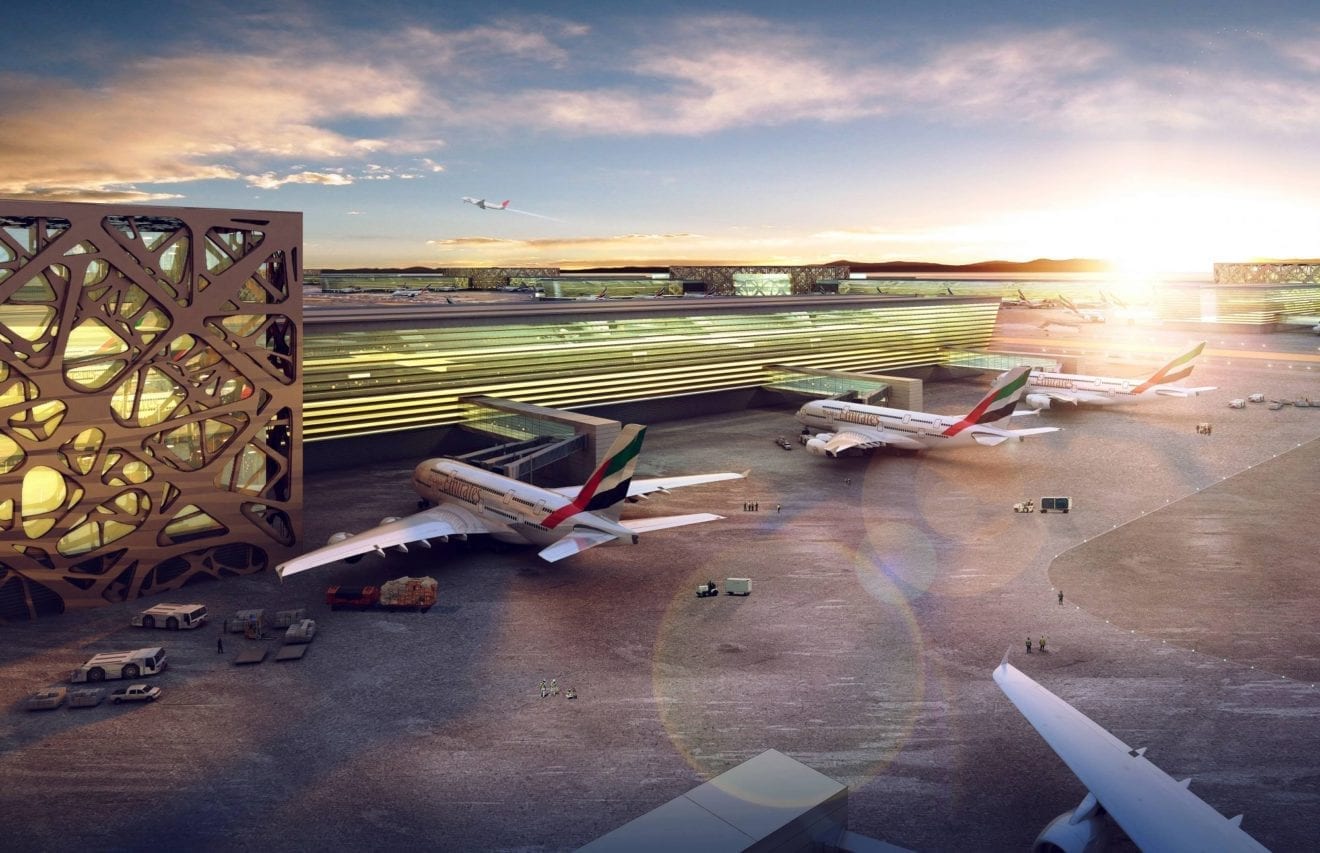
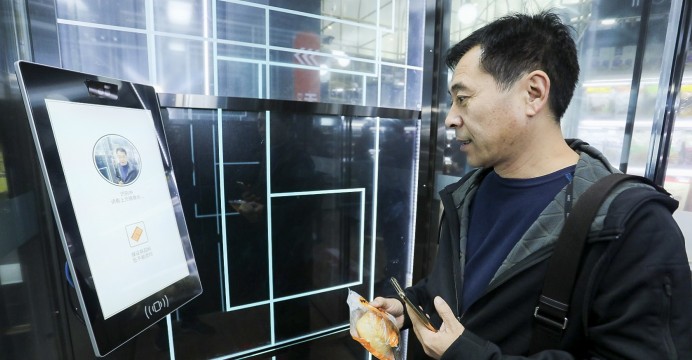
    Planners are seeking to transform the exhausting experience in ageing, overcrowded terminals into something far more pleasant. Passengers’ baggage is collected by robots, they relax in a luxurious waiting area complete with an indoor garden before getting a face scan and swiftly passing through security and immigration — this could be the airport of the future.

    It’s a vision that planners hope will become reality as new technology is rolled out, transforming the exhausting experience of getting stuck in lengthy queues in ageing, overcrowded terminals into something far more pleasant.

    The Asia-Pacific has been leading the way but faces fierce competition from the Middle East as major hubs compete to attract the growing number of long-haul travellers who can choose how to route their journey.

    The regions “are the two leading pockets of technology growth because they are really competing to be the global hubs for air transportation,” Seth Young, director of the Center for Aviation Studies at Ohio State University.

    “If I’m going to fly from New York to Bangalore, do I transfer through Abu Dhabi or Dubai or do I transfer through Hong Kong? That’s a huge, huge market.”

    But the changes also represent major challenges that could upend decades-old business models at major airports, with analysts warning operators may face a hit to their revenues to the tune of billions of dollars.

    Facial scanning in particular is generating a lot of buzz. Changi in the affluent city-state of Singapore, regarded as among the world’s best airports, is set to roll out this biometric technology at a new terminal to open later this year.

    Passengers will have their faces scanned when they first check in and at subsequent stages, theoretically allowing them to go through the whole boarding process quickly without encountering another human.

    Australia announced in July an investment of Aus$22.5 million ($17.5 million) to introduce face recognition technology at all the country’s international airports, while Dubai Airport is also trialling it.

    Robot baggage handlers

    Self-service check-in and printing of boarding passes is already common, with many people printing their passes at home or at airport kiosks, and some hubs are now introducing self-service baggage drop points.Robots are appearing at some major hubs, including at Seoul’s Incheon airport, where they carry out tasks including cleaning and carrying luggage, while Changi’s new terminal will have robotic cleaners complete with butlers’ uniforms.

    The service, which allows passengers to print and tag their baggage and then send it off on the conveyor belt, is available at airports including Australian hubs, Hong Kong, London Heathrow and Amsterdam’s Schiphol.

    Airports are also trying to overhaul their image as dreary places that must be endured in order to get from A to B, to somewhere travellers can enjoy spending time.

    Changi is building a new terminal complex called Jewel, a 10-storey development filled with shops and restaurants whose centrepiece will be a 40-metre (130-foot) indoor waterfall surrounded by an indoor garden.

    The complex will make the airport look more like a shopping mall than a traditional hub, and is aimed at cashing in on transitting passengers.

    “They are looking at retail, non-aeronautical profits,” said Shukor Yusof, an aviation analyst from Endau Analytics.

    But while hubs in Asia-Pacific and the Middle East surge ahead, airports in the United States and Europe are being left behind.

    “Europe and the US were the leading aviation markets for the last 75 to 100 years, and it’s very difficult to revolutionise your infrastructure when you are on a foundation that is 75 years old,” said Young of the Center for Aviation Studies.

    He added it was also a matter of “political will”, as emerging economies see building cutting-edge airports as a way of raising their status globally.

    Ageing hubs

    Some US and European airports are nevertheless trying to up their game.

    New York’s ageing airports have long been criticised as old-fashioned, cramped and dirty but JFK, the main international hub serving the city, hopes to shed its dire reputation with a proposed $10 billion redevelopment.

    Amsterdam’s Schiphol is aiming to become the world’s leading digital airport by 2019, and has been testing hand luggage scanners that allow passengers to keep liquids and laptops in their bags. It is also looking at biometric technology.

    Despite the buzz surrounding new technology, there are concerns that rapid innovation could threaten long-held ways of doing business.

    A report from consultancy Roland Berger warned that airport revenues from retail and parking could fall by between two and four billion dollars due to the new innovations.

    Automated, more predictable check-in procedures threaten retail outlets as passengers are likely to reduce the “buffer” they build in to trips to the airport, meaning less shopping time, while developments such as ride-hailing apps could undercut parking revenues, it said.

    Still, the landscape may not transform so quickly as many airports face difficulties in introducing new technology, from resistance to change to availability of financing, said Xavier Aymonod, a transport expert at Roland Berger and lead author of the report

  • Security issues challenge the digital future

    Security issues challenge the digital future

    A panel discussion at CommunicAsia2017 titled “Diversifying Your Business Model Through Creative Partnerships” veered straight into the critical subject of security at the outset.

    Juniper Networks’ CTO Kireeti Kompella declared that security issues will “only going to get worse unless we do something about them.”

    Failure to develop effective security solutions will hold back the development of the upcoming 5G digital landscape before next generation networks can begin to deliver new services through creative collaboration, he said.

    “We all know about SDN (Software Defined Networks), but I talk about the Self-Driving Network or the Self-Defending Network,” said Kompella, describing a network in which security was embedded and automatic.

    He said the sheer scale of the IoT means that human intervention cannot effectively counter the growing number of security threats and intrusions.

    “Humans are going to lose if you don’t have Artificial Intelligence on your side,” he said.

    Beyond security, Ericsson’s Magnus Ewerbring, CTO, Asia-Pacific, named “integrity” in addition to security as one of the key issues for the industry in the IoT era. By this he means issues around trust, privacy, fraud and data protection.

    “IoT will be both consumer and industrial, and security is important, but integrity will also be key,” he said, adding that “traditional operators enjoy integrity, trust and faith” from their customers.

    The panel, comprising representatives from carriers, vendors, and analysts, then wrestled with ongoing challenges to the traditional carriers’ business models.

    Whether they are providers of “dumb pipe or smart pipe,” and while internet giants like Facebook are highly dependent on them, Facebook and other OTT players were not significant sources of revenue for carriers.

    Rohit Talwar, futurist speaker, Fast Future, told the conference that many carriers “like to find a reason not to innovate” and were too focused on “boxes.”

    “Facebook and Google don’t want boxes,” he said. “They want the people who create intellectual property. They are selling people who create IP.”

    Helen Wong, director of network product technology & strategy for Asia Pacific, Verizon, countered by saying that the new technologies of virtualization and cloud-based services-by their very nature-meant that carriers are finding partnerships which were “beyond boxes and vendors.”

    Mike van den Bergh, CMO, PCCW Global, said his company actively collaborates with new players in areas from tap-and-go payments to smart housing.

    “They all deliver revenue to us,” he said. “Everything in the cloud is part of wider partnerships to deliver next generation services.”

  • Sharia Finance Sees Promising Future

    Sharia Finance Sees Promising Future

    The Financial Services Authority (OJK) says that the sharia finance still sees promising future despite the slowing down of global economic growth.

    “I’m optimistic on the promising future of the sharia finance industry. However, there will be many challenges and uncertainty,” said Sarjito, OJK Deputy Commissioner for Capital Market Supervision, Thursday, September 29, 2016.

    The challenges and uncertainty include the difficulty in expanding the business in a different jurisdiction that gets hit by local regulations and also the interpretation of sharia itself.

    Sarjito continued, the other challenge is the weak of the sharia finance management and its governance. “The last one is the lack of human resources that are competent enough and having the adequate capacity in sharia finance,” he said.

    The sharia finance industry in Indonesia has shown an unbelievable progress. Based on the report of the Indonesian Islamic Finance, the asset of the sharia finance industry has a 10% growth, and reached Rp617 billion in 2015.

    The number has exceeded the conventional finance asset’s growth. The same trend is also seen in other countries that are also developing the sharia finance.

  • Huawei, Intel chiefs talk the future of ICT

    Huawei, Intel chiefs talk the future of ICT

    In today’s digitally intelligent world, the age of enterprises shoring up their singular competitive advantages is over. With industries converging and consumer requirements constantly evolving, today’s businesses need to be more open, flexible, and build on their “ecological advantages” as well.

    This was the key message delivered by Huawei CEO Guo Ping during his keynote speech at Huawei Connect 2016.

    “Today we are in the cloud era, and while we do not yet know what things will be like in the future, one thing is sure—every modern industry system will become interconnected and complicated,” Guo said.

    “As data, IoT, mobility and cloud entities develop, businesses that are not even connected with one another will have more interactions. Hence, advantages will not only come from within the organization as has traditionally been the case, but also by the effective use of its external resources.”

    Guo predicted that in the many complicated scenarios that industries such as transportation, healthcare, and education will face, companies in these sectors will eventually develop and evolve toward an open ecosystem.

    The same can be said for the ICT industry, whereby in the cloud era the sector has already transformed from a single vertical industry and into an enabler of digital transformation. A report from the World Economic Forum revealed that in 10 years, the opportunities brought upon by the digital transformation of industries will reach $100 trillion, with the world seeing the rise of even more new applications.

    “Vertical integration of the value chain is a thing of the past,” stated Guo. As the ICT industry cultivates a new ecosystem, the Huawei CEO believes it will have three key features—open, dynamic, and symbiotic—wherein enterprises, big or small, “can take part in this interdependent, symbiotic, and regenerative community of common interests, as long as it has its own unique value and makes its own unique contribution.”

    As for Huawei’s role in this cloud-driven ecosystem, Guo stressed his company’s primary principle is to prioritize “creating a bigger pie (market) over fighting for a larger piece of a shaky pie.”

    “It’s the path we must take to build our future ecological advantages,” stated the CEO. “Our responsibility as an industry leader is to leverage our core competency, and use insights gleaned from our customers as basis of development to increase the size of the market. We don’t emphasize on whether the resources will be owned by us, but instead we emphasize on would be what can we leverage and effectively connect with external resources to bring the future together.”

  • Millennials to Decide Future of TV in Indonesia

    Millennials to Decide Future of TV in Indonesia

    As of 2016, according to the Central Statistics Agency’s estimations, Indonesian millennials  born between the 1980s and early 2000s  make up about 41 percent of the 258.8 million population.

    “The future will be in OTT and many want to capture this market. The number of millennials is going to be big in Indonesia and infrastructure is now being prepared. The government has rolled out 4G and smartphone prices are getting lower each year,” Greeny said.

    Genflix offers its customers thousands of videos, Japanese cartoons and other exclusive content. Genflix currently has three million subscribers, 60 percent of whom are paying customers. Most of them access the service via their smartphones.

    The catch

    Hendy Lim from the Redemption Entertainment said this is the moment for the local talents and content creators as the content-hungry OTT services will keep on coming to tap into the growing Indonesian middle-class. But there is a catch.

    Hendy, who has just left his position as the vice president of the media company MNC Group, said the OTT services need to compete with the deep-pocketed free-to-air televisions.

    “These free-to-airs can pay up to $30,000 per episode. I can’t tell the exact number, but I think [the OTT] can pay only 5 percent of it,” he said, adding that free-to-air revenues are high because many people still watch television.

    The on-demand services will also have to face uncertain regulations with regard to corporate establishment, taxes and censorship.

    Communications and Information Technology Minister Rudiantara promised that this year the government will produce a regulation governing the OTT services. The regulation will take into account the international tax treaty and censorship measures similar to those applied for televisions.

    Desmond Poon, chief technology officer of the listed internet service provider Link Net, said during the summit that censorship as such is against the idea of the internet.

    Despite the challenges posed by censorship and the not yet fully available broadband connectivity, especially in the easternmost part of the country, Poon remains optimistic the OTT business will continue to grow.

  • History of barcodes in the World

    History of barcodes in the World

    Barcodes originated from the increasing need to create a system to manage retail operations in a more efficient manner.  Retailers were getting bigger and bigger and stock control was becoming more and more difficult.  They needed a system to make it simpler.   In 1952, Norman Joseph Woodland and Bernard Silver stepped up to the plate and developed the modern barcode.   They based their barcode on morse code, using dots and lines. Woodland created his first barcode from sand on the beach.

    Later, in 1959, David Collins became aware of the need to automatically identify railroad cars. He created a system for monitoring and controlling railroad carriages also using blue and red reflective stripes attached to the side of the cars which encoded a six digit company identifier and a four digit car number.  He called this system Kar Trak. This is an example of what the Kar Trak system looked like.

    Both of these barcodes developed by Woodland and the Kar Trak Barcodes had problems due to the fact that the scanner could not read the barcodes easily if they had any dirt on them.   They didn’t have the technology they needed to create the modern day barcode scanner.  The whole system was abandoned in 1970s but later in the 1980s a new system emerged which utilised radio tags.

    In the beginning, barcodes were scanned by special optical scanners called Barcode Readers.  Later technology improved and scanners and interpretative software were used on devices including desktop printers and even smartphones.

    As the years progressed, barcodes were improved and transformed into the barcodes we find today.  With the development of technology, barcodes scanners were also improved which made the retail process simple and easy for both the supplier and the retailer as well as for the customer.

    Barcodes became very widely used to manage retailer checkout systems. Their use has spread to a variety of other tasks such as automatic identification and data capture.  The very first Universal Product Code (UPC) was scanned in June 1974 at the Marsh Supermarket in Ohio.  It was on a packet of Wrigley Company chewing gum.  The packet of gum was bought by Clyde Dawson and the cashier was Sharon Buchanan.  It cost 67 cents. This packet of gum and the receipt are now on display in the Smithsonian Institution’s National Museum of American History in Washington.

    In 1966, the National Association of Food Chains (NAFC) got involved in the barcode business.  They wanted to develop a system where checkouts at retailers could be automated and controlled.  They created a committee which created guidelines for the development of barcodes and assisted in creating a standard approach to implementing barcodes in retailers.

    As more and more retailers invested in purchasing the equipment needed to scan the barcodes, these stores benefited greatly.  It allowed for more responsiveness to customer needs by revealing which products were in higher demand.  Sales increased by 10 – 12 % and the operating costs decreased by 1 -2%.  This enabled the retailers to lower their costs and thereby increase their market share.  By 1988, 8000 retailers were converting to using barcodes per year.

    However, there were people who were against the launch of barcodes.  This scepticism mainly came from conspiracy theorists who believed that barcodes were an intrusive surveillance technology.   Also, some Christians believed that barcodes hid the number 666 which represents the number of the beast.

    Despite these protests, barcodes took the world by storm, and were adopted by more and more stores throughout the world, as well as in South Africa.  In these modern days, you can’t walk into a store without seeing a barcode.  Barcodes have come a long way since 1960.  They have revolutionised retailers by increasing their efficiency and control over stock, thereby increasing their profit level and generally making the retail business as smooth as possible. Barcodes are now used throughout the world for a huge variety of products ranging from beauty products to gardening tools all the way to groceries.

    This is one of the reasons why it is necessary to buy barcodes South Africa for any product you want to sell in South Africa or Asia, including china. These will be registered with your chosen retailers who can then begin selling your product.  When you buy barcodes in South Africa, you are becoming part of history.

  • Singapore government to spend $2b on ICT this fiscal

    Singapore government to spend $2b on ICT this fiscal

    Singapore’s soon-to-be-formed Government Technology Agency (GovTech) will continue to partner the ICT industry and invest in technologies such as data analytics, ICT infrastructure, and platform-as-a-service to develop citizen-centric services.

    GovTech, which will be established at the end of this year, will replace the Infocomm Development Agency of Singapore (IDA) and aim to lead technological transformation in government.

    The agency is expected to continue to partner the industry to co-create such digital solutions and will be calling for a projected S$2.82 billion ($2.04 billion) of ICT tenders across fiscal year 2016.

    These ICT tenders will comprise mainly infrastructure and ICT security bulk contracts due to some multi-year contracts ending in FY16, as well as contracts relating to agency-specific systems. Last year, SMEs accounted for more than half of the total contracted value of ICT tenders.

    One key focus for government procurement this year will be to enhance ICT infrastructure to better support the data and digital services needs of a Digital Government in a Smart Nation.

    For example, increased data center virtualization will allow the government to modernize its hosting of ICT applications and ensure faster time to production for new digital services.

    Wi-Fi will be extended to more areas within government schools to support smart learning. The government will also continue to invest in its cybersecurity efforts, with a bulk tender for IT security services to be called in this fiscal year.

    “We want to empower Singapore with possibilities through technology. To do that, investment in infrastructure is necessary so that innovative citizen-centric services can be built and enhanced on a strong foundation,” IDA managing director Jacqueline Poh said.

    “There will be opportunities abound for the government and industry to collaborate and build a smart nation together.”

  • Is this the city of the future?

    Is this the city of the future?

    Today, more than half of our planet’s population live in urban areas, with millions of people migrating from the countryside to towns and cities in search of prosperity to a point where the world’s urban population has rocketed from 746 million in 1950 to 3.9 billion in 2014, according to the United Nations.

    As urban populations balloon, the strain on cities – many of them hundreds of years old – increases, with everything from transport to living space, healthcare and security put under pressure.

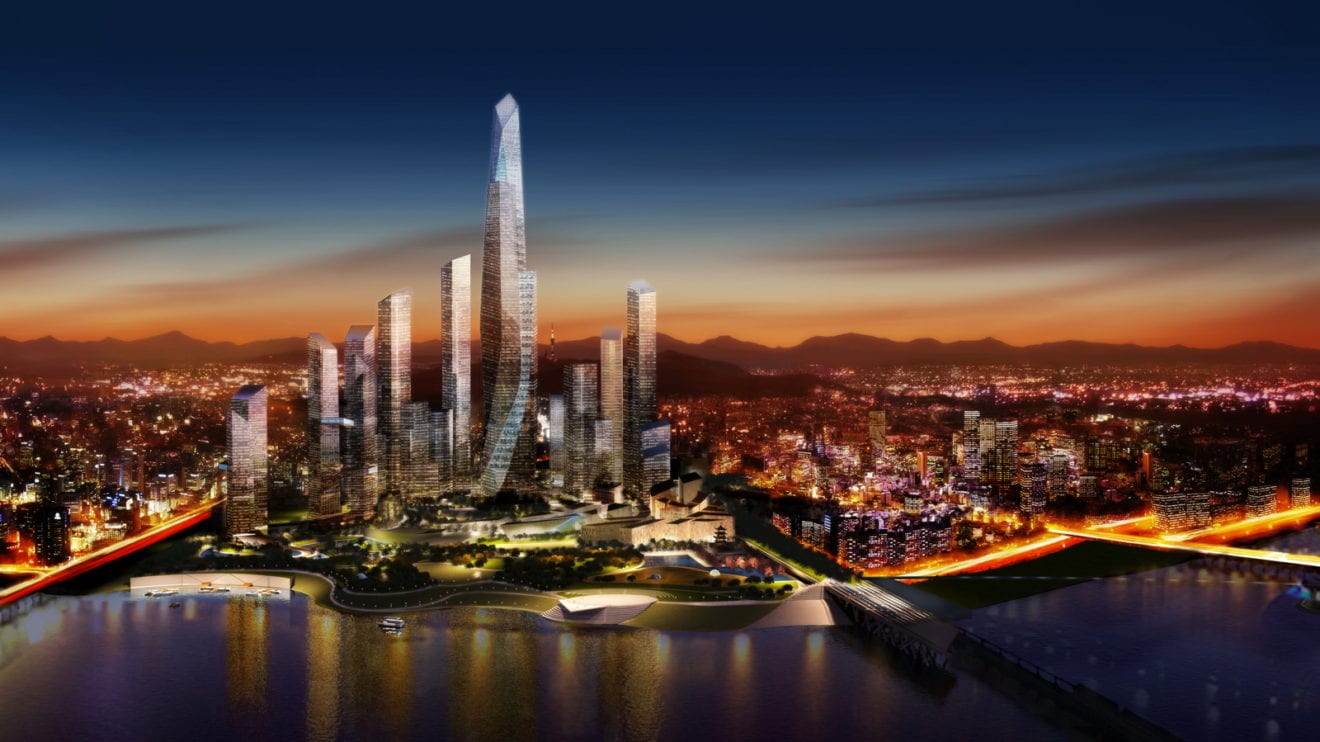
    In South Korea, the Songdo International Business District (Songdo IBD) is offering one vision of how cities might look in the future. A $35 billion project, Songdo has been developed across more than 1,000 acres of reclaimed land.

    “The original concept of Songdo was as a gateway city to the Korean mainland from Incheon International Airport, where basically all the uses – be they residential, retail, work, educational or cultural – would… all be within a 15 minute walking time of one another,” Jonathan Thorpe, senior EVP and chief investment officer at Gale International, part of the public-private partnership behind Songdo, told CNBC’s Sustainable Energy.

    As well as being technologically advanced, there is a heavy emphasis placed on sustainability. Forty percent of the city has been designated as “green public space” while the city is also home to 20 million square feet of LEED – Leadership in Energy and Environmental Design – certified space.

    “The residents can… control their lighting, their heating, ventilation, air conditioning usage, all within a single panel,” Thorpe said.

    “Moreover, they can track the actual consumption of energy that they individually are consuming, compare that to the use of their neighbours and this helps, really, greatly increase efficiency,” he added.

    The importance of technology is crucial, according to renowned British architect Norman Foster.

    “In many ways technology has been a constant throughout civilization,” Foster told Sustainable Energy.

    “It’s always been maximizing the materials to transform the climate and create a more comfortable environment in an age before cheap energy,” he said.

    “We have to relearn those traditional lessons and apply that with the technology of our time. You have to look at all the elements within the building – the materials, the way in which it responds to climate – to reduce the amount of energy and ideally move to buildings which harvest energy.”

  • Mumbai has highest potential for modern retail in India

    Mumbai has highest potential for modern retail in India

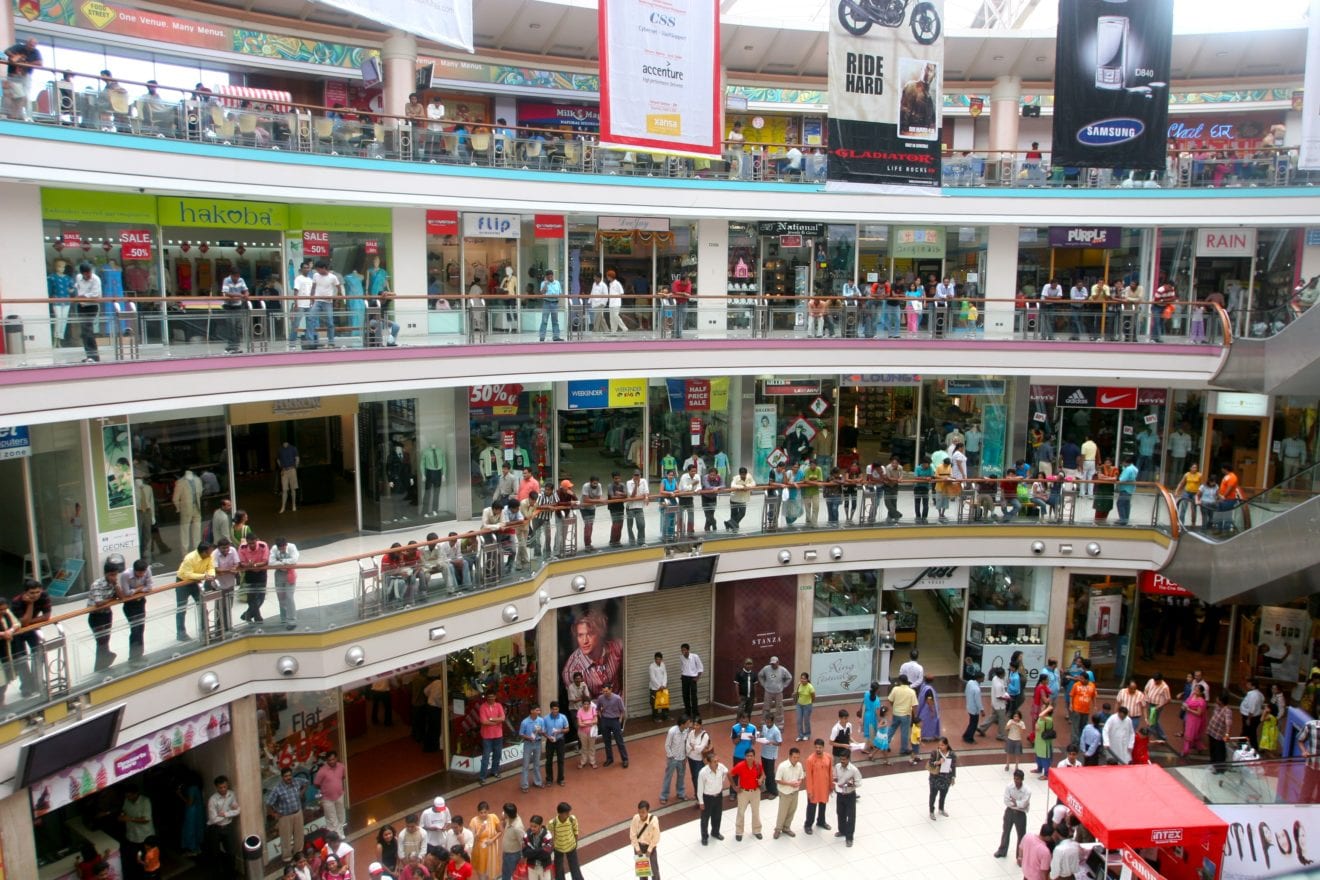
    Mumbai Metropolitan Metro has the highest potential for modern retail in the country at Rs 1.05 lakh crore, followed by Delhi-National Capital Region, which has total potential of Rs 77,900 crore, according to Knight Frank & Retailers Association of India’s ‘Think India. Think Retail. 2016’ report.

    Bengaluru is third in the list, with potential of Rs 48,600 crore.

    As part of the city-level analysis, the report has identified zone level supply-demand gap for apparel, F&B, entertainment and grocery across India’s top markets.

    It says the penetration of modern retail is set to increase from the current 13.5% to 50% by 2036 in Mumbai, from 26% to 50% by 2028 in NCR and from 24% to 50% in 2026 in Bengaluru.

    While the market potential of daily needs supermarkets and hypermarkets is pegged at Rs 58,800 crore in Mumbai and Rs 51,200 crore in NCR, it stands at Rs 24,300 crore in Bengaluru.

    The report says that modern retail penetration in India is extremely low at 19% compared to US, Singapore and China, where the figures are 84%, 71% and 63% respectively.

    According to the report, 69% of the total retail spending comes from Mumbai Metropolitan Region, NCR and Bengaluru out of the top seven cities in the country.