Retail News CRM

Tag: goods

  • Amazon selling refurbished products in Australia

    Amazon selling refurbished products in Australia

    Amazon Australia has expanded the reach of its marketplace, now offering refurbished products through certified sellers under its ‘Renewed’ program.

    Products sold through this program will have a six-month selling partner-backed warranty and will be inspected and tested by suppliers to ensure they look and work as new.

    “Renewed provides Australian customers with great discounts on the good as new products, paired with the reassurance of a six-month warranty, and the convenience of having it delivered to their door,” Amazon Australia country manager Matt Furlong said.

    “Aussie shoppers are savvy, and we hope that Renewed gives them another way to get the products they want for an even better price.”

    Renewed products will be available across mobile phones, computers, tablets, headphones, and wireless speaker, with more categories to come soon. Certified resellers currently include Apple, Samsung, Microsoft, Lenovo, HP and Dell.

    Australian marketplace Kogan also offers refurbished products, though also offers a grading system to signify the item’s condition – from grade A to grade C.

    Grade A refers to a product that is in near-new condition, while grades B and C show further use and degradation.

    While Renewed products at present do not present this information on the store page, Amazon notes the refurbishment process typically includes a full diagnostic test, replacement of any defective parts, a thorough cleaning and inspection process, and repackaging by the seller or refurbisher.

    A growing economy

    According to Ahmad Elhawli, founder of sports marketplace Sportsfinda, the used goods industry is a $34 billion industry.

    “It used to be [these products] would sit at home or collect dust, nowadays they’re living in a sharing economy – it’s a lot more acceptable to share things with others or purchase products that were used by others,” Elhawli said.

    Swinburne University’s lecturer of marketing Dr. Jason Pallant said that, while this is still a relatively small chunk of the overall market, demand for second-hand and refurbished goods is growing.

    “Similar to general retail, online has facilitated this type of shopping, allowing consumers to find an expanded range of products whenever and wherever they choose,” Pallant said.

    However, unlike a more traditional marketplace offering, Amazon’s stricter control over how these goods are certified could lead to less discounting, meaning less incentive for consumers to shop refurbished.

    “On the surface, this provides some apparent benefits to consumers as Amazon are promising to tightly check the quality of both products and sellers, as well as offering warranties on certain items,” Pallant said.

    “However, these securities come at a price. Stricter requirements on sellers will likely be passed on to buyers through higher prices than might be found through other systems.”

    Why conscious consumers buy refurbished

    While buying new products typically comes with peace-of-mind, buying refurbished tends to not only come at a lower price point, but also at a lower impact environmentally – decreasing demand for manufacturing new products unnecessarily, as well as the effects of electronic waste.

    “Considering the speed at which new products are created, and the amount of waste this creates, it is good to see businesses of various kinds working into the idea of the circular economy, and trying to help products be reused and recycled,” Pallant said.

    According to the United Nations Environment Programme, humans produce as much as 50 million tonnes of e-waste per year, with only 20 percent of this recycled – the remaining 80 percent ending up in landfills to potentially contaminate soil and groundwater.

    “As consumers become more environmentally conscious, these types of initiatives are positive steps,” Pallant said.

  • Scale of Stanley hawker’s counterfeit goods business surprises Customs

    Scale of Stanley hawker’s counterfeit goods business surprises Customs

    Hong Kong Customs who raided a mobile hawker selling counterfeit goods in Stanley on Friday was surprised by the scale of the operation behind it.

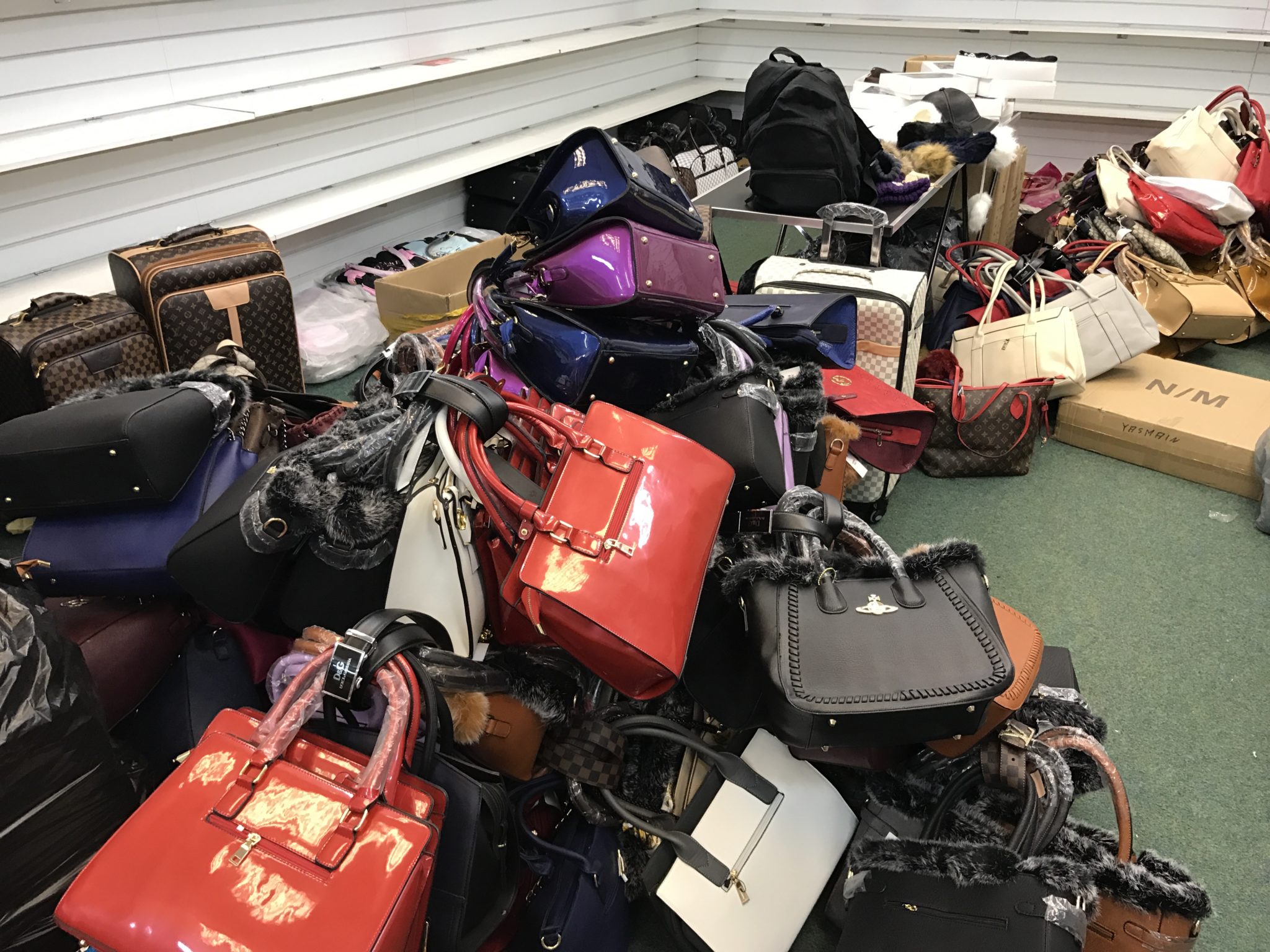
    Some 6900 items of suspected counterfeit goods were seized, including clothing, caps, and shoes, with an estimated market value of $420,000.

    But what made this raid stand out was that it was the first-ever case detected of a single mobile hawker selling counterfeit items using multiple mobile-storage facilities.

    After raiding the single stall they discovered 13 storage facilities in nearby alleys linked to the stall.

    A 44-year-old female stall owner was arrested.

    The enforcement activity followed a tipoff alleging the sale of suspected counterfeit items at Stanley. After an in-depth investigation with the assistance of trademark owners, the raid was carried out.

    A Customs spokesperson said inspection and enforcement activity to combat the sale of counterfeit goods will be stepped up during the summer holiday.

    “Customs reminds traders to be cautious and prudent in merchandising since the sale of counterfeit goods is a serious crime and offenders are liable to criminal sanctions. Customs also reminds consumers to procure goods at reputable shops and to check with the trademark owners or their authorized agents if the authenticity of a product is in doubt.”

    Under the Trade Descriptions Ordinance, any person who sells, or possesses for sale, any goods with a forged trademark commits an offense. The maximum penalty upon conviction is a $500,000 fine and five years imprisonment.

  • Amazon increases efforts to tackle counterfeit goods

    Amazon increases efforts to tackle counterfeit goods

    Online retail giant Amazon is expanding its product serialization service to Canada, India and some European countries to tackle counterfeit products in the supply chain.

    Amazon Transparency involves the application of unique codes to products to allow the retailer, its customers, brands and other members of the supply chain to authentic every unit of a product.

    “Counterfeiting is an industry-wide concern – both online and offline. We find the most effective solutions to prevent counterfeit are based on partnerships that combine Amazon’s technology innovation with the sophisticated knowledge and capabilities of brands,” said Dharmesh Mehta, vice president, Amazon Customer Trust and Partner Support.

    “We created Transparency to provide brands with a simple, scalable solution that empowers brands and Amazon to authenticate products within the supply chain, stopping counterfeit before it reaches a customer.”

    With Transparency, each brand puts the codes on its products, which is then scanned and verified by Amazon to ensure its authenticity.

    Customers can also use a mobile app to check for themselves, regardless of where they purchased the units.

    Brands also use Transparency to communicate unique unit-level information, including manufacturing date, manufacturing place or other product information such as ingredients.

    Over 4,000 brands are using the service in the US and Amazon said that it has proactively prevented over 250,000 counterfeits reaching customers.

  • Operation Octopus cracks down on counterfeit dolls in claw machines

    Operation Octopus cracks down on counterfeit dolls in claw machines

    Hong Kong Customs has conducted a territory-wide operation to combat counterfeit dolls in claw machines.

    Codenamed “Octopus”, the operation proceeded from June 5–13 and resulted in the seizure of about 2700 suspected counterfeit dolls and other relevant items with an estimated market value of about HK$300,000 (US$38,322).

    Customs had earlier received information alleging that the presence of counterfeit dolls in claw-machines shops was widespread in the market. Officers later conducted patrols in different districts.

    After further investigation with the assistance of a trademark owner, Customs officers raided six claw-machine shops in Chai Wan, Lam Tin, Mong Kok, Tuen Mun and Tin Shui Wai as well as a storage facility in San Po Kong. Some 2700 suspected counterfeit dolls and other suspected counterfeit goods, 15 claw machines and five token changing machines were seized.

    During the operation, three men and three women were arrested, including three shop owners and three staff members, aged between 26 and 50.

    The investigation is ongoing.

    Divisional commander (IP general investigation) Peggy Tam told press that Customs would continue to step up inspection and enforcement to fight against the use of counterfeit goods for the purpose of trade. She reminded consumers to check with the trademark owners or their authorised agents if the authenticity of a product is in doubt.

    She also reminded traders to be cautious and prudent in merchandising since the possession of counterfeit goods for any purpose of trade is a serious crime and offenders are liable to criminal sanctions.

    Under the Trade Descriptions Ordinance, any person who sells or possesses for the purpose of trade any goods with a forged trademark commits an offence. The maximum penalty upon conviction is a fine of HK$500,000 ($63,870) and imprisonment for five years.

  • Global personal luxury goods market growth endures

    Global personal luxury goods market growth endures

    Global personal luxury goods market growth has reached a “new normal” pattern, following back-to-back years of strong performance in 2017 and 2018, according to the luxury goods industry advisory service Bain & Company.

    Last year, 6 per cent global growth* led to €260 billion (US$292 billion) in sales, which is expected to balloon to €271–276 billion ($304.3–310 billion) this year, registering an expected 4-per-cent to 6-per-cent growth at constant exchange rates.

    According to Bain, the growth has been driven primarily by the acceleration in domestic spending of mainland Chinese consumers and an increase in European tourism, which, despite socio-political turmoil in countries like the UK and France, fuelled positive growth in the region through last year’s holiday season.

    Meanwhile a temporary weakening of consumer confidence in North America, as well as a decrease in traffic to malls and department stores, negatively impacted personal luxury spending during last year’s holidays stateside.

    The findings were part of the Bain Luxury Goods Worldwide Market Study, Spring 2019 presented this week in collaboration with Fondazione Altagamma, the Italian luxury goods manufacturers’ industry foundation.

    “This year looks to be on par with our new normal of growth in the market,” said Bain & Company partner and lead author of the study Claudia D’Arpizio. “China continues to dominate the luxury scene. Elsewhere we are continuing to see geopolitical uncertainty shape and reshape tourism spending patterns, with Chinese consumers choosing to spend domestically with more frequency. Overall we are seeing moderate growth in most markets.”

    The report showed that mainland Chinese consumers are demonstrating a strong preference for purchasing luxury goods at home thanks to price harmonisation, consumer-centered strategies, and governmental initiatives. Solid consumer confidence and willingness to buy, especially among young generations, are expected to drive year-over-year growth of 18–20 per cent* in the region.

    Japan remains an exclusive and attractive market for luxury brands, with forecasted growth of 2–4 percent* in 2019. Tourist spending is expected to rise ahead of the Tokyo Olympics in 2020, with Chinese consumers already confirming their interest in the area.

    Across the rest of Asia the outlook is positive, apart from Hong Kong and Macau, which continue to lose out to Mainland China. Bain & Company asserts that the luxury market in the region is set to grow by 10–12 percent*. An expanding middle class with increasing disposable income is fueling growth in Indonesia, Philippines and Vietnam, while sustained growth in South Korea is the result of local consumers and a mild rebound of tourism.

    The rest of the world is expected to be flat or see a slight decrease of 2 per cent*, with the Middle East remaining stagnant as domestic consumer spending begins to flow outside of the region.

    “We expect stable growth in 2019,” said D’Arpizio.  “But under the surface of this new normal, the future of luxury is taking shape with a number of key characteristics, including Chinese Generation Z, access, ownership, sustainability and social responsibility, the impact of digital across the entire value chain, preference for luxury experiences over products, and consumer networks as a new measure of value.”

  • Customs seizes $7 million worth of fake goods

    Customs seizes $7 million worth of fake goods

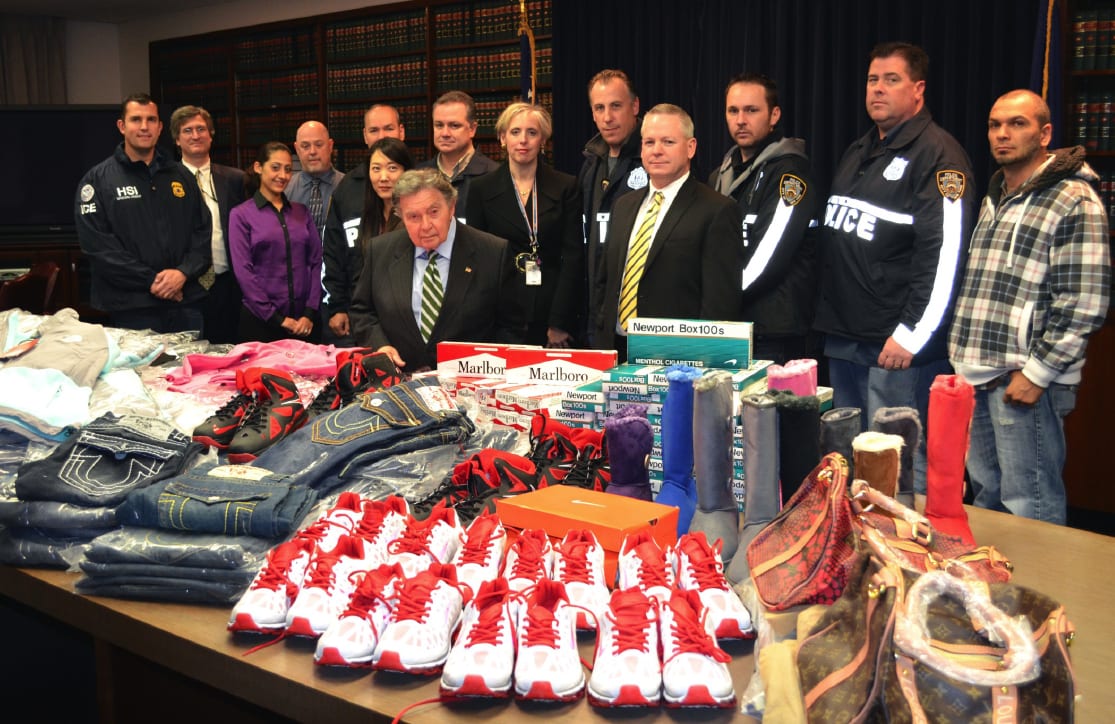
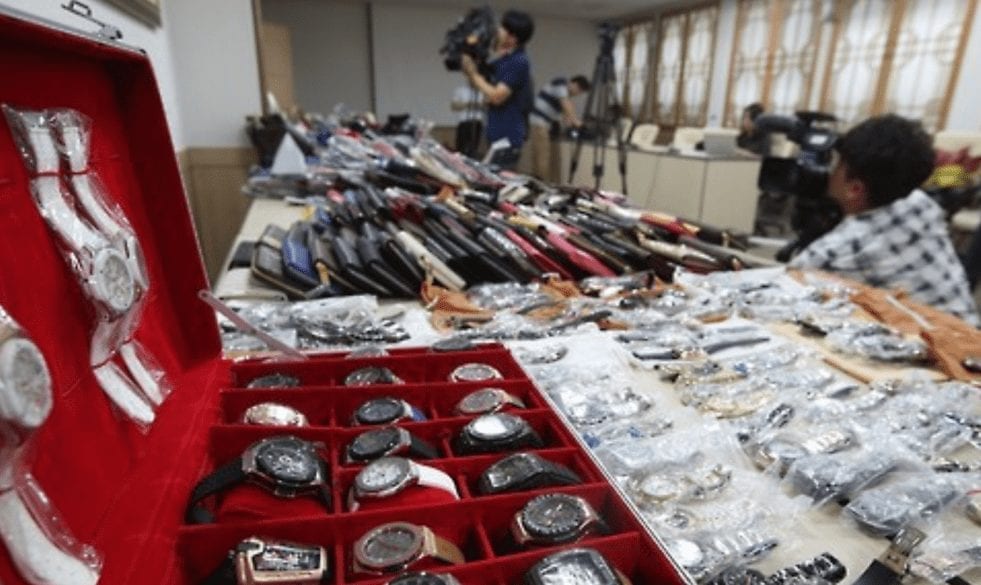
    Hong Kong Customs has seized 55,000 items of fake goods destined for the US during a three-month campaign to combat cross-border counterfeiting. The haul, some of which is shown in the accompanying photograph, included trainer, apparel, mobile phones and accessories, handbags and Beats-branded headphones.

    Customs officers estimated the value of the haul to be about HK$7 million.

    “Hong Kong Customs has been working closely with the US Customs and Border Protection using intelligence exchanges, and took targeted enforcement action between January and April including stepped-up inspection of suspicious express courier parcels destined for the US,” said a Customs spokesperson.

    “Hong Kong Customs will continue working closely with overseas law enforcement agencies to combat cross-boundary counterfeiting activities through intelligence exchanges and joint enforcement actions.”

    Under the Trade Descriptions Ordinance, any person who imports or exports any goods to which a forged trademark is applied commits an offense. The maximum penalty upon conviction is a fine of $500,000 and imprisonment for five years.

  • Asean countries fight against Counterfeit Goods

    Asean countries fight against Counterfeit Goods

    Enforcement officials, investigators, and prosecutors from across the Asean region discussed best practices for addressing the trade in counterfeit goods at a workshop on the enforcement of intellectual property rights held in Manila last week.

    The talks covered online business models used for the infringement of IP rights, investigative techniques and intelligence gathering, as well as measures to combat infringement, particularly in the online environment.

    According to a statement released by the workshop, the trade in counterfeit products diverts revenue from legitimate businesses, depletes innovation and development, and underpins organised crime networks. In addition, counterfeits are generally of low quality and are potentially harmful to consumers.

    A wide range of products are affected, including footwear, clothing, electrical machinery, pharmaceuticals, cosmetics, and toys.

    A report released this year by the European Union Intellectual Property Office and the OECD estimates that counterfeit and pirated goods represented up to 3.3 per cent of world trade in 2016. This share has grown significantly, from up to 2.5 per cent estimated in 2013.

    “Strong IP enforcement legislation in the EU provides police and customs agencies with the powers they need to successfully intercept counterfeit goods,” said IP enforcement expert Erling Vestergaard, highlighting a number of EU initiatives that address the issue.

    World Intellectual Property Day is held annually on April 26 to highlight the importance of IP in encouraging innovation and creativity. The global theme for this year is IP and Sports.

  • India’s Quikr Acquires Zefo marketplace

    India’s Quikr Acquires Zefo marketplace

    Indian online classifieds site Quikr has bought refurbished goods marketplace Zefo, headquartered in Bangalore.

    The acquisition allows an exit strategy for Zefo’s current investors, including Sequoia Capital, and gives Quikr a pathway to expand and strengthen its pre-owned product range.

    Zefo, has a portfolio of more than 10,000 products in four cities, including Bengaluru, Mysore, Delhi NCR and Mumbai.

    “With Quikr and Zefo as a combined entity, we will be able to offer a broader selection of products at even more competitive prices along with as strong a focus on quality,” said Quikr founder and CEO Pranay Chulet.

    “With this transaction, the capabilities we have built and the offerings we have honed can now be offered to Quikr’s large customer base,” said Zefo CEO Rohit Ramasubramanian.

  • JD takes major stake in Five Star Appliances

    JD takes major stake in Five Star Appliances

    Chinese online retailer JD is to buy nearly half the shares in electrical goods retailer Jiangsu Five Star Appliance, for US$189 million. Jiayuan Chuangsheng currently holds 93 per cent of the Five Star business and after divesting a 46 per cent stake to JD will remain its largest shareholder with 47 per cent.

    Analysts say the investment will allow JD to boost its online profile and provide consumers with a network of about 300 Five Star Appliance storefronts, in much the same way as archrival Alibaba is building physical retail networks in Mainland China, blurring the boundaries between online and offline retailing.

    With stores primarily located in central and southern China, Five Star Appliances has annual sales of about US$2.7 billion.

    Last year, JD accounted for nearly 40 per cent of China’s home appliance sales, making it the largest retail in the space. Partnering with a brick-and-mortar retail network is likely to boost sales for both parties and protect JD from fast-growing Suniung.com which now accounts for 30 per cent of the market. Tmall is also building a share of the appliance sector, its sales now nudging 25 per cent.

  • Counterfeit goods seized in Stanley retail raids

    Counterfeit goods seized in Stanley retail raids

    Hong Kong Customs seized about 1300 fake branded items with a street value estimated at $600,000 during Stanley retail raids yesterday.

    The raid followed an earlier patrol where officers found suspected counterfeit goods were being sold at retail shops in the seaside suburb.

    The goods seized included handbags, leather products and clothing.

    A Customs spokesperson said that with the assistance of trademark owner, Customs officers took enforcement action, raiding two retail shops and one storage facility in the district.

    One man and two women were arrested – a shop owner and two salespersons, all aged between 34 and 47.

    The investigation is ongoing.

    Customs has previously said it will continue to step up inspection and enforcement to combat the sale of counterfeit goods and the number of raids in the territory has increased this year.

    “Customs reminds traders to be cautious and prudent in merchandising since the sale of counterfeit goods is a serious crime and offenders are liable to criminal liability,” said the spokesperson.

    Under the Trade Descriptions Ordinance, any person who sells or possesses for sale any goods with a forged trademark commits an offence. The maximum penalty upon conviction is a fine of $500,000 and imprisonment for five years.

  • Police smash massive China counterfeiting gang

    Police smash massive China counterfeiting gang

    Police have shut down a huge China counterfeiting ring estimated to have raked in some US$15 million.

    Chinese police have arrested 32 people believed to be part of the operation, which focused on counterfeiting luxury-branded goods.

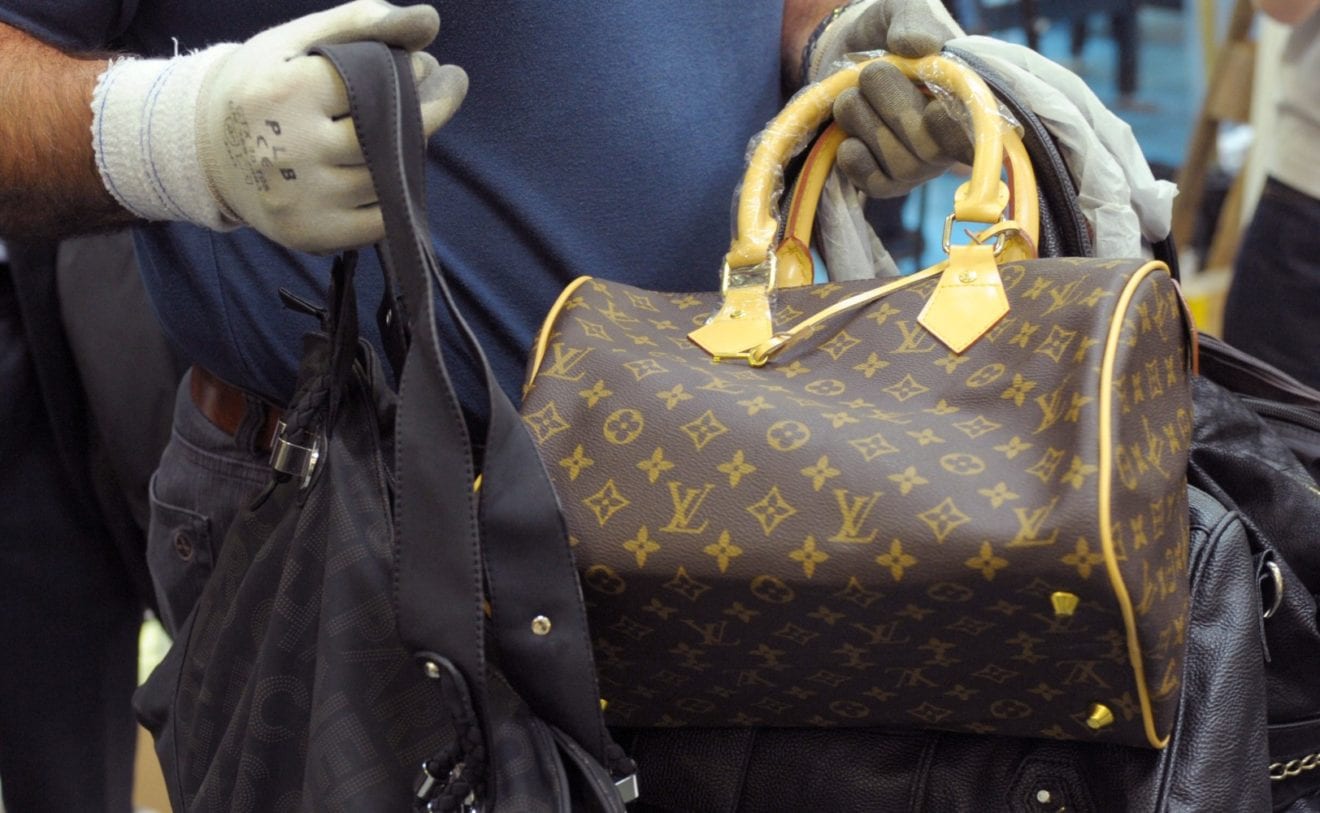
    The Shanghai raid led to the seizure of more than 4000 items of luxury apparel and accessories bearing Louis Vuitton, Kenzo and Loewe labels, among other top brands. Two assembly lines producing the counterfeit items were shut down.

    The raid was in response to a tip-off to the Shanghai Qingpu district public security bureau that fake Louis Vuitton bags were selling on Chinese social media platform, WeChat.

    Estimates held that the ring had sold more than 100,000 fake luxury items at a value of around RMB100 million (US$14.9 million). Each item would have cost around RMB200 ($30) to produce.

    The rise of online markets all over the world has been blamed for a general increase in fake products sold globally. The counterfeit industry is now worth an estimated $590 billion a year, and accounts for around 3.3 per cent of total international trade.

    According to customs officials, the most frequently seized fakes are items of footwear, clothing, leather goods and IT equipment. China is by far the world’s largest source of pirated goods.

  • Operation Goalkeeper World Cup against Counterfelt Goods

    Operation Goalkeeper World Cup against Counterfelt Goods

    In a sting to thwart criminal attempts to sell 2018 FIFA World Cup fakes, Hong Kong Customs’ Operation Goalkeeper has so far resulted in about $15.3 million worth of suspect merchandise being seized, plus five arrests.

    Aimed at preventing such items crossing the border, Operation Goalkeeper launched at the end of April with a focus on finding infringing items being trafficked through passenger and cargo channels at airport, seaport, land boundary and railway control points on the eve of the matches.

    Launched at the end of April 30, the sting has so far resulted in about 259,000 pieces of suspect items in 21 cases being seized.

    Items include about 180,000 pieces of apparel and accessories, 50,000 pairs of shoes and 29,000 bags. There are also about 57,000 suspected counterfeit jerseys, including 50,000 pieces bearing suspected forged FIFA trademarks.

    The items were seized from 12 seaborne containers, four goods vehicles and a batch of air parcels.

    Under the Trade Descriptions Ordinance, any person who imports or exports any goods to which a forged trademark is applied commits an offence. The maximum penalty is a fine of $500,000 and imprisonment for five years.

    Operation goalkeeper continues.

  • Macau Customs raids two stores selling counterfeit products

    Macau Customs raids two stores selling counterfeit products

    Macau Customs officers have arrested five local residents after busting a luxury counterfeit-goods retailing business in the territory.

    Nearly 500 fake items of clothing, handbags, belts shoes and watches carrying brand names including Prada, Gucci, Louis Vuitton, Cartier, Chanel and Hermes were seized in raids. Officers suspect the goods had a street value of MOP3.65 million (US$451,445).

    The Customs action followed complaints by the brand owners. Two retail stores located in the NAPE and Central districts of Macau were raided, Customs announced this week.

    The goods were brought in from the mainland and were being sold in shops at retail prices matching those of genuine products on sale in the city.

    People caught selling counterfeit goods in Macau face jail terms of up to six months.

  • Chinese millennials driving luxury goods sales

    Chinese millennials driving luxury goods sales

    Chinese millennials are driving faster growth than expected for worldwide sales of luxury goods, says consultancy Bain & Co.

    It says there is a thriving demand in China for items such as high-end handbags, shoes and jewellery.

    After stalling in 2016, revenues from personal luxury goods are set to rise 6 per cent at constant exchange rates this year to €262 billion (US$308 billion), Bain forecasts in an annual report compiled with the help of Altagamma, the trade association for Italian luxury brands. Earlier projections were for 2 to 4 per cent growth.

    Already, stronger earnings are being reported by luxury retailers including Brunello Cucinelli and LVMH, which owns Bulgari and Louis Vuitton.

    Bain says retailers’ efforts to connect with younger buyers and to bridge a price divide between Europe and Asia (more expensive) were also paying off.

    “Luxury goods companies have rethought strategies and are now regaining the trust they lost from customers,” says Bain partner Federica Levato, who co-authored the report.

    She says this year’s growth is “healthier”, being driven by a rise in volumes rather than in prices, and is balanced between tourist purchases and local buyers.

    Chinese buyers now make up 32 per cent of the luxury goods market, more than any other nationality, thanks to increased purchases in both their home market and abroad.

    As a whole, the industry could notch up annual growth rates of 4 to 5 per cent until 2020, says the Bain report, with online sales growing steadily and expected to reach a quarter of all sales by 2025, up from the present 9 per cent.

    Millennials already represent a third of the market, with the later “generation Z”, which grew up with smartphones, starting to make a dent in the luxury market, says Bain.

    Brands have been increasingly turning to social media or pairing up with pop stars and influencers, and branching into casualwear and streetwear, with t-shirts, sneakers and denim.

    However, while 65 per cent of luxury firms will grow sales this year, only 35 per cent will manage to increase their operating profit, says the report.

  • Tips For Packaging And Transporting Goods

    Tips For Packaging And Transporting Goods

    It’s important to be cautious when transporting products. Just one dropped box could cause a lot of problems for you. If you’re careful about how you pack, you’ll be able to protect your items from the challenges ahead.

    These simple and effective tips will help you to keep your products safe.

    Make Sure Your Pallet Can Support The Items It’s Carrying

    It’s important to properly secure any items you are transporting to the pallet beneath them.

    You also need to confirm that the pallet can fully support the weight of the items.

    Ideally, there should be several centimeters between your goods and the pallet’s edge. You should never have items hanging over the edge of the pallet.

    Make sure there are no loose nails or planks.

    Stainless steel banding will help ensure things on the pallet are kept strongly in place. It prevents movement and limits the chance of problems. A lot of companies recommend Reid Brothers UK – stainless steel banding as they find it to be of excellent quality.

    If the goods are stacked too high, or if the pallet seems heavily weighed down, you may

    Properly Protect Any Bulk Bags That Are Being Transported

    If you’re transporting bulk bags, such as bags of feed or flour, you should make sure you protect them.

    If you place the bags directly on a ballet, they could wind up tearing. If there are gaps between the planks, the bags could wind up falling through those cracks. It’s a good idea to place a carton on top of the pallet before you load the bags up.

    That way, you can keep your bags secure and safe.

    Make sure the carton carrying the bags isn’t too close to the edge of the pallet.

    Take Advantage Of Plastic Wrap

    You never want to ship out boxes that are unassembled.

    Plastic wrap can help you to consolidate the parts you are shipping out. It can also keep boxes from becoming misplaced during the shipping process. Make sure you wrap the boxes several times over.

    If the boxes are wrapped securely, you won’t have to worry about them slipping off of the pallet.

    You should start wrapping from the bottom. From there, you should layer over half of the wrap at each turn.

    You should wrap the pallet a few times over. Make sure that all of the boxes, including the boxes at the very top, are fully covered.

    Provide Instructions As Needed

    Carriers unload thousands upon thousands boxes each day. If you have special needs, you’re going to have to make sure you properly convey them. You should include labels that will help carriers transport your boxes properly.

    Examples of the kind of labels you should use include “This Side Up,” “Fragile,” or “Do Not Stack” labels.

    You should use a bright color like orange for the labels; this will ensure that they are easy to spot. You should also use a large, easy-to-read font.

    Additional Packaging Tips:

    What sort of information should be included on packaging?

    You’ll want to have the destination and the origin point clearly printed on the box. If you’re transporting hazardous materials, you’ll need to make sure you use the proper identification.

    Are there additional steps you need to take if you are shipping goods from or to the United States?

    While transporting items to the United States can be more complex, we recommend that you follow the same basic advice.

    Can a driver refuse to ship out goods that are packaged improperly.

    If you ask a driver to transport unsecured merchandise, they have the right to refuse. Improperly secured merchandise can put the other items that driver is transporting at risk. If you are shopping out something that can’t be fully secured, such as a snowmobile, the driver may write something like “Bourret not responsible for damages” on the bill.

    Looking For Additional Tips?

    If you’re dealing with a problem or have additional questions, get in touch with us as soon as you can. We’d be happy to help you securely ship out your cargo!