Retail News CRM

Tag: goods

  • Retailers alerted to surge in trade for counterfeit goods

    Retailers alerted to surge in trade for counterfeit goods

    In Singapore and other parts of South East Asia, there has at least been a minimal market for counterfeit goods. Retailers across the region have wrangled with this issue for many years and today, it shows little sign of waning.

    Statistics for 2016 revealed that, worldwide, the market for counterfeit goods worldwide was worth an astonishing $650bn (US$460bn). Many of these products were sold online to customers the world over, with popular items sold including eyeglasses, electronics and designer footwear. Bargain-hunting consumers may find the price outweighs whether or not what they buy is genuine.

    Local trade

    The range of fake goods finding their way at customs is pretty wide. Aside from luxury items such as jewellery and smartphones, everyday items bearing counterfeited brand names including rice, noodles and chocolate are also sold as the genuine article. Singapore, as a major global port, sees a fair few of said goods reach customs.

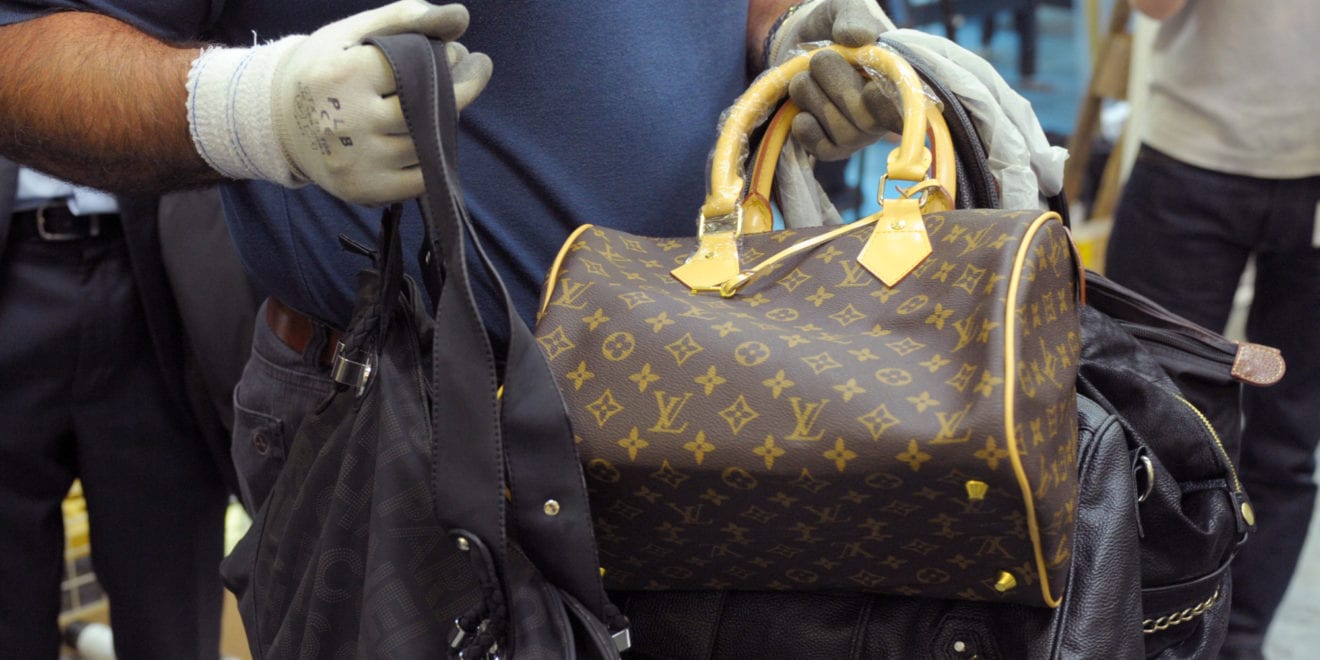
    In September 2016, Singapore Customs seized over 5,000 bags of counterfeit rice imported from India. That same month, more than 1,300 wallets, bags and purses were confiscated. Both bore trademarks of brands which local authorities deemed to be illegal, highlighting the need for retailers to be wary of what they buy in from suppliers.

    When determining what is real and what is fake, Singapore Customs do a lot of the work, whether through performing checks at airport terminals and ports or by enforcing the Trade Marks Act. However, retailers are also tasked with staying on-side, whether selling products online or offline in the bustling streets and markets.

    Telling real from fake

    Retailers are advised to read the Trade Marks Act. Introduced in 1998 and revised in 2005, it states that it is illegal for traders to sell any products bearing un-trademarked logos or other forms of branding. Inspecting goods thoroughly is a must before buying; a good way of doing this is to compare a fully-trademarked product against one that has been offered for sale.

    Any differences in fonts, brand names, colours and materials should be easy to spot. If there are any signs that a product offered by a wholesaler is fake, it is recommended to contact local customs and turn down those products. This should be done regardless of whether or not they seem to represent value for money.

    Should any business find itself selling counterfeit goods, knowingly or otherwise, there are grave consequences. Hefty fines are often given per fake item sold, reaching as much as $10,000 per item. In such an instance, legal advice from local firms including Withers LLP is advisable, whether it’s before or after buying fake goods.

    Multiple sources

    Many counterfeit goods sold across Asia find their way onto online marketplaces such as Amazon, AliBaba and eBay. Retailers using these channels to sell their products are advised to take precautions to ensure what they sell on said sites are the real thing. AliBaba account holders are advised to register with AliProtect.

    Whether they come from China, India, Europe or within Singapore, the market for fake goods shows no sign of slowing down. Attempts by governments and online retailers to clamp down on them are improving, though.

  • Luxury goods feature in UK accord for South Korea trade talks

    Luxury goods feature in UK accord for South Korea trade talks

    The pending talks with South Korea follow similar dialogues the UK has opened with Australia, China, the Gulf Cooperation Council, India, New Zealand and Norway

    London: The UK and South Korea are set to to begin regular trade talks, with luxury brands a particularly promising topic, as Britain prepares to expand its commercial reach once it has left the European Union.

    A formal working group of ministers from the two countries will meet as many as four times a year to discuss removing barriers to commerce and prospects for “future, ambitious trade opportunities” after the UK exits the EU, the British government said in an statement on Sunday.

    Prime Minister Theresa May has promised to make the UK a leader in liberalising trade around the world after Brexit. Yet Britain is unable to strike its own free-trade deals — or even being formal negotiations — while still a member of the EU.

    “We want to take advantage of all the opportunities available to us to ensure that Britain becomes a global leader in free trade,” UK International Trade Secretary Liam Fox said in an emailed statement. “The agreement of this latest trade dialogue shows that government is preparing for Brexit, not prevaricating.”

    The pending talks with South Korea follow similar dialogues the UK has opened with Australia, China, the Gulf Cooperation Council, India, New Zealand and Norway in the six months since voters chose in a referendum to leave the EU. Trade and investment between the UK and South Korea is worth about 10.9 billion pounds ($13.6 billion) a year, according to British estimates. The UK is the fifth-largest foreign direct investor in South Korea.

    The UK government said in its statement that South Korea is an especially promising market for luxury brands such as Burberry Group Plc, which has 70 stores in the country, and high-end automakers Jaguar Land Rover and Bentley. Other sectors with strong potential include renewable energy and nuclear decommissioning.

    “What we’re doing is putting in place plans to ensure the UK remains open for business and trade links continue to strengthen,” Fox said. “Important like-minded free trading partners like Korea and others are telling us they’ve heard that message loud and clear. Korea itself is a prime example to the world of how free and open trade can lift countries out of poverty to prosperity.”

  • FedEx brings packages to 7-Eleven stores

    FedEx brings packages to 7-Eleven stores

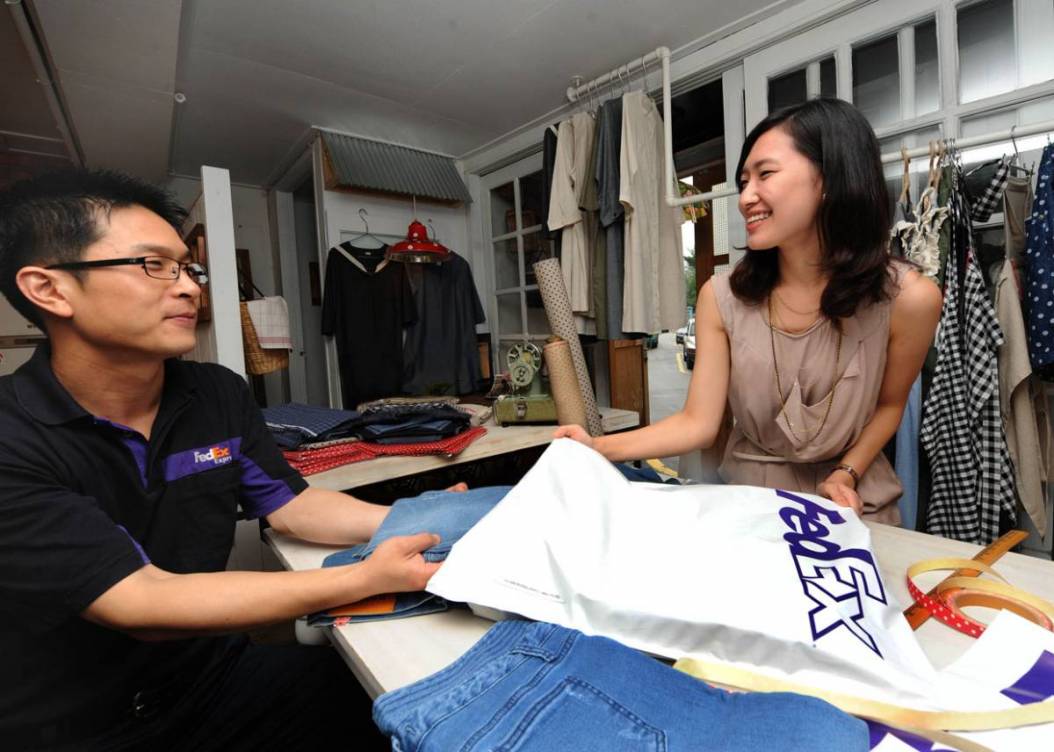
    FedEx Express, a subsidiary of FedEx Corp and convenience store chain 7-Eleven, announced today that customers and online shoppers can collect their packages at selected 7-Eleven stores. The service is only applicable to shipments of up to 10 kilograms in weight and 105 cm in dimension and with a total value for customs of no more than US$500 per shipment.

    FedEx Express, a subsidiary of FedEx Corp and convenience store chain 7-Eleven, announced today that customers and online shoppers can collect their packages at selected 7-Eleven stores. The service is only applicable to shipments of up to 10 kilograms in weight and 105 cm in dimension and with a total value for customs of no more than US$500 per shipment.

    Customers simply need to reply to their FedEx pre-delivery notification message and indicate their preferred 7-Eleven location. They will then receive an SMS message with the pick-up details.  Customers are required to present both the air waybill number and SMS message at their chosen 7-Eleven store upon pick-up.

    Packages must be collected within five days. Anthony Leung, managing director, FedEx Express, Hong Kong and Macau said the company’s retail service network expansion was a response to market needs. Rose Yeung, sales and marketing director, 7-Eleven Hong Kong and Macau, said this represented “another step forward in expanding our service portfolio, which includes bill payment, ticketing, self pick-up and donations.”

  • Singapore shoppers look to online shopping for good deals

    Singapore shoppers look to online shopping for good deals

    The extended season will lead to an eleven percent ($9.1 billion) increase in online sales to a total of $91.6 billion, according to Adobe’s 2016 Digital Insights Shopping Predictions report. Large retailers expected to account for the bulk of the growth, with an average growth rate of 16.6% compared to smaller retailers at 7%.

    “We expect to see a five percent spike in online shopping in early November and a record 24 percent increase in the last two weeks of December,” said Mickey Mericle, the vice president of marketing and customer insights at Adobe.

    “‘Click and collect,’ faster shipping and retail promotions starting earlier than ever are all contributing to the extended shopping season. Despite the uptick in sales we expect to see slower growth in total online sales this year,” he says.

    Singapore shoppers

    Closer to home, findings specific to the Singapore market show that consumer budgets are tight and the savvy shopper prefers online shopping due to the higher likelihood of finding good deals and bargains this way.

    Marketers can also expect fewer last-minute shopping rushes as respondents are now shopping slightly earlier in November. This suggests that marketers should make the effort to reach out to these early birds accordingly.

    Notably, consumers report visiting an average of 3-5 sites before making a purchase, which offers marketers a critical chance to target these potential customers once more and bringing them back on-site via remarketing

    Almost half of Singaporean millennials (49%) surveyed value experiences more than material goods, with a sizeable 41% echoing this sentiment when all local consumers who are surveyed are factored into the picture.

    Finally, the study shows that mobile shopping is king as consumers praise retailers for better optimizing their sites for mobile browsing, allowing them to shop on the go with their hectic schedules.

  • India looks to cut tariff concessions on Chinese goods

    India looks to cut tariff concessions on Chinese goods

    India is expected to push for a new approach to tariff cuts at the 16-country trade bloc to prevent China from flooding its market with cheap goods. The commerce department is working on ways to give minimum tariff concessions to Chinese goods and delay the concessions by a long number of years even as it allows imports from other member countries at lower duties.

    As part of the Regional Comprehensive Economic Partnership (RCEP) trade negotiations, India is looking to treat Chinese products differently due to the burgeoning trade deficit it has with Beijing. In 2015-16, India’s exports to China were $9 billion while the imports were a staggering $61.7 billion leaving a trade deficit of $52.7 billion.
    India hopes this longer phasing out of tariff concessions and differential treatment, called “deviations”, will become the basis for RCEP negotiations. The new approach comes ahead of the next ministerial meeting on November 3-4 in the Philippines.

    Moreover, since India had to do away with a three-tier structure of differential duty cuts as part of the negotiations, deviations are the last ray of hope to contain the trade deficit with China under a formal trade agreement. In the earlier tiered structure, India had proposed to remove duties on 42.5% of the items traded with China, something that Beijing had termed as low.

    “We hope the tiers come back from the backdoor through deviations,” said a commerce department official, adding that the difference in tariff cuts may not be as much as in the earlier structure of three tiers.

    “We can look at longer staging periods for China by delaying the concessions by some years or not offer key products for tariff cuts to them at all,” the official said. Despite agreeing to a common concession, India is insisting on a single undertaking for the RCEP which means nothing is agreed until everything is agreed. “With single undertaking, we can be sure other members will not lose interest in India’s demands once we accept their demands for tariff concessions on goods,” the official said.

    Trade Openness

    Our problem with China seems to be a lack of trade access. And to better manage our trade deficit with China, we need to call for better trade access rather than opt to keep tariff barriers high. The latter option would only raise transactions costs and lead to thoroughly suboptimal policy going forward. are definite gains from trade and openness

  • Bali’s exports to Europe decline

    Bali’s exports to Europe decline

    Balis exports of various handicraft and small industrial products to European countries declined in the first three moths this year because the economic growth in Europe has not yet recovered well.

    “Importers from Europe still demanded for various handicraft, garments and furniture products but the volume was not as big as that last year,” exporter Made Parwata said here on Saturday.

    He said that importers from Spain still maintained stable demand and delivery was still smooth.

    Other European importers were those from Italy, France and Germany. These countries are included as the big ten importers of Balis products.

    However, the Central Bureau of Statistics (BPS) data showed that imports of these products by France, Spain, Italy and Germany declined from US$19 million in the January-March 2015 to US$17 million in the same period this year.