Retail News CRM

Tag: Gucci

  • Gucci powers French Luxury Group Kering’ growth

    Gucci powers French Luxury Group Kering’ growth

    French international luxury group Kering has seen positive trading results brought on by stronger-than-expected sales of its Gucci brand.

    The group is among several luxury houses that have so far managed to ride out interruptions to business caused by 21 weeks of protests in Hong Kong.

    Kering is following a strategy of redistributing stock originally intended for sale in Hong Kong to other markets.

    Gucci has a large store network in Mainland China and South Korea, where spending has picked up among luxury-goods consumers who may otherwise have shopped in Hong Kong. Sales in the territory during China’s Golden Week holiday were underwhelming.

    “The trends are still negative so far in Hong Kong,

  • Gucci makeup line about to launch in Singapore

    Gucci Makeup by Alessandro Michele is set to launch in Singapore next month.

    The new makeup line has its roots in the unassuming harmony of the creative director’s work as first seen on the runway more than four years ago.

    The makeup is designed to “not mask but rather exalt flaws and make them part of the language of beauty,” according to a statement released by the firm. “Defects should be evidenced and not hidden away. Within this language everyone should be able to wear makeup how they want to, whether to reveal your true self, allowing you to be yourself, or as a means to transform, allowing you to be who you want to be.

    Gucci’s three new lipstick collections are diverse formulations, including Rouge a Levres Satin with a satin finish, Rouge a Levres Voile with a sheer finish, and Baume a Levres, a lip balm with a translucent finish.

    Gucci Makeup will be available at Takashimaya Department Store’s Beauty Hall from September 12.

  • Gucci store closed after staff Measles

    Gucci store closed after staff Measles

    Gucci’s Harbour City store has been closed for disinfecting after three staff members fell ill with measles within the last week.

    A Harbour City spokeswoman told that store staff advised mall management about the infections last evening and the Canton Road store was closed early.  Gucci’s office at Ocean Centre has also been closed.

    “We are carrying out thorough disinfection and extra cleaning throughout the mall,” the spokeswoman said. “The two washrooms near the store have also been temporarily suspended for disinfection and cleaning.”

    Hong Kong health officials are on high alert as the territory has witnessed a rapid escalation in the number of measles cases reported in recent weeks. Last year, 15 people were reported to have contracted the highly infectious disease, but already this year there have been 73 cases, including 29 people working at Hong Kong International Airport.

    According to the SCMP, the first Gucci staff member, a male aged 30, became ill last Tuesday after flying to Tokyo. He is now back in Hong Kong and recovering in hospital.

    The second and third victims, both women aged 25, have since developed symptoms and are also recovering in hospital.

    The incubation period of measles lasts from seven to 21 days before symptoms are obvious.

    None of the three staff had worked at other Gucci shops and none of their family members have developed symptoms.

  • Gucci restaurant pop up heads into Singapore

    Gucci restaurant pop up heads into Singapore

    Osteria, the Gucci restaurant pop up, will open in Singapore next month.

    Set to open at The Arts House, the four-week popup will have a Renaissance theme, replete with the signature red Gucci Herbarium-motif wallpaper.

    The restaurant will open for lunch and dinner on select days from May 1 to 26

    The menu will be conceptualised by chef Massimo Bottura, with Gucci Osteria head chef Karime Lopez.

    Main highlights include Bottura’s signatures dishes, including The Crunchy Part of the Lasagne, Lopez’s creation of sweet-sour pork belly bun, named Taka Bun.

    “We are excited to be able to bring Gucci Osteria to Singapore – a city with a vibrant culinary landscape,” says chef Karime Lopez.

    “At our first international edition, we want to showcase the best of global cuisine, as a country’s cuisine is no longer confined to its birthplace – it can always be reinterpreted and refined. The cuisine we are presenting is not just traditional Italian, but rather a cultural expression that resonates with the global diner of today.”

    Ticket sales open on the 20th of this month. Diners can choose a specially curated four-course lunch (from $128), a seven-course lunch ($228), or seven-course dinner (from $278).

  • Gucci invests 10 Million in diversity programs

    Gucci invests 10 Million in diversity programs

    Luxury apparel retailer Gucci has invested US$10 million into a diversity program to foster inclusion within the firm.

    The Gucci Changemakers scheme responds to public outcry over a black turtleneck jumper released by the brand with a mouth slit highlighted by thick red lips, resembling blackface makeup.
    Gucci promptly pulled the controversial item from sale and issued an apology.

    “Gucci deeply apologises for the offence caused by the wool balaclava jumper,” said the brand in a press statement. “We consider diversity to be a fundamental value to be fully upheld, respected, and at the forefront of every decision we make.”

    The Gucci Changemakers program, launched internally last year, is reing ramped up in the wake of the scandal. It will involve the recruitment of a global director for diversity and inclusion and a training scheme to bolster cultural awareness amongst all 18,000 global staff, as well as an internal exchange program that will bring five staff from diverse backgrounds to work in its creative studio in Rome. The scheme will also provide paid leave for employees to volunteer at various social programs.

    Further initiatives will provide scholarships for fashion students in North America and make funds available to benefit communities in several North American cities and in the Asia-Pacific region.

    “I believe in dialogue, building bridges and taking quick action,” said Gucci CEO Marco Bizzarri. “This is why we started working immediately on the long-term infrastructure at Gucci to address our shortcomings.

    “And now through our Changemakers program, we will invest important resources to unify and strengthen our communities across North America, with a focus on programs that will impact youth and the African-American community.”

  • Dapper Dan is holding Gucci accountable for controversial “blackface sweater”

    Dapper Dan is holding Gucci accountable for controversial “blackface sweater”

    Renowned Harlem fashion designer and tailor Dapper Dan’s relationship with Gucci through the years has been a rocky road. After gaining notoriety for knocking off the Italian house’s logo in his designs throughout the ’80s and ’90s, the tables turned in 2017, when Alessandro Michele was taken to task for knocking off one of Dap’s designs in his Cruise 2018 collection.

    However, all’s well that ends well: Both parties made peace and began working together. Not only did Dapper Dan collaborate with Gucci on a vintage hip-hop-inspired capsule collection and lookbook, the Kering-owned luxury label underwrote his brand new studio and atelier in Harlem, also making him the face of a special tailoring campaign.

    As lovely of a story as this is, it might not wind up with a happy ending. Just last week, Gucci apologized for (and pulled from shelves) an $890 sweater that resembled blackface. After several days of impassioned conversation among fans on social media, the brand released a statement, saying: “Gucci deeply apologizes for the offense caused by the wool balaclava jumper … We consider diversity to be a fundamental value to be fully upheld, respected and at the forefront of every decision we make. We are fully committed to increasing diversity throughout our organization and turning this incident into a powerful learning moment for the Gucci team and beyond.”

    While acknowledging the misstep and the need to prioritize diversity is a step in the right direction, the situation did not sit well with Dapper Dan. On Sunday, he posted a statement of his own on Instagram, insinuating that his partnership with Gucci may be on thin ice. “I am a Black man before I am a brand,” he wrote. “Another fashion house has gotten it outrageously wrong. There is no excuse nor apology that can erase this kind of insult. The CEO of Gucci has agreed to come from Italy to Harlem this week to meet with me, along with members of the community and other industry leaders. There cannot be inclusivity without accountability. I will hold everyone accountable.”

    Gucci made a concerted effort to make things right with Dap — and, seemingly, to educate themselves about both his neighborhood and his culture — the last time they were at odds, but this understandably hits very close to home, and could certainly cause major issues within their business partnership.

    Whatever the outcome, this case only underscores the dire need for more inclusion and diversity in the industry, as the frequency with which fashion brands slip up in regards to racism only gets higher by the day. It’s a change that needs to be implemented immediately, and hopefully Gucci will set an example for its industry peers, as it’s already been known to do in other areas.

  • Gucci unveils fragrances collection ‘The Alchemist’s Garden’

    Gucci unveils fragrances collection ‘The Alchemist’s Garden’

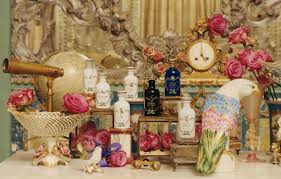
    Gucci has revealed its luxury fragrances collection – The Alchemist’s Garden – with oud, amber, violet, iris, mimosa, rose and woods as the seven scents. The Alchemist’s Garden collection has seven scents – oud, amber, violet, iris, mimosa, rose and woods.

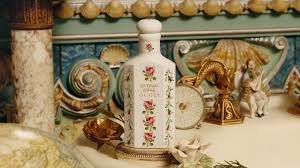
    The design of the bottles is inspired by vintage apothecary, pharmacy jars and the first perfumery containers, resonating with the nostalgic theme of the collection. All the bottles are white except for oud, which is black, and rose, which is in a shade of blue chosen by Michele.

  • From Gucci to Dolce & Gabbana: racism in fashion continues?

    From Gucci to Dolce & Gabbana: racism in fashion continues?

    Luxury fashion is all about breaking codes, creating a new, irresistible message that captivates consumers. But some of the globe’s top brands have raised eyebrows with designs that have seemingly racist undertones. The latest instance of that was Italian fashion designer Gucci, which produced a black wool balaclava jumper with an oversized collar that pulls over the chin and nose. It includes a slit where the mouth is, ringed with what look like giant red lips.

    Its similarity to blackface prompted an instant backlash from the public and forced the company to apologise publicly on Wednesday.

    Gucci also withdrew the offending garment from sale on websites and stores. It said the incident would be “a powerful learning moment for the Gucci team and beyond”.

    But the question persists: how can fashion houses that thrive on detail miss such critical social cues?

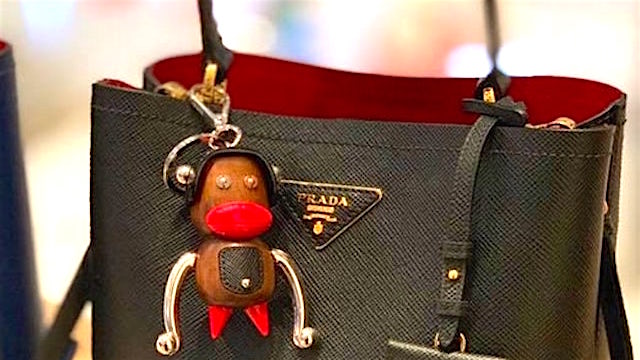
    Prada similarly withdrew a monkey bag charm that recalled blackface in December, saying it “abhors racist imagery.” And Dolce & Gabbana issued a video apology after one of the designers made insulting remarks about Chinese people in a private chat discussing the questionable depiction of a Chinese model in a campaign.

    “Luxury brands used to be able to get away with provocative and eccentric ads that push the boundaries of our society and culture in the name of being creative and cutting edge,” says Qing Wang, a professor of marketing at Warwick Business School in the United Kingdom.

    “However, a long list of recent incidents have caused public outrage, suggesting that era is now gone, or that luxury brands have lost touch with public sentiment. What used to be considered ‘creativity’ has now turned into ‘bad taste’ or even ‘racist’.

    He cited other fashion fails that evoked stereotypes, including Dolce & Gabbana’s “slave sandal” in its spring-summer 2016 collection and a recent Burberry campaign for the Chinese New Year that was compared to Asian horror films.

    While many of these incidents have caused immediate social media backlashes, the longer-term impact will take time to measure, and will depend on the brands’ reaction and future sensitivity.

    Dolce & Gabbana was forced to cancel its Shanghai runway show after the insulting remarks were publicised, top Asian influencers backed out of campaigns and Chinese websites dropped their line – a warning sign from a region that holds great sway in global luxury sales.

    The blackface images have particular resonance in the United States, where the governor of Virginia and his attorney general have been caught up in a scandal over blackface incidents from their college days in the 1980s. The offensive depictions are reminiscent of travelling entertainers from the 19th century, who would paint their faces black to portray African characters in a ridiculous and mocking fashion, spreading racial stereotypes along the way.

    Italian sociologist Michele Sorice at Rome’s Luiss university says that the evocation of blackface by Italian fashion houses signals “a mixture of good faith, and ignorance”. He notes that Italian society still isn’t fully aware of the racial charge in some words and images.

    “I imagine that they don’t truly think they are racist,” Sorice says. “I think they didn’t have the instruments to understand that these images are archetypes that were used to contrast the concept of blackness and make them ridiculous. I think that many simply don’t know. It is a cultural issue.”

    Paolo Cillo, a marketing professor at Milan’s Bocconi University, says the designer’s intent may have been taken out of context and amplified, and she credits Gucci with acting swiftly to quell the controversy.

    “I wouldn’t stigmatise fashion,” Cillo says, comparing the fashion designer process to artistic pursuits like filmmaking, painting or music. “There are artists in the world of culture that did more outrageous things and no one ever said a thing. There is a perception that fashion is ephemeral, or commercial. But from my point of view, it is not. It reflects the times, like all other artistic forms.”

    While the fashion world has been at the forefront of addressing sexual norms – Gucci has been redefining genderless dress codes under Alessandro Michele – it has lagged behind other industries in taking on social issues such as racial tolerance, climate change or women’s empowerment, according to Larry Chiagouris, a marketing professor at Pace University, US.

    “It is not clear why this is,” Chiagouris says, “but the evidence clearly points to the fashion industry’s need … to catch up with the rest of the world.”
  • Kering faces €1.4 billion Italian tax bill

    Kering faces €1.4 billion Italian tax bill

    Kering is facing an Italian claim for €1.4 billion (£1.2 billion) in unpaid taxes. The company’s Swiss-based Luxury Goods International (LGI) subsidiary has been under investigation for allegedly avoiding tax on earnings generated elsewhere. The probe has largely centred on Gucci, Kering’s star brand and biggest revenue driver. Italy’s tax police carried out checks at Gucci’s Florence headquarters and Milan offices in 2017, and drew up the report that has now been handed to Kering, a source close to the investigation said.

    Kering has consistently denied avoiding tax, saying its activities were fully compliant with all tax obligations.

    In its statement on Friday, the group said the Italian tax authorities’ findings for the years 2011-2017 had yet to be finalised by their own enforcement team.

    “Kering challenges the outcome of the audit report both on the grounds and the amount,” the company said, adding that it “does not have the necessary information” to record a provision against any potential bill for back taxes or penalties.

    The company has said that LGI is a substantial firm in its own right, with 600 employees handling inventory, billing and supply-chain logistics, with a business model “known to French and other competent tax authorities”.

    According to reports by France’s Mediapart newspaper and Germany’s Der Spiegel, Kering’s wholesale activities – the sale of products to retailers such as department stores – have come under particular scrutiny.

    Some business carried out by Kering employees in locations including Milan and Paris was billed through the Swiss unit, incurring lower tax rates, according to those reports.

  • Gucci adds 6 new intriguing Gucci Places

    Gucci adds 6 new intriguing Gucci Places

    Luxury fashion brand Gucci has labelled six international destinations as ‘Gucci Places’ – a list that includes Daelim Museum in Seoul. The Gucci Places were selected by the Italian Fashion House as destinations that “surprise, arouse interest, and inspire a creative response”, according to a report in Prestige Online. They were chosen in collaboration with well-known artists who were tasked with visiting the place and record their impressions, establishing a visual journey of photographs, travel notes and sketches.

    Daelim Museum was named for its association with Coco Capitan, an artist whose calligraphy has appeared on Gucci collections.

  • Net-a-Porter launches kidswear with Gucci

    Net-a-Porter launches kidswear with Gucci

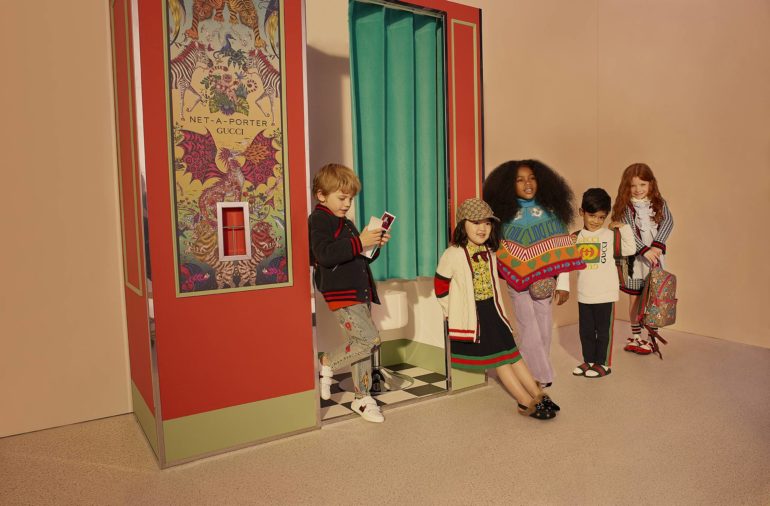
    After its Gucci and Dolce & Gabbana childrenswear pop-up e-shops generated a resounding “more!” from Net-a-porter.com customers, the retailer is launching a multi-brand kidswear collective. By “collective”, Net-a-porter.com means, quite simply, a tight edit of brands which have all created exclusive capsule collections for the website. Yeah Right NYC Kids, Alanui Kids, ATM Kids, Chinti & Parker Kids, Lingua Franca Kids, Golden Goose Deluxe and Veja make up the list of seven labels for girls and boys ages one to 12.

    “The new year felt like the perfect time to launch this collective,” Elizabeth von der Goltz, Net-a-porter.com’s global buying director, tells Mini Vogue. “It’s January – kids are back to school but there’s this idea of cosiness and wanting to feel comfortable.”

    The capsules, accordingly, reflect this: cashmere sweaters, comfy cardigans, track pants and trainers populate the new section. “Whether it’s for ourselves or for our kids, we are always thinking about wellness in January so this this an extension of that – it’s luxe athleisure for kids!”

    If the list of brands feels more offbeat than the global labels Net-a-porter.com first dabbled in the kidswear market with, this was intentional.

    “As an online global retailer known for our distinct fashion point of view, we wanted to take this and bring it to the kidswear market, creating something different from traditional retailers.”

    Von der Glotz is particularly excited about the patterned cardies from Alanui Kids collection and the mini-me versions of Golden Goose and Veja sneakers – two of Net-a-porter.com’s best-selling shoe styles.

    The e-tailer is confident it has quietly developed a recipe for success: “Our customers have been highly engaged with all of our kidswear pop-ups with most styles selling out within just a matter of weeks of launching,” she continues.

    Four out of five of the Gucci products sold were logo T-shirts, and the fifth was the belt bag. “It’s so interesting to see, as the pieces are in such high demand in our adult range too.” Starting them early is certainly paying off for the business.

  • Reebonz to use blockchain technology to assure authenticity

    Reebonz to use blockchain technology to assure authenticity

    Southeast Asian online luxury marketplace Reebonz is exploring blockchain technology as part of its strategy to demonstrate the provenance of products. Complementing the firm’s existing in-house team of ateliers who specialise in authenticating leather products, timepieces, gemstones and jewellery, Reebonz intends to incorporate all transactions on a blockchain to ensure the comprehensive traceability of all products sold within its ecosystem. The firm’s goal is to enable buyers to verify the authenticity of products on their own and stamp out losses and distrust generated by the global exchange of counterfeits.

    By establishing end-to-end traceability, customers will also be able sell their items back to Reebonz, which would allow the company to easily identify a customer’s purchase.

    “The Reebonz leadership team is extraordinary and has already developed a cutting-edge technology and platform”, said Tim Draper, senior advisor of Draper Oakwood Technology Acquisition and founding partner of Draper Associates.

    “The authentication of pre-owned luxury items using the blockchain is just one of many high impact innovations Reebonz is pioneering to improve the luxury shopping experience for customers across Asia Pacific.”

    “While we started as an online platform that helps consumers access affordable luxury, we have evolved into an ecosystem that connects buyers and sellers through the widest range of luxury,” added Reebonz CEO and co-founder Samuel Lim.

    “Identifying gaps and opportunities in the luxury e-commerce landscape and spearheading strategies that present innovative ways of redefining luxury consumption has made us a leader in this industry. As we continue to build out a thriving community of buyers, sellers and international boutiques, it will become critical for the industry to evolve, and for us to become a leading innovator of authenticity solutions. We are excited to use the blockchain technology to solve one of the key global issues that impacts our industry.”

  • Gucci fine jewelry new style revealed

    Gucci fine jewelry new style revealed

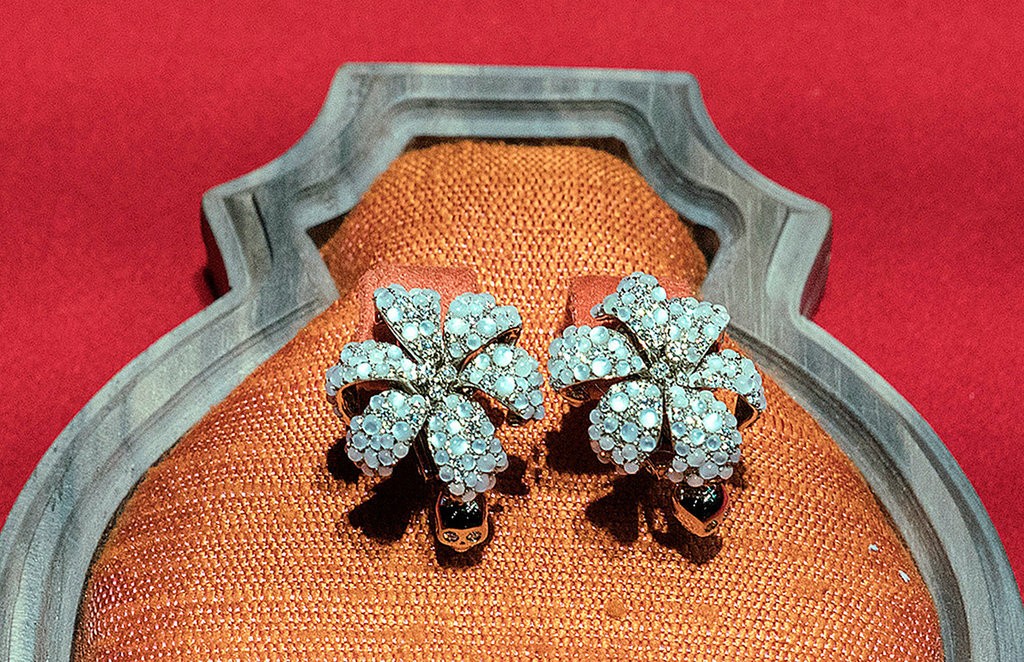
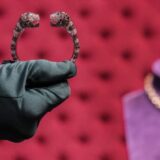
    These are flush times for Gucci, the 96-year-old house that in recent years has become fashion’s all-conquering luxury brand. And amid booming sales, Alessandro Michele, Gucci’s creative director since 2015, has introduced the brand’s first high-end fine jewelry line, a series of extravagant styles that present the designer’s florid evocations of flea market finds as gem-encrusted treasures.

    Talking of the nostalgic inspiration behind many of his creations, Mr. Michele said, “I’ve dressed a number of women in things that were gathering dust in vintage archives — they no longer existed.”

    “That includes jewelry as well,” he added. “It’s beautiful to bring them back to life and give them importance once again.”

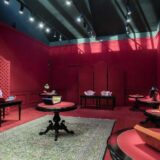
    At the Gucci Hub, a former aeronautical factory here where the brand opened its headquarters last year, the jewelry showroom reflects Mr. Michele’s opulent touch: red velvet-covered walls, red velvet room dividers, red velvet-topped tooled wood tables around a densely floral Oriental rug, and bright-toned velvet coffers lined in silk to showcase the designer’s well-established motifs rendered as precious jewels.

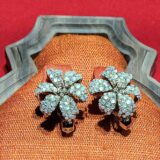
    Tigers, snakes, lions and foxes form necklaces, bracelets and rings, mirroring earlier versions that Mr. Michele created for both the costume and the mid-market fine jewelry lines at Gucci. But the new higher-end collection — which has no specific name — is more elaborate, its 25 design styles accented with a range of gemstones.

    The new line appears to expand the reach of Mr. Michele’s remarkably successful universe for his most ardent and wealthy collectors. It’s Gucci style for Cartier spenders — at a time when Gucci has pledged to go fur-free, eliminating what had been the brand’s biggest-ticket items.

    Mr. Michele, who calls himself “a passionate student of antique jewelry,” has resurrected animalier styles, like those of the midcentury American jewelry designer David Webb, and for this new collection he has employed some vintage techniques like the intricate hand engraving used to create the animals’ faces, skipping the rhodium plating now common on white gold so it retains a yellowish cast, and the use of old-fashioned raised settings for the tiny diamonds spangled across the fishtail of a ring.

    “When you see the way I combine things with each other, you perceive everything together as a new language,” he said, referring to his fashion aesthetic that mashes up the animal motifs with Chinese silks and Mexican embroideries, Renaissance gowns, Victoriana, disco drama, high ’80s glam, shades of Elton John and Dapper Dan, and more. “There’s a complete fusion of ideas. This ‘disruption’ that everyone’s talking about is found in the dialogue between these elements.”

    From the new collection, Marco Bizzarri, the chief executive of Gucci, wears a woven gold bracelet with black diamonds that is embossed with the phrase “Blind for Love” in capital letters across the top.

    Mr. Michele himself has a gold ring with a fox’s head, a large brown diamond set between its ears.

    Though the pieces look like styles that, in their antique forms, were made for women, in the Gucci context, anyone can wear them.

    “Clothes, like jewelry, don’t have very revolutionary roots, meaning that what’s revolutionary is the way you wear a piece of jewelry,” the designer said.

    So far the collection, with prices that mostly range from 15,000 euros to 70,000 euros (US$17,900 to US$83,500), has been offered only to favorite clients through private sales in Japan, China and the United States and private appointments that began in July.

    Gucci refers to the pieces, which are not high jewelry (typically starting in the $100,000 range and going into the millions), as “medium-high,” or as “unique pieces” when it repeats designs using different gems.

    However, the brand says it is considering a move into the bigger stones and larger price tags of true high jewelry for its next collection.

    Gucci is not the first fashion house to enter the upper echelons of jewelry.

    Chanel, Dior and Louis Vuitton have all made it big business, as the high jewelry market has flourished through and beyond the economic downturn of the last decade.

    And the brand’s fortunes have been growing at a clip that has shocked industry watchers.

    Kering, its parent group, reported that Gucci’s revenue soared 42 percent to €1.5 billion in the three months to the end of September. And its biggest boost has been coming from millennials, who, Kering says, account for at least half of its 2017 sales thus far.

    “The new generation is going to want a more modern jeweler,” said Maurizio Pisanu, the house’s director of jewelry merchandising. “So it’s up to the brand that realizes that first, and Gucci already had the right intuition two years ago — to break the rules.”

    Gucci has hired its first staff gemologist to search for stones worldwide and maintains a jewelry workshop with about 30 goldsmiths and stone-setters near Milan.

    All of the brand’s existing fine jewelry and now most of its high-end fine jewelry pieces are made there, with some help from an external atelier in Valenza, a center of Italian jewelry fabrication about 60 miles to the south.

    According to the brand, sales of the initial pieces have been brisk (although it won’t provide specifics).

    So if the collection does expand, Mr. Michele’s antique-tinged, everything-is-precious aesthetic might disrupt the higher stratospheres of the jewelry sector in the way that he has already reset Gucci and the fashion desires of a vast public.

    The collection has arrived at a moment when the codes of high jewelry are in flux — important stones are becoming more difficult to find, and a new generation of customers is more interested in showing off wearable (and possibly recognizably branded) design than owning the special occasion gem-encrusted parures of the past.

    Mr. Pisanu said design-driven jewelry customers “benefit a brand like Gucci, where jewelry isn’t our core business but we have the ability to make high-quality jewelry like the other brands — and with a different aesthetic that’s much more innovative than what a classic brand would ever dare to make.”

  • Kering’s new digital strategy revealed

    Kering’s new digital strategy revealed

    Customers draw inspiration from today’s hyperconnected world and they engage with luxury brands through the digital tools they use every day. In a fast-changing environment, the success of luxury houses depends upon their ability to offer creative propositions, and a consistent customer experience across all distribution channels and devices.

    In December 2017, Kering appointed Grégory Boutté as Chief Client and Digital Officer with the mission to carry out Kering’s digital transformation and to take the lead on e-commerce, CRM, data science and innovation for the Group. Since then, e-commerce has been the fastest growing channel for all Kering’s brands and represents 6% of the Group’s total retail sales for the first half of 2018.

    “Digital can be many different things at once – a distribution channel; a platform for offering seamless omni-channel services to clients; a driver of brand image and visibility; and a tool for engaging with customers in a personalized way. Digital technology, data science and innovation provide a way of offering our customers the best possible experience – on every touchpoint”, declared Grégory Boutté.

    Drawing upon his vision, Kering’s digital approach is based on the following objectives:

    • to provide the Group and its Houses with a real-time 360-degree view of their customers, and to deliver rich and personalized experiences;
    • to offer clients high levels of service, from initial transaction to after-sales;
    • to enable Kering’s Houses to develop close relationships with their clients and to adapt their offerings in order to meet specific needs.

    Today, Kering is announcing new milestones on its digital journey.

    The following initiatives will strengthen Kering’s focus on enhancing the Group’s omni-channel capabilities and further developing its Houses’ digital activities.

    In-store customer experience

    Kering is working on a suite of apps in partnership with Apple to be used by Houses staff in store, the first of which is a store experience app that enables sales associates in-store to access stock levels in real time to provide their customers with a fully personalized service.

    Via the app, sales associates know instantly if a specific size or color is available in-store or if it can be ordered from other stores; they can also give customized styling recommendations.

    Client service

    Kering developed a new approach to customer service with centralized teams in Europe and the US focused on addressing customers’ requests.

    Gucci, Saint Laurent and Bottega Veneta have dedicated teams, while other brands grouped their efforts under a single customer service unit, operated by Kering on their behalf.

    CRM and Communication

    Kering has launched several pilot projects using data science techniques to deliver personalized messages and experiences to customers, based on their profile and purchasing history.

    All Kering Houses have launched or are launching WeChat mini-programs in order to build as close a relationship as possible with their Chinese customers and to offer social commerce.

    E-commerce 

    Kering will leverage its in-house technology and operations team to fully internalize the e-commerce activities currently handled through the joint venture with YNAP.

    Following a highly successful and fruitful seven-year partnership with YNAP, these e-commerce activities will transition to Kering in the first half of 2020.

    Coordinated efforts and shared expertise with YNAP have enabled Kering Houses to enhance the level of service of their e-commerce websites. Most of them now offer services such as check availability, reserve in store, make store appointment, pick-up in store, return in store, exchange in store, and buy online in store.

    Kering will continue to develop partnerships with third-party e-commerce platforms when relevant.

    Digital capabilities

    A data science team has been created at Group level to improve the service provided to the clients of Kering’s Houses by making the best use of the available data.

    A China-based Client & Digital team is currently being formed. It will be responsible for adapting digital practices to the Chinese market, along with identifying and promoting innovations from China to other markets.

    Kering’s Group Innovation team has been tasked with two missions: to instill an internal culture of innovation (test-and-learn approach, quick sharing of discoveries, scouting business trends), and to work on disruptive technologies to further improve the client experience in the future in terms of business or environmental matters.

    Kering’s Chief Client & Digital Officer Grégory Boutté added: “These exciting new initiatives have been designed to meet – and exceed – the needs of our Houses’ customers and to ensure we continue to offer them an exceptional experience across all channels in a fast-changing global market. These opportunities have been made possible by the experience and know-how that Kering has gained over the years, notably through its successful joint venture with YNAPWe will continue to work with them post-transition and to enjoy a fruitful relationship.”