Retail News CRM

Tag: Gucci

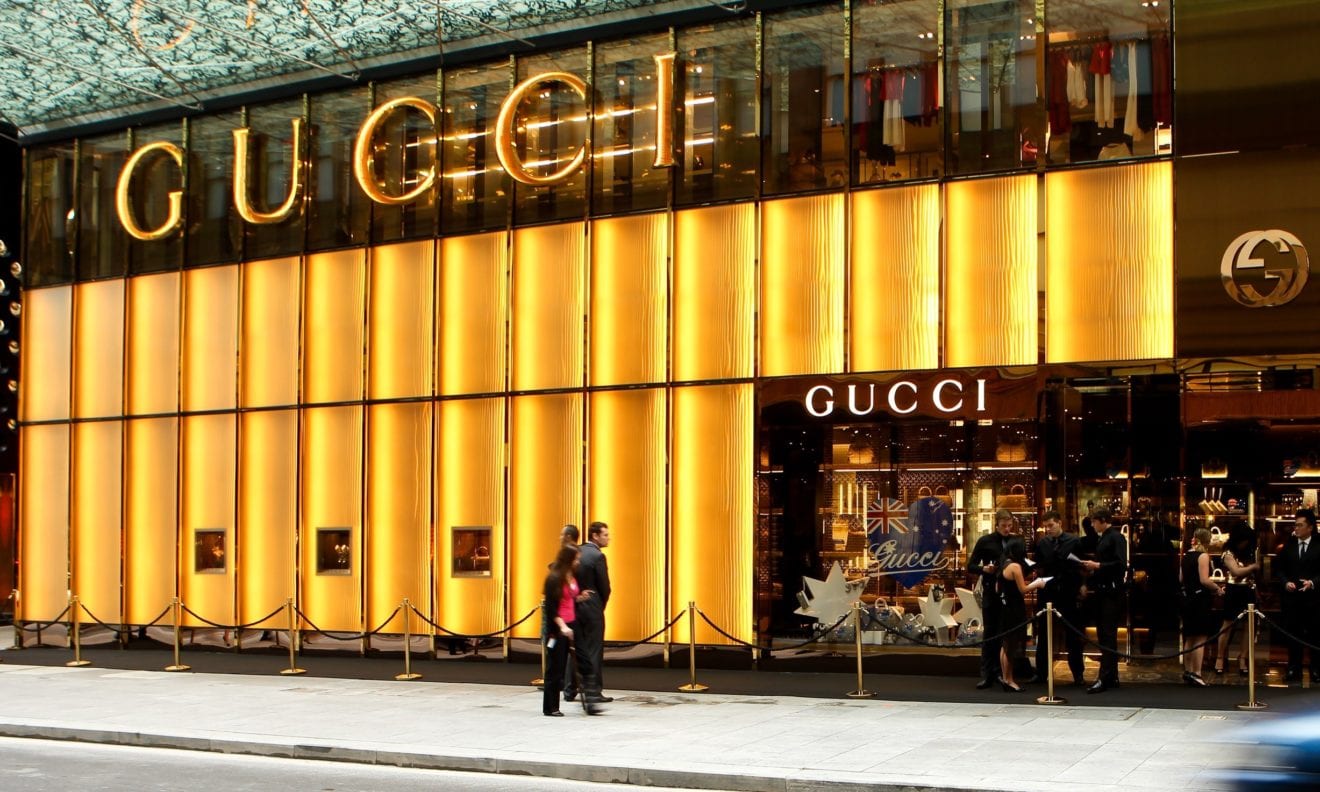
  • Gucci korea reopened its flagship store by going back to basic

    Gucci korea reopened its flagship store by going back to basic

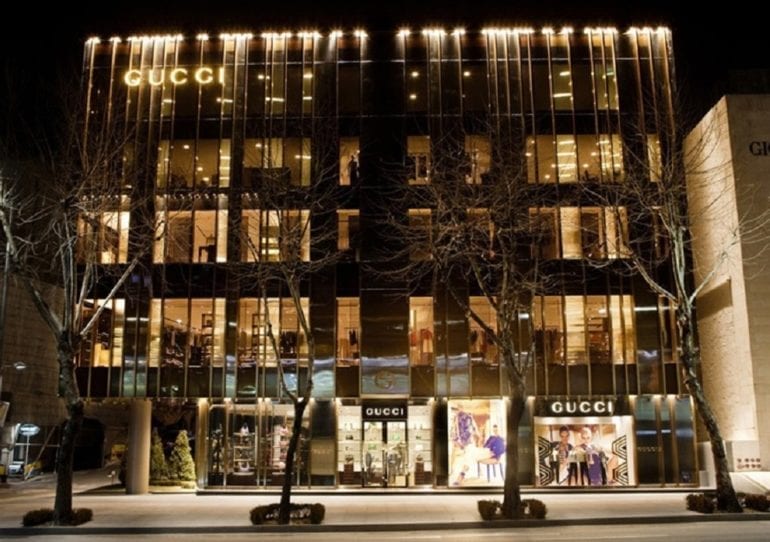
    Italian luxury house Gucci opened the doors to its renewed Korean flagship store in Cheongdam, Southern Seoul, giving fashionistas a new reason to visit the neighborhood.

    The three floors of the shop carry the brand’s most popular items, from bags, wallets and shoes to clothes and the newly launched “Gucci Deco” home-furnishing items.

    Just a few years ago, Gucci was regarded as a luxury brand with a slightly old-fashioned design that failed to appeal to younger trendsetters. But after Alessandro Michele took the helm in 2015 as creative director, Gucci has started a whole new chapter in its history, becoming the most searched for brand on Google in 2017, and adding over 8 million followers on the Gucci official Instagram account.

    Their success was attributed not to trying something entirely fresh, but to Michele’s decision to get back to basics, returning to the vibrant colors and patterns of the old archives, but adding a 21st century twist. His designs were vintage, but not too classic – bold but not gaudy.

    The flagship store carries all the popular items that made Gucci the hottest brand in town, within an interior of walls decorated in old rose, and antique carpets that add a classy ambience to the overall space. The toned-down color of the walls lends a stark contrast to the colorful products on display.

    Visitors to the store can see all of Gucci’s treasures in one space, but there are two distinct reasons why the new shop is worth a look: the do-it-yourself (DIY) zone and the Korean edition goods only available at the flagship store.

    The two DIY zones are located on the second and third floors and are both equipped with different ready-made patchworks and pins that, when guests choose from them, staff members are ready to sew them on in different ways. On the second floor, visitors can decorate their very own jackets, while on the third, one can create DIY handbags and clutches.

    Also available are the Korea-exclusive edition items, which have been embroidered with a Korean tiger that differs from any of the animals usually seen on other Gucci products. The unique Korean tiger is printed on men’s Beastiary bags, wallets and Princetown shoes, which can only be found in this particular shop and nowhere else in the world.

    And while they don’t have their own DIY zone, many of the women’s sneakers have metal buttons on them, which allow the wearer to snap different patches into place and change them as one likes.

    “The Gucci flagship store is like a cabinet of curiosities that’s made to please and inspire visitors,” said a staff member on the day of the opening. “The store is a space where you can experience the unique brand culture of Gucci.”
  • Kering to celebrate new sales record

    Kering to celebrate new sales record

    In a “phenomenal” result, global luxury group Kering had record operating revenue last year, driven in large part by the popularity of Gucci.

    Kering’s income totalled €15.4 billion (US$19 billion), up 25 per cent as reported or 27.2 per cent on a comparable basis. Revenue from luxury activities was up 27.5 per cent as reported, or 29.9 per cent on a comparable basis, while for sport and lifestyle activities, revenue was up 12.8 per cent as reported or 14.7 per cent on a comparable basis.

    Describing it as a phenomenal year, chairman/CEO François-Henri Pinault says the group created more than €3 billion in extra revenues in a single year, and generated more than €1 billion in additional EBIT.

    In a performance “nothing short of spectacular”, Gucci was amplifying its desirability across all markets.

    “Saint Laurent is on a rapid growth track, while Bottega Veneta pursues its redeployment. Balenciaga is charting an impressive development trajectory, and our other luxury brands are experiencing positive momentum,” says Pinault.

    Revenue for luxury activities topped €10 billion last year, up 29.9 per cent year on year based on comparable data. Comparable growth was up 44.6 per cent for Gucci and 25.3 per cent for Yves Saint Laurent.

    Other luxury brands saw accelerated revenue growth (up 14.1 per cent on a comparable basis), especially Balenciaga, which delivered the fastest growth rate of all group brands in the second half.
    Puma’s revenue topped €4 billion for the first time, a rise of 15.8 per cent on a comparable basis, while recurring operating income for the brand jumped 92.7 per cent.

  • Here’s Why Pre-Owned Luxury Fashion Are Growing In Asia

    Here’s Why Pre-Owned Luxury Fashion Are Growing In Asia

    Asia’s pre-owned luxury fashion market is continuing to grow, with shoes and t-shirts gaining ground, according to multichannel retailer Reebonz.

    Although bags continued to dominate, with an average of 77 per cent of total transactions in 2016 and 2017, both shoes and apparel achieved steep sales growth throughout the region, according to Reebonz’s now annual Asia Luxury Index.

    In Hong Kong, for example, sales of used branded sneakers rose 48 per cent last year, while “luxury t-shirt” sales soared six-fold.

    The report is based on Reebonz’s own trading data across Australia, China, Hong Kong, Indonesia, Malaysia, New Zealand and Singapore, along with unspecified “industry reports”.

    Reebonz says millennials are driving the sector’s growth, “tilting the scales in favour of a pre-owned luxury market that continues its growth trajectory”.

    Chanel, the most-purchased pre-owned brand by millennials, recorded more than double the total sales value on Reebonz last year over 2016.

    The report said the changing perceptions towards pre-owned luxury have altered the state of resale and how consumers shop today, contributing to 40 per cent sales growth in the pre-owned category at Reebonz.

    “The growing demands of buying from the resale market cleverly gives rise to a community of individual sellers, injecting the luxury ecosystem with products that meet these needs,” said Reebonz cofounder Daniel Lim.

    Louis Vuitton, Hermes and Chanel were the three top-selling brands on Reebonz last year, fetching resale values as high as 125 per cent of their original retail price in the secondary market. Gucci, Celine and Dior were also among the top 10.

  • Florence’s Gucci museum opened a restaurant with the world’s best chef

    Florence’s Gucci museum opened a restaurant with the world’s best chef

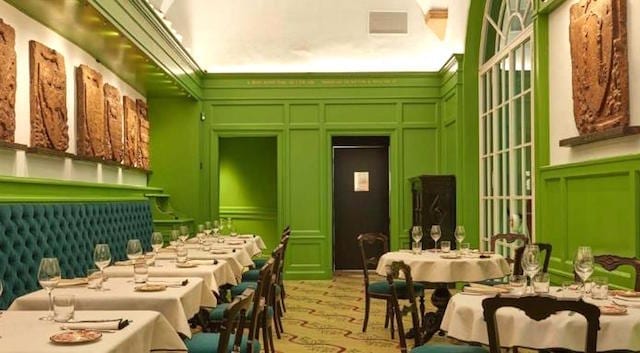
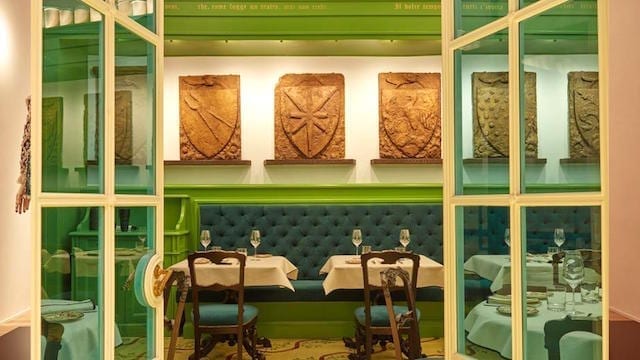
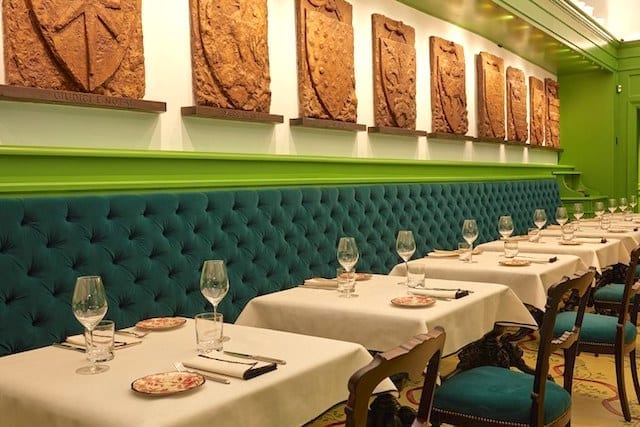
    Luxury fashion brand Gucci has opened a 50-seat restaurant, Gucci Osteria, in Florence featuring triple-starred Michelin chef Massimo Bottura.

    This follows in the tracks of Giorgio Armani offering fine-dining restaurants at its hotels in Dubai and Milan, the Dolce & Gabbana Gold Restaurant and Dolce & Gabbana Martini Bistrot in Milan, and Ralph Lauren with Ralph’s Restaurant in Paris. Roberto Cavalli also has an international chain of cafes.


    LVMH last year also announced it would open a second branch of its gourmet grocer La Grande Epicerie in Paris, days before Tiffany’s & Co launched its Blue Box Cafe in New York. LVMH also owns Cova Pasticceria, which has a strong international presence along with Prada’s Pasticceria Marchesi.

    In Seoul, Dior runs the Dior Cafe at its flagship store, in partnership with patissier Pierre Herme.


  • Is Amazon threatening luxury?

    Is Amazon threatening luxury?

    Amazon has been struggling to recruit luxury brands to sell their good on its platform, but there is one way that it could make its marketplace more of a destination for shoppers looking for certain tiers of luxury products.

    Amazon could launch vertically integrated, mass-customized brands of its own that use technology to smooth the customer shopping process, similar to Indochino.

    While Amazon is not likely to get catalog coverage from many of the ultra-luxury brands, it does have the ability to make a number of mid-level luxury brands less relevant to large segments of Amazon customers, replacing those brands through the merchandising of its own private-label luxury brands at prices that encourage even the slightly price-sensitive luxury products customer to consider a cheaper alternative, available directly from Amazon.

    There will always be customers who want nothing other than the $10,000 handbag with that special brand name, or the $3,000 suit from Armani or Gucci. Yet for millions of Amazon Prime customers, the prospects of “affordable luxury” becomes available through something like an Indochino model.

    Brands like Brooks Brothers, Hugo Boss, Zac Posen, Tom Ford and Burberry that may today be aspirational for millions of Amazon customers could be replaced with Amazon’s own mid-level luxury brands, made at comparable quality with perfect custom fitting and a much lower price. Such a model has the potential to wipe out much of the apparel advantage Stitchfix has created for itself over past few years.

    Indochino is a direct-to-consumer manufacturer of custom suits for shirts for men. While production is based out of China, it offers U.S. customers the opportunity to get sized either through a measurement process online using videos, or in a limited number of storefronts based in major metropolitan locations throughout the United States. For under $400, Indochino is able to manufacture a custom-fitted garment and shrip it to the U.S. or Canadian customer within 3 weeks.

    Comparable pricing for a U.S.-tailored suit including luxury brands would range from $1,500-$3,000. While a luxury U.S. brand in the U.S. is likely to require 2-3 weeks for custom tailoring of an off-the-rack suit, the custom-made Indochino suit sells for a fraction and promises a better fit because it was made using the customer’s body measurements.

    Let’s say Amazon bought Indochino, or built its own comparable model, and expanded it into women’s clothing too.

    Then Amazon uses some variant of technology from its new acquisition Body Labs to develop a system for measuring customers’ dimensions. With such technology onsite at a range of retail studios across the country, Amazon now would have the dimensions of millions of Prime customers, and would be able to offer them its own custom-fit luxury-quality brands.

    Using pin-point merchandising, Amazon could target these brands to specific customers that have searched for comparable luxury brands on Amazon already. Amazon’s scale and ability to accept low margins would quickly turn the mid-luxury brand customer towards Amazon, and away from so many of the luxury brands that have declined to distribute their products on Amazon.

    With any decent scale, Amazon would have competitive manufacturing costs, the ability to up-sell and cross-sell all sorts of other items (apparel and non-apparel), all the while being comfortable with much lower margins than a typical luxury brand. With an already generous returns policy, Amazon could offer customers the opportunity to buy lower-priced custom-made items, returning whatever items the customer did not like. I do not know of any other apparel brand that could compete effectively with such a model.

    The prospect that Amazon could win part of the customer’s wallet that today goes to luxury brand purchases externally should be on the radar of mid-tier luxury brands, and a ray of hope that more consumers will be able to afford a luxury look at lower prices.

  • Gucci’s smart KOL strategies in China

    Gucci’s smart KOL strategies in China

    Google announced the top 10 most searched fashion brands of 2017, among which Gucci claimed the number one spot. What kind of smart strategies has it applied so far?

    The company has chosen three different methods to help itself expand its presence in China, through the WeChat mini program platform, through advertising campaigns, and through ambassador branding.

    Gogoboi: Take advantage of WeChat mini programs
    Gogoboi (Ye Si, 叶嗣) partnered with Gucci earlier this month to launch his 2017 Holiday Collection on his official WeChat account. This is the first time when Gucci offered exclusive online sales via a third-party platform – specifically a WeChat mini program – with a KOL in China. The outcome was remarkable: within 5 days, all of the promoted items were sold out, which was comparable to that of Givenchy’s sales in July 2017.

    Originally a features editor for Grazia China, Gogoboi rose to fame in the fashion world by running his own Weibo account, where he writes style guides and criticizes cultural icons in China. Contrary to other fashion critics who tend to praise all brands regardless of their quality and design, Gogoboi’s comments are usually snarky and negative. However, this does not stop him from being popular among Chinese consumers as he chipped away at the mainstream fashion media and was adored by more and more Gen Z customers. Eventually, Gogoboi gained national recognition for his strong point of view, and his remarks are usually seen as a top “fashion guide” resource in China.

    In April, Gogoboi launched a mini program for his own high-end e-tail store, dubbed Bu Da Jing Xuan (不大精选), which allows customers to shop luxury brands through WeChat on their mobile phones. A mini program is an app used within the WeChat app itself, with no additional downloads. Blurring the lines between sales and critiques, Gogoboi curates a recommendation list for all luxury brands that Bu Da Jing Xuan tries to sell, and Gucci’s 2017 Holiday Collection is one of them.

    Zhou Fenxia (周芬霞): Connecting with ordinary customers
    Gucci unveiled its “Roman Rhapsody” advertisement campaign in September, which features models in different neighborhoods of Rome. The promo video quickly went viral in China not only because of the eye-catching pieces from Gucci’s upcoming collection, but also because a Chinese immigrant, Zhou Fenxia, starred in the promo video. “This is the first time that an ordinary Chinese woman was selected for a high fashion promotional video in three decades, and her personal video clip has gathered the most likes on Gucci’s Instagram,” according to CGTN, an English-language news channel of China Central Television.

    Zhou is neither a professional model nor a TV personality. She is the owner of a Chinese restaurant in Rome, indeed. Zhou met Alessandro Michele, Gucci’s creative director, when he was dining in her restaurant, and Michele quickly realized that Zhou would be a good fit for the “Roman Rhapsody” campaign. “[The reason Gucci came to me was] Probably because of my Chinese identity,” Zhou told Netease (网易) during an interview. “Gucci wants to expand its Chinese market and I think they would like to star Chinese people in their campaigns.”

    Chinese customers are by far the most important national cohort of luxury consumers, accounting for about 30 percent of all luxury purchases in Italy, according to a recent report by ouliannews (欧联网). Choosing a non-celebrity model likely helped Gucci better connect with ordinary customers in China, and this may even be revolutionizing the fashion industry. Michele, who is known for his creativity and originality, does not conform to the chic aesthetic currently dominates the fashion industry, and starring Zhou in “Rome Rhapsody” may signal a new strategy Gucci will use cater to the Chinese market.

    Li Yuchun (李宇春): Redefining fashion icons in China
    Li Yuchun is a Chinese pop singer, songwriter, and actress. In 2016, she obtained another role: the brand ambassador for Gucci in China. Li has broken the stereotype of Asian women being sweet and gentle, and showcases a style of androgyny that has proven a good fit for Gucci.

    Li’s fame in China was also a significant factor in Gucci’s decision to make her its brand ambassador. Li won the national singing contest Super Girl (超级女声), in 2005. Ten years later in 2015, she was picked as one of Business of Fashion’s 500 Global Fashion Leaders. For Gucci, Li represents feminism in some way – to set loose women from the shackles that traditional Chinese culture imposes on them, which is a kind of spirit Gucci would like to convey and continuously uphold.

  • Gucci confirms tax evasion probe

    Gucci confirms tax evasion probe

    Italian fashion giant Gucci on Monday said police raided its offices over suspected tax evasion, confirming a report in the Italian press.

    The Milan public prosecutor suspects the fashion house of declaring several years worth of Italian sales in Switzerland, thereby saving around 1.3 billion euros ($1.5 billion) in domestic tax, La Stampa daily said.

    The investigation is reportedly based on information from a former senior Gucci employee who has since left the company, which is part of French luxury group Kering.

    La Stampa said financial police had spent at least three days searching Gucci’s new, ultra-modern Milan headquarters and also other offices.

    “With respect to an article concerning an audit by the local tax police conducted at Gucci’ls offices in Florence and Milan published in an Italian newspaper today, Gucci confirms that it is providing its full cooperation to the respective authorities and is confident about the correctness and transparency of its operations,” Gucci said in a statement.

    Four years ago, fellow Italian fashion behemoth Prada had to pay 470 million euros to the Italian taxman after it declared a decade’s worth of home revenue abroad.

    The Italian tax dragnet has since extended to tech giants — 318 millions euros of Italian revenue for Apple and 306 million for Google while investigations are also under way regarding Amazon and Facebook.

    Gucci has turned in a strong recent performance with third quarter organic growth of 49.4 percent on 1.5 billion euros of sales.

  • Balenciaga is the hottest fashion label

    Balenciaga is the hottest fashion label

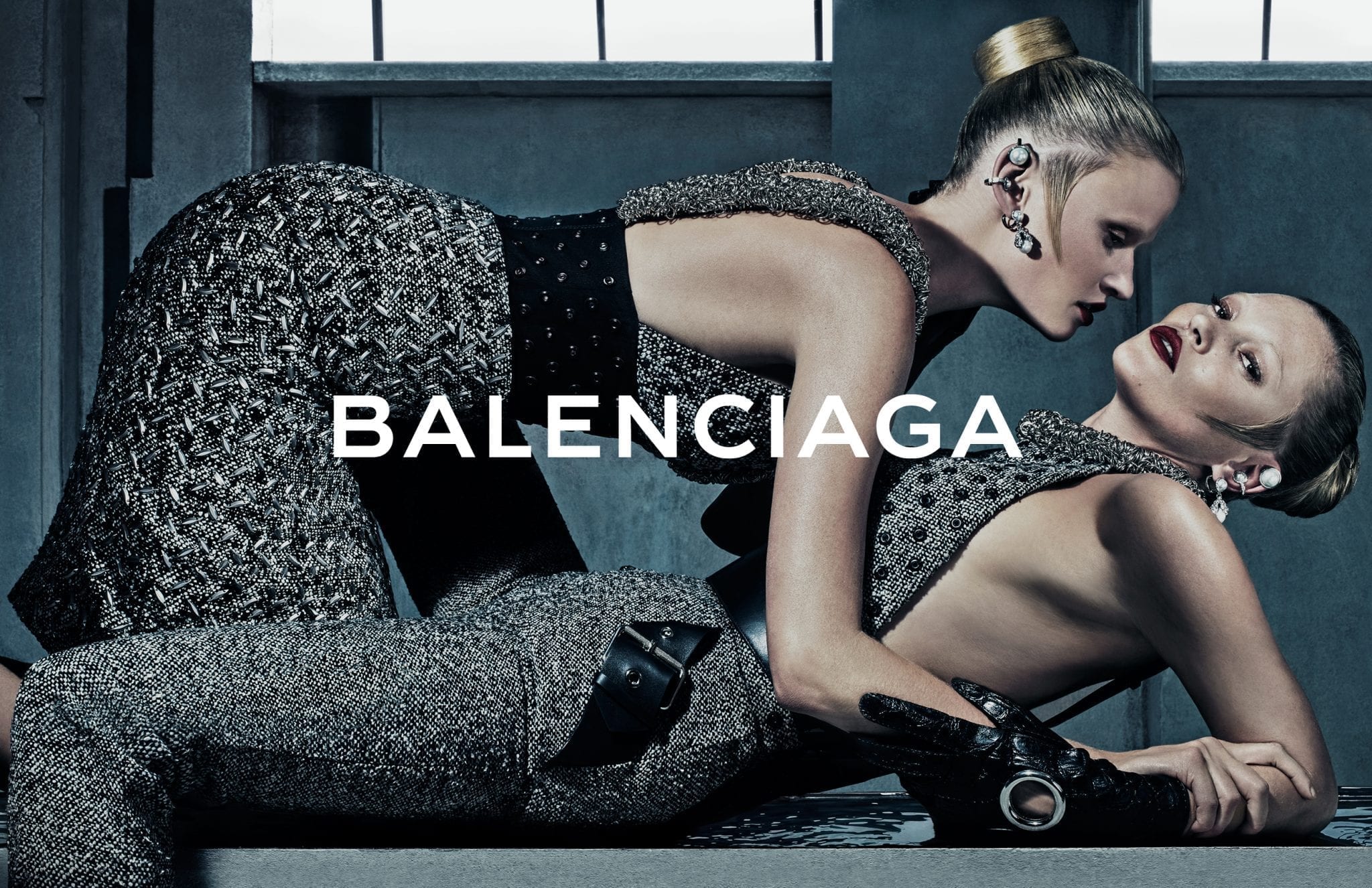
    Balenciaga has overtaken Gucci as the hottest fashion label, according to the latest Lyst Index.

    The index draws on data analysis by fashion-search platform Lyst in conjunction with the Business of Fashion website. The 4.5 million data points analysed include sales, searches and consumer perceptions of 5 million products and 12,000 brands.

    Its result is despite Louis Vuitton, Hermes and Gucci being named best fashion brands globally just last month by Interbrand consultancy.

    Ranking the world’s hottest brands and top-selling products, the Lyst Index ranked Gucci first in this year’s second quarter, followed by Kanye West’s Yeezy and Balenciaga. However, the Spanish fashion brand continued to rise, displacing Gucci in the third quarter, with Virgil Abloh’s Off-White rising to third – a jump of 31 places in three months.

    Lyst says Balenciaga’s rise was because of a new logo and the Colette residency in Paris keeping the brand top of mind “while Demna Gvasalia continues to design products that drive the fashion narrative online”.

    Additionally, the platform praised Gucci for being a “consistent performer”, reports High Snobiety.
    Rounding out the top 10 are Vetements, Givenchy, Valentino then Saint Laurent, while Stone Island leaped from 41st to eighth, followed by Moncler (previously 20th) and finally Raf Simons (previously 21st).

    Lyst Index also looked at the most influential rappers in fashion for the quarter, listing (in order) Kanye West, Nicki Minaj, Pharrell Williams, Cardi B, Drake and A$AP Rocky.

  • Gucci bans fur

    Gucci bans fur

    Italy’s Gucci will stop using fur in its designs from next year, joining a growing number of fashion houses looking at alternatives after coming under pressure from animal rights activists and changing consumer tastes.

    Gucci, part of Paris-based luxury group Kering, has paraded models down the catwalk in luxurious fur coats in the past and creative director Alessandro Michele brought in loafers and sling-backs lined with kangaroo-fur two years ago.

    But the brand said it would now join an alliance of fur-free companies, adding it would sell off remaining accessories and clothing made with animal fur in a charity auction.

    Gucci has sold some of its mink fur coats for over $US40,000 ($A51,000).

    Marco Bizzarri, Gucci’s chief executive, said the brand would drop fur starting from its spring and summer 2018 collection and that its new approach had been agreed on with Michele.

    Gucci has enjoyed a revival under Michele, whose flamboyant, colourful designs have fuelled sales over the past two years.

    Animal rights campaigners said they hoped the move by the Italian fashion house could have a knock-on effect, although it is far from the first label to stop using fur.

    “Gucci’s decision will radically change the future of fashion,” said Simone Pavesi, manager of animal-free fashion at Italian campaign group LAV.

    “As fashion becomes more and more ethical, supply chains that revolve around animals will be a thing of the past.”

    In June, Yoox Net-A-Porter, a multi-brand online luxury retailer, adopted a fur-free policy on accessories and clothing sold on the site.

    Italy’s Giorgio Armani last year committed to stop using fur, saying technological progress meant there was no longer any justification for cruelty to animals, while US brand Calvin Klein took the plunge in 1994.

  • Gucci reopens Pavilion Kuala Lumpur store

    Gucci reopens Pavilion Kuala Lumpur store

    Gucci Pavilion KL has reopened in Kuala Lumpur, after the Italian label closed its Malaysian flagship to be redesigned in the taste of current creative director Alessandro Michele.

    Located on the second and third floor at Pavilion Kuala Lumpur, the refurbished store is the first in Malaysia to feature the creative director’s new design concept.

    Within the two-storey boutique, customers are privy to illustrious fabrics, geometric prints, and mosaic marble floors, as well as wooden panelled walls –set against a rich burgundy colour palette throughout.

    The stairway is flushed with dark red velvet and room-enlarging mirrors, while the store façade is a Greco-Roman marble stone in grey, with the ‘Gucci’ stamped in metallic silver over the entrance.

    The Gucci Pavilion KL store stocks the latest ready-to-wear, footwear, bags, accessories and fragrances for men and women.

    The high-end fashion house has been improving its retail operations in Asia in recent months.

    In June, Gucci unveiled its China-dedicated e-commerce website, gucci.cn, created to “allow consumers a better access to Gucci products, without the limitations imposed by store location or opening hours.”

    Gucci opened its first Alessandro Michele-designed store in Japan in Tokyo last December.

  • Gucci Decor line to feature Richard Ginori porcelain

    Gucci Decor line to feature Richard Ginori porcelain

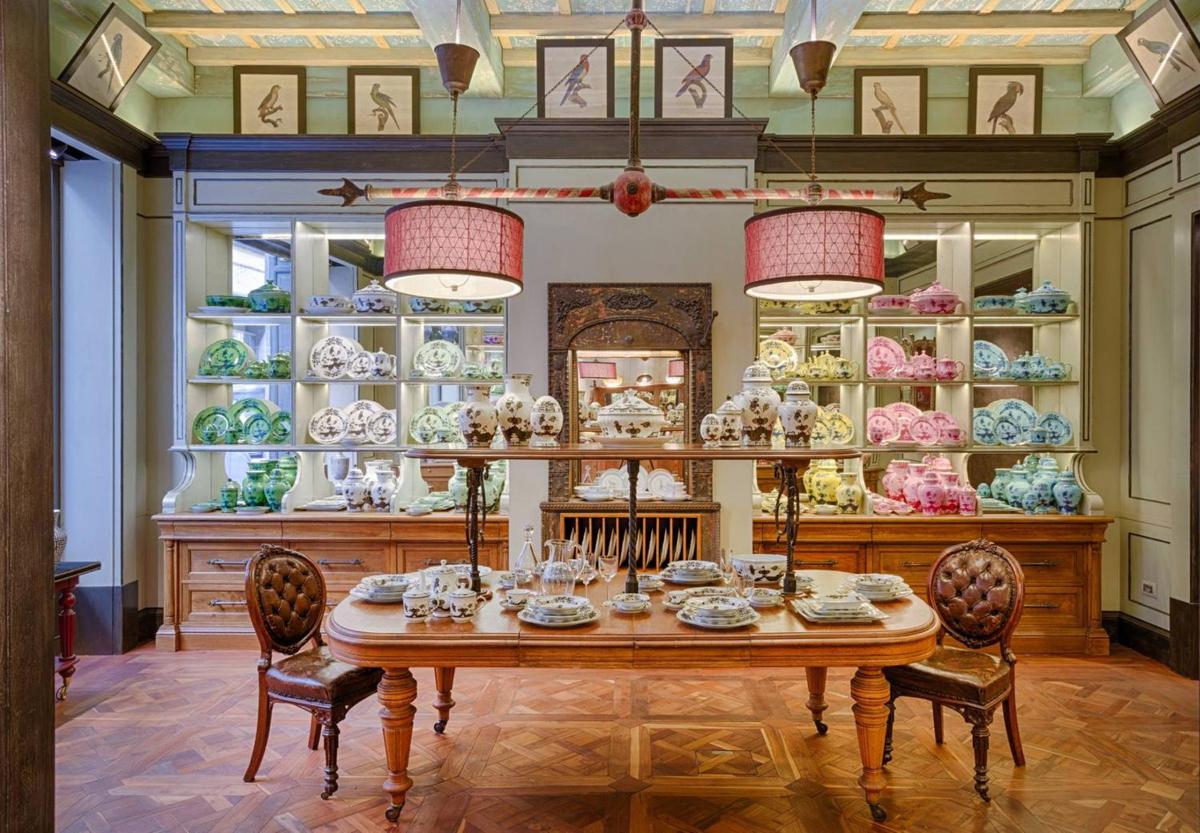
    A new Gucci Decor line to be launched in September will feature tableware and candle holders by Gucci-owned heritage porcelain brand Richard Ginori, upholstered dining chairs, metal trays and folding tables, folding screens and decorative cushions.

    Working with Florentine porcelain specialist Richard Ginori, founded in 1735, Gucci creative director Alessandro Michele has designed a range of patterned crockery featuring a green-and-white herbarium decoration. There are also idiosyncratic candle holders with Gucci patterns, such as geometric chevrons and the talismanic “eye” design. Animals from the Gucci Garden – bees, butterflies and cockerel heads – are rendered in porcelain in 3D topping the lids of pots. Small incense holders feature 3D stag beetles, and bees support incense sticks.

    The collection includes scents in the form of candles and incense: Inventum (ancient damask rose blended with Taif rose), Fumus (birch, orange leaves and beeswax), Herbosum (tomato leaves, aromatic plants, long grass, basil and lemongrass) and Esotericum (Seville oranges, jasmine, leather and salt).

    Gucci Decor will have a progressive global roll-out in Gucci flagship stores, online and at selected specialty stores. Prices start from $194 for a candle, rising to $29,760 for a screen.

  • Gucci launches China e-tail site

    Gucci launches China e-tail site

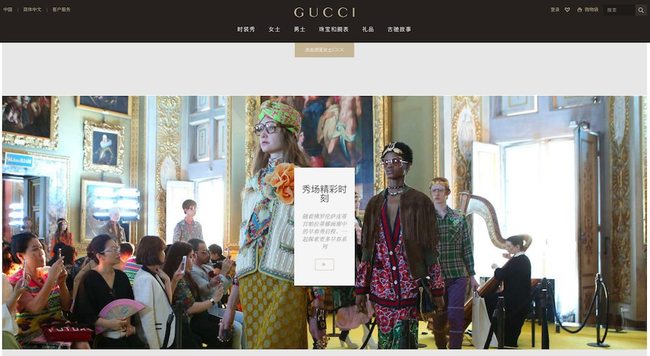
    Gucci has launched gucci.cn, its e-tail site for the Chinese market. In the words of the Italian luxury label, it will be Gucci’s only official Chinese website, created to “allow consumers a better access to Gucci products, without the limitations imposed by store location or opening hours. To optimise service speed, goods are shipped from local warehouses, and each transaction is assisted by a China-based customer service team, via live chat or phone.” In addition, payments on gucci.cn can be made using popular providers such as Alipay and WeChat.

    Content-wise, the site offers a wealth of images and a narrative with a strong visual impact, culminating in the ‘Stories’ section, which takes an in-depth look at  the sources of inspiration which influenced Creative Director Alessandro Michele’s collections, offering an exclusive glimpse of the designer’s own world.

    “Combining editorial content with commercial features – said Gucci – is an approach which has already proved effective in North America, Europe, the UAEs and Australia, where the new website was launched back in 2015.”

    As of today, Gucci’s e-tail sites are active in the USA, Japan, South Korea, Australia, Canada, the UK, Italy, Ireland, France, Germany, Spain, Portugal, Switzerland, the Netherlands, Austria, Belgium, Sweden, Norway, Denmark, Finland, the Czech Republic, Poland, Hungary, Romania, Bulgaria, Slovenia, Turkey and the UAEs.

  • Central Embassy Open House opens

    Central Embassy Open House opens

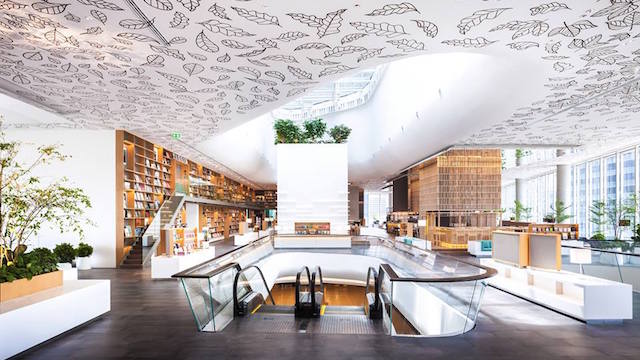
    Bangkok luxury mall Central Embassy has unveiled a new space, Open House, where customers can eat, work, study or just relax – even take a nap.

    Central Embassy Open House 1

    Covering the entire top floor, Central Embassy Open House offers 7000 sqm of open-concept “co-living space” beneath high ceilings, with glass panels all around offering city views.

    Central Embassy Open House 6

    As well as a “co-working space”, Open House offers a restaurant, lounge, bar, bookshop, art gallery, design shop and children’s playground, nestled against the Embassy Diplomat Screens cinema.

    Central Embassy Open House 5

    “It took almost two years to complete this project,” says Central Embassy MD Barom Bhicharnchitr. “Accessible luxury is the key, but luxury is not about price – it’s mostly about quality of life.”

    Central Embassy Open House 2

    Central Group launched the THB18-billion (US$523.1 million) Embassy in 2014 on part of the former British Embassy site and Wireless and Ploenchit Roads. Its curving 200m facade advertises such brands as Gucci, Prada and Ralph Lauren, while ticket prices in its VIP cinema top THB1000.

    Central Embassy Open House 3

  • MyTheresa.com takes aim at Korea

    MyTheresa.com takes aim at Korea

    European luxury online retailer MyTheresa.com is launching a Korean-language site.

    Selling luxury womenswear and accessories from such brands as Chloe, Gucci, Miu Miu and Stella McCartney, the e-tailer says it has seen “huge growth potential” in South Korea.

    “The Korean luxury market is moving quickly to digital. Ever since our first activities in Korea we have seen a massive consumer shift to digital and a triple-digit growth in the market,” says MyTheresa.com president Michael Kliger.

    The online fashion destination’s Korean website will offer free exchanges and returns within 30 days, including a free collection service, as well 72-hour deliveries. It aims to offer a more personalised service with a Korean-speaking customer care team.

    Korean customers will be able to pay in euros if using American Express, MasterCard or Visa.

    Launched in 2006, MyTheresa.com was acquired by American company Neiman Marcus Group in 2014. The German multi-brand retailer delivers to more than 120 countries with websites available in Arabic, Chinese, English, French, German and Italian.

  • Retail woes a boost for Hong Kong indie fashion

    Retail woes a boost for Hong Kong indie fashion

    High-end international brands have long held court alongside local Hong Kong indie fashion designers – who are now enjoying greater visibility in the city’s vibrant retail market.

    The city’s deep-rooted love of luxury has seen names like Gucci and Hermes open multiple stores in the city – stores that have co-existed with a stable of local apparel brands, such as Giordano, Baleno, Bossini and Esprit.

    By 2014, consumers’ tastes had diversified and fast-fashion overseas brands began descending on Hong Kong. The arrival of names like Topshop, American Eagle, H&M, Zara and Mango added yet more to the mix in Asia’s favourite shopping destination. Now that shop rents are finally becoming more affordable, independent fashion retailers are increasingly making their presence felt.

    Structural change

    In a report by commercial real estate firm CBRE, Joe Lin, executive director, retail services at CBRE Hong Kong, said that the city is undergoing a period of structural change.

    “Over the previous decade, high-street shop landlords have reaped the benefits of strong demand from luxury retailers and massive rental growth.”

    Lin noted that in the past 12 months, luxury retailers have adjusted their leasing strategies to save costs. “Landlords have become more realistic on rental negotiations, enabling more mid-range brands to tap into prime locations at relatively affordable rental levels.”

    The trend has opened the door for mid-market brands to expand, and for the rise of independent labels.

    “More independent stores are coming back to the market, streets, malls, and even some up-and-coming revitalised buildings in the traditional industrial districts, such as Lai Chi Kok and Kwun Tong,” said Lin. “They modernise the decoration and with the decent F&B outlets that draw good foot-traffic to these areas, independent retailers also benefit from this new trend.”

    Refined taste

    British fashion designer Elizabeth Lau established The Refinery in 2014 after moving to Hong Kong with her husband. Lau said she saw an opportunity to “curate for individuals” in Hong Kong by introducing unique fashion, accessories and lifestyle brands from around the world.

    Her first store, at the creative and design hub PMQ in Central, found a steady following, and in January 2016, The Refinery opened a second retail outlet in Tai Koo.

    Fashion edit

    Partners in fashion Genevieve Chew and Jacqueline Chak, an accountant and architect respectively, launched Edit in Central in 2012 as a concept store stocking emerging brands. They later created their own in-house label, which is described as “one part eclectic femininity and the other relaxed ease.” Their collections are worn by fashion personalities such as Yasmin Sewell, Margaret Zhang and Amanda Strang. The partners have also designed uniforms for Hong Kong’s new boutique Tribute Hotel in Kowloon.

    Fé Valvekens is another career-change entrepreneur who found her fashion foothold in Hong Kong. German-born Valvekens is a qualified engineer who founded fashion label A Day with Fé, blending daywear with yoga wear. Her PMQ store in Central also holds yoga and fashion styling workshops

    Quality indie labels

    Building on her established career in fashion, US expat Jamie Dredge co-founded Polkadot Boutique on Hollywood Road, Central, in 2011. After moving to Hong Kong two years earlier, Dredge spotted a gap between high-end luxury designers and mass-market clothing in Hong Kong.

    Her idea was to offer quality, well-designed womenswear and accessories from indie labels in the US, as well as supporting upcoming local designers.

    “We still have our local-based designers, but are also working with hot new labels out of Los Angeles and New York,” she said. Examples include Yumi Kim and Blank NYC Denim from New York, Veronica M from Los Angeles, and Hong Kong’s What the Frock?!.

    Being an independent retailer in Hong Kong has its challenges, said Dredge. Rents remain high, especially for smaller operators who don’t have the negotiating leverage of a famous brand. The demise of free print lifestyle magazine HK Magazine, which folded last year after 25 years, closed one door for independents to build a profile – and paid advertising is expensive.

    “We now have to work harder on our social media channels – and be more creative in our promotions,” Dredge said.

    On the other hand, word-of-mouth networking is an advantage in a city as close knit as Hong Kong.

    Pop-ups and collaborations

    One of Polkadot’s strategies is to host events where customers can meet the designers for a social night out, which might involve hair and makeup as well as fashion. One of the “biggest perks of Hong Kong” is the willingness of businesses to collaborate with each other, Dredge said.

    “Hong Kong is great for doing pop-up events and collaborations, which get the customers involved,” she said.

    It also illustrates how a physical boutique can still be successful, despite the challenges of online shopping.

    “People still like to feel the clothes, to try them on, to talk to the designer,” she said.

    “A lot of our garments are unique, and many of them exclusive. Our customers aren’t walking around seeing other people dressed the same, and that’s why they come to us.”

    -HKTDC