Retail News CRM

Tag: hotel

  • Kuala Lumpur’s The Starhill reopens after major refit

    Kuala Lumpur’s The Starhill reopens after major refit

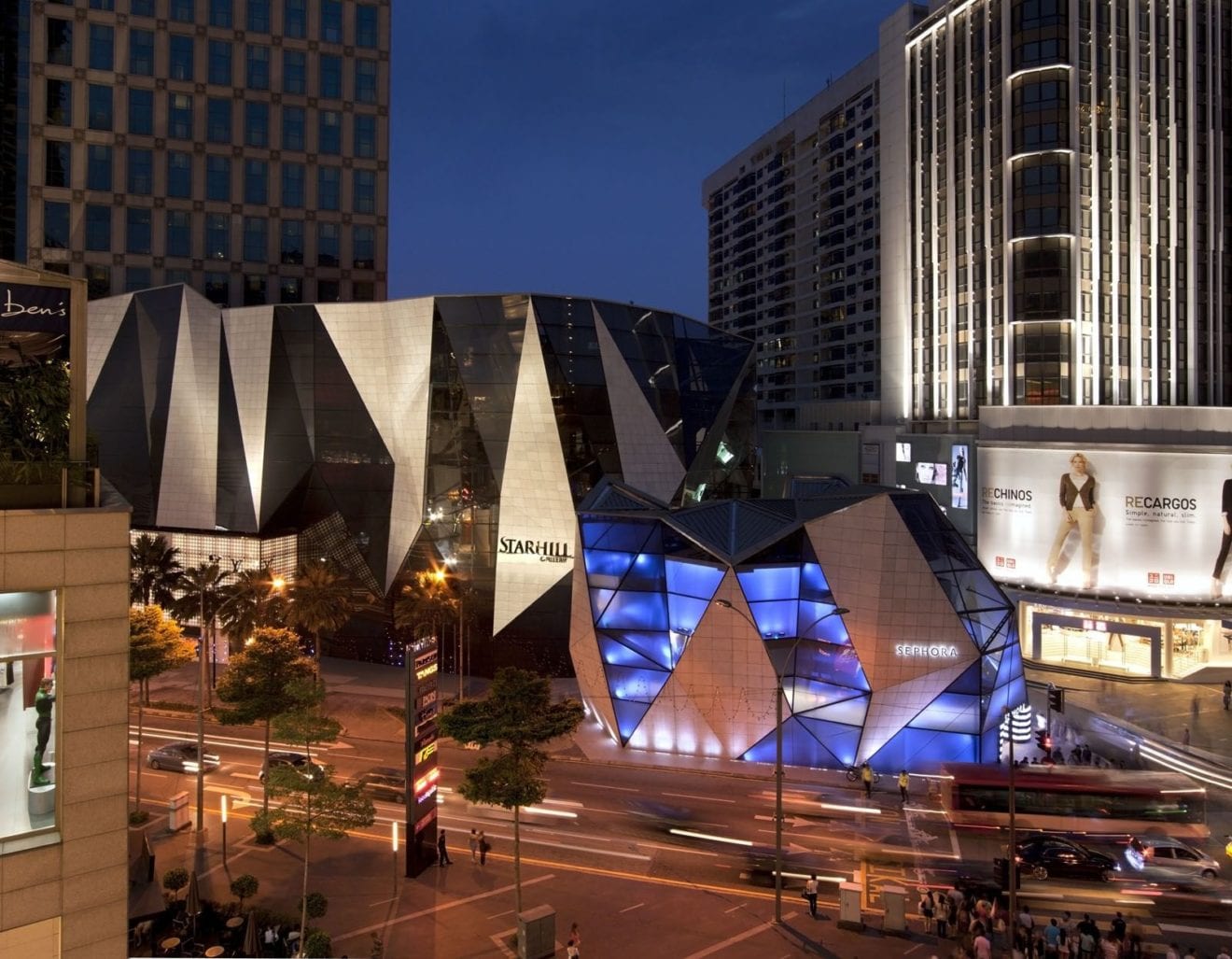
    Kuala Lumpur’s luxury shopping centre The Starhill has unveiled its new look, after a two-year transformation announced in 2019.

    Integrating hospitality into the retail experience, the shopping centre in Kuala Lumpur’s Bukit Bintang retail district has been repositioned as the “Home of the Tastemakers” where customers can shop and stay in a sophisticated home-like setting that offers experiential retail in a cosy, intimate boutique atmosphere.

    The new extension is linked with the lower retail area in one vertical seven-floor construction, featuring four floors of experiential retail space and three floors housing 162 hotel rooms under the JW Marriott Kuala Lumpur. More than 1100 rooms are connected to The Starhill by combining JW Marriott Kuala Lumpur and The Ritz-Carlton, Kuala Lumpur.

    “Our focus is to offer a holistic experience that goes beyond retail and dining, encapsulated in an intimate space with a sense of familiarity where patrons can escape from the hustle and bustle of the city,” said Joseph Yeoh, VP of YTL Land & Development.

    “This reinforces The Starhill as the place to be in Bukit Bintang, especially following the unveiling of Taiwanese bookstore Eslite Spectrum after a two-year journey setting up this creative art and cultural destination.”

    Defying the conventional mall developer’s mentality of ‘more is better,’ The Starhill is boutique-sized at 28,000sqm of retail space, of which more than 92 per cent is already tenanted, with 30 per cent taken up by food and beverage enterprises.

    The Starhill is home to local brands including Apollo Wellness Centre, Biologique Recherche and Opera Cafe, and international labels such as Paul & Shark, Philipp Plein, Roberto Coin, Shiatzy Chen, Stefano Ricci and Tom Ford.

    The Eslite flagship, the first in Southeast Asia, opened at The Starhill last week.

    Eslite Spectrum Kuala Lumpur, which occupies the entire 6500sqm of Level 1, offers a variety of books in addition to handmade goods and lifestyle brands. With more than 40 locations in Taiwan, including one open 24 hours, and branches in Hong Kong, China, and Japan, Eslite is of the largest retail book chains in Asia.


  • Hong Kong will be ending hotel quarantine on Sep 26

    Hong Kong will be ending hotel quarantine on Sep 26

    It’s a breath of fresh air – almost literally, just in time for our end-of-year travels. While Japan has just announced that visa-free entry will soon open for individual travellers, Hong Kong will end its once-mandatory hotel quarantine from September 26 (next Monday) onwards.

    Now, instead of having to spend three days in a self-paid hotel, you will need to go through a polymerase chain reaction (PCR) test upon arrival. You can then happily head off home or go to a hotel of your choice, but just remember to self-monitor for three days after. This also means that you won’t be able to pop by your local bar or favourite restaurants for the same time period. Hong Kong terms this as the “0+3” scheme.

    There’s now also no longer a need to show proof for a pre-flight PCR test before flying to Hong Kong – instead, it’s been replaced with the more affordable Antigen Rapid Test (ART).

  • The Ritz-Carlton Residences to arrive in Hanoi

    The Ritz-Carlton Residences to arrive in Hanoi

    The first Ritz-Carlton branded residences in Vietnam is set to open in late 2023. Masterise Homes and Marriot International on May 10 announced the signing of an agreement for The Ritz-Carlton Residences, Hanoi, a standalone luxury branded residential project that marks the debut of the Ritz-Carlton brand in Vietnam, slated to open in late 2023.

    The Residences at the Grand, Hanoi will be situated in the heart of the prestigious Hoan Kiem District, along popular Hang Bai Road and near Hoan Kiem Lake, one of the city’s most beloved landmarks. The anticipated 104-unit branded residences will feature one-bedroom Premier, two-bedroom Classic, and three-bedroom Presidential suites, to suit each resident’s needs and preferences.

    The project features award-winning architects, designers, and project management consultants. Once complete, the residences will be the country’s first Ritz-Carlton Residences and the fifth in Asia Pacific following Singapore, Bangkok (Thailand), Colombo (Sri Lanka), and Kuala Lumpur (Malaysia). The agreement leverages the long-term strategic partnership between Masterise Homes and Marriott International, combining the expertise of a pioneer in luxury real estate products and services in Vietnam and the global hotel management company, owner of the Ritz-Carlton brand.

    Jason Turnbull, deputy managing director cum CFO Masters Homes, commented: “The Ritz-Carlton Residences, Hanoi at The Grand is an ultra-luxury development set to offer an enduring legacy for residents and expected to be a masterpiece that matches the beauty of the facade’s classical architecture and modern design combined with the legendary service of The Ritz-Carlton. This project expects to change how we look at ultra-luxury living and elevate Vietnam’s position on the global real-estate map.”

    In line with the long-standing tradition of service excellence synonymous with The Ritz-Carlton brand, homeowners will be able to enjoy world-class amenities complemented by the legendary service from the Ladies and Gentlemen of The Residences. Its prominent location offers the best of the city within close proximity and allows residents to enjoy the vibrancy of Hanoi’s Old Quarter streets, and return to the comfort and privacy of their residences in mere minutes.

    “We are thrilled to continue working with Masterise Homes to amplify our luxury presence in Vietnam with the signing of The Ritz-Carlton Residences in Hanoi – embracing the growing demands for branded living in this burgeoning cosmopolitan city,” said Rajeev Menon, president, Asia Pacific (excluding China), Marriott International.

    “Vietnam is a dynamic market and we look forward to bringing the brand’s refined style and legendary services to residents in Vietnam.”

    The Residences at The Grand, Hanoi is the second Marriott branded residences in Vietnam, following the milestone dual- branded Grand Marina, Saigon announced earlier this year, which operates under two brands within the Marriot Bonvoy portfolio – JW Marriott and Marriott Hotels.

    The Ritz-Carlton Hotel Company, L.L.C., of Chevy Chase, MD., part of Marriott International, Inc., currently operates more than 100 hotels and over 45 residential properties in 30 countries and territories. With 100 years of history, an unshakeable credo and corporate philosophy of un-wavering commitment to service, both in their hotels and in our communities, The Ritz-Carlton has been recognized with numerous awards for being the gold standard of hospitality.

    Masterise Homes, a member of Masterise Group, is a pioneer in bringing world-class excellence to the development, operations, and management of luxury real estate products and services, in the Vietnamese market and beyond. With a one-of-a-kind portfolio comprising the largest Branded Residences in South East Asia, Masterise Homes demonstrates world-class capabilities via a strategic partnership with Marriott International, the largest hotel brand in the world featuring the iconic brands of Marriott, JW Marriott and Ritz-Carlton.

  • HCMC hotel occupancy hits record low

    HCMC hotel occupancy hits record low

    HCMC’s average hotel occupancy rates dropped 54 percentage points year-on-year to 20 percent last year as Covid-19 travel restrictions hit foreign arrivals, a report says.

    Over 3,600 hotel rooms were closed last year as the number of foreign tourist arrivals plunged 85 percent year-on-year to 1.3 million, according to real estate consultancy Savills.

    Average room rates fell 29 percent year-on-year to $61 per night, the report said. Total supply fell 5 percent year-on-year to 15,200 rooms in 111 hotels.

    The development of Covid-19 vaccines will help the industry improve over the next two years and it is expected to make a full recovery by 2024, the report said.

    Vietnam halted all international flights from March 25 in an unprecedented move to stem the spread of the novel coronavirus.

  • Thai occupancy rates holding up despite Covid-19 crunch

    Thai occupancy rates holding up despite Covid-19 crunch

    Thailand’s Accommodation Occupancy Rate (AOR): Whole Kingdom data was reported at 30.400 % in Oct 2020. This records an increase from the previous number of 27.930 % for Sep 2020. Thailand’s Accommodation Occupancy Rate (AOR): Whole Kingdom data is updated monthly, averaging 66.030 % from Jan 2015 to Oct 2020, with 70 observations. The data reached an all-time high of 81.260 % in Jan 2019 and a record low of 2.260 % in Apr 2020.

    Thailand’s Accommodation Occupancy Rate (AOR): Whole Kingdom data remains active status in CEIC and is reported by Bank of Thailand. The data is categorized under Global Database’s Thailand – Table TH.Q004: Hotel Occupancy Rate and Average Room Rate (Monthly).

  • HCMC real estate business group wants Airbnb-like services legalized

    HCMC real estate business group wants Airbnb-like services legalized

    The Ho Chi Minh City Real Estate Association has called for regulating accommodation-sharing services like Airbnb for better management and taxation.

    Such services have become popular in Vietnam in recent years as they help meet the large demand for low-cost accommodation from tourists and fetch homeowners an income from spare apartments and rooms, it said in a report

    HoREA pointed out that since this kind of business is still not regulated authorities are losing an opportunity to collect taxes and having difficulty managing it.

    There have even been cases of people using accommodation provided by such websites for criminal activities, it said.

    It called for modifying the law to allow homeowners to rent them as long as they register the business and pay taxes.

    There were 40,000 Airbnb listings in the country in January this year compared to 1,000 in 2015, according to tourism development consulting firm Outbox Consulting.

    HoREA also wanted restrictions on the number of days homeowners could rent out in a year and apartment management fees to be increased since it increases management work.

    The number of Airbnb units in Ho Chi Minh City as of the last quarter was 13,200, down 37 percent year-on-year due to the Covid-19 pandemic, according to data from market research firm AirDNA.

    In Hanoi, the figure was down 27 percent to 10,600.

  • Agoda axes staff as Covid-19 virus outbreak decimates bookings

    Agoda axes staff as Covid-19 virus outbreak decimates bookings

    Asian online travel agency and metasearch engine Agoda has shed 1500 staff in a major downsizing brought on by the impact of the coronavirus pandemic.

    The cuts equate to more than a third of the company’s regional payroll believed to be 4000.

    The move is a “last resort”, according to CEO John Brown, who has personally pledged to waive his own salary for the rest of the year while the travel industry plummets globally. Another senior staff has also faced 20-per-cent cuts in salaries.

    “Before getting to this decision we took aggressive measures and every opportunity to reduce costs across the business,” said Brown. “Staff reductions will always be the last resort, but we have had to make this very difficult decision. The truth is that while we are seeing some signs of recovery in our core markets in Asia-Pacific, the impact of Covid-19 on the travel industry is deeper and will be more prolonged than we could have envisaged.”

    The announcement was made during a virtual town hall with employees this week and formalized in an email to all staff.

    According to Brown, most staff cuts are in the firm’s customer experience group, as well as in product, IT, finance, partner services, marketing, and the Rocketmiles program. The CEO said this will be the first and last cut in staff.

  • Centara Hotels & Resorts makes food donation to the Thai Government’s Public Relations Department

    Centara Hotels & Resorts makes food donation to the Thai Government’s Public Relations Department

    Centara Hotels & Resorts, Thailand’s leading hotel operator, recently donated 1,500 food boxes to the Thai Government’s Public Relations Department, as part of its ongoing efforts to help those communities and individuals most affected by the COVID-19 pandemic. The meals, which were prepared by a team of food and beverage staff at Centara’s flagship, Centara Grand at CentralWorld, were presented by General Manager of the hotel, Robert Maurer-Loeffler, to the Deputy Director-General of the Government Public Relations Department, Pichaya Muangnao. The meals were distributed to people impacted by COVID-19 and others needing assistance.

    The COVID-19 pandemic is causing hardship for communities all across Thailand, and Centara is committed to providing help wherever we can. We hope our meal box donation to the Government Public Relations Department will bring some immediate relief to Thai people and those in need.

    Centara recently launched Help the Heroes, an initiative designed to directly benefit health workers and vulnerable communities impacted by COVID-19. When a consumer buys a Centara cash voucher for a future escape, Centara will add a further 50% value to the purchase. Half will go to the buyer, with the value of the voucher being increased by 25% to help them get more out of their next adventure, when it is safe to travel again.

    And the other 25% will be made as a donation to those in need, with the customer able to choose which of the two charities Centara donates to. The company is also providing complimentary hotel accommodation and meals to healthcare workers, with Centara Grand at CentralWorld providing hotel rooms for medical staff from the Police General Hospital so that they can save travelling time and return to work as refreshed and recharged as possible.

  • South Korean love hotels business booming and expanding

    South Korean love hotels business booming and expanding

    Yanolja’s gentrification of South Korean love hotels has brought the company a valuation of more than $1 billion from investors keen to capitalise on the globalisation of a novel approach to short-stay accommodation, its chief executive told Reuters.

    The budget hotel and online booking platform operator reached the valuation having secured $180 million from US peer Booking Holdings Inc and Singapore sovereign wealth fund GIC Pte Ltd, Yanolja confirmed on Tuesday.

    It aims to conduct an initial public offering (IPO) as early as next year, CEO Kim Jong-yoon said in an earlier interview.

    “I can proudly say we transformed the industry,” he said.

    Yanolja’s emergence coincides with a time of flux among hoteliers, as legislators are at loggerheads with market disruptors such as Airbnb Inc – through which private home owners can let rooms for short-term stay – while a government campaign to reduce working hours promises to free up more leisure time for short breaks.

    Love hotels have occupied a peculiar space in the broader market, offering privacy for as little as a few hours at minimal cost for, for instance, young couples living with their parents.

    Popular association with extramarital affairs, prostitution and hidden cameras, however, has sullied their reputation, exacerbated by their often garish decor and low-key lighting.

    Yanolja – meaning “Hey, let’s play” – sought to dispel any stigma with its bright, modern franchised love hotels, targeting millennial couples but also budget tourists seeking short-term accommodation.

    “Previously, many people were not able to go to love hotels out of embarrassment,” Kim said. “But we’ve drawn in guests even for travel. That’s the biggest change.”

    The firm, which began as an online search portal for love hotels, also lists hotel, pension and guest house rooms on its website at prices ranging from 50,000 won ($41.86) a night at budget hotel Ben-Hur to 200,000 won at five-star Hyatt.

    It has entered a strategic partnership with Booking whereby the latter’s Agoda brand can list Yanolja accommodation, while Yanolja customers will be able to book worldwide through Agoda and other Booking brands, Yanolja said in a Tuesday statement.

    Booking and GIC were not immediately available for comment.

    “It’s a unique example which breaks away from the traditional notion of love hotels,” said tourism professor Lee Hoon at Hanyang University in Seoul.

    “But the domestic market is not big enough. Yanolja can survive only if it goes global and scales up,” Lee said.

    Yanolja aims to expand in hotels in Southeast Asia where it invested $15 million in ZEN Rooms last year, bringing it into competition with Indian budget hotel operator Oyo, backed by Airbnb and Japan’s SoftBank Group Corp.

    “We are very keen to go global,” said Kim.

    Yanolja was founded in 2005 by former love hotel housekeeper and valet Lee Su-jin, whose search portal evolved into an advertising platform for love hotel operators seeking to replace customers lost after the 2004 passing of an anti-prostitution law.

    A decade later, Yanolja claimed to be the first company to offer a reservation platform for mobile phones for its own and others’ love hotels, a major shift in an industry which relied on walk-in customers.

    The platform allowed it to expand its target guests to shoe-string travellers from home and abroad, in a country where Airbnb-type options are limited to foreign guests. Listings later ballooned as hoteliers turned to Yanolja to fill rooms after a political dispute caused a drop in Chinese demand.

    South Korea’s online travel sales nearly doubled in five years through 2018 to $21.8 billion, showed Euromonitor data provided to Reuters. Sales by mobile made up nearly half of the total, the third-biggest proportion globally, Euromonitor said.

    Yanolja’s revenue nearly doubled to 188.5 billion won last year, from a year earlier, but the firm is still losing money on a consolidated basis, said CEO Kim. It aims to sell shares in an IPO by 2022 at the latest, he said.

    Yanolja plans to increase offerings and raise efficiency through technology such as artificial intelligence and the internet of things, in a hotel industry Kim deemed conservative.

  • First 5G smart hotel launched in China

    First 5G smart hotel launched in China

    InterContinental Shenzhen, Shenzhen Telecom Engineering and Huawei have signed a strategic cooperation agreement to create the world’s first 5G smart hotel.

    By introducing the hotel industry’s first end-to-end 5G network with integrated terminals and cloud applications, the project will enable InterContinental Shenzhen to provide guests with an innovative luxury experience and open the door for digital transformation of entire hotel industry through 5G technology.

    Shenzhen Telecom is deploying Huawei’s 5G network equipment in the InterContinental Shenzhen to achieve continuous indoor and outdoor 5G coverage, which will serve as the platform for a new generation of hotel services.

    Guests will experience 5G hotel applications through 5G smartphones and customer-premises equipment (CPE) terminals, including 5G welcome robots, 5G cloud computing terminals, 5G cloud games and 5G cloud virtual reality (VR) rowing machines.

    For the project’s kick-off ceremony, Shenzhen Telecom and Huawei jointly deployed a 5G Digital Indoor System on the hotel’s first floor and in the presidential suites.

    In the hotel lobby, guests can access the 5G network through CPEs or their smartphones to experience high speed 5G downloads and uploads. Service efficiency is improved with 5G intelligent robots that provide services including guest information, destination guidance, and delivery.

    The presidential suites covered by the new network provide guests with 5G hotel services such as cloud VR rowing machines, cloud games and 4K movies.

    Dr. Peter Zhou, chief marketing officer of Huawei Wireless Solution, said: “5G is here – from the 4K ultra high-definition live broadcast of CCTV’s Spring Festival Gala early this year to today’s 5G entertainment and business transformation of the InterContinental Shenzhen’s presidential suites, 5G technology has penetrated into different industries.”

  • Online reviews are terrible and useless

    Online reviews are terrible and useless

    Online reviews sound good in theory. In practice, however, they don’t work so well. Reviews were initially important as proxies of trust for e-commerce businesses, but they have now well and truly spilled over to bricks-and-mortar businesses, where the weakness of the review system is being amplified as some consumers have figured out how to weaponize it.

    The general idea is that users provide their personal and honest feedback and other users are able to make more informed choices (like avoiding scammers). Even the business owner can use “learnings” to improve the business.

    It just doesn’t work.

    Amazon is plagued by fake reviews and trolls. In the book space, for instance, small groups and even bots target specific authors over spurious disagreements the trolls may have, and downvote their books accordingly so that they never appear in algorithmically-driven searches.

    On AirBnB and Uber, providers and users review each other. Another great idea, but in practice, since no one can afford to be given a 1-star review (the host wouldn’t get guests and the guest wouldn’t get accommodation) – the unspoken rule is that everyone gives each other 5-star reviews all the time. A 4-star review should set alarm bells ringing.

    Reviews are not a fair representation of the business, because reviewers have suspect motives, are unqualified, unreliable and the process is flawed and without proper context.

    The problem with online reviews

    Here are just a few of the drawbacks with online reviews, as they currently exist:

    • The motive of the reviewer is not always apparent, and neither is it always pure. Even positive reviews may have little to do with the actual service experience, and people who are motivated to review, often have an axe to grind.

    • Those who prefer not to review products and services are often bombarded by reminder emails until they relent, only to give a less than well-thought-through review long after the fact.

    • You usually only get one side of the story in a review.

    • Most people doing the reviewing have zero insight into the business’s operations, and criticisms and expectations are often unrealistic. Negative reviews are not merely limited to articulating a personal negative experience, but often are about perceptions of staffing levels, time, production, etc.

    • Compulsive reviewers operate under the misguided belief they are helping other consumers, but they are usually on a power trip.

    • Is ANY consumer really equipped to judge and compare Bunnings to McDonald’s?

    • Is the person’s subjective experience actually useful? Does the fact that a person doesn’t like a burger mean no one else will? Or vice versa?

    • A business would need to have thousands of reviews across different times, different experiences and different contexts for the sample to be considered statistically relevant. I suspect the average small business would rarely reach this sample size. Few real world, independent retail businesses boast sufficient reviews, so the results are invariably skewed. It takes more than a hundred or so reviews for the law of averages to apply, but whether a rating is valid or not does not deter the reviewing platform, with most of them showing reviews after a handful has been received.

    • Different people have different standards – what one reviewer considers value for money, another will consider expensive another to cheap. That is, the reviewer does not necessarily reflect the market that the operator seeks to attract.

    • Generally speaking, our culture – and it is amplified in the online space – has a tendency to reward victimhood.

    • It is impossible for different people with different expectations to apply the same standard. Can you have a 5-star experience at a 3-star motel, and is the average punter equipped to make that distinction?

    Any run-of-the mill establishment gets reviewed as well, whether they like it or not. If you want to exist on Google Maps, you get Google Reviews. TripAdvisor has excellent SEO juice, so any business reviews will come up with your own listing at all times. If you want to keep a recent poor review off the top of your results, it will set you back $70 per month to feature a good review instead.

    What now?

    Review results are statistically and psychologically unreliable, but there is no way of avoiding them. They are here to stay, flawed or not.

    Retailers should learn how to play the reviewing game, and the options are to (a) ignore and (b) embrace or (c) fight.

    Our strategy has been:

    1. Avoid channels where the trolls feed in vast numbers (Facebook: reviews disabled; Twitter: no account; Instagram: no account).

    2. On Google and Tripadvisor, respond to every review positive or negative to at least put both sides of the story out there.

    3. Resist seeking positive reviews or attempt to ‘game’ the reviews and don’t display/promote any reviews, even positive ones.

    4. Learn what you can from a review as objectively as possible – in some instances, reviews are simply the old “world of mouth” now made visible and there is a benefit in knowing what is being said.

    In the early days of e-commerce, when consumers were still sceptical, a 5-star review simply meant the product was as advertised and arrived when promised.

    Any scammer who wanted to take money without sending the goods wouldn’t last long. These trust issues are not as prevalent, and there are different mechanisms to root out the bad apples today.

    Businesses – and the delivery of customer experience – are too complex to be reduced to a simple star system or a subjective comment.

    Maybe that is an opportunity for an entrepreneur.

  • Dusit Thani Shares More News about Bangkok Developments

    Dusit Thani Shares More News about Bangkok Developments

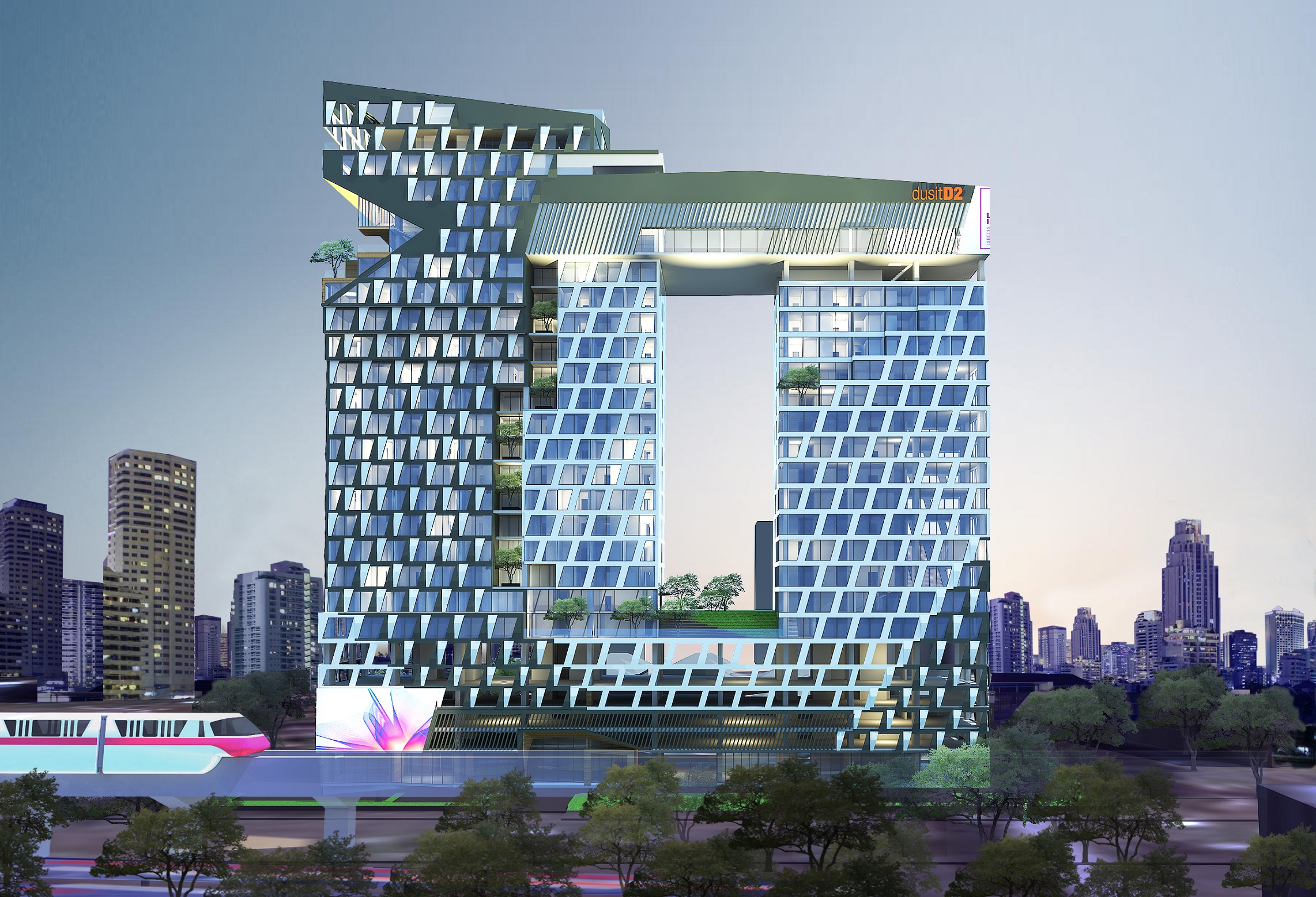
    More details have been revealed about the massive mixed-use development planned for downtown Bangkok on the high-profile site of the former Dusit Thani Hotel.

    Dusit Thani, the Thai hotel and property development company, is partnering with Central Pattana, which owns the Central retail and mall businesses, in the development, located a stone’s throw from the Sala Daeng skytrain station, adjacent to Rama 4 Road and Lumpini Park.

    Scheduled for completion in 2024, the US$1.15 billion development will comprise 440,000sqm of prime real estate, including a new Dusit Thani hotel, luxury residences, a modern office tower and a high-end shopping mall.

    The development will open in three stages, firstly the 39-story hotel building, followed by Central Park Offices, whose 90,000sqm will be fitted out as a technology hub.

    The 80,000sqm mall, to be called Central Park, is designed to interconnect with all elements of the development as well as the skytrain and adjacent underground railway stations. It will feature a rooftop park. Both the offices and mall are scheduled for completion in 2023.

    The final part of the project, a 69-storey residential tower which is divided into two sections – Dusit Residences and Dusit Parkside – will be completed subsequently.

    “We aim to deliver a one-of-a-kind mixed-use project that blends heritage and innovation, connects all important infrastructure and transportation, embraces a green concept reflecting our prime position opposite Lumpini Park, and delivers enduring value for all our stakeholders,” said Suphajee Suthumpun, group CEO of Dusit Thani Public Company.

    “By blending the best of Thai design and hospitality with international standards of service, we will create a new city landmark that reflects our past, embraces our present, and anticipates the future. By doing so, we will continue the legacy of Dusit Thani Bangkok following the same principles Thanpuying Chanut Piyaoui had when she founded the hotel — to be bold and do great things, to create things that never existed before, and to always have a positive impact.”

    Suthumpun said the development aimed to “revolutionise the way people shop, dine, work, live and stay” in the area.

    Wallaya Chirathivat, deputy CEO of Central Pattana said Dusit Central Park will connect four Bangkok neighbourhoods in four directions – Ratchaprasong (north), Charoenkrung (south), Sukhumvit (east), and Yaowarat (west), in doing so creating “a new junction where old meets new, and financial meets commercial”.

  • Tourism Malaysia Collaborates with ShopBack to Incentivise Travellers to Cuti-Cuti Malaysia

    Tourism Malaysia Collaborates with ShopBack to Incentivise Travellers to Cuti-Cuti Malaysia

    Recognising the growth of online travel bookings in Malaysia, Tourism Malaysia recently confirms its support towards the largest Online Travel Fair organised by ShopBack Malaysia from 11th to 17th March 2019, and applauds the company’s efforts in enticing travellers to go around Malaysia with attractive travel bonus and cashback.

    Dato’ Dr. Ammar Abd Ghapar, Senior Director, Domestic & Events Division, Tourism Malaysia says, “This is the third year that Tourism Malaysia is supporting ShopBack Malaysia’s efforts in promoting domestic travels. In the past two years, it has been rolling out a Chief Travel Officer video series to showcase the immense beauty of our land to the public, and this year we are expanding our support towards ShopBack’s Online Travel Fair, the largest e-travel fair in Malaysia which is held in collaboration with its partner merchants including Agoda, Booking.com, Expedia, Malaysia Airlines, BusOnlineTicket, KLOOK, Traveloka, Trip.com, and many more.”

    “The past ShopBack Online Travel Fair achieved 100% year-on-year growth. This is definitely encouraging and together with the continuous efforts from the public sector as well as private e-commerce players, we are confident in growing the industry performance towards the Visit Malaysia 2020 goal,” Dato’ Dr. Ammar says.

    Alvin Gill, Country General Manager of ShopBack Malaysia, expressed that every year, hundreds of thousands of travellers use ShopBack to make travel bookings with Agoda, Booking.com, Expedia, Malaysia Airlines etc. because it saves them more money. “Through a special partnership with all the online travel sites, travellers can get up to 8% cashback on each travel booking. That means if a hotel room cost RM500, a traveller just needs to open the ShopBack web/app, click to our merchant site to make the booking and he/she will get RM40 cashback from us. The booking price is the same, but you will get cashback in your ShopBack account if you use us.”

    “In conjunction with our first Online Travel Fair in 2019, we are also giving away an extra up to RM25 bonus cashback to all travellers who purchase flight, accommodation, and trip packages to any Malaysia destination via our platforms from 11th to 17th March 2019. We are truly honoured to have Tourism Malaysia’s support for this campaign – together we can empower more people to rediscover the food, art, nature and culture in the country and create fond memories with their family and friends here,” Alvin adds.

    The leading cashback site works with a full range of travel sites that covers airlines, bus, rides, accommodations and tour services to offer cashback on top of discounts provided by merchants. Signing up to ShopBack is free. Over 1 million Malaysians are using ShopBack at the moment, and over RM30 million of cashback has been given to local users since 2015.

  • LVMH plans London hotel-retail project

    LVMH plans London hotel-retail project

    Luxury retailer LVMH is harbouring plans to develop a corner of London’s Grafton Street, according to a report on Business of Fashion.

    The development, made in partnership with privately owned property developer O&H, will reportedly include a Cheval Blanc hotel, a restaurant, a spa and a rumoured flagship Celine boutique. The projects are expected to be complete by the third quarter of 2022.

    The news follows the group’s acquisition of luxury hospitality group Belmont at the end of last year, at which time the company said it saw growth potential in the luxury sector coming not only from goods, but also high-end experiences.

    LVMH already operates a number of locations in the Grafton Street vicinity, including stores by Louis Vuitton, Loro Piana, Christian Dior and Rimowa nearby.

  • Grand Opening of Centara West Bay Residences & Suites Doha

    Grand Opening of Centara West Bay Residences & Suites Doha

    Centara Hotels & Resorts, Thailand’s leading hotel operator, has celebrated the grand opening of its dramatic new waterfront hotel in Doha, introducing the company’s elegant Thai hospitality to the State of Qatar for the first time.

    The 265-key Centara West Bay Residences & Suites Doha is a striking new hotel located in the city’s West Bay district, which is home to many of downtown Doha’s most stunning skyscrapers. Overlooking the Arabian Gulf, the hotel is just moments away from the lively Doha Corniche and 25-minutes’ drive from Qatar’s Hamad International Airport.

    The launch of this new landmark marks a major milestone for Centara, as the company continues to expand its international footprint. One of the Middle East’s most eagerly-anticipated new hotels, Centara West Bay Residences & Suites Doha harmoniously blends luxurious interiors and facilities with the timeless charm of Thai hospitality, while also showcasing authentic Qatari culture.

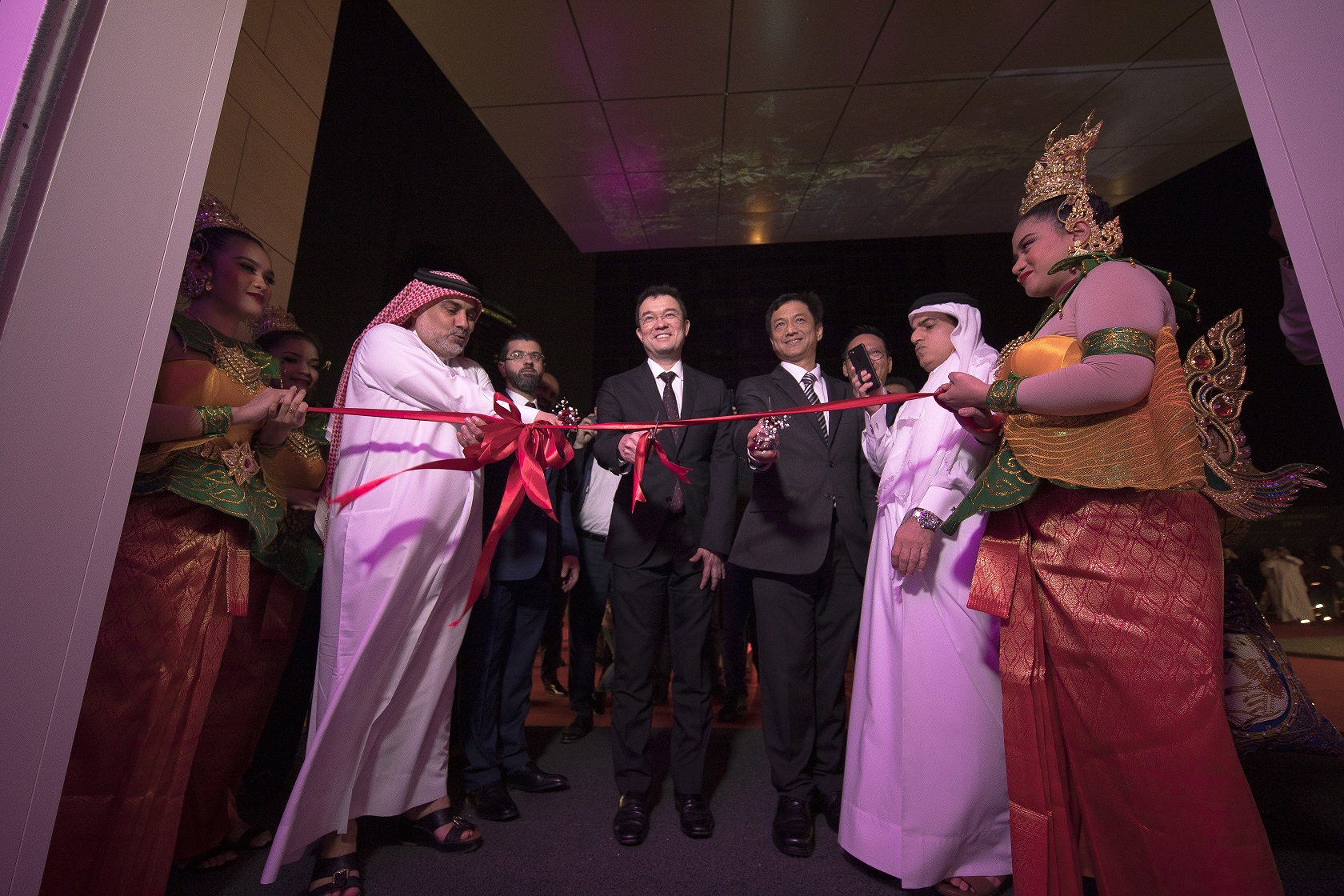
    The grand opening event featured traditional Thai and Qatari performances, including a falconry show, plus executive speeches, a ribbon-cutting ceremony and VIP dinner created by Michelin starred chef, Alfred Prasad.

    “Doha is one of the most dynamic destinations in the world today, and we are delighted to enter this important market with such a spectacular new hotel. Centara West Bay Residences & Suites Doha is an iconic addition to the city’s skyline. With spacious accommodation, luxurious facilities and gracious Thai service, this hotel will cater for all types of guest, from leisure visitors and large family groups to long-stay business travellers. We look forward to welcoming all guests to Doha in the future, as the city embarks on an exciting new era of international prominence and prosperity,” commented Thirayuth Chirathivat, Chief Executive Office, Centara Hotels and Resorts.

    Guests have a choice of stylish and spacious accommodation, comprising studios, suites, one- to three-bedroom apartments and four-bedroom penthouses, all featuring floor-to-ceiling windows with breath-taking views of the Gulf. Residences range in size from a generous 45 square metres to an opulent 365 square metres and come fully equipped with comfortable bedrooms, separate living and dining areas, kitchens, and cutting-edge technology, including Smart TVs.

    Centara West Bay Residences & Suites Doha features a collection of contemporary F&B outlets, including Caprice, a café-inspired restaurant showcasing exquisite Thai cuisine and international fare; Dalchini, which promises progressive Indian from creative Chef Alfred Prasad cuisine; plus a chic Lobby Lounge and a refreshing Pool Bar. In-room dining is also available and residences have their own cooking and dining facilities.

    There are many opportunities for relaxation, including an indoor pool with panoramic views of the Gulf, a spacious fitness centre and aerobics studio. There is also a kids’ club and children’s pool for younger guests, plus a gift shop, prayer room and two flexible meeting rooms.

    A key cultural and economic hub for the entire Middle East region, Doha is home to a wealth of cultural attractions including the historic Souq Waqif market, Museum of Islamic Art and State Grand Mosque, plus major shopping malls and soft sandy beaches. It is also rapidly emerging as a global sporting destination, hosting the annual season-opening Qatar Open tennis tournament, the 2019 IAAF World Athletics Championships and of course, the 2022 FIFA World Cup.

    The Middle East is a key strategic part of Centara’s five-year development plan, which aims to double the company’s global portfolio of hotels and resorts by 2022. Centara Muscat Hotel opened in 2017, and following this week’s grand opening of Centara West Bay Residences & Suites Doha, the group further plans to launch Centara Grand Hotel Doha in the first half of 2020.